Quick View Summary Table of Surface Finish Selection
| Process | Typical Ra (µm) | Pros | Cons | Suitable Materials | Cost | Tolerance Capability | Interference / Fit Impact |
| Sand Casting | 6.3 – 25 | Low tooling cost, complex shapes | Very rough surface | Cast iron, Al, steel | $ | Loose | Poor for fits |
| Die Casting | 1.6 – 6.3 | Good finish, repeatability | Expensive tooling | Aluminum, zinc | $$ | Moderate | OK for loose fits |
| Investment Casting | 1.6 – 3.2 | Fine detail, near-net | Longer lead time | Steel, SS, Al | $$$ | Moderate | Limited fit control |
| Saw Cutting | 6.3 – 12.5 | Fast, inexpensive | Rough edges | All metals | $ | Loose | Not suitable |
| CNC Machining (Rough) | 3.2 – 6.3 | Fast stock removal | Tool marks visible | All machinable metals | $$ | Moderate | Limited |
| CNC Machining (Finish) | 0.8 – 3.2 | Accurate, repeatable | Higher cycle time | Al, steel, SS, brass | $$ | Tight | Good sliding fits |
| Grinding | 0.2 – 1.6 | High precision & flatness | Slower, heat risk | Hardened steel | $$$ | Very tight | Excellent |
| Honing | 0.05 – 0.4 | Ideal for bores | Limited geometry | Steel, cast iron | $$$ | Very tight | Excellent |
| Lapping | 0.01 – 0.2 | Ultra-flat, mirror finish | Very slow process | Steel, ceramics | $$$$ | Extreme | Precision interference |
| Polishing | 0.05 – 0.8 | Cosmetic appeal | Not dimensional | Most metals | $$ | Poor | No fit control |
| Electropolishing | 0.05 – 0.4 | Corrosion resistance | Material removal | Stainless steel, Al | $$ | Moderate | Slight clearance increase |
| Electroplating | Base Ra + coating | Wear & corrosion protection | Thickness variation | Steel, copper alloys | $$ | Moderate | Can tighten fits |
| Anodizing | Base Ra | Hard, decorative layer | Brittle coating | Aluminum | $$ | Moderate | Reduces clearance |
| Powder Coating | 2.5 – 12.5 | Durable, uniform | Thick coating | Steel, aluminum | $-$$ | Loose | Increases interference |
What Is Surface Finish for CNC Parts?
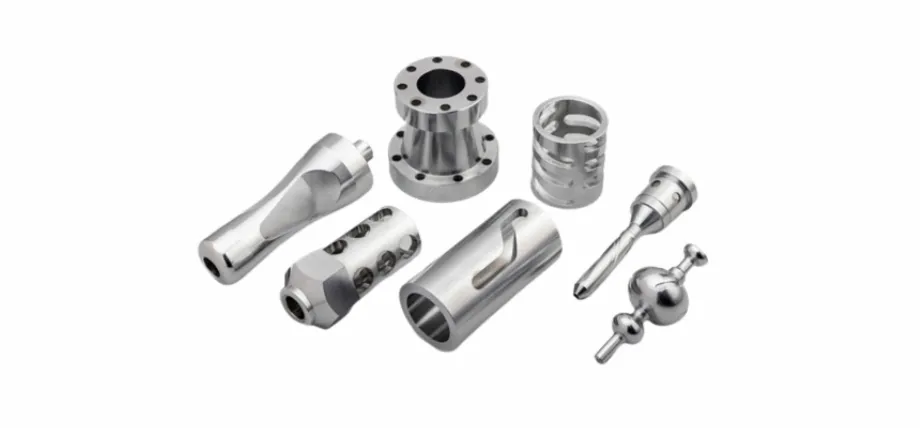
Precision Machined Steel Parts
Surface finish of a CNC part refers to the texture and roughness of its surface. It is a key factor that defines appearance, but also affects the performance of a part. The CNC machining surface finish depends on the CNC machining process, the machining parameters, and the material. The most common metric to measure surface finish is Ra (Roughness average). It tells how smooth or how rough the surface is.
CNC parts with smoother surfaces have less friction, but it does not always mean that it is better. Surface finish is highly dependent on the application as well. Different applications require different surface finishes, depending on their functionality. For example, bearings and bushings have finishes ranging from Ra 0.2 to 0.8 µm to retain lubricant, which helps to reduce friction and improve performance.
What Is RA Value?
Roughness Average, or Ra, is the average of the profile deviations, meaning it tells you the average height of a surface’s ups and downs. Ra is the most commonly used metric for surface smoothness, so machinists and engineers widely accept it.
The value of Ra is measured in micrometres (µm). The lower the Ra value is, the smoother the surface. Practical applications of Ra include determining critical functional attributes, such as the friction coefficient. ear resistance and heart transfer.
Different Types of Surface Finishing Methods
The machined surface finish refers to the surface finish of a CNC part as it comes off the CNC machine. It does not have any post-processing finishing done. Though the surface is relatively smooth, it has tool marks, which isn’t ideal for parts that require a clean machine surface finish.
Typical Ra value of a machined surface is around 3.2µm, but can be lower if you use a tighter finishing pass. It is commonly used in internal components that are covered,
Bead Blasting
Bead blaster is a soft, non-reflective, and matte finish that is achieved by propelling glass beads at high pressure, which strips a small amount of material and smoothes the surface. It is a manual operation, so the result depends on the operator’s skill. It provides a consistent, obscure finish that hides inconsistencies very well.
Polishing
Polish is a highly reflective and glossy finish that is achieved through abrasive or chemical agents. It improves a part’s aesthetic appeal, and also the smoother surface reduces friction.
It is commonly used in the medical and luxury goods industry. The normal Ra value of polished surfaces is around 0.1 -0.3µm.
Anodizing
Anodizing service is an electrochemical process that forms a thick porous aluminum oxide layer. Anodizing service is of two types: Type II and Type III. Type II coat is lighter with a thickness of 5-25µm. Its Ra value depends on the base surface finish
Type III anodizing is a Hardcoat that is thicker and more durable. It significantly improves wear and corrosion resistance. The average Value of type III coats is much higher, is slightly higher than the base surface finish.
The anodizing aluminum process is a durable, wear-resistant finish. It is a widely used finish in industrial applications that require high durability and excellent performance.
Brushing
Brushing is performed with fine bristles or abrasive media that create uniform, parallel lines on the surface. The brushed finish has a slightly reflective satin appearance. It has a Ra of 0.4-0.8µm. This finish is used for various metals and is often used for architecture and trims where a brushed finish is desired.
Surface Finish Types and Ra Values
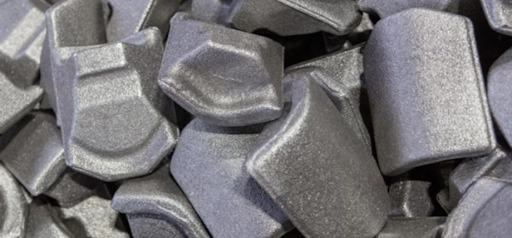
Bead-blasted CNC machined parts
| Process | Typical Ra (µm) | Surface Quality |
| Sand Casting | 6.3 – 25 | Very rough, grainy |
| Die Casting | 1.6 – 6.3 | Smooth, uniform |
| Investment Casting | 1.6 – 3.2 | Fine |
| Saw Cutting | 6.3 – 12.5 | Rough cut marks |
| CNC Machining (Rough) | 3.2 – 6.3 | Visible tool marks |
| CNC Machining (Finish) | 0.8 – 3.2 | Smooth machined |
| Drilling | 1.6 – 6.3 | Spiral tool marks |
| Reaming | 0.4 – 1.6 | Smooth |
| Grinding | 0.2 – 1.6 | Fine, matte finish |
| Honing | 0.05 – 0.4 | Cross-hatched |
| Lapping | 0.01 – 0.2 | Ultra-flat, precision |
| Polishing | 0.05 – 0.8 | Shiny, smooth |
| Buffing | 0.02 – 0.2 | High-gloss |
| Electropolishing | 0.05 – 0.4 | Bright, corrosion-resistant |
| Electroplating | Depends on base Ra | Decorative |
| Anodizing (Aluminum) | Follows base Ra | Protective, cosmetic |
| Powder Coating | 2.5 – 12.5 | Textured coating |
Machining Surface Finish Ra Values
| Process | Typical Ra (µm) | Finish Description |
| Saw Cutting | 6.3 – 12.5 | Rough cut marks |
| Turning (Rough) | 3.2 – 6.3 | Visible tool marks |
| Turning (Finish) | 0.8 – 3.2 | Smooth, consistent |
| Milling (Rough) | 3.2 – 6.3 | Stepped tool marks |
| Milling (Finish) | 0.8 – 3.2 | Fine-machined surface |
| Drilling | 1.6 – 6.3 | Spiral tool marks |
| Reaming | 0.4 – 1.6 | Smooth, precision holes |
Surface Finish Types and Materials
| Grade Level | China Ra (µm) | China Rz (µm) | ISO / EU Ra (µm) | USA Ra (µin) | USA RMS (µin) |
| Very Coarse | 50.0 | 200 | 50.0 | 2000 | 2200 |
| Coarse | 25.0 | 100 | 25.0 | 1000 | 1100 |
| Medium Coarse | 12.5 | 50 | 12.5 | 500 | 550 |
| Medium | 6.3 | 25 | 6.3 | 250 | 275 |
| Medium Fine | 3.2 | 12.5 | 3.2 | 125 | 140 |
| Fine | 1.6 | 6.3 | 1.6 | 63 | 70 |
| Very Fine | 0.8 | 3.2 | 0.8 | 32 | 35 |
| Extra Fine | 0.4 | 1.6 | 0.4 | 16 | 18 |
| Ultra Fine | 0.2 | 0.8 | 0.2 | 8 | 9 |
| Mirror Grade | 0.05 | 0.2 | 0.05 | 2 | 2.5 |
Stainless Steel Surface Finish
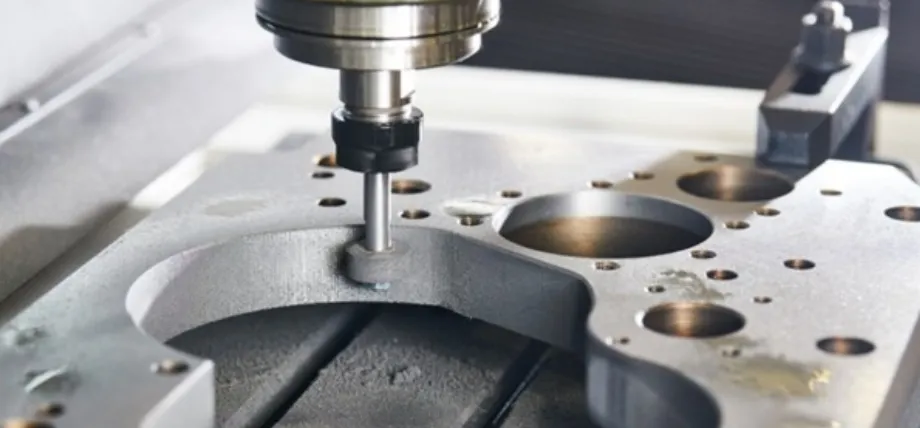
CNC Interior Edge Grinding
Stainless steel surface finishes are standardised; a hot-rolled finish, such as No.1, is used where appearance is not critical. A cold-rolled finish provides a much smoother, more uniform surface for fabrication.
Mechanical finishes, such as grinding and polishing, as well as brushing, have different applications and functions.
Aluminium Surface Finish
Aluminum can have various surface finishes depending on the application. They are mainly applied to improve durability. Many surface finishes can be applied to machined CNC parts. Some commonly used surface finishes are listed with their Ra and applications.
- As machined: It has tool marks from the machining process. It is relatively smooth and has an Ra value of 3.2 µm.
- Polished: Polished surface finish is highly reflective and smooth. It reduces friction and has an Ra of 0.1-0.3 µm.
- Brushed: Brushed finish has unidirectional lines that help hide scratches. The Ra value of the brushed finish ranges from 0.4-0.8µm.
- Other: other surface finishes include anodizing, grinding, and electroplating.
Brass and Bronze Alloys Surface Finish
The surface finishes used for brass and bronze are mainly mechanical surface finish options for brass and bronze, including:
- Polished: polished surface finish is highly reflective and smooth, but it tarnishes without protective coatings
- Brushed: Brushed finish can bring out the metal’s luster without polishing. It has saitnapeearan and is mainly used for high traffic areas.
- Sand blasted: sand blasted finishes have uniform matte textures, mainly used in architectural aesthetic purposes.
Ceramics Surface Finishes
The high hardness and brittleness of ceramics require them to have specialized surface finishing processes. The main surface finishing methods used for ceramics are grinding and polishing using diamond abrasives because they help control the roughness with extreme precision. It is important to minimize damage as it can cause cracks in the material.
Plastics Surface Finishes
Plastic surface quality is largely determined by the mold quality and production method. SPI standardizes mold finishes. A mold can have various finishes that can be either high gloss, smooth, or textured, depending on the requirements. Post-processing methods are limited since plastics are sensitive to heat and abrasion.
How to Choose the Right Surface Finish for Your CNC Part
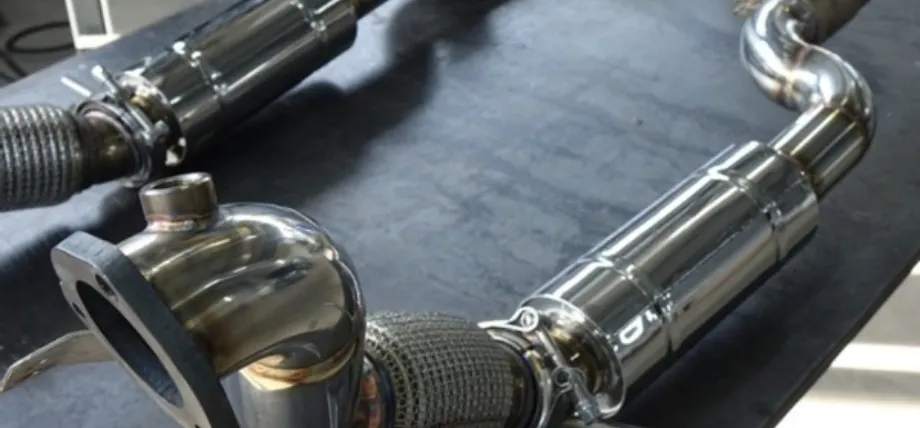
Polished Custom Exhaust Assembly
Choosing the right surface finish is essential to the function and application of your part, so it holds a lot of emphasis. The main aspect of the process is determining the functional requirements that your part perhaps needs to fulfill. This will also determine the Ra value for your part.
Parts that require seals need smoother finishes for better surface contact and improved wear resistance. While parts that don’t interact closely, like structural elements, have higher Ra values, meaning rougher finishes. This helps to optimize the time and keep costs low.
Material is also a large aspect that contributes to the finish that your part can have. Harder and stable materials can achieve better and smoother finishes. For example, aluminum can be mirror-polished. On the other hand, softer materials like copper are more ductile and can tear or work harden during the machining or polishing. So material is also a determining factor of your parts’ surface finish.
Practical constraints like cost and manufacturability are also real factors to consider. Smoother finishes require machining time and additional post-processing, which raises cost. It is better to optimize the process by selecting the finish that suits your project better.
In practicality, there is a simple way to select the best finish for your part that summarizes the above information. Start with functional requirements, select the finish that fulfills your parts functionality, then go on to material and environmental constraints to make sure the material you choose performs well in the environment. For example, brass performs well underwater while steel rusts, so it is better to use brass for valves.
The final step of the process is to select the Ra value that meets all goals. For exposed visible surface and critical performance parts, it is better to choose a smoother surface, while for covered and non-critical components, a rougher surface keeps the costs low.
How To Select The Surface Finish According to Tolerance
Surface finishing is often the final step of precision machining and selecting the correct surface finish is important because the wrong coating can void part functionality. Not only that, but using electroplating techniques on unsuitable metals can even damage the substrate material.
As a rule of thumb, if the tolerances are tight, you need smoother and finer finish for accurate measurement. Loose tolerance allows rougher finishes.
- Start with functional requirements: Check if your part surface is critical for mating, sealing, or aesthetic purposes.
- Non-functional parts can have cost-effective finishes without smoother finishes.
- Match surface roughness and tolerance class: High precision tolerances like ±0.05 mm use finer surface finishing like Ra 0.8 or lower.
- Cost: Rougher finishes will cost you way less than fine grain finishes and processes like grinding, lapping or polishing can significantly add to production costs when comparing it to as-machined finish.
CNC Machining Surface Finishes at Proleanmfg
Proleanmfg provides professional surface finishing services like bead blasting, electroplating, powder coating services, and different precision machining technique finishes, such as machined, mill finish and brushed textures.
Our in-house surface finishing can impart textures to aluminum alloys, stainless steel, titanium, plastics, and composites using gentle, non-abrasive techniques. This can help the precision part’s dimensional accuracy.
Our turnaround times are typically 2 – 5 days, and we ensure superior quality. Contact us today to discuss your project requirements and receive an online quote.
Conclusion
The right surface finish for your projects will ensure performance, durability, and cost efficiency in precision components. From bead blasting to zinc plating and yellow chromate coating, each process can only address specific requirements like corrosion resistance, appearance, and wear properties. At the end, different types of surface finishes exist to match your application and tolerance needs.