
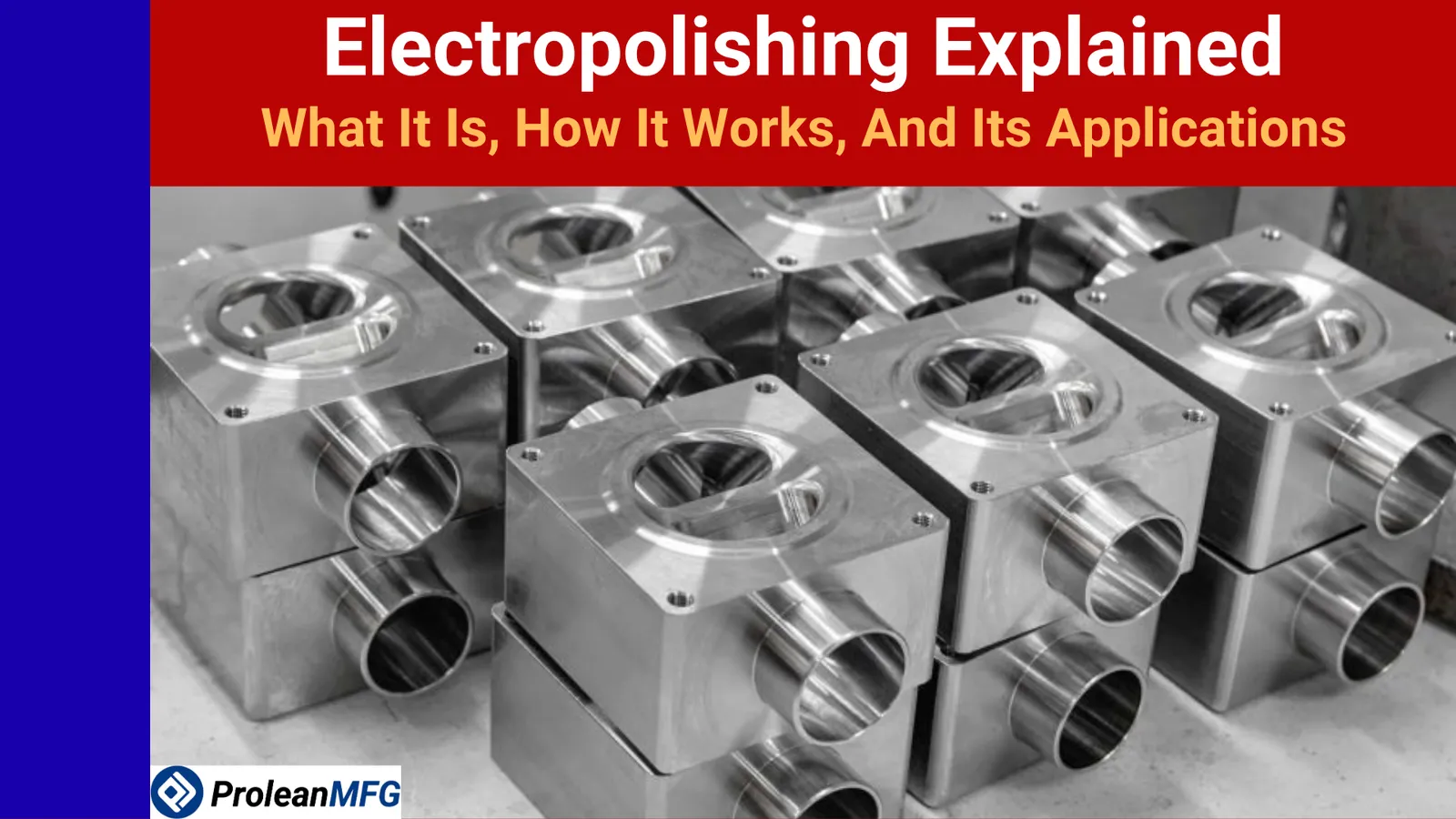

Electropolishing is a common electrochemical finishing process that removes a microscopic layer on metal for a bright, smooth, and corrosion-resistant result. The workpiece (anode) is placed in an electrical setup comprising DC, an electrolyte solution, and a cathode.
Since electropolishing doesn’t smear contaminants, it is widely specified for food, medical, and other sensitive applications.
Getting the electropolishing process right is the secret to promoting easier cleaning, enhancing part performance, and minimizing rejects. This depends on proper process control and material choice.
Before you specify electropolishing in your next CAD drawing, let’s first review how the process works, its material compatibility, applications, and comparison to other finishes.
Key takeaways
- The material used in electropolishing matters. The best response comes from stainless steel (particularly the 300 series). Carbon steel may be electropolished too; it requires follow-up coating to enhance corrosion resistance.
- Electropolishing, or reverse plating, uses the surface dissolution method; no mechanical force. The result is a smooth, shiny surface that is easy to clean.
- Electropolishing is ideal for corrosion resistance and an attractive appearance. It is notably better than mechanical polishing and buffing concerning complex shapes. Choose passivation over electropolishing is appearance is not a concern.
What is Electropolishing?
Electropolishing is a finishing technique that primarily improves corrosion resistance and surface finish, predominantly on metals. The electrochemical process systematically removes a microscopic layer from a metal’s surface.
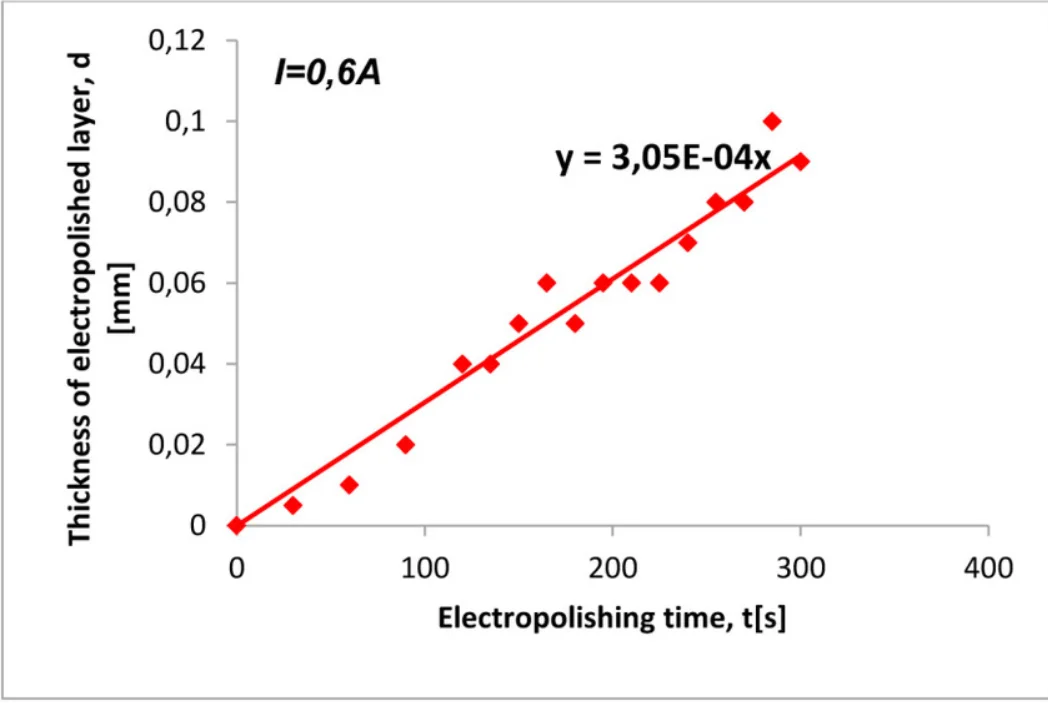
Electropolished layer thickness versus electropolishing time for stainless steel 1H13 [2]
As the graph above shows, the electropolishing process is steady and predictable. Practically, current and time determine the amount of metal removed.
This controlled process produces a smooth, bright surface. Also called electrochemical polishing or electrolytic polishing, this technique should not be confused with passivation. Unlike electropolishing, passivation does not use electric current.
Consider it a reverse electroplating process – it dissolves a metal layer instead of adding one, inside an electrolyte solution.
How Does Electropolishing Work?
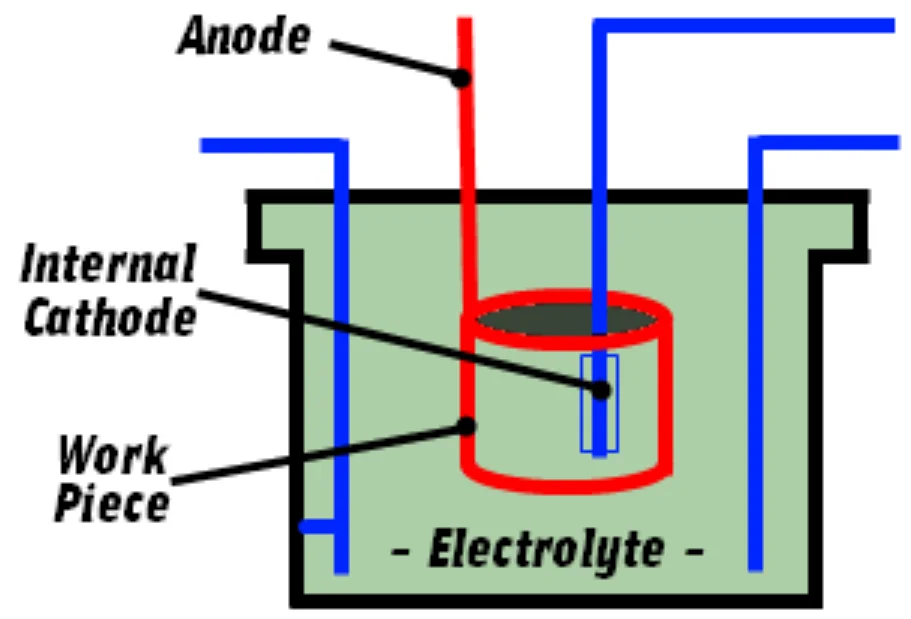
Electropolishing schematic
As the diagram above shows, the process entails immersing a metal component in an electrolyte and passing a direct current. Through this interaction, metal ions leave the metal surface to produce a smooth, polished appearance.
Microscopic peaks receive the highest current density. They dissolve faster than valleys to produce a more leveled surface.
The process control parameters are time, current, electrolyte temperature, agitation, electrolyte components, and voltage. These parameters ensure a precise surface finish tailored to the application.
Materials Compatibility for Electropolishing
Electropolishing applies to most conductive materials, including electropolishing stainless steel, nitinol, titanium, aluminum, brass, carbon steels, copper, nickel, and specialty alloys.
Electropolishing Stainless Steel
Options include 200 series, 300 series, 400 series, and precipitation-hardening grade. Electropolishing stainless steel is popular because the chromium content produces a stable oxide layer.
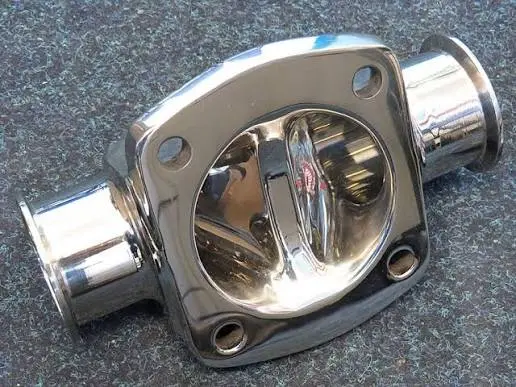
Electropolishing stainless steel
The 300 series (austenitic) stainless steel specifically gives the most predictable response to the surface finish.
Nitinol Electropolishing
Nitinol is another name for a nickel-titanium alloy. Electropolishing minimizes the release of nickel ions. A notable benefit of nitinol electropolishing is support for biocompatibility for implantable devices.
Titanium Electropolishing
Electropolishing cleans and smooths the surface after machining and heat treatment. It can also remove some surface contamination from high-temperature manufacturing. An electropolished titanium part can meet ASTM F86 requirements for surface preparation in implants.
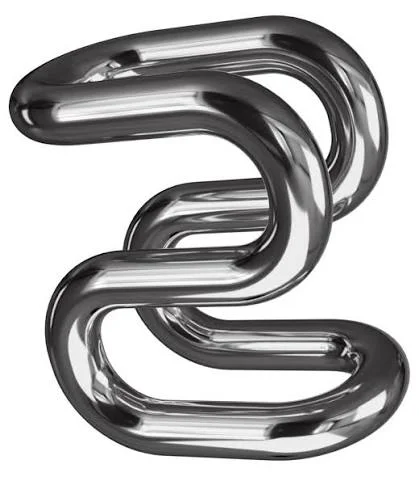
Titanium electropolishing
Aluminum Electropolishing
ProleanMFG can electropolish a broad range of aluminum grades and parts. Electropolishing results are generally better on wrought aluminum grades such as 6061, 1100, and 3003.
Since passivation is a stainless steel treatment, electropolishing is a key electrochemical process for mirror-finish, burr-free, and contaminant-free aluminum parts.
Copper and Brass Electropolishing
Brass and copper parts can be electropolished for enhanced corrosion resistance, improved microfinish, and longer fatigue life. The surface improvement can also show in the form of a brighter finish.
Since the process removes contaminants and oxides from the surface, it can also be used to enhance surface conductivity.
Carbon Steel Electropolishing
Carbon steels are preferred for their cost-effectiveness, heat-treatability, and hardness. However, their response to electropolishing is not the same as stainless steel’s.
The oxide layer in carbon steel is unstable, so electropolishing alone cannot enhance corrosion resistance significantly. It is typically used to improve surface finish and remove imperfections.
For corrosion resistance, carbon steels typically require coating to complement electropolishing.
Nickel Electropolishing
The family of nickel alloys includes Incoloy, Inconel, and Monel. These grades offer excellent heat and corrosion resistance. Electropolished parts can attain brighter finishes, high purity, and improved flow.
Specialty Alloy Electropolishing
Specialty alloys eligible for electropolishing include niobium, tantalum, and tungsten. Many of these are used in specialty industries, so the surface treatment process must be closely monitored.
What Are The Benefits of Electropolishing?
The main benefits of electropolishing include enhanced corrosion resistance, removal of oxide scale, suitability for delicate parts, friction reduction, suitability for complex shapes, and removal of surface defects.
Enhanced Corrosion Resistance
Since the process removes surface impurities and irregularities, it minimizes the risk of stress corrosion cracking, crevice corrosion, and pitting. It ensures the metal surface is in good structural condition even under tough working environments.
Easier-to-Clean Surface
Electropolishing removes microscopic burrs, peaks, and valleys. This makes it easier to clean the parts.
Removal of Oxide Scale
Electropolishing can remove remnant oxide scale after processes such as welding and heat treatment. The process restores the corrosion-resistant layer of stainless steel by stripping away the oxide scale.
Suitability for Delicate Parts
In electropolishing, no mechanical force is involved, so fragile components retain their geometry. The process is ideal for fine mesh, micro tubing, and other precision components.
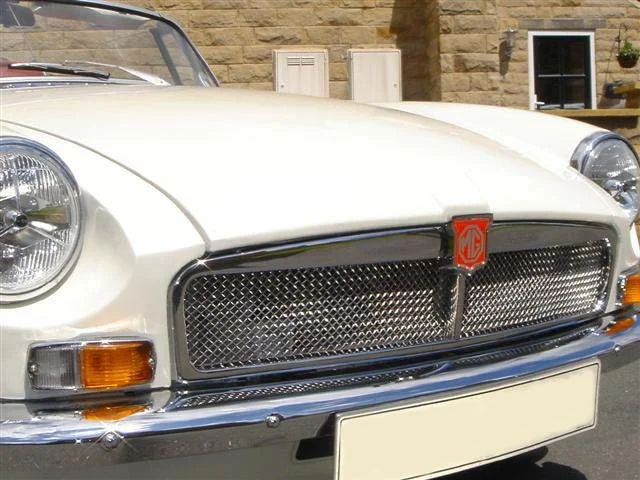
Electropolished fine mesh
Friction Reduction
Electropolishing can make sliding surfaces slide more easily against each other. The process reduces the number of microscopic valleys and peaks. Electropolished fasteners and valves have a longer service life.
Suitability for Complex Shapes
While abrasive tools cannot reach some areas in a complex component, electropolishing reaches most of the extremes the electrolyte can wet. Auxiliary cathodes may be required for deep recesses for current density balance.
Examples of these application areas:
- Undercuts
- Blind holes
- Internal bores
- Internal channels
- Complex contours
Removal of Surface Defects
Electrochemical polishing is an effective method for removing microscopic burrs and peaks. The electrochemical process dissolves the defects easily.
What are the Limitations of Electropolishing?
Potential limitations of electropolishing in a project can stem from the surface preparation, electrolyte bath, or electropolishing process. Each of these stages should be well planned and executed to ensure a smooth and effective surface finishing process.
Surface Preparation
The surface should be thoroughly cleaned and prepared. If not, residual oxides and oils can cause clouding and staining.
Electrolyte Bath
The bath should be carefully monitored to ensure its contents are in the right proportions and conditions. An imbalanced electrolyte bath can cause etching and pitting, which can indicate poor brightness.
Electropolishing Process
Challenges can also happen during the electropolishing process. Here are some of the main ones:
- Adequate allowance should be given for tolerance-critical features
- It doesn’t fix major defects and deep scratches
- Racking can produce contact marks
- Free-machining grades give poor results
Where Can Electropolishing be Used?
Common applications of electropolishing include blades, fasteners, springs, and wire racks across semiconductor, medical, and food processing industries.
Blades
Electropolished turbine blades, surgical blades, and food-processing blades have burr-free, smooth edges. These edges are easy to maintain.
In food processing, the burr-free cutters resist residue accumulation. In medical applications, surgical blades have consistent, easy-to-clean edges.
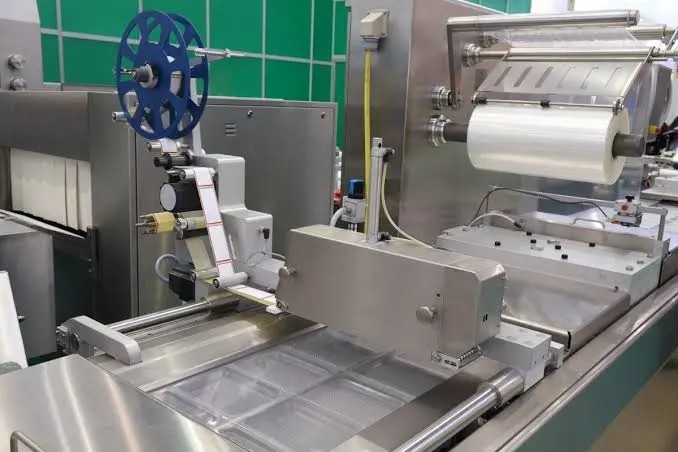
Food processing equipment
Fasteners
Screws, nuts, and bolts are electropolished for enhanced corrosion and galling resistance. The process also cleans up the threads, minimizing the spots for dirt/contaminants to collect.
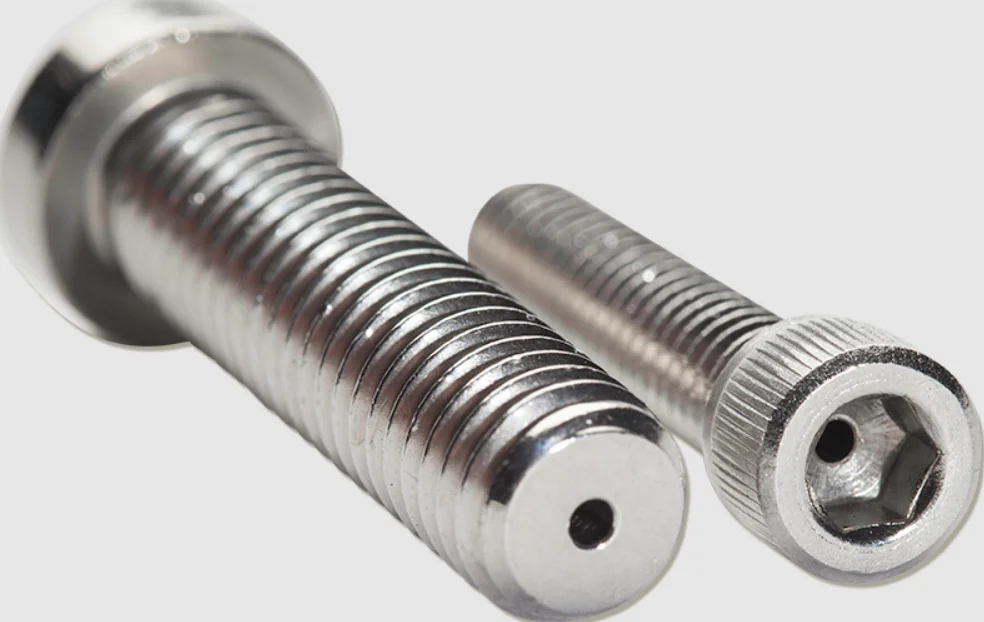
Electropolished fasteners
Electropolished fasteners are commonly used in medical settings to enhance cleaning and sterilization. They are also used in semiconductor tools and food processing equipment.
Springs
Electropolished springs have a higher fatigue life because the process removes micro-burrs and other surface irregularities that can trigger cracking. Medical and surgical equipment derive their reliable cycling capability from electropolishing.
Food processing valves can be cleaned repeatedly because their electropolished components operate smoothly.
Wire Racks
Wire racks require consistent performance despite the regular cleaning and abrasion from other components. Electropolishing gives the necessary smooth surface.
Medical facilities use wire racks to hold devices during sterilization. The racks are also common in semiconductor manufacturing facilities, where they hold parts during cleaning.
Electropolishing vs. Other Surface Finishing Technologies
You can compare electropolishing to alternatives such as buffing, mechanical polishing, and passivation.
Buffing
A rotating wheel and a fine abrasive compound combine to produce a shine on the workpiece surface. Concerns about the finishing method include struggling with complex geometry and a tendency to smear metal.
Mechanical Polishing
Mechanical polishing removes material from the surface of a part using abrasive belts or wheels. It usually comes before buffing. It is a good choice for removing tool marks, scratches, and weld lines.
Passivation
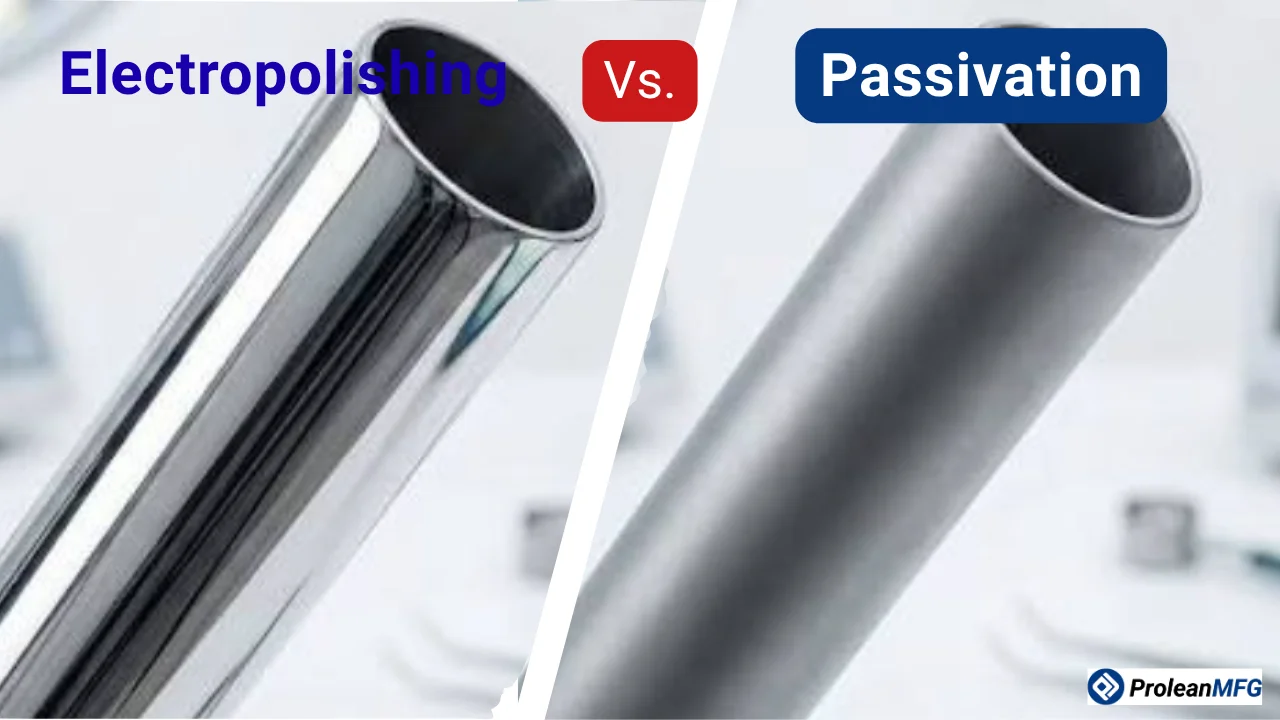
Electropolishing vs passivation
This chemical treatment removes free iron and replenishes the oxide layer of the part. Unlike electrochemical polishing, passivation leaves the surface roughness untouched. Electropolishing combines polishing and chemical treatment.
We recommend passivation if corrosion resistance is critical and the surface finish doesn’t matter. The lower cost of passivation becomes interesting in that case.
Use the comparison table below to choose between electropolishing and alternative methods.
| Feature | Electropolishing | Mechanical polishing | Buffing | Passivation |
|---|---|---|---|---|
| Working mechanism | A microscopic layer is dissolved through an electrochemical process | Abrasive wheels/belts remove surface material | Wheel with fine abrasive material rotates and removes material | Chemical process without electric current |
| Uses mechanical force | No | Yes | Yes | No |
| Part geometry | Reaches most wetted areas | Depends on tool access | Limited | Reaches most wetted areas |
| Surface roughness effect | Smooths and brightens | Removes scratches and weld lines | Enhances shine | No effect on surface roughness |
| Corrosion protection | Enhanced, particularly on stainless steel | Not a primary function | Not a primary function | Restores oxide layer – enhances corrosion resistance |
| Limitation | Cannot repair deep scratches or major defects | Buffing required as a follow-up | Potential to smear metal | Does not change surface appearance |
| Best used for | Clean finish, corrosion resistance | Improving appearance -removing defects | Enhancing shine on simple shapes | Cost-effective enhancement of corrosion resistance when appearance is not a primary concern |
In Conclusion
Electropolishing removes microscopic material from a metal surface, giving the material a cleaner, smoother appearance. It also enhances corrosion resistance. The electrochemical process applies to conductive alloys such as aluminum, titanium, and stainless steel.
An effective electropolishing process depends on thorough surface preparation, tight control of the electrolyte bath, and working on the right material. For corrosion resistance and surface smoothness, electropolishing outdoes mechanical polishing, buffing, and passivation.
Do you want a better surface finish for your metal parts? You need to explore our surface finishing services. Then, upload your part file today for a quote within 24 hours.
Resources
[1]https://www.sciencedirect.com/topics/physics-and-astronomy/electropolishing