Home » Services » Rapid Prototyping Services » Vacuum Casting Service
Vacuum Casting Services
High-quality vacuum casting solutions for functional prototypes, design validation, and low-volume production.
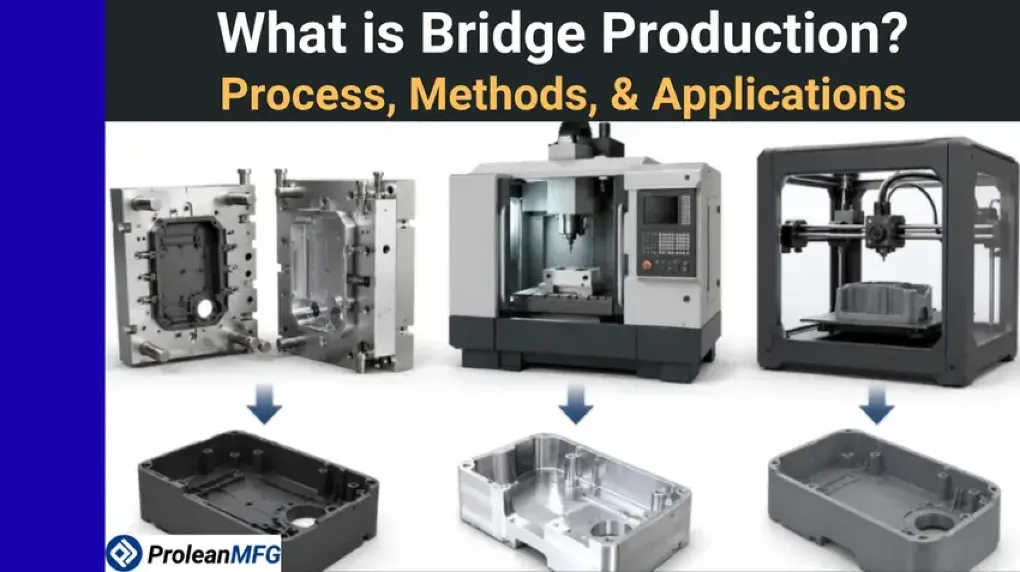
- Ideal for functional prototypes, pre-production parts, and bridge production
- Uses silicone molds and polyurethane (PU) resins to produce smooth, accurate parts
- Compatible with CNC-machined or 3D printed master patterns
- Supports color matching, surface textures, and cosmetic-grade finishes
- Typical dimensional tolerances of ±0.2–0.3 mm, depending on part geometry and size*
*Tolerances depend on material shrinkage, part geometry, and mold design.
Get a New Vacuum Casting Quote
What Is Vacuum Casting?
Vacuum casting is a design-flexible and cost-effective manufacturing process used to produce high-quality prototypes and low-volume parts, especially when surface finish is important.
This process involves creating a master pattern, usually via 3D printing or CNC machining, which is then used to produce a silicone mold. Pourable polyurethane resin is cast into the mold and results in a set of vacuum-cast parts that are comparable to injection-molded parts in terms of accuracy and surface finish.
When Should You Use Vacuum Casting?
Vacuum casting is the ideal solution when you need accurate, high-quality parts quickly, and PROLEANMFG provides the short lead times that can help yo with prototyping parts.
Consider vacuum casting when:
You require rapid prototyping with a production-level surface finish
You need low-volume production (typically under 100 parts)
You want to test different materials, colors, or textures
You need vacuum cast parts
You need a flexible alternative to CNC machining
Advantages of Vacuum Casted Parts?
- High-quality surface finish
- Maintain tight tolerances and replicate complex geometries
- Cost-effective for low volumes
- Fast turnaround times
- Polyurethane resins that simulate thermoplastics, rubber, or silicone
- Ideal for functional testing
What Is The PROLEANMFG Vacuum Casting Process
Master Model Creation
A precise master model is crafted using CNC or 3D printing. This ensures accurate part geometry replication
Silicone Mold Fabrication
Liquid silicone encases the model in a vacuum, forming a detalled mold. The vacuum eliminates air bubbles for precision
Resin Casting
Polyurethane resin fills the mold under vacuum, replicating the model’s details. This produces high-quality parts with excellent finish
Precision Quality Assurance
Our company implements a proprietary automated inspection system to ensure flawless part accuracy and consistency.
Achievable Tolerances With Vacuum Casting
| Part Dimension | Typical Tolerance | Design Note |
|---|---|---|
| 0–50 mm | ±0.20 mm | High accuracy achievable for small, well-supported features |
| 51–100 mm | ±0.30 mm | Typical range for most functional prototype parts |
| 101–200 mm | ±0.40 mm | Increased variation on larger surfaces due to resin shrinkage |
| Hole Diameter | ±0.10–0.20 mm | Secondary machining recommended for tight-fit holes |
| Warpage | ≤0.5% of overall dimension | Influenced by resin type, wall thickness, and cooling conditions |
What Are The Vacuum Casting Materials?
These polyurethane materials allow you to create functional prototypes, sample parts, and low-volume production components
| Material Category | Typical Resin Types | Key Properties | Common Applications |
| Rubber-like Materials | PU8150, PU8263 | Flexible, shock-absorbing, wear-resistant | Overmolding, seals, gaskets, soft-touch components |
| ABS-like Resins | PX223HT, UP6160, UP4280 | Balanced strength and rigidity, good surface finish | General-purpose housings, enclosures, functional prototypes |
| PMMA-like / Acrylic-like | PX5210HT, PX522HT | Transparent, rigid, good optical clarity | Clear covers, light pipes, display models |
| PP-like Resins | 8550, UP5690 | Flexible, fatigue-resistant, lightweight | Snap-fit parts, living hinges, consumer components |
| Nylon-like Resins | PA6 (DPI 2180) | Tough, wear-resistant, good mechanical strength | Mechanical parts, brackets, functional assemblies |
FAQ
How Does A Vacuum Casting Machine Work?
A vacuum casting machine removes air from the mold during resin pouring, ensuring bubble-free, accurate, and high-quality part production.
How Does Vacuum Casting Work?
It replicates a master pattern. Vacuum casting uses a silicone mold and vacuum pressure to cast polyurethane resin
What Is Vacuum Casting?
Vacuum casting is a rapid prototyping process that creates low-volume, high-quality parts by casting resin into silicone molds under vacuum.