CUSTOM PARTS. FROM CAD TO PHYSICAL FORM.

3D printing
services.

Turn your CAD into custom parts for design reviews, assembly checks and functional prototypes. Compare resin, nylon and thermoplastic printing routes with material and finishing support for your application.

Custom prototype partsMaterial selection supportFrom one design to a short run
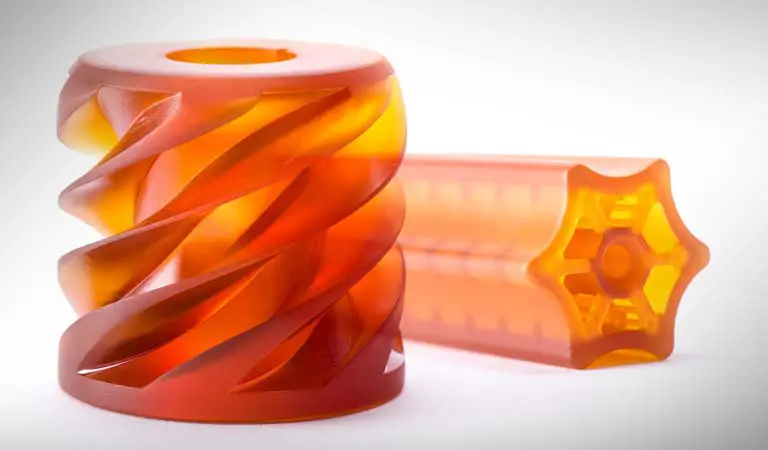
Orange translucent spiral and hollow ribbed components
Complex-form reference. Specific process and resin are not established by the image.
Design without a moldExplore details and complex forms
Choose the right materialMatch appearance, fit and function
Get a project-specific quoteCAD, quantity, finish and schedule

FIND YOUR PRINTING ROUTE

Different processes.
Different possibilities.

A detailed presentation model, a nylon housing and a thermoplastic fixture each call for a different approach. Send your CAD and intended use so we can review the process, material and finishing route together.

01 / SLA

Fine detail & visual prototypes

Stereolithography cures liquid photopolymer resin layer by layer. Consider it for intricate features, smooth-looking surfaces and models used to communicate a design.

Typical brief: appearance models, small-feature reviews and fit-check components. Specify the resin and post-cure state for functional testing.

02 / SLS

Complex nylon components

Selective laser sintering fuses polymer powder, with the surrounding powder supporting the build. It is a route to explore for intricate nylon geometries and assemblies.

Typical brief: housings, brackets and short-run prototype parts. Provide access to remove powder from internal spaces.

03 / MJF

Functional polymer parts

Multi Jet Fusion uses fusing agents and heat to form parts in a powder bed. Review this route for nylon components and batches of repeated geometries.

Typical brief: assembly samples, enclosures and functional evaluations. Select the exact grade and conditioning around your test.

04 / FDM

Thermoplastic models & fixtures

Fused deposition modeling builds parts from extruded thermoplastic. It is a practical route to compare for concept models, handling samples and fixture development.

Typical brief: form checks, jigs and assembly aids. Review layer direction, wall construction and surface expectations.

Looking for metal 3D printing?

Include the alloy, geometry, loads and any heat-treatment or machining requirements in your RFQ. Metal additive projects need a separate review of the available process, material and inspection scope.

Process availability and the final material grade are confirmed in your quotation.

MATERIALS FOR YOUR APPLICATION

Choose the properties
your part needs.

Start with the job the part must do: communicate a shape, fit an assembly, flex under load or work in a defined environment. These material families provide a starting point for engineering review.

Material families to discuss for your project
Material familyPrinting route to reviewWhere to startSpecify for selection
Rigid photopolymer resinSLADetailed models, presentation parts and assembly samplesStiffness, color, cosmetic faces and exposure conditions
Clear / translucent resinSLA, subject to grade and finishing reviewCovers, display models and visual checks of internal featuresClarity target, thickness, tint and surface finish
Nylon PA12SLS or MJF, with a process-compatible gradeHousings, brackets and functional prototype componentsLoading, fit, surface texture and conditioning
Nylon PA11MJF, subject to grade availabilityParts needing a review of ductility and repeated deflectionFlex cycles, impact conditions and dimensional requirements
ABS / polycarbonate thermoplasticFDM, exact filament grade to confirmConcept models, fixtures and assembly aidsTemperature, load direction, wall construction and finish

Need help choosing a grade?

Share your target properties, operating environment and reference material. The proposal should identify the exact grade and technical data sheet. ABS-like resin and printed ABS have different properties; select against the intended test.

SURFACE FINISHING & SECONDARY OPERATIONS

From the build
to the finished part.

Finishing can improve presentation, remove build artifacts or prepare interfaces for assembly. Mark visible surfaces and critical dimensions so the finishing plan supports both appearance and fit.

BUILD FINISH

Cleaned & support-removed

Define the condition needed after printing, cleaning and support removal. Allow for the process texture and any permitted support contact marks.

COSMETIC FINISH

Sanding & painting

Review sanding and paint for presentation parts where the substrate is compatible. Supply a color reference and identify surfaces where coating thickness affects assembly.

COLOR

Dyeing for nylon

Discuss dye compatibility with the selected nylon grade. Agree color expectations with a reference sample and retain the texture required for the application.

ASSEMBLY FEATURES

Machining, threads & inserts

Review secondary operations for critical holes, mating surfaces or fasteners. The design needs suitable access, material and allowance for the selected operation.

Available finishes are confirmed against the selected process and material. Resin post-cure and polymer conditioning belong in the agreed delivery specification.

FROM DESIGN REVIEW TO SMALL BATCHES

Make the next
design decision tangible.

Use a physical part to discuss proportions, check interfaces or develop a test setup. Choose the route around the decision you need to make and the number of parts you need.

CONCEPT DEVELOPMENT

See and handle the design

Explore shape, scale, ergonomics and component packaging with a physical model before moving further into product development.

ASSEMBLY VALIDATION

Bring mating parts together

Review enclosure interfaces, mounting points, access and assembly sequence. Call out the features that determine fit.

FUNCTIONAL PROTOTYPES

Build around the test

Evaluate a defined load, movement or handling condition using a suitable material and build orientation. Keep conclusions tied to those test conditions.

SHORT-RUN DEVELOPMENT

Compare more than one part

Request quantity breaks for evaluation sets, fixture iterations or small batches. Compare printing with casting or tooling as the design and demand develop.

Ready to move beyond a printed sample?

Explore vacuum casting for repeated cosmetic samples, or rapid tooling when injection-molding resin and process behavior are central to validation.

3D PRINTING SPECIFICATIONS

Match the build
to the drawing.

Usable build size, wall thickness, surface texture and dimensional accuracy depend on the selected machine, material and geometry. Your quote should define the limits that apply to your part.

What to review for each printing process
SpecificationSLASLS / MJFFDM
Build sizePart envelope plus orientation and support allowanceUsable powder-bed space and part arrangementBuild envelope, orientation and split-part options
Walls & featuresThin sections, fine detail and support accessThin sections, powder escape holes and internal cleaningWalls, ribs, overhangs and extrusion-path constraints
Dimensional accuracyResin, support removal and post-cure effectsGrade, thermal distortion and conditioning effectsMaterial, layer direction and distortion effects
Surface conditionResin surface and permitted support marksPowder texture and any agreed finishVisible layers and any agreed smoothing or coating
Delivery scheduleBuild, cleaning, post-cure, finish and inspectionBuild, cooling, depowdering, finish and inspectionBuild, support removal, finish and inspection

Supply tolerances and datums for critical features. Layer height describes the build increment; dimensional acceptance is agreed separately. Inspection reports and application-specific tests can be scoped with the quotation.

DESIGN SUPPORT

A better brief.
A more useful prototype.

A few decisions before printing can make the sample more useful. Include these details with the model so we can review the build around your priorities.

01

Identify the important faces

Mark cosmetic areas, mating surfaces, loads and datums. These help determine orientation and where support contacts are acceptable.

02

Open up internal spaces

Plan access for support removal, resin drainage or powder escape. Include a cleaning and inspection requirement for internal passages.

03

Define the final condition

Specify finishing, inserts and the test environment. Evaluate dimensions and performance after the agreed processing and conditioning.

HOW TO ORDER

Send the CAD.
Define the result.

Get an engineering-reviewed quotation through our existing RFQ page. A clear model, material brief and quantity help establish a practical route and schedule.

01

Share your project

Send 3D CAD or a watertight mesh with units. Add a drawing, quantity, material preference, finish and target date.

02

Review the quotation

Confirm process, exact material, build considerations, secondary operations, inspection scope and delivery milestones.

03

Evaluate your parts

Check the delivered parts against the agreed drawing and finish. Use the findings to guide the next design revision or quantity.

3D PRINTING FAQS

Your project.
Your questions.

How much does a custom 3D printed part cost?

Price depends on process, material, geometry, build arrangement, quantity, finishing and inspection. Send the model and quantity breaks for a project-specific quote; hollowing or combining parts should be reviewed against the intended use.

Which 3D printing process should I choose?

Start with appearance, fit, loading and environment. SLA is a route to review for fine detail and visual models, SLS or MJF for nylon components, and FDM for thermoplastic models or fixtures. The exact grade and geometry determine the final recommendation.

What files should I send?

Send 3D CAD where available, or a watertight STL with units and adequate mesh resolution. Include a revision-controlled drawing for tolerances, threads and critical features, plus your material, quantity and finishing requirements.

How long does 3D printing take?

The schedule is confirmed after model and material review. It includes build preparation, printing, cooling or curing where needed, cleaning, finishing and inspection. Confirm shipping separately and flag a required arrival date in the RFQ.

Can printed parts be used for functional testing?

Yes, when the selected process, grade, orientation and finished state suit the defined test. Specify loads, temperatures, fluids and duration. Test results apply to those conditions and do not automatically establish injection-molded or long-term performance.

Can I request metal parts or a specialized polymer?

Include the exact alloy or polymer grade and its intended use. Availability, build route, heat treatment, secondary machining and inspection require a separate engineering review before an offer is confirmed.

Is 3D printing suitable for a small production run?

It can be worth comparing when geometry is complex, quantities are limited or designs may change. Include repeat quantities in the RFQ and compare the total cost, material needs and finish with vacuum casting or prototype tooling.

Scroll to Top