
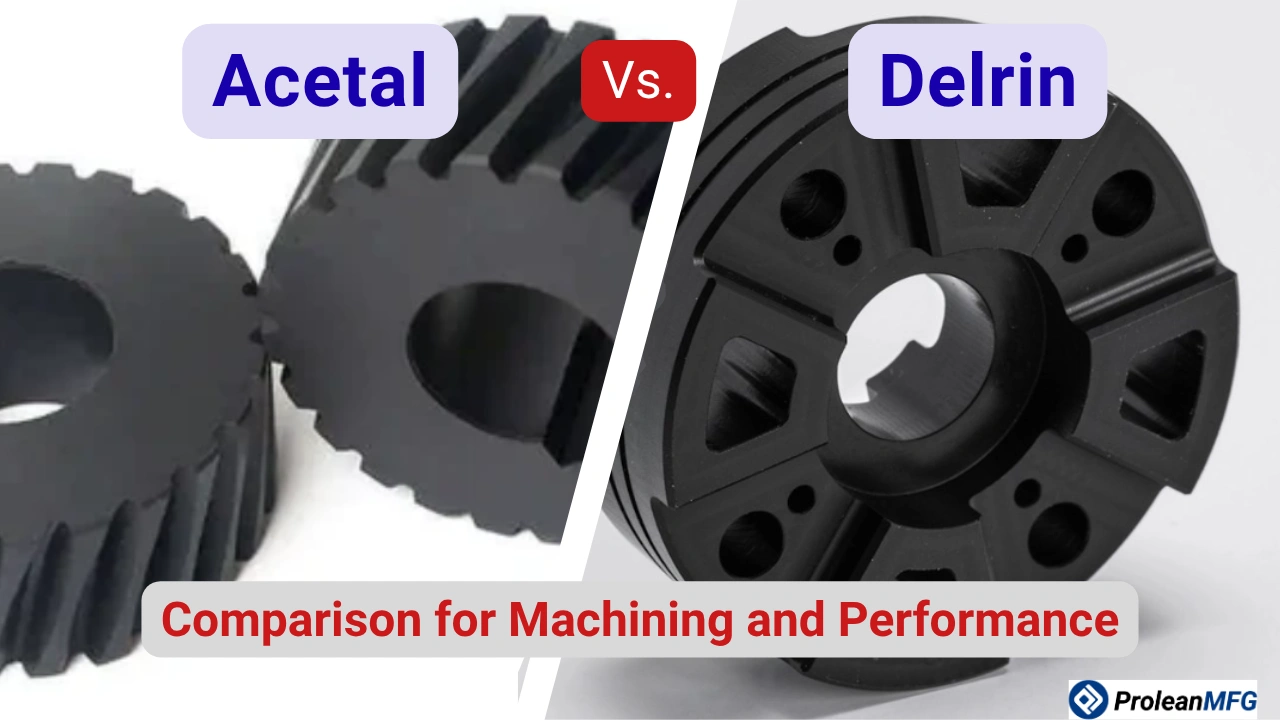

Acetal, or polyoxymethylene (POM), and Delrin are often compared in industrial settings because, although both are POM-based materials, differences exist in polymer structure, performance, and processing.
Both are polyoxymethylene (POM) engineering plastics. However, Delrin has a homopolymer structure while acetal has a copolymer structure.
Both acetal and Delrin materials have excellent properties for CNC machining, including durability and strength. This makes them a strong choice for demanding applications such as precision bearings & gears, valve bodies, material handling parts, and automotive fuel components.
However, you need to identify the specific distinctions of acetal vs. Delrin. Mostly, it is about acetal’s superior stability and chemical resistance, and Delrin’s higher mechanical strength.
This article provides comprehensive information to help you choose between the two materials. Key areas discussed include common grades, mechanical properties, common applications, and machinability.
What is Acetal?
Acetal’s other name is polyoxymethylene (POM). It refers to a semi-crystalline thermoplastic that has excellent wear resistance, strength, stiffness, and durability. These are some of the most-sought properties for precision-machined parts in demanding applications.
We find acetal a trusted bridge between metals and engineering plastics when the design specifies self-lubrication, corrosion resistance, and low weight.
The material is commonly specified for;
- Chemical resistance for fuels and weak acids
- Self lubrication
- Consistent machinability
- Dimensional stability
Structure and Composition
Acetal copolymer (POM-C) is a product of trioxane copolymerization. A comonomer such as ethylene oxide is used in this process.
To prevent depolymerization, such as would occur in homopolymers, POM-C’s oxymethylene backbone contains ethylene oxide units.
While POM-H’s crystallinity is slightly higher, POM-C has higher chemical resistance and hydrolytic stability.
Mechanical and Physical Properties
Below is a summary of the mechanical and physical properties of Acetal (POM-C).
| Property of Acetal (POM-C) | Value |
| Acetal Density | 1.41 g/cm3 |
| Hydrolytic stability | Higher |
| Crystallinity | 65% to 75% |
| Temperature of deflection under load: – method A: 1.8 MPa | 100°C |
| Tensile strength | 66 MPa |
| Charpy impact strength – notched | 8 kJ/m2 |
| Acetal Hardness (Rockwell M) | M 84 |
| Tensile strain at break | 40% |
Common Grades and Applications
Celcon® (Ticona), Hostaform® (Celanese), Kepital® (Kolon), and Ultraform® (BASF) comprise the most popular commercial grades of acetal. The applications of these grades range from food processing equipment to transmission parts.
Injection molding acetal is a common option for high-volume manufacturing of precision parts.
| Acetal Grade | Applications |
| Celcon® (Ticona) | Pump and valve components, plumbing fittings, fuel system parts, food processing equipment, bearings, and gears |
| Hostaform® (Celanese) | Fuel system components, fasteners, industrial gears, transmission parts, and electrical connectors |
| Kepital® (Kolon) | Automotive parts, industrial bushings & rollers, precision mechanical components |
| Ultraform® (BASF) | Fasteners, sporting equipment, safety restraint systems, and water meter housings |
What are the Advantages of Acetal?
Hydrolytic and chemical resistance are the main advantages of acetal. Other than that, the material offers uniform stock quality, lower cost, consistent machinability, and lower moisture absorption.
What Are The Limitations of Acetal?
Compared to Delrin material, acetal is limited in tensile strength, fatigue endurance, and hardness. Other limitations to flag include UV sensitivity, inferior surface finish, degradation from concentrated bases and strong oxidizers, and limited upper service temperature.
What is Delrin?
Delrin is the trade name of DuPont’s homopolymer acetal (POM-H). It is commonly used as a benchmark for other acetal grades. This engineering polymer has, over the years, been consistently manufactured with validated performance.
CNC machining is popular for processing Delrin, but so is Delrin plastic injection molding, especially for high-volumes. The process is dependable when manufacturing precision parts such as gears.
Delrin material is the go-to thermoplastic when the primary design drivers are tensile strength, stiffness, surface finish, and fatigue resistance,
Structure and Composition of Delrin
Delrin is the product of formaldehyde polymerization. It comprises an unbranched oxymethylene chain.
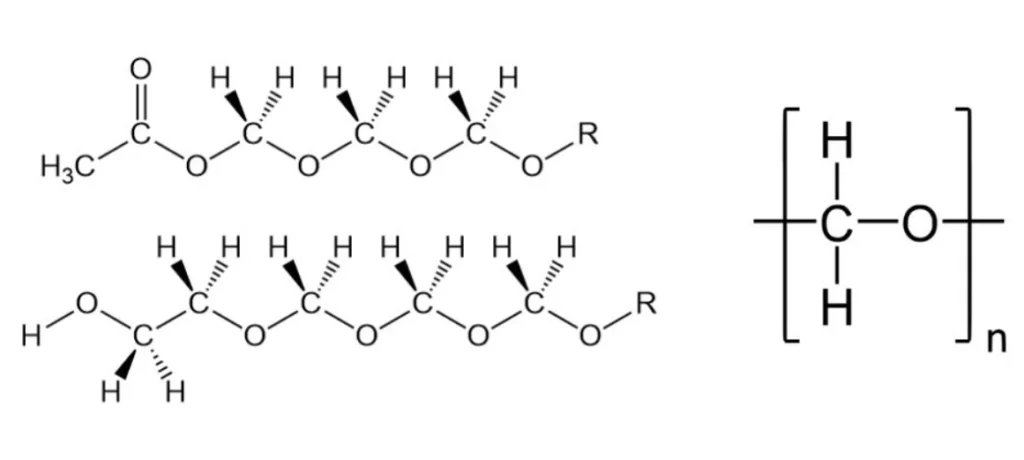
Some of the common properties of the delrin acetal homopolymer crystal are fatigue resistance, stiffness, hardness, and high crystallinity (up to 85%).
However, note that there are trade-offs to this structure, susceptibility to acid-catalyzed depolymerization being the main one.
Mechanical and Physical Properties of Delrin
As you design your parts, consider the following mechanical, physical, and thermal properties of Delrin 150 (General Purpose).
| Property | Delrin® 150 Homopolymer Acetal (POM) |
| Tensile strength | 75.8 MPa |
| Hardness (Rockwell) | 94 |
| Compressive Strength | 35.9 MPa |
| Flexural Modulus | 2.90 GPa |
| Hydrolytic stability | Lower |
| Delrin Density | 1.42 g/cc |
| Delrin Melting Point | 175 °C |
| Deflection Temperature at 1.8 MPa | 125 °C |
Common Grades and Applications of Delrin
Concerning CNC machining acetal copolymer and Delrin, Delrin 150 is the most popular grade. An alternative to metal bearing if bearing performance is the main design parameter, Delrin AF is preferable.
If your parts are for critical applications, always request an ISO 9988-2-compliant specification for CNC machining materials.
What are the Advantages of Delrin?
As a testament to the material’s superiority in the POM family, Delrinn outdoes acetal copolymer in fatigue resistance, tensile strength, and hardness.
- Superior Tensile Strength – Delrin 150 has a tensile strength of approximately 69 MPa. For this, we consider the plastic for load-bearing components, including structural brackets and bushings
- High Fatigue Resistance – Delrin maintains its mechanical integrity even under cyclic loading. This property is essential in parts such as cam mechanisms and springs.
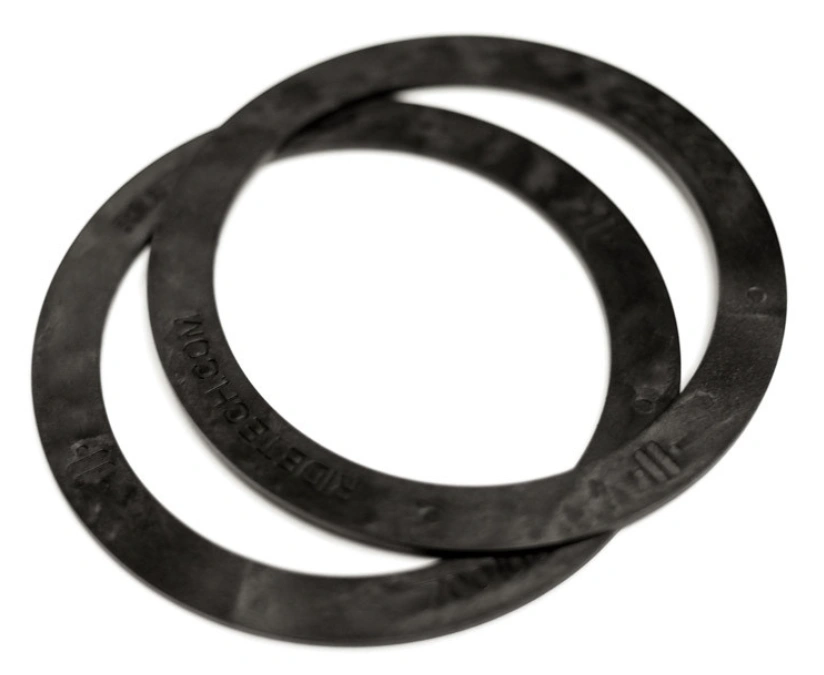
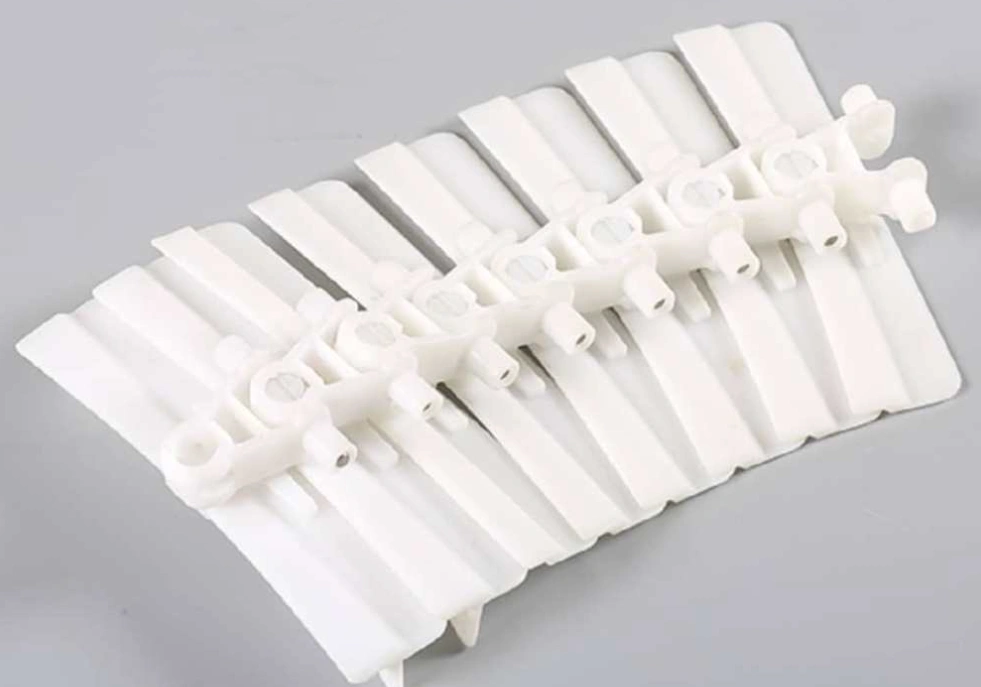
- Higher Hardness (Rockwell M94) – Compared to most acetal copolymers, which lie in the M78–M80 range, Delrin offers superior hardness. This can be experienced from the material’s higher dimensional stability and wear resistance. The property is useful in parts such as valve seats and conveyor parts.
What are the Disadvantages of Delrin?
Higher material cost, limited chemical resistance, and poor hydrolytic stability are often highlighted as the limitations of Delrin.
Higher Cost – Delrin costs more than acetal copolymer due to the proprietary manufacturing process. The difference in cost can be substantial in high volume production.
Poor Chemical Resistance – The relatively faster degradation is another limitation of Delrin. You will mostly notice this challenge if you expose Delrin parts to fuels and strong acids.
Poor Hydrolytic Stability – Delrin also tends to lose its dimensional stability when exposed to water. Its high water absorption means the parts are unsuitable for applications with regular water exposure, for instance, pumps.
Are Acetal and Delrin The Same?
The simple answer is NO. However, polymer procurement teams can easily confuse the two materials.
Even as we explain this further, note that while all Delrin is acetal (POM), not all acetal is Delrin.
As will be clarified in the next section on the differences for acetal copolymer vs delrin, Delrin (homopolymer) has higher tensile strength, hardness, and fatigue resistance. However, acetal copolymer outdoes it in water stability and chemical resistance.
Confusion arises from not defining whether it is a copolymer or a homopolymer grade. If not specified in the purchase order or drawing, the material can potentially fail to meet chemical or mechanical requirements.
Determine if certification is required, so standards like ASTM D6100 and ISO 9988 can be adhered to.
The consequences of not specifying correctly can be major for acetal copolymer vs delrin. Consider an instance where you order a generic acetal instead of Delrin. You use the material to build a structural bracket. This bracket cracks and fails because you didn’t account for fatigue resistance and tensile strength.
What are the Differences Between Acetal and Delrin?
Acetal and Delrin differ in chemical resistance, moisture absorption, thermal resistance, hardness, and mechanical strength. Consider also their differences in availability, cost, processing, and dimensional stability.
Chemical Resistance
The superior chemical resistance of copolymer acetal is notable in industrial circles.
Acetal should be specified when
- Weak acids and alkalis
- Hydrocarbon fuels and lubricants
- Hot water environments
Avoid Delrin when;
- Risk of hot water or steam
- Continuous fluid exposure
- Acidic media
Moisture Absorption
Both acetal copolymer and Delrin absorb moisture, but the acetal copolymer performs slightly better in this area. The slight difference can be relevant in precision assemblies because of the resulting dimensional change.
Thermal Resistance
With a heat deflection temperature of 125°C under a load of 1.8 MPa, Delrin 150 has a clear advantage over acetal copolymers’ 100–110°C. Delrin is the better specification for applications near hot fluid lines or process heat.
Hardness
The Rockwell M94 hardness for Delrin compared to the acetal hardness for copolymer’s M84 enhances sharp edge retention. The material also resists indentation against continual contact loads.
Delrin outdoes acetal copolymer in wear-risk applications such as sliding contact and gear tooth surfaces.
Mechanical Strength
Delrin has higher fatigue endurance and tensile strength. The cost premium of the material is often justifiable in high-cycle systems and structural parts. The lower-cost acetal copolymer works comparably well in lower-load applications.
Dimensional Stability
This is another element where an acetal copolymer can perform better. Acetal has a more uniform molecular structure and lower crystallinity.
Center-line voids can be evident in Delrin rods, especially the larger diameters. These voids are often discovered during boring.
Machinability and Processing
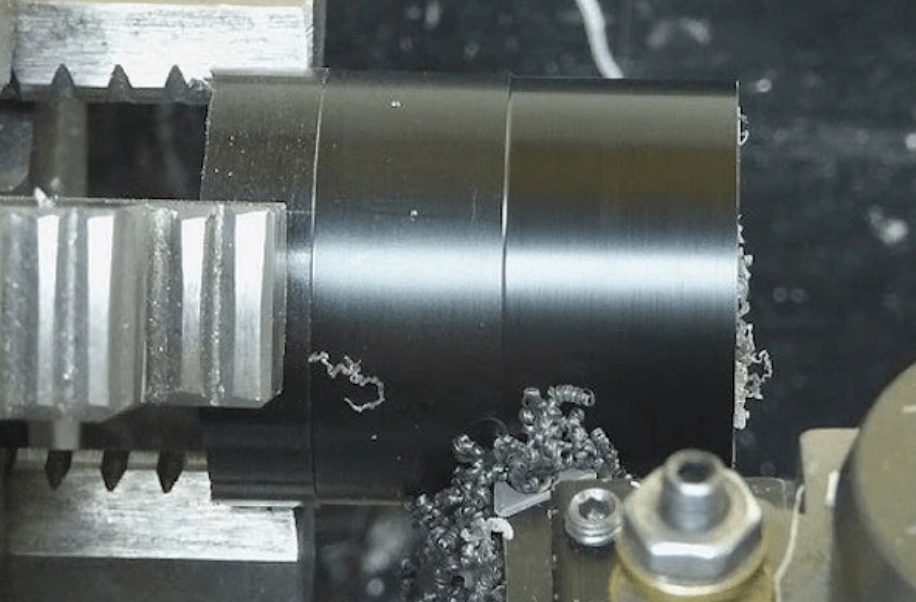
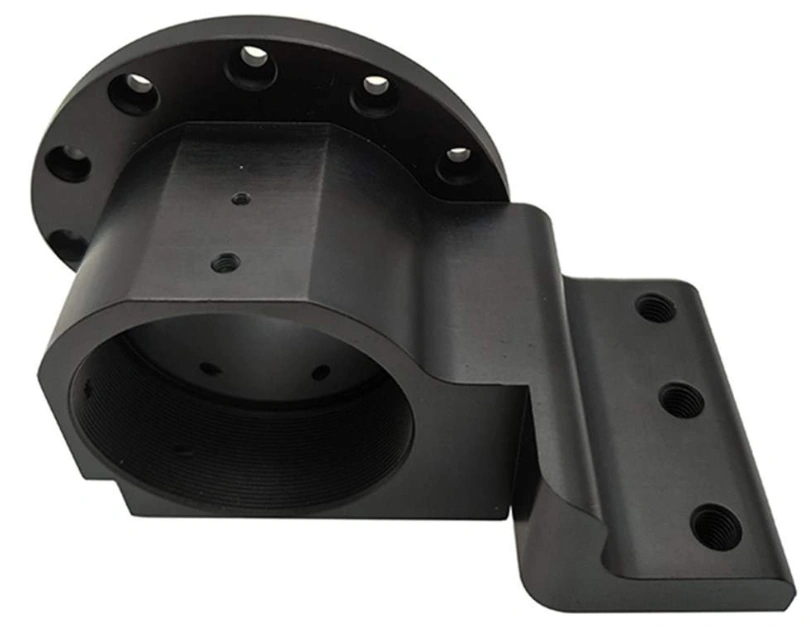
When checking Delrin machinability compared to acetal copolymer, the practical difference between acetal and Delrin machining is minimal. Delrin has a slight edge concerning surface finish. Acetal copolymer chips are cleaner, and they produce less thermal buildup at high machining speeds.
That said, both materials require the following:
- Moderate speeds and feeds
- Sharp tooling
- Coolant is not necessary in most cases
Note that Delrin plastic injection molding is an equally attractive manufacturing technique for large production runs. We use it when we need highly intricate parts from the thermoplastic.
Choosing Acetal vs Delrin
Understanding the loading requirements, environmental conditions, appearance, and cost of the two materials ensures the best choice for machining.
- Acetal vs Delrin: Environmental Considerations
Acetal copolymer performs better if the machined part is meant for environments with moisture, chemicals, or fuels. Considering Delrin’s poor hydrolytic performance, we prefer a copolymer for such environments.
- Acetal vs Delrin: Loading Requirements
For applications defined by fatigue and mechanical stress, it’s Delrin that holds out better. Specify Delrin for parts such as cams and gears, which are constantly subjected to loads.
- Acetal vs Delrin: Appearance
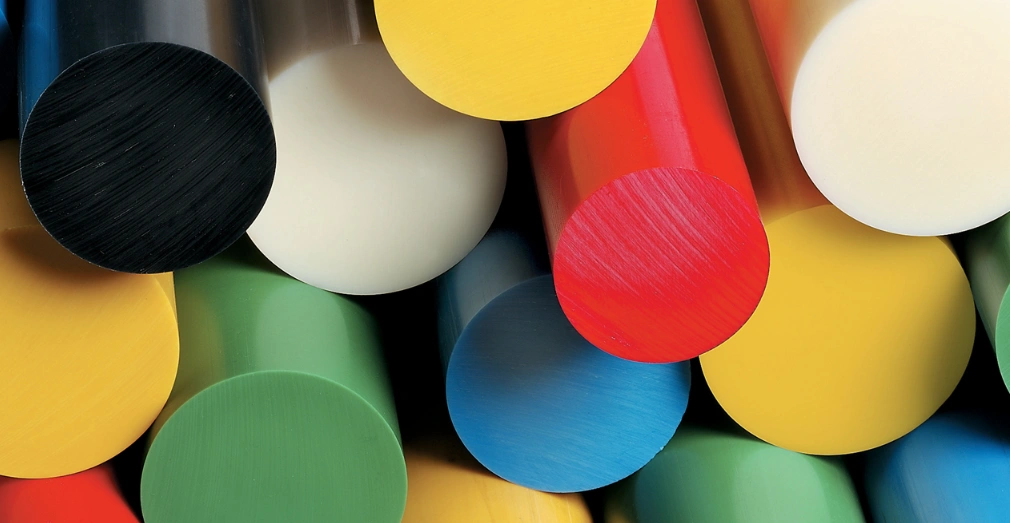
While both Delrin and copolymer machine to a smooth finish, the latter has a wider color range. Delrin colors are mostly confined to white and black. So, ensure you confirm whether appearance matters so you can have customer-facing components colored appropriately.
4. Acetal vs Delrin: Cost
If you are looking for a more pocket-friendly option for high volume, non-critical parts, we’d suggest you go with acetal copolymer. The premium price of Delrin is usually justifiable when the mechanical performance of the parts is a high priority.
When to Choose Acetal vs Delrin
Choose acetal when the focus is on lower cost and stability. Delrin is preferable for projects requiring precision and strength.
These points are expounded in the table below, which is organized by application.
| Application/Property | Recommended Material | Argument |
| Structural components and high-load gears | Delrin | Fatigue resistance and strength |
| Mass production, cost-sensitive | Acetal | Better consistency, lower material cost |
| Appearance or precision | Delrin | More rigid, better surface finish |
| Chemical or moist environments | Acetal | Chemical stability, superior hydrolysis |
In Conclusion
Acetal copolymer and Delrin may have a common foundation, but differences in performance can affect a part’s longevity, reliability, and cost.
Key differences are in aspects such as tensile strength, chemical resistance, temperature tolerance, cost, and applications.
So, understanding the requirements of your project is the first step towards selecting acetal vs Delrin. If the environment is moist, acetal is the best option. For highly customized projects, consider Delrin parts.
By understanding the strengths and limitations of each material, you can specify the right one for your application. A balance of mechanical, chemical, and physical elements determines whether acetal copolymer or Delrin is the ideal choice.
For all your acetal copolymer and Delrin machining services, contact our able team. We are experts at producing quality parts from both acetal and Delrin. Our comprehensive DFM analysis ensures the designs are optimized.
Upload your design today and request a free quote.
Resources
[1] https://cellpack-technology.com/wp-content/uploads/2025/03/POM-C-EN.pdf
[2] https://www.matweb.com/search/datasheet_print.aspx?matguid=1eca48b8be434aab9e222575fe44e802