
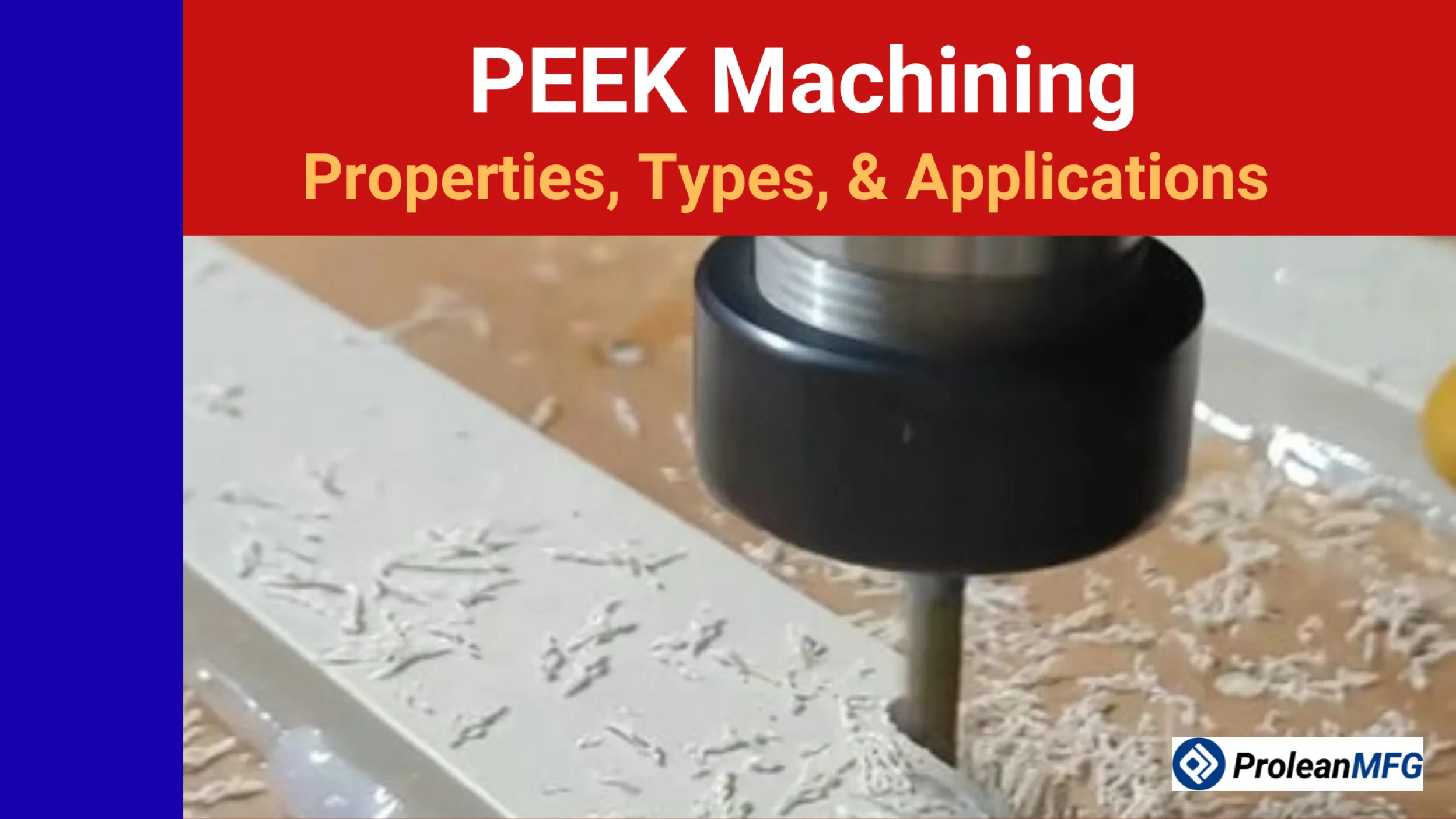

PEEK CNC machining is cutting and shaping polyetheretherketone, commonly known as PEEK, into precise parts for use in industries such as food, automotive, aerospace, chemical, and nuclear.
Several PEEK grades are available for these applications, including standard PEEK, medical grade PEEK, and high-temperature PEEK.
This engineering thermoplastic appeals for these applications not only for its high strength-to-weight ratio, but also for its tight tolerances and high temperature resistance. A thermoplastic with a continuous service temperature of up to 250°C (482°F) and a glass transition temperature (Tg) of 143°C is outstanding.
As you ponder the type of engineering thermoplastic to use in your next project, we present a coverage of the basics of PEEK machining. This article comprises, among others, PEEK pros and cons, grades for CNC machining, applications, and comparison with alternative technologies.
What is PEEK Machining?
CNC PEEK machining is the use of computer numerical control (CNC) technology to cut and shape polyetheretherketone (PEEK) into precision parts for different applications.
Various PEEK machining technologies are available, including the following;
PEEK CNC Drilling – Creates precise holes with a set diameter and depth
PEEK CNC Grinding – Produces fine surfaces with tight tolerances
PEEK CNC Milling – Ideal for flat surfaces, complex shapes, and slots
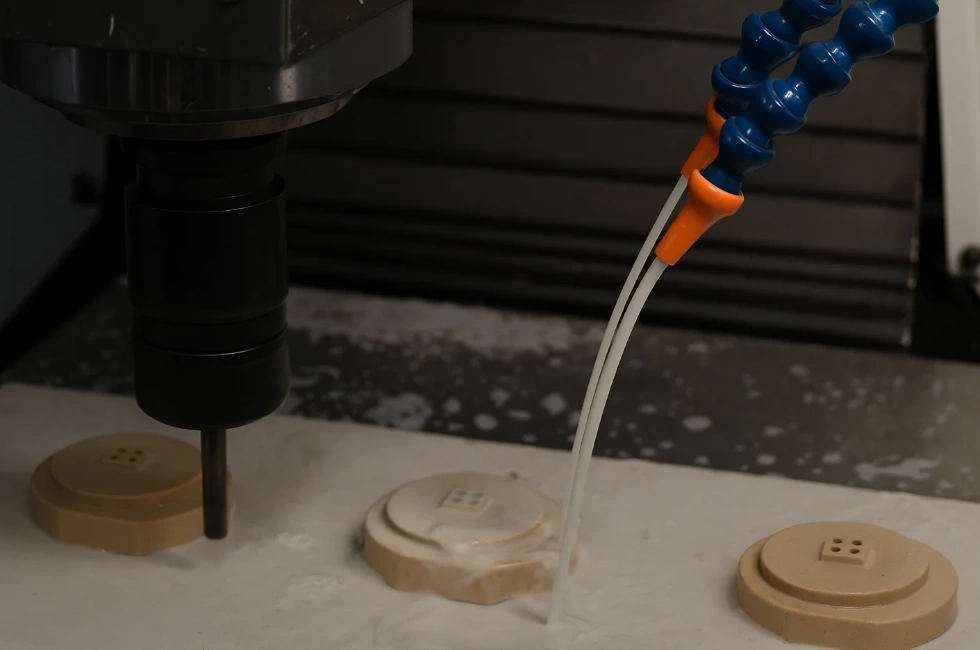
PEEK CNC milling
PEEK CNC Tapping/Threading – Preferred for producing external and internal threads in PEEK parts
PEEK CNC Turning – Used to produce rods, bushings, and other cylindrical/rotational PEEK parts
PEEK Multi-axis CNC Machining – Technology for producing complex PEEK parts with minimal setups.
The precise and versatile process follows standard steps, starting with the selection of the appropriate PEEK grade.
Other steps that follow are;
- 3D modeling of the part
- CNC programming
- Cutting tool selection
- Fixturing/workholding
- Setting the machining parameters
- Monitoring the PEEK material machining process
- Post-machining steps
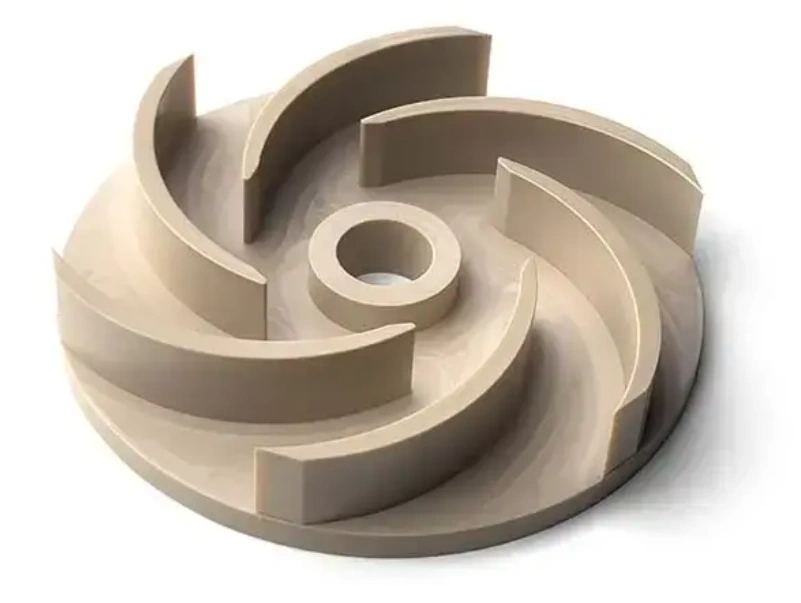
CNC-machined PEEK part
What is PEEK (Polyether Ether Ketone)?
First commercialized in 1978, PEEK is a popular engineering polymer that retains its mechanical strength and shape up to 250°C (482°F). The heat-stable material has a high strength-to-weight ratio, exceeding that of some metals.
The repeating unit for PEEK, –O–Ph–O–C(=O)–Ph–, is the backbone of these properties. This unit comprises ether linkages (–O–), aromatic phenyl rings (Ph), and a ketone group (–C(=O)–).
These components have an alternating arrangement, which is behind the material’s rigidity and thermal stability.
CNC-machined PEEK allows engineers to replace heavier materials with something with comparable functionality. Healthcare, aerospace, and several other industries choose PEEK parts for the value in reliability, durability, and chemical resistance.
Properties of PEEK
PEEK provides an outstanding mixture of physical, electrical, mechanical, and thermal properties. These unique properties are outlined next.
Physical Properties of PEEK
The main physical properties of PEEK include;
- Excellent fatigue performance
- Semi-crystalline engineering plastic
- Insoluble in common solvents
- Biocompatible
- Remarkable dimensional stability
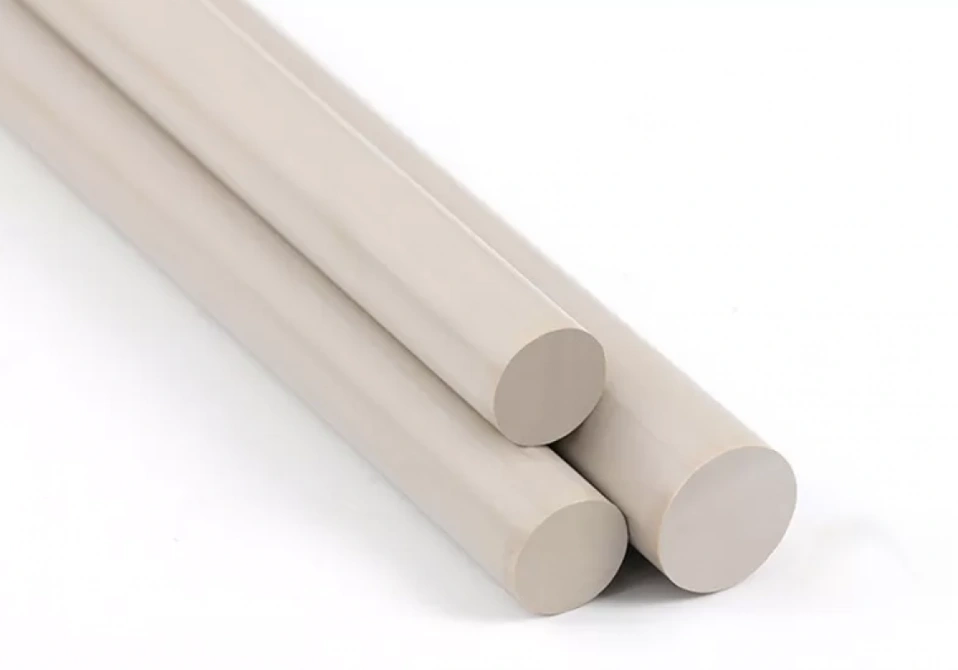
Biocompatible medical-grade PEEK
Electrical Properties of PEEK
Here are the standout electrical properties of PEEK;
- High surface and volume resistivity
- Good insulating capability
Mechanical Properties of PEEK
The mechanical properties of PEEK include;
- High toughness and tensile strength
- Excellent creep resistance
- Good flexural modulus at elevated temperatures
Thermal Properties of PEEK
Some of the notable thermal properties of PEEK are;
- High melting point – 343°C
- Glass Transition (Tg) temperature – 143°C
- Continuous service temperature – 250°C (482°F)
What Are The Advantages of PEEK Machining?
The main advantages of PEEK machined parts are high mechanical strength, high temperature resistance, food compliance, and tight tolerances.
High Mechanical Strength: With an unmatched strength-to-weight ratio, PEEK presents manufacturers with a mechanically reliable alternative to metal. Even under dynamic loading conditions, the material maintains its abrasion resistance, wear resistance, fatigue resistance, and tensile strength.
High Temperature Resistance: The plastic provides remarkable thermal performance. Its continuous service temperature reaches 250°C (482°F). This means PEEK parts can work perfectly under extended high temperatures.
Food Safety: The standard PEEK grade is food-safe. The parts are therefore usually certified for food contact. This is important for industries that require compliance with food-safety requirements, such as meat processing, beverage processing, and food packaging machinery.
Tight Tolerances: PEEK machining tolerances are typically very tight, provided the machinery and PEEK material machining expertise are good. The plastic’s capability to maintain tight tolerances ensures unmatched dimensional stability of machined parts. This is critical for complex geometries.
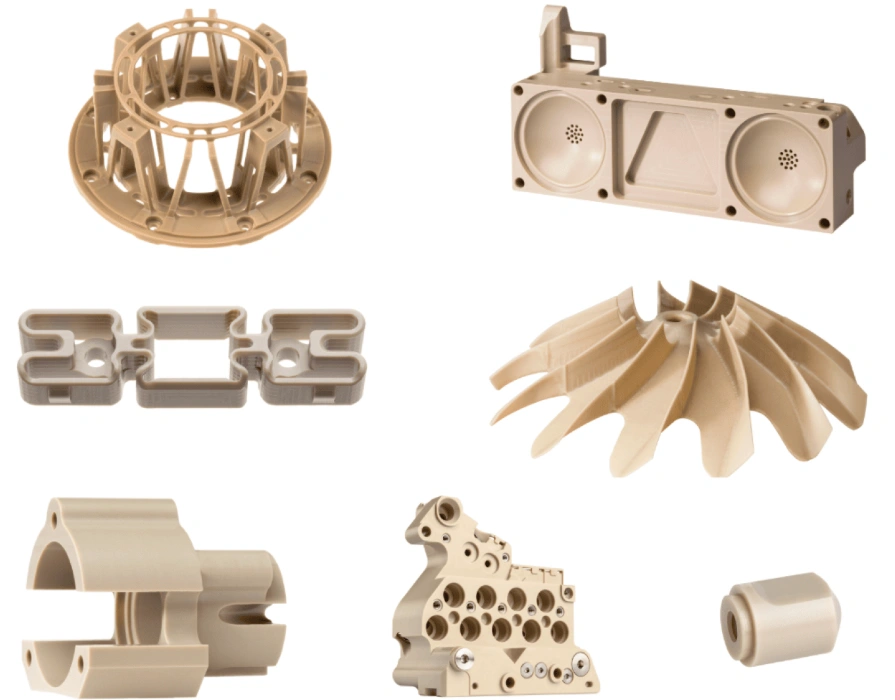
Complex PEEK parts
What are the Limitations of PEEK Machining?
The limitations of PEEK in CNC machining include size limitations, high cost, and visible tool marks.
Size Limitations: PEEK stock is usually available in standard sizes of sheets and rods. Therefore, the maximum size of a machined PEEK part is limited. Moreover, the risk of dimensional warping and stress buildup increases with the size of a PEEK part.
High Cost: PEEK is one of the most premium-priced engineering plastics in the market. Since it is abrasive and hard, the material promotes high tool wear during machining. Overall, these factors increase the cost of PEEK machined parts.
Visible Tool Marks: PEEK machinability is high, but tool marks can remain on machined parts, especially the complex ones. Additional surface finishing may be required to remove these tool marks.
PEEK Grades and Types for CNC Machining
Depending on the application, the applicable PEEK grades for machining include standard PEEK, reinforced PEEK, medical grade PEEK, high-temperature PEEK, and wear-resistant PEEK.
Standard PEEK
Standard or unfilled PEEK is perfect for CNC-machined parts with balanced chemical resistance, mechanical strength, and thermal stability. The standout characteristic is the ease of machining standard PEEK material compared to the reinforced varieties.
These parts are widely used in structures, insulators, and other general engineering applications.
Reinforced PEEK
Reinforced PEEK contains carbon or glass fibers for higher stiffness and strength. Extra wear resistance and thermal conductivity are achieved with carbon-filled PEEK. Since reinforced PEEK is also dimensionally stable, its machined parts are commonly found in automotive and other load-bearing applications.
Medical Grade PEEK
Medical grade PEEK meets critical industry standards, such as USP Class VI and ISO 10993. Its machined parts are commonly used in surgical devices and implants. These parts can be repeatedly sterilized without losing their crucial performance capabilities.
High-Temperature PEEK
This grade is so-called because it maintains top performance at high temperatures. It maintains low thermal expansion and excellent creep resistance, capabilities that are perfect for industrial and aerospace environments.
Wear-Resistant PEEK
Wear-resistant PEEK is engineered for dynamic applications, such as gears, bearings, and bushings. Its low-friction performance ensures the parts last longer with minimal maintenance requirements.
Applications of PEEK Machined Parts
PEEK machined parts are widely used in different industries, including food processing, aerospace, automotive, chemical & nuclear, and rapid prototyping & customized parts.
Food Industry
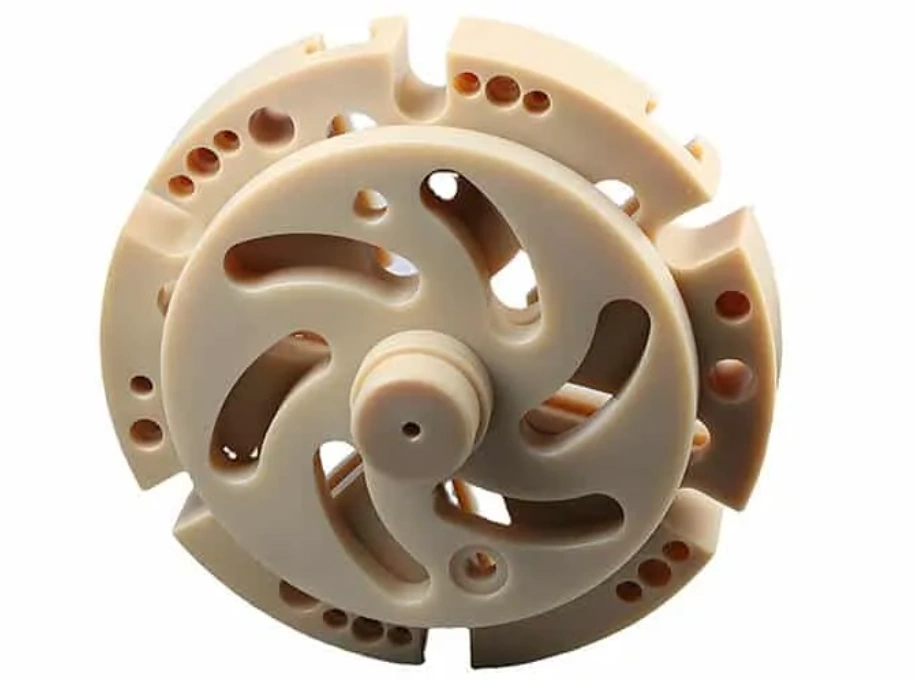
Food-grade PEEK part
CNC-machined PEEK parts are used for components that come into contact with food. These parts ensure compliance with standards and the safety of the food products.
Aerospace
The low weight and high strength of PEEK are valuable in structural parts for aerospace. The material can maintain high performance even in demanding instances, say, high temperatures.
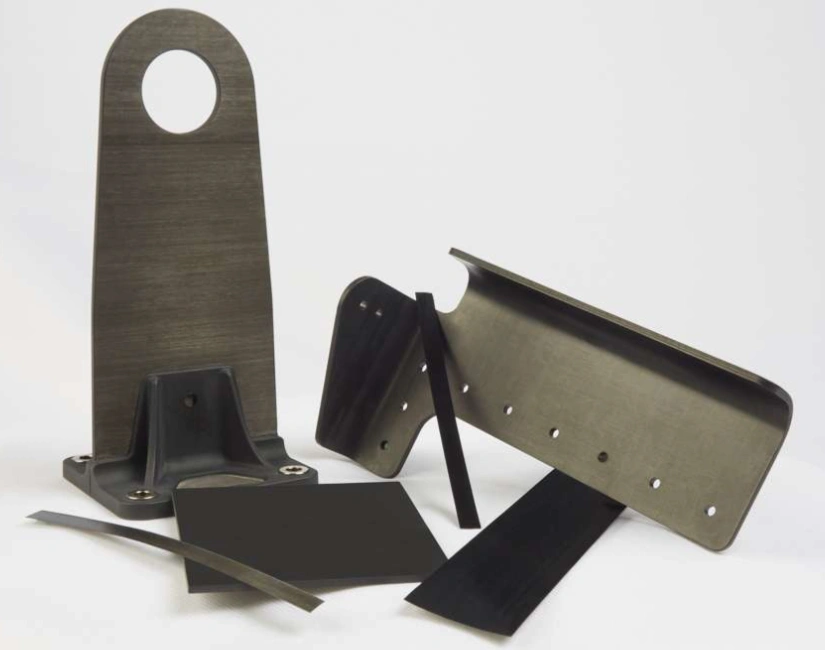
Aerospace PEEK part
Automotive
PEEK is a popular CNC machining material in the automotive industry, where the key requirements are weight reduction, high strength, and superior heat resistance. Its properties are comparable to some of the metals used, so it is not surprising to find manufacturers using the engineering plastic as a metal alternative.
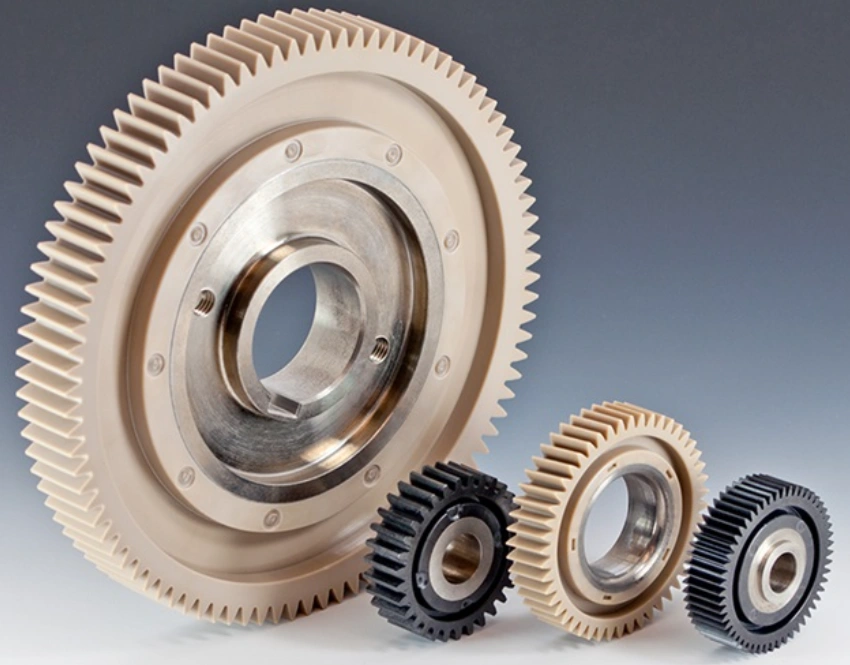
Chemical & Nuclear
For these industries, thermal and chemical resistance are the main relevant properties derived from PEEK machined parts. The plastic can maintain its properties in the corrosive environments that characterize these applications.
Rapid Prototyping & Customized Parts
Also, PEEK plastic machining offers an opportunity to make custom parts and supports rapid-prototyping projects. This is because the material is stiff and versatile, so it can be easily adapted to different project requirements.
Notable Types of Defects in PEEK Plastic Machining
PEEK’s high internal stresses and low thermal conductivity promote machining defects in dimensional accuracy, edge quality, and surface quality. There are specific machining defects under these categories, as highlighted next.
Dimensional Accuracy Defects
Internal stress release and thermal expansion during CNC machining cause the plastic to undergo dimensional drift. The main defects related to this state are out-of-tolerance features and warping.
Edge Quality Defects
PEEK is naturally abrasive. It tends to delaminate during machining. Due to this, its machined edges can easily form burrs, chippings, and micro-crackings.
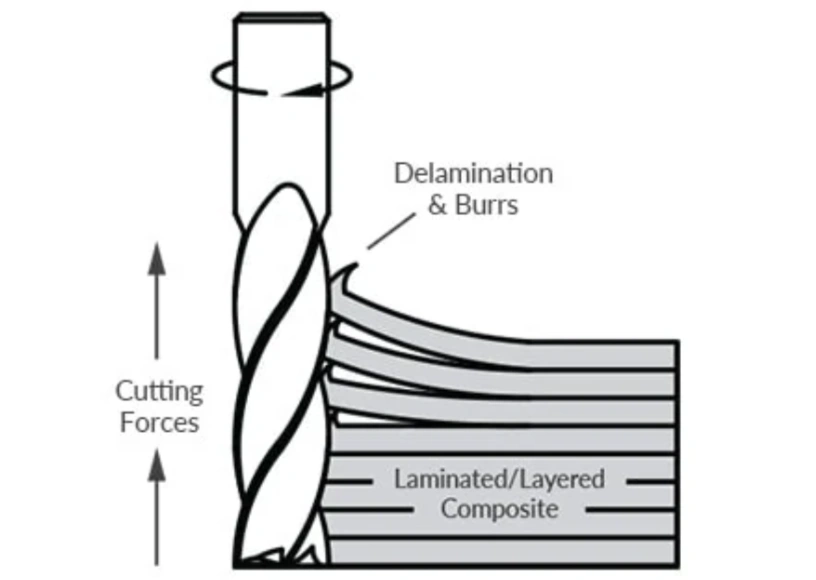
Surface Quality Defects
Tool wear and poor heat dissipation cause subsurface damage and surface roughness in PEEK parts. These defects are undesirable because they affect the part’s fatigue resistance.
PEEK Machining Tips and Best Practices
Following professional PEEK machining tips and best practices is critical. Important factors to consider include tooling, feeds, speeds, and heat management. Others include surface finishing, fixturing, chip control, annealing PEEK, and tolerance control.
- Tooling Selection for PEEK: Sharp edges, high rake angles, and tough tools are recommended for enhanced PEEK machinability.
- Optimized Feeds and Speeds: Due to PEEK’s heat sensitivity, the cutting speeds and feeds should be moderate and consistent.
- Heat Management and Cooling: Adequate heat management and cooling are critical in PEEK CNC machining to prevent localized cooling.
- Surface Finishing Optimization: Climb milling and fine passes are recommended to prevent tool marks. The surface finish on PEEK machined parts can be further optimized with;
- Cutting tool with a sharp cutting edge
- Light and precise depth of cut
- Slow feed rate and high cutting speed
- Fixturing and Workholding Reliability: Although PEEK can deform from over-clamping, the clamping force should be sufficient to prevent vibration during PEEK plastic machining.
- Chip Control: Chips should be properly evacuated to prevent re-cutting. Build-up should also be avoided with the right tool path strategies.
- Annealing PEEK for Stress Relief: Annealing PEEK is recommended to minimize warping and enhance dimensional stability. Annealing PEEK entails these steps:
- Heating at approx. 50°F/hour
- Holding at 300°F for 1 hour per inch of thickness
- Cooling with a rate matching the heating rate
- Tolerance Control: CNC machining of PEEK should account for thermal expansion. Critical PEEK parts should be machined in stages.
PEEK Machining vs PEEK 3D Printing
Polyether ether ketone machining outperforms 3D printing for high-strength, high-precision, high-tolerance, and superior-surface-finish applications. PEEK 3D printing is preferable for complex geometries and rapid prototyping.
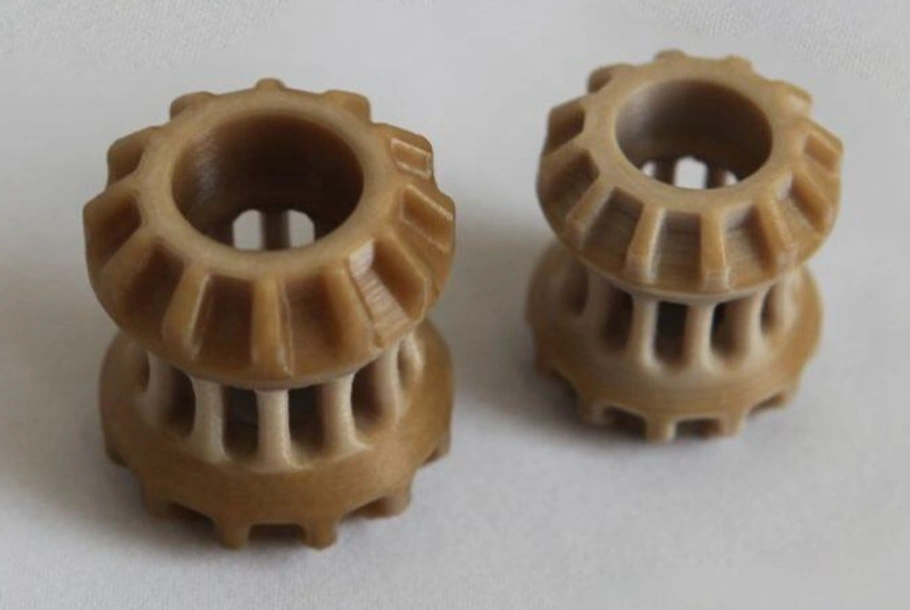
3D printed PEEK parts
The differences are further captured in the table below.
| Property | PEEK CNC Machining | PEEK 3D Printing |
| Precision | Very high | Moderate |
| Design complexity | Limited by tool access | Excellent |
| Production speed | Slower for complex geometries | Faster for complex geometries |
| Cost per part | Cost-effective for simple geometries at higher volumes | Expensive at scale, lower complexity one-off projects and prototypes |
| Surface finish | Superior with Ra values as good as 0.8 µm | Rougher, so it often requires post-processing |
PEEK Machining vs PEEK Injection Molding
PEEK CNC machining thrives in high-precision, low-to-medium production, and custom parts manufacturing applications. PEEK molding is more suited for mass manufacturing of complex parts.
A summarized comparison of PEEK CNC machining and PEEK molding is given in the table below.
| Property | PEEK CNC Machining | PEEK Injection Molding |
| Precision | Excellent | High, but prone to warpage and shrinkage |
| Production volume | Perfect for low-to-medium volumes | Best suited for high volumes (10,000+ parts) |
| Design complexity | As good as the cutting tool’s accessibility | Excellent |
| Tooling cost | Relatively low | Very high |
| Lead time | Short | Long |
Is PEEK Hard to Machine?
Yes, PEEK is considered hard to machine. It is a tough engineering plastic with remarkable heat resistance. The plastic tends to gum up during machining.
However, the right PEEK machining strategy can still work and deliver high-quality parts. In addition to using sharp tools, the machinist should optimize speeds and feeds. The cooling should also be well-administered.
As for the CNC machine, robust machinery and tight fixturing can handle PEEK’s uniqueness.
Is PEEK Better Than Delrin for Machining?
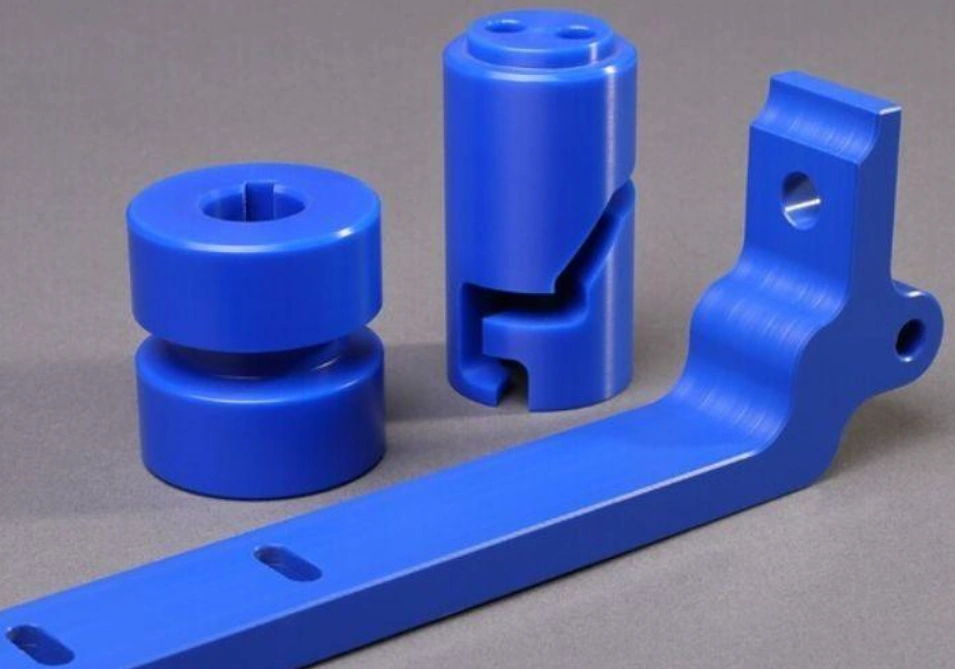
Machined Delrin parts
Delrin is easier to machine than PEEK. It can be machined at high feed rates and cutting speeds without much concern about tool wear. The harder and more abrasive PEEK is less machinable, requiring slower machining speeds. It is also more demanding on tooling – requires diamond-tipped or carbide tools.
Regarding the dimensional stability of machined parts, PEEK tends to perform better than Delrin. Delrin tends to develop internal stress during machining, which can affect the dimensional stability of parts.
With PEEK machined parts, higher dimensional stability across a wider temperature range is observed.
Is PEEK the Strongest Plastic?
With a tensile strength of between 90 and 100 MPa, PEEK is one of the strongest plastics. This performance is better than that of alternatives such as polypropylene (PP) and nylon (PA66). The tensile strength can be even higher (up to 250 MPa) when the plastic is combined with carbon fibers.
From an engineering perspective, though, tensile strength is not the only measure of strength. The manufacturer should also consider elements such as fatigue resistance and wear resistance.
PEEK maintains its impressive mechanical properties up to 250°C (482°F), which is better than alternative engineering plastics.
Conclusion
PEEK is a standout engineering plastic that delivers dimensional stability, low weight, and strength to different industrial applications. While PEEK plastic machining can present challenges such as tool marks and limited geometric freedom, the CNC-machined parts often thrive in demanding applications.
The temperature resistance, high tolerances, and dimensional consistency of the thermoplastic guarantee top performance in a range of industries, from aerospace to food processing.
Get PEEK CNC-machined parts with superior surface finish and micron-level tolerances. There are no hidden costs of rework or project delays, surface inconsistencies, or edge defects. Our specialized PEEK CNC machining services are engineered for your project’s first-pass success.
Send us your PEEK machining part drawing and let us make your machining goals a reality.