
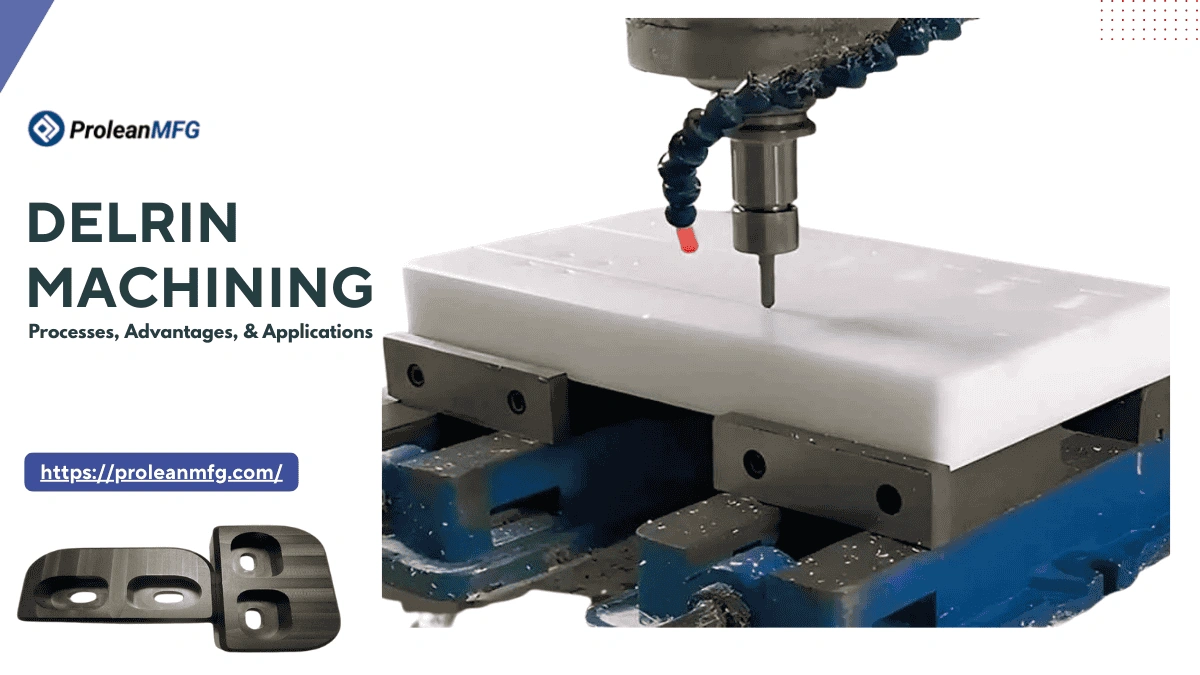

Delrin is one of the widely used thermoplastics, from automotive gears & bushings to electronic enclosures. Although it offers strength, stiffness, chemical resistance, self-lubrication, and other beneficial properties, you also need to consider several machining factors to achieve quality results.
You can craft complex shapes & features from a Delrin workpiece using CNC machining. The only thing you need to have is a manufacturable design.
This article will elaborate on what Delrin is, its advantages & disadvantages, machining tips, design guidelines, and industrial applications.
Let’s get started!
What is Delrin?
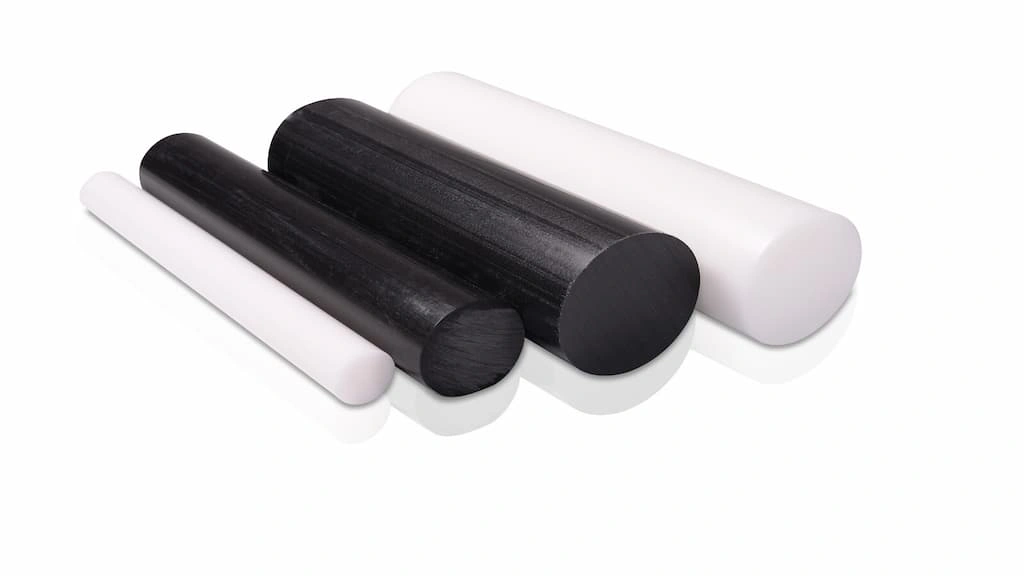
Delrin is a semi-crystalline thermoplastic used in high-performance plastic applications. This low-friction material provides excellent dimensional stability, stiffness, wear resistance, high strength, moisture resistance, and good chemical resistance.
Delrin® is a brand name for Polyoxymethylene POM-H homopolymer, produced by a leading material brand, DuPont. Other names for Delrin include polyacetal and acetal.
It can be processed with various manufacturing methods, such as CNC machining, 3D printing, molding, and thermoforming. In particular, Delrin machining services are for the production of complex, precise components in small to medium volumes.
Properties of Delrin 100, Delrin 150, and Delrin 570
Delrin 100, Delrin 150, and Delrin 570 are the main grades of Delrin material used in CNC machining. Let’s elaborate further on each of them.
Delrin 100
Delrin 100 offers excellent toughness, fatigue resistance, high mechanical strength, and good thermal stability.
Delrin 150
Delrin 150 is considered a general-purpose Delrin grade that provides a balance of mechanical performance, thermal stability, and chemical resistance. It also has better lubricity than 100, and is suitable for bushings, gears, etc.
Delrin 570
Delrin 570 grade contains ~20% glass fiber reinforcement and offers significantly high mechanical strength, rigidity, and dimensional stability. You can choose this for different types of automotive, electrical, and industrial machinery components.
What is Delrin Made of?
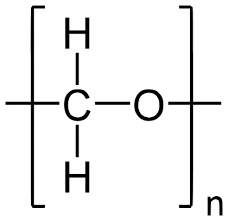
Delrin is made of long and repetitive chains of Oxymethylene groups –CH₂O–, forming a high-crystalline internal structure. So, a single monomer of formaldehyde forms Delrin through polymerization.
In industrial production, first, formaldehyde is derived from methanol using a catalytic oxidation process, secondly, formaldehyde is polymerized to form polyoxymethylene (POM) chains, thirdly, some additives & stabializers are added to improve the properties. Next, the POM is shaped into rods, sheets, or blocks before being sent to market.
Advantages of Delrin Machining
Delrin is a high-performance plastic that can be machined into 3D functional shapes with tight accuracy and consistency. Other benefits of Delrin machining include high machinability, excellent mechanical properties, corrosion and chemical resistance, low friction, electrical insulation, and cost savings.
Let’s elaborate on the advantages briefly.
- Delrin Machinability: It is considered a free-machining plastic that can be machined using milling, turning, drilling, and other operations.
- Corrosion Resistance: Delrin does not corrode when exposed to moisture or a humid environment.
- Chemical Resistance: Delrin machined parts are resistant to mild acids, alkalies, alcohols, oil, and other types of chemicals.
- Excellent Mechanical Properties: Delrin offers high mechanical stiffness, tensile strength, creep & fatigue resistance, toughness, and impact strength.
- Electrical Insulation: It insulates the current flow and can absorb high-voltage shocks.
- Low-friction: Delrin’s surface has a low coefficient of friction and self-lubrication, making it beneficial for rotating components.
- Cost-saving: Delrin machinability and lightweight nature reduce production costs, especially for prototyping & small volume projects.
Disadvantages of Delrin Machining
Along with many advantages, Delrin has a few disadvantages, including low surface adhesion, thermal sensitivity, flammability, and risk of warping.
- Low-surface Adhesion: Due to low surface friction, it is difficult to adhere secondary POM parts and other materials.
- Thermal Sensitivity: Due to low thermal stability (~90°C to 120°C), it is difficult to machine at high temperatures and use the Delrin machined parts in temperature-sensitive environments.
- Risk of Flames: Delrin is flammable and can burn with a nearly invisible flame.
- Risk of Warping: While machining thin & complex parts, Delrin may warp and shrink.
Delrin Machining Applications
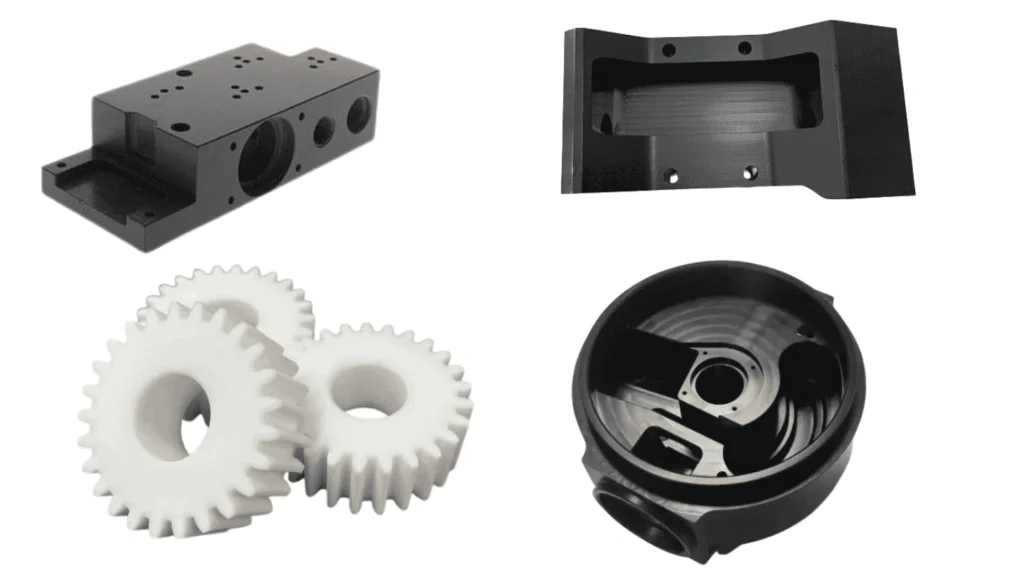
The unique combination of properties and machinability makes Delrin useful across industries. Machined Delrin parts are used in automotive, electrical, medical, aerospace, and industrial machinery.
Next, let’s break down the applications of machining Delrin homopolymer with real-world examples.
Automotive Industry
Lightweight, wear-resistant, and durable parts for the automotive industry. E.g., door lock parts, gear shifters, seat parts, fuel pump housing, window sliders, bushings, etc.
Aerospace Industry
Lightweight Delrin machined parts that are fatigue-resistant, dimensionally stable, and reliable components for helicopters, planes, airbuses, drones, etc. E.g., structural bushings, cockpit parts, valve components, and wear strips.
Electrical and Electronics
Reliable and dimensionally stable parts that are moisture-resistant and electrically insulating. E.g., connector housing, precision gear for printer, sensor housings, custom insulators, and switches.
Medical Industry
Delrin has good chemical resistance, biocompatibility, and sterilization properties, making it useful for medical applications. E.g., drug delivery systems, diagnostic equipment parts, insulin pens, and prosthetic parts.
Industrial Machinery
High wear-resistant, self-lubricating, and light-load components for industrial machinery, such as conveyor rollers, bushings, gears, guide rails, valve parts, and safety housings.
Delrin Machining Tips and Recommendations
While machining Delrin homopolymers, the following rules are recommended for accuracy, finish, speed, and defects minimizations.
- Light Clamping: Do not use excessive clamping force; it can damage the Delrin workpiece.
- Use Proper Coolant: Since Delrin is heat-sensitive and deforms above 120°C, use air coolants while machining.
- Twist Drills: While creating precise holes, use standard twist drills and adjust the lip angle if leading edges are flat.
- Chip Breakers: During Delrin milling & turning, use chip breakers to ease the material removal and reduce the machining noise.
- Avoid Contamination: Clean tools, workholding, and machining area before processing Delrin, as any metallic contamination can impact the results.
- Use Sharp Tools: The Delrin machining tools must be sharp with proper clearance.
- Steady Rest During Turning: In addition to high speeds and moderate feeds, steady rests are recommended for Delrin homopolymer materials.
- Single-flute End Mills: Although 2-flute, 3-flute, and O-flute end mills are compatible with Delrin workpieces, single-flute end mills are recommended for minimal heat and effective chip removal.
Design Guidelines for Delrin Machining Parts
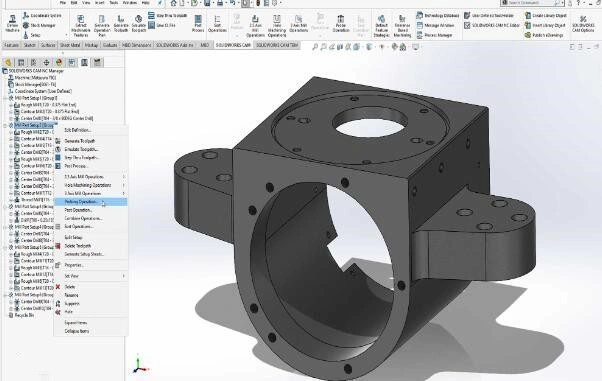
Part design is the first and critical step in CNC manufacturing; it determines manufacturability, machining speed, dimensional accuracy, and overall quality of machined Delrin parts.
Let’s break down the key design rules and guidelines for machining Delrin parts.
1. Minimum Wall Thickness
Maintain uniform wall thickness if possible, and maintain a minimum thickness of 0.5 mm. In transitional sections, use a gradual transition with a proper slope.
2. Internal Radii
In sharp corners, apply internal radii (0.5 to 1 mm) to avoid stress concentration.
3. Pocket Depth Ratio
Maintain the depth of pocket to no more than 3-4 times the tool diameter, and apply internal radii according to the tool size.
4. Minimum End Mill and Drill Bit
A minimum end mill size of 0.80 mm and a minimum drill size of 0.5 mm are recommended.
5. Delrin Machining Tolerances
Use practical tolerances in the design of Delrin-machined parts, based on the part’s geometrical complexity and the capabilities of the available CNC equipment. General Delrin machining tolerances range from ±0.127 to 0.025 mm.
Different Types of Delrin Machining Processes
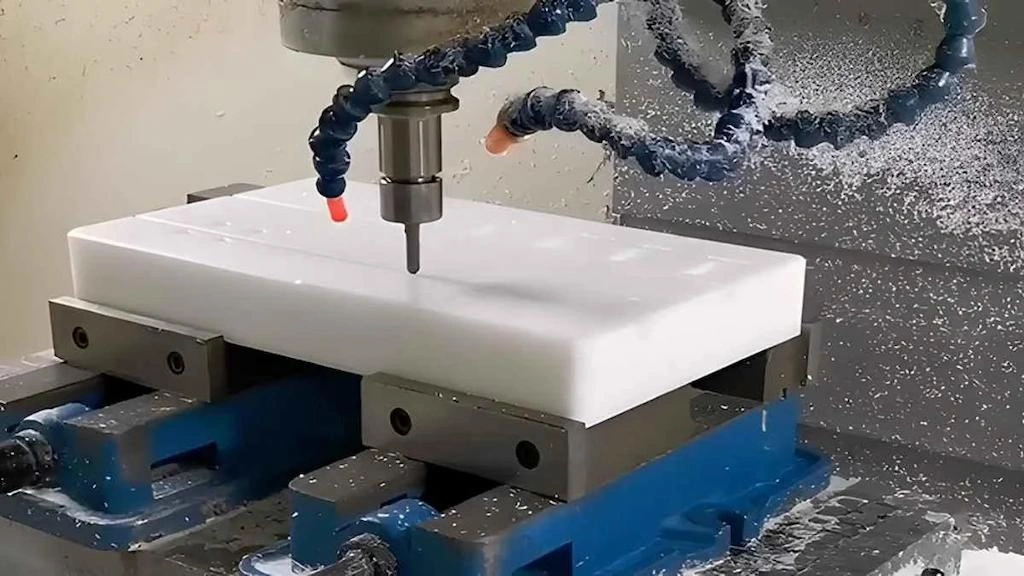
Milling, turning, drilling, boring, and reaming are the main Delrin machining processes. Each of these processes has distinct capabilities for shaping Delrin material.
Let’s further break down these processes.
Delrin CNC Milling
Milling involves rotating cutting tools attached to a spindle, which moves across multiple axes to shape the stationary workpiece. You can use milling operations for complex 3D shapes, contours, deep pockets, slots, etc.
Delrin CNC Turning
Unlike milling, turning involves rotating a Delrin workpiece and a stationary turning tool. This mechanism allows for shaping axially symmetrical parts, such as cylindrical shafts and bushings.
Delrin CNC Drilling
The drilling process uses a specific size of drill bit, which rotates at high RPM and goes into the material by penetrating the surface as it engages with the workpiece. You can create both blind and through holes with CNC drilling.
Delrin CNC Boring
Boring is for enlarging and finishing the pre-drilled holes on Delrin workpieces. During CNC lathe boring, the workpiece rotates on the spindle, and a boring bar advances into the pre-drilled holes axially (or the tool moves linearly).
Delrin CNC Reaming
Like boring, it is a type of post-treatment process for existing holes. A reamer having multiple edges removes minor material from the hole to achieve the desired tolerance & finish.
Critical Delrin Machining Parameters
Cutting speed, feed rate, and cutting depth are the critical parameters for Delrin CNC machining processes. These parameters differ for milling, turning, drilling, and any other machining process.
The table below outlines approximate CNC machining parameters for Delrin.
| Process | Feed Rate | Cutting Speed | Cutting Depth | Recommended Tool Geometry |
| Turning | 0.005–0.020 in/rev | 500–1,500 SFM | 0.050– 0.015, based on desired finish | Positive rake angle 10–15° and sharp edges |
| Milling | 0.003–0.008 in/tooth | 3,000–8,000 RPM (spindle speed) | 1-2 x tool diameter and reduce it for finishing | Polished 2–3 flute end mills |
| Drilling | 0.002–0.005 in/rev | 200–400 SFM for small and 400–800 SFM for larger bits | 2–3 drill diameter (peck depth) | 118° point angle drill, polished |
| Reaming | 0.002–0.004 in/rev | 0.5 to 0.7 x drilling speed | 0.003–0.010 in | Straight-flute reamers |
| Boring | 0.003–0.010 in/rev t | 500–1,500 SFM | Changeable with a fine increment | Single-point inserts with positive rake |
Delrin Machining Finishes
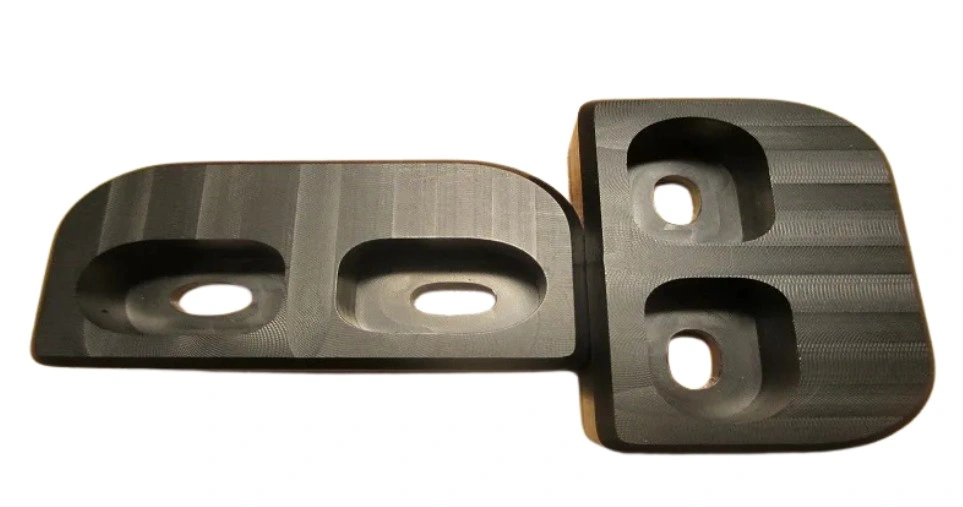
As-machined Delrin parts may contain minor tool marks and have a standard roughness value of 125 µin (3.2 µm). However, optimized feed, speed, and tool selection can provide a better finish. For instance, fine-machining can produce a surface as smooth as ~0.8 µm.
Furthermore, you can use bead blasting, polishing, or other suitable techniques to achieve the desired finish.
- As-machined Finish: It can be as smooth as s ~0.8 µm with sharp tooling & optimized machining variables.
- Bead blasting: Blasting beads on machined Delrin parts removes tool marks and produces the uniform texture you need.
- Grinding/Polishing: It is for a highly reflective surface; fine abrasive grinding, buffing, and polishing can be applied for parts requiring an ultra-smooth finish.
Delrin Machining Cost & How to Reduce It?
The cost of machining Delrin material is more competitive than that of aluminum, steel, or other engineering metals. It is somewhere between $0.15 and $25+ per part, depending on size, complexity, precision, and production volume.
Per-hour machining cost is another way to express the cost, typically ranging from $20 to $150+ for Delrin materials.
Furthermore, you can apply the following strategies to reduce machining costs.
- Use standard machining tools
- Do not use minimal wall thickness or inconsistent transitions across the part geometry.
- Optimize your part design for manufacturability
- Avoid over-tolerancing of dimensions & geometrical features.
- Size your parts according to the available Delrin sheets, bars, or blocks.
- Choose a supplier from regions where labor, space, and machinery costs are relatively low.
Delrin Machining Vs Injection Molding Vs 3D Printing
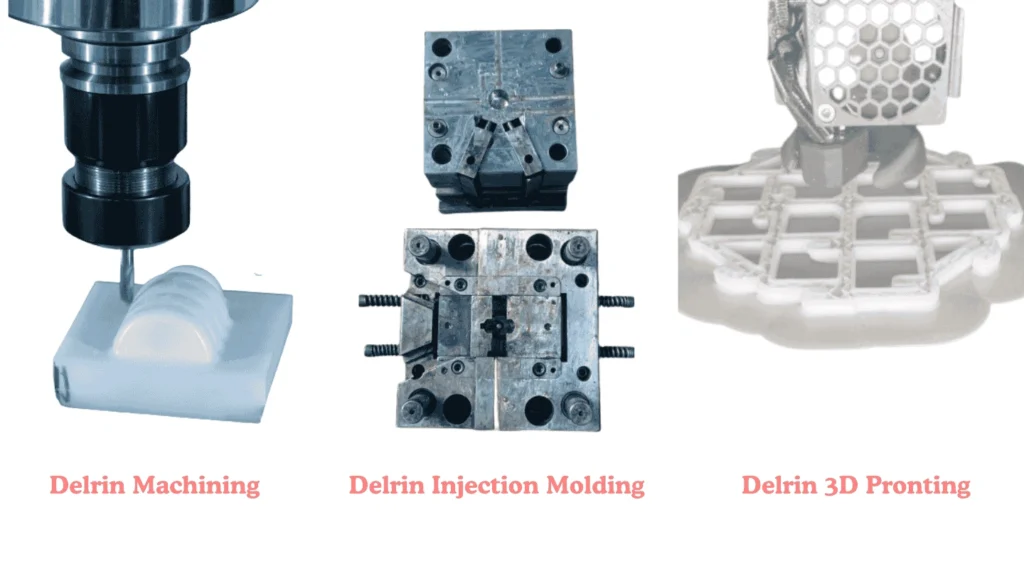
Besides CNC machining, there are multiple methods of producing Delrin parts, such as injection molding and 3D printing.
Molding involves melting the Delrin pellets and injecting the molten material into an injection mold, which shapes the parts once fully solidified. On the other hand, Delrin 3D printing is an additive approach that builds the designed shape by adding successive layers.
Let’s compare Delrin CNC machining services with molding & 3D printing.
| Factor | Delrin CNC Machining | Delrin 3D Printing | Delrin Injection Molding |
| Parts Complexity | Medium–High | High complexity & intricate internal features | Limited by mold design & its manufacturability |
| Production Cost | Low for small volume | Low for prototyping due to minimal tooling cost | High tooling cost, but effective for mass production |
| Speed | Medium speed | Longer production cycles | Quick after tooling setup |
| Tolerances | Very tight: ~±0.025 mm typical | Moderate: ~±0.1–0.3 mm typical | Tight and consistent: ~±0.05–0.12 mm typical |
| Surface Finish | Smooth as-machined finish | Visible layer lines and needs post-treatments | Excellent; finish determined by mold surface |
| Best For | Testing prototypes and small volume projects | Rapid prototyping of complex & custom designs | Consistent parts in high volumes |
Delrin Machining Capabilities at ProleanMFG
At ProleanMFG, we have multi-axis CNC equipment (3-, 5-, and higher-axis) for Delrin precision machining, with tolerances down to ~0.0127 mm.
Even if your design has intricate channels, grooves, undercuts, and irregular curvatures, we can still machine them using automated equipment.
Additionally, we offer a balance between machining quality and cost competitiveness.
So, upload your design and get a quote for our Delrin machining services today!
Summing Up
Delrin machining deals with the production of strong, stiff, high-strength, and low-friction components. Mainly, the automotive, aerospace, medical, electrical, electronics, and industrial machinery industries are benefiting from Delrin CNC machining.
Use of the right tooling, feed, speed, cutting depth, and other variables ensures precision, finish, and consistency. Therefore, the overall quality depends on DFM factor, the capabilities of the used equipment, and the expertise of the engineers & operator handling the project.
ProleanMFG, a leading on-demand manufacturer, has a decade of experience and a continuously evolving machine shop that can meet your strict Delrin machining requirements
FAQs
Delrin is highly machinable and can be cut or shaped precisely. In fact, it is considered a free-machining engineering plastic.
Delrin 150, Delrin 100 AF, and 30 % glass-filled Delrin are the common grades of Delrin used for machining.
Thermal-sensitivity, poor bonding adhesion, flammability, and risk of warping are the main disadvantages of Delrin