
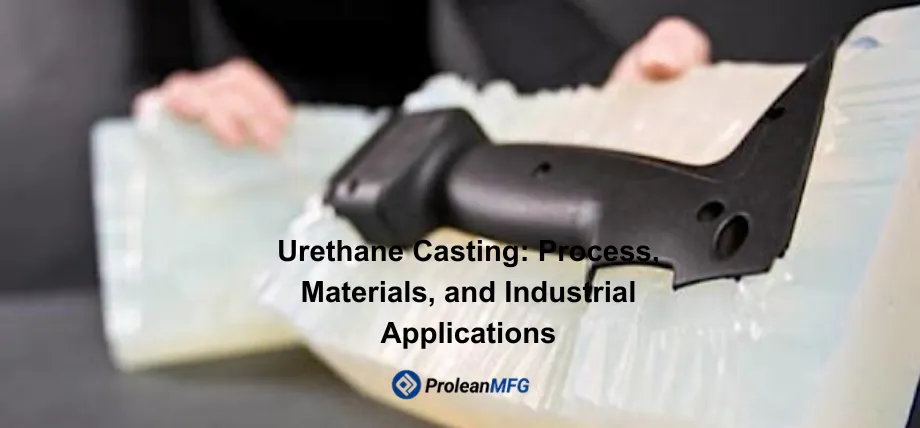

Urethane Casting is a process that involves pouring liquid urethane resin into a silicone mould and curing it to produce top-quality plastic or rubber components. It is also called Urethane Molding or polyurethane casting. It is mostly used as an alternative to producing parts without using an expensive hard tool.
You use the Urethane Casting Process when your project is between prototyping and mass production. It’s between 3D printing, which is quick but offers limited material properties. However, injection molding is high quality, but the tooling is costly. So urethane casting is a good choice for projects that require both speed and precision.
Efficiency is the key advantage. You can very quickly manufacture products using silicone molds to lower production time and cost. Urethane Casting Materials can also replicate the appearance, texture, and performance of production plastics. So you can create a part similar to the final product.
What Is Urethane Casting?
Urethane Casting is a low-pressure process that involves pouring liquid resin into a silicone mould and curing it to create a required shape. Also referred to as polyurethane casting or urethane molding, it is used to produce small quantities of premium components without hard tooling.
The Urethane Casting Process is conducted under vacuum conditions. The mould and liquid resin are placed in a vacuum chamber to evacuate air. This is because air bubbles may lead to voids and flaws. As a result, it produces smooth surfaces and uniform structures.
The second factor is the mould lifespan. One silicone mould can normally be used to make between 20 and 50 parts before it begins to deform. Rather than spending thousands on metal molds, you can just make new silicone molds from the same pattern. It gives you production flexibility.
That’s why Urethane Casting is more cost-effective than injection molding. You don’t have to pay for expensive steel or aluminum tooling. You can still produce quality parts that are comparable to injection molding.
How the Urethane Casting Process Works?
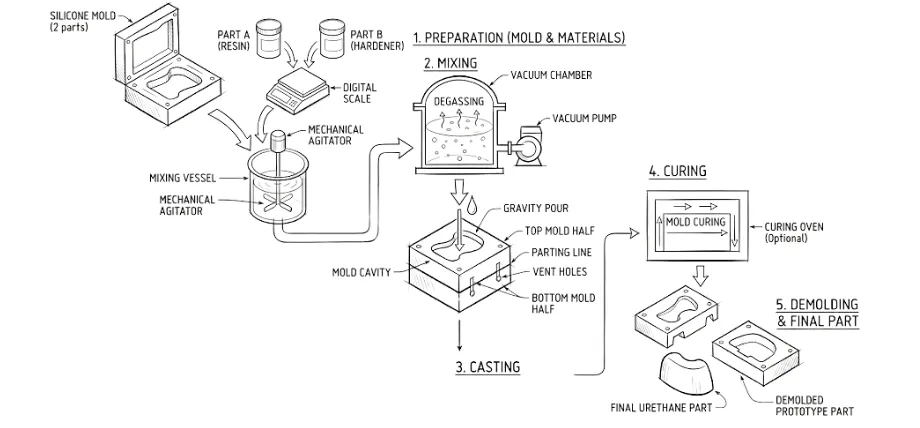
The urethane casting process is a sequential system in which each step has an impact on part quality, accuracy, and finish. Knowing how each step works allows us to avoid problems and produce parts at a commercial level.
Step 1: CAD Design and Part Preparation
The first stage starts with a final CAD design. This model determines the shape, wall thickness, and printability. Wall thickness matters as thinner walls can warp or not fully cure. Generally, equal wall thickness allows for uniform curing. A bad design will have thin walls or unsupported areas, which may create air pockets or weak points in the casting. So, design is the key to successful Urethane Casting.
Step 2: Creating the Master Pattern
The master pattern is the model from which the mold is made. It is commonly produced through high-resolution 3D printing or CNC machining. 3D printing is typically used for complex geometries and smooth textures. CNC machining is used for tighter tolerances and specific designs.
Important because the mold is created from the master pattern. Any flaw in the master surface will appear in the cast. As a result, the master pattern is an important part of Urethane Molding.
Step 3: Making the Silicone Mold
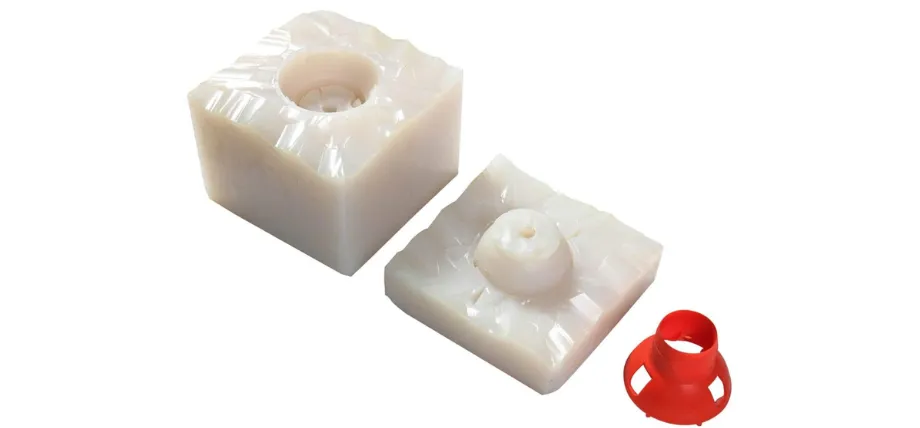
A mold box is filled with liquid silicone, and the master pattern is placed. Once cured, the mold is cut, and the master pattern is pulled out, creating a cavity for the part. The rigidity of the mold is important.
Soft molds are easier to open to extract complex shapes. But hard molds provide greater dimensional stability, allowing for more part casting. Silicone molds can be expected to give 20 to 25 parts with high-quality material, allowing 100 to 500 parts. This versatility is one of the main advantages of polyurethane casting over hard tooling.
Step 4: Vacuum Urethane Casting
The resin is mixed and pulled under vacuum to remove air entrapped during mixing. The resin is then poured into the mold under a vacuum. The vacuum is necessary as it removes air pockets and allows the resin to equally spread into all sections of the mold. This allows Urethane Casting to have a high-quality finish. The mold is then left in a controlled environment for the resin to cure and stabilize.
Step 5: Post-Processing and Finishing
After demolding, the cast refers to secondary finishing like trimming flash, sanding, painting, or inserting components. This provides improved appearance and performance. Surface finishes ensure that the parts meet production standards, and other procedures like painting or coating improve durability. This is where finishing plays an essential role in the Urethane Casting Process, particularly for visual and end-use parts.
Urethane Casting Materials
In Urethane Casting, material choice impacts part performance, strength, and appearance. Two major material types are used: silicone for molds and polyurethane resins for parts.
1. Silicone Mold Materials
In the Urethane Casting Process, the mold is made of silicone, and its quality affects mold life and part accuracy. Using Platinum-cure silicon over tin-cure can provide reduced shrinkage and more stability through multiple uses. This is important since dimensional stability is linked to accuracy.
Hardness is also critical. Soft silicone is used for complex parts with undercuts to make removal easier. A harder silicone is used for larger parts, with only a few cycles of repetitive use required to maintain shape.
2. Urethane Resins and Casting Resins
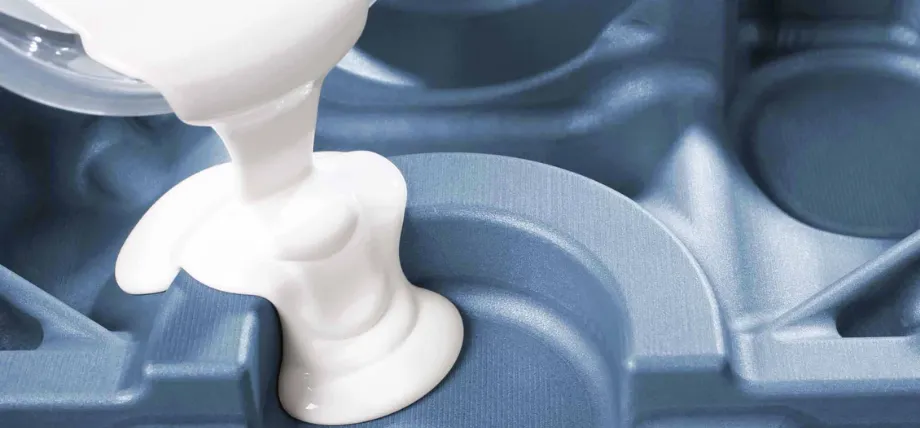
Polymethylene casting resins are available in a broad selection of urethane resins. These materials are capable of simulating soft rubber to hard plastics. Soft elastomers are used when flexibility is desirable, including grips or seals.
Structural components and housings are made with rigid resins, which act like ABS or polycarbonate. When it is necessary to be clear (like a lens or a display cover), clear urethane materials are used.
Urethane Resin Types and Properties
| Material Type | Shore Hardness | Key Properties | Typical Applications |
| Soft elastomer | Shore A 5–40 | High elongation, flexible, tear-resistant | Grips, seals, overmolds, medical models |
| Mid-range elastomer | Shore A 40–80 | Durable, abrasion-resistant, and good tensile strength | Gaskets, bellows, rollers, boots |
| Hard elastomer | Shore A 90 – Shore D 60 | Stiff, impact-resistant, low compression set | Gears, forming dies, structural flex parts |
| Rigid urethane | Shore D 65–85 | High strength, ABS/PC-like behavior | Housings, enclosures, structural components |
| Clear urethane | Shore D 75–84 | Transparent, UV-stable options available | Lenses, light pipes, display covers |
This range of materials is the reason Urethane Casting Materials are versatile. Depending on the application needs, you can choose a formulation that is flexible, strong, or optically clear.
How to Choose the Right Urethane Casting Material?
The choice of the Urethane Casting Materials depends on the usage of the part. Rather than selecting a material by one property, you must select a material behavior as per application needs.
1. Shore Hardness Selection
Shore hardness is the first parameter you consider in Urethane Casting. It decides the softness or rigidity of the material. You have lower Shore A values when you need to have parts that are flexible, like grips or seals.
Hard parts, such as housings or enclosures, are higher Shore D. It is important because improper hardness may cause the component to become either too soft or too difficult to perform its function.
2. Tensile Strength vs Flexibility
Performance is not just about the hardness or flexibility. Tensile strength and elongation are also to be considered. In load-bearing or dynamic devices, high tensile strength guarantees that the part is capable of bearing stress without failure.
In the case of the bending or stretching parts, greater elongation is needed. This is valuable because a hard material with low elongation will crack under constant pressure, whereas a flexible material will absorb vibration without breaking.
3. UV Resistance
When the product is outside or exposed to the sun, UV resistance becomes very important. Normal polyurethane casting materials may decay or discolor in UV light. The selection of UV-stabilized formulations is effective in maintaining color and mechanical strength. That is why exterior applications or long-term use require UV resistance.
4. Abrasion Resistance
Abrasion resistance is important for parts that require friction or frequent contact. More resistant materials maintain their shape and surface with time. It is significant in use in rolls, seals, or components that undergo constant use.
5. Application-Based Material Selection
In Urethane Molding, the right material selection always depends on the application. As an example, a flexible grip needs to be elastic and comfortable, whereas a structural housing needs to be hard and strong. Once you understand how the component/ product will be used in the real world, you will be able to find a material that fits both the functional and durability needs.
Vacuum Casting vs Alternative Manufacturing Processes
Different manufacturing processes have different uses. Urethane Casting is between prototyping and mass production. When comparing it to other processes, you can select the right process based on cost, speed, and performance.
Urethane Casting vs Injection Molding
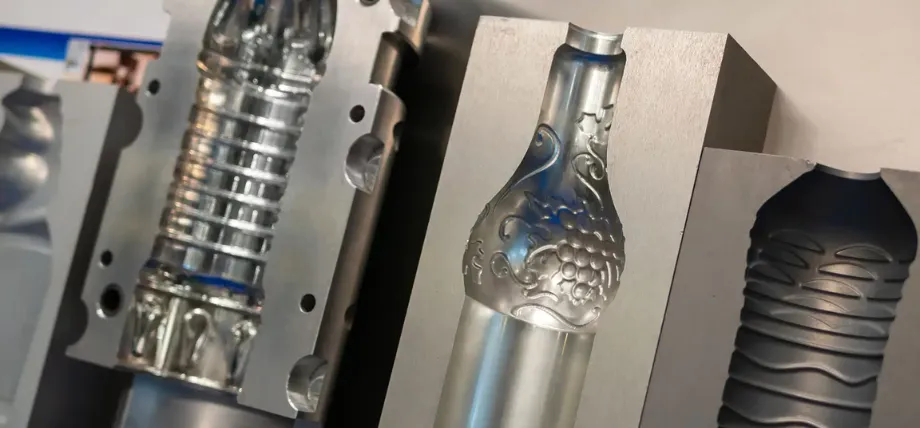
Tooling, cost, and volume of production are the key differences between Urethane Casting and Injection Molding. Injection molding uses aluminum or steel molds, which are costly and require weeks to be made. Moreover, urethane casting uses silicone molds, which are quicker and less expensive to manufacture.
| Parameter | Urethane Casting | Injection Molding |
| Tooling Cost | $200 – $1,500 | $3,000 – $100,000+ |
| Lead Time | 3 – 7 days | 4 – 12 weeks |
| Mold Lifespan | 20 – 500 parts | 100,000+ parts |
| Materials | Polyurethane resins | Wide thermoplastics (ABS, PC, PP) |
| Ideal Volume | 1 – 500 parts | 500+ parts |
| Tolerances | ±0.38 mm | ±0.05 – 0.25 mm |
This difference is important due to the crossover volume point. In small batches (fewer than about 500 parts), Urethane Casting is cheaper since it has a low tooling cost. Injection molding is less expensive per piece when the tooling cost is divided between thousands of products.
Urethane Casting vs 3D Printing
For single parts, 3D printing is quicker, since no molds are necessary. But polyurethane casting gives better surface finish and uniform properties. 3D-printed parts often have layered structures, which means strength depending on direction variations. On the other hand, cast parts are isotropic, that is, they have the same strength all through.
You use 3D printing when you require one or two components quickly or when you have to change your design frequently. You use Urethane Molding when you require several parts with high-quality production and performance.
Urethane Casting vs CNC Machining
CNC machining makes parts directly on solid material and is accurate, and has a large material range (including metals and engineering plastics). Nonetheless, cutting complex shapes can be costly and lengthy. Internal cavities, undercuts, and hollow structures are hard to make without multiple arrangements.
Urethane Casting is advantageous in making complex designs in one mold. It is also cheaper to use a minimum quantity of plastic components, particularly on several parts that are the same.
Urethane Casting Applications
Urethane Casting is used in different phases of product development, starting with early prototyping, through to small production batches, and even finished components. It is flexible because it can produce high-quality parts within a short time with minimal tools.
Rapid Prototyping
You apply Urethane Casting in rapid prototyping when the parts need to be similar in appearance and performance to final production parts. This is significant in that initial testing can be more than shape testing.
Cast parts contain a smooth surface finish, uniform wall thickness, and realistic mechanical characteristics. Therefore, they are suitable for testable, functional checking, and presentation models.
Low Volume Production
Urethane Molding is best used in low-volume production, usually between 20 and 500 parts. This is a good range, as silicone molds can be replicated many times at less cost than hard tooling.
It is usually applied in pre-production runs, pilot runs, and market testing before injection molding is executed. This allows you to test design and demand, without a large initial investment.
End-Use Parts
End-use parts of industry and consumers, also, in many cases, are produced by polyurethane casting. These are enclosures, seals, grips, and functional components that demand durability and good surface quality. The good thing about this is that you can replicate production-like conditions without large-scale manufacturing.
But it has its limitations. Ordinary urethane will degrade when exposed to extended UV conditions or excessively high temperatures. The choice of material is significant in Urethane Casting because of its long-term application.
Cost of Urethane Casting
Urethane Casting prices are based on three key aspects: the master pattern, the silicone mold, and the per-part cost of casting. Knowing the contributions of each factor will help you in estimating the overall cost of the project.
Master Pattern Cost
The master pattern is a one-time expense for making a silicone mold. It is commonly 3D printed or CNC machined. Prices of smaller parts often vary between $50 and $500, depending on size and complexity. The great thing is that the master is reusable as well; you can make many molds of the same design and with no extra design expense.
Mold Cost
The second cost factor in the Urethane Casting Process is the silicone mold. A master pattern is used to create a mold, which is used to make many products. Mold prices typically vary between 200 and 1500 dollars based on size and complexity. Approximately 20 to 25 parts are molded in a regular mold, then a new one is needed. This renders mold planning significant in the calculation of the total cost of production.
Per-Part Cost
The per part price is based on the type of resin used, the material used, and the finishing. In the majority of projects, the cost per part is between 10 and 100 dollars. This depends on the size of the part, the grade of the material, and any other operations like painting or finishing.
Cost Formula
A simple formula can be used to compute the total cost of polyurethane casting:
Total Cost = Master Pattern Cost + (Number of Molds × Mold Cost) + (Quantity × Per-Part Cost)
This formula can be used to estimate the cost depending on the volume and complexity of production.
Why It Is Best for Mid-Volume Production?
Urethane Casting is most economical with a range of about 10 to 200 parts. With this volume, you enjoy low tooling costs and affordable per-part prices. At lower scales, 3D printing can be quicker in single-part aspects.
Injection molding is more cost-effective above this range because the price per part is less at high volumes. That is why UrethaneMolding is viewed as a perfect solution when it comes to mid-volume production, when speed, cost, and quality need to be balanced.
Vacuum Casting Service
Proleanmfg provides a vacuum casting service that turns your initial prototype into a functional, low-volume production. We use advanced silicone molding techniques and high-grade polyurethane resins that match the surface finish of injection-molded parts.
We provide precision engineering for tight tolerances and complex geometries with vacuum-assisted resin that eliminates air bubbles. You can choose from a wide range of resins, including rigid plastics, flexible elastomers, and high-temperature resistant materials
Request a free quote today!
Conclusion
Urethane Casting offers a quick, low-cost production of parts of production-like quality with flexible tooling and a short lead time. It is perfect for creating 10 to 500 parts before full-scale production. Mold life is limited, and polyurethane material may not be good in heat and during prolonged UV exposure.