
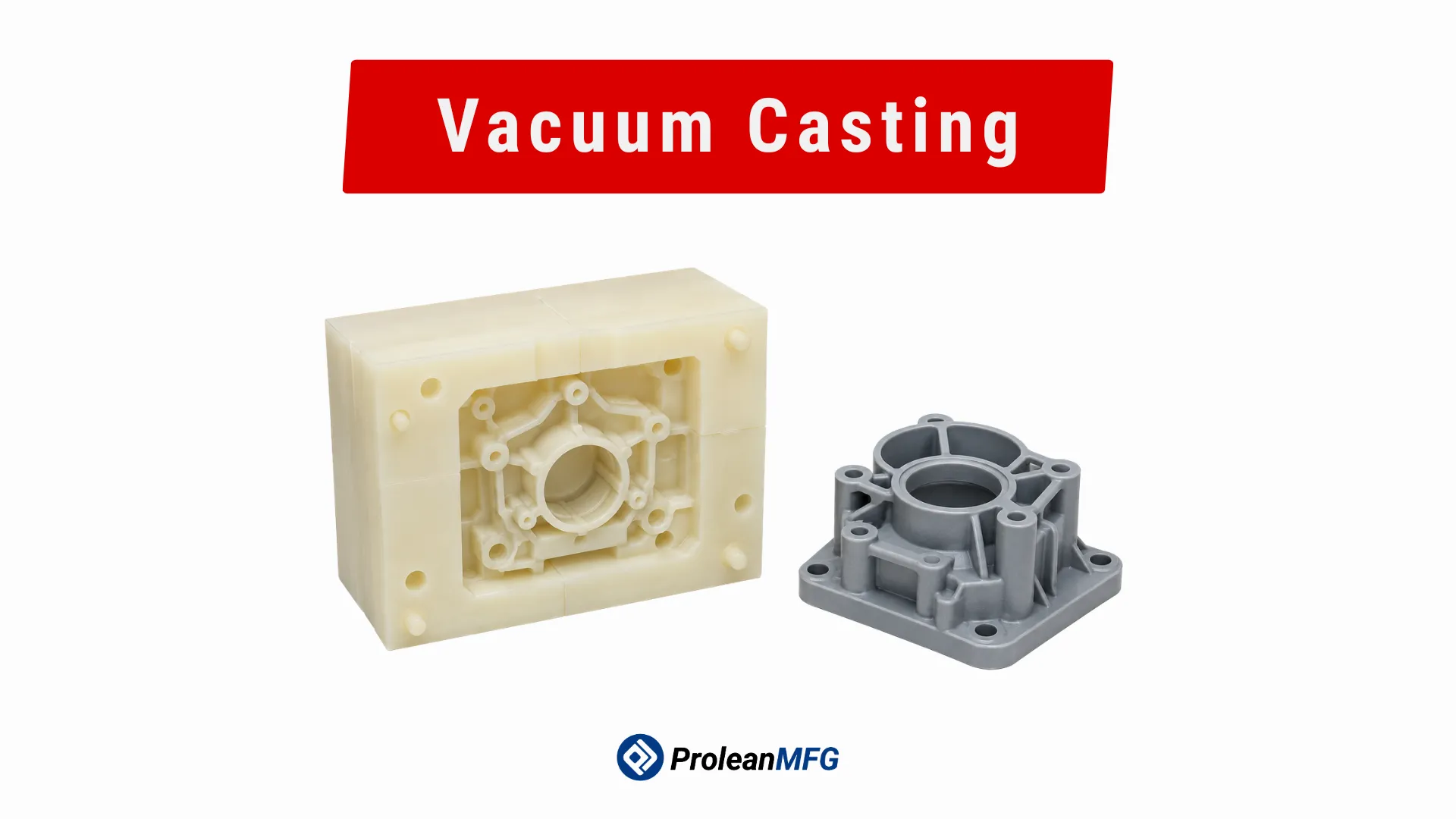

Vacuum casting produces small batches of plastic parts. It uses silicone molds rather than hard-metal tooling. Engineers commonly use it for prototypes, appearance models, product testing, and low-volume production parts.
Vacuum casting is used to produce small batches of plastic parts with low tooling costs and fast turnaround. It uses silicone molds rather than hard-metal tooling. Engineers commonly use it for prototypes, appearance models, product testing, and low-volume production parts.
Most vacuum-casting projects produce 5 to 50 parts per mold. However, this depends on part geometry and resin type. It is widely used for plastic housings, covers, brackets, consumer product parts, automotive components, and electronic enclosures.
Compared with injection molding, it requires lower upfront investment, making it suitable for prototypes, product development, bridge production, and early market samples before mass manufacturing. It uses silicone molds rather than hard-metal tooling.
At Prolean MFG, vacuum casting enables teams to quickly validate designs and produce high-quality plastic parts without the expense of production tooling.
This article explains:
- Vacuum casting process
- Material options
- Design guidelines
- It’s comparisons with CNC machining, 3D printing, and injection molding
What Is Vacuum Casting?
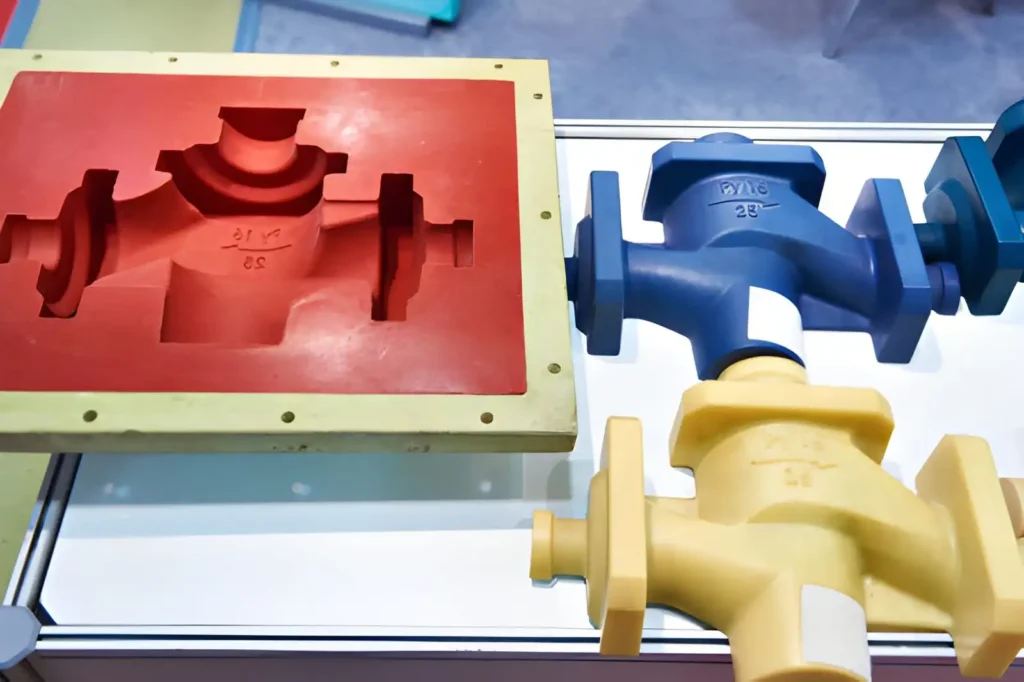
Vacuum casting is a soft-tooling process. It produces plastic parts from silicone mold casting. It is primarily used for low-volume or prototype production of polyurethane-resin- and elastomer-based products.
Many manufacturers use this technique as an inexpensive way to validate their designs, create appearance models, produce functional test pieces, and produce pre-production parts.
Manufacturers begin by making a master model using either CNC Machining (Computer Numerical Control) or 3D printing. Then they cast a flexible silicone mold over the pattern.
Once the mold is created, liquid resin is poured into the mold within a vacuum chamber. As the vacuum chamber pulls air out from under the liquid resin, the resulting parts will have a very smooth surface finish, precise detail reproduction, and even cavity filling.
Although compared to metal tooling processes, there are significant time savings and lower up-front costs to produce the molds required for vacuum casting, most molds have a limited number of casting cycles, approximately 15 to 25, depending on the mold design and the resin type selected. This makes vacuum casting ideal for short-run productions and rapid product development.
How Does the Vacuum Casting Process Work?
Vacuum casting is a manufacturing process that uses silicone molds and liquid resin. It is commonly used to produce accurate plastic prototypes and low-volume parts.
The process involves the following steps:
- Create a master model.
- Produce a silicone mold from the master.
- Prepare the mold for casting.
- Cast liquid resin into the mold under vacuum.
- Remove air during the vacuum stage so the resin fills fine details and thin walls more effectively.
- Inspect the finished parts and perform any required post-processing, such as sanding or painting.
Creating the Master Pattern
The first step is to make the master model. Typically, manufacturers use one of three methods to create their master models: CNC machining, SLM (selective laser melting), or SLS (selective laser sintering).
The master model gives the manufacturer an idea of what the finished part will look like after processing. It also determines the final part geometry and surface finish.
Typically, after completing the manufacturing, a light sanding and/or polishing is applied to the master model. If any imperfections or blemishes are present on the master model, they will carry over to the silicone mold used in the next step. Thus, creating a smooth master surface will result in a smoother finish on the final castings.
Producing the Silicone Mold
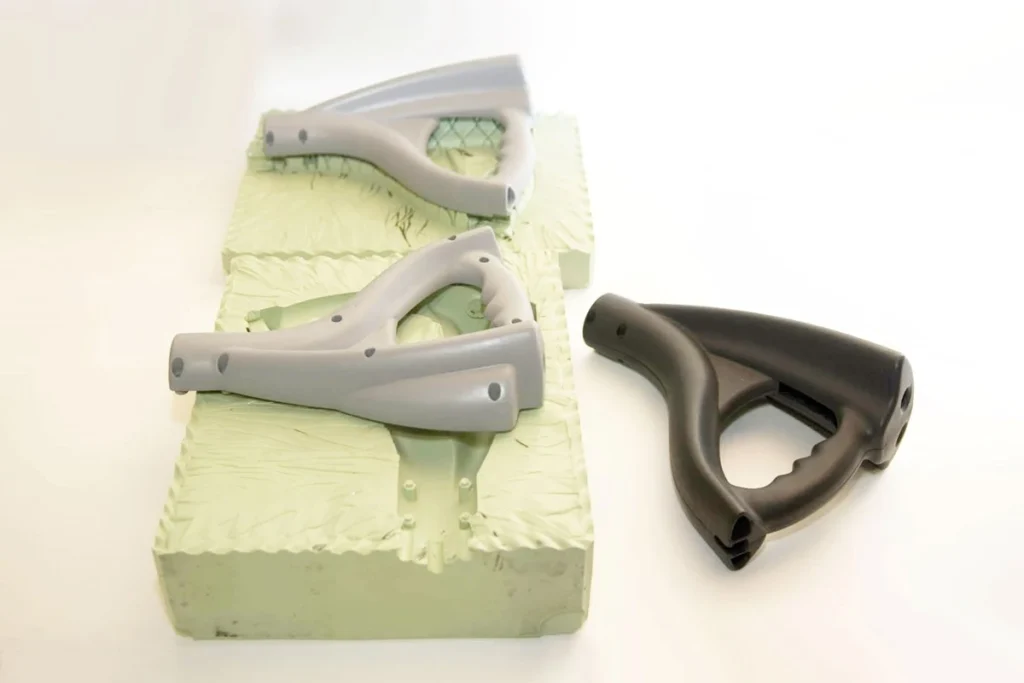
Technicians place the master model in a casting box and pour liquid silicone into the box, surrounding it.
The silicone typically undergoes a degassing process before being placed in the oven, allowing air to escape before curing. The silicone will cure in an oven at approximately 104F.
Depending upon the specific type of silicone, this could take anywhere from a few hours to 24 hours. Once the silicone has cured, technicians must carefully remove the mold from the master model.
Cutting the Mold
Following curing, the silicone mold needs to be cut for part removal. Generally, technicians make curved cuts to improve part orientation during molding.
Proper mold orientation provides Accurate part location and minimizes flash development along part edges. Therefore, correct mold placement is key to providing repeatable, high-quality castings throughout each cycle.
Preparing the Resin
Before casting, some manufacturers prepare the resin by mixing it with a catalyst and placing it into the mold. Throughout this process, pigments are added to color the resin. In addition, some resin products can benefit from being warmed before pouring into the mold.
As previously stated, the resin product is often placed under vacuum before being placed in the mold. The purpose of this Vacuum process is to remove air pockets from the resin before pouring it into the mold.
Casting Under Vacuum
With the mold ready for casting and the resin prepared for pouring, both items are placed into a Vacuum casting unit. Following Vacuum generation, the resin flows slowly into the mold cavity due to differential pressures. Due to this pressure differential, resin can now enter smaller internal cavities, thereby supporting more complex geometries, ribs, thinner walls, and textures better than traditional casting processes.
Resin Curing
After the resin has flowed into the mold cavity, it is moved into an oven where it cures. Polyurethane resin cures between 140 and 160 degrees Fahrenheit. Curing time varies greatly depending on resin type and the size of the item being produced.
Demolding and Finishing
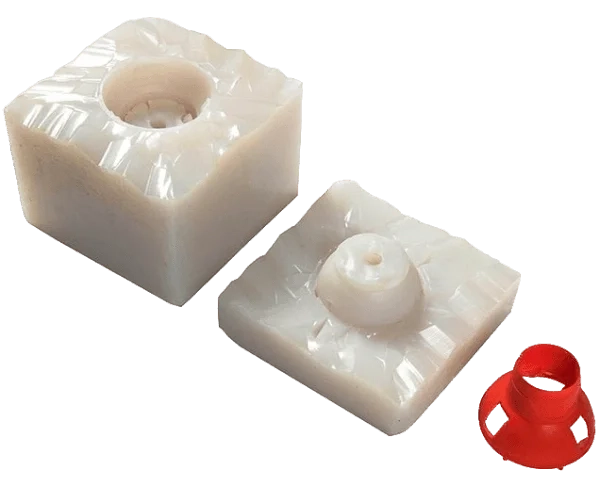
Once curing has occurred and mechanical properties have developed, along with the item’s increased hardness, it is removed from the mold. Gates, flash, and extra material are then trimmed off as needed. The item may also undergo additional finishing steps, such as sanding, painting, polishing, or applying a topcoat.
What Materials Are Used in Vacuum Casting?
The majority of vacuum casting utilizes a polyurethane resin combined with an RTV (Room Temperature Vulcanized) silicone mold. Various resin types have different properties that can support various product functionality, surface finish, and mechanical characteristics. As such, most engineers will choose material based on flexibility, impact loading, transparency, or assembly conditions.
ABS-Like Resins
ABS-like resin materials are common in manufacturing rigid plastic prototypes and housing parts. ABS-like resin materials offer the best combination of impact strength while maintaining geometric stability during assembly testing. Most grades exhibit a Shore D hardness of approximately 75-85.
Additionally, these materials may be drilled, sanded, and lightly machined after molding. As a result, they are suitable for applications including: electronic enclosures, automotive trim parts, and consumer products casings.
Glass-Filled Nylon-Like Materials
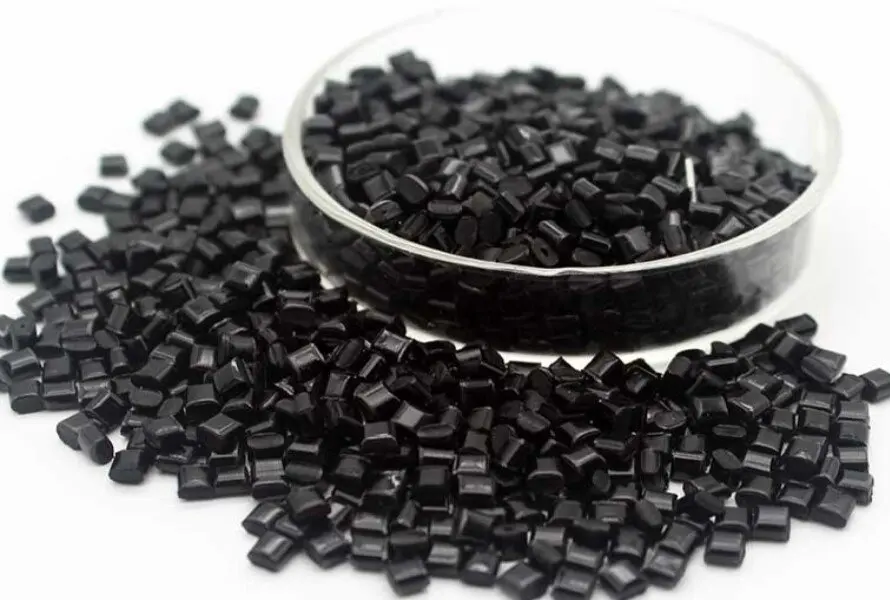
Glass-filled nylon-like materials are stronger and stiffer than typical polyurethane resin materials. The addition of glass fill provides greater rigidity, reduces deformation under bending loads, and improves the material’s ability to withstand structural loads.
Typically, these grades are employed as mounting bases, mechanical covers, and brackets. Some grades also achieve tensile strengths greater than 70 MPa, which is usually required for functional prototype testing.
Elastomeric TPE-Like Materials
TPE-like resins create flexible parts that mimic rubber’s elastic properties. Applications include: seals, grips, cable covers, and wearable parts. The Shore A hardness values of this grade range from approximately 30 to 90, depending upon the intended application. Soft grades tend to deform under compression when subjected to handling and/or assembly stresses.
PC-Like Resins
PC-like resin materials offer high clarity and superior impact resistance compared to many other polyurethane resins. Commonly utilized for applications requiring clear covers, lighting parts, and protective housings. Due to their greater toughness compared to acrylic-like resin grades, they exhibit less propensity to crack during drop testing and repetitive handling.
Clear Acrylic-Like Resins
Acrylic-like clear resins are primarily used to replicate the optical properties of acrylic and PMMA in a product’s transparent portions. These materials are mostly used for display covers, fluid-view parts, and aesthetic prototypes. Most grades are designed to emphasize visual appeal rather than structural integrity.
High-Impact Resins
High-impact polyurethane resin materials are ideal for producing parts that will undergo repeated handling and mating cycles.
High-impact polyurethane resin materials are commonly used to manufacture industrial housings, snap-fit covers, and engineering samples. Some grades also possess enhanced chemical resistance and moderate thermal stability during lab testing.
Silicone Mold Materials
Flexible tooling, such as RTV (Room Temperature Vulcanizing) silicone molds, is utilized in vacuum casting due to their ease of demoldability from complex geometries and undercuts. The flexibility of silicone molds also enables manufacturers to accurately reproduce textured surface detail and small features.
Most silicone molds use a Shore A hardness of 40 to 50 to balance flexibility and mold durability. In general, platinum-cure silicones demonstrate lower shrinkage during repeated casting operations than tin-cure silicones.
Design Guidelines for Vacuum Casting
Silicone is a flexible mold that enables vacuum casting, offering greater design flexibility than most other tooling methods. Even so, certain geometrical requirements are recommended to minimize the risk of creating shrink marks, trapped air, and weak spots in the molded part.
Tolerancing and Shrinkage
Vacuum-cast parts typically shrink by approximately 0.15% after they cure. For this reason, if you have assembly-fit components that will be assembled after manufacturing, it is best to account for potential shrinkage when designing your CAD models.
Typically, most projects allow an accuracy tolerance of ±0.3 mm for measurements less than 100 mm. Due to deformation over time from repeated removal from the mold, larger pieces may exhibit size variations.
Wall Section
Vacuum casting poses no problem for accommodating parts with varying wall section thicknesses. While it is true that a balanced wall section improves resin flow and therefore the overall surface finish, many plastics are used with wall section thicknesses ranging from 1.5 mm to 4 mm. Wall sections that are too thin may not fill, while those that are too thick may produce sink marks once cured.
Rib Design
Ribs provide strength to flat plastic sections without adding excessive weight. Ribs also help reduce flexing and bending of parts during manual or mechanical assembly.
The maximum thickness of ribs should remain at or below 60% of the adjacent wall section. Using thicker ribs can leave noticeable impressions on exterior surfaces.
Boss Features
Bosses provide mounting/attachment points for screws/fasteners within enclosed housing. The addition of supporting ribs around the boss provides a means to distribute assembly stresses more uniformly across the part.
As with ribs, the wall thickness of bosses should also remain at or below 60% of the adjacent wall thickness to prevent localized shrinkage caused by the screw.
Undercuts & Complex Geometry
Due to the flexibility of silicone molds, undercuts (such as clips/groves) and complex interior shapes (like curves) are much easier to achieve with vacuum casting than with metal tooling; as a result, designers can add these features early in the prototype development process for enclosure/snap-fit type applications.
Logo’s & Surface Detail
Vacuum casting can capture surface and engraved details quite accurately from the master model. Typically, raised lettering/logos require a minimum height of 1mm to be viewed effectively after casting. Details finer than this can become softened/lost due to wear on the silicone surfaces after several casting cycles.
Gate/Vent Location
Gate location can affect resin flow throughout the mold cavity. Gating typically performs best in thicker cross-sections because the resin tends to move farther away from these areas.
Vent holes allow for trapped air to escape as the resin fills the mold cavity. If vents are poorly located, then bubbles tend to form near the thinner/more angular portions of the mold.
Resin Handling
Polyurethane (resin) is generally preheated to approximately 40°C in many shops before casting. The higher the temperature, the smoother the flow will be for thinner sections of the model and for models with textured or irregular shapes. Storage of resin requires continued attention to moisture content. Excess moisture can cause bubbling and surface imperfections in cured parts.
Is Vacuum Casting the Same as Urethane Casting?
The key distinction between the two processes lies primarily in the material being cast. Vacuum Casting is a manufacturing process that uses a vacuum chamber to draw liquid resin from its container into a closed silicone mold, minimizing (if not eliminating) air pockets in the mold’s cavities.
Specifically, urethane casting is an example of a vacuum casting process that utilizes two-component polyurethane resin systems as the primary medium for producing parts. Since Polyurethane
Materials are the most commonly available types of casting resins; many companies use these terms interchangeably throughout their workshops and technical data packages.
Although various resin systems may be used, depending on part requirements, some applications require elastomeric materials for producing flexible components. Other applications may require Clear or heat-resistant resin grades.
Both terms will typically refer to a similar low-volume production methodology. However, Vacuum Casting generally refers to the molding methodology, while urethane casting generally focuses on the resin used.
The difference between vacuum casting and urethane casting
| Technical Aspect | Vacuum Casting | Urethane Casting |
| Process Definition | Vacuum-assisted resin casting process | Polyurethane resin casting method |
| Main Focus | Air removal and cavity filling | Resin chemistry and material properties |
| Mold Type | RTV silicone mold | RTV silicone mold |
| Resin Compatibility | Polyurethane, silicone, epoxy, and elastomers | Mainly two-part polyurethane systems |
| Vacuum Pressure Usage | Removes trapped air during filling | Uses the same vacuum-assisted filling |
| Common Shore Hardness Range | Depends on the selected resin | Typically, Shore A 30 to Shore D 85 |
| Typical Production Volume | 5 to 50 parts per mold | 5–50 polyurethane parts per mold |
| Surface Quality | Smooth finish with detailed replication | Similar injection-molded appearance |
| Common Applications | Prototypes, housings, covers, clear parts | Functional polyurethane prototypes |
| Process Limitation | Limited mold life and manual processing | Resin aging and moisture sensitivity |
Vacuum Casting vs. Other Manufacturing Processes
Vacuum casting is best suited for producing small batches of plastic parts that require a specified level of surface quality and visual similarity to the final product.
It is an intermediate step (between rapid prototyping and full production) that uses liquid resin and a silicon mold to create a cast part.
Vacuum Casting vs. Vacuum Forming
Vacuum casting involves pouring liquid polyurethane into a silicone mold to create solid parts with features such as ribs, bosses, or enclosed cavities. Vacuum forming involves heating a sheet of plastic until pliable and shaping it over a mold. The resulting parts tend to be thinner, such as covers, trays, or packaging shells.
Therefore, vacuum casting is suitable for parts that require some degree of thickness and structural shape/feature definition. In contrast, vacuum forming is typically used for simpler parts made from sheet materials.
Vacuum Casting vs. Centrifugal Casting
Centrifugal casting is typically used to produce metal parts such as bushings, sleeves, and rings. The mold spins at a speed that causes the metal to flow outwards during casting.
On the other hand, vacuum casting is primarily used to make plastic prototypes/non-metallic parts. A static mold is filled with liquid resin to achieve this.
While both methods can achieve excellent results depending upon the application, centrifugal casting tends to be more robust in producing strong metal parts.
However, vacuum casting is generally preferred if you require flexibility to produce complex shapes quickly and/or inexpensive prototype plastic parts.
Vacuum Casting vs Injection Molding
Injection molding is a process in which molten plastic is injected into a mold under high pressure generated by a tool. It is most commonly used for mass production.
However, vacuum casting uses a low-pressure method in which resin is poured into silicone molds. It is ideal for early production sampling/small and small-batch applications.
Injection molding has lower unit costs than vacuum casting, but only when produced in large volumes. On the other hand, vacuum casting will cost less for small orders and testing runs.
Vacuum Casting vs. 3D Printing
Both enable the production of a wide variety of geometric shapes and part configurations. However, unlike 3D-printed parts, vacuum-cast parts are formed from resin in a mold and may therefore exhibit better surface quality.
Also, because each part produced via vacuum casting requires the creation of individual molds, there can be limitations on how quickly parts can be produced. 3D printing allows users to print parts directly from a CAD file.
Therefore, 3D printing is quicker when producing single prototype parts. However, when a user needs to produce multiple identical parts with higher-quality finishes/vibrancy, vacuum casting is the superior choice.
Vacuum Casting v. CNC Machining
CNC machining takes raw material and cuts it to form a part. This process is primarily used to create precise, high-strength engineering parts.
Vacuum casting uses a mold to create a shape from resin. The vacuum casting process can be used to create plastic housing or other unique componentry.
CNC machining is typically best suited for metals and parts that require high precision. Vacuum casting is generally better at creating low-volume runs of custom-shaped plastics.
Manufacturing Process Comparison Table
| Factor | Vacuum Casting | Injection Molding | 3D Printing | CNC Machining | Vacuum Forming | Centrifugal Casting |
| Process Type | Silicone mold + resin | High-pressure plastic injection | Layer-by-layer build | Cutting from a solid block | Heated sheet forming | Rotating mold casting |
| Material | Polyurethane resin | Thermoplastics | Plastics, resins | Metals, plastics | Thermoplastic sheets | Metals |
| Tooling | Silicone mold | Steel/aluminum mold | No tooling | No tooling | Forming mold | Metal mold |
| Best Quantity | 5 to 50 parts | 1,000+ parts | 1 to 10 parts | 1 to 100 parts | Medium–high | Medium |
| Lead Time | 7 to 20 days | 4 to 10 weeks | 1 to 3 days | 3 to 7 days | 3 to 7 days | 10 to 15 days |
| Part Cost | Medium | Low at scale | Low for single parts | Medium | Low | Medium–high |
| Surface Finish | Smooth molded finish | Very smooth | Layer lines visible | Machined finish | Moderate | Variable |
| Tolerance Level | Moderate (±0.3 mm approx.) | High | Medium | Very high | Low–medium | Medium |
| Shape Complexity | High | Medium | Very high | Medium | Low | Low–medium |
| Undercuts | Good | Limited | Excellent | Limited | Poor | Limited |
| Main Use | Prototypes, small batches | Mass production | Rapid prototyping | Precision parts | Packaging, covers | Cylindrical metal parts |
| Tool Cost | Low ($200 – $1,000) | Very high | None | None | Medium | High |
How Much Does Vacuum Casting Cost?
The main components of vacuum casting costs are tooling and per-part costs. Typically, a silicone mold costs between $200 and $1,000. The cost of producing one part varies by size, material, and finish, with prices ranging from $10 to $100.
Vacuum Casting Total Cost is dependent on:
- Type of resin
- Complexity of the part
- Manual finishing work
- Size of batch produced
How to Choose a Vacuum Casting Service Provider
Choosing a supplier for vacuum casting is not just about cost; it is based on the processes the supplier uses, how materials are handled, and the supplier’s ability to meet your design requirements. Ideally, you want a stable supplier that can produce repeatable parts across multiple casting cycles, with consistent surface quality and dimensions.
Experience with Low-Volume Production
As vacuum casting is not a mass-production technique, experience running 5- to 50-piece lots is ideal. Check if they have produced functional prototypes, cosmetic sample parts, and bridge production parts.
Master Model Capability
The quality of the part produced by vacuum casting depends on the master model used. Thus, an ideal supplier would be capable of producing or modifying their own master models using either high-resolution 3D Printing or CNC Machining.
Proper surface preparation of the master model will also reduce the potential for defects during silicone molding and improve the surface finish of the molded parts.
Equipment and Process Control
It is preferred that suppliers of vacuum castings use a sealed vacuum chamber with constant-pressure control. This reduces the risk of trapped air in the mold. Preparation of the mold and control of curing temperature conditions also affect the dimensional stability and shrinkage characteristics of the cast parts.
Material Range
A well-experienced supplier will provide a range of polyurethane resin grades available to meet customer requirements. This could include: rigid ABS-type resins; flexible elastomeric resins, and clear (translucent) casting resins. The selection of resin type should be based on the specific requirements of the finished part, such as desired housing rigidity, desired part flexibility, and optical transparency/visibility.
Quality Systems and Certifications
Formalized processes associated with certified Quality Systems, such as ISO 9001 and/or ISO 13485, indicate a supplier’s commitment to process control. In general, quality system certification indicates greater accountability for traceability, inspection, and reproducibility in production.
Lead Time and Production Capacity
When establishing a timeline for your vacuum casting project, include both the time required to prepare your mold and the actual vacuum casting cycle.
Typically, lead times are established by defining when you can expect to receive your master model(s) and molds, and when you can expect delivery of your finished parts. Consideration should also be given to determining whether there exists a maximum mold size and maximum batch quantity limitations when designing large components.
Vacuum Casting Services at Prolean MFG
At Prolean MFG, our vacuum casting services support both prototype and short-run production using silicone molding systems.
Our process starts with creating 3D-printed master models, followed by silicone mold preparation and vacuum resin casting. Additionally, we remove air during casting to reduce surface defects and improve part consistency.
Our engineers can reach around ±0.3 mm accuracy for small features under 100 mm. Silicone molds generally support up to 20 casting cycles. However, it depends on geometry and resin type.
The maximum mold size is suitable for medium to large prototype components used in automotive, consumer product, and industrial applications. If you want to move from idea to usable parts quickly, Prolean MFG gives you a practical way to get prototypes and low-volume parts without production delays or high setup costs.