
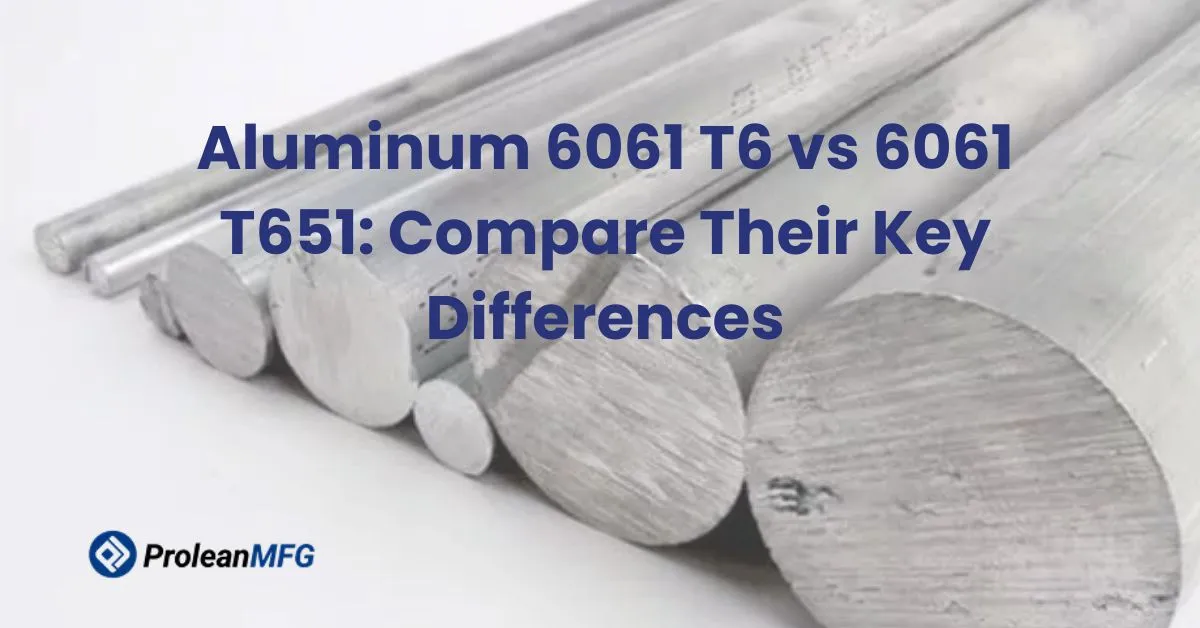

The debate between 6061T6 and 6061T651 when selecting aluminum for precision applications is one of manufacturing’s most misunderstood subjects. Both tempers begin with the same 6061 base alloy and undergo similar heat treatment. They behave differently when machining, and selecting the wrong temper can result in warped parts, failure to meet tolerances, or needless rework.
Knowing how tempering shapes the final characteristics of each variant is key to understanding the material 6061 T6 aluminum. This choice is important for anyone working in the aerospace industry, structural fabrication, or general manufacturing.
These distinctions have a direct impact on lead times, quality of parts, and budget for engineers and buyers who are sourcing CNC machining materials. Working with a partner who has experience can make a big difference. ProLean MFG is a leading provider of CNC machining materials and specializes in custom aluminum machining to meet your project specifications.
This guide will help you understand the key differences between 6061-T6 and T651 to make an informed decision.
What is 6061 T6 Aluminum?
T6 aluminum is well known for its high strength and exceptional mechanical properties. Aluminum alloys are available in a wide variety. Different grades are available in the market. Due to its excellent mechanical properties, it is used in the machining process.
It has good corrosion resistance and weldability, making it an ideal choice for industrial and structural applications.6061 tempered alloys both have the same composition. They have different mechanical properties, such as machinability, formability, and hardness.
6061 Aluminum Temper Designations
A specific temper achieved through solution heat treatment followed by artificial aging is called T6. Aluminum temper designations include F, O, H, W, and T, but the system also contains subcategories and modifiers. The word T shows that the alloy has been heat-treated.
The digit that is used next to ‘T’ tells the type of heat treatment process that is used to get certain mechanical properties, such as strength and hardness. By precipitating alloying elements within the aluminum matrix, this process maximizes the alloy’s strength.
The “51” suffix in T651 shows that the material has been stressed and is relieved by stretching. The aluminum plate or bar is stretched from 1% to 3% of its length after quenching. Stretching does not fully remove residual stress; it reduces and redistributes quench stress. Due to this, the aluminum does not bend or distort during or after machining.
6061 T6 Aluminum Treatment Process
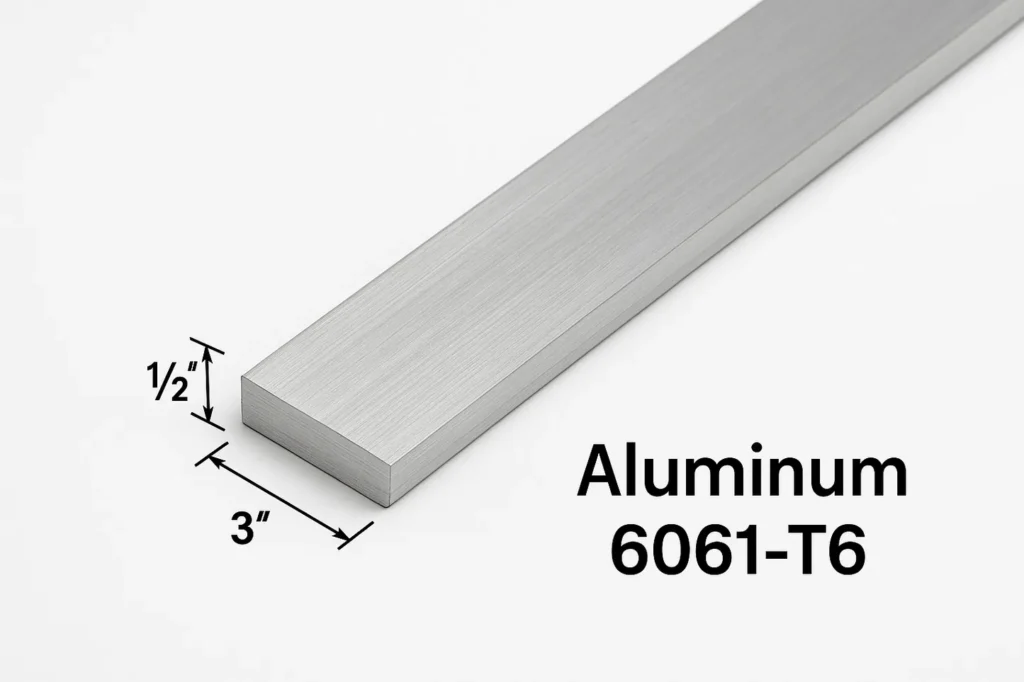
Aluminum 6061-T6
Here is the heat treatment process for 6061 T6. It follows three controlled stages:
Solution Heat Treatment
To dissolve alloying elements such as magnesium and silicon. The material 6061 T6 aluminum is heated to approximately 980°F (527°C).
Quenching
To lock the dissolved elements in a supersaturated solid solution, the material is rapidly cooled in water. This fast cooling process can introduce residual internal stresses.
Aging
In the aging process, the quenched material is artificially aged at around 320°F (160°C) for 8–12 hours. It causes fine precipitates to form and significantly increases the strength of the alloy.
Below are the mechanical properties of 6061 T6 aluminum. These 6061 T6 aluminum properties provide high strength, which is suitable for structural and load-bearing applications:
Tensile Strength
Before breaking, how much pulling force can the aluminum handle? Aluminum 6061 T6 tensile strength is 45,000 psi (310 MPa).
Yield Strength
The force at which aluminum starts to bend permanently is called yield strength. The yield strength of aluminum 6061 T6 is 40,000 psi (276 MPa).
Elongation at Break
It means how much the aluminum can stretch before it breaks. The Elongation at Break of aluminum 6061 T6 is 12%.
Modulus of Elasticity
Modulus means how stiff or flexible the material is. The Modulus of Elasticity of aluminum 6061 T6 is 10,000 ksi (69 GPa).
Brinell Hardness
It means how hard the surface is. The aluminum 6061 T6 hardness is 95 HB.
Shear Strength
Before being cut or sheared, how much force can the alloy resist? The shear strength of 6061 T6 is 30,000 psi (207 MPa).
Density
Density means the weight of the material. The density of 6061 T6 is 0.0975 lb/in³ (2.70 g/cm³).
Pros of 6061 T6 Aluminum
Here are some pros of aluminum 6061 T6, such as
High strength
It has a high strength-to-weight ratio. Making it an ideal choice for structural use.
Corrosion resistance
In most environments, it has good corrosion resistance. Making it an ideal choice for the machining process.
Availability
Due to its low cost, it is widely available in the market compared to other tempers such as T651.
Weldability
6061 can be welded, but T6 loses strength in the heat-affected zone (HAZ) and effectively returns to T4-like properties locally. After machining, it gives a smooth and attractive surface.
Anodizing
To improve appearance, protection coating, and anodization can be done easily.
Cons of 6061 T6 Aluminum
Below are some cons of the aluminum 6061 T6, such as
Residual Stresses
Internal stresses are created inside the material during the heating process. During machining, it can cause bending or wrapping.
High Precision Applications
6061-T6 is widely used for precision-machined components. Residual stress can distort heavy stock removal, but it does not make T6 unsuitable for precision applications.
Need Extra Support
Special fixtures or stress-relief processes are sometimes needed. During the machining process, it helps to maintain shape and accuracy.
Definition 6061 T651 Aluminum
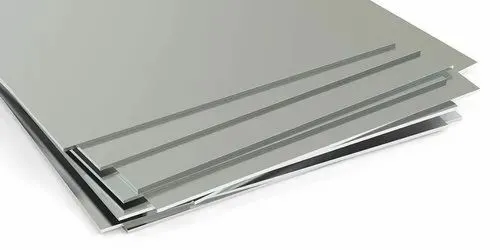
6061 T651 Aluminum Sheets
.Machinability between 6061-T6 and 6061-T651 is essentially the same.The difference is in dimensional stability during machining. During machining, it does not bend or warp easily. Grinding, polishing, and cutting of T651 is easier than that of T6. It is a perfect choice for precision aluminum machined parts.
T651 Aluminum Heat Treatment Process
Like T6, the heat treatment process of T651 follows three core stages. Just one important step is added.
Solution Heat Treatment
It is the same as T6. To fully dissolve the alloying elements. T651 is heated to approximately 980°F (527°C).
Quenching
After heat treatment, rapid cooling in water, same as T6. It introduces residual stresses.
Stress Relief by Stretching
To mechanically relieve residual stresses before aging, the material is stretched 1%–3%.
Aging
To restore and finalize strength, it is artificially aged under the same conditions as T6.
Pros of 6061 T651 Aluminum
Below are the pros of 6061 T651 aluminum
Stress-Relieved
By stretching, 6061-T651 is stress-relieved. This makes an ideal choice for machining.
Tight-Tolerance
It helps to maintain perfect dimensions. For complex and accurate parts, it is a good choice.
Less Risk of Warping
After machining, it does not bend or change shape because of the very low internal stress. So the chances of warping are very low.
Flatness
The surface always stays flat and straight, which is important for plates and precision components.
Cons of 6061 T651 Aluminum
Some of the cons of aluminum 6061 T651 are
High Cost
Extra processing is needed for T651, making it more expensive than T6
Availablilty
T651 is not available in all shapes and sizes.
Machinability Time
An extra process takes more production time than T6. T651 has a longer lead time.
6061-T6 vs 6061-T651 — Key Differences
Here are the key differences between 6061-T6 and 6061-T651
| Property | 6061 T6 | 6061 T651 |
| Tensile Strength | 45,000 psi (310 MPa) | 45,000 psi (310 MPa) |
| Yield Strength | 40,000 psi (276 MPa) | 40,000 psi (276 MPa) |
| Elongation at Break | 12% | 12% |
| Modulus of Elasticity | 10,000 ksi (69 GPa) | 10,000 ksi (69 GPa) |
| Brinell Hardness | 95 HB | 95 HB |
| Shear Strength | 30,000 psi (207 MPa) | 30,000 psi (207 MPa) |
| Density | 0.0975 lb/in³ (2.70 g/cm³) | 0.0975 lb/in³ (2.70 g/cm³) |
| Stress Relief | No | Yes (stretched 1–3%) |
| Dimensional Stability | Lower | Higher |
| Machinability | Good — risk of warping under deep cuts | Excellent — stable throughout machining |
| Typical Use | Structural / General | Precision Machining |
| Relative Cost | Lower | Higher |
Temper Chart of Aluminum 6061
Here is the temper chart of aluminum that will help you to better understand.
| Property | 6061 T6 | 6061 T651 |
| Tensile Strength | 45,000 psi | 45,000 psi |
| Yield Strength | 40,000 psi | 40,000 psi |
| Brinell Hardness | 95 HB | 95 HB |
| Elongation at Break | 12% | 12% |
| Stress Relief | No | Yes (stretched 1–3%) |
| Dimensional Stability | Lower | Higher |
| Typical Use | Structural/general | Precision machining |
| Relative Cost | Lower | Higher |
Mechanical Properties: 6061 T6 vs 6061 T651
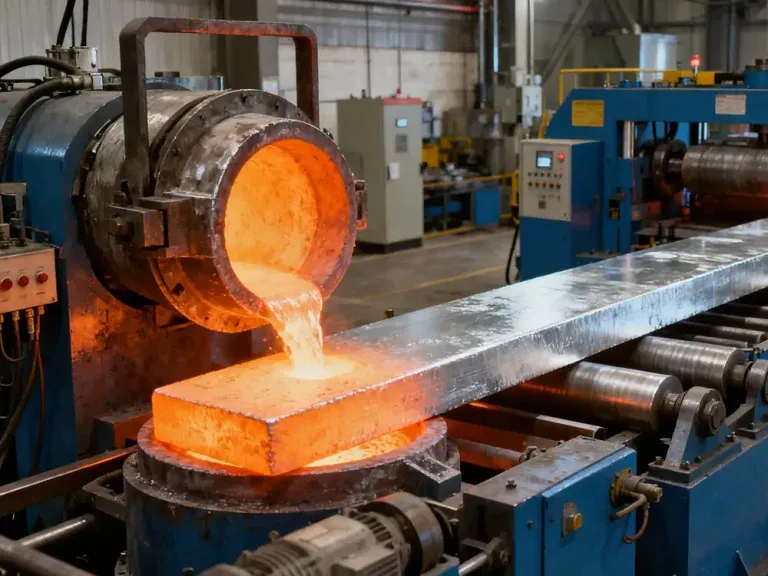
Heat Treatment of Aluminum Alloy
Below are the mechanical properties of the 6061 T6 aluminum vs 6061 T651
Strength
Both aluminum alloys have the same tensile and yield strength values. The T651’s stress-relief step does not reduce strength. Because it simply redistributes internal stresses. Due to the stretching process, T651 has slightly lower residual stress.
Heat treatment
The processing of both alloys is almost identical, with T651 adding a controlled stretch between quenching and aging. This is the single additional step that separates these two temperaments in real-world behavior.
Dimensional stability contrast
Dimensional stability contrast is the main difference between 6061-T6 and 6061-T651. During machining, due to internal stress, T6 can cause bending. Stretching does not remove stress; it reduces and redistributes it. So the shape is maintained during cutting and machining.
Applications for 6061 T6 VS T651
Selection of these two tempers depends on how the part will be used and how much machining is needed. Both of them are used in many machining processes. Each temper has its own benefits in different applications.
Machinability and Fabrication
6061-T6 is used in many applications. It has good machinability. It is used where very high precision is not needed. It is most widely used for structural brackets, extruded profiles, and welded structures.
T651 is used in the machining process because it does not bend or warp. It is best for high-precision and complex machining parts. It keeps the exact shape of the parts. It is used for high-tolerance components, precision plates, and mold tooling.
Applications of 6061 T6
Some of the common applications of 6061 T6 are
- It is used in structural Frames due to its high yield strength. such as frames, beams, and structural supports.
- Due to its different characteristics, such as strength, corrosion resistance, and ease of fabrication. It is used in the automotive and marine industries. Such as making brackets, chassis parts, boat hulls, and fittings.
- 6061 T6 machinability and finishing are good. It is commonly used in housings, casings, and enclosures for electronics and consumer goods.
- With the extrusion process, T6 is one of the most compatible aluminum alloys. Extruded shapes such as channels, angles, and tubes are most commonly used in window frames, curtain walls, railings, and structural framing systems.
- It is used in welded assemblies. Compared to many high-strength aluminum alloys, it has good weldability.
Applications of 6061 T651
Common applications of 6061 T651 are
- 6061-T651 internal stress is removed. It is best for CNC machining. During cutting, it keeps its shape and size. It is an ideal choice for complex and accurate parts.
- It is used in making aerospace parts. Due to its uniform mechanical properties and dimensional stability, it is used for structural panels, tooling jigs, and aircraft assembly fixtures.
- Throughout the entire machining process, T651 maintains its geometry. It ensures that the finished mold or fixture maintains the precise dimensions which is required for repeatable production.
- High tolerances and long-term dimensional stability are needed for medical devices and optical instruments.
- T651 is used where very high precision is needed. It is used on precision applications because, after machining, it does not warp or distort.
When to Choose: Aluminum 6061 T6 or 6061 T651
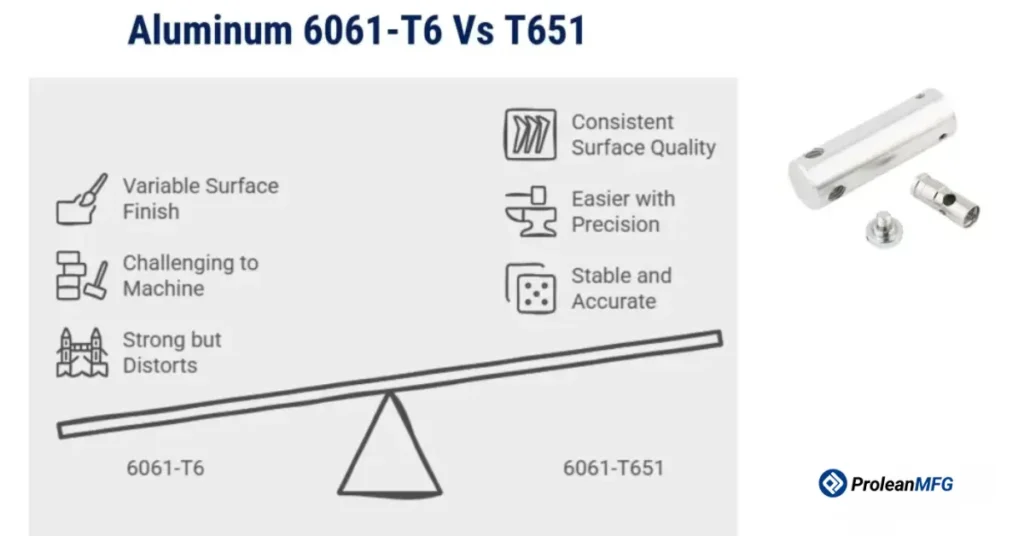
Aluminum 6061 T6 or 6061 T651
The selection between 6061 T6 vs 6061 T651 totally depends on the application. The complexity, machining process, and level of accuracy that you needed. But here is the short conclusion: when to choose 6061 T6 or 6061 T651.
6061 T6 Aluminum
When tolerances aren’t critical, choose T6 for applications that involve welding, forming, or light machining. This material is ideal for structural assemblies and general fabrication projects that are cost-sensitive, where the risk of distortion caused by machining is low.
T6 is the best option for material that is used in extruded, rolled, or shaped form with minimal stock removal.
6061 T651 Aluminum
Select T651 when the part is subjected to a significant CNC machining process or requires high dimensional tolerances. It can also be selected for parts that will be used under precision-critical conditions.
For aerospace plates, mold tooling, and complex multi-axis components, T651 is widely used. This step of stress relief makes the material more predictable. This results in more accurate parts and reduces the need for rework.
Conclusion
Internal stress state is the main factor when comparing 6061 T6 and 6061 T651. Both tempers have a chemical composition that is nearly identical and a mechanical strength that is almost identical. The differences are in the way each temper reacts to material removal through machining. T6 has residual quench stress that can cause distortion. T651’s controlled stretch eliminates these stresses before it ever touches a machine tool. T6 has been proven to be the most cost-effective option for structural and general applications. When it comes to precision machining, the T651 is always the best choice.
ProLean MFG can help you with your aluminum sourcing project. They have deep expertise in custom aluminum machining services. They offer a wide range of materials and can deliver parts to your exact specifications, on time and within tolerance. Contact us today to discuss the details of your project.