
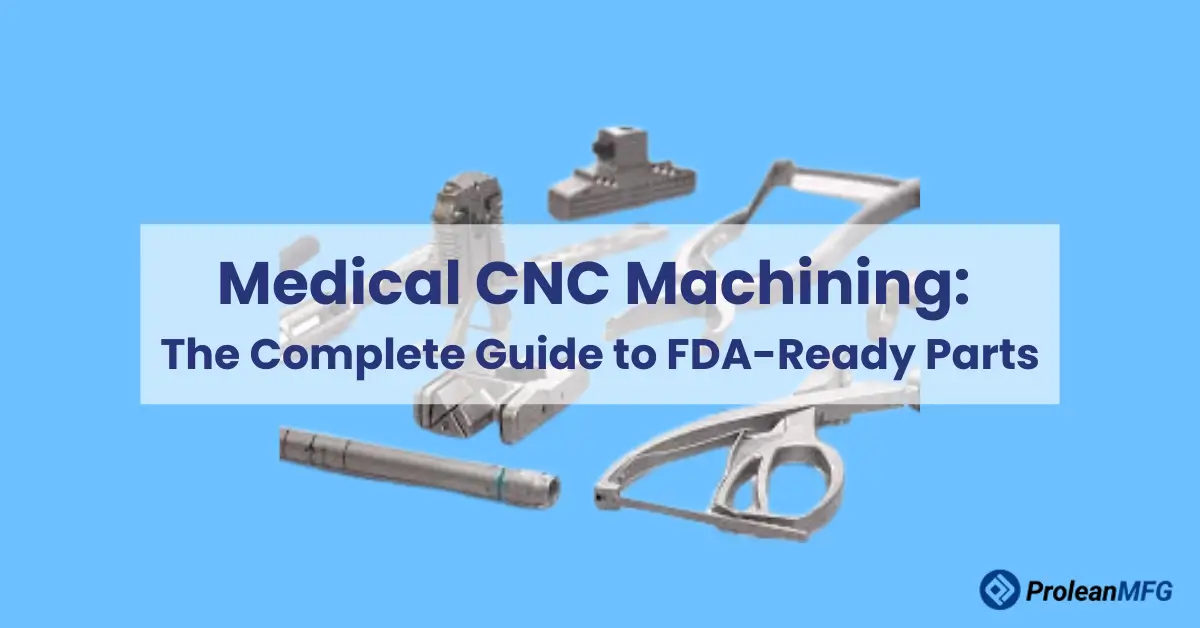

Medical CNC machining is a perfect manufacturing process to produce implants and medical tools. CNC machining for the medical industry is a decision that is biocompatible and FDA/ISO 13485-ready from day one, not just materials and tolerances.
This blog is about what CNC machining is, material selection, applications, and how it dominates the medical industry. Let’s get started!
What is Medical CNC Machining?
Medical CNC machining is a subtractive manufacturing process that utilises computer-operated systems to produce precision-engineered parts. This process ensures an exceptional level of precision, accuracy, and repeatability. Therefore, it is a more trusted process for the production of medical machining parts without any errors.
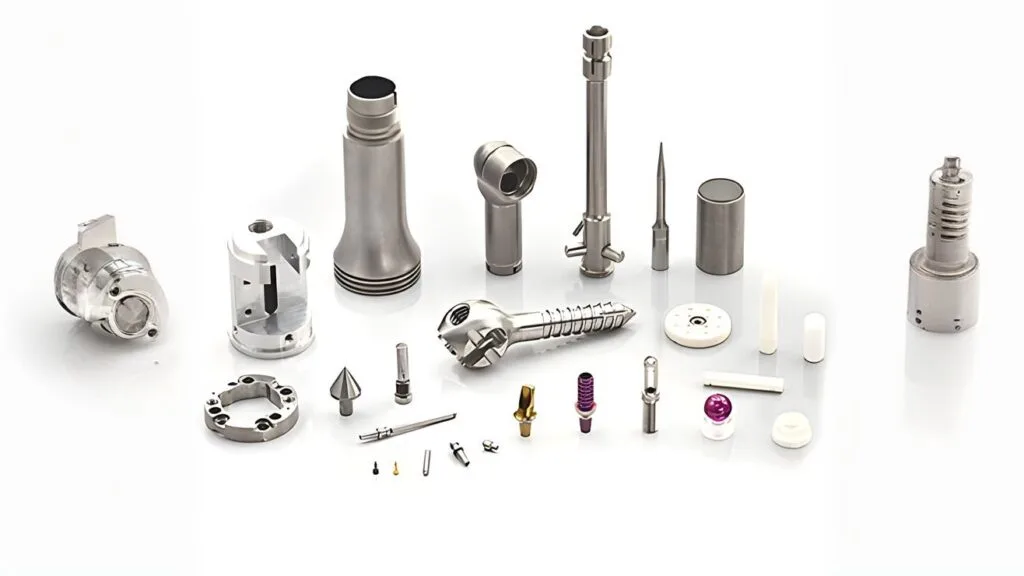
- Medical machining parts include bone screws, hip joints, dental implants, surgical scissors, and advanced scanning equipment, including dental and medical scanning equipment.
- The robust and biocompatible materials are used to compose these medical parts.
- Parts must meet FDA 21 CFR Part 820 quality system regulations and, for global supply chains, ISO 13485 certification.
These medical machining parts include bone screws, hip joints, dental implants, surgical scissors, and advanced scanning equipment, including dental and medical scanning equipment. The robust and biocompatible materials are used to compose these medical parts. But these parts must meet FDA 21 CFR Part 820 quality system regulations and, for global supply chains, ISO 13485 certification.
Why CNC Machining Dominates Medical Device Manufacturing?
Precision is non-negotiable for medical devices. The CNC machining for the medical industry is an ideal process, delivering tight tolerances of ±0.001 inches. This is critical for medical machining parts such as catheter guides, bone screw and surgical instruments
The table below represents three structural advantages of CNC machining medical devices:
| Advantage | Why It Matters in Medical | Competing Process |
| Dimensional Repeatability | Critical for implants and mating components | Investment Casting (±0.01 in) |
| Material Flexibility | Supports Ti-6Al-4V, PEEK, SS316L in one shop | Injection Molding (polymers only) |
| No Tooling Cost | Ideal for prototypes and low-volume FDA submissions | Stamping (high tooling cost) |
| Full Traceability | Every cut logged via the CNC program file | Manual machining (inconsistent) |
| Surface Finish Control | Ra values matched to FDA biocompatibility needs | 3D Printing (rough surface as-built) |
Material Selection for Medical CNC Machining
The material selection for medical machining is an important decision to ensure the part meets safety, quality, and legal requirements. Strict quality controls implement for choosing the wrong material for patient safety.
The wrong selection can cause more costs and delays for the FDA approvals for your medical device machining program. This table guides you to choose the right material to confirm your material status as per ISO 10993.
| Material | Common Applications | ISO 10993 Status | Machinability |
| Ti-6Al-4V (Grade 5) | Orthopedic implants, bone screws | Established biocompatible | Moderate, needs coolant |
| SS 316L | Surgical instruments, housings | Established biocompatible | Good, widely supported |
| PEEK | Spinal implants, trial components | Established biocompatible | Good, low abrasion |
| Aluminum 6061 | Non-implant housings, prototypes only | Not for implants | Excellent |
| Delrin (POM) | Non-implant jigs, fixtures | Not for implant contact | Excellent |
| UHMW-PE | Orthopedic bearing surfaces | Established biocompatible | Moderate, stringy chips |
Critical Medical CNC Machining Applications
The medical CNC machining produces a wide range of medical machining parts and devices requiring accuracy. The precision medical machining helps in making important parts accurately.
Here are the four applications of CNC machining for the medical industry:
Surgical Instruments
Surgical instruments such as scalpels, forceps, and retractors are produced using medical instrument machining. The medical parts typically require a Ra of 0.4–0.8 µm to ensure repeatability and accuracy.
Orthopedic Implants
Orthopedic implants like bone plates, hip stems, and tibial trays are produced using CNC machining. Critical features of these components are manufactured under controlled fixturing and machining conditions with tolerances as tight as ±0.002 inches to ensure precise fit within the patient’s body. The CNC machining medical devices is usually made from Ti-6Al-4V or cobalt-chrome, following ASTM F86 standards for functionality.
Orthopedic implants like bone plates, hip stems, and tibial trays are produced using CNC machining. These components are designed within ±0.002-inch tolerances to fit precisely in the patient’s body. The CNC machining medical devices is usually made from Ti-6Al-4V or cobalt-chrome, following ASTM F86 standards for functionality.
Diagnostic and Imaging Equipment Housings
CNC machining is employed to produce intricate medical device housings, like MRI, ultrasound, and endoscopy housings. The Class II or III non-implant parts are manufactured with aluminum via CNC machining for the medical industry.
Dental and Ophthalmic Devices
CNC machining is employed to produce dental implants with high precision to properly join with bone and stay stable in the body. Similarly, medical instrument machining for ophthalmic has a high level of accuracy that keeps lenses aligned perfectly for clear vision.
Surface Finishes in Medical Machining
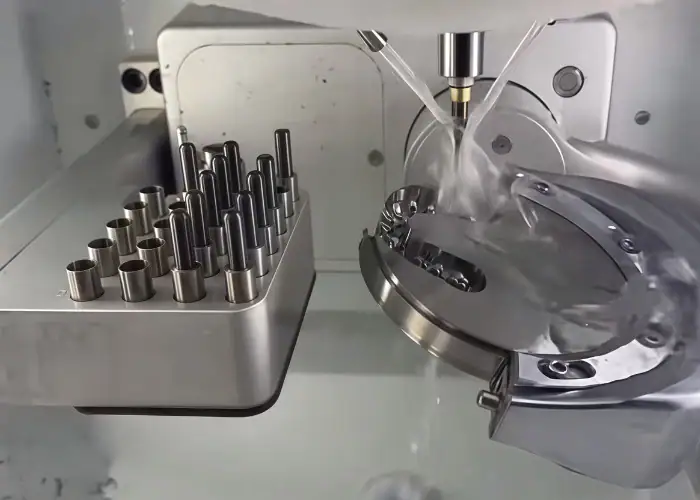
Surface finishes play a crucial role in medical machining. Each surface roughness (Ra) range is selected to meet specific FDA and ISO compliance requirements, ensuring safety, biocompatibility, and performance in medical applications. A smooth and rough surface acts differently with a medical device or part performance. A smooth surface makes implants work better in the human body. Whereas a poor surface can cause infection and device failure. Therefore, medical machining parts must be FDA-approved and have every specification in the DHF documentation.
| Finish Type | Ra Range | Best For | Compliance Note |
| As-Machined | Ra 0.8–3.2 µm | Non-implant housings, fixtures | Document as-machined state in DHF |
| Electropolished | Ra 0.1–0.4 µm | Surgical instruments, SS implants | Reduces the chrome-depleted surface layer |
| Passivated (ASTM A967) | N/A (chemical) | All SS 316L parts | Required per FDA for SS implants |
| Bead Blasted | Ra 1.6–6.3 µm | Non-load-bearing implant surfaces | Increases surface area for bone ingrowth |
| Anodized (Ti) | Ra varies | Titanium implants and instruments | Type III hard anodize for wear resistance |
Common Mistakes and Solutions in CNC Medical Device Machining
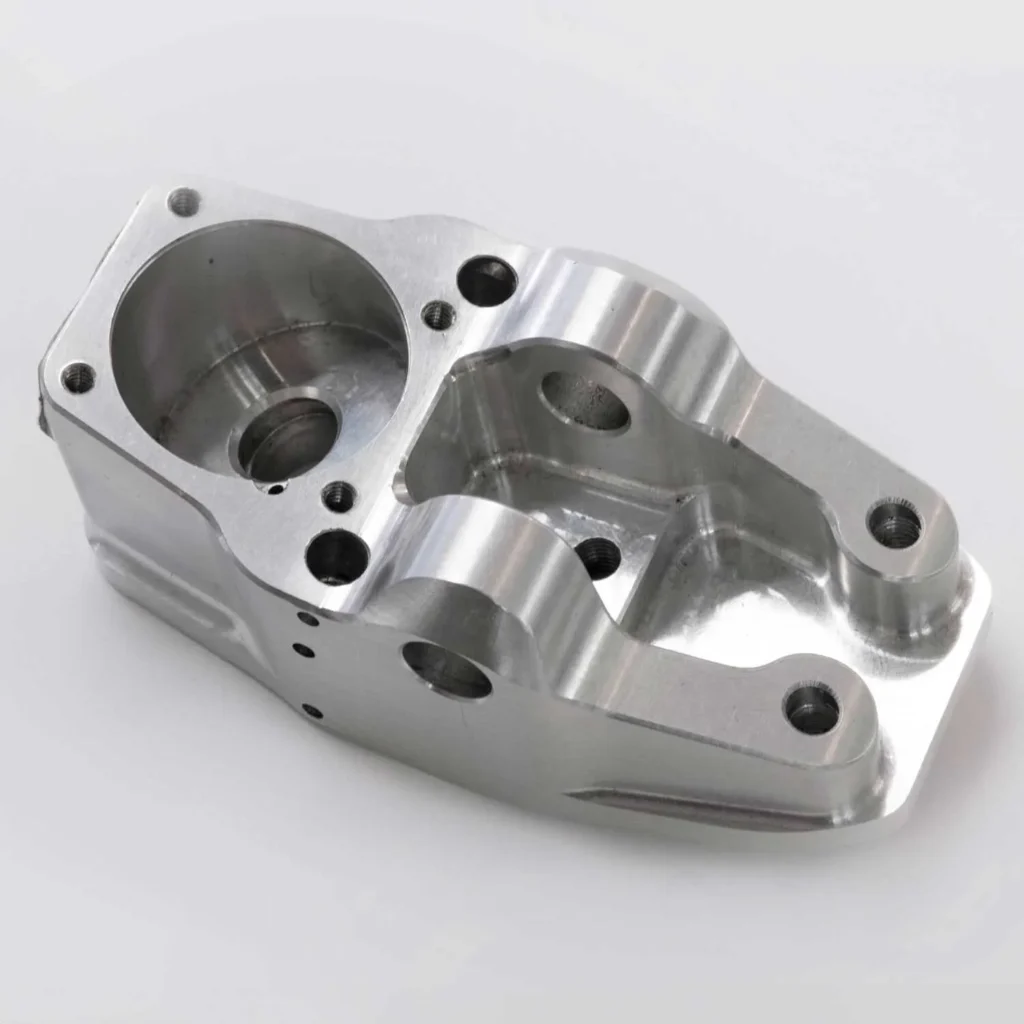
There are several common mistakes that the medical CNC machining faces before the machine starts. These mistakes can happen during the specs, the selection of the supplier, and the documentation step.
Selecting a Supplier Without ISO 13485 Certification
The selection of a supplier without ISO 13485 certification is mostly overlooked. This evaluation is based on the basis of price and lead time. This mistake can restart your audit trail from zero. Therefore, the verification of expiry days before DFM begins is necessary.
Over-Tightening Tolerances Beyond Functional Need
Tight tolerances ±0.001 inch do not require for an entire drawing where only 2 or 3 features need it. This leads to an increase in the cost with slow production.
Therefore, apply tolerances where there is a functional need and with proper documentation in the DHF and selective application of GD&T.
Tolerance Application Decision Flow
- Step 1: Identify function-critical features
Identity critical features like fit, alignment, sealing, or performance of the device. - Step 2: Check assembly dependency
Tighten tolerances are needed only if the assembly requires precise fit, alignment, or functional performance. - Step 3: Evaluate risk impact
Determine whether loose tolerances affect safety, reliability, or compliance to assess the overall risk impact. - Step 4: Confirm manufacturing capability
Tighter tolerances are applied only if they are within confirmed manufacturing capability. - Step 5: Apply GD&T selectively
Apply GD&T only when clarity or functional control is required. - Step 6: Avoid blanket tolerancing
Avoid blanket tolerances for non-critical pr cosmic features. - Step 7: Document justification (DHF)
DHF documentation is required to justify specific tolerances and their functional impact.
Ignoring Sterilization Compatibility During Material Selection
Any medical part is designed without skipping the sterilization compatibility testing. Moreover, some plastic materials can change their size and shape due to ETO sterilization. And stainless steel can also be harmed by repeated sterilization.
The clinical team must confirm the sterilization method with dimension stability before the material is finalized.
Skipping First Article Inspection on Initial Production Runs
The first article inspection is a must before the high-volume production runs. This inspection is a validation that a machined part is produced to the design intent.
Hence, consider FAI as a required condition, and a drawing showing all details regarding all dimensions.
| Step | FAI Requirement | Description |
| 1 | Design review | Verify drawings, CAD models, and specifications are complete |
| 2 | First part production | Manufacture the first sample under actual production conditions |
| 3 | Dimensional inspection | Check all critical dimensions and GD&T requirements |
| 4 | Record results | Document all measurements, deviations, and outcomes |
| 5 | Material & process check | Verify material certification, process parameters, and surface finish |
| 6 | Approval | Obtain formal sign-off before mass production |
| 7 | Documentation storage | Maintain the FAI report for traceability and audit (DHF/quality system) |
Treating Surface Finish as an Aesthetic Specification
If the surface finishing measurements are missing from the drawing, then bacteria can stay on it even after the sterilization.
So, each surface finish is defined as a clear medical need. The reason must be recorded according to the relevant ISO 10993 or FDA guidelines.
Start Your Medical CNC Machining Project With ProLean MFG
Medical CNC machining is an indispensable technology for modern healthcare manufacturing. At ProLean MFG, our precision medical machining ensures reliable devices and components that meet exact dimensional and compliance requirements.
Orthopedic implants, surgical instruments, dental components, and diagnostic device housings are manufactured by ProLean MFG using materials like titanium, stainless steel, and medical-grade polymers. Example projects include custom orthopedic plates, precision surgical tool components, and CNC-machined housings for medical scanning devices.
Our engineers cope with all of your specific device classes for both medical device machining and medical machining parts. ProLean stays ahead with the growing demand of CNC machining for the medical industry with ISO 13485-aligned processes, full material traceability, and FDA-ready documentation built into every order.
Ready to start your CNC machining medical industry services for your device project? Get a quote from ProLean MFG today!!