
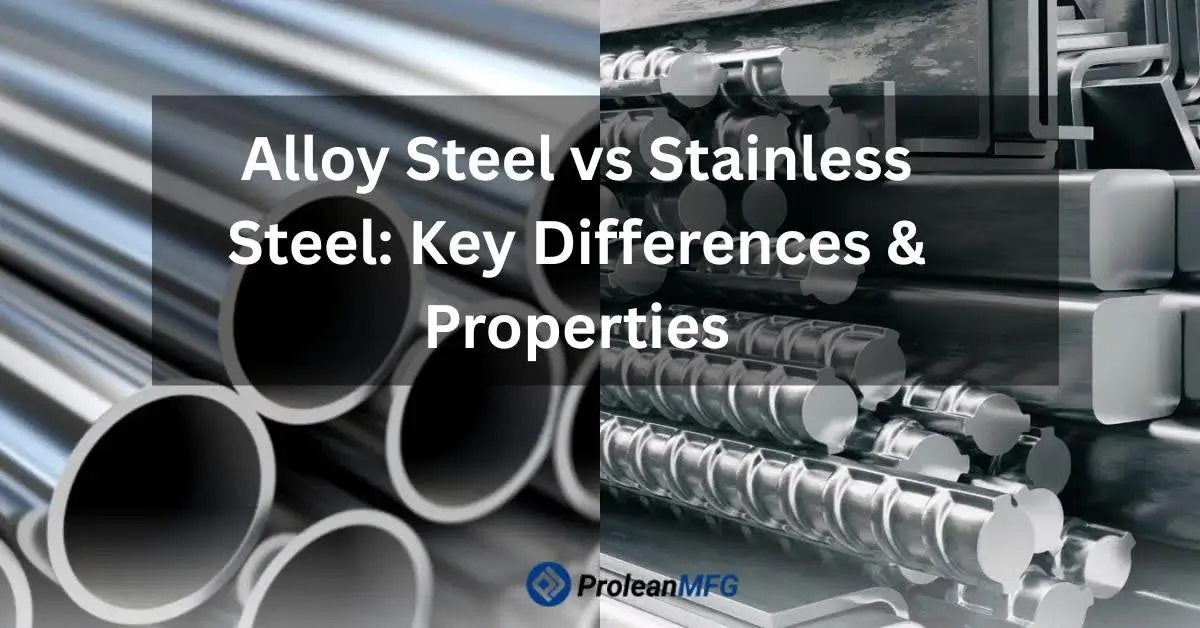

The choice of steel is one of the most important decisions for any manufacturing or engineering project. Alloy steel vs. stainless steel is at the heart of this debate. Both materials are iron. They both have important industrial roles, and they come in different grades. The materials differ in composition, corrosion behaviour, performance, and cost.
For projects involving stainless steel machining, material selection affects not only part performance but also tool wear, production efficiency, maintenance needs, and lifecycle costs. A wrong choice can lead to premature failures, especially in high-demand environments.
In 2026, the global market for advanced stainless steel will continue to expand. As the demand for lightweight components in automotives, medical grade components, and offshore power infrastructure increases, engineers are forced to make more precise material decisions than ever. The distinction between the two steel groups is no longer just a technical matter. The challenge of cost and performance optimization impacts all phases of a product’s lifecycle.
ProLean MFG offers expert guidance on every step of the material selection and production process. ProLean Tech provides 904L Stainless Steel and Alloy Steel CNC machining capabilities to provide expert advice during each stage of material selection and production. However, 904L stainless steel is a high-alloy austenitic steel, specifically designed for its corrosion resistance in aggressive environments, such as acids, rather than its general CNC machining properties.
Differences in Composition and Classification Between Alloy Steel & Stainless Steel
Chemically, the fundamental difference between stainless steel and alloy steel is evident. The two alloys are both iron-carbon, but their alloying elements differ in terms of type, quantity, and purpose. Those differences drive every downstream performance characteristic.
Alloy Steel
What is alloy steel?
Alloy steel can be defined as steel with one or more alloying elements beyond carbon and iron added in controlled quantities to achieve certain mechanical properties. Total alloying elements can range from 1% up to 50% of the total weight. The resulting material is engineered to achieve specific mechanical properties, such as hardness, toughness, or wear resistance.
Low Alloy Steel and High Alloy Steel
Alloy steels can be divided into two broad categories, based on their total alloying content.
Low-alloy steels are steels that contain less than 8 percent of the total alloying elements. This category includes the popular AISI alloys 4140 and 4340 and other alloys widely used in structural, automotive, and tooling applications. Low alloy steels offer cost-effectiveness and significant gains in hardenability, strength, and durability over plain carbon steel.
High-alloy steels have an alloying of more than 8 percent. This category includes die steels, tool steels, and certain specialty grades. These materials are used for their extreme hardness, wear resistance, heat strength, or other properties. They are also more expensive and harder to manufacture than low-alloy alternatives.
Common alloying elements and their effects
The mechanical properties of alloy steel grades are determined by the composition of their elements.
Chromium (Cr), in higher concentrations, increases corrosion resistance and hardness.
Nickel (Ni) is an alloy that has increased toughness, resistance to impact, and strength when heated at low temperatures.
Molybdenum: Increases high-temperature strength and temper brittleness.
Vanadium: Improves shock resistance, fatigue resistance, and grain structure.
Manganese (Mn) increases hardenability and tensile strength; it reduces heat shortening when welding.
Silicon is a deoxidizer that improves resistance to oxidation and strength at high temperatures.
Tungsten, a metal that is hardenable at high temperatures, is found in high-speed alloys.
Does alloy steel rust?
Alloy steels, like carbon steels, have a high iron content. They will corrode when exposed to moisture or oxygen.
Stainless Steel
A threshold of 10.5% minimum chromium is required in the mass to define stainless steel. This level of chrome triggers the self-repairing passive oxide layer (Cr2O3) to form on the surface. This layer is what gives stainless steel its resistance to corrosion.
Chromium and Its Importance
Chromium is the element that makes stainless steel “stainless”. When the chromium is above 10.5%, it reacts with atmospheric oxygen to form a thin, invisible, and stable chromium oxide film. This layer acts as a barrier against moisture, oxygen, and corrosive agents. It will self-heal if damaged or scratched as long as the bulk contains enough chromium. The protection increases as the chromium content does. This is why many commercial grades have 16 to 26% chromium.
Without this passive layer, the material will be completely dependent on coatings and plated to protect it against corrosion.
Types of Stainless Steel
There are five major metallurgical groups that stainless steel falls into:
Austenitic (304, 316, 904L) Non-magnetic; best corrosion resistance in the world; most widely used around the globe.
Ferritic (443 and 444): moderate corrosion resistance at a lower price than austenitic grades
Martensitic (411 420 44C): Hardness and strength are high, used for surgical instruments, cutlery, and bearings
Duplex (2205, 2507): High strength, superior resistance to chloride, commonly used in oil and gas environments.
Precipitation Hardening (17-4 PH, 15-5 PH: PH): High strength achieved through heat treatment; used for aerospace components and high-performance parts
Comparing the mechanical properties between stainless steel and alloy Steel
Mechanical performance is an important factor in many structural and dynamic applications. Each property of the two materials is compared.
Tensile strength
Heat-treated alloys can have a strength of up to 1,500 MPa. After quench and temper, grades like 4340 can reach 1, 800. The range of stainless steel is different depending on the grade. Annealed 304 sits around 515 to 620 MPa, while duplex, cold-worked austenitic, and precipitation-hardening grades reach 800 to 1,300 MPa. Hardened martensitic steel grades can reach 1,900 MPa. Alloy steels are a good choice for structural applications that require high strength and a moderate cost.
Hardness
Heat-treated alloys are among the toughest steels available commercially. In tempered form, 4140 reaches 28 to 34HRC. D2 tool steel measures 60 to 62HRC.
Austenitic grades of stainless steel, like 304 or 316, are 70-95 HRB when annealed, which makes them softer. After hardening, martensitic alloy 440C is capable of reaching 57-60 HRC. However, it costs more than other equivalent alloy grades.
Ductility
Austenitic steels have elongation values between 40 and 60%. They are therefore ideal for complex forming, deep drawing, and rolling. Heat-treated low-alloy grades offer strength at the expense of ductility, resulting in a drop from 15 to 25 percent elongation. The application’s requirements for forming and loading will determine the right balance.
Impact Resistance
Alloy steel material properties include impact resistance because of containing nickel, such as 4340 and 8620, which are designed to be tough. They perform well at low temperatures. Austenitic stainless grades also have good impact resistance at cryogenic temperatures. This is why they’re used in LNG tanks and cold climate piping. Ferritic and Martensitic stainless steel grades are more brittle and not suitable for impact-critical applications.
Fatigue Strength
Alloy steels that have a fine microstructure due to heat treatment show fatigue limits between 500 and 900 MPa at 30 to 45 HRC, which makes them a standard choice for crankshafts.
Stainless steel material properties include lower fatigue limits, and they work-harden quickly under cyclic loads. This can cause cracks to form at surface defects. Duplex and precipitation-hardening grades perform considerably better in fatigue-critical applications.
Alloy steel is generally the better choice for applications that demand very high strength, hardness, and fatigue resistance, such as gears, crankshafts, axles, and structural frames that carry heavy dynamic loads.
Stainless steel is the preferred option when the part must resist corrosion, handle food contact, or operate in wet or chemically aggressive environments, such as medical instruments, kitchen equipment, and marine fittings. Knowing which mechanical property matters most for the specific application makes it easier to pick the right material from the comparison below without over-engineering or adding unnecessary cost.
What is the difference between stainless steel and alloy steel in terms of corrosion resistance?
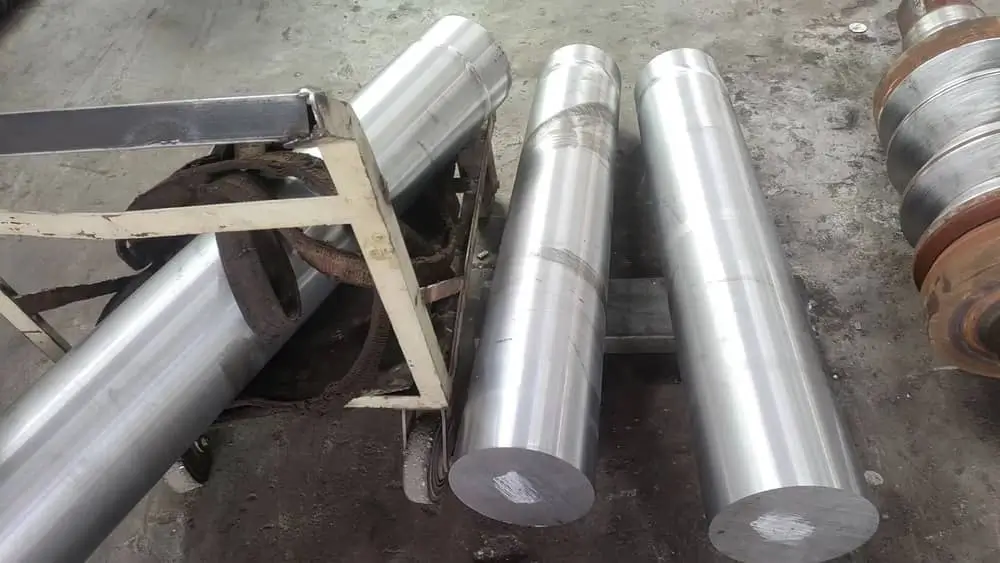
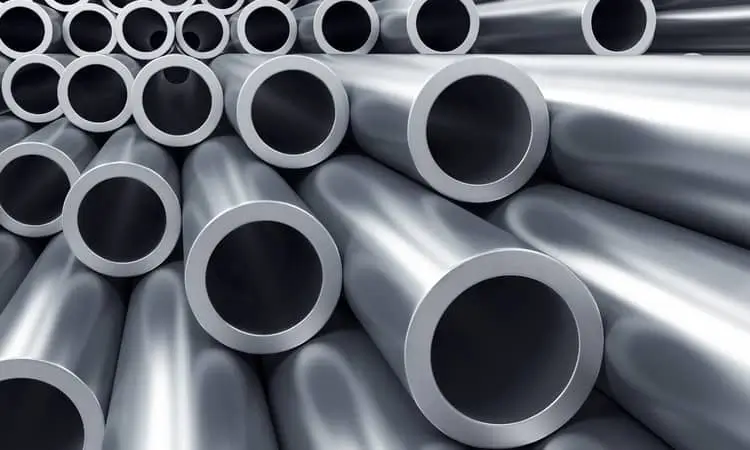
Stainless steel circular rods
The way they resist corrosion is what really makes them stand out. It can be critical in harsh environments.
General Corrosion Resistant
Due to its passive chromium oxide layer, stainless steel has the advantage of being resistant to uniform corrosion under a variety of conditions. This includes many of the atmospheric, aqueous, and mildly corrosive conditions. Alloy steel will oxidize and corrode in the same conditions if it is not protected. Stainless steel is therefore the best choice for outdoor and chemical exposure.
Pitting and Crevice Corrosion
They can be especially severe, as they can cause localized serious damage, which can lead to sudden failures. The chloride ions in stainless steels disrupt the passive layer, causing pitting. The most pit-prone grade is 304. PREN values are higher in 316, 2205 Duplex, and 904L. This means that they will be more resistant to pitting. Alloy steels will corrode uniformly in the absence of a coating. In environments where chlorides are high, it is better to use stainless steel grades with a higher PREN rather than an alloy steel coated with zinc.
Galvanic corrosion
Due to an electrolytic solution that carries a current, when two metals are in contact, the one with the higher corrosion rate will be the first. When alloy steel is in contact with stainless steel, it will corrode faster. It is not uncommon for mixed metal assemblies to corrode, especially in humid environments. This can be resolved by matching the fastener type to the base metal type or by using insulation.
Stress Corrosion Cracking
When the temperature is above 60 degrees Celsius and an austenitic alloy, e.g., 304, is in the presence of chlorides, it is likely to undergo stress corrosion cracking. This severely restricts its application in heated seawater and in certain process streams. Alloy steel with a hardness greater than 35 HRC is prone to cracking caused by hydrogen in acidic or hydrogen environments. Alloy steel is less prone to this problem, provided the heat treatment is done in a sour environment at a hardness below the critical level.
Factors That Affect Corrosion Resistance
Both materials are affected by several design and service factors.
- Surface finishes: Smoother surfaces tend to offer better corrosion resistance to stainless steel because there are fewer places to collect corrosion.
- Passivation is the process of creating a chemical layer to increase the thickness of a passive layer, after machining, using citric or nitric acids.
- Welding heat input: Heat-affected zones in austenitic welds can lose their passive layers because of sensitization. The possibility of this occurring is lower when using lower carbon grades like 304L or 316L.
- Protection of coatings: Corrosion protection of alloy steels is entirely reliant on coatings and plating. The level of corrosion protection is a reflection of the condition of the plating or coating.
- Operating temperatures: Elevated temperatures can accelerate corrosion in both metal families and cause surface layers to lose stability.
Distinction Between Heat Treatment and Fabrication
The way a material has been processed will result in variations to the cost, lead-time, and functionality of a finished component.
Heat Treatment Methods
Alloy steels respond very well to heat treatment as a design material. Engineering alloy steels frequently undergo the processes of annealing to enhance their machinability and normalizing to foster a reduction in internal stresses. These hold the best value in the industries of gears and cams.
An example of this is the quench and tempering process; this maximizes strength and hardness and is followed by a tempering to restore believe it it toughness.
The heat treatment of stainless steel is more limited. Austenitic grades cannot be heat-treated, and the only way to increase these grades is by cold work. Martensitic and precipitation hardening grades can be heat-treated to increase strength, but the temperature ranges are very limited, and the process is quite controlled in terms of the parameters.
Weldability
Welding is possible for alloy steels, but it is essential to do some careful pre-heating, as well as post-heating, to avoid both hydrogen cracking and brittle zones, or both, affected by your changes in heat. Procedures that are stricter are most likely going to be required for materials that have more carbon or more alloy content. This is even more relevant for materials that have a carbon equivalent of over 0.3%.
For example, 304L or 316L grades, which are part of austenitic stainless steel, can be considered some of the most freely wieldable materials, as they don’t often require pre-heating or post-heating. In comparison, materials in the Duplex category require a more even and balanced microstructure, which in turn demands a more solid control of input heat. Meanwhile, materials in the martensite grades category require pre-heating and post-heating to a similar extent and for similar reasons as alloy steels require.
Machinability
Alloy steels that have gone through the annealing process are able to be machined. Using standard carbide tools along with usual cutting rates, grades like 4140 or 4340 can be machined. In addition, if the material has gone through heat treatment and has an HRC of above 40, that would require what is called hard machining.
In those cases, you would need to use either CBN tools or ceramic tools. Ultimately, this process is more expensive and takes longer; however, if you have the right setup, it is possible.
Austenitic stainless steel is harder to machine. Dwell, low feed rates, and poor cooling all contribute to rapid tool wear and poor surface finish. With respect to cooling and tooling, fast cutting speeds are essential. With the right parameters, modern CNC machining centres can handle these materials at a production scale.
Austenitic steels are engineered to have some of the highest formability. The stainless steel’s high ductility and work hardening properties improve edge quality during deep drawing. This is the reason why 304 and 316 are popular in the food, construction, and medical industries.
Alloy steels are typically in an annealed state before heat treatment. In cold forming high alloy grades, springback or cracking may occur when the material is too stiff. The usual procedure is to heat treat and then form.
Applications of Alloy Steel vs Stainless Steel
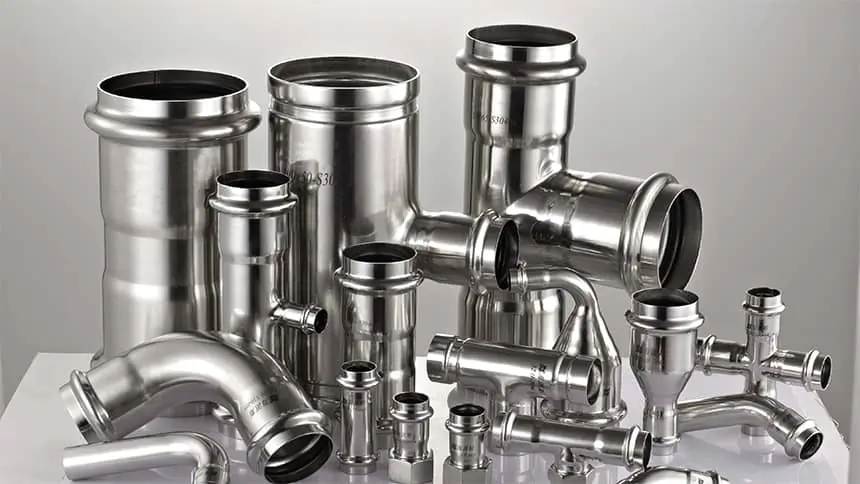
Applications of stainless steel
The last step in selecting materials depends on the location and functionality of the component. This is how the various material families integrate with specific applications.
Alloy Steel Applications
Powertrain: Crankshaft and camshaft assemblies. Connecting rods, gear-loose and shiftless transmissions.
Aerospace: Landing Gear Parts, Aircraft Fittings, and High-Strength Bolts.
Leveling & Drilling: drill bars, kelly bars, and assemblies downhole tools
Heavy machinery: Pins & sprockets for excavators. Mining crushers. Blades of bulldozers.
Cold work Tools: Presses and dies with high hardness
Construction – Reinforcement bar, structural elements, and pretension cables
Applications of Stainless Steel
Medical Implants, devices, and surgical.
Food and Drink: As well as medical equipment, tanks, mixers, and conveyors.
Offshore and Marine: Propellers, fittings, and deck hardware that are immersed on the seabed.
Chemical Processing includes high-purity fluid systems, reaction vessels, distillation columns, and heat exchangers.
In architecture, it is important that curtain wall systems and decorative facades have a long-lasting, aesthetic stability.
In the pharmaceutical industry, fluid-handling systems, packaging machines, and clean-room systems are all used.
Selecting the Right Type of Steel
Compare options and prioritize the following.
Mechanical load: Does the component experience tensile forces exceeding 1,000 MPa? Is it required to have a high degree of hardness, and can it be loaded and unloaded repeatedly without breaking? In such situations, heat-treated alloy steels are likely to be the best choice.
Temperature of operation: Some alloys are preferred above 500 degrees Celsius; austenitic stainless steels are preferred at cryogenic temperatures.
When it comes to deep drawing or complex forming, austenitic alloy steels are preferred.
In the medical, food, and aerospace industries, stainless steel is used extensively.
Alloy steels cost less for the same strength. The addition of corrosion resistance to stainless steel can lead to a significant increase in cost.
It’s not only about the material when it comes to purchasing decisions. It’s also about economics and its environmental impact.
Alloy Steel and Stainless Steel Price Comparison
Costs are determined by the amount of alloy contained in raw materials. The stainless steel contains more chromium compared to alloy steels.
Under similar market conditions, the price of alloy steel 4140 is 3 to four times higher than austenitic stainless steel 304. The molybdenum in 316 is between 30% more expensive than 304. Specialty grades like 904L and duplex 2205 are 10 times more expensive than alloy steel. Surface-treated alloy steels are cheaper in large-scale production, where corrosion resistance is not the primary concern.
Costs of the life cycle
The price of raw material is one factor that goes into a life cycle analysis. It is important to take into account the cost of the component, as well as the frequency and intervals between replacements. It is possible that a component with a lower cost, but which needs to be changed every three years over the course of 15 years, could be more costly than an alternative made from stainless steel. Unplanned downtime can be more expensive than the difference in materials, especially for production-critical environments such as food and chemical processing plants.
Environmental Sustainability and Impact
Steel is the most recyclable material on Earth. Both materials are highly recyclable. The embedded energy costs of stainless steel are higher due to the high amount of energy needed for production. Electrically fed arc furnaces that use recycled steel are a low-carbon emission alternative. This industry is changing rapidly.
Stainless steel’s benefits, like its long lifespan and low maintenance costs, can be outweighed by the carbon footprint created by infrastructure and equipment that are designed for long-term usage.
What are the Advantages of Using Stainless Steel over Alloy Steel?
By identifying the areas where alloy steel is clearly beneficial, you can avoid specifying products that will increase costs.
- Heat-treated alloy tool grade can reach a hardness of 60+ HRC. This is higher than the standard grades of stainless steel.
- Alloy steel’s cost is considered when evaluating its value. This is especially true for structural and dynamic applications with high loads and corrosion-free environments.
- The alloy steel wears better than austenitic stainless steel and costs less per part. This lowers the cost of each part.
- Raw material costs for alloy steels of the same strength, such as those, can be lower, particularly in high-volume production.
- Alloy steels respond better to heat treatment and can be used for a wide range of hardness, toughness, and precision property control.
- Stainless steel does not have a magnetic property. Therefore, only magnetic grades are suitable for applications that require a magnetic response, such as magnetic actuators, magnetic sensors, or magnetic clamping.
What are the Advantages of Stainless Steel over Alloy Steel?
Comparing stainless steel with alloy steel, there is often a significant difference.
- It is corrosion-resistant. It is corrosion-resistant.
- Surface treatments are required for alloy steels to meet certain requirements. Surface treatments are required for stainless steels to meet the requirements of food, medical devices, pharmaceuticals, and non-porous surfaces.
- Stainless steel is a great choice for architectural, consumer, and hospitality applications because of its bright, professional appearance. It requires minimal maintenance.
- Coatings protect alloy steel. When a coating fails, corrosion begins quickly. Stainless steel is not susceptible to a single failure point.
- Austenitic stainless steel has excellent toughness above -196 degrees. This is a great advantage for LNG and cold-weather infrastructure.
- Stainless steels of medical grade, like 316L, are approved for use as surgical instruments and implants. Alloy steels, however, are.
What are the similarities between stainless steel and alloy steel?
Alloy and stainless steels are so similar that a comparison is justified.
Both are iron-based
These materials are both iron-carbon alloys with intentional alloying components. This common basis provides similar behavior metallurgy. It is the same for heat processing, mechanical processing, and other similar manufacturing methods.
Steel Family Improvements
There are two family classifications because plain carbon was not sufficient for certain uses. Both stainless steels and alloy steels have been designed with purposeful improvements. One is focused on mechanical performance, while the other is more corrosion resistant, with mechanical advantages secondary in certain grades.
Flexibility
Both stainless steel and alloy steel have different properties and compositions. The materials are available in a wide range of grades, from ultra-soft sheets to ultra-hard tools.
Machining and welding
Standard industrial practices can be used to join, cut, and weld the two materials. The parameters for each operation will differ, as well as the tooling and process control. In modern job shops, the same CNC machines, laser cutters, and press brakes are used to process both materials.
Heating
Heat treatment is less heat-treatable for stainless steel than it is for alloy steel. However, some grades of stainless steel, like martensitic or precipitation-hardening, respond well to heat treatment. Both families benefit from annealing for improved fabrication and stress relief after welding.
Recyclability
The quality of both materials will not be affected by recycling. Scrap stainless and alloy steel has a positive market value. Globally, they are the major source of raw materials for electric arc smelters. The specification of either material is in line with the principles behind the circular economy.
Selecting the Right Steel For Your Application
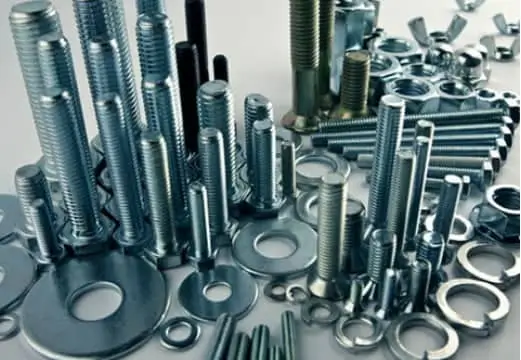
Applications of alloy steel
The combination of all technical and commercial aspects in a structured approach allows for the selection of the most suitable material at the start, saving money on costly redesigns, substitutes, or failures.
Functional Requirements
Define the purpose of the component. Define the mechanical load (static, impact, or dynamic), temperature, and conditions of exposure (dry in, humid out, submerged in liquids, chemicals, or food). Mostases indicate which type of steel is most suitable for the product, based on the functional requirements.
Budget Constraints
Include all costs, including the cost for raw materials. Include the level of complexity in the machining process, any surface or coating treatments, maintenance intervals, and frequency of component replacements over the lifecycle. Comparing the cost of base materials over their lifecycle can negate any apparent savings.
Aesthetic Preferences
Appearance is important for consumer-oriented applications, like architectural or medical. The natural brightness of stainless steel, its brushed or polished finishes, and its long-term stability make it a popular option. Alloy steels can be coated with a plated finish to create a beautiful look. These finishes do require maintenance.
Maintenance and lifespan
Think about who will maintain the equipment and how often. For remote locations or environments that are difficult to access, maintenance-free stainless steel is an excellent engineering choice. Alloy steel can be a cost-effective option for equipment used and maintained in controlled environments.
Real-World Grade Selection: A Practical Decision Framework
In most cases, the choice is between stainless steel and alloy steel. Engineers rarely select between categories. In reality, engineers select specific ific grades.
When grades are more important than categories
Imagine the shaft from a motor in a mild chemical atmosphere. The material has low tensile and fatigue strength, yet it sounds like annealed steel. The 17-4PH H900 is a corrosion-resistant steel with a tensile strength of more than 1,310MPa. Alloy 4340 with hard Chrome provides corrosion resistance that is comparable to other materials, but at a lower cost.
It is not a question of “alloy vs stainless steel,” but rather, it is “which grade can solve this problem at the lowest cost?” The question is not “alloy or stainless?” but rather, “which grade will solve this problem at the lowest total cost?” The question is not “alloy or stainless steel”, but “which grade can solve this problem for the lowest cost?” It is not a question of “alloys or stainless steel” but rather, “which grade will solve this problem at the lowest total cost?” The right question is not “alloy or stainless?” but rather, “which grade will solve this problem at the lowest price?”
Surface Treatment and Coatings Strategies for Alloy Steels in Corrosive Environments
Intelligent surface engineering, a topic rarely discussed but very important, is one that deserves more attention. It can allow alloy steel to perform in environments normally reserved for stainless steel. If the surface treatment is correctly applied and maintained, it’s possible to maintain the raw material advantage even in moderately corrosive conditions.
Alloy Steel Surface Treatments
Hard Chrome plating: Electrodeposited chrome coating providing moderate corrosion resistance. Excellent wear. It is used extensively on hydraulic rods and shafts.
Electroless Ni ckel Coating Offers corrosion and wear resistance with no thickness variations.
Thermal Spray Coatings: Deposits metals such as chromium, tungsten, and other ceramics on alloy steel surfaces. The coatings resist corrosion and wear even in aggressive environments.
Nitriding or Nitrocarburizing: Introduces nitrogen to the surface, creating a hard casing with mild corrosion resistance and improved fatigue performance.
Phosphating, Paint or Powder Coating: Cost-effective corrosion protection for non-precision parts; requires regular maintenance but allows repairs in the field.
Surface-Treated steel alloy Beats Stainless
Surface-treated alloys can be more cost-effective than stainless steel. This is especially true for components that are frequently replaced, work in mildly corrosive environments, or have high mechanical requirements. It is important to match the coatings with the corrosion exposure, rather than using stainless as a default.
Conclusion
Both stainless steel and alloy steel have different engineering uses. Alloy steel has high-performance mechanical properties with high hardness and strength. The material is also controlled precisely. It is a material that can be used both for structural and dynamic applications. Stainless steel is resistant to corrosion and harsh environments. It is corrosion-resistant and has good mechanical properties. It is also hygienic. It is impossible to do this without external protection.
Both materials are excellent. It is important to make a decision based on a thorough analysis of the functional requirements, environmental exposures, and fabrication constraints.
ProLean MFG is able to assist with projects that require expert analysis, materials with high tolerances, and a range of CNC machining. We offer a wide range of stainless products that are high-performance, as well as precision CNC machining. Contact for a custom solution.