

Material selection becomes a critical engineering decision when lives are at stake, and every component must perform flawlessly in 35,000 feet of air. Aerospace metals are subjected to extreme heat, vibration, and fatigue cycles, which would otherwise destroy normal materials in hours. The difference between using the correct alloy and the incorrect one can mean the difference between a successful flight and a catastrophic crash.
Aerospace has been pushing the limits of metals for decades. Every gram of metal used in aircraft, from the aluminum frames in commercial airliners to nickel superalloys found in jet engine turbochargers, is carefully chosen. Materials sourcing and machine work are a large part of the production costs in global aerospace manufacturing, which is worth $400+ billion.
It is important to get your materials strategy right at the beginning if you are involved in the production or purchase of aerospace components. ProLean MFG’s precision machining and aerospace CNC machining solutions are designed to meet the material and tight tolerances of the aerospace industry.
Why Material Selection is Critical in Aerospace Manufacturing?
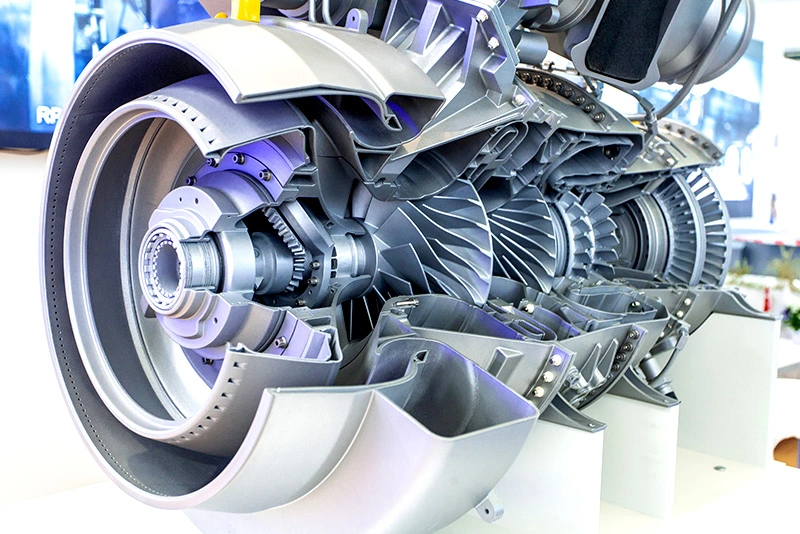
There is a lot of careful consideration when it comes to choosing materials in aerospace parts manufacturing. Prior to designing any individual part, engineers consider a range of factors, such as thermal resistance, corrosion behavior, and fatigue strength, to name a few. The risks associated with incorrect specifications can result in costly redesigns and even failed certifications.
Performance under Extreme Conditions
Aerospace components have to perform in some of the most inhospitable environments, both within the Earth and beyond. The components in the engines can see temperatures of over 1,000 °C. The airframe components endure a structural cycle of repeated stresses for decades during their service. In addition to this, the fasteners, brackets, and other components all face corrosion, which is a result of moisture, jet fuel, and deicing chemicals, all of which must be taken into account simultaneously.
In the aerospace industry, metals must meet certain specifications to adequately serve the industry.
- The overall design has to be optimized, which will save overall costs by ensuring the design will not collapse and will not need replacing.
- Thermal Stability – The design will be able to withstand and maintain its mechanical strength at elevated temperatures.
- Fatigue Resistance – The design will be able to withstand millions of stress cycles and not break.
- The design should be protected from environmental factors that can cause weakened aluminum. Corrosion, humid, saline, chemically hostile.
- The design has to be able to withstand minor damage and not fail catastrophically.
Weight vs. Strength
In the aerospace industry, one major factor to consider is the weight and cost of the design. Every kg of weight will increase operational costs and reduce payload. A specific strength that the industry is focused on is the ratio of tensile strength to its mass.
Aluminum alloys are the most popular choice for airframe construction because they offer excellent strength and low cost. Titanium offers even greater specific strength and superior corrosion resistance at a higher cost. Modern aircraft are using carbon fiber composites, but metals still dominate structural, fastener, and engine applications, where formability, fatigue resistance, and repairability are most important.
The Most Common Metals in Aerospace
Not all metals are suitable for aerospace applications. Materials that meet the requirements for aerospace applications must be certified and traceable, and they often have to comply with specific AMS (Aerospace Material Specifications). These are the main metals used in aerospace.
Aircraft Grade Aluminum (2024, 6061, 7075)
Aluminum is the main structural material in commercial aircraft. Around 70-80% is used in the conventional airframes.
Three alloys dominate aerospace applications:
The 2024 aluminum alloy is used for fuselage and wing skins. High tensile and fatigue resistance make it the ideal alloy for components that are subjected to repeated loads. It is less resistant to corrosion than other alloys and is usually clad or oxidized as protection.
6061 Aluminum, a versatile and weldable aluminum alloy, is used for secondary structures, brackets, and fittings. It is a cost-effective option for aircraft-grade aluminum that offers a balance between strength, corrosion resistance, and machinability.
7075 Aluminum alloy is one of the strongest aluminum alloys, and its strength is comparable to mild steel. It is used for wing spars and bulkheads as well as other high-stress components. The zinc alloying makes 6061 stronger, but it is more difficult to weld and machine.
Titanium for Aircraft: Properties and Use Cases
Titanium has gained in popularity, particularly for its structural and engine-adjacent applications. Titanium is the only metal that offers the same combination of properties in its weight category.
Key Material Property
- Titanium has less strength and density than steel
- Excellent corrosion resistance: virtually insensitive to jet fuel, hydraulic fluid, and seawater
- Thermal resistance up to 600 degrees C
- Biocompatibility and non-magnetic properties in avionics
How these properties map to aircraft use cases
The properties of titanium directly affect where it is used in aircraft.
| Property | Why it Matters | What it is used for |
| High strength-to-weight ratio | Weight reduction without sacrificing the load-bearing capability | Airframe structures, fuselage frames |
| Corrosion Resistance | The spout is resistant to fluids and fuels. | Fasteners and components for hydraulic systems |
| Thermal resistance (up to 600 degC). | The material is resistant to extreme heat. | Engine blades, nacelle structures |
| Biocompatible/non-magnetic | Safe near sensitive electronics | Avionics housings and landing gear components |
The most common titanium alloy in aerospace is Ti-6Al-4V. This is the most widely used titanium alloy worldwide. It is used for airframes, landing gear components, engine blades, and fasteners.
Considerations for Trade-Offs
The main trade-off is cost. Titanium is harder and more expensive to machine than aluminum and requires specialized tools with slower cutting speeds. When evaluating titanium, procurement teams should consider both the material cost and the machining complexity.
Aerospace Alloys: Superalloys (Inconel, Hastelloy, Waspaloy)
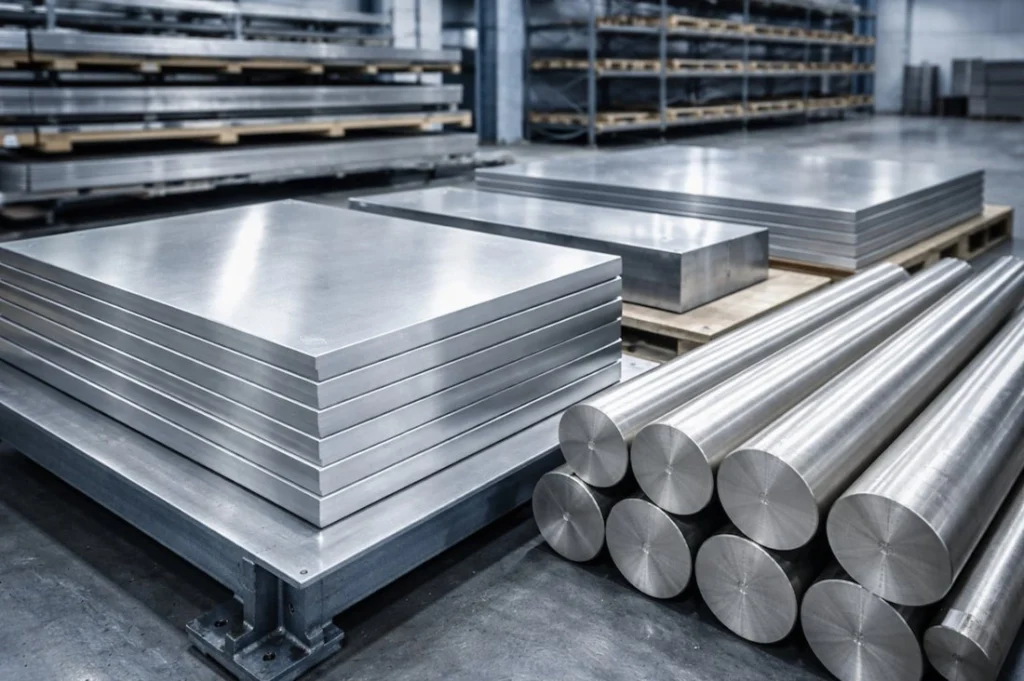
Standard metals are not suitable for components that must operate at high temperatures, such as those found in jet engines. Superalloys based on nickel and cobalt are the perfect solution. These aerospace alloys have been engineered to retain their mechanical properties even at temperatures that would cause most metals to soften or oxidize quickly.
The most common nickel superalloy used in aerospace is Inconel 718. It is used for turbine disks and combustion chambers as well as exhaust systems. Due to its low thermal conductivity and work-hardening behaviour, it is notoriously hard to machine.
Hastelloy X is a popular choice for combustor liners, afterburner components, and combustor linings because of its outstanding oxidation resistance at high temperatures. The high chromium content makes it resistant to oxidizing conditions.
Waspaloy can be used for high-pressure turbines where high-temperature strength and creep resistance are essential. It retains structural integrity even at temperatures above 980 °C.
Stainless Steel and Other Supporting Metals
Stainless steel is a crucial component in the aerospace industry. While titanium and aluminum dominate the primary structure, it also plays an important supporting role. Fasteners, brackets, and hydraulic fittings are made of stainless steel. It is also used for components that require both strength and corrosion resistance in moderately hot environments.
In non-structural applications, 300-series stainless (304 and 316) is common. 15-5 PH and 17-4 PH precipitation-hardened stainless steels are used in more demanding structural fastener and fitting applications. In specialized electrical connectors and bearing applications, certain aluminum bronzes and Beryllium Copper are also used.
Aerospace Metals Comparison Table
| Metal | Density (g/cm3) | Tensile strength (MPa) | Max Service Temp in DegC | Key Applications | Machinability |
| Aluminum 7075 | 2.81 | 572 | 120 | Bulheads and wing spars | Excellent |
| Aluminum 2024 | 2.78 | 483 | 120 | Fuselage skins, ribs | Good |
| Titanium Ti-6Al-4V | 4.43 | 950 | 315 | Engine parts, landing gear | Difficult |
| Inconel 718 | 8.19 | 1,240 | 700 | Turbine disks, combustors | Very Difficult |
| Stainless 15-5 PH | 7.78 | 1,310 | 370 | Fasteners, fittings | Moderate |
| Hastelloy X | 8.22 | 785 | 1,080 | Combustor liners | Difficult |
How are Aerospace-Friendly Metals Machined?
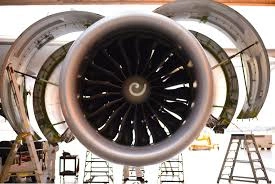
CNC machining is the most important precision manufacturing process that transforms raw metals used in aerospace into flight-ready components. Aerospace machining standards are much stricter than those in general manufacturing. A few micrometers of deviation can make the difference between an approved part and scrap.
What is Aerospace CNC Machining?
Aerospace CNC machining is the computer-controlled subtraction of manufacturing processes (milling, turning, drilling, and grinding) applied to aerospace-grade materials, under strict quality control and traceability requirements. Aerospace CNC machining produces parts that must adhere to tight tolerances. These can range from +-0.005mm to +0.025mm, depending on the application.
Modern aerospace machining centres are capable of 5-axis machining, which allows complex geometries to be produced with a single set-up — reducing fixing errors and improving repeatability. Multi-axis machining can be essential for turbine blades and structural brackets. Impellers also benefit from this technique, as they often have three-dimensional contours.
Tolerances & Precision Standards (AS9100D)
AS9100D is a quality management standard that applies to the aerospace, defense, and space industries. AS9100D certification is required for any machining suppliers working in the aerospace industry. It governs everything, from material traceability to inspection protocols and documentation.
Precision machining for aerospace demands:
- Dimensional tolerances of +-0.005mm on critical features
- Surface finish specifications are often expressed in Ra values.
- Material traceability – certificates of conformance and material test report (MTR) for each batch
- First Article Inspection (FAI), per AS9102, for new parts approvals
- Inspection in process using CMM (Coordinate Measuring Machines)
What are the Challenges of Machining Titanium Alloys and Superalloys?
Nickel and titanium superalloys pose the greatest challenges to machining in the aerospace industry. Both materials exhibit characteristics that cause tool wear to increase and generate significant heat within the cutting zone.
- Heat is concentrated on the tip of the tool instead of being dissipated by the chip.
- Work Hardening- as the material is cut, it becomes harder to cut.
- Reactivity of Titanium with Other Materials — Titanium will react at high temperatures with other materials, causing adhesiveness and edge wear.
- Superalloys remain strong at all temperatures. Superalloys retain their strength even when heated.
For these materials, you will need carbide or ceramic cutting tools, coolant delivered under high pressure, and conservative parameters. Tool changes must also be frequent.
Cost of CNC Machining for Aerospace Metals
Understanding CNC machining cost will help you budget accurately for your project. Costs of CNC machining metals used in aerospace vary widely depending on materials, component complexity,y and tolerances.
What is the Main Driver of Aerospace Machining Costs?
A combination of factors determines the final cost of an aeronautical component:
Cost is the most important variable. Titanium costs 10-20x more per kilogram than aluminum. The price per pound of Ni superalloys, Inconel, and nickel is 30-50 times that of aluminum. The ratio of raw material to final product is typically 10:1.
Cutting speed and the number of settings, as well as the difficulty in cutting material, are all factors that affect machining times. A titanium part costs 5 hours to machine compared with an aluminum equivalent that takes only 1 hour.
The costs of tooling are high for hard materials. Carbide end mills are expensive for titanium, superalloys, and other hard materials. They can cost $50 to $200 per tool and may last only a fraction of the time as aluminum.
Costs of quality and certification – AS9100D compliance, CMM inspections, and FAI documentation – add 15-30% to total project costs, but are not negotiable in aerospace supply chains.
Batch size can have a significant impact on the cost per component. NRE (non-recurring Engineering) costs, such as fixturing and first-article testing, are spread across the entire production run. Smaller batches are more expensive per unit.
How to Cut Costs without Compromising on Quality?
- Smart design and sourcing can reduce the cost of aerospace machining by a considerable amount.
- Early in the design phase, work with your machining partner to identify features that can cause unnecessary costs.
- Tolerances must be optimized – only use tight tolerances when they are essential.
- Review material selection – If superalloys or titanium are specified, make sure they are really needed. Some stainless steels or aluminum can offer the same functionality for a fraction of the cost.
- Consolidate setups by designing parts that require fewer setups. Each change in setup increases the time required and can lead to refixturing mistakes.
- Increase batch size if inventory costs permit; larger batches reduce fixed costs.
In order to choose the best metal for aerospace components, it is important to consider the operating environment, load case, and regulatory requirements. This is a breakdown of each category.
Choose the Right Aerospace Metal for Your Application
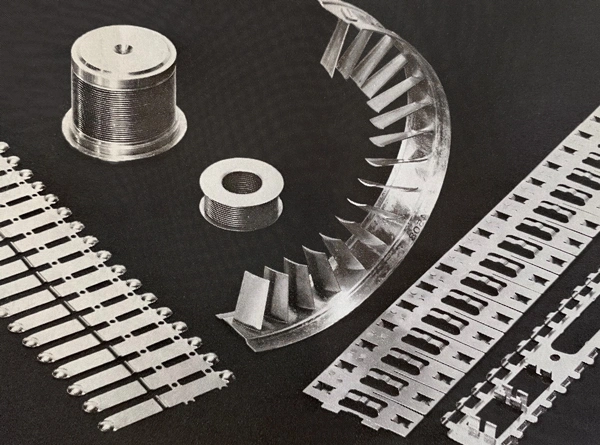
To choose the best aerospace metal, it is important to understand the operating environment, the load case, and the regulatory requirements of the component. Here’s a breakdown of the different categories.
Structural Components
Aluminum aircraft-grade (7075 or 2024) is preferred for the primary components of an airframe, including fuselages and wings. This material is ideal for large structural panels and machined fittings. It has the best combination of specific strength, fatigue, corrosion resistance, and machinability.
Titanium is used in structural applications where higher strength and corrosion-resistance are required, but the package must be smaller. Examples include bulkhead fittings, wing-to-body join structures, or landing gear components.
Engine and High-heat Parts
The only metals allowed to be used in or near the engine core are nickel superalloys, including turbine disks and blades. Titanium is used for the cooler parts of the engine, such as the low-pressure compressor and fan. Superalloys are used as temperatures increase towards the combustion zone.
Interior and non-critical Components
If you are looking for interior components that are not subject to high temperatures or loads, then 6061 aluminum and stainless steel are a great choice. These alloys have low processing and material cost, are easy to machine,e and strong.
Common Mistakes When Sourcing Aerospace Metals
Even the most experienced procurement teams can make costly mistakes when it comes to sourcing these metals. Here are some of the most common mistakes that you should avoid:
Never accept non-certified materials. Always insist on AMS-specified material, with complete traceability documentation. The supply chain is plagued by counterfeit or uncertified metals.
When designing expensive parts, it is important to consider the amount of material that will be machined. Poorly optimized designs can waste up to 90% of a $10,000 billet of titanium. This is something that should be considered in every DFM review.
Specification of the wrong temper or condition – aluminum 7075 T6 and 7075 T73 have different corrosion resistance profiles. The wrong temper can cause stress corrosion cracking when used in a corrosion-critical application.
Selecting a machining provider without AS9100D is not an option. It’s a requirement. Without it, suppliers cannot provide the documentation, traceability, and process control required by aerospace quality.
Surface finish specifications that are too tight increase costs and machining time without adding any functional value. Align surface finishing specifications with actual functional requirements.
Conclusion
Aerospace metals do not just provide materials, but also engineered solutions for some of the most challenging mechanical, thermal, and environmental challenges faced by modern industry. The majority of the airframe is made from aircraft-grade aluminum.
Titanium is used for high-strength applications that are moderately hot, corrosion-critical, and require high strength. Nickel superalloys are used where temperatures exceed the limits of any metal. The right metal for the application, machined with the correct tolerances, and under a certified system of quality, is what makes the difference between components that last decades.
ProLean MFG can assist you in achieving your goals, whether you are looking for raw metals used in aerospace to source, designing components for CNC-machining, or evaluating suppliers. Our aerospace CNC machining services will help you achieve your goal of a certified part. Contact us to discuss the details of your project.
FAQs
By volume, aluminum alloys, notably 2024,6061, and 7075, are the most commonly used metals in aerospace. Due to their high strength-to-weight ratio and excellent machinability, they dominate commercial airframe structures.
Titanium is more expensive than aluminum because it has a lower thermal conductivity. It also takes longer to machine due to its work-hardening and low thermal conductivity. The tool wear rate is higher, and the cutting speed is slower, which all adds to the cost of the final part.
AS9100D certification for quality management is a minimum requirement. NADCAP accreditation may be required for processes that require special attention, such as heat treatments, non-destructive tests, or chemical processing. Many OEMs require approvals from specific suppliers.
Aluminum alloys can only be used at temperatures between 190 and 250 degrees Celsius. Titanium alloys, nickel superalloys, or stainless steel must be used for higher temperatures, depending on the temperature range.
Aerospace alloys have tighter tolerances in chemical composition and are certified to AMS or similar standards. Aerospace alloys are subjected to more stringent testing and produced in smaller batches than standard industrial alloys.
It all comes down to the load requirements, the space constraints, the temperature exposure, and the budget. Aluminum is usually the most cost-effective option if it can meet all the requirements while still fitting within the space available. Titanium is used when aluminum cannot meet the strength requirements at an acceptable weight