

316 stainless steel grade has extensive use in fabrication applications. It handles corrosion well and performs reliably in hostile environments. In many cases, you’ll come across two CNC machining materials under this grade: 316 vs 316L stainless steel.
At a basic level, 316 and 316L stainless steels are very similar, with the key difference being carbon content. The lower carbon in 316L helps prevent carbide formation during welding, which improves corrosion resistance at welded joints. Because of this, 316L is usually preferred for welded parts exposed to moisture or chemicals, while both grades perform similarly in general use conditions.
This article will walk you through:
- Properties of 316 and 316L stainless steel
- The difference between 316 and 316L stainless steel in fabrication use
- What to consider before selecting the right grade for your project
What is 316 Stainless Steel?
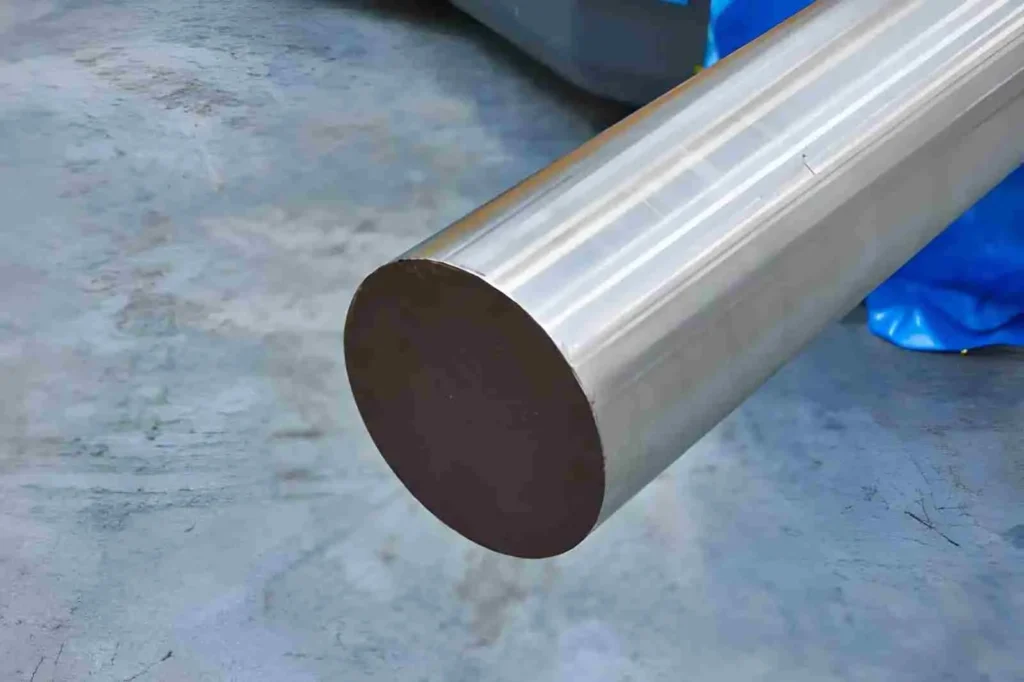
316 stainless steel round bar
Among different types of stainless steel material, 316 stainless steel is a chromium-nickel alloy with added molybdenum for better corrosion resistance. It is commonly used in fabrication for parts that are exposed to moisture, chemicals, or harsh environments.
Table 01: 316 Stainless Steel Properties
| Property | Value | Application | Practical Note |
| Composition | 16 to 18% Cr, 11 to 14% Ni, 2 to 3% Mo | General 316 parts | Mo content improves resistance to chloride exposure |
| Temperature Resistance | Stable up to ~800 to 1000°C (short-term) | Heat systems, industrial equipment | Long exposure reduces strength over time |
| Strength | Higher than 304 stainless steel | Structural and fabricated parts | Maintains ductility during forming operations |
| Magnetic Properties | Non-magnetic in the annealed condition | Electrical and precision assemblies | Minor magnetism may appear after welding or cold work |
| Formability & Workability | Good for bending and fabrication | Sheet metal parts, equipment housings | Springback needs to be considered in bending |
| Cost | Higher than standard stainless grades | Long-life components | Driven by alloying elements like nickel and molybdenum |
Definition
316 stainless steel (UNS S31600) is an iron-based alloy containing:
- Chromium
- Nickel
- Molybdenum
This alloy consists primarily of iron but contains substantial amounts of chromium, nickel, and molybdenum. The typical 300-series alloys used in industrial fabrication include 316 stainless steel.
Alloys within this family have a nominal composition of approximately 16-18% chromium, 10-14% nickel, and 2-3% molybdenum. This alloy formulation was developed specifically to enhance the surface stability of stainless steel alloys when subjected to corrosive and aggressive services.
Material Structure and Properties
When 316 stainless steel is annealed (heated to its recrystallization temperature), it exhibits an austenitic crystal structure. The austenite structure provides a stable, nonmagnetic state. This structure also enables bending and other forming operations without compromising structural integrity.
The material properties exhibit superior performance compared to general-purpose stainless steel formulations, particularly when continuously exposed rather than intermittently.
Thermal and Mechanical Properties
High-temperature exposure does not significantly affect the mechanical properties of 316 stainless steel. The tensile strength of 316 stainless steel typically ranges from 500 to 750 MPa, depending on the material form and processing conditions.
As such, the alloy is suitable for applications subject to thermal cycling. These applications include fluid and exhaust system components that require moderate levels of heat resistance.
Corrosion Resistance
The inclusion of molybdenum in the alloy enhances resistance to chloride-based corrosion. However, the presence of molybdenum does not rule out localized corrosion.
Therefore, while the alloy exhibits enhanced corrosion resistance in environments containing salt, moisture, or chemicals, corrosion can occur in areas of poor drainage or stagnant water flow, particularly if weld finishing or surface cleaning processes are not properly executed.
Fabrication and Welding
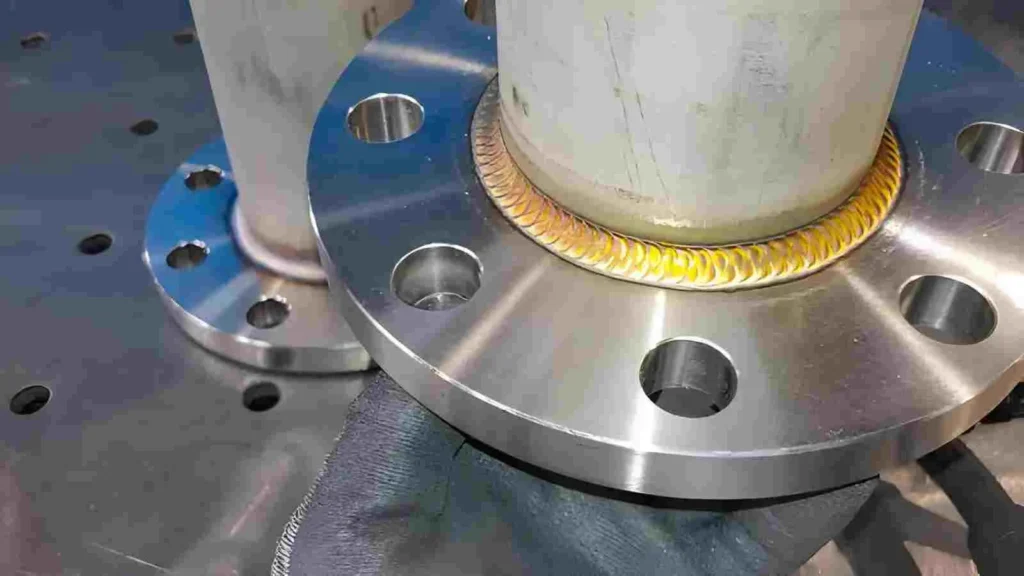
TIG welding stainless steel pipe
316 stainless steel can be processed using standard fabrication methods, such as TIG and MIG welding. In welded assemblies, 316L is often preferred to reduce carbon-related precipitation in heat-affected zones.
It also supports forming operations, although springback is more noticeable than in mild steel, so bending allowances are usually required in production setups.
Applications of 316 Stainless Steel
316 stainless steel (UNS S31600) is often used in fabrication for parts that come into contact with moisture, chemicals, or frequent cleaning over long periods. It is commonly seen in food processing and pharmaceutical equipment.
Chemical and Process Equipment
Parts used in Chemical and Process Equipment include: tanks, piping, valves, and associated components, including those in contact with acidic solutions, solvents, and other process liquids. 316 can also be found on components that will be continuously exposed to chemicals, rather than intermittently.
Marine and Offshore Parts
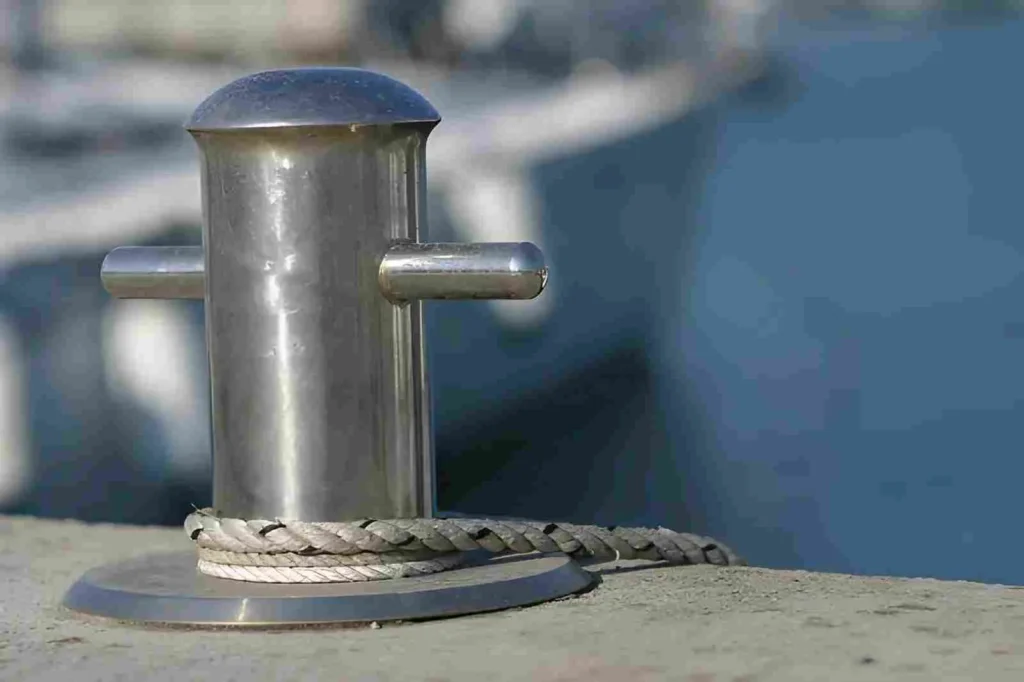
316 stainless steel marine bollard
Components and Fittings used in Marine and offshore construction and operation include: fittings, fasteners, sheets, etc. These components are generally subjected to either seawater or salt-spray. This alloy is commonly used in marine construction because constant exposure to these conditions is unavoidable.
Food and Pharmaceutical Equipment
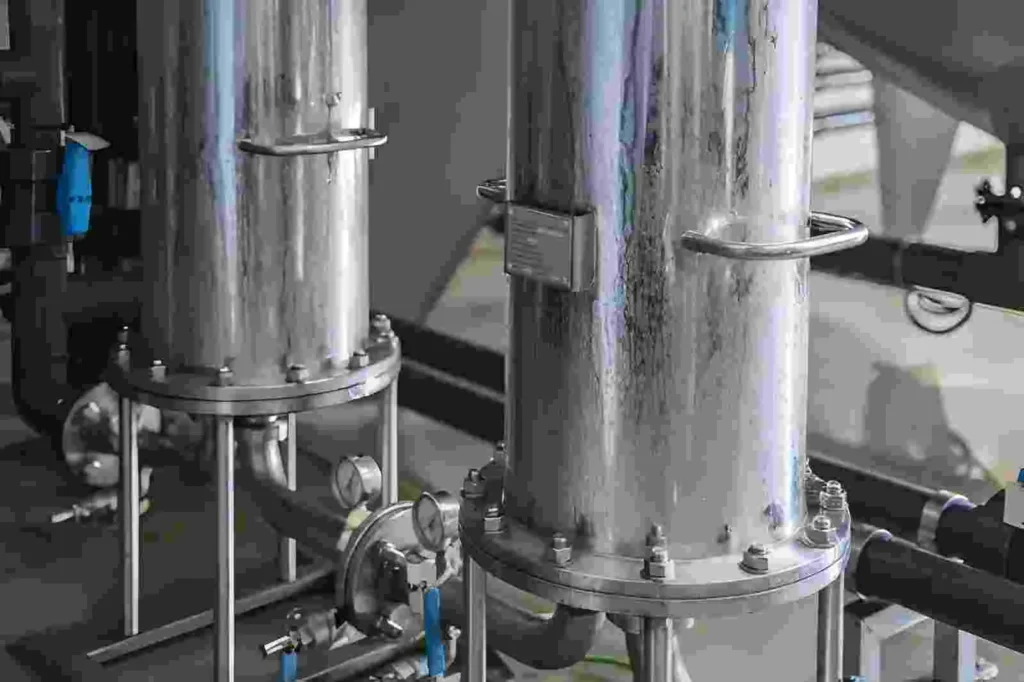
304 stainless steel tubes for water and brewery systems
Processing tanks, piping systems, and mixing equipment for food and pharmaceuticals utilize this alloy. The surface finish of this alloy is very important, as it can directly affect how readily residues accumulate on the surface during cleaning processes.
Medical Components
Surgical instruments, trays, and implant components use 316. This alloy is selected for its ability to withstand repeated sterilization and provide long-term material stability for medical applications.
Limitations of 316 Stainless Steel
316 Stainless Steel is fairly easy to fabricate; however, several factors may influence its processing in various applications (cost, machineability, etc.). Typically, these limits are observed more as your product is being fabricated and during long-term service conditions, versus at the point of original material selection.
Cost Factor
The inclusion of Nickel and Molybdenum in 316 increases raw material costs compared to other standard stainless steel grades. The impact of increased costs will become apparent through higher unit costs per part, based on quantity, for parts produced in production runs.
Machining Behavior
316 generates more tool wear than Carbon Steel or low-Alloy grades during cutting/machining operations. Cutting/Machining operations often require adjustments to feed rate, tool coatings, and/or cutting speeds to produce consistent quantities and surface finishes.
Chloride Exposure Limits
Localized Corrosion can occur over time in environments containing chlorides that become trapped or stagnant. Localized corrosion is typically observed in crevices, weld joints, and poorly draining areas rather than on exposed surfaces.
Magnetic Response After Processing
In the Annealed Condition, 316 Stainless Steel is Non-Magnetic; however, following Cold Working or Welding, localised areas may exhibit some degree of Magnetic Property, depending on the degree of Deformation and Heat Input.
What Is 316L Stainless Steel?
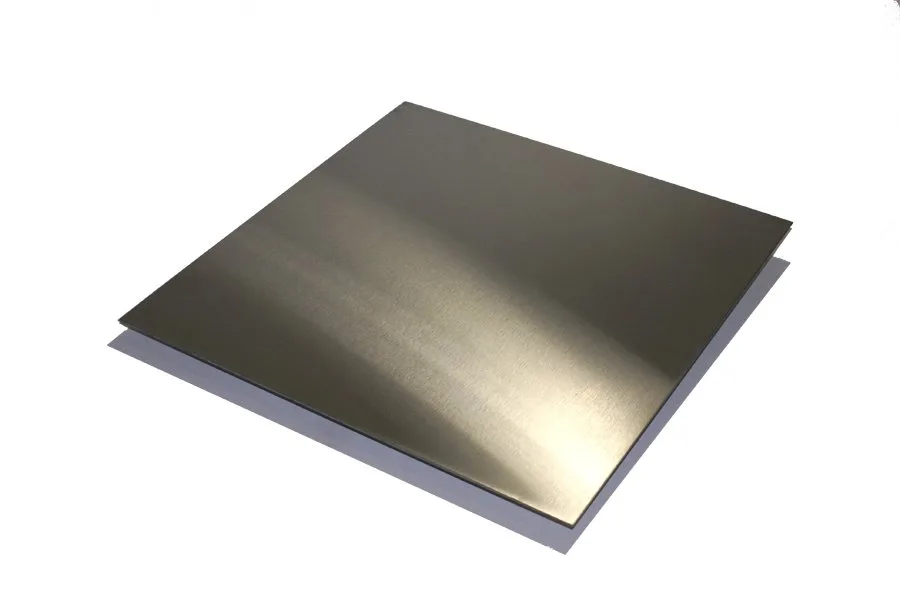
Stainless steel 316L sheet
316L stainless steel is a low-carbon austenitic stainless grade with molybdenum added for improved corrosion resistance.
It is commonly used in welded parts and in industries like marine, food processing, and pharmaceuticals, where resistance to moisture and cleaning chemicals is important.
The carbon level is kept at or below 0.03%, which primarily improves weld behavior by limiting carbide formation in the heat-affected zones.
Table 02: 316L stainless steel characteristics
| Material aspect | Typical values | Real fabrication impact | Practical limitation |
| Alloy composition | 16 to 18% Cr, 10 to 14% Ni, 2 to 3% Mo, ≤0.03% C | Low carbon improves weld stability and reduces grain boundary changes | Higher alloy cost compared to 304/standard stainless |
| Density | ~8.0 g/cm³ | Used for weight estimation in sheet and structural design | Adds weight in large fabricated assemblies |
| Tensile strength | ~485 to 620 MPa (depending on condition) | Supports moderate structural load in welded assemblies | Not for heavy load-bearing structural steel use |
| Yield strength | ~170 to 290 MPa (annealed condition) | Defines forming limits during bending and pressing | Requires allowance for springback in sheet forming |
| Melting range | ~1370 to 1400°C | Stable during welding and thermal cutting processes | Not a high-temperature structural alloy |
| Corrosion resistance | Higher than 304 in chloride environments | Performs better in salt, moisture, and chemical exposure | Localized corrosion is possible in crevices |
| Hardness | ~70 to 95 HRB | Allows forming without excessive cracking | Tool wear increases during machining |
| Magnetic response | Non-magnetic (annealed), slight after cold work | Suitable for non-magnetic assemblies | Minor magnetism can appear after fabrication |
Definition
316L stainless steel is the lower-carbon version of 316 stainless steel. The primary differences stem from reduced carbon levels, which alter how the material reacts during welding and during long-term exposure.
While both materials contain a similar set of base-metal alloying elements, such as chromium, nickel, and molybdenum, the “L” grade is designed for fabrication where many welded joints are expected.
Typically, 316L is used instead of standard 316 when the end application involves welding, complex assembly, or thermal cycles, to prevent carbide precipitation caused by the material’s higher carbon content.
Chemical Makeup
316L contains approximately 16 to 18 % chromium, 10 to 14 % nickel, and 2 to 3 % molybdenum by weight and has a maximum of 0.03 % C. It is these two elements that differentiate it from the 316 alloy composition.
The controlled addition of Carbon to 316L improves weldability while preventing unwanted effects in the surrounding area.
Welding and Fabrication Response
The ability to weld predictably is one of the major reasons 316L is used in fabrications. By controlling carbide precipitation near weld regions, consistent weld strength and surface finish quality can be achieved. Additionally, using 316L reduces the requirement for extensive post-weld correction procedures. This is particularly advantageous in tank fabrication, piping systems, and sealed assemblies.
Thermal Stability
At moderate temperatures typical of industrial systems, 316L retains its structural integrity. However, it should not be considered an elevated temperature alloy. Therefore, it is primarily used in process equipment rather than in furnace-grade applications.
Magnetic Behavior
When in its standard annealed state, 316L is non-magnetic. Depending upon the degree of deformation caused by forming or welding, some localized magnetism may occur; however, this change is generally confined to specific areas of the component rather than throughout the entire component.
Applications of 316L Stainless Steel in Major Industries
316L Stainless Steel is commonly used when parts will be in contact with a liquid or cleaning solution, or when multiple welds will be performed during manufacturing. The selection of 316L stainless steel is generally based upon service performance rather than aesthetics or design.
Food Processing Equipment
316L stainless steel is commonly used in food processing, including tankage, pipes, and mixers. Food processing systems are washed repeatedly using water, steam, and/or chemical cleaners. As such, the materials used in these applications should exhibit stability after repeated washing.
Additionally, due to the high frequency of repairs and replacements during regular maintenance, welds should be easily accessible to facilitate repairs without excessive disassembly.
Pharmaceutical Systems
316L stainless steel is commonly used in the manufacture of reactors, storage tanks, and transfer lines in pharmaceutical production. Many parts that come into contact with active ingredients are sterilized at some point during the production cycle.
Due to the potentially aggressive nature of many reactants involved in these processes, the choice of material is typically driven by the need for welded connections that maintain integrity throughout the product life cycle without requiring excessive repair or replacement.
Water Treatment Systems
316L stainless steel is commonly used in the piping, dosing systems, and filtration units of water treatment facilities. Water treatment systems involve a continuous flow of water, with various chemicals added to treat it.
As a result, the selection of 316L stainless steel is primarily driven by its ability to deliver consistent performance over extended periods of operation.
Limitations of 316L Stainless Steel
316L offers several advantages for a wide range of applications; however, it has limitations in terms of cost, ease of machining, and long-term performance in specific environments.
Higher Material Cost
There is an increase in base metal cost due to the addition of nickel and molybdenum. This is more apparent when fabricating large quantities of sheet or making high-volume production runs.
Machining Difficulty
Material 316L is more difficult to machine than mild steel. Increased tool wear requires the use of carbide or coated tools and lower cutting speeds.
Chloride Stress Risk
Areas where chloride can collect on parts subject to stress may develop microcracks over time. The weld area, as well as any area within an internal part that is tightly curved, has an increased risk.
Heat Limitation
316L will perform adequately at typical industrial temperatures, but it should not be exposed continuously to extremely elevated temperatures. Exposure to these conditions will result in a loss of mechanical properties.
316 Vs 316L Stainless Steel: How to Make the Right Selection
316 stainless steel and 316L stainless steel have almost identical chemical compositions and mechanical properties. In reality, their main distinction lies in their carbon content, which affects their behavior during welding and over extended use.
The choice of material typically depends on the manufacturing process, the environment it will be exposed to, and the cost/benefit ratio.
316 vs 316L Stainless Steel: Welding and Fabrication Requirements
The primary reason to select 316L over 316 is when welding will be a significant part of the fabrication. Lower carbon content in 316L minimizes metallurgical changes near the weld area, thereby reducing post-weld problems.
Although 316 can also be welded, in thick weldments or those requiring multiple welds, greater caution is required to minimize loss of corrosion-resistant properties in the weld area.
In Practice:
- 316L: Used for welded tanks, piping, and sealed systems
- 316: Used for structural parts or components where welding is limited or tightly controlled
316 vs 316L Stainless Steel: Corrosion Exposure Conditions
Both alloys provide good corrosion resistance, although 316L offers slightly better corrosion resistance in welds or chemically exposed joint configurations over the long term.
Chloride-rich environments (such as salt spray, cleaning agents, etc.) tend to provide more stable corrosion performance for 316L than for 316 in welds and stressed regions.
In Practice
- 316L: It is better suited for welded structures in wet/chemical-type environments.
- 316: It is suited for general corrosion exposures, especially where less welding is involved.
316 vs 316L Stainless Steel: Mechanical Strength and Load Use
The higher carbon content in 316 provides slightly greater tensile strength than 316L. The actual difference is relatively minor and may not be critical for load-bearing or structural applications; both alloys fall into similar tensile-strength classifications.
Typical selection based on processing rather than maximum load limitations.
In Practice:
- 316: It is slightly better for structural, load-sensitive types of parts.
- 316L: better for fabricated and welded assemblies.
316 vs 316L Stainless Steel: Cost and Production Planning
While prices for both alloys vary little among suppliers, the price of 316L may occasionally be marginally higher due to the need to control its low-carbon content during processing.
Except for large quantity purchases, this is rarely a factor in choosing an alloy for specific application needs.
In Practice:
- 316: It is economically competitive with lower costs in many supply chain locations.
- 316L: selected when additional fabrication requirements are necessary.
Quick Selection Guide:
- If welding is involved, choose 316L
- If welding is minimal and higher strength is needed, choose 316
- If the part is exposed to moisture or chemicals after welding, prefer 316L
Alternatives to 316 and 316L Stainless Steel
316 and 316L are generally used as default choices for corrosion-resistant fabrications; however, other stainless steel grades may offer improved performance depending on the level of exposure, required welding characteristics, and cost constraints.
304 / 304L for General Fabrication
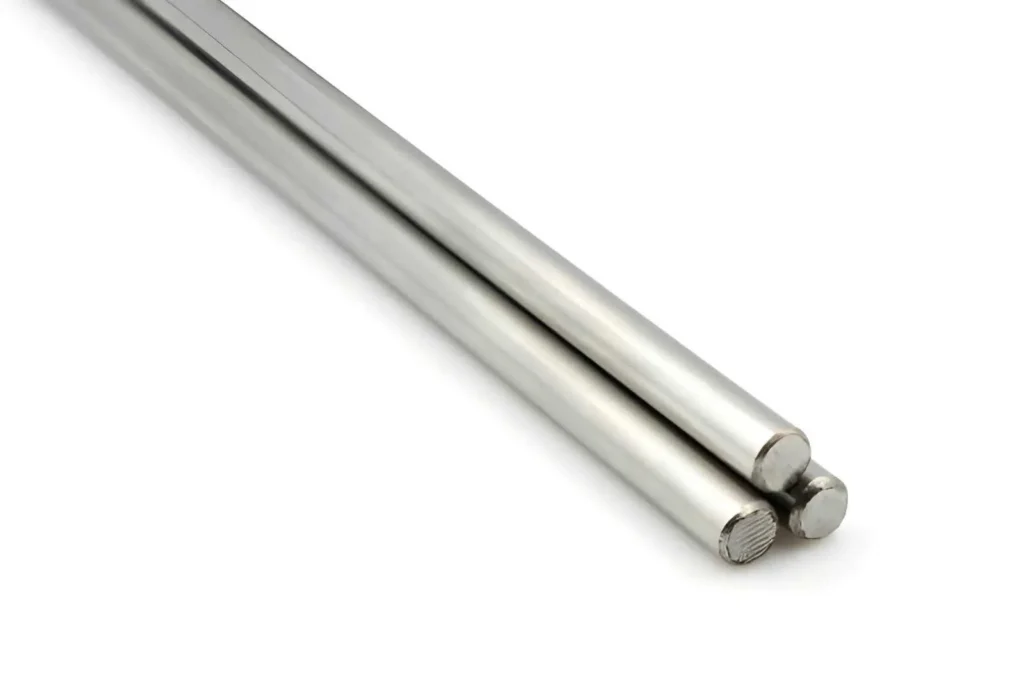
304 stainless steel rods
304 stainless steel is the most common material for general fabrication in non-corrosive environments. Although this grade contains no molybdenum, its resistance to chlorides is less than 316.
The typical composition is approximately 18% Cr and 8% Ni. Therefore, this material provides a good general corrosion resistance but is not suitable for marine or harsh chemical exposures.
The addition of L to 304 (304L) reduces the carbon content, primarily by preventing carbide precipitation during welding, thereby improving weldability.
Practical Use Cases:
- Structural fabrication of buildings
- Appliances (housings & panels)
- Light architectural projects
- Non-food equipment that will be exposed to moisture
- Electric enclosures
Limitation: Not suitable for prolonged exposures to salt water or chemical-rich environments.
317 / 317L for Higher Corrosion Load
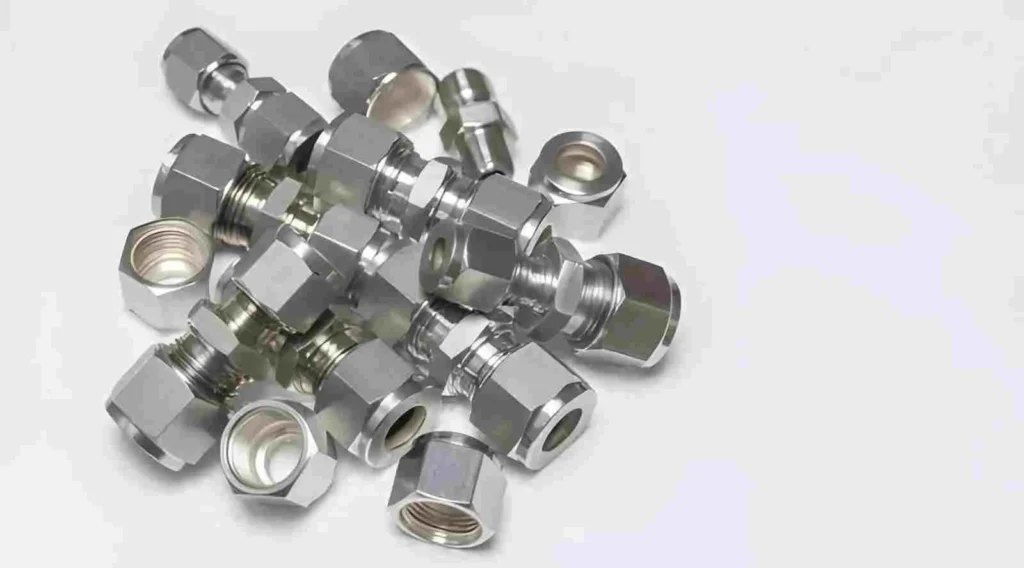
317 SS Quick-connect fittings coupling
317 stainless steel has a higher molybdenum content than 316 stainless steel. The result is enhanced corrosion resistance in harsher environments. These grades have found applications in chemical processing and chlorine-rich environments, such as industrial scrubbing, filtration, and waste treatment.
317L is similar to 317, but it also has a reduced carbon content, which enhances weldability in fabricated assemblies.
Practical use cases:
- Chemical storage and transportation systems
- Scrubber and filter units for industries
- Equipment for waste treatment
- Offshore and Marine Exposures
- Pipelines for acid transportation
Limitation: Due to their higher alloy content, these materials are typically more expensive and may require longer machining times.
316Ti for Heat + Weld Stability
316Ti contains titanium. This prevents carbon from moving at elevated temperatures, thereby providing stability during both welding and heat-up cycles. This material is used in situations where either standard 316 or 316L loses stability due to repeated temperature cycling.
Practical use cases:
- Heat exchangers
- High-temperature exhaust and piping
- Pressure vessels/pressure piping systems requiring welding
- Equipment for thermal processing
- Low to Moderate Range Industrial Furnace Equipment
Limitation: Higher cost, may not be readily available from all suppliers. (Also Read: 904L and 316L stainless steel)
Key Takeaways: Choosing between 316 Vs 316L
Choosing between 316 and 316L mainly depends on the part application conditions. Both grades offer similar corrosion resistance and strength, but small differences in carbon content affect welding behaviour and long-term performance in welded structures.
In fabrication, 316L is typically selected when welding is required. Moreover, if the parts will be exposed to moisture or chemicals for extended periods. On the other hand, 316 is often used when higher strength is preferred, and welding is limited or controlled. Cost differences are usually small, so the decision is more about process and application rather than price alone.
Prolean MFG provides custom metal machining and fabrication services for both 316 and 316L grades. Whether your project requires welded assemblies, precision parts, or custom metal components, our team can help you choose the right material and manufacturing method for your specific application.
Contact Prolean MFG for a quote or consultation to discuss your project requirements.