


The versatility, corrosion resistance, and strength of stainless steel make it a highly sought-after material in a wide range of industries. To achieve the best results, however, it is important to have the right tooling and knowledge. Understanding the differences between grades and their machinability is crucial for manufacturers who want to produce high-quality stainless parts with precision and efficiency.
In this guide, you will be exploring different options of CNC machining materials to navigate stainless steel machining complexity and achieve superior results.
What is Stainless Steel?
Stainless Steel is an alloy made of iron and chromium. The minimum amount of chromium is 11%, which forms the protective layer that prevents oxidation and corrosion. Other elements, such as carbon, can be added to get some special properties.
Iron has excellent durability, but it is highly prone to corrosion and is easily damaged. Stainless steel’s corrosion resistance comes from the passivation film formed by chromium (Cr).
Can Stainless Steel Be Machined?
Yes, stainless steel can be machined. There are different ways of machining stainless steel. Successful machining depends upon the selection of the right cutting parameters, using sharp tools, and implementing effective cooling strategies.
Some grades of stainless steel, particularly those designated as machinable stainless steel, contain additives, such as sulfur or selenium, which improve the formation of chips and reduce tool wear during processing.
Types of Stainless Steel
Let’s explore the five main types of stainless steel material.
Austenitic Stainless Steels
Austenitic stainless steels are the largest family of stainless steel grades. These steels have a face-centered cubic crystal structure, which is why they are called austenitic steels. These steels are non-magnetic in nature.
We can work harden them. These properties come from elements such as manganese, nickel, and nitrogen. Austenitic stainless steels are divided into two main subgroups.
- AISI 200
- AISI 300
In some cases, molybdenum is added to these steels to enhance their corrosion resistance.
200 Stainless Steel Grades are most commonly used in household products, such as architectural structures, water tanks, washing machines, and automobiles.
300 Stainless Steel is primarily used in the manufacture of aerospace parts, mining tools, cutlery, and pharmaceutical products.
Examples of Austenitic Stainless Steels
The most common examples of austenitic stainless steel are Type 304, Type 316, Alloy 20 (Carpenter 20), Type 321H, and Type 309S
Properties of Austenitic Stainless Steel
| Property | Austenitic Stainless Steel |
| Corrosion Resistance | Very high |
| Heat Treatable | No |
| Magnetic | Non-magnetic |
| Toughness | Very high |
| Ductility | Very high |
| Welding Ability | High |
| Chromium Content | ~18% (average) |
| Nickel Content | Usually 8%–12% |
| Molybdenum Content | 2%–7% |
| Carbon Content | Less than 0.1% |
| Stress Corrosion Cracking | Low resistance |
Ferritic Stainless Steels
They have strong chemical resistance and excellent magnetic properties. These grades offer good corrosion resistance at a lower cost. It is most commonly used in manufacturing automotive parts, kitchenware, and industrial tools.
Examples of Ferritic Stainless Steel
Some common examples of ferritic stainless steels are Type 405, Type 409L, Type 410L, Type 430, Type 439, and Type 447
Properties of Ferritic Stainless Steel
| Property | Ferritic Stainless Steel |
| Corrosion Resistance | Lower than 304/316 |
| Heat Treatable | No |
| Magnetic | Magnetic |
| Toughness | Medium |
| Ductility | Medium |
| Welding Ability | Low |
| Chromium Content | 10.5%–30% |
| Nickel Content | Usually nickel-free |
| Molybdenum Content | Usually 1%–2% |
| Carbon Content | Less than 0.08% |
| Stress Corrosion Cracking | High resistance |
Martensitic Stainless Steels
They are well known for their high hardness in manufacturing, making them suitable for applications requiring wear resistance. For hardness and tempering, aging and high heat treatments are applied to these steels. Martensitic stainless steels may have either high or low carbon quality, depending on the required properties.
Examples of Martensitic Stainless Steels
Most commonly used martensitic stainless steels are X12Cr13, X20Cr30, X50CrMoV15, and X17CrNi16-2.
Properties of Martensitic Stainless Steels
| Property | Martensitic Stainless Steel |
| Corrosion Resistance | High |
| Heat Treatable | Yes |
| Magnetic | Mostly magnetic (some non-magnetic) |
| Toughness | Low (untempered), high (tempered) |
| Ductility | Low to medium |
| Welding Ability | Low to medium |
| Chromium Content | 12%–17% |
| Nickel Content | Usually nickel-free, sometimes 2%–4% |
| Molybdenum Content | Nil to 1% |
| Carbon Content | 0.1%–1.2% |
| Stress Corrosion Cracking | Poor resistance |
Duplex Stainless Steels
Duplex alloy is actually a combination of two types of stainless steel, such as austenitic stainless steel and ferritic stainless steel. This dual-phase structure gives nearly twice the yield strength of austenitic stainless steels. There are three types of grades available in duplex stainless steel.
- Standard duplex
- Super duplex
- Lean duplex
Duplex stainless steels are strong and corrosion-resistant metals. They are most commonly used in making tubes, columns, shells, piping systems, heat exchangers, condensers, and reactors.
Examples of Duplex Stainless Steel
Different grades of duplex stainless steel are X2CrNiN22-2, X2CrCuNiN23-2-2, X2CrNiMoSi18-5-3, X2CrMnNiMoN21-5-3, X2CrNiMoCuN25-6-3, and X2CrNiCuN23-4.
Properties of Duplex Stainless Steel
| Property | Duplex Stainless Steel |
| Corrosion Resistance | Good to very high |
| Heat Treatable | No |
| Magnetic | Magnetic (due to ferritic structure) |
| Toughness | High |
| Ductility | Medium to high |
| Welding Ability | High (if nitrogen is present) |
| Chromium Content | 18%–30% |
| Nickel Content | 1%–9.5% |
| Molybdenum Content | 0.1%–5% |
| Carbon Content | Less than 0.03% |
| Stress Corrosion Cracking | Very high resistance |
Precipitation Hardening Stainless Steels
It is also called PH stainless steel alloy. It contains a small amount of other elements such as titanium, copper, phosphorus, or aluminum, which form precipitates during heat treatment. When the alloy is formed, it undergoes the special age-hardening treatment. Due to this process, they have three to four times higher yield strength than austenitic stainless steels.
They are most commonly used in the chemical industry, nuclear plants, making aircraft, and in the marine construction industry.
Example of Precipitation Hardening Stainless Steel
The common example of precipitation hardening stainless steel in machining is 17-4 PH Steel.
Properties of Precipitation Hardening Stainless Steel
Precipitation hardening stainless steel offers good machinability. The properties of PH-hardened steels are easily adjusted and controlled to achieve the desired results during machining stainless steel.
Overview of Stainless Steel Machining Techniques
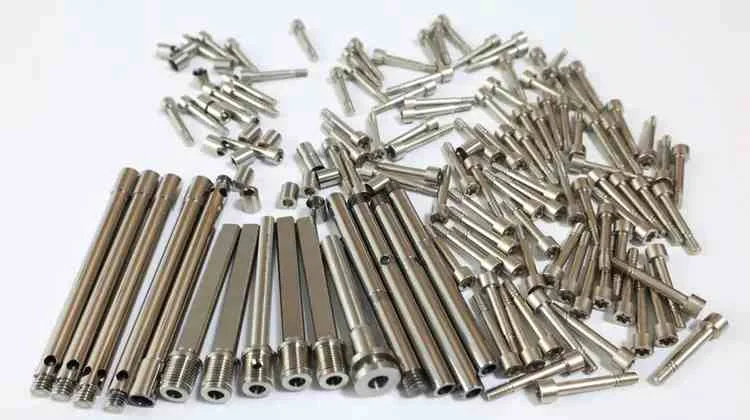
CNC-turned stainless steel parts
Different machining methods are used to process the stainless steel. Each method is selected based on the machining needs. Properly understanding the techniques will help to choose the manufacturer’s most efficient and cost-effective option for their machining process.
Chip-Forming
Milling
The most common and primary stainless steel machining process is milling. To cut the stationary workpiece, a high rotation speed is used. Proper speeds and feeds for milling stainless steel are important to get better results. The selection of the right cutting tool is important. It provides better finishes, a clean cutting edge, and reduces tool wear.
Turning
During the process of turning, we use a stationary cutting tool while the workpiece rotates. To remove the material and shape the parts, the cutting tool touches the rotating workpiece. For machining austenitic stainless steel, turning is most commonly used.
Turning machinable stainless steel grades such as 303 or 416, yields better surface finishes with less wear of the tool compared to standard austenitic grades.
Drilling
The second most commonly used method in the machining process is drilling. It is used along with other metalworking techniques. It is used to create holes in the metal workpiece. Stainless steels are drilled to make screw holes for secondary assembly and to improve the appearance of the product.
Threading
To attach screws and fasteners, threading is done on the parts of the steel. Threads can be made inside a hole or on the external part of the workpiece. Tapping machining stainless steel demands proper selection of tap, use of lubricants, and control of speed during the process. To secure the connections, threading is performed on tubes and pipes.
Grinding
To enhance the surface of stainless steel, grinding is done. Grinding can make the workpiece more accurate by removing a very small amount of material. Grinding also removes the burns that are formed during welding. To create a smooth, sharp edge on stainless steel parts, this method is used.
Profile Cutting
Laser Cutting
To melt and remove stainless steel, laser cutting uses a powerful, focused light beam. For cutting thin stainless steel sheets, this method is most commonly used. It is better than cemented carbide tools because there is less chance of tool wear. But it’s very costly, and highly skilled operators are required to operate the equipment.
EDM (Electrical Discharge Machining)
To melt the metal, Electrical Discharge Machining (EDM) uses electrical pulses. The electrical pulses have a very high voltage as well as frequency. This is best suited to create complex three-dimensional shapes.EDM is best for machining stainless steel components that are too hard to cut with rotating tools.
Waterjet Cutting
To cut the thick sheets of stainless steel, waterjet cutting is used. High water pressure is used to break down and cut the materials. It can process multiple layers simultaneously without causing any tool wear. The main concerns in waterjet cutting are edge roughness, sand inclusion contamination, and delamination/splashing, which affect your process.
How the Stainless Steel Machining Process Works
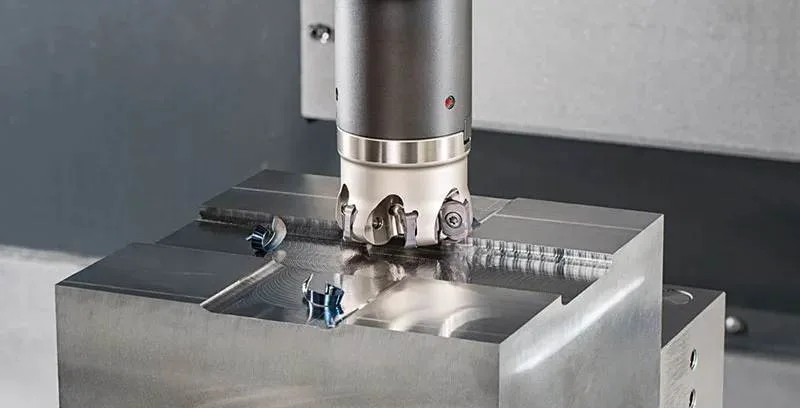
Stainless steel milling
It’s a systematic workflow that starts from design to final inspection. Follow these steps during the machining of stainless steel parts to get better quality.
Design & Create a CAD File
The first step in the stainless steel machining process is to create the computer-aided design (CAD) file, which is the foundation of the manufacturing process. This is an important step where precision and specifications matter a lot, especially in the automotive industry.
When the design specifications are finalised, the engineer can develop the 3-dimensional model of the part. A CAD file is important because all the details are saved, like the requirements of the material and size measurements, which are needed for manufacturing.
Choose Stainless Steel Grade
Different types of stainless steel grades are available. The selection of the right stainless steel is important because it can make our manufacturing process more precise and efficient. Different factors can be considered, such as strength, corrosion resistance, weldability, and heat treatability.
The stainless steel grade you can choose affects the cutting performance and surface finishes, so this is an important step if we want to enhance the performance and manufacturing efficiency.
The Machining Process
Through controlled material removal, the actual machining phase transforms raw material into finished products. Once the steel type and CAD design are finalised, the actual process begins. To ensure accurate results, important decisions are made, such as the selection of cutting tools, angles, and cutting speed, to get the precise results.
Finishing
Once the product is finalized. Finishing, removing machining marks, and preparing components for assembly or coating. It maximizes the corrosion resistance.
Cooling strategies
Steel has poor thermal conductivity. During machining stainless steel, effective cooling is important. Flood coolant delivers a lot of liquid flow onto the cutting area to cool it down, reduce friction, and wash away metal chips. It sends the liquid directly to the cutting edge, which keeps it cooler and helps chips break, and improves chip control.
Is Machining Stainless Steel Difficult?
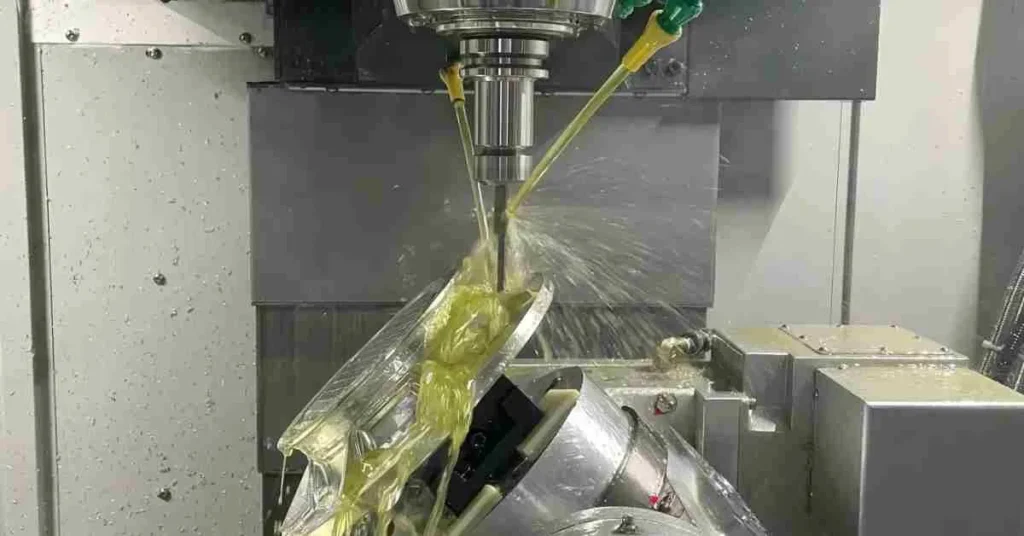
Stainless steel machining process
During the machining of stainless steel, we face many difficulties. In the machining process, these difficulties are very common.
Overheating of the steel surface is the main problem, which occurs during the machining process. If heat tint forms, surface cleaning and passivation may be required to restore the passive layer, depending on the service environment. Pickling is the process in which we can treat the steel with acid. Such as hydrochloric or sulfuric acid. The acid removes the oxidized layer of the steel and restores the corrosion resistance.
We can produce high-quality stainless steel machined parts with proper techniques, equipment, and expertise. The work becomes much easier when using machinable stainless steel grades. They produce better chips and harden less during the cutting process.
Which Stainless Steels are Difficult to Machine?
During the machining process, stainless steel causes problems, but some types are harder to machine. Below are some examples of stainless steels that are difficult to machine:
316 Stainless Steel
316 stainless steel has poor machinability. For machining this steel, specialized cutting tools are required. It is usually used when we don’t have another option.
304 Stainless Steel
304 stainless steel has a main problem: it becomes harder quickly during machining. It will make the cutting process more difficult.
Issues With Machining Stainless Steel
There are some issues when we machine the stainless steel, such as
- Stainless steel is rough and gets harder during cutting, which makes cutting tools wear out much faster and decreases tool life.
- High force is needed to get the desired results. Due to high rigidity, the chances of chatter and dimensional inaccuracies are high.
- Stainless steel has poor chip control during the machining process, requiring more force to machine effectively.
- Some types of stainless steel grades are hard, which makes them difficult to machine.
Which is the Easiest Way to Machine Stainless Steel?
416 stainless steel is the easiest type to machine. In general, 400-series stainless steel grades are much easier to machine, while 300-series stainless steels are much harder to machine.
Best Practices for Machining Stainless Steel
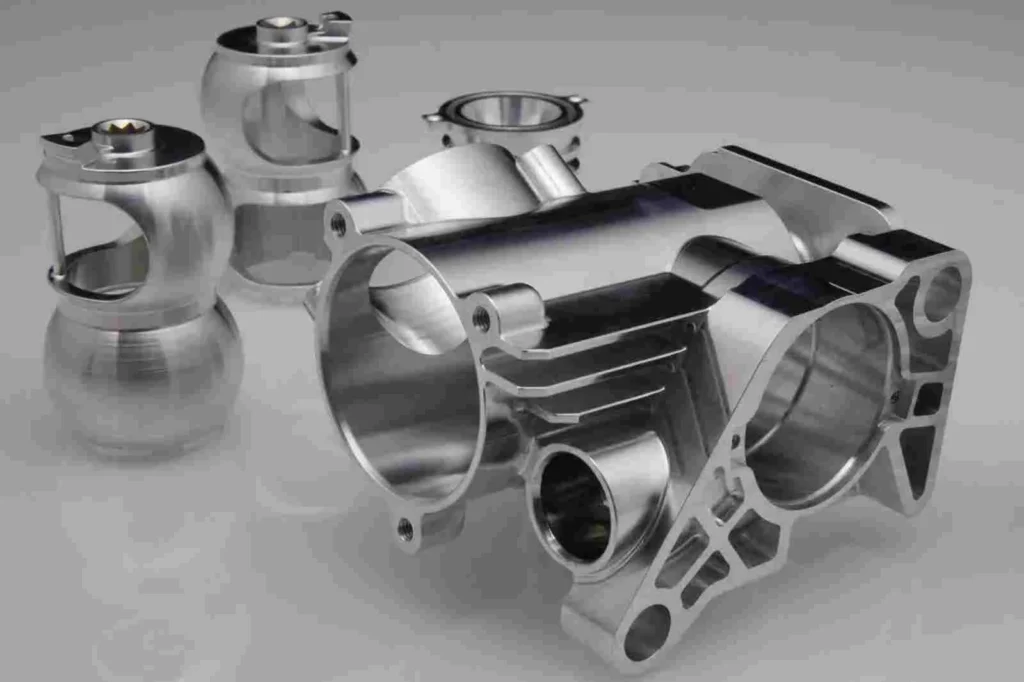
Stainless steel machined parts
These are the best practices that help to machine the stainless steel and make your machining process efficient.
Use High-Quality Materials
For smooth operations, use the best quality workpiece. There are different types of stainless steel grades. Each has its unique characteristics. Spending a little time on material selection can save a lot of money and prevent tool breakage.
Work Hardening
Work hardening is the process by which stainless steel becomes harder during machining. It is due to the plastic deformation of stainless steel. When it gets harder, the machining process becomes more difficult. Using a coolant on the cutting tool will reduce the hardening.
Rigid Tooling
The connections of the tool and the machine setup must be very tight and secure. If the tool becomes chatter, it can cause poor machining. After the workpiece is fixed, the machine bed should also stay stable and have no excessive vibration.
Material of the Tool
To get high results, the selection of the right tool is very important. Two things are important for making tools such as cemented carbide and high-speed steel.
High-speed steel is often used in drill bits and saws. To control the high movement speed, these tools are used. Cemented carbide tools are made from materials such as Tungsten Carbide, Titanium Carbide, or Tantalum Carbide.
Carbide tooling is faster than high-speed steels. They also provide a smooth finish. For mass production and high cutting speed, it is an ideal choice.
Use Sharp Tooling
For accurate and smooth machining, always use sharp cutting tools. Quickly replace the tools that are worn out. Dull tools may damage the workpiece. During the machining of stainless steel, the cutting edges should be properly sharpened.
Lubricants
During the machining of stainless steel, using a lubricant is essential. Lubricant has multiple benefits. Firstly, it reduces friction between the cutting tool and the metal. Secondly, it prevents overheating. Lastly, the lubricant fluid washes away metal chips from the tool and the workpiece.
Advantages of Machining Stainless Steel
Here are some advantages of machining stainless steel, such as
Corrosion resistance
The main advantage of stainless steel is its corrosion resistance. Unlike iron, it does not rust, even in moist or wet environments.
Easy to Shape
It is easy to mold, cut, or weld stainless steel into the desired shape using proper tools.
Multiple Finishing Options
For stainless steel material, multiple surface finish options are available. This is the main requirement for aesthetic appearance.
Safe and Hygienic
Stainless steel is safe and hygienic. It makes an ideal choice for the food and surgical industry.
Strong Physical Properties
It has strong physical properties. Stainless steel maintains its physical properties across a wide temperature range.
Long-Lasting Material
It has strong corrosion resistance and mechanical properties. It extends the life of the tool and reduces the cost.
Recyclable
Stainless steel is 100% recyclable without losing the quality of the product. This is an excellent choice for the machining process.
Disadvantages of Machining Stainless Steel
Below are some disadvantages of machining stainless steel, such as
High Cost
Machining of stainless steel is very expensive. The material is expensive compared to other materials and takes longer to machine.
Easily Dented
Stainless steel becomes easily dented. Surface dents can compromise appearance in machining applications or create contamination traps in hygienic applications.
Susceptible to Scratches
Most of the grades of stainless steel are easily scratched.
Applications of Stainless Steel Machining
Here are the common applications of stainless steel machining.
Medical Devices
Due to its biocompatibility and corrosion resistance ability it is most commonly used in medical devices, surgical instruments, and diagnostic materials.
Food and Beverage
Stainless steel has corrosion resistance. Due to its hygienic properties, it is used in the food and beverage industry.
Marine Applications
Stainless steel has resistance to saltwater corrosion. It is used for boat fittings, making ship parts, propeller shafts, railings, fasteners, and offshore equipment.
Aerospace
Due to its strength and corrosion resistance, it is used in the aerospace industry for making fittings, brackets, and structural parts.
Industrial Machinery
Stainless steel has high-strength supports, high-pressure, and high-temperature. Due to this ability, it is used in industrial processes.
Automotive
Stainless steel is widely used in the automotive industry. Such as exhaust systems, trim parts, and fasteners. Stainless steel can withstand harsh weather, which reduces the repair cost.
What is the Cheapest Stainless Steel for Machining?
For the machining process, type 409 is the cheapest grade of steel. Ferritic family stainless steels are cheaper because they contain less chromium. A major driving factor in steel cost is chromium.
| Stainless Steel Grade | Type | Relative Cost | Machinability Rating | Corrosion Resistance |
| 430 | Ferritic | Lowest | Good | Moderate |
| 416 | Martensitic | Low | Excellent | Moderate |
| 303 | Austenitic | Medium | Excellent | Good |
| 304 | Austenitic | Medium | Fair | Very Good |
| 316 | Austenitic | High | Fair | Excellent |
ProLean MFG is a leader in providing exceptional CNC machining services. CNC machining Services are designed to meet the needs of stainless steel fabrication.
Conclusion
Understanding the material properties, using appropriate tooling, and optimizing process parameters for each grade and operation are all necessary to machining stainless successfully. The material can be challenging due to work hardening and high cutting forces. However, the stainless steel machined components deliver superior corrosion resistance, durability, and performance. When possible, select machinable grades of stainless steel. Maintain sharp tooling. Use proper speeds and feeds when milling stainless. And implement effective cooling strategies to maximize productivity.
ProLean MFG offers precision stainless steel machined components backed by expertise in materials for CNC-machined parts. Our comprehensive range of advanced manufacturing processes. Our comprehensive CNC Machining Services combine the latest technology with our technical expertise to produce components that meet even the most exacting specifications. Contact us to discuss your project and see the ProLean MFG Difference in precision manufacturing.