DFM tied to the mating part
We review the contact face, locating features, fastening loads and tool access together.

CUSTOM PARTS / ENGINEERING & MACHINING
A reusable handle that must fit after cleaning. A thin housing that must stay flat. We connect your PPSU drawing to a machining sequence, critical-feature checks and a defined inspection plan.
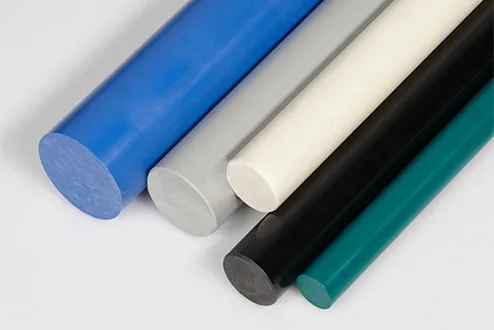
Our review links the feature that matters in your assembly to the proposed setup, machining sequence and acceptance check.
| Your part challenge | Our proposed approach | How to verify the result |
|---|---|---|
| A bore or slot controls assembly | Establish the functional datums before selecting the setup. Keep related features in one machining setup where tool access allows. | Check the mating feature and its position relative to the drawing datums. |
| A thin housing moves during machining | Plan supported clamping and balanced material removal; assess the part after release from the fixture. | Check wall thickness and free-state flatness, with the support condition stated. |
| The part will see repeated cleaning | Review the grade and the proposed cleaning cycle alongside dimensional requirements. | Separate as-machined inspection from any customer-specified post-cycle validation. |
ILLUSTRATIVE ENGINEERING BRIEF
Illustrative RFQ: 50 handles, a 6.00 ±0.05 mm locating slot and two M3 fastening positions. The customer needs repeatable assembly with a metal carrier.
These numbers describe an example customer requirement, not a completed customer project or a guaranteed machining limit. Final feasibility is confirmed from the drawing.
Clamping can distort the slot; repeated fastening can damage a plastic thread. A good initial fit also does not establish fit after cleaning cycles.
Proposed acceptance: record slot width and fastener position relative to the agreed datums. Approve a first-off fit check with the carrier or an agreed gauge before the batch.
We review the contact face, locating features, fastening loads and tool access together.
The proposed route identifies roughing, datum transfer and final machining of the functional features.
Agree the dimensions and assembly checks to approve before the remaining quantity is released.
List the critical features, measurement conditions and required records with the quotation.
Confirm the grade after the functional requirements are clear.
Steam sterilization, continuous operation and short thermal excursions are different conditions. State the temperature, duration, number of cycles, cleaning agents and loaded dimensions for an engineering review.
| Material option | Selection context | What to confirm |
|---|---|---|
| Industrial PPSU | Equipment components and insulating parts | Specify supplier grade, color, stock form and required documentation. |
| Medical-use PPSU | Reusable instrument and equipment components | Request the exact supplier declaration and intended contact conditions. A material test report does not establish finished-device suitability. |
| Customer-specified PPSU | Parts with a defined purchase specification | Provide the trade name and grade. Substitutions require approval against the drawing and purchasing requirements. |
Material reference: Ensinger material reference ↗.
Send the current drawing, mating-part dimensions and where the fit changes. Our review can compare the datum scheme, clamping, machining sequence and inspection condition before proposing a route.
Identify the mating feature, required clearance, datum references and measurement condition. We review the actual size and geometry instead of applying one tolerance to the entire part.
Show the fastener, torque and expected assembly cycles. A machined-thread or insert route can then be assessed with the surrounding wall and installation access.
Dimensional machining inspection and sterilization validation are different checks. Include the required cycle and acceptance criteria so the scope can be agreed.
The CAD model, drawing revision, PPSU grade, quantity, mating requirements, cleaning conditions and required inspection records.
ENGINEER YOUR NEXT PART
Send the drawing and tell us which feature controls assembly, sealing or motion. Our review connects that requirement to a proposed route and inspection scope.