
Home » CNC Machining Materials for Custom Parts » Nylon CNC Machining
Nylon CNC Machining
CNC machining of Nylon 6, Nylon 66, and glass-filled nylon for functional plastic components.
Suitable for parts requiring wear resistance, low friction, and good strength-to-weight ratio. Commonly used in mechanical assemblies, housings, and sliding components where dimensional stability and material selection are critical.
- Materials: Nylon 6, Nylon 66, GF15 / GF30 glass-filled nylon
- Processes: CNC milling and CNC turning
- Typical tolerance: ±0.05 mm (tighter tolerances subject to part geometry and moisture control)
- Part types: bushings, gears, wear pads, structural plastic components
- Quality system: ISO 9001 certified manufacturing
Get a New Nylon CNC Machining Quote
Engineering Advantages of Nylon
Nylon (polyamide) is one of the most widely used engineering plastics in CNC machining
due to its excellent balance of strength, toughness, and wear resistance.
Compared with metals, nylon offers significant weight reduction while maintaining good
mechanical performance. It also provides excellent chemical resistance and low friction
properties, making it suitable for moving mechanical components.
Key Benefits
- Lightweight engineering plastic
- Excellent wear resistance
- Low friction coefficient
- Good chemical resistance
- Good mechanical toughness
- Cost-effective engineering material
- Good electrical insulation properties
Common Nylon Grades for CNC Machining
| Grade | Characteristics | Machinability | Typical Applications |
|---|---|---|---|
| Nylon 6 | Tough and wear resistant | Good | Bushings |
| Nylon 66 | Higher strength | Moderate | Mechanical parts |
| Glass-Filled Nylon | High stiffness | Moderate | Structural parts |
| Flame-Retardant Nylon | Electrical safety | Moderate | Electrical housings |
Material selection depends on mechanical load, temperature exposure, and dimensional stability requirements.
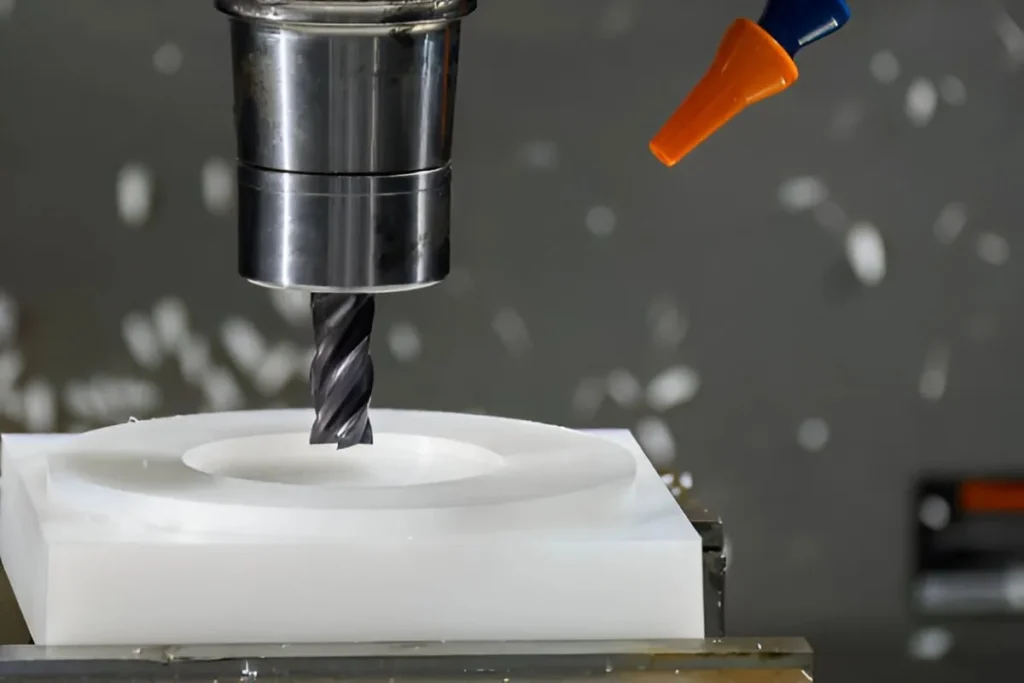
Precision CNC Machining of Nylon Components
repeatability for functional plastic components.
Typical nylon parts include bushings, gears, rollers, and lightweight mechanical components used in motion systems.
| Feature | Typical Value |
|---|---|
| Minimum wall thickness | 0.8–1.5 mm |
| Typical tolerance | ±0.02–0.05 mm |
| Surface finish | Ra 1.6–3.2 µm |
| Maximum part size | up to 1200 mm |
Typical Nylon Components
- Bushings
- Gears
- Rollers
- Wear pads
- Sliding guides
- Lightweight brackets
Recommended Geometry Features
- Internal pockets
- Threaded holes
- Thin-wall plastic parts
- Lightweight structures
Machining Considerations for Nylon
Common Machining Challenges
Moisture absorption
Nylon can absorb moisture from the surrounding environment. This may cause dimensional changes in precision parts, especially in high-humidity conditions.
Thermal expansion
As a thermoplastic material, nylon expands more than metals when exposed to heat during machining. Excessive cutting heat may affect dimensional stability.
Material deformation
Because nylon is softer than metal, thin features or unsupported sections can deform under cutting forces or clamping pressure.
Chip control
Nylon tends to produce long, stringy chips during machining, which may interfere with tool paths if chip evacuation is not properly managed.
Engineering Solutions
To address these challenges, nylon machining typically involves:
- Using sharp tooling designed for plastics
- Optimizing cutting speeds and feed rates
- Minimizing clamping pressure during fixturing
- Maintaining stable machining temperatures
- Proper chip evacuation and coolant strategies
With appropriate machining strategies, nylon parts can achieve reliable dimensional accuracy and consistent surface finishes.Lorem ipsum dolor sit amet, consectetur adipiscing elit. Ut elit tellus, luctus nec ullamcorper mattis, pulvinar dapibus leo.
Comparison Chart
| Material | Machining Difficulty |
|---|---|
| Aluminum | Low |
| Nylon | Low |
| Stainless Steel | High |
Surface Finishing for Nylon Parts
Common Finishing Methods
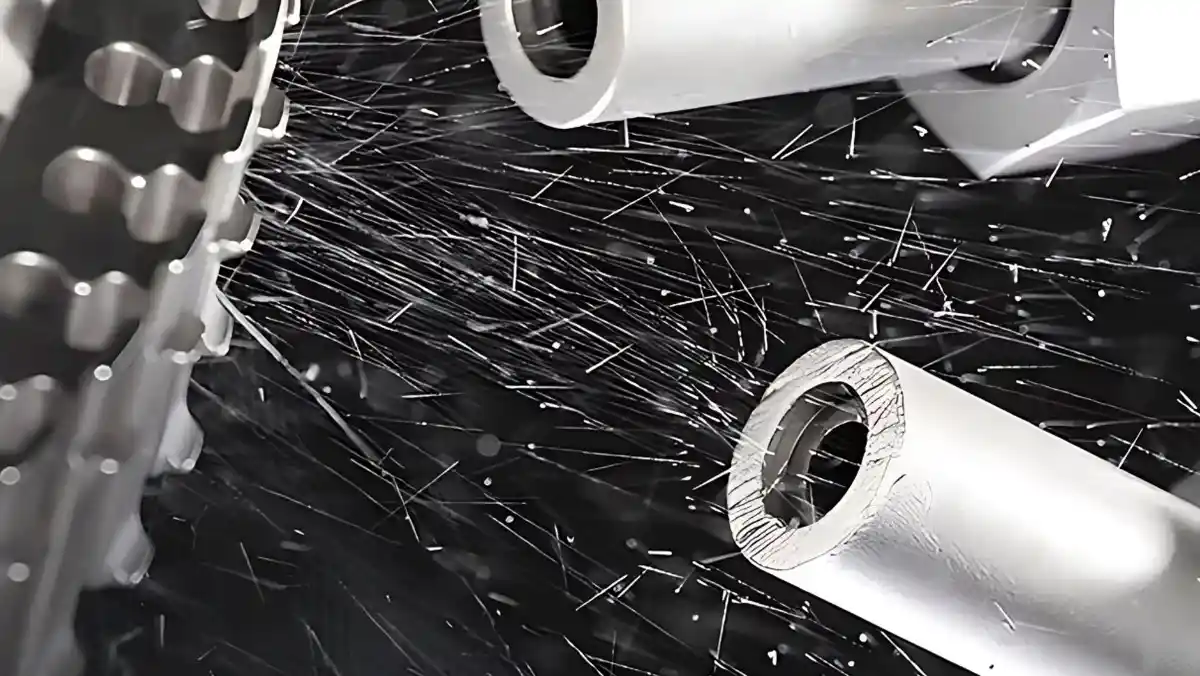
Bead blasting
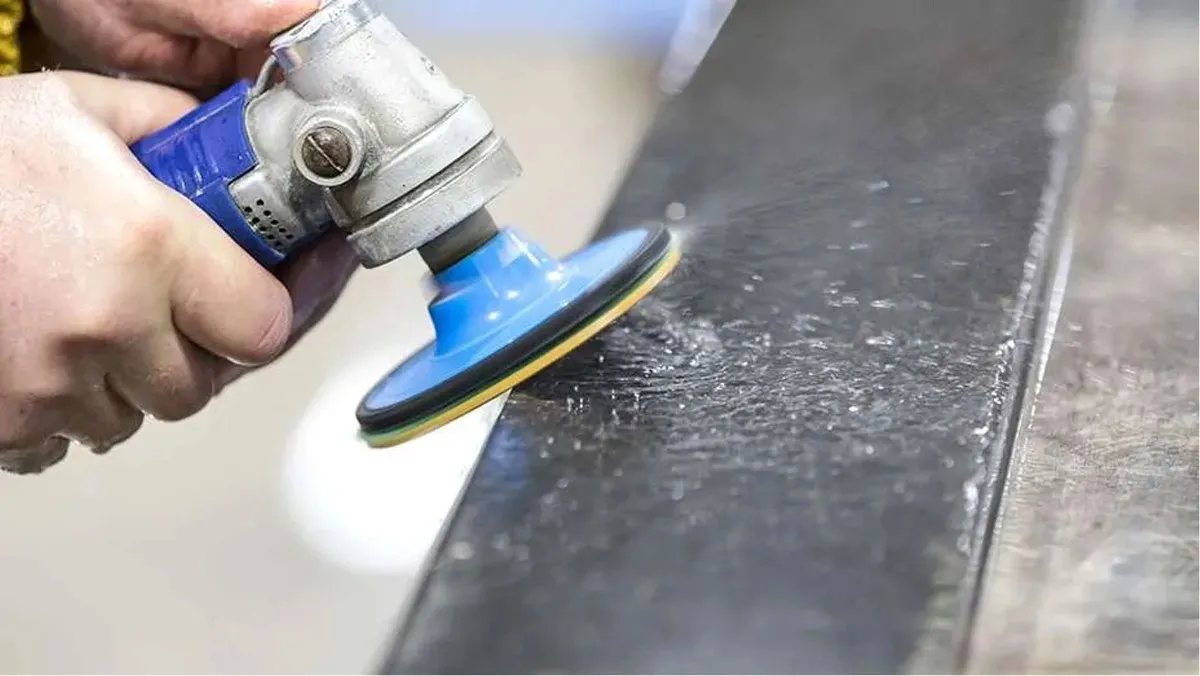
Polishing
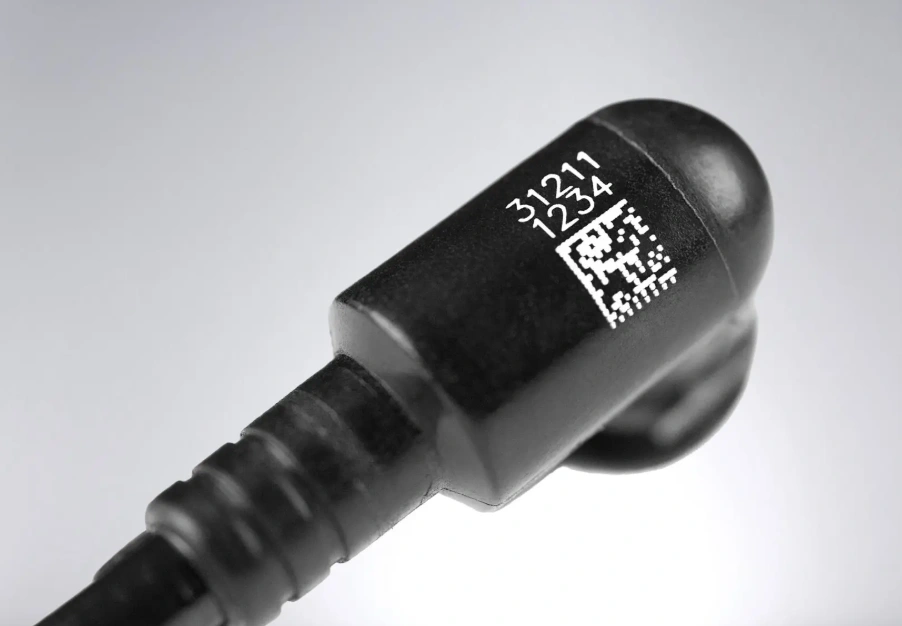
Laser marking
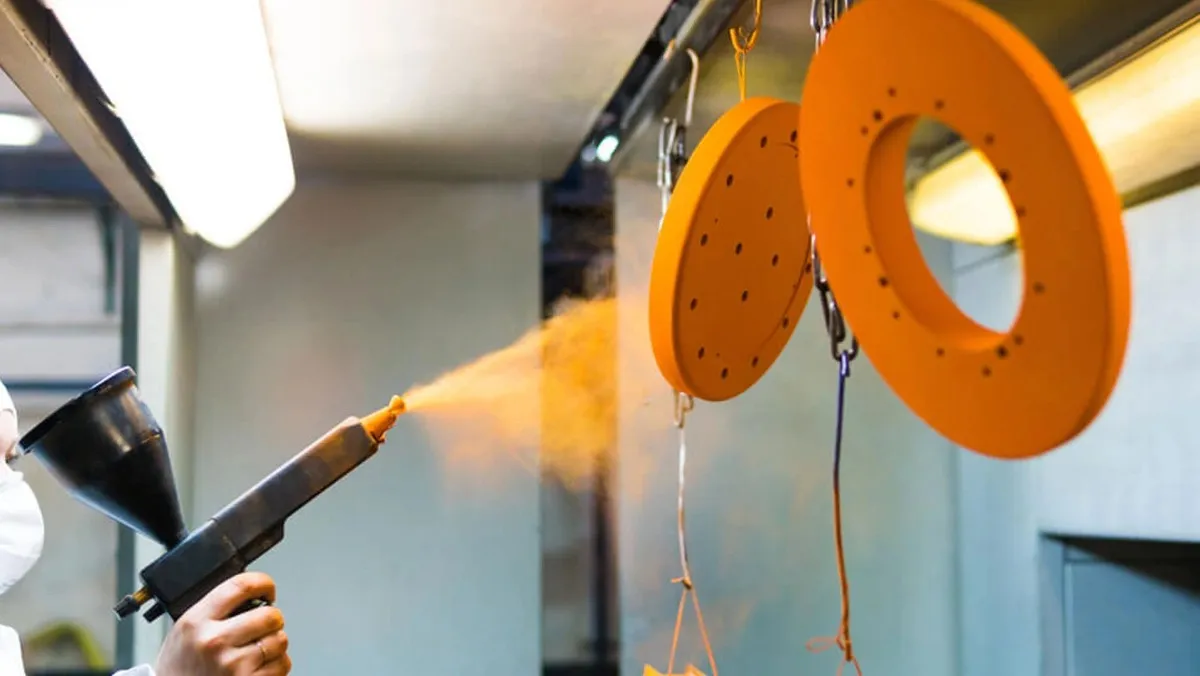
Painting or coating
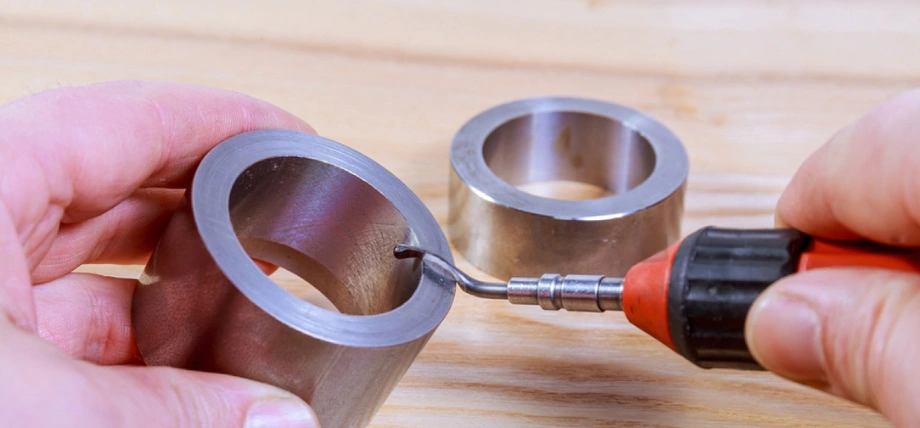
Deburring
Surface finishing can improve appearance, reduce friction, or add identification markings to nylon parts.
Industrial Applications of Machined Nylon Parts
Nylon is widely used in industrial components where lightweight construction, wear
resistance, and low friction are required.
Compared with metal parts, nylon components can reduce weight, minimize noise, and
improve sliding performance in moving mechanical systems.
CNC-machined nylon parts are commonly used in industries that require durable and cost-effective engineering plastics.
Industrial Machinery
Typical parts include:
- Bushings
- Sliding guides
- Wear pads
- Rollers
Nylon components are often used in mechanical systems where low friction and wear resistance are important for moving parts.
Automotive Systems
Typical parts include:
- Lightweight brackets
- Cable guides
- Plastic gears
- Interior mechanical components
Nylon is frequently used in automotive applications due to its combination of strength, toughness, and weight reduction.
Electronics & Electrical Equipment
Typical parts include:
- Electrical housings
- Insulating components
- Cable supports
- Connector components
- Electrical housings
Because nylon has good electrical insulation properties, it is commonly used in electrical and electronic equipment.
Consumer and Industrial Products
Typical parts include:
- Plastic gears
- Mechanical housings
- Wear-resistant components
- Structural plastic parts
Nylon is widely used in consumer products and light industrial equipment where durability and cost efficiency are required.
Frequently Asked Questions
Is nylon easy to machine?
Yes. Nylon is generally easier to machine than most metals due to its lower hardness and good machinability.
However, its thermoplastic nature requires proper cutting parameters to avoid deformation or surface melting during machining.
What grades of nylon are commonly used for CNC machining?
Common grades include Nylon 6 (PA6), Nylon 66 (PA66), and glass-filled nylon.
Each grade offers different levels of strength, stiffness, and dimensional stability depending on the application.
Does nylon absorb moisture?
Yes. Nylon can absorb moisture from the surrounding environment.
Moisture absorption may slightly affect the dimensional stability of precision parts, which is why environmental conditions and part tolerances should be considered during design.
What tolerances can be achieved when machining nylon?
Typical CNC machining tolerances for nylon parts range from ±0.02 mm to ±0.05 mm, depending on part geometry, material grade, and machining conditions.
What surface finishing options are available for nylon parts?
Common finishing options include bead blasting, polishing, deburring, and laser marking.
These finishing processes can improve appearance, reduce friction, or add identification marks to nylon components.