
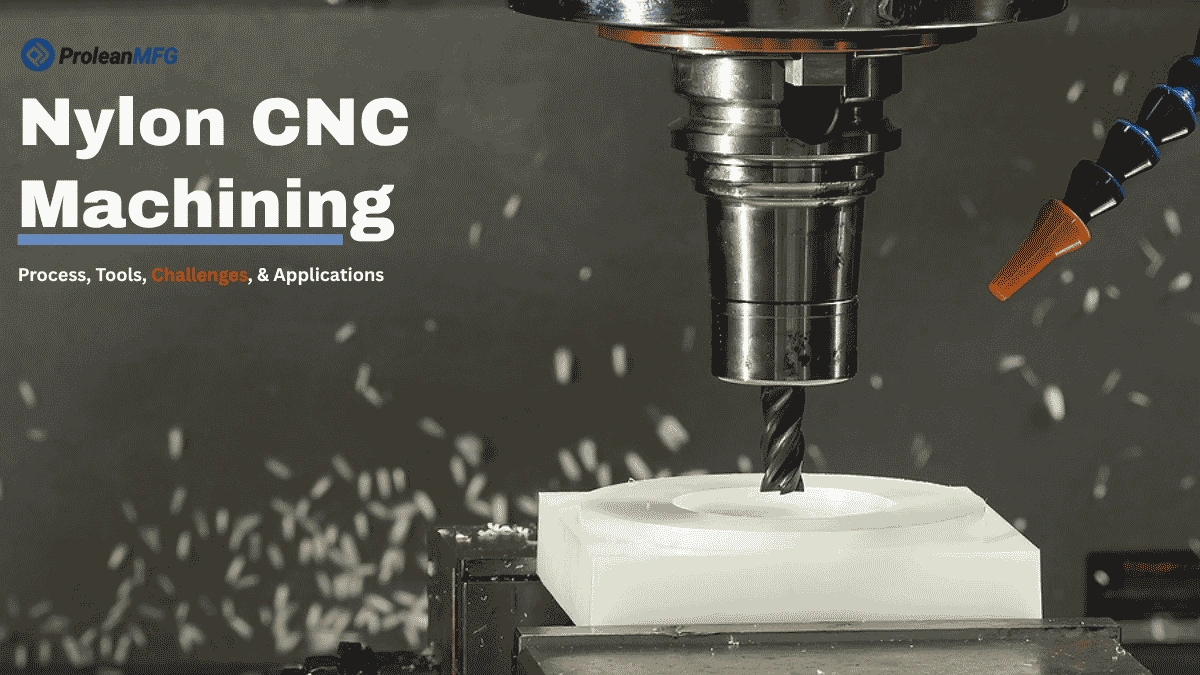

Nylon machining is a precise, fast process for manufacturing components that require high lubricity, chemical resistance, wear resistance, compressive strength, and durability. It offers low material waste, efficiency, and flexibility in manufacturing, but has thermal sensitivity and moisture absorption challenges. Choose the right feeds & speeds, tooling, and coolant flow to machine Nylon material into gears, bushings, wear pads, sliding guides, etc.
Different Nylon grades, such as Nylon 6, Nylon 66, and glass-filled Nylon, are available for CNC machining and can be used for diverse applications. They can be used for parts like gears, bushings, wear pads, sliding guides, and other custom components.
This Nylon CNC machining article will guide you through Nylon grades, material properties, design guidelines, machining tools, speeds & feeds, surface finishing options, challenges, benefits, and industrial applications.
Let’s get started!
What is Nylon?
Nylon, or Polyamide(PA), is a high-strength and wear-resistant thermoplastic that is used in CNC machining to produce strong, durable, and low-friction components. For example, gears, bushings, seals, slides, CAMS, and custom engineering parts.
The only difference between polyamide vs Nylon is that Nylon is the most common subtype of the polyamide family and is extensively used across engineering applications.
Nylon provides tensile strength of 83 MPA, flexural strength of 109 MPA (nylon 6), and melts at ~215°C [1]. These properties make nylon suitable for fabricating high-performance applications in fittings, industrial machinery, automotive, and aerospace industries.
What is Nylon CNC Machining?
Nylon CNC machining is a subtractive manufacturing process to shape the raw Nylon workpieces into the desired shapes using suitable tools & machining processes. You can cut, mill, turn, and drill the Nylon with computer-controlled instructions, maintaining accuracy ±0.127 mm to ±0.05 mm or lower.
To produce CNC-machined Nylon parts with desired specifications, you must optimize the design for manufacturability, choose the right tool material & machining variables, and consider heat & moisture sensitivity.
Is Nylon the Right type of Material for my CNC Machining Parts?
Is Nylon Good for CNC machining? Yes, nylon is good for machining as it has excellent machinability, can be shaped into complex parts, and is compatible with various machining operations.
Nylon is the right type of material for CNC machining if you need tough, low-friction, corrosion & wear resistance, durable plastic parts. In contrast, it can not be a good option for applications requiring tight dimensional stability in humid conditions.
Before moving into the details of nylon CNC machining, ensure it is the right plastic for your application.
Here are the three steps to ensure Nylon is suitable for your machining project.
- First, identify the desired strength, hardness, coefficient of friction, thermal stability, and machining properties.
- Analyze whether Nylon meets the identified requirements.
- If Nylon properties and performance are suitable for your application, look for the grade that best fits: Nylon 6, Nylon 66, or glass-filled nylon.
Nylon Grades used in CNC Machining
Nylon machining grades
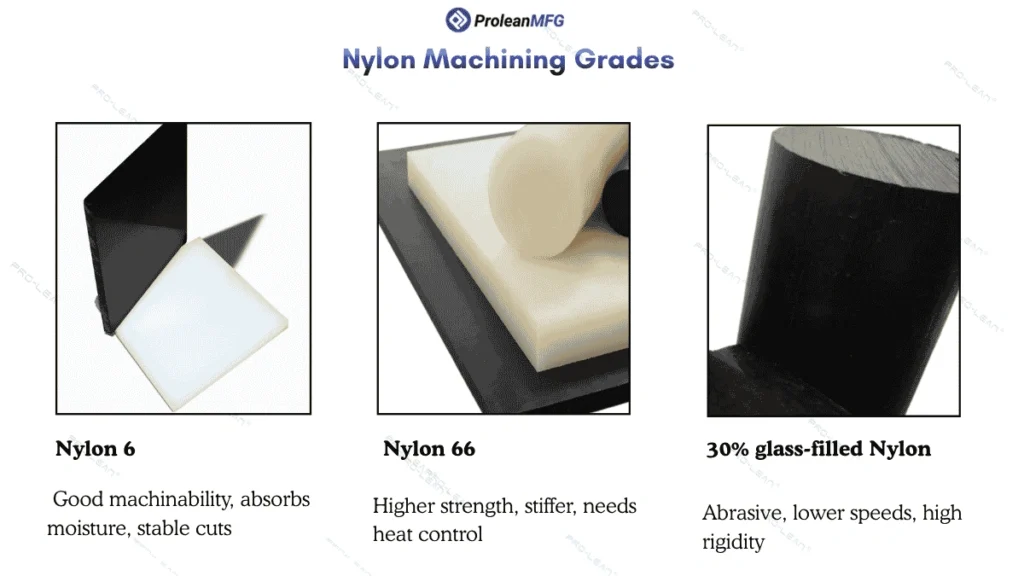
Nylon 6, Nylon 66, and glass-filled Nylon are the Nylon CNC machining grades. Nylon 6 provides better impact strength, flexibility, and machinability. Nylon 66 is stronger, heat-resistant, and has a higher load-bearing capacity. Meanwhile, glass-filled nylon is much stiffer and dimensionally stable, but has lower machinability.
International standard ASTM D4066 classifies these nylon grades (injection-molded or extruded stocks) based on composition, molecular structure, included additives, and processing characteristics.
Next, let’s look at the properties table of Nylon machining grades.
| Property | Nylon 6 | Nylon 66 | Glass-Filled Nylon |
| Density (g/cm³) | ~1.13 | ~1.14 | ~1.20 – 1.40 |
| Tensile Strength (MPa) | 65 – 80 | 80 – 95 | 150+ |
| Tensile Modulus (GPa) | 1.7 – 2.2 | 2.0 – 3.0 | 5 – 10+ |
| Melting Point (°C) | ~215 | ~255 – 265 | ~260 |
| Heat Deflection Temp (°C) | ~75 | ~90 | 200–260+ |
| Moisture Absorption (%) | ~3.5 % | ~2.5 % | ~1.1 % |
| Wear Resistance | Moderate | High | Excellent |
| Impact Strength | High | Moderate | Lower and can |
| Creep Resistance | Low | High | Excellent |
| Machinability | Excellent | Excellent | Low; difficult to machine without abrasive coating |
| Dimensional Stability | Moderate | Good | Excellent |
| Cost | Lower | Medium | Higher |
Nylon Part Design for CNC Machining
While designing Nylon parts for CNC machining, use uniform wall thickness, size ribs & radii correctly, consider shrinkage, set pocket depth properly, avoid unnecessary tolerances, and consider moisture absorption & thermal expansion. Let’s further discuss these design rules.
Wall Thickness
Maintain uniform wall thickness of Nylon parts. If thickness changes, use proper transitions. Meanwhile, the minimum wall thickness must be above 1.5 mm.
Ribs
Ribs reinforce the part strength and improve stiffness without adding significant weight. While designing ribs, keep the rib thickness 0.5 to 0.6 times the part wall thickness.
Radii & Corners
Sharp corners increase the stress concentrations and also make the parts difficult to handle. So, add an internal radius of > 0.5 mm to make rounded corners.
Pockets
Do not set the depth of pockets higher than four times their depth. Otherwise, it reduces the chip evacuation efficiency. Avoid Unnecessary Tight Tolerances.
Seeing dimensional & geometrical tolerances tighter than required for functionality & performance increases Nylon machining Cost. For instance, ±0.1 is enough for general applications, whereas precise parts might need ±0.05 or lower. You can refer to ISO 2768 for tolerances.
Consider Moisture Absorption to Compensate Linear Expansion
For parts used in humid environments, consider 0.2 to 0.3 % ( of allowance to balance the linear expansion caused by moisture. It is 0.25 to 0.30 % for Nylon 6 % and 0.22 to 0.28 % for Nylon 66. [3].
Thermal Expansion
Consider the thermal expansion rate, as the dimension at 10°C or 50 °C cannot be the same as at 20 °C. The coefficient of thermal expansion for Nylon is ~8.1 x 10⁻⁵/° C.
What Are the Nylon Machining Tools?
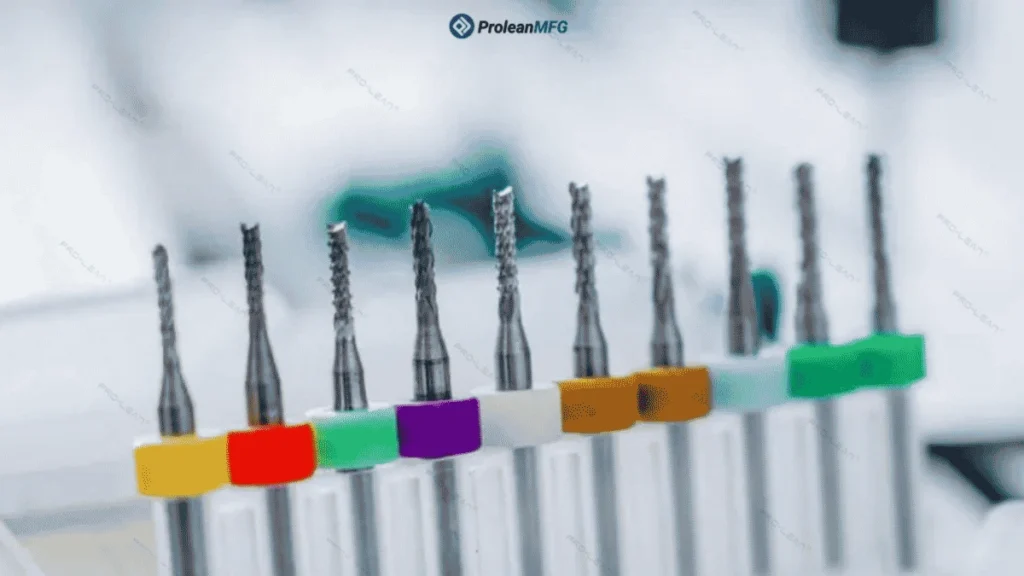
Nylon machining tools
High-speed steel or carbide tools are used for Nylon machining, which are sharp and polished to remove material efficiently. The type of tool depends on the machining process and operation.
End mills with 1 or 2 flutes are suitable for milling, single-point turning tools are suitable for Nylon turning, and twist drills can create holes in Nylon workpieces.
The list below outlines the end mills, twist drill bits, O-flute cutters, and turning tools used in Nylon CNC machining.
- End Mills: Use end mills to create Nylon parts with complex geometrical features, such as slots, contours, and channels.
- Twist Drill Bits: Use twist drill bits of HSS or Carbide for through and blind holes.
- O-flute Cutters: These are router bits, which are preferred for Nylon fabrication. E.g., signage and advertisement boards.
- Turning Tools: Use turning tools with C-2 grade carbide inserts for Nylon.
Feeds and Speeds for Nylon CNC Machining
High speeds and feeds are used for CNC machining of Nylon. The recommended speed is typically 200 SFM +, and the feed rate is 0.002 to 0.015 inches per tooth. The exact value of cutting speed and feed depends on the Nylon grade, tool material, and machining operation.
The table below outlines general Speed and feed values for Nylon turning, milling, and drilling [4].
| Parameter | Carbide tools | HSS tools |
| Milling speed (SFM) | 500–1000 | 300–650 |
| Drilling speed (SFM) | 160–500 | 160–500 |
| Turning speed (SFM) | 500–1300 | 300–650 |
| Milling feed (in/tooth) | 0.002–0.012 | 0.004–0.012 |
| Turning feed (in/rev) | 0.002–0.010 | 0.002–0.008 |
| Drilling feed (in/rev) | 0.001–0.004 | 0.004–0.012 |
Balancing Speed Feed Rate while Machining Glass-filled Nylon
Machining glass-filled nylon typically requires 30-50% lower speeds than other standard grades. This is because the glass reinforcement increases the material’s abrasiveness and reduces its machinability. Therefore, balance the feed and speed to achieve efficient material removal without defects or excessive machining roughness.
Setting speeds too high causes Nylon to melt and results in a rougher finish, whereas setting them too low causes the tool to rub the Nylon workpiece.
Surface Finishing for CNC-machined Nylon Parts
The standard as-machined finish for Nylon parts is around 3.2 µm (Ra value). For final finishing, perform sanding, bead blasting, tumbling, polishing, or vapor smoothing. These surface treatment methods can produce distinct textures and levels of smoothness. Subsequently, dying can give aesthetic colors.
- Sanding and Beadblasting: These techniques remove burrs, tool marks, and minor surface imperfections. Choose when you need a smoother surface than the as-machined one.
- Tumbling: In this treatment, machined parts are held in a barrel with abrasive media. As the barrel rotates, the abrasive rubs the surface, removing burrs. Use tumbling for small volumes that require uniformity & a matte/stain finish.
- Polishing: It uses fine abrasive grains for smoothing the Nylon surface. Polishing treatment is suitable for a gloss or mirror-like finish.
- Vapor Smoothing: A controlled stream of heated vapor melts the thin outer layer, revealing a high-gloss surface on a machined Nylon part.
- Dying: In this post-machining process, Nylon parts are immersed in solvent-dye solutions to achieve the desired color.
Next, let’s compare these finishing techniques through a concise table.
| Aspect | Sanding | Bead blasting | Tumbling | Polishing |
| Texture | Matte finish | Uniform matte/satin | Uniform matte | Smooth to glossy |
| Cost | Low (manual labor) | Low–medium | Low for small volumes | Medium–high (labor-intensive) |
| Best for | Tool marks removal, small batches | Tool mark removal & uniform finishing | Batch finishing of machined parts, for functional purposes | Aesthetic or low-friction surfaces |
How to Carry Out CNC Machining for Nylon Fabrication?
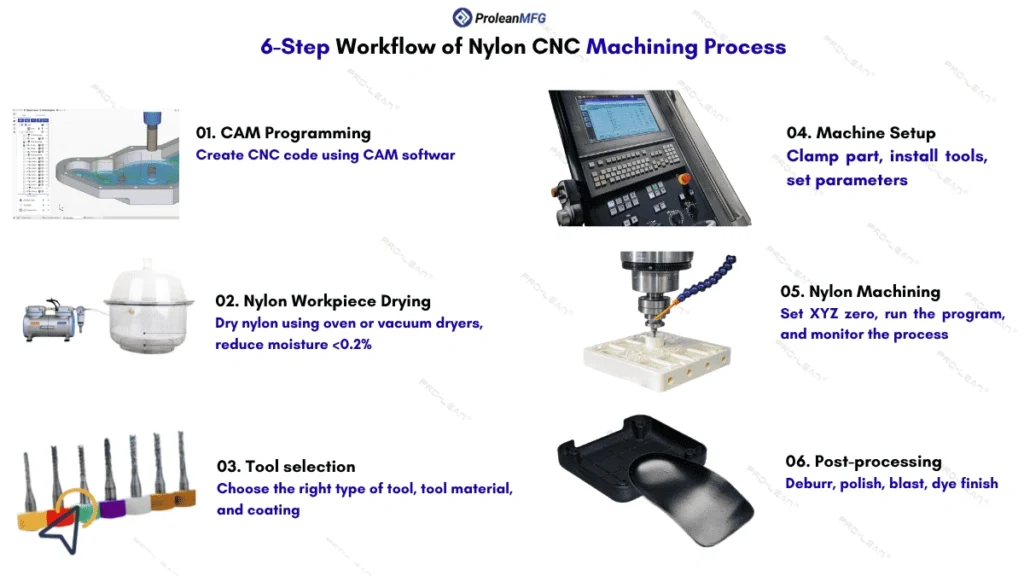
Nylon machining steps
Once you have a ready-to-machine design, there are several steps to carry out the CNC machining process, including CNC programming, workpiece preparation, tool selection, machine setup, machining, and post-machining treatments.
Let’s further break down these steps.
- CNC programming: Generate a CNC program to control the machining process. It can be done in SolidCAM and MasterCAM, or in some design software that also includes programming extensions.
- Workpiece Preparation: Remove moisture from Nylon workpieces through oven or vacuum drying.
- Tool Selection: Choose the right tool type, such as a one-flute or two-flute end mill, and HSS or carbide.
- Machine setup: Clamp the workpiece, install tools, and set machining parameters.
- Machining process: Calibrate the machine & set up, and fix the initial coordinates (X, Y, Z). Then, run the CNC program to do the job. You only need to monitor the process.
- Post-machining Treatment: To achieve the desired precision and finish, perform deburring, vapor polishing, beadblasting, dying, or other post-machining operations.
Different Nylon CNC Machining Processes: Milling, Turning, Routing, and Drilling
Milling, turning, routing, and drilling are the main CNC machining processes for Nylon. Each one of them has distinct capabilities in shaping the Nylon workpiece. Nylon turning is for cylindrical parts; milling is for complex parts & profiles; routing is for large-sized parts; and drilling is for creating precision holes.
CNC Nylon Milling
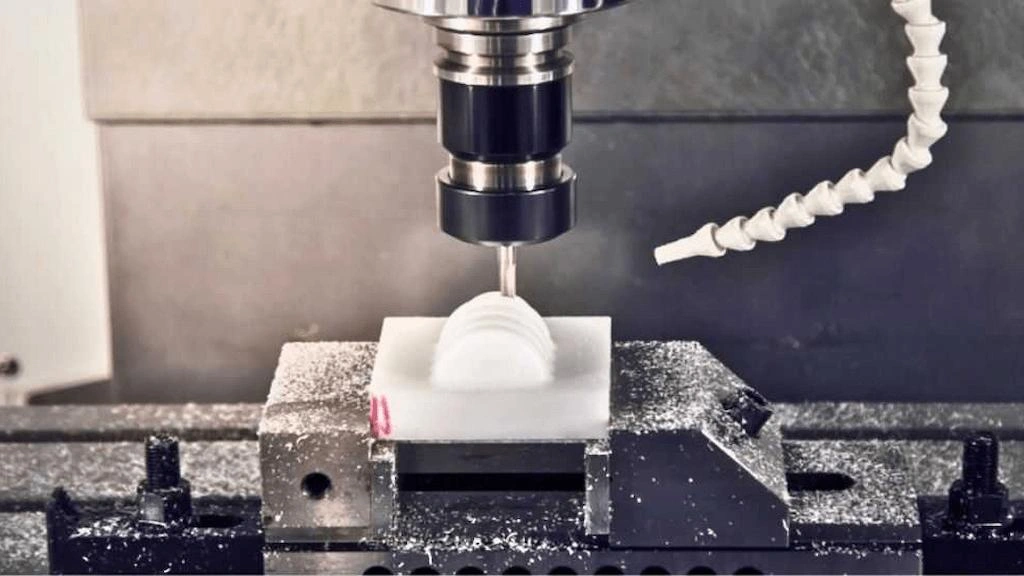
Machining glass-filled nylon
A rotating cutter removes the material from a stationary Nylon Workpiece. It is performed on CNC mills with HSS or Carbide end mills.
Use Milling when you need flat surfaces and complex geometries on your Nylon parts, such as slots, pockets, and irregular contours.
CNC Nylon Turning
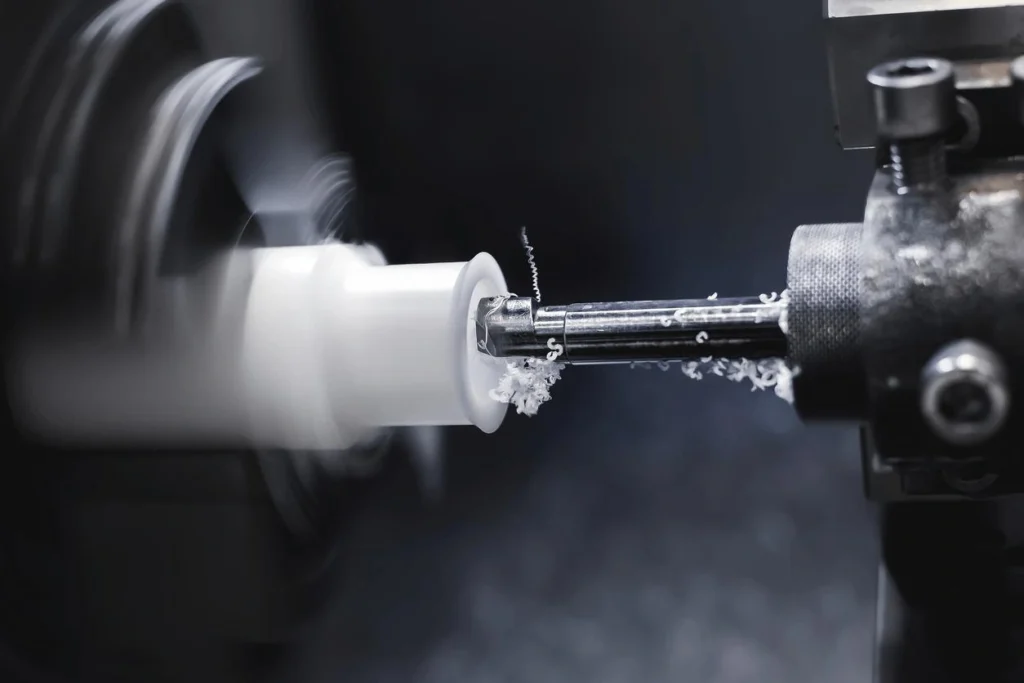
Nylon CNC turning
Nylon Turning is performed on CNC lathes and turning centers. It involves a rotating Nylon workbar with a stationary tool that feeds into the material to create an axially symmetric component.
Nylon CNC Drilling
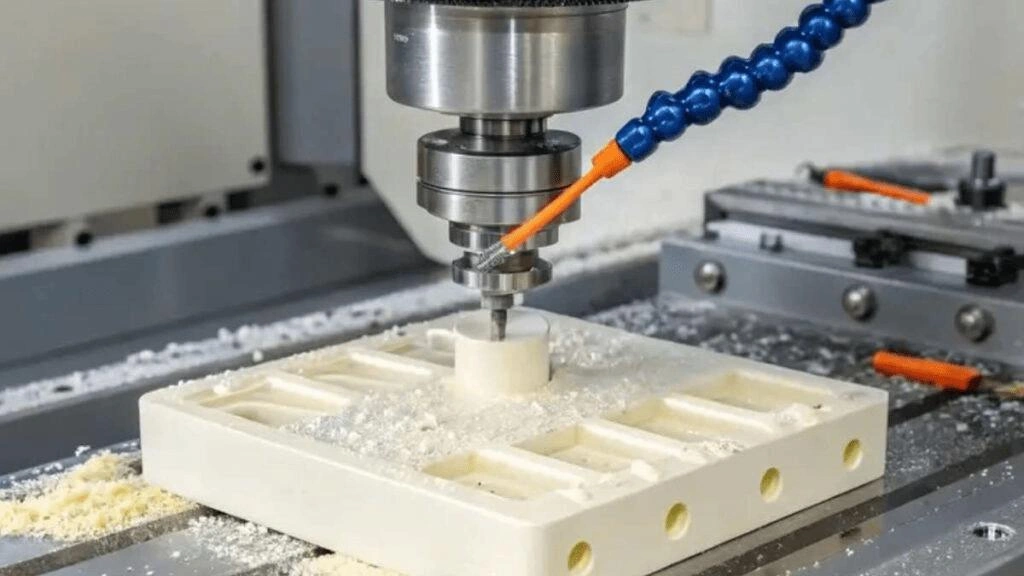
Nylon CNC drilling
In Nylon drilling, a rotating drill bit creates the holes of the desired diameter and depth. You can perform it on regular milling machines or drill presses.
Nylon CNC Routing
CNC routing is suitable for the Nylon fabrication of flat & large components. It is a fast process, and the spindle speed can reach 22,000 RPM. You can use this process to make bushings, wear pads, and custom fixtures.
Nylon CNC Machining Cost and Reduction Strategies
Per-hour Nylon CNC machining costs typically range from $30 to $150, depending on the type of CNC equipment, setup costs, tooling, part complexity, and desired tolerances. Subsequently, production volume and raw material prices also influence the cost.
Cost Factors in Nylon CNC Machining
Material grade, material wastage, part complexity, tooling, tolerances & finish, production volume, machine type, and post-processing are the key factors that determine Nylon CNC machining prices. However, each factor has a different level of impact.
| Cost Factor | Description | Impact on Machining Cost |
| Material Grade | The cost of Nylon 6,66, reinforced, etc., is different | $$ |
| Material Wastage | High material wastage increases the cost | $$ |
| Part Complexity | Geometrical features such as undercuts, slots, and profiles. | $$$ |
| Tooling | Tools with specialized coatings cost more. | $$$ |
| Tolerances & Finish | Precision and surface requirements | $$$ |
| Production Volume | Higher volumes reduce per-part machining cost. | $ (reduces) |
| Machine Type | 5-axis CNC machining is more expensive than 3-axis or manual machines. | $$$ |
| Post-processing | Deburring, sandblasting, polishing, and other treatments increase cost. | $$ |
How to Reduce the Nylon CNC Machining Cost?
To reduce Nylon CNC machining costs, remove moisture from the Nylon before machining, use the right tooling, optimize feed & speed, optimize DFM & tool path, and streamline post-machining processes.
Remove Moisture From Nylon Workpiece
Moisture content in Nylon causes dimensional inaccuracies and machining defects, such as warping. So, dry the workpiece and ensure the content is below 0.2%.
Use the right Type of Tools
Consider the tool type, geometry, material, and coating while choosing tools for Nylon machining. Additionally, ensure the tool is sharp and that efficient cooling is in place before machining.
Optimize Feed and Speeds
Do not set higher speeds or feed than required for performance. Instead, perform test runs and set optimal parameters.
DFM and Tool Path Optimization
You can also make minor design adjustments (if changes do not affect functionality) to optimize Design for Manufacturability (DFM). Additionally, optimize the toolpath to reduce material waste.
Streamline Post-machining Treatments
Adjust design, tooling, and setup for minimal post-machining treatments. Consequently, streamline processes such as deburring, sanding, and polishing to reduce overall production time.
Benefits of Nylon Fabrication with CNC Machining
CNC machining is a fast, precise, and cost-effective process for fabricating Nylon parts in small batches. It can be easily machined to fabricate complex parts with irregular profiles & internal features, as well as provide a high strength-to-weight ratio, chemical resistance, and electrical insulation, and a low-friction surface.
Here is the list of Nylon CNC machining benefits.
- High Strength-to-weight Ratio: Nylon machining can be used to make high-strength parts while reducing the overall weight. In such cases, it can be suitable for metals & alloys.
- Excellent Machinability: Nylon fabrication with machining allows the production of parts with complex geometrical features due to excellent machinability.
- Tight Tolerances: Nylon CNC machining offers tight tolerances of ±0.05 mm or lower.
- Versatility: Nylon CNC-machined parts are used in diverse industries for both prototyping and end-use applications.
- Chemical Resistance: Nylon performs well under mild acids, alkalies, hydrocarbons, oils, and other chemical exposures.
- Wear Resistance: The semi-crystalline structure of Nylon makes it wear-resistant.
- Electrical Insulation: Nylon has high dielectric strength (~14 to 20 KV/mm) and insulates the current flow.
- Cost-effectiveness: Compared to other Nylon fabrication methods, CNC machining is highly cost-effective for Complex and precise parts for prototyping and small-volume projects.
- Natural Lubricity: CNC-machined nylon parts offer a low coefficient of friction and natural lubricity, beneficial for producing rotating & sliding components.
Industrial Applications of Nylon CNC Machining
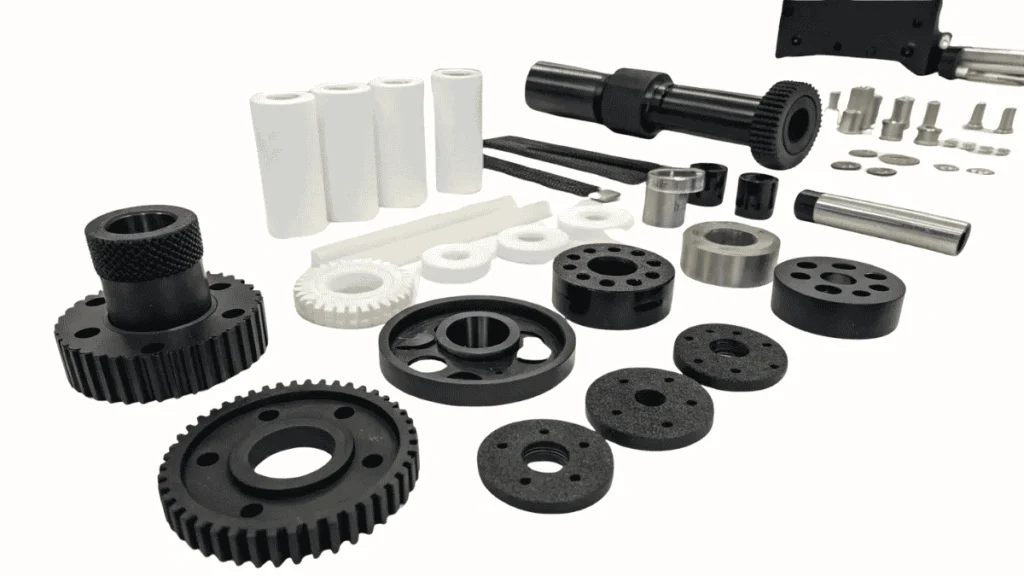
CNC-machined nylon parts
Nylon CNC machining produces low-friction, durable, and impact- and wear-resistant components across multiple industries, including automotive, aerospace, robotics, medical, electronics, consumer goods, and industrial machinery.
The table below explains why Nylon CNC machining is used across industries and which types of parts/products can be produced.
| Industry | Why is Nylon used? | Application Examples |
| Automotive | Lightweight but strong parts, low friction, and withstand harsh environmental conditions. | Bushing, suspension spacers, brackets, cam belt covers, and air intake manifolds. |
| Aerospace | Reduce weight without losing strength, and can be machined with tight tolerances required for aircraft performance & safety. | Aircraft bushing, bearing parts, electrical connector enclosures, and clamps & brackets. |
| Robotics | Weight reduction, precision, vibration damping, low-friction for motion system parts, etc. | Guide bushings, actuator casings, cable carriers, dive gears for joints, and instrument mounts. |
| Medical | PA6 and PA12 are FDA-compliant, tribiological properties, and tight tolerances for medical accuracy | Device housing, instrument handles, and custom orthotics. |
| Electronics | Electrical insulation and dimensional stability under thermal cycles | Insulating panels, mount screws, plug bodies, and relay casings. |
| Consumer Goods | Cost-effective, design flexibility, and durability. | Kitchen appliance parts, sporting goods, load-bearing clips, and power tool housing. |
Industrial Machinery | Impact strength, vibration damping, and high tensile strength. | Conveyor rollers, valve seats, vibration-damping pads, jigs& fixtures. |
Replacing a Steel Guide Bushing with Nylon: An Application Case Example
Upon choosing a Nylon (PA 6) bushing over a steel bushing for a bushing used in a robotic linear sliding joint, manufacturers were able to achieve ~80% weight reduction without compromising the required performance. The OD, ID, and length of the bushing were 25 mm, 20mm, and 30 mm, respectively.
It is achieved through CNC machining; nylon 66 guide bushes have an overall tolerance of ±0.05 mm and a surface finish of 1.6 µm, making the bushing highly suitable for precision robotic guiding. Also, due to reduced inertia, the change had an improved system response at the expense of maximum load capacity (compared to steel).
Challenges In Nylon CNC Machining and How to Overcome Them?
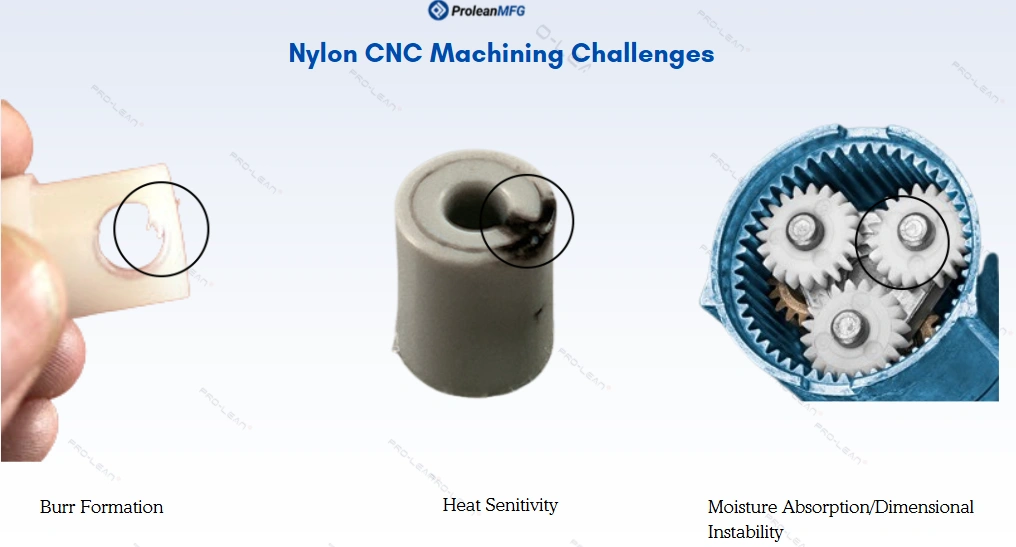
Nylon machining challenges
Thermal sensitivity, dimensional instability, and burr formation are three major challenges in CNC machining of Nylon materials. These challenges can be overcome by drying the workpieces before machining, adjusting feed & speed, and using sharp tools & proper coolant flow.
Heat or Thermal Sensitivity
Heat is the primary challenge in Nylon CNC machining. In fact, it is much more heat-sensitive than metallic CNC machining materials and most of the other thermoplastics.
The low melting point (~220 °C) and minimal thermal conductivity of nylon can cause heat buildup at the tool-machining interface if coolant flow is inadequate. Consequently, improper feeds & speeds also trigger the localized-heat buildup, causing delamination & melting.
How to Overcome: Balance feed & speed, reduce cutting depth, and use compressed air cooling. Meanwhile, use flood coolant for glass-filled nylon.
Moisture Absorption & Dimensional Instability
Nylon, especially Nylon 6, has a water absorption of more than 3.5%, which causes dimensional instability as the moisture content is reduced in machined parts. Additionally, high moisture content in the workpiece also causes machining defects, such as wrapping.
How to Overcome: Dry Nylon before machining and ensure the water absorption is below 0.2%. If the application environment is humid, consider allowance during design.
Burr Formation
Nylon machining is prone to burr formation, which affects the edges and finish quality of machined parts. The main causes of burr formation are slower feeds and dull tool cutting edges. Additionally, Nylon is viscoelastic, which also promotes burr formation.
How to Overcome: Increase feed, but not too high. Use a sharp cutting tool and apply mechanical deburring, tumbling, or trimming.
Subsequently, you can apply cryogenic deburring to achieve a high-quality finish on precise, complex geometries.
Comparison of Two Nylon Fabrication Methods: CNC Machining Vs Injection Molding
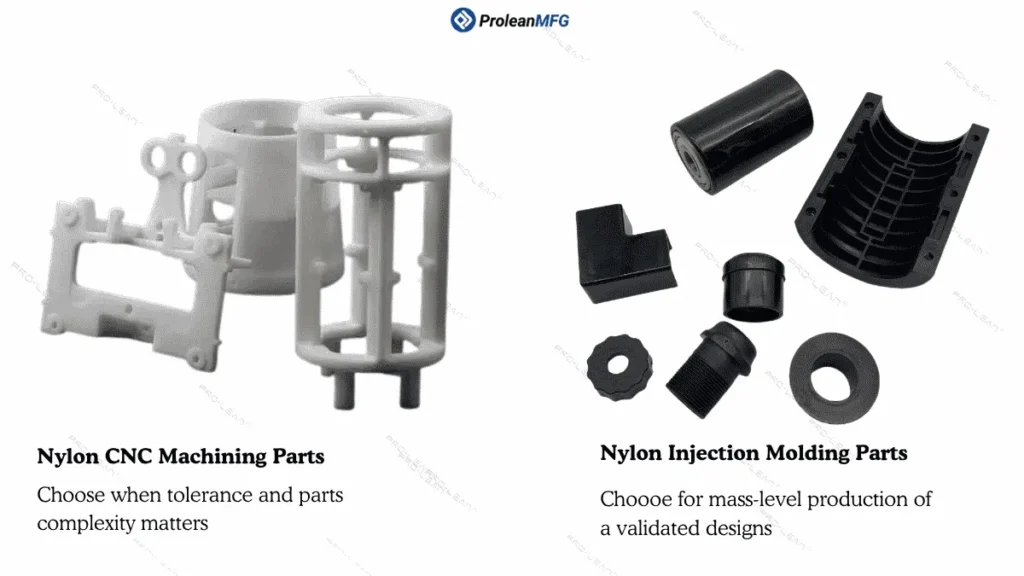
Nylon machining vs injection molding
Nylon CNC machining is a precise manufacturing method that provides a general tolerance of ±0.1 mm and does not require expensive tooling. In contrast, injection molding offers consistency and cost-effectiveness in large-volume production (>1,000 units).
Injection molding is not a subtractive manufacturing process like CNC machining. It involves melting and shaping nylon in a mold cavity.
Next, the table below differentiates Nylon fabrication with injection molding and CNC machining.
| Aspect | Nylon CNC Machining | Nylon Injection Molding |
| Process | It is a subtractive manufacturing; a tool removes material from the workpiece | Molding process: molten nylon is injected and solidified inside the cavity to produce the desired shape |
| Tooling cost | Lower, even with programming costs added. | Higher upfront cost for injection molds |
| Design flexibility | Higher flexibility, including contours, internal radii, and slots. Design can be modified easily | Limited by mold geometry |
| Per-part cost | Higher per-part production, especially for medium-to-large volumes | Lower for high volumes |
| Production speed | Fast for prototyping & small batches | Higher once the mold is prepared |
| Production volume | Ideal for 1-1,000 units. | Ideal for >1,000 units. |
| Material waste | Higher | Minimal material wastage |
| Application examples | Custom gears & bushings, prototypes, medical device housing, etc. | Connecor bodies, cable ties, enclosures for consumer electronics, and the mass production of auto parts. |
| When to Choose? | When tolerance and parts complexity (exterior) matter | For mass-level production of a validated design |
Nylon Alternatives for CNC Machining
Delrin, PEEK, PC, and PTFE are some CNC Plastic Machining alternatives to Nylon. These can be CNC -machined into a designed shape, but machinability, surface lubricity, and wear-resistance can not be the same as Nylon.
Delrin machining provides higher machinability and dimensional stability. Polycarbonate is a good alternative for applications requiring toughness & impact strength. Teflon (PTFE) can be a nylon alternative for more thermally stable and low-friction parts.
The table below compares Nylon vs Delrin vs PC vs PTFE.
| Property | Nylon | Delrin (POM) | Polycarbonate (PC) | PTFE |
| Machinability | Good | Exceptional | Good | Fair |
| Tensile Strength | Exceptional | Excellent | Good | Fair |
| Compressive Strength | Excellent | Exceptional | Good | Fair |
| Toughness | Excellent | Good | Exceptional | Fair |
| Wear Resistance | Exceptional | Excellent | Good | Fair |
| Chemical Resistance | Good | Good | Fair | Exceptional |
| Dielectric Strength | Good | Excellent | Good | Exceptional |
| Material Cost | Low cost | Low-medium | Medium | High cost |
Which has the Higher Machinability between Glass-filled Nylon, Nylon 66, and Nylon 6?
Nylon 6 is easiest to machine, Nylon 66 offers moderate machinability, and machining glass-filled Nylon can be relatively difficult compared to the other two grades.
The reasons for the low machinability of glass-filled Nylon are the fiber’s abrasiveness and brittleness, and the higher heat generated. Machining glass-filled Nylon required PCD or TiB₂-coated inserts. Additionally, cutting speed must be slower than for standard Nylon grades.
Future Trends in Nylon CNC Machining
The latest innovations in robotics and AI are driving many industry trends in Nylon CNC machining, such as real-time monitoring, robotic loading of workpieces, the use of 5-axis machines, and the integration of CNC with molding or 3D printing. Additionally, tools with specialized coatings are increasingly popular for Nylon and other plastic machining projects.
- Real-time Monitoring: Manufacturers are integrating sensors and IoT to monitor defects, precision, and tool wear in real time.
- Predictive Maintenance: Although it is in its early stages, AI-integrated software is being used to predict and schedule machine downtime and maintenance work.
- Robotic Loading of Workpieces: Industrial or cobots are being integrated into CNC machines to control the loading & unloading of nylon workpieces through I/O signals.
- Tools with Specialized Coating: End mills, drill bits, and other tools are coated with iN, TiAlN, ZrN, or DLC to achieve a low coefficient of friction, especially for reinforced Nylon workpieces.
- Hybrid Manufacturing: Manufacturers are combining CNC machining with injection molding & 3D for design flexibility and speed. Meanwhile, the combination of CNC machining and 3D printing is more common.
- Nylon Material Trends: Increased use of glass-filled nylons, recycled nylons, and bio-based nylons.
Summing Up
CNC machining of Nylon parts required careful execution of every step, including DFM optimization, Nylon grade selection, tool selection, feed & speed setting, process monitoring, and surface finishing. At the same time, you must consider the heat-sensitivity of nylon, the presence of moisture, and the burr formation challenge.
Besides meeting machining precision & designed specifications, the economics of machined parts are also important. To reduce costs, follow strategies such as shortening the toolpath, avoiding unnecessary tolerances, and streamlining post-machining processes.
If you are not making the designed Nylon parts in-house and outsourcing to an OEM, leverage ProleanMFG’s capabilities and experience to meet your project goal. Our Nylon CNC machining services provide lightweight engineering parts for automotive, industrial machinery, electronics, and many other industries. We use 3-, 4-, 5-, or higher-axis CNC machines for Nylon machining, and can offer tolerances as tight as ±0.05 mm, or lower.
Why ProleanMFG Excels in Nylon CNC Machining?
- In-house CNC machine shop with 100+ pieces of equipment.
- 10+years of experience, and we have a dedicated team of engineers for plastic part machining projects.
- Track record of producing bushings, gears, wear pads, sliding guides, and other custom products.
- High-quality yet cost-effective Nylon machining solutions
FAQs
Is nylon good for machining?
Yes, Nylon is good for machining, with a machinability factor of 0.8 compared to 12L14 steel. It only has some challenges, like heat sensitivity and moisture content. You can machine nylon into a complex shape with internal features, such as slots, cavities, and internal radii.
Can nylon be CNC machined?
Yes, Nylon can be CNC machined with fine precision of 0.05 mm or lower. The manufacturers CNC machine nylon 6, nylon 66, and glass-filled nylons to produce various custom parts across industries. Milling, turning, drilling, and routing processes can be applied to nylon workpieces to achieve designed shapes with tolerances ±0.05 mm or lower.