
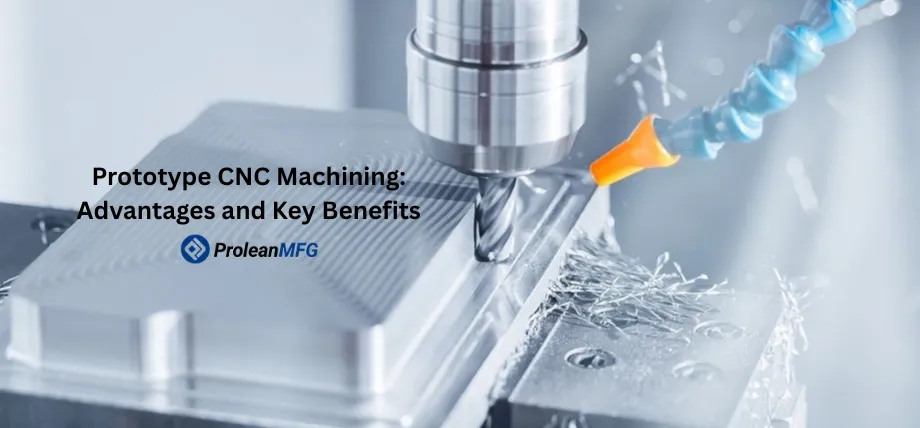

What is CNC Prototype Machining?
Prototyping is when the manufacturer tests and creates a version of the product to gather feedback before mass production. To say that CNC machining is perfect for prototyping would be an understatement. CNC technology uses computerized controls to review every step and workpiece through on machine probes, CMMs, and calibrated gauges.
The first step of CNC machining prototypes is to create a CAD file of the prototype. Then it is imported into a CAM software and converted into a CAM model to generate G-code. CAD files are converted to CAM files, which include G code and M code. G code controls the movement, while M code relates to the general operation of the machine.
It is widely used because of its highly advanced precision machining and reliable functional testing. This helps manufacturers reduce errors and development time.
Why Choose CNC Machining for Prototyping?
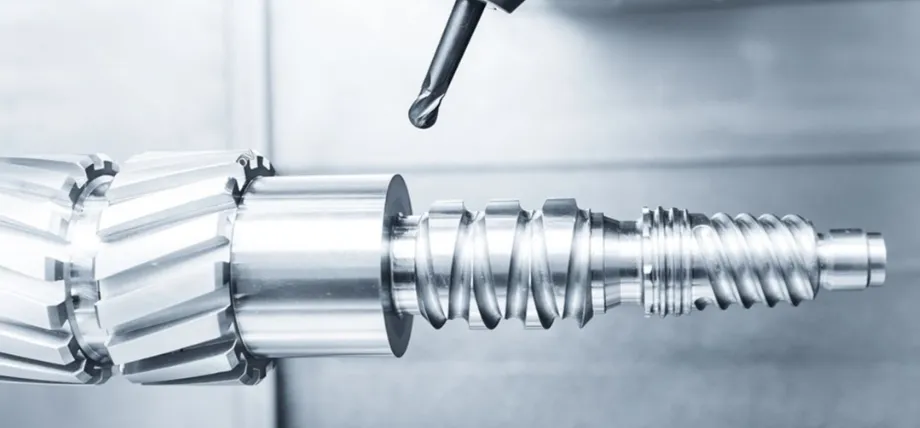
Precision CNC Shaft Machining
CNC machining is widely used for prototyping because it involves computer control, which brings precision and accuracy. The speed of processing of CNC machining also brings a quick turnaround time because it reduces the time from concept to prototype.
CNC precision machining can work with various metals, which brings experimental ease. CNC machining brings versatility because it can make complex designs as easily as it can make simple designs. The parts produced by CNC machining rarely require secondary processing and have a good finish.
Functional CNC Prototyping
A functional CNC prototype is a prototype part that is fully functional and can be created by using a CNC machine. The prototype part is going to be created by using real materials such as aluminum and steel, or any other metal that can be used to satisfy the requirements of the engineers.
The prototype part is going to be tested to assess its load-bearing capabilities. You will be able to identify defects before the production process, hence saving them money.
The CNC prototype minimizes the risks that may be associated with errors during the production process. The prototype parts can be used to satisfy important requirements such as aeronautics and medicine, where precision is required, and defects cannot be allowed.
Rapid Development and Quick Turnaround
Prototype CNC machining is widely preferred because of its rapid development and quick turnaround. Once a CAD is created, it can easily be converted to machine instructions, which allows production to begin almost instantly.
You can easily modify designs and update the programs all within a short time. This allows companies to reduce development cycles and test ideas, all while moving towards the final product efficiently.
At ProleanMFG, our rapid prototyping services offer quick lead times without compromising precision or quality. We can deliver the prototypes as fast as 1-3 days. For complex projects, it might take more than a week.
Tight Tolerances and Precision
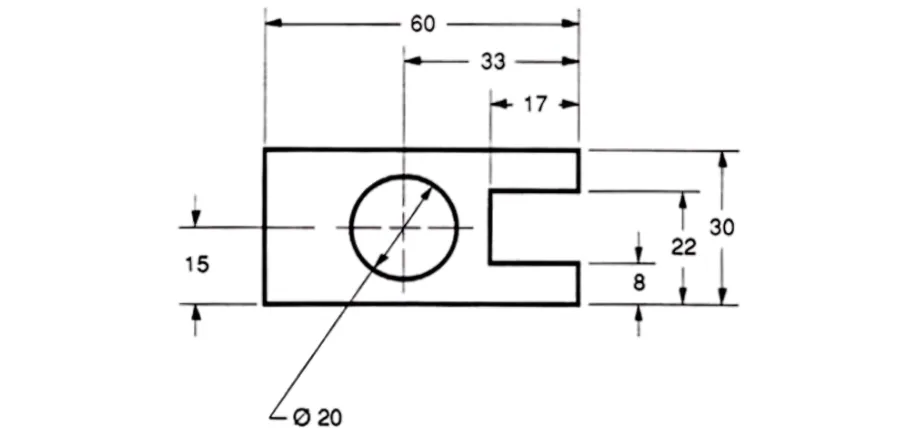
CNC Prototype Block Drawing
Prototype CNC machining provides tight tolerances and high precision because of its control over cutting tools. This is essential in prototyping to make them fit the original purpose..
Cost-Effective for Low Volume
Prototype CNC machining is the perfect option for low-volume production runs because it does not require expensive tooling. Since it works directly with digital designs, it is ideal for producing small quantities. Manufacturers are allowed to easily make changes because only a selective material is machined without any additional expenses. This reduces upfront investment while ensuring the final product is up to the needs of clients.
Wide Range of Materials
Unlike 3D printing, CNC allows manufacturers to work with a wide range of CNC machining materials. They can range from strong metal alloys to wood and plastic. This allows engineers to work with a wide range of similar materials in order to choose the best one. Engineers can check the heat and corrosion resistance of many materials suitable for the industry it is intended for.
Disadvantages and Limitations of CNC Machining for Prototypes
However, CNC also has some limitations.
- High Initial Cost: CNC machines are expensive and require a high initial investment. The cost of labor, tooling, and electricity is also a major factor that adds to the high cost. Additionally, the cost for small operations and prototyping is disproportional, which makes it expensive.
- Material waste: CNC machining is a subtractive process, which means a large portion of the raw materials is removed and ends up as chips and waste. This increases cost, especially when working with expensive materials such as titanium and steel.
- Tool wear and machining errors: CNC machining cutting tools slowly wear down, which causes them to lose their dimensional accuracy and affect the surface finish. Harder materials wear down tools faster, and high precision prototypes require frequent tool inspection, which increases downtime and cost
- Post-processing: Prototypes made from CNC machining require post-processing, such as deburring to ensure smooth edges. Surface finishing, such as polishing coatings and heat treatment, is often a necessary part of the process and increases production time and cost.
- Long setups: the process requires CAD designing, tool programming, and path optimization. These processes are time-consuming and increase the production time of the parts.
CNC Machining Prototyping Process
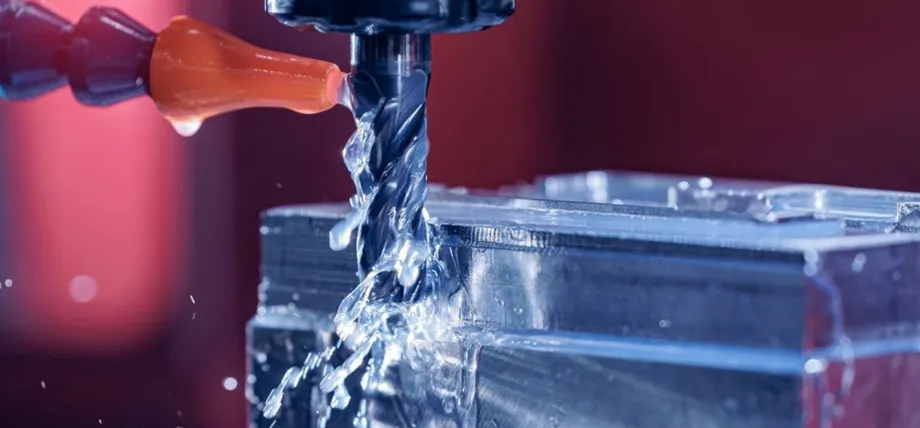
CNC Milling with Coolant
Prototype CNC machining includes many steps to transform a digital product into a physical one. The first steps include engineers creating a 3D CAD file for the product. This digital model defines the exact dimensions for the prototype, and engineers create a detailed 3D design.
This is then converted to a CAM file, which generates G-code. This guides the machine on tool movements and speed. The appropriate material is selected for the prototype, and according to that, the necessary cutting tools are installed.
The prototype machining uses milling and drilling to reach the desired shape of the prototype.CNC cuts into blocks of material to achieve the intended prototype while providing high precision and tight tolerances. The prototype then undergoes a finishing process, such as polishing or coating, after machining.
Key CNC Techniques
Prototype machining uses several advanced techniques to achieve the desired product. Each method serves a specific purpose.
Core CNC Machining Processes
CNC Milling
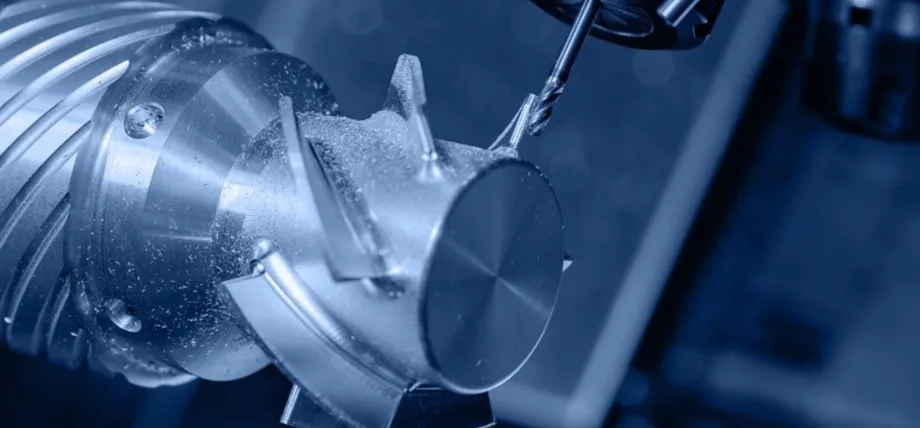
4-Axis CNC Precision Milling
Milling is a versatile machining technique that is commonly used in prototyping due to its greater tolerances and adaptability. It uses a high speed routine cutting tool that moves across multiple axes to remove material. The process easily creates complex and intricate geometries with great accuracy.
The process is extremely precise and allows control over various factors, including tool speed, feed rate, and cut depths, which makes it an ideal choice for making detailed mechanical parts.
CNC Turning
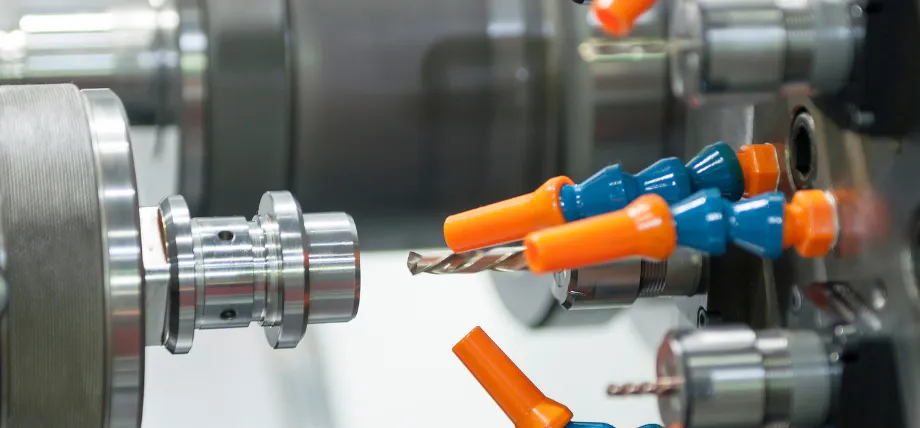
CNC Lathe Tool Setup
Turning is a widely used CNC process that involves rotating the workpieces at high speed while a stationary cutting tool moves along the length of the workpiece to remove material. Turning is highly efficient for high volume production of identical parts.
It provides consistent dimensional accuracy and surface finish. The process has limited geometrical capabilities which generally are cylindrical and spherical forms.
Other Digital Manufacturing Processes (EDM, Laser Cutting)
EDM
EDM or electric discharge machining is a non-traditional machining process that uses controlled electric sparks to erode or vaporize the material. The process does not physically cut the materials but rather vaporizes the material through an electric discharge between the electrode and the workpiece.
This technique is mainly used for machining conductive hard metals that are prone to work hardening and other related problems. It eliminates the need for a cutting tool since it erodes material through an electric spark, making the hardness of the steel irrelevant.
Laser Cutting
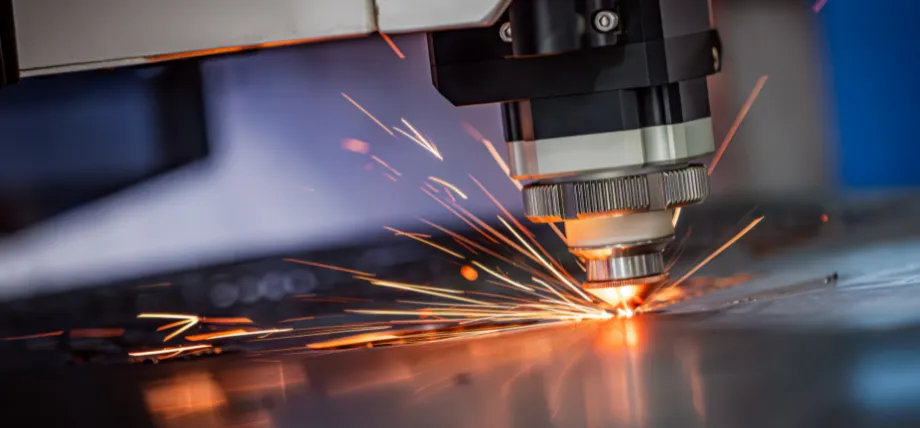
CNC Laser Metal Processing
Laser cutting is CNC guided process that involves a high powered laser to cut metal by melting, burning or vaporizing the material. It is a precise and clean cutting process that produces great results in intricate designs and rapid prototype fabrication due to its exceptional speed and accuracy.
The process is extremely versatile and capable of processing different material options ranging from wood to high strength metals and composites.
Applications of CNC-Machined Prototypes
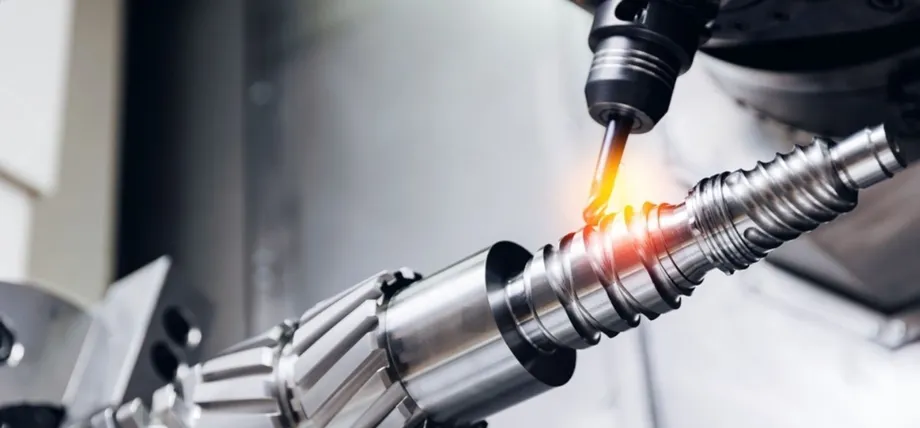
Prototype machining process
CNC has applications in many industries. Some industries rely on it heavily, like the automotive industry, which uses CNC as its go-to process. They require gears and parts with extra-tight tolerances, which can be achieved by CNC.
The aerospace industry constantly goes through CNC machining prototypes to test the performance of new parts. Since these parts belong in an airplane, extra care is needed. CNC is extensively used in architecture. CNC creates detailed models, which were previously achieved using molds, which proved to be expensive.
The medical industry requires microscopic precision, which is provided by CNC. This industry uses prototype CNC machining to create and test medical devices and equipment. CNC machining plays an important role in producing non-standard and mission-specific components that cannot be bought off the shelf. They are unique to the environment they are going to be used in. CNC provides customization and precision.
CNC facilitates the production of custom CNC machining services, parts, and components. This caters to specific requirements. The jewelry industry, for example, uses CNC for intricate and custom shapes.
CNC Machining vs Other Rapid Prototyping Methods
The difference between traditional prototyping and rapid prototyping lies in their speed and automation. Traditional focuses on molding, machining, and casting, while rapid focuses on CNC machining and quick prototype production.
More time is spent on setup in traditional prototyping and machining adjustments. This method is best for complex and small designs, but it is a lot slower compared to rapid prototyping and may require additional setup time.
Rapid prototyping uses advanced CAM/CAD integration and automated tool paths that reduce set-up and production time. Engineers can easily modify digital designs and produce new prototypes within hours according to their requirements. This accelerates product development and multiple designs in a short amount of time.
Custom CNC Machining Service
It is important to choose the right CNC service to ensure the production of quality parts and components. We have in-house 3-axis, 4 axis, and 5 axis CNC machining and Swiss machining facilities that can process any metal from aluminum to titanium and high-performance alloys.
Work with our manufacturing team to get
- Ra 0.4µm surface finishes
- ISO 9001 certified supplier
- 100% inspection and material traceability
- Detailed quotes in as little as 24 hours
- Optional DFM support to scale your prototype to low and high volume manufacturing
Reach out to us to get a reliable, high-quality instant quote today!
Conclusion
CNC machine prototyping is used because of its precision and capability to create complex designs. A CNC machining prototype can be used to work on different materials such as metals and wood. The steps involved include designing, material selection, and finishing. The advantages of using a CNC machine include reproducibility and ease of modification.
CNC machining prototype is used in different fields such as aerospace, medical, and military due to its durability and precision, making it a widely used and popular option. CNC-machined prototypes are a great way to provide fast and precise models.