
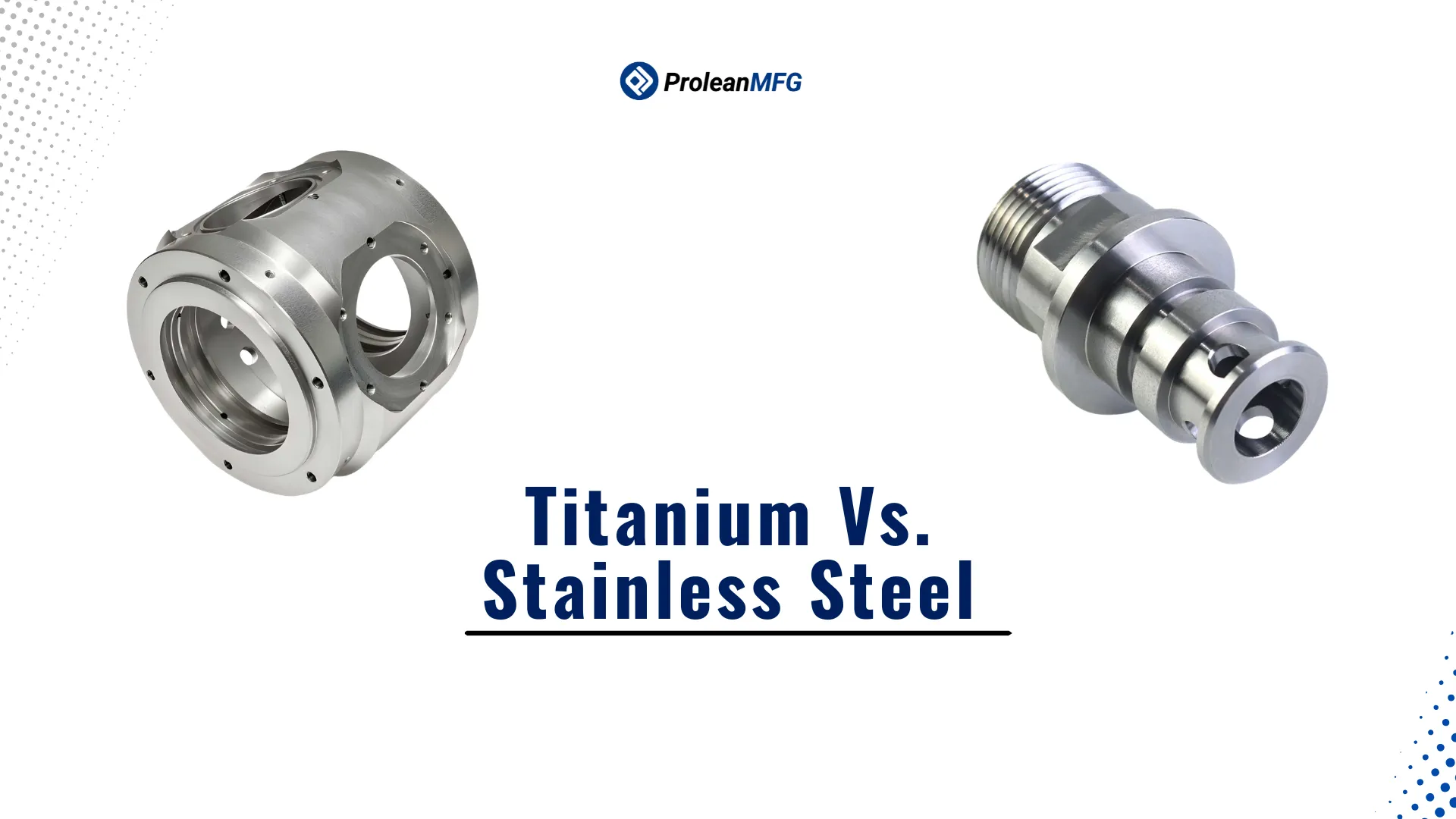

Titanium and stainless steel are both strong and rust-resistant, but they differ in weight, cost, and use. Stainless steel is heavier and usually less expensive, while titanium is lighter and very strong for its weight, though it costs more.
When it comes to machining and fabrication, each metal offers options that suit the project, including welding, cutting, and heat resistance. Both metals are popular in industries such as medical, dental, and aviation because they can withstand stress, resist corrosion, and last a long time.
In this article, we’ll compare the titanium strength and stainless steel strength to help you decide which material is best for your project.
Titanium vs Stainless Steel: Machining Challenges
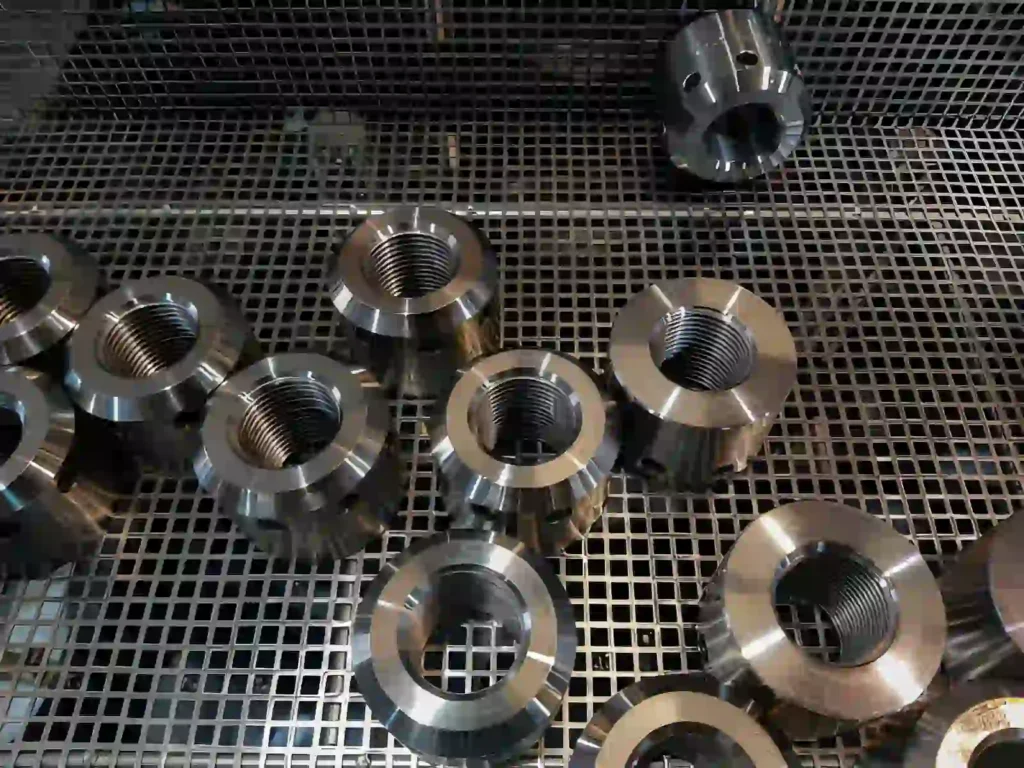
Titanium is harder to machine than stainless steel due to its poor thermal conductivity. It also interacts more with cutting tool materials, resulting in greater hardening during machining.
- Generally, titanium is more challenging to machine than many stainless steel alloys, though the difficulty varies depending on the specific alloy and machining conditions.
In addition, titanium is difficult to work with in many ways. This makes working with titanium much more challenging in a typical manufacturing environment.
The difficulties encountered in machining titanium are typically caused by its poor thermal conductivity, interactions with cutting tool materials, and changes in its properties during machining.
Titanium vs Stainless: Material Characteristics
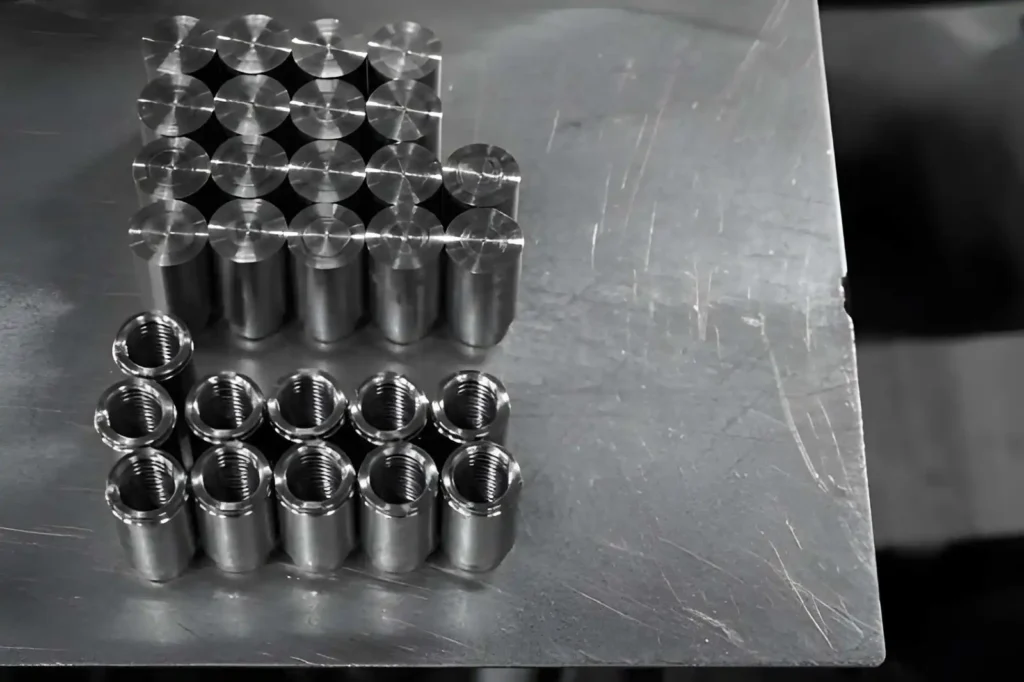
To determine which is best suited for use in machined parts (titanium or stainless steel), you need to be familiar with both materials’ thermal and mechanical properties.
Below are the key factors in determining which tools to use and the optimal machining parameter settings, which will ultimately yield the desired performance characteristics of your final product.
Thermal Behavior
Titanium has a very low thermal conductivity. The majority of the heat produced by friction from the cut remains localised near the tool edge where it was produced and does not spread throughout the remainder of the piece. Heat transfer is much easier in stainless steel.
Implications for machining:
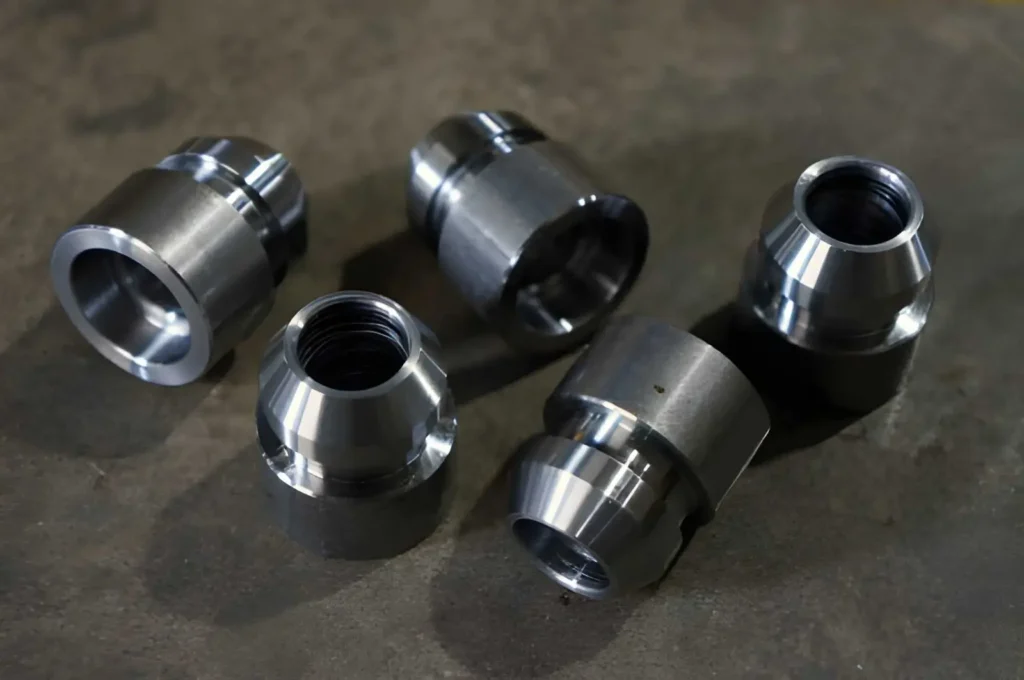
Titanium: Tool life reduced significantly due to high tool wear rates & edge chipping. Slower cutting speed requirements and/or utilize an external means of providing cooling to the area being machined.
Stainless Steel: Lower tool stresses allow for higher cutting speeds before excessive heat buildup.
Hardness (Work Hardening)
Titanium hardens rapidly under cutting stress. The rate at which stainless steel becomes harder is less rapid. Differences in how quickly these metals develop hardness affect the amount of material hardened and the tool’s interaction with the work surface.
| Property | Titanium | Stainless Steel |
| Titanium hardness | 30 to 35 HRC | 35 to 40 HRC |
| Work Hardening Rate | Fast | Moderate |
| Hardened Layer Depth | 0.2 to 0.5 mm | 0.05 to 0.15 mm |
| Tool Impact | Rapid wear, frequent sharpening | Moderate wear |
Titanium requires sharper tools and reduced engagement to avoid over-hardening at the cut surface. Stainless steel allows more standard cutting approaches.
Cutting Parameters
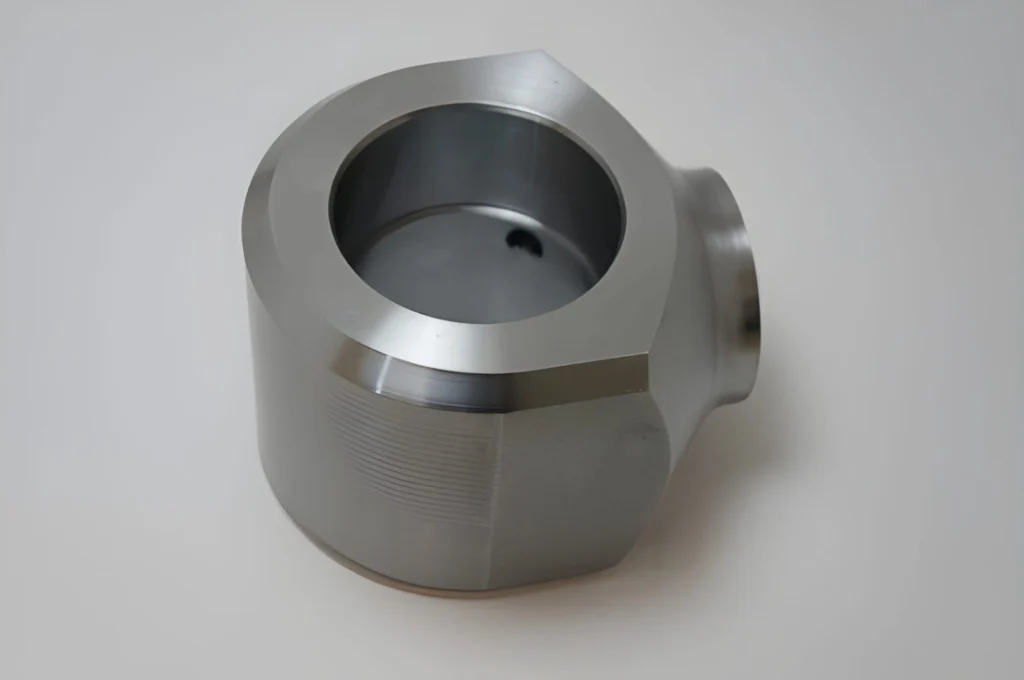
Correct speed and feed are essential to control heat and minimize work hardening.
| Material | Recommended Cutting Speed (SFM) | Recommended Feed Rate (IPR) |
| Titanium | 30 to 60 | 0.002 to 0.005 |
| Stainless Steel | 70 to 100 | 0.004 to 0.008 |
Tool Materials Required for Titanium Vs Stainless Steel
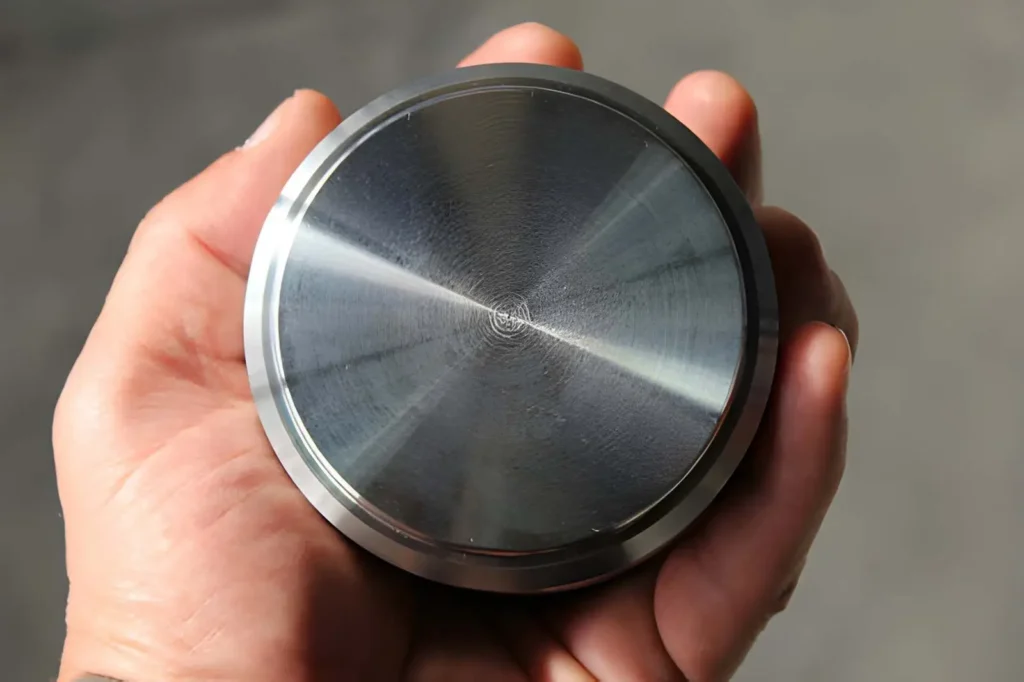
Many confuse: Is titanium harder than steel? While titanium and stainless steel have different hardness and machining properties. However, the cutting tool must be selected to suit each metal’s specific characteristics.
| Tool Material | Suitability for Titanium | Suitability for Stainless Steel |
| Carbide | Best choice; handles heat and low thermal conductivity well | Suitable; provides good wear resistance |
| HSS | Not recommended; wears quickly and struggles with heat | Acceptable for moderate speeds and small cuts |
| Ceramic | Avoid; too brittle for titanium’s work hardening | Can be used; handles stainless steel heat, but be careful with vibration |
| CBN | Limited; can work for very precise cuts, but not ideal for most titanium parts | Excellent; maintains hardness and sharpness under heat |
Takeaway:
For titanium, solid carbide is usually the safest and most reliable option. For stainless steel, carbide or CBN tools perform best, while HSS can be used for lighter, less demanding operations.
How to Control the Machining Process for Titanium and Stainless Steel
Machining titanium and stainless steel requires specific machining conditions regarding material cooling, initial machine setup, and vibration levels during the process. This will determine how long your tools last and how accurate your finished parts will be.
Cooling the Metal
Titanium generates high temperatures at the cutting zone during machining due to its low thermal conductivity. It also requires careful heat management.
Usually, Oil-based coolants, applied at high pressure (above 1,000 psi), provide this capability while maintaining sharp tool edges by preventing excessive heat buildup.
High-strength stainless steel generates much lower temperatures during machining than titanium. In most cases, high-pressure (300-500 psi) water-based coolants would suffice for cooling purposes. Use of proper coolant improves surface finishes and results in a smoother cutting operation.
Machine Stiffness
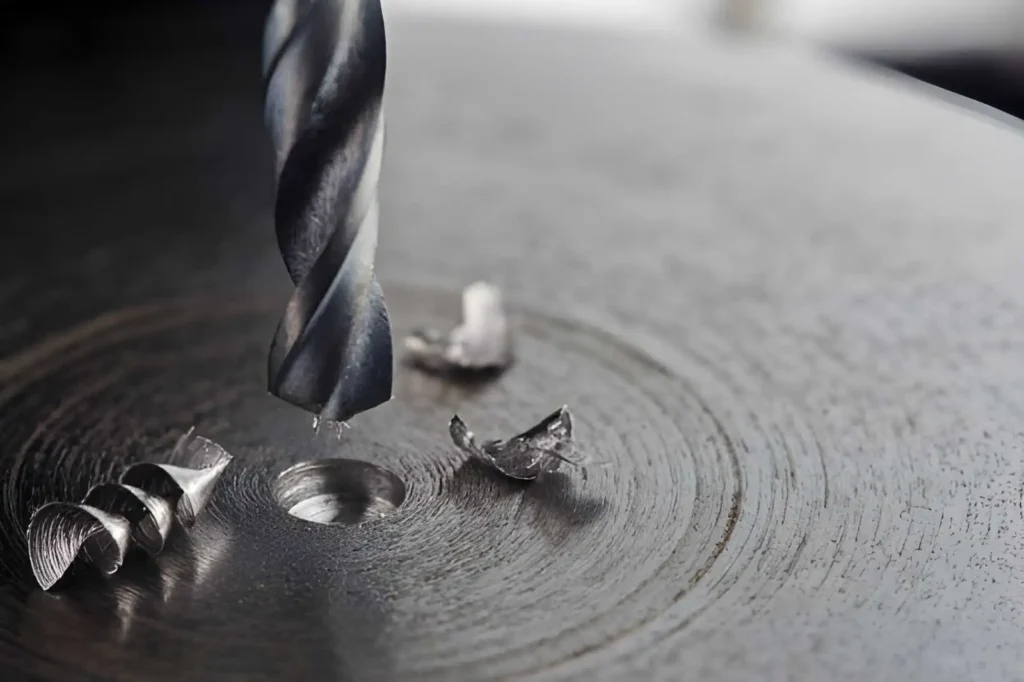
A machine should be very stiff when machining titanium. The part being machined must be securely fastened, and high-quality tool holders are required. Even slight vibration or movement can damage the part being produced or significantly shorten the tool’s life.
Stainless steel is easier to machine; typical workholding methods and average machine stiffness are sufficient.
Reducing Vibration
Vibration is another major concern when machining titanium. Reduced vibration can be accomplished using shorter tools, dampened tool holders, and tight clamping.
Stainless steel does not experience vibration to the same degree as titanium; it may benefit slightly from tighter clamping and more precise tool alignment.
Both materials will ultimately receive better surface finishes and extend the life of their tools due to reduced vibration.
Cost Differences: Titanium vs Stainless Steel – Understanding the Factors That Contribute to Higher Ti Machining Costs
Ti machining is more costly than SS, as additional labour and equipment will be required. Understanding the factors that contribute to this cost difference can help you plan your project and minimise surprises.
Tool Wear and Replacement
SS wears tools much more slowly (due to hardness) than Ti. Tool replacement and/or sharpening are needed more frequently during Ti machining, which increases costs. Tools tend to last longer during SS machining.
Machine Time
On average, parts machined from Ti require about 30-40% longer production times: Ti’s low thermal conductivity and tendency to increase hardness during machining result in slower machining. Production time is shorter when machining SS.
Coolant and Lubrication
The increased heat generated by Ti necessitates higher-pressure coolants and oil-based lubricants. Increased coolant consumption and subsequent maintenance requirements also result. Standard coolants are used with SS. Therefore, operating expenses are reduced.
Setup and Rigidity
A more rigid set-up is necessary for machining Ti. Additionally, premium tool holders and strict vibration control must be employed. Less stringent machining requirements apply to SS. Ti’s setups are more complex, which adds both time and expense.
By considering these key cost-driving factors, you can better anticipate expenses and avoid surprises in your titanium CNC machining projects.
Best Practices for Machining Titanium and Stainless Steel
Following the correct procedures when machining will generally help you obtain a smooth, safe cut for your tools and increase efficiency.
Tips for Machining Titanium
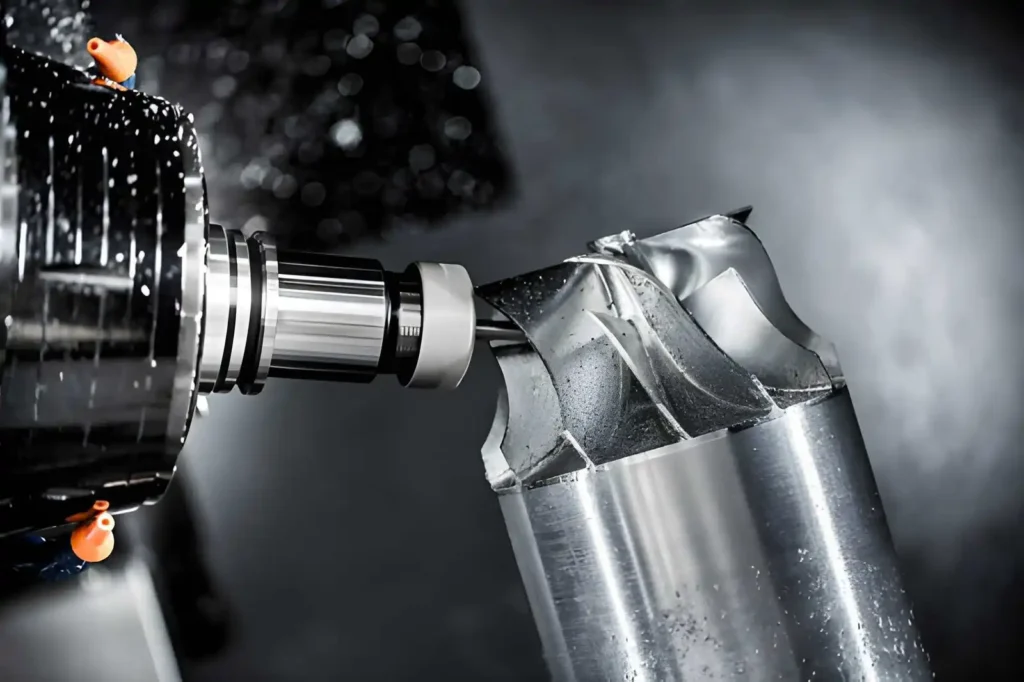
Titanium is difficult to machine due to its tendency to heat up rapidly during machining and to harden from the cutting action. Therefore, maintain a stiff setup to prevent vibration and provide sharp cutting edges.
- A high-pressure oil-based cooling agent should be applied to reduce the temperature rise of the titanium.
- Also, inspect your tooling regularly to determine whether it has become worn.
- Utilize slow feed rates and light depth of cuts to ease the machining operation as well as reduce potential damage to either your machine or the part.
Tips for Machining Stainless Steel
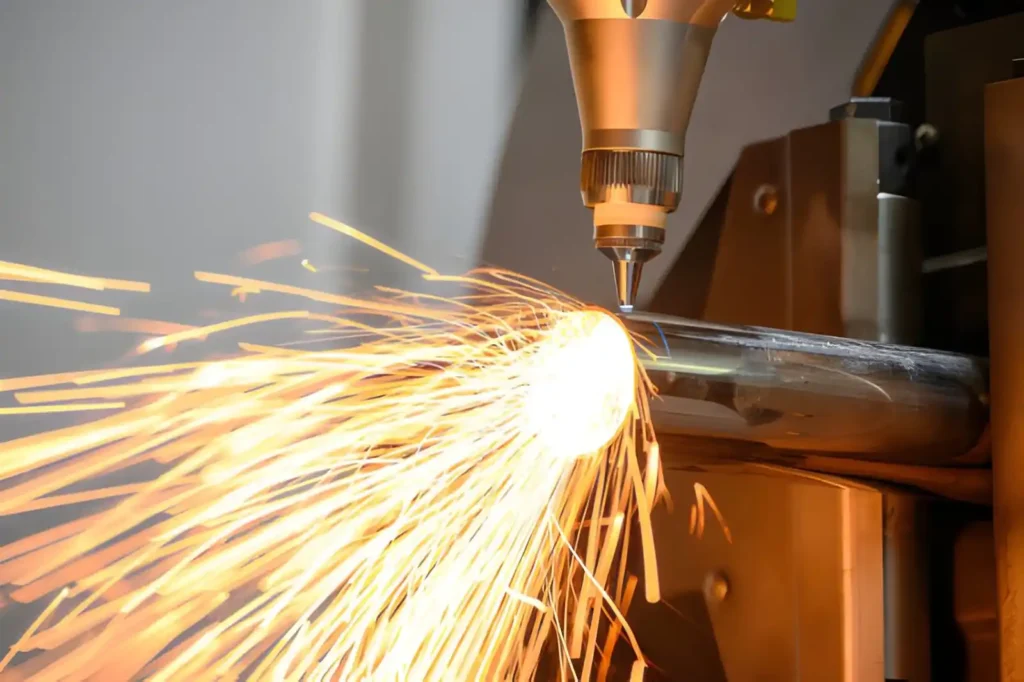
Although stainless steel is much easier to work with than titanium, it still requires attention. Ensure you are using the appropriate speed and feed rate for the specific stainless steel alloy you are working with.
- Select your tooling based on geometric characteristics and considering stainless steel strength.
- Provide adequate cooling of the part being machined.
- Watch for signs of work hardening (hardened areas).
- Maintain consistency across all cutting parameters to achieve a uniform surface finish and precise dimensions.
Fabrication and Joining of Titanium vs Stainless Steel
Titanium and stainless steel have good corrosion resistance; however, they have unique characteristics that may make them difficult to form into parts. Therefore, if you know the differences in forming, machining, and joining, you can choose the most suitable material for your parts.
Forming and Machining
The austenitic grade of stainless steel has excellent formability. As such, you can easily bend, stamp, or deep-draw this type of stainless steel. The ferritic and martensitic grades of stainless steel are slightly less flexible and therefore somewhat more difficult to form; nonetheless, they, too, are generally manageable.
Titanium is significantly stronger and therefore forms more easily at ambient temperatures. To successfully form it, you typically need to use hot-forming processes. Similarly, machining titanium is more difficult than machining stainless steel.
Titanium retains heat at the cutting edge, reacts with the tool, and can rapidly harden, thus shortening the life of the cutting tool.
Welding and Brazing
Welding stainless steel is relatively simple, with many established methods. Your primary concerns should include potential localised corrosion adjacent to the welded area.
Titanium is more sensitive to welding. When welding titanium, you must protect it from oxygen, nitrogen, and hydrogen by using an inert gas. If you do not follow proper procedures, the weld strength may be reduced. Brazing is possible with either metal; however, the filler materials and brazing conditions will depend upon the specific metal being processed.
Additive Manufacturing (3D Printing)
Both titanium and stainless steel can be 3D printed. Titanium’s low weight-to-strength ratio makes it highly desirable for aerospace and medical applications. Complex parts in medical device or consumer product designs that require high strength and detail are also ideal candidates for 3-D printing in stainless steel.
Surface Finishing
You can polish stainless steel to a mirror finish and passivate it to increase corrosion resistance. Similarly, you can polish and anodise titanium. Anodising allows you to add colour to the surface while improving wear resistance and enhancing corrosion resistance.
Titanium Vs Stainless Steel: Standards, Specifications, and Certifications
Standards help ensure titanium and stainless steel parts meet quality, safety, and performance requirements.
| Material | Standard | Purpose |
| Titanium | ASTM F136 | Ti‑6Al‑4V ELI, medical implants |
| AMS 4911 | Aerospace-grade titanium | |
| ISO 5832-3 | Unalloyed titanium for implants | |
| Stainless Steel | ASTM A240 | Plate and sheet material |
| ASTM A276 | Bars and rods | |
| EN 10088 | Stainless steel grades | |
| ISO 7153-1 | Surgical instruments |
Titanium vs Stainless Steel: Material Comparison Snapshot
| Property / Feature | Stainless Steel (e.g., 304, 17-4PH, 904L and 316L stainless steel) | Titanium (e.g., Ti-6Al-4V) |
| Density | ~7.9 to 8.1 g/cm³ | ~4.5 g/cm³ |
| Strength-to-Weight | Moderate | Very high |
| Tensile Strength | ~500 to 1,000 MPa (depends on grade) | ~900–1,100 MPa |
| Yield Strength | ~200 to 950 MPa | ~830 MPa |
| Hardness | ~150 to 400 HV | ~330 HV |
| Thermal Conductivity | ~15 to 25 W/m·K | ~7 W/m·K |
| Corrosion Resistance | Very good, depends on grade (316 > 304) | Excellent, especially in seawater and chlorides |
| Oxide Layer | Cr₂O₃ (protective but can pit in chlorides) | TiO₂ (stable, self-healing) |
| Elastic Modulus | ~190 to 210 GPa | ~110 GPa |
| Welding | Usually easy; watch for sensitisation | Harder; needs inert gas protection |
| Machining | Easier, especially free-machining grades | Harder causes faster tool wear |
| Biocompatibility | Good; suitable for tools and temporary implants | Excellent; widely used for implants |
| Magnetic Behavior | Austenitic: non-magnetic; Martensitic: magnetic | Non-magnetic |
| Melting Point | ~1,400 to 1,530°C | ~1,660°C |
| Cost (Material) | Moderate | High (~5 to 10× stainless steel) |
| Recyclability | High | High |
Conclusion
Both titanium and stainless steel bring unique strengths to the table. Titanium has a unique combination of properties that make it very useful when you need high strength with low weight, exceptional fatigue life, or biocompatibility. In fact, in many cases, titanium outperforms its peers when you’re working under conditions that require both mechanical strength (weight) and chemical resistance.
On the other hand, stainless steel offers greater flexibility and can be machined much more easily than titanium. Stainless steel is also generally less expensive, making it ideal for high-volume manufacturing applications where cost and ease of machining are critical.
In reality, there is no one-size-fits-all solution for every project. The choice will depend upon how each of these considerations impacts the part being manufactured. Some projects may demand superior strength. Others require exceptional corrosion resistance. There could be applications that require low weight rather than high, and others where the operating temperatures are extreme. And last but certainly not least, cost.
At Prolean MFG, we help our customers identify the optimal material for their components. We also offer a variety of custom metal machining services and surface finish options for both titanium and stainless steel.
Contact us now so we can begin discussing your project and request a custom quote based on your specific needs.