
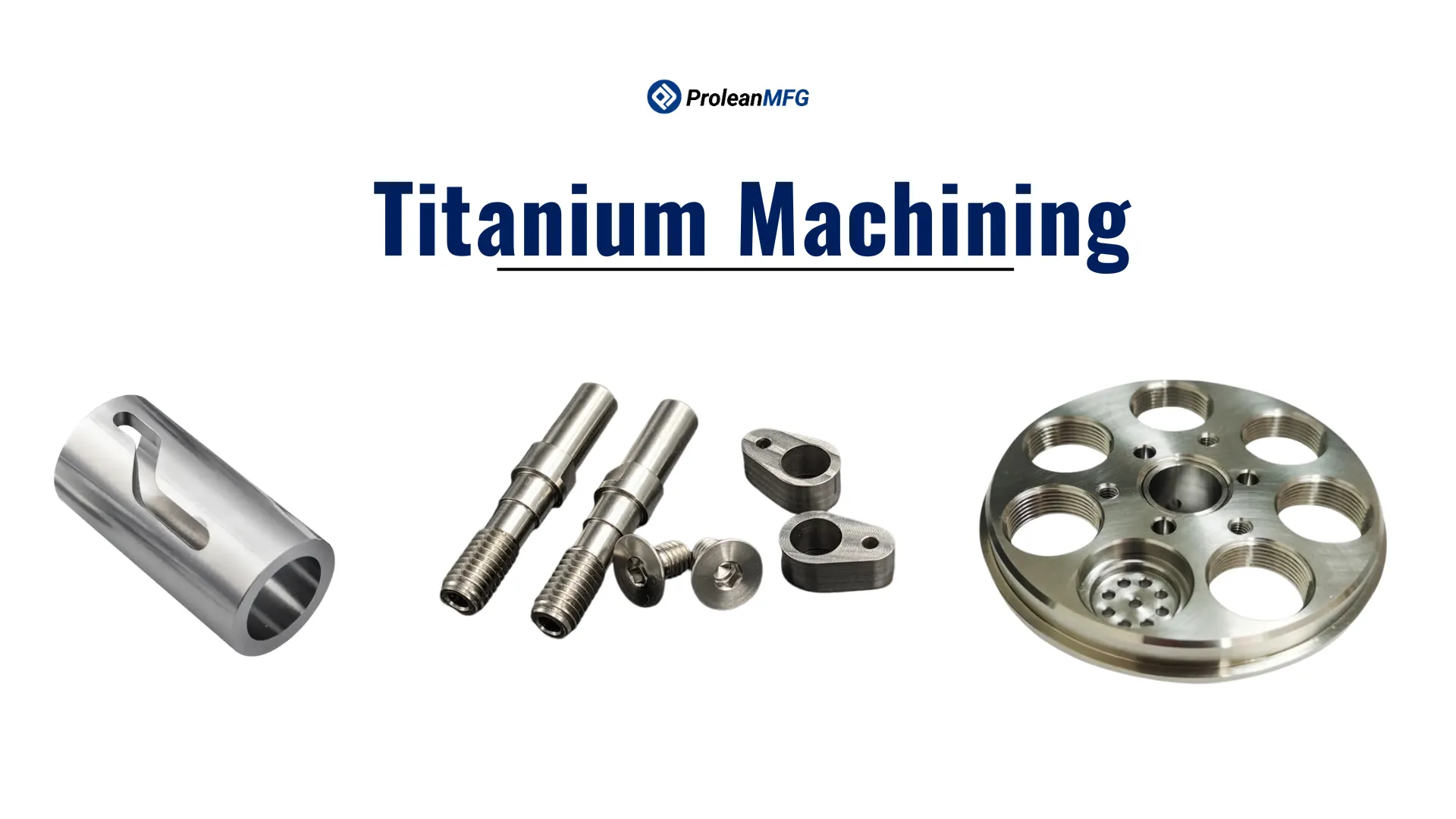

Titanium is widely used for aerospace, medical, and high-performance parts. It offers high strength at low weight, but machining requires care. The material is expensive, so errors can be costly. Proper tooling and setup are essential.
Titanium has low thermal conductivity, which keeps heat near the cutting edge. This leads to faster tool wear and potential crater wear. The material also strain hardens quickly, increasing notch wear during cutting. Parts can flex due to titanium’s low modulus of elasticity, so secure clamping and controlled feeds are critical. Its high strength at elevated temperatures makes it ideal for aircraft components and high-heat applications.
Common titanium CNC machining materials/grades include Ti-6Al-4V, Ti-5-5-5-3 (stronger but more complex to machine), and Ti-407 (easier to machine). Knowing the grade helps select the proper tooling, speeds, and feeds to reduce wear and avoid part damage. Let’s get deeper into titanium machining, the care needed, and optimization tips.
Popular Titanium Grades/Alloys for Advanced CNC Machining
The choice of the correct titanium alloy will significantly affect your machining strategy, including tooling, feed rates, speed, and coolant. The different alloys exhibit different characteristics on the machining center; therefore, it is necessary to understand their differences to achieve good parts and long tool life.
Titanium Grade 5 (Ti-6Al-4V)
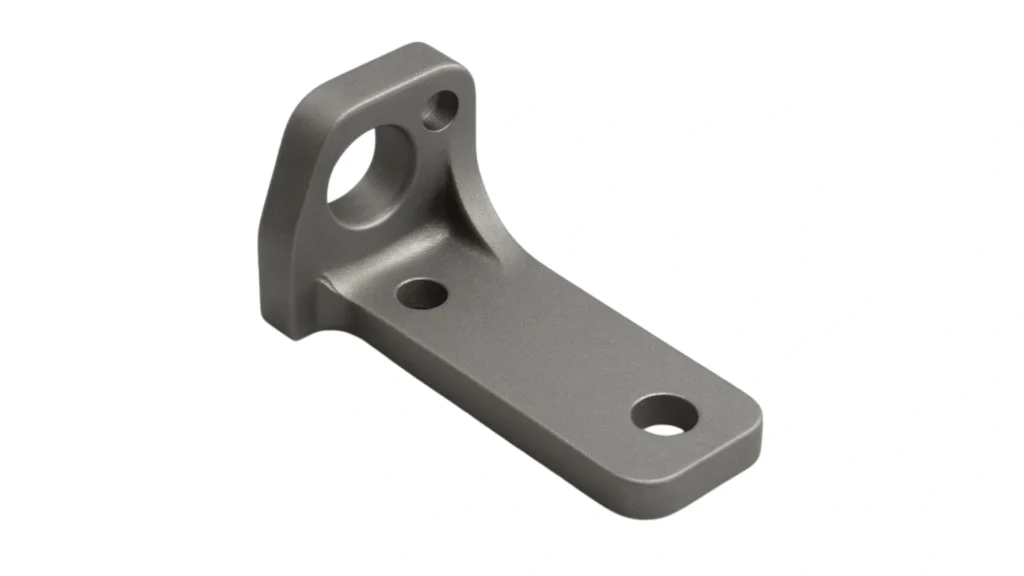
Titanium Grade 5 (Ti-6Al-4V) part
Ti-6Al-4V (Grade 5) is the most commonly used titanium alloy, but other alloys like Ti-5-5-5-3, Ti-10-2-3, and Beta-C offer higher strength and work harden rapidly. Higher cutting forces may be required with Grade 5 titanium, which can increase tool wear compared to different grades. Carbide or coated endmills should be used for machining Grade 5 titanium. Steady feed rates should also be maintained while machining Grade 5 titanium. Dwell time in corner areas should be avoided to limit heat buildup.
Coolant or flood lubrication is necessary to maintain cutting temperatures and provide a good surface finish.
Titanium Grade 2
Grade 2 has lower tensile strength and is easier to machine compared to Grade 5. Lower tool wear is observed during machining Grade 2 titanium; however, chip control can be difficult due to its high ductility. Moderate feed rates should be utilized while machining Grade 2 titanium. Chips should be removed from the cutting area to avoid excessive heat buildup. This grade is suitable for applications where strength is not a significant factor, but surface finish and corrosion resistance are essential.
Titanium Grades 7 & 23
Grades 7 and 23 are highly reactive, and work harden significantly. Sharp, coated tools should be used for machining them. Cutting forces should be minimized, and climb milling should be used when possible to reduce heat and chip welding. Grades 7 and 23 titanium are ideal for precision parts, including medical implants and chemical-processing equipment.
Choosing the Right Titanium Grade for CNC Machining
| Grade | Key Properties |
| Grade 1 | Pure titanium, high toughness, and corrosion-resistant |
| Grade 2 | Pure titanium, stronger than Grade 1, good ductility |
| Grade 3 | Pure titanium, higher strength, good corrosion resistance |
| Grade 4 | Pure titanium, the strongest among pure grades |
| Grade 5 | Ti-6Al-4V alloy, high strength, good corrosion resistance |
| Grade 6 | Ti-5Al-2.5Sn alloy, stable at high temperature, weldable |
| Grade 7 | Ti-0.15Pd, excellent corrosion resistance, weldable |
| Grade 11 | Ti-0.15Pd, very corrosion-resistant, ductile |
| Grade 12 | Ti-0.3Mo0.8Ni, high temperature strength, corrosion-resistant |
| Grade 23 | Ti-6Al-4V-ELI, biocompatible, ductile |
How Titanium Is Machined
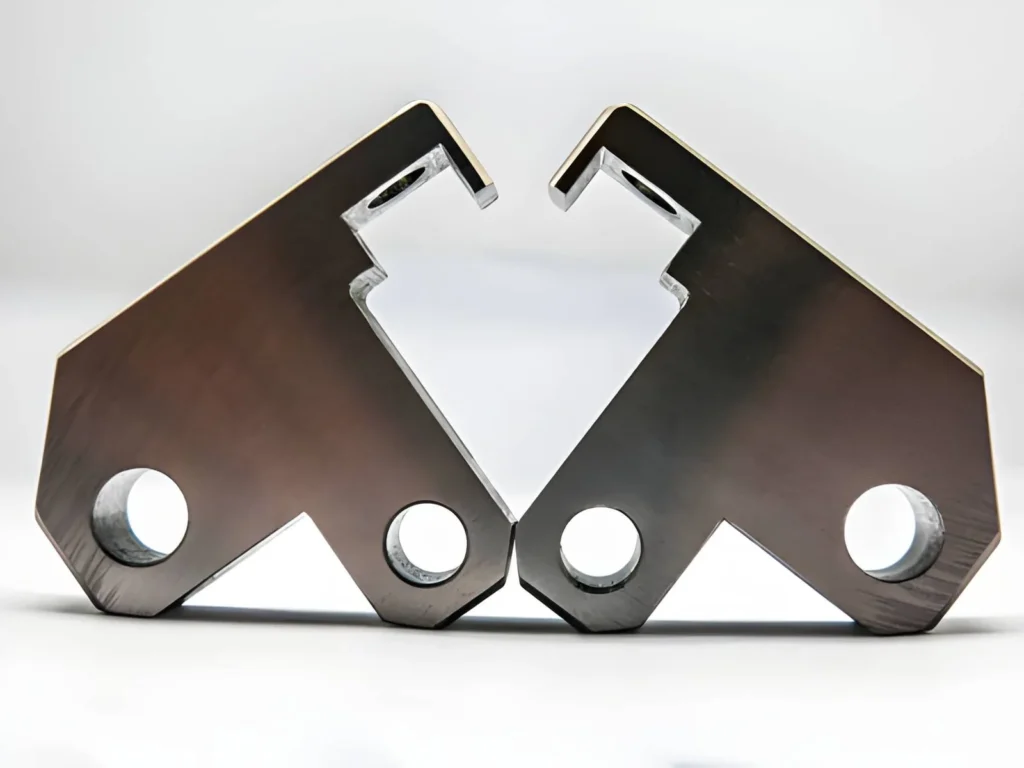
Custom titanium parts
Titanium has strength and low weight, but is difficult to machine. Its thermal and reactive properties can also cause problems during machining, potentially damaging equipment. Therefore, you will need to use appropriate equipment, setup, and techniques to machine titanium effectively without issues.
- Cutting Equipment: The cutting equipment must withstand the thermal properties and hardness of titanium. In titanium machining, carbide tools are the preferred choice, while HSS is only suitable for low-speed drilling or light cuts, as it loses hardness at high temperatures.
- Tool Coatings: Tool coatings can help reduce thermal and chemical reactions during the machining of titanium. TiAlN coatings create an aluminum oxide layer at higher temperatures. This aluminum oxide layer helps transfer heat from the workpiece to the chips and extends tool life.
- Setup: Due to its flexibility and the cutting forces involved in machining titanium, it can chatter or “dance.” To prevent this, use larger end mills to minimize deflection and keep tool overhangs as small as possible. Also, secure your workpiece and operate under consistent feed and speed settings to avoid strain hardening.
- Milling Strategy: Use a climb mill for titanium instead of the conventional method. By starting with thicker chips, heat is transferred into them. This process eliminates rubbing, strain hardening, and excessive tool wear while maintaining the cleanliness of the workpiece surface.
Titanium Machining Techniques
Titanium has high strength, low weight, and corrosion resistance, making it an ideal material for various applications; however, machining this material is difficult due to its properties, and therefore, selecting proper tools, establishing a correct setup, and effectively using cutting fluids will help in maintaining both tool longevity and part quality.
CNC Drilling
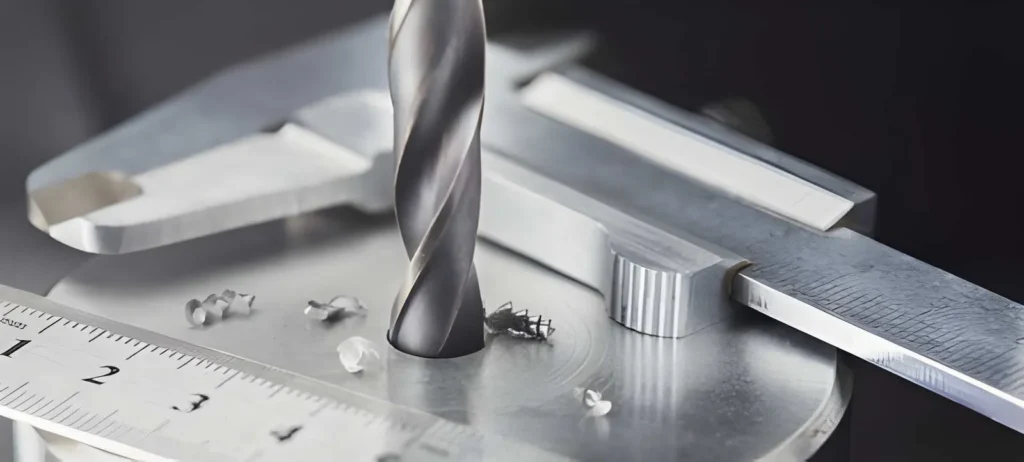
Titanium drilling
Drilling titanium components requires sharp carbide or HSS drill bits. The application of cutting fluids will help reduce heat and friction during drilling. Controlling feed rates to avoid chipping and cracking of the drilled part is also essential. If chipping or cracking occurs, adjusting the lubrication amount or the feed rate may be necessary to produce a hole without defects.
CNC Milling
CNC Milling is utilized to create complex shapes and profiles in titanium. Due to titanium’s tendency to wear down carbide or diamond-coated milling tools, these tools are best suited for this type of operation, as they can withstand the wear and tear associated with machining this material. Maintaining consistent speeds and feeds while avoiding prolonged exposure to corners of the material (work hardening) will result in a longer tool life and better finish on the part. (Also read: CNC turning)
Tapping
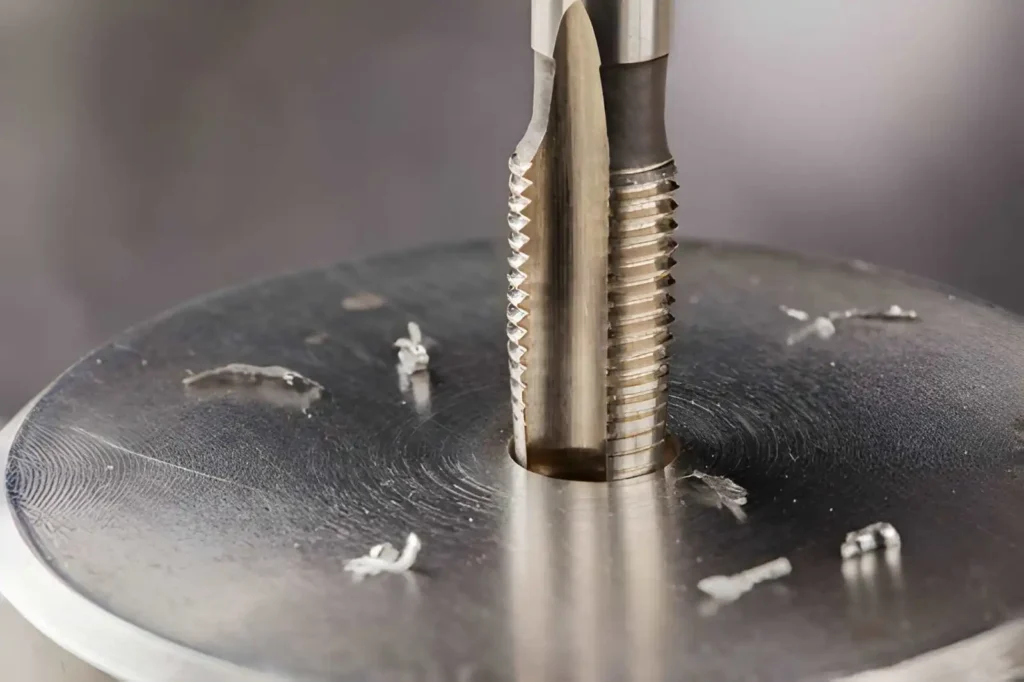
Titanium tapping operation
Tapping is utilized to create internal threads in titanium parts. Using HSS or carbide taps with proper cutting fluids will help reduce friction and facilitate chip evacuation from the tap. Properly aligning the tap and maintaining a constant speed will enable a smooth tapping operation. Increasing lubrication or adjusting the feed rate may be required if the tap sticks to the part or wears out excessively.
Challenges of CNC Machining Titanium
Titanium is considered an advanced material for machining because of its unique characteristics. Understanding these characteristics will help you choose the proper tooling, feeds, speeds, and cooling strategy to produce acceptable parts while maintaining tool life.
Heat Management
Titanium has poor thermal conductivity, and therefore, the heat generated by the process tends to accumulate at the cutting edge. If this happens, tool life may be reduced and/or the part can be deformed. To manage heat during the cutting process, provide adequate coolant, feed at constant rates, and avoid extended periods of cutting in the same area.
Tackling Tool Wear
Titanium causes tool wear primarily due to its low thermal conductivity, chemical reactivity with cutting tools, and tendency to work harden, rather than its hardness. The alloy type also plays a significant role in how fast the tools become dulled. Therefore, carbide or coated tools are required, and the tools must be checked regularly. Reducing the stresses on the tool and extending its life can be achieved by adjusting the speed, feed, and engagement.
Flexural Properties
Although titanium is robust, when subjected to cutting forces, it can bend, creating vibrations and chatter. Make sure the part being machined is adequately secured to prevent movement, and that the machine itself is rigid. Using short tool overhangs, large end mills, and/or fixture designs that resist movement will minimize deflections and create consistent cuts.
Titanium Milling: Practical Tips to Avoid Machining Problems
Milling titanium requires detailed preparation. Titanium has high strength, low thermal conductivity, and a strong potential to work-harden, making it difficult to machine. The best way to achieve repeatable machining results and protect your tools is to use the appropriate combination of tools, feeds, speeds, and chip management.
Understanding Titanium’s Difficulties
Titanium produces a lot of heat very quickly, making it difficult to machine. Additionally, titanium can be prone to strain hardening, which can make the machined edges harder than the original parts. Thus, controlling the cutting forces and temperatures is essential to minimize tool wear, tool breakage, and/or part distortion.
Choosing the Appropriate Cutting Tools
When turning titanium, carbide, or coated end mills should be used. End mills with more cutting teeth distribute cutting forces evenly along their length, reducing overall cutting forces. A sharp, properly ground tool minimizes the risk of chipping and produces a better surface finish. Always check the cutting tool(s) before starting a job.
Controlling Speeds and Feeds
Milling at high speed with light cuts will help minimize heat generation when machining titanium. Do not use heavy, slow cuts, as they will create a lot of heat and stress on the tool. Also, do not vary the feed rate too much, as this can cause the cutting process to either work-harden the part or generate excessive heat. Continuously monitor the tool condition, and adjust the parameters if the tool begins to show signs of wear.
Optimizing Radial Engagement
The less of the tool that is in contact with the workpiece at any given time, the lower the heat and cutting forces will be. Using lower radial engagement will help minimize these forces, promote better chip removal, and extend tool life. Proper radial engagement will also help to keep the tool cooler and improve its overall performance.
Managing Chip Formation
Climb milling (thick-to-thin chips) is generally preferred for machining titanium. Usually, chips are formed from thick to thin, which helps them break and be removed more easily from the workpiece. Thick chips, on the other hand, have a higher ability to absorb heat. Ensure the cutting tool has a suitable chip breaker to prevent chips from clogging the rake face. Some jobs may require conventional milling to first remove hardened surface layers of the titanium before switching to climb milling.
Tool Entry and Chamfer
A smooth “arc-in” tool entry will significantly reduce the shock loading on the tool. A properly chamfered edge will eliminate any excess material that could be creating instability in the tool. Making these two minor changes to the tool entry and chamfering will significantly improve both the tool’s performance and the finished surface.
Using Sufficient Coolant
Coolant is necessary to keep the chips flowing smoothly and to cool the cutting edge. Use high-pressure coolant and make certain it flows continuously throughout the job. For longer jobs, consider installing a chip evacuation system. Adequate coolant will help to extend the tool’s life and prevent damage to the workpiece.
Monitoring Tool Wear and Deflection
Tools should be checked regularly for wear. Titanium’s low modulus of elasticity (~110 GPa) can cause the tool to deflect under cutting loads. This reduces surface finish quality and dimensional accuracy. If deflection does occur, reduce the depth or width of the cut until the deflection is eliminated. Worn-out tools should always be replaced immediately.
Choosing Coatings and Grades
There are many types of coatings available, including TiN, TiCN, TiAlN, and AlTiN, which all have improved wear characteristics and reduced friction compared to uncoated tools. Multi-layer coatings provide additional protection from chip build-up. Choose a coating that is most compatible with the titanium alloy and type of machining operation being performed.
Adjusting Feeds and Speeds
Reducing the cutting speed will help reduce heat during machining titanium, while selecting the correct feed rate will aid in achieving proper chip formation. Secondary relief angles on the tool will improve edge stability and reduce chipping, especially when machining difficult-to-machine titanium alloys.
How Titanium Differs from Steel and Aluminum
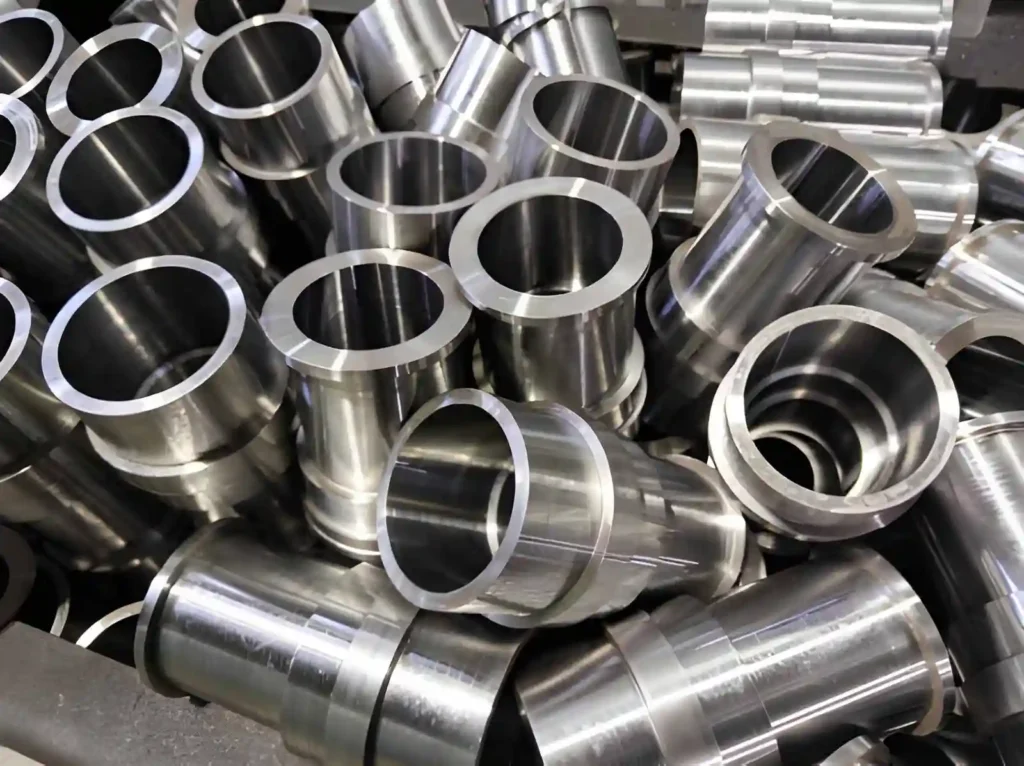
CNC-machined steel parts
Titanium is strong, lightweight, and corrosion-resistant, but it is harder to machine than steel or aluminum. Choosing the right material depends on part requirements, cost, and machining strategy.
Quick Decision-Making Tips
- Choose titanium when you need a high strength-to-weight ratio, heat, and corrosion resistance. It produces high wear on your cutting tools and limits your feed rates.
- Choose steel when the cost of the raw material is a significant factor in the decision. While machining steel alloys is generally easier than many other metals, different grades offer varying levels of fatigue strength depending on their composition and heat treatment.
- Choose aluminum when you want an inexpensive, lightweight alloy that can be produced in large quantities. The primary drawback to using aluminum is its low strength and poor heat resistance, making it unsuitable for high-performance applications.
Material Comparison for CNC Machining
| Feature | Titanium (Ti-6Al-4V) | Steel (Stainless) | Aluminum |
| Strength | Very high, maintains strength under heat | High, but fatigue-prone | Moderate |
| Weight | Low density, strong-to-weight ratio | Heavy | Very low |
| Heat Resistance | Excellent, tolerates high friction | Moderate | Low |
| Corrosion Resistance | Excellent, self-healing oxide layer | Good, may rust | Good, surface oxidizes |
| Tool Wear | High, needs carbide/coated tools | Moderate | Low, easy to cut |
| Machining Notes | Slow feeds, steady coolant, watch chip formation | Easier than titanium, moderate speeds | Very easy, high-speed cutting is possible |
| Cost | High | Moderate | Low |
Common Products Made from Titanium
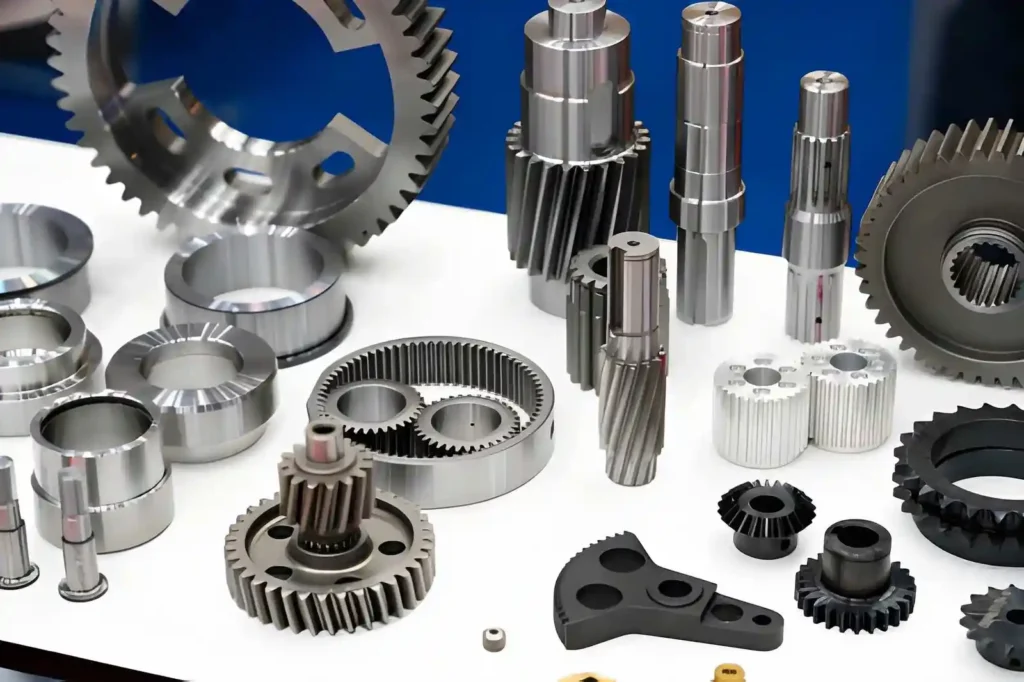
Machined titanium automotive part
- Aircraft Components (Frames, Engine Parts, Landing Gear)
- Turbine components, medical implants, and precision industrial fittings.
- Shipbuilding Components (Propellers, Ballast Systems, Piping)
- Medical Implants (Hip Joints, Knee Joints, Bone Plates, Pacemakers)
- Dental Implants & Devices (Crowns, Bridges, Implant Systems)
- Sporting Goods (Golf Clubs, Bike Frames, Baseball Bats, Tennis Rackets, Camping Equipment)
- Jewelry and Accessories (Watches, Wedding Bands, Bracelets, Necklaces, Eyewear Frames)
Custom Titanium Machining Services at Prolean MFG
At Prolean MFG, we offer custom metal machining for a range of metals like titanium, brass, copper, aluminum, and steel. Our experts understand material behaviours and help reduce heat, protect tools, and improve the surface finish quality of your parts. Whether you’re grinding, drilling, milling, tapping, or turning, we provide solutions tailored to your needs. Get free design and DFM support for your titanium parts, and take advantage of fully custom-machined components built to your specs.
Contact us today to see how we can make your titanium projects easier and more reliable.