

Every time you use a microwave, refrigerator, laptop, or vehicle, you are using a product that was created through sheet metal assembly. Whether you are manufacturing parts, sourcing materials, or buying products, it’s important that you have a good understanding of how sheet metal fabrication and assembly work.
Introduction to Sheet Metal Assembly
Both sheet metal fabrication and assembly are important manufacturing processes. But when considering the overall product, they are mostly linked stages of one end-to-end manufacturing process. That’s why many good manufacturers offer integrated sheet metal fabrication services, so you get consistent results.
Before moving on to sheet metal assembly, the first stage is sheet metal fabrication. This is the process that provides the inputs (finished parts) needed for sheet metal assembly.
What is Sheet Metal Assembly?
Sheet metal assembly is the process of joining multiple sheet metal parts to form a complete functional product or a working sub-assembly. The process uses various joining techniques to combine these parts together.
Sheet metal assembly is the stage that reveals whether your design is manufacturable. Even with a perfect CAD model, products can still fail during manufacturing due to constraints. That’s why a strong sheet assembly plan is compulsory for your product.
Even if the sheet assembly comes next after fabrication, most experienced sheet metal fabrication services will often ask questions regarding assembly, even before they quote. This is because these assembly decisions change the whole geometry, tolerances, and cost. If you choose sheet metal fastening methods as early as possible in the planning stage, the easier the assembly becomes.
What is Sheet Metal Fabrication?
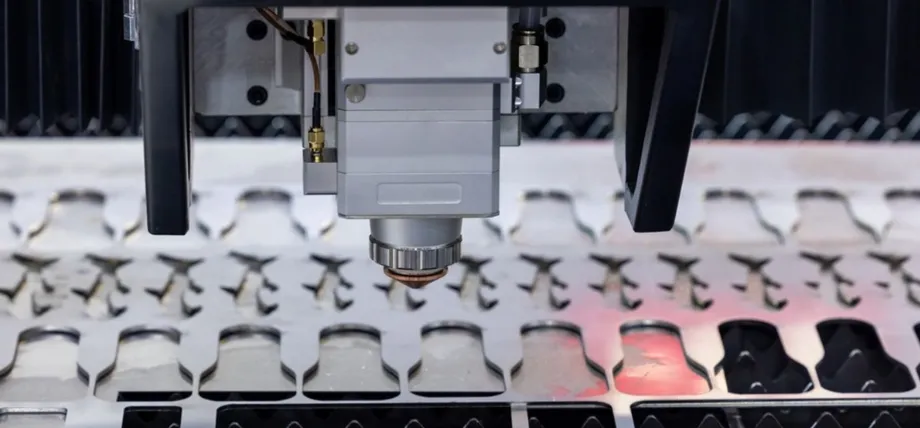
Sheet metal fabrication is the process of converting flat metal sheets into usable, functional parts. This process consists of a sequence of operations such as cutting, bending, forming, finishing, etc. In the modern industry, most fabrication processes use advanced technologies like CNC machining for high precision and efficiency.
A precision sheet metal fabrication process usually includes:
- Cutting the sheet into the required shape
- Forming and/or bending the part
- Adding features such as holes, slots, and embosses
- Final inspection and finishing
- Proceeding with the parts for assembly
After the individual parts are fabricated, they are ready for sheet metal assembly.
Sheet Metal Assembly Techniques
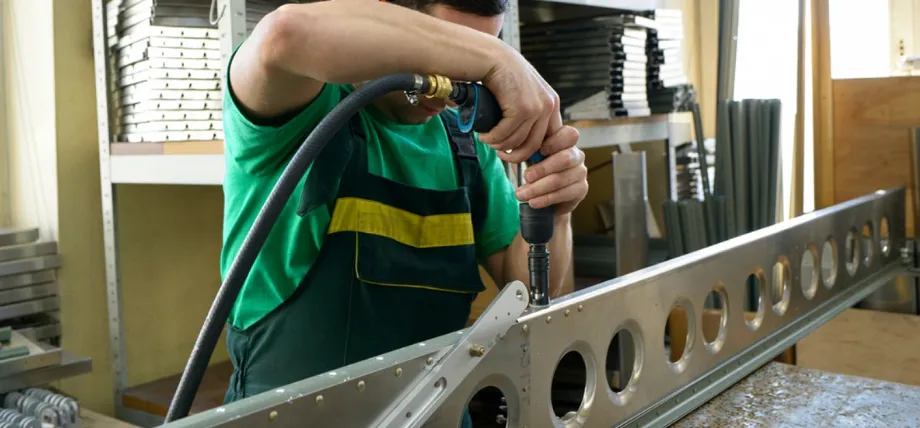
There are various joining techniques carried out during metal parts assembly. But most of these operations fall into three joining families:
- Mechanical Fastening
- Welding
- Adhesive Bonding
You can choose the best method(s) considering your needs, appearance, speed, and other requirements. In the sections below, you’ll have a deeper look at each of the assembly techniques.
Mechanical Fastening / Assembly
In mechanical fastening, metal parts are joined using separate hardware or mechanical interlocks. This doesn’t heat the base metal. The strength of the joint mainly comes from the clamping force, locking, or plastic deformation.
Types of Mechanical Assemblies
The main methods/mechanisms of mechanical assembly are bolts and screws, rivets, clinching, and self-piercing riveting.
- Bolts/Screws – A bolt/screw is inserted into a pre-designed hole. This creates a clamping force between sheets. The shear resistance of the fastener and the friction mainly hold the joint.
- Rivet – The rivet is inserted into the hole and deformed. Then it forms a second head and locks the sheets together. The shear strength of the rivet and the bearing strength of the sheet around the hole mainly hold the joint.
- Self-clinching fasteners(studs/PEM nuts) – The fastener is pressed into the sheet, and the sheet metal flows into an undercut in the fastener. This creates a permanent mechanical lock without cutting threads into the sheets.
- Clinching – The sheet is locally reshaped by a punch and die setup. It forms a button-like interlock without using any external fastener.
Mechanical joining is very popular because it’s simple, predictable, and most of the time it’s serviceable.
Welding (Fusion Joining)
During welding, the sheet metal is joined by melting the base metal. Sometimes, an additional filler material is also used. When the molten metal cools down, it forms into a single continuous piece, creating a permanent joint.
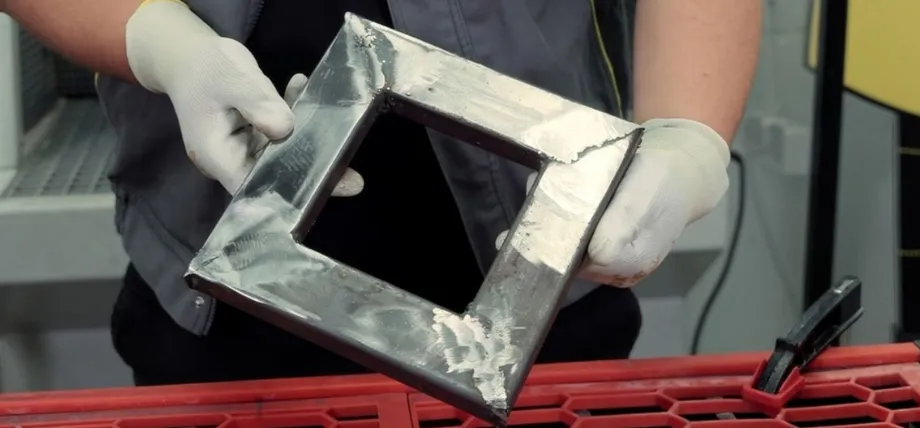
The common welding types used in sheet metal fabrication are:
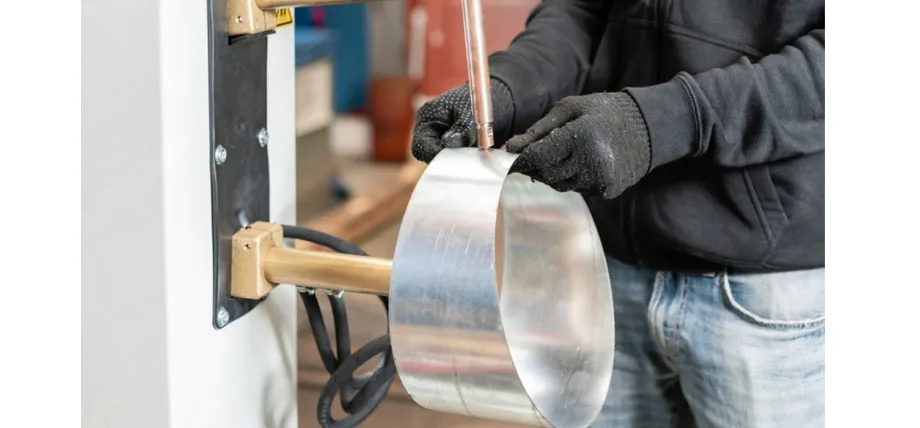
- Resistance spot welding – Sheets are placed in an overlapping manner and clamped using two electrodes. A high current is passed to form a small fused nugget. This is highly useful for thicker sheets.
- MIG welding – This method uses a welding wire that is continuously fed and a shielding gas. This is good for thicker structures.
- TIG welding – TIG welding uses a tungsten electrode for welding. This is a bit slower method, but it gives very clean and controlled results. This is widely used when the appearance of the product highly matters.
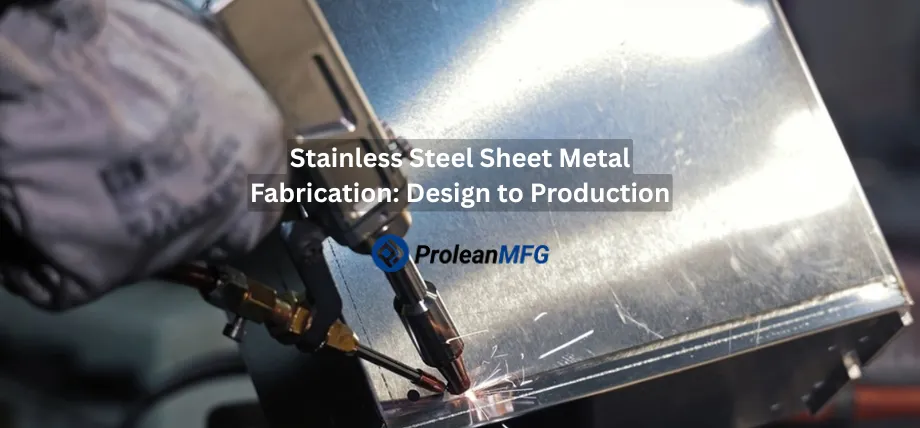
- Laser welding – This gives a high energy density for the weld. This is widely used for narrow welds since it gives a very low distortion.
One important consideration you must be careful of is that the microstructure near the joint can be changed after the bond is formed. This area is usually known as the heat-affected zone. When you’re deciding on the joint strength, durability, and other properties, you should take this factor into your calculations as well.
Adhesive Bonding
During adhesive bonding, you use an external adhesive layer between metal surfaces. This adhesive chemically hardens (cures) and distributes the load across the joint area. This curing can occur at room temperature, or sometimes you need to provide heat, depending on the adhesive used.
The quality of the adhesive bonding highly depends on the surface preparation since oil or any contaminants can destroy the bond strength. And you need to give sufficient time for curing. Temperature, moisture, and chemical exposure are critical parameters to be considered that directly affect the long-term performance of the bond.
Comparison of Assembly Techniques
Table 1: Comparison of Sheet Metal Joining Techniques, Advantages, and Uses
| Technique | Fits Best For | Main Concerns |
| Mechanical Fastening | Serviceable products, thin sheets where heat must be avoided Fast production Mixed-material assemblies | Needs holes and tool access Risk of loosening under vibration Prone to corrosion at joints |
| Welding | Permanent and rigid assembly High-volume production Parts that must behave as one solid unit | Distortion is present Surface coating issues arise No disassembly Requires skilled control and inspection. |
| Adhesive Bonding | Clean appearance No heat distortion Bonding dissimilar materials and vibration-resistant joints. | Requires excellent surface preparation Cure time slows production Sensitive to temperature and chemicals. |
Hybrid Joining
In most cases in real manufacturing, you’ll have to go for a combination of the above techniques for better performance and efficient manufacturing. Some of the common combinations are:
- Riveting & adhesive bonding – Adhesive adds fatigue resistance and sealing to the rivet.
- Spot welding & adhesive bonding – Used together to improve stiffness and reduce the impact of vibrations
- Cinch hardware & screws – Allows serviceability without stripping the metal sheet
You can choose the best combination for your sheet metal design, production volume, and cost limitations.
How to Choose the Right Sheet Metal Assembly Technique
To choose the best method, you must consider some important criteria initially. Below is a summary of the main points to think of when choosing an assembly technique.
Table 2: Selection Criteria for Different Assembly Techniques
| Assembly Technique | When to Choose? |
| Mechanical Fastening | You need to disassemble the joint in the future or have access for maintenance. The sheet is thin, and heat distortion must be avoided. You have low-to-medium production volumes. You need to join mixed materials |
| Welding | You need a permanent, rigid structure The joint must carry high loads. You have high production volumes. The effect on the appearance due to the weld is acceptable |
| Adhesive Bonding | You want a smooth, clean external appearance Heat must be avoided. You are joining dissimilar materials. Sealing and vibration resistance are important |
| Hybrid Joining | You need both strength and fatigue resistance. You want instant handling strength plus long-term durability. The product will see vibration or thermal cycling |
Materials Used in Sheet Metal Fabrication and Assembly
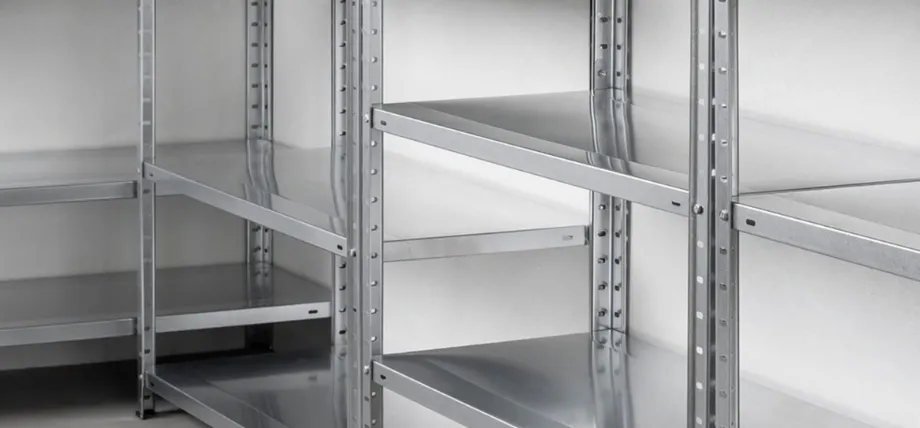
Critical Material Properties that Affect Metal Parts Assembly
There are some important properties that the materials have to use for sheet metal fabrication and assembly. Some of the most critical properties are:
- Ductility – The material should allow for deformation near the assembly area without cracking, especially in mechanical assembly.
- Weldability – If you are planning to weld, it should be weldable without porosity and distortion.
- Corrosion Resistance – Metal should be corrosion-resistant; otherwise, the areas near joints and edges will corrode fast.
- Surface condition: highly important in adhesive bonding. The material should form a strong chemical bond with the adhesive to obtain a quality bond.
- Hardness – The choice of material hardness depends on the assembly type, like threaded assemblies, self-clinching.
Apart from the above properties, there are many other properties you should carefully analyse depending on the metal and targeted assembly type.
Common Materials Used in Sheet Metal Assembly
- Carbon steel – Cost-effective and easy to form and weld, but you should provide additional corrosion protection.
- Stainless steel – Strong, durable, and highly corrosion-resistant. Sometimes, it can be much harder to form and weld cleanly.
- Aluminum alloys – Lightweight and have good corrosion resistance. Suitability depends on the choice of the joint.
- Copper and Brass – Highly conductive and corrosion-resistant. Has a good appearance but can be expensive. Also needs good care during forming and joining.
Design Principles for Sheet Metal
Even if you choose the best material, the assembly and the final product might not come out as expected or cause unexpected expenses. This happens mostly due to design problems. You can prevent many of these issues by using best practices such as designing for manufacturability (DFM) and designing for assembly (DFA).
Design for Manufacturability (DFM)
During DFM, we design parts to be easy to fabricate. During DFM, we:
- Keep realistic bend radii (avoid razor-sharp bends that can crack)
- Use consistent bend directions when possible
- Avoid tiny flanges that are hard to form
- Plan hole-to-edge and hole-to-bend distances to prevent distortion
Design for Assembly (DFA)
DFA is the method of designing so that we can easily assemble without mistakes. In DFA, the following properties are considered to make sheet assembly faster and more reliable.
- Self-locating features – You allow parts to locate themselves before you fasten or weld. This reduces fixturing time and improves consistency.
- Symmetry and clear orientation – If a part can be assembled in two orientations, you should carefully choose the right one.
- Allowing access to tools – If you’re using bolts or rivets, you need clearance for drivers, rivet guns, and clamps.
- Fewer fasteners for smarter joints – Fastening adds cost, time, and more failure points. You can reduce the number of fasteners by adding tabs, interlocks, or formed features.
- Controlling tolerance stack-up – When you have more bends, holes, and mating parts, more errors can occur. If you can reduce this during design, it’ll bring you great advantages.
Advantages of Sheet Metal Assembly
Sheet assembly gives you a strong mix of performance and practicality in manufacturing processes. It offers many advantages, such as:
- High strength-to-weight efficiency
- Scalability
- Design flexibility
- Cost-effectiveness
- Options for repair and service
In order to gain the maximum of these advantages, you must be skilled in choosing the best techniques. The wrong choice of assembly techniques can lead to more problems than advantages.
Applications of Sheet Metal Assembly
You can find sheet metal assembly in almost every industry, especially where frames, enclosures, and removable parts are present.
Automotive Industry Applications
Automotive manufacturing industries use sheet metal assembly for:
- Brackets and mounts,
- Chassis and subframes (in certain designs)
- Battery enclosures and trays
- Seat structures and reinforcement components
- Body structures and closures
Since vehicles usually face vibrations and fatigue, fastening methods must be chosen carefully. Most popular assembly techniques in this industry are usually combinations of spot welding, self-piercing riveting, adhesives, and mechanical fastening, depending on location and the material.
Aerospace Industry Applications
Aerospace is an industry that demands high reliability, strict quality control, and weight discipline. Main applications of sheet assembly in this industry are:
- Brackets and supports
- Housings and panels
- Ducts and airflow components
- Interior structures
Beyond simple and traditional systems, the aerospace industry uses the latest technology and advanced systems for metal parts assembly, since this industry considers safety as its first priority.
Electronics and Electrical Industry
This is one of the most common places you’ll see metal parts assembly with precision requirements:
- Server racks and chassis
- Electrical cabinets and control panels
- Instrument housings
- Shielding enclosures
In electrical and electronic components, one of the main considerations is the alignment and repeatability. Also, these parts should be EMI/RFI safe in some cases, and should come up with clean surfaces.
Consumer and Household Products
These are the applications you see every day, everywhere. You can find hundreds of metal part assemblies in your refrigerator, microwave, washing machine, and HVAC units. Most common applications are:
- Outer panels and frames
- Internal brackets
- Motor mounts
- Ducts and covers
- Reinforcement parts
In household appliances, cycle time and consistency matter a lot. Therefore, manufacturers mostly choose fast and repeatable methods like spot welding, clinching, and automated riveting in producing consumer products.
Conclusion
Sheet metal fabrication assembly is the base for a quality and reliable product. Correct decision-making and strategic planning during both fabrication and assembly will give you the best product at the minimum cost. If you’re sourcing work externally, the ideal option is to go for suppliers that offer integrated sheet metal fabrication services. This will provide consistent outcomes and reduce many possible errors and failures that can occur in the middle.
FAQs
How do you define sheet metal?
Many engineering references describe the metals with roughly 0.4–6 mm thickness as sheet metal. Metals thicker than that are often categorized as plates.
What is the strongest way to join sheet metal?
It depends on other parameters as well, but usually it is welding. It is permanent, and it can make two parts function as a single component. But rivets and bolts can also be very strong if you design properly.
Can you join different metals?
Yes, you can join them using fasteners or adhesives.
Is sheet metal assembly expensive?
It also depends on complexity, the number of joints, and the number of parts you need to join. But mechanical assembly is considered highly cost-effective for simple designs.
Why do some assemblies fail even if the drawing is correct?
This usually happens because of tolerance stack-up. Small variations that occur from cutting, bending, and forming collectively add up and finally give a bigger error. If the design doesn’t include locating features like tabs, slots, or pilot holes, parts can shift, and holes may not align. This is why good sheet assembly design always considers both fabrication and assembly together.