
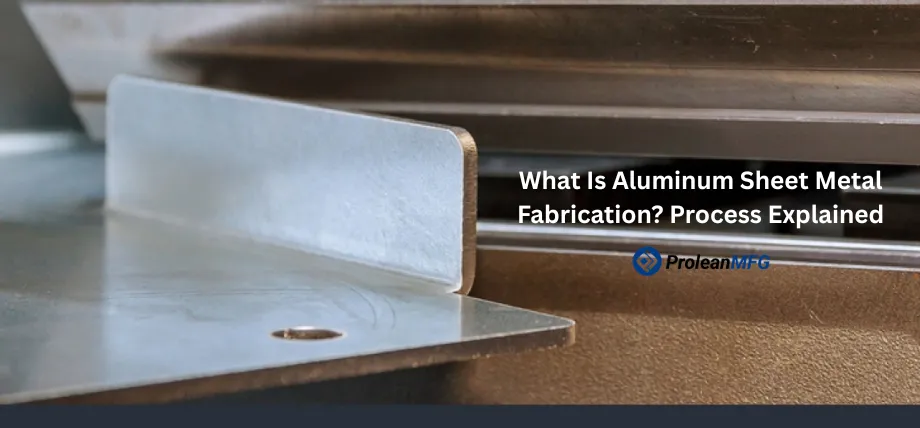

Aluminum sheet metal fabrication has become a more popular manufacturing method than casting and extrusion when you need precise and thin-walled parts. Here, since you are working with flat sheet stock, you’ll face very fewer shrinkage issues and defects compared to other bulk forming methods. Because of this, aluminum sheet fabrication is well known for high dimensional accuracy and more predictable mechanical response in precision aluminum-fabricated products.
Introduction to Aluminum Sheet Metal Fabrication
Aluminum sheet metal fabrication is the process of manufacturing components from thin aluminum sheets. In industry, aluminum is classified as sheet metal when the thickness of the stock falls between 0.5 mm and 6 mm.
As you might know, the final shape is formed by the flow of material in many manufacturing techniques. But in aluminum sheet fabrication, the main modes of deformation are plastic bending and elastic recovery. Since the input for this process is sheets, you can expect higher consistency in thickness and surface properties in aluminum sheet metal fabrication than in other methods.
Common Aluminum Alloys for Sheet Metal Fabrication
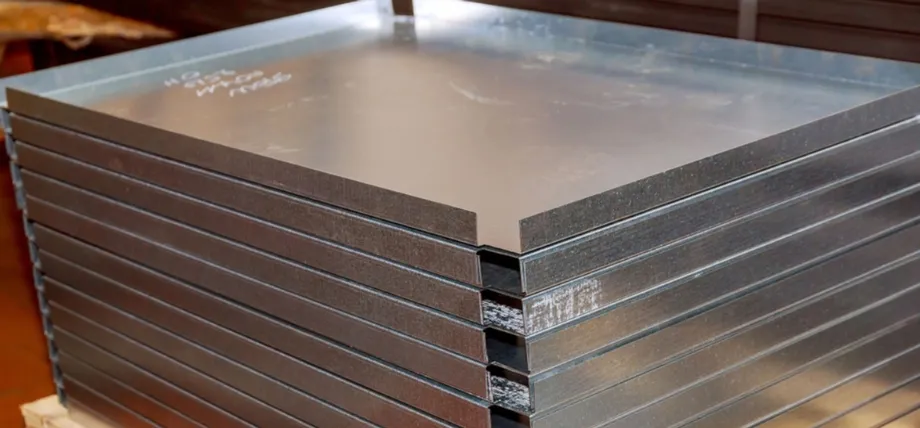
There are different aluminum grades falling into a set of series, such as 3xxx, 5xxx, 6xxx, 7xxx, etc. These series mainly differ by the alloying elements and thereby major performance criteria. Given below are some of the widely used aluminum grades in the industry.
3003 Aluminum Alloy
3003 aluminum mainly has magnesium as the alloying element, and sometimes may include small amounts of copper as well. This grade is well-known for its high formability. You can use 3003 aluminum for tight bends and deep drawing processes since it has a very low risk of cracking.
5052 Aluminum Alloy
The 5052 grade has magnesium as its main alloying element. It has a small percentage of chromium most of the time, added to further improve the corrosion resistance. 5052 aluminum has excellent weldability and good fatigue performance. It is widely used for custom aluminum fabrication of parts that are expected to operate in harsh (marine/moisture) conditions.
5754 Aluminum Alloy
Just like in 5052, 554 aluminum also has magnesium mainly, since they both fall into the same series. This grade has a cleaner surface appearance than other grades. It also has good formability compared with some other grades with a high magnesium percentage. That means it provides a good balance of strength and corrosion resistance.
5083 Aluminum Alloy
5083 aluminum has a higher percentage of magnesium than both 5052 and 5754. In addition, it also has manganese and chromium in small amounts. 5083 is one of the best aluminum choices for parts operating in harsh marine conditions. It has significantly higher strength even without heat treatment, combined with excellent seawater resistance, making it ideal for shipbuilding and marine structures.
6061 Aluminum Alloy
6061 aluminum has both magnesium and silicon, mainly, and sometimes small traces of copper and chromium. This is a highly heat-treatable alloy and also has excellent machinability. 6061 is a good all-rounder for strength and formability.
7075 Aluminum Alloy
Zinc is present as the main alloying element in 7075 aluminum, sometimes combining with magnesium and copper. 7075 has very high strength, but it’s hard to bend, tight bending, and welding due to less formability. This is an excellent choice for aerospace parts and heavy-duty components.
What Is the Best Aluminum Grade for Sheet Metal Fabrication Services?
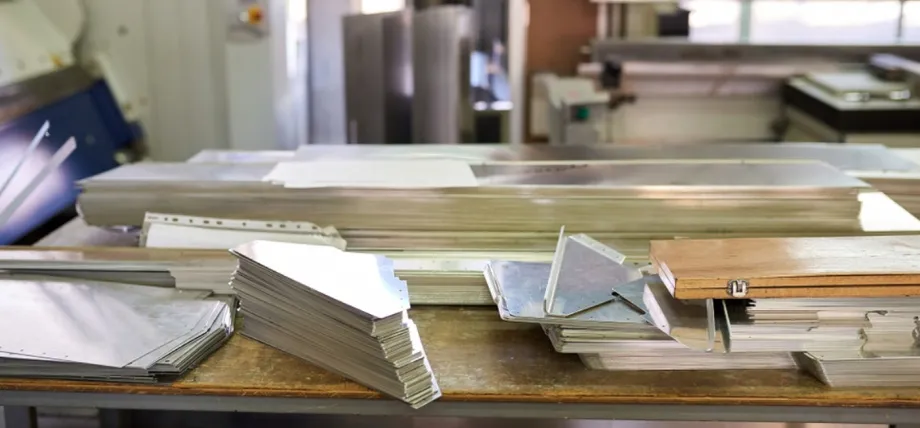
You cannot name a universally best alloy for aluminum sheet metal fabrication. The right grade depends on the performance expectations of the part, such as complexity, strength, and operating conditions. In general, the use cases of the following popular grades can be concisely described as follows.
- 3003: For deep bending, drawing, and complex forming processes
- 5052: For a good balance of strength, formability, and corrosion resistance
- 5754: For better strength than 5052, also with stable forming behavior
- 5083: For parts operating in marine and harsh environments
- 6061: For significantly higher strength (but cannot accommodate tight bends)
- 7075: For very high strength applications (but poor in formability)
If you analyse the current usage across industries, you can see that 5052 is the most used grade for aluminum sheet fabrication and durable aluminum-fabricated products.
The Aluminum Sheet Metal Fabrication Process
The aluminum sheet metal fabrication process is a multi-stage process with a series of interconnected steps.
Core Sheet Metal Processes (cutting, bending, forming)
- Selecting the stock aluminum sheets (should consider the grade, thickness, and cost while choosing)
- Initial cutting for design shapes
- Performing bending and forming operations to obtain the final shape
Secondary Operations (machining, welding, finishing)
- Machining functional features such as holes, slots, and interfaces
- Joining and finishing processes
Each stage must be calibrated to account for aluminum’s higher springback, lower stiffness, and sensitivity to surface damage compared to ferrous sheet metal fabrication. Improper sequencing or tooling can lead to distortion, edge defects, or tolerance drift in final aluminum-fabricated products.
Laser Cutting
In aluminum sheet metal fabrication, laser cutting is used to cut the metal sheets into required shapes and create initial profiles with high accuracy. It is suitable for precision cutting of thin- to medium-thickness sheets.
CNC Machining
CNC machining is usually performed after cutting. You can use CNC machining to add precise features such as holes, slots, and threads into your parts. This is the best method to create your assembly points of parts to exactly fit in a sheet metal design. Since aluminum is a soft metal, careful handling of tools and process parameters is important to avoid defects and obtain a clean output.
Sheet Metal Forming
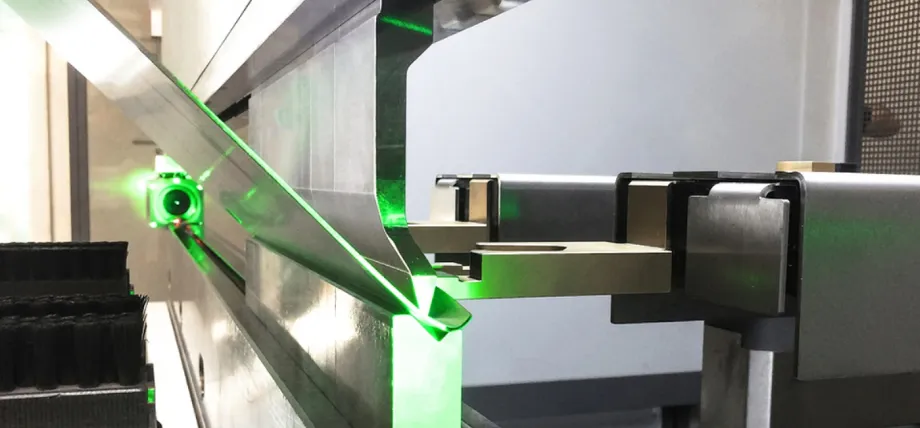
After cutting, this is the step that performs bending and rolling to give the sheet its final 3D shape. In aluminum sheet fabrication, springback is higher than in steel. Therefore, bend radius, tooling, and bend sequence are critical parameters you must carefully plan. You can use a sheet metal bend radius chart to determine safe bend radii to prevent cracking and errors.
Other Processes (Plasma Cutting, Welding Aluminum)
Welding is used to join individual parts into assemblies (commonly with TIG or MIG, depending on the alloy).
Secondary steps such as deburring, surface finishing, and plasma cutting are applied to improve performance and quality in final aluminum-fabricated products.
- Deburring: Removes sharp edges after cutting. Make the parts safe to handle and fit properly during assembly.
- Surface finishing: Provides additional protection and improves appearance (anodizing/powder coating/brushing). Sometimes it improves corrosion and wear resistance as well.
- Plasma cutting: Used mainly to cut thicker stock at high speeds. Since this method uses a high-temperature ionized gas, you’ll get heat-affected zones. Therefore, edges and risky parts should be cleaned or trimmed before proceeding with bending or forming.
Advantages of Aluminum Sheet Metal Fabrication
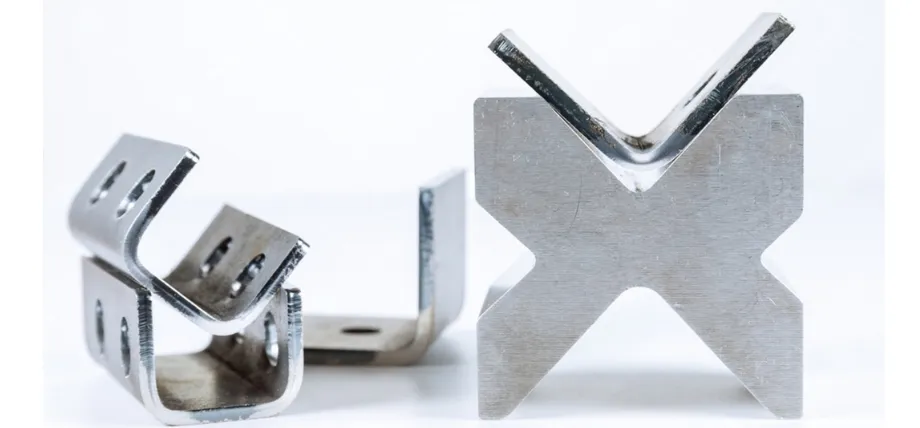
Lightweight and Strength-to-Weight Ratio
One of the biggest advantages of aluminum sheet metal fabrication is its low density combined with high strength. It is one of the light metals among different types of metal sheets You can reduce product weight without compromising structural performance. This is highly useful in industries like aerospace and automotive since aluminum-fabricated products improve energy efficiency.
Corrosion Resistance and Durability
Aluminum has its natural oxide layer that acts as a barrier against corrosion. Therefore, aluminum products are ideal for use in outdoor and industrial environments. Compared to steel sheet metal fabrication, aluminum needs less maintenance and gives a longer service life.
Electrical and Thermal Conductivity
Aluminum is a metal with excellent electrical and thermal conductivity. So, custom aluminum fabrication is highly suitable for producing heat sinks, electrical housings where heat should be dissipated, and cooling panels.
Versatility and Custom Fabrication Benefits
With today’s advanced tooling and CAD technologies, you can even achieve highly complex geometries with aluminum sheet metal fabrication. Custom aluminum fabrication is also easily scalable from prototype to mass production while maintaining quality.
Disadvantages of Aluminum Sheet Metal Fabrication
Despite its dominant and strong advantages, aluminum sheet metal fabrication also has some limitations. You must consider these drawbacks and decide accordingly to pick the right selection for your aluminum-fabricated products. A few main disadvantages of aluminum are:
- Lower hardness compared to steel and other demanding metals
- Comparatively higher material cost
- Risk of surface scratching due to its softness
- Springback issues in bending processes
Many manufacturers indicate springback as a key challenge in sheet metal fabrication with aluminum. You can minimize most of the issues with proper tooling and careful sheet metal design to achieve accurate results.
Applications and Industries for Aluminum Sheet Metal Parts
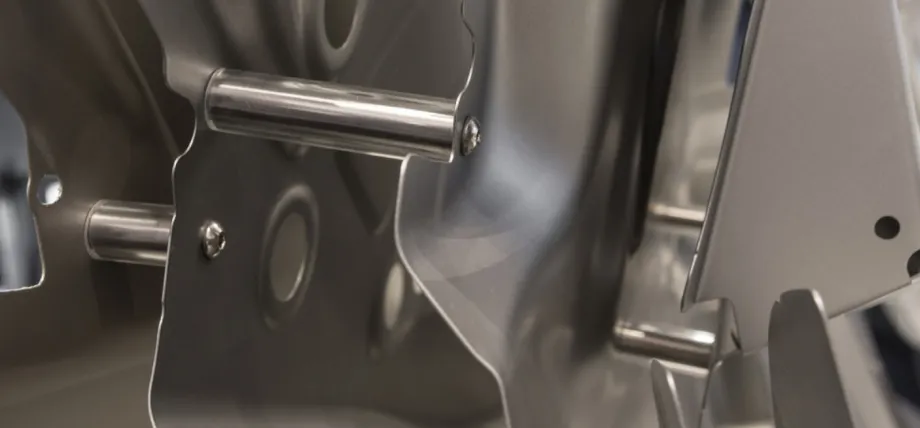
Aluminum-fabricated parts are widely used across many industries since they are highly adaptable and provide huge performance benefits.
- Aerospace Industry: panels, aircraft interior components, lightweight structures
- Automotive Industry: body panels, battery housings, heat shields, cooling systems
- Electronics and Electrical Industry: heat dissipation systems, control panels, conductive housings
- Construction and Architecture: facade panels, roofing systems, decorative aluminum-fabricated products
- Industrial Equipment: machine guards, brackets, precision casings
Designing for Aluminum Sheet Metal Fabrication: Common Mistakes to Avoid
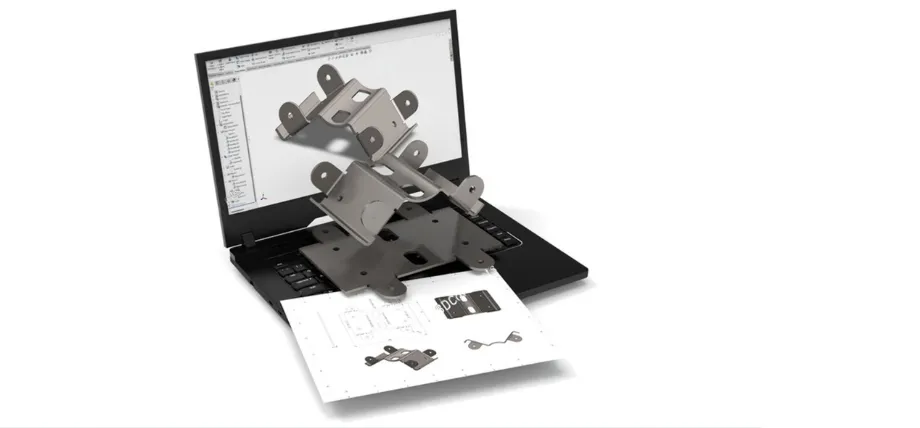
Poor planning in sheet metal design can increase production costs and also raise unexpected fabrication defects. You must optimize your design to avoid these common mistakes:
- Ignoring bend radius guidelines – You must always consult a sheet metal bend radius chart when designing bends. Too small bend radii can lead to cracking in aluminum sheet fabrication.
- Choosing stock with incorrect material thickness – Selecting an inappropriate thickness can directly affect both strength and manufacturability in aluminum sheet metal fabrication.
- Designing unnecessarily complex geometries – This will increase machining time and production cost in custom aluminum fabrication.
- Neglecting or overengineering for tolerances – It is sufficient to provide the required tightness of tolerances in sheet metal fabrication. Overengineering can lead to unnecessary manufacturing expenses. Poor tolerances will also cause issues in assembly and safety concerns.
Sheet Metal Fabrication
ProleanMFG provides high-quality sheet metal fabrication services for various industries, including medical and aerospace. We also go beyond standard sheet metal fabrication by providing design support, rapid prototyping, CNC cutting, and full-scale production with strict quality control.
Reach out today for an online quote for cost-effective manufacturing for your project.
Conclusion
Aluminum sheet metal fabrication is a cost-effective process for producing metal enclosures, boxes, and thin sheet metal parts with clean edges and bends. Aluminum sheet metal components can be made by forming, bending, and shaping with different surface finishes, from brushed lines to coatings.
FAQs
What is the easiest aluminum alloy to bend?
3003 and 5052 both have good formability and lower cracking risk during bending.
Is laser cutting better than plasma cutting for aluminum sheets?
Laser cutting is more precise and gives clean edges. Plasma cutting is less precise than laser cutting and is mainly used to cut thicker sheets fast.
Why does aluminum have a higher springback than steel?
Aluminum has a lower modulus of elasticity. So, it gains more elastic recovery after bending.
Can aluminum sheet parts be welded easily?
Yes, especially 5xxx series alloys. They offer good weldability and corrosion resistance.