
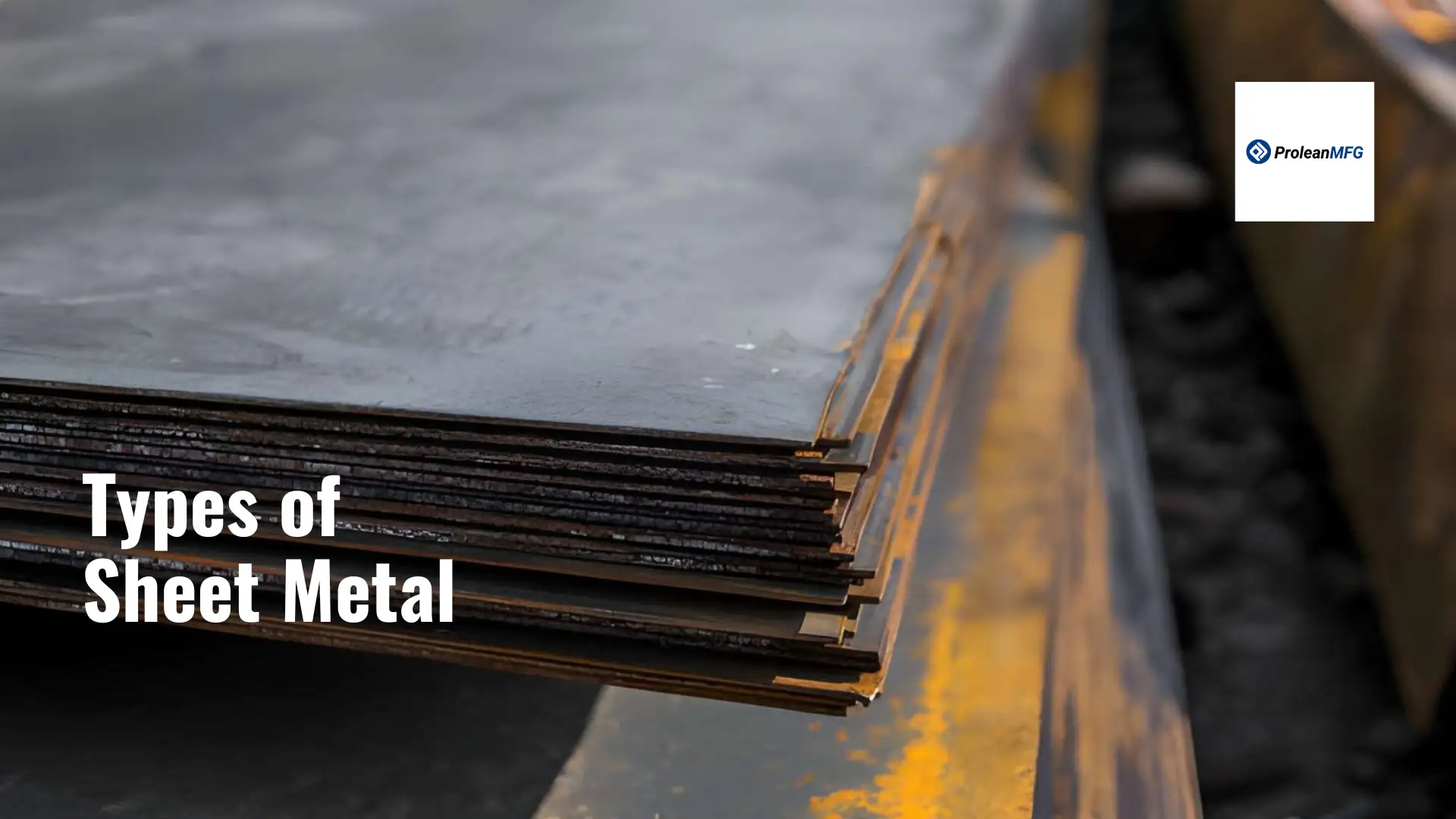

Choosing the right sheet metal is the most critical step in precision sheet metal fabrication. The material you select affects how easily it forms, how well it withstands wear and corrosion, and how long the finished part will last.
There are various types of sheet metal available. Each type has its own unique strengths. For example, aluminium alloys have low weight and high formability. Stainless Steel is resistant to corrosion. Carbon Steels have extremely high strength. The most important factor in choosing the type of sheet metal is your needs.
- Formability: How easy it is to bend and shape
- Weldability: Ability to weld (i.e., join) in the desired way
- Corrosion Resistance: How well it will perform in the environment in which it will be used
- Strength/Weight: The best match for your specific application
- Cost: Always try to get the highest quality at the lowest cost possible.
In this article, we will discuss the different types of sheet metal, their properties, and how to choose the right material for your project with more in-depth details.
What is Sheet Metal?
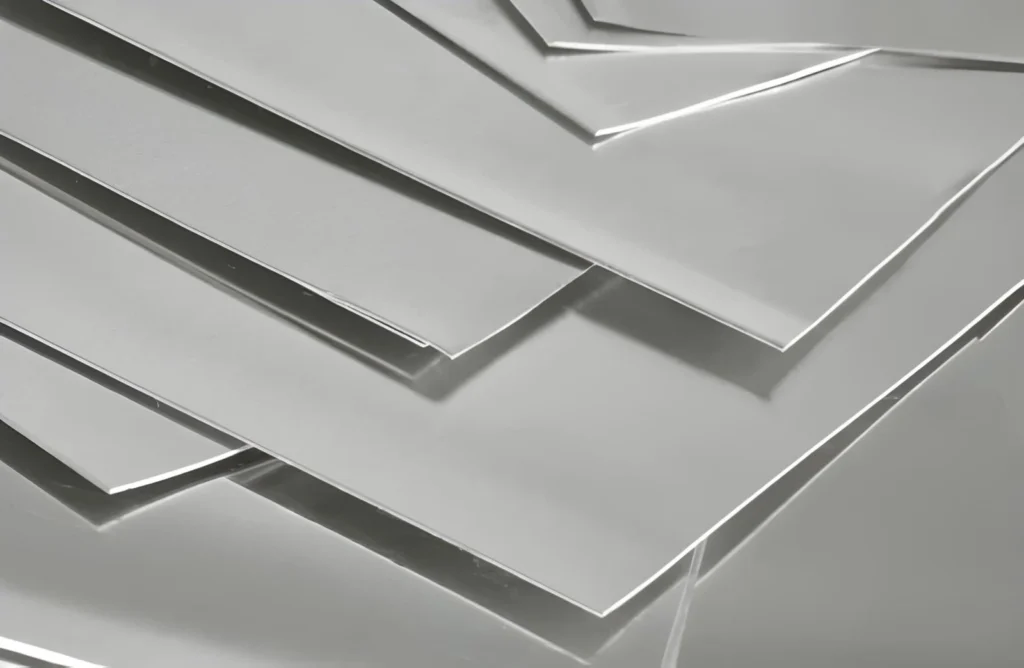
Industrial sheet metal
Aluminium is a lightweight sheet metal and is widely available. It is machined parts due to its natural resistance to corrosion, its relatively light weight, and its sufficient strength for many applications. Different aluminium alloys have varying degrees of strength, workability, weldability, or machinability. Selecting the appropriate sheet metal alloy depends on your project’s application requirements, including marine, industrial, and/or structural use.
- Aluminium Alloy 5052: Alloy 5052 contains magnesium as its primary alloying element. This alloy is relatively easy to shape and weld and exhibits satisfactory performance in wet environments and in the presence of chemicals. The tensile strength is moderate, making it suitable for applications requiring parts with adequate durability to withstand moderate stresses without excessive load. Applications: Panels for boats, chemical tanks, and kitchen equipment.
- Aluminium Alloy 5754: Alloy 5754 has greater tensile strength than 5052 and performs satisfactorily in exterior or saltwater applications. This alloy welds satisfactorily and exhibits satisfactory corrosion resistance when exposed to weather and seawater. Applications: Hull construction for boats, panels for vehicles, and frame construction for outdoor furniture.
- Aluminium Alloy 6060: 6060 is a heat-treatable aluminium alloy that offers good strength while remaining easy to form and weld, making it suitable for structural and general-purpose applications. This alloy is typically used in applications where high-strength properties are not necessary, such as interior structure or general-purpose framing. Applications: Furniture, lighting frames, handrails.
- Aluminium Alloy 6061: 6061 is a widely used alloy that offers good strength and corrosion resistance. It welds or machines easily and is frequently used as an extrusion for structural parts. Applications: Frames for machinery, scaffolding, railings, and aircraft components.
- Aluminium Alloy 6082: 6082 has average tensile strength and excellent weldability. This alloy can carry heavier loads than 6060 and 6061; therefore, it is suitable for structural or offshore applications. Applications: Shipping containers, bridges, offshore platforms.
- Aluminium Alloy 7075: 7075 is a high-strength alloy with excellent toughness. This alloy is lightweight and an ideal choice for parts that require supporting high loads while minimising weight. However, due to limitations in welding this alloy, it is typically used in either machined or bolted components. Applications: Structures for aircraft, high-performance machinery, and precision engineering parts.
Aluminium Alloy Comparison Table
| Alloy | Composition | Strength | Corrosion | Weldability | Example Uses |
| 5052 | Mg 2.5% | Moderate | High | Easy | Marine panels, chemical tanks |
| 5754 | Mg 3% | Medium | Very High | Easy | Boats, vehicle panels |
| 5083 | Mg 4.5%, Mn | Medium-High | Excellent | Standard welding | HVAC, kitchen, industrial |
| 6060 | Mg-Si | Low | Good | Easy | Furniture, lighting, handrails |
| 6061 | Mg-Si-Cu | High | Good | Good | Machinery, scaffolds, railings |
| 6082 | Mg-Si-Mn | Medium-High | Good | Good | Offshore platforms, bridges |
| 7075 | Zn-Mg-Cu | Very High | Moderate | Limited | Aircraft, high-performance parts |
Stainless Steel Sheet Metal
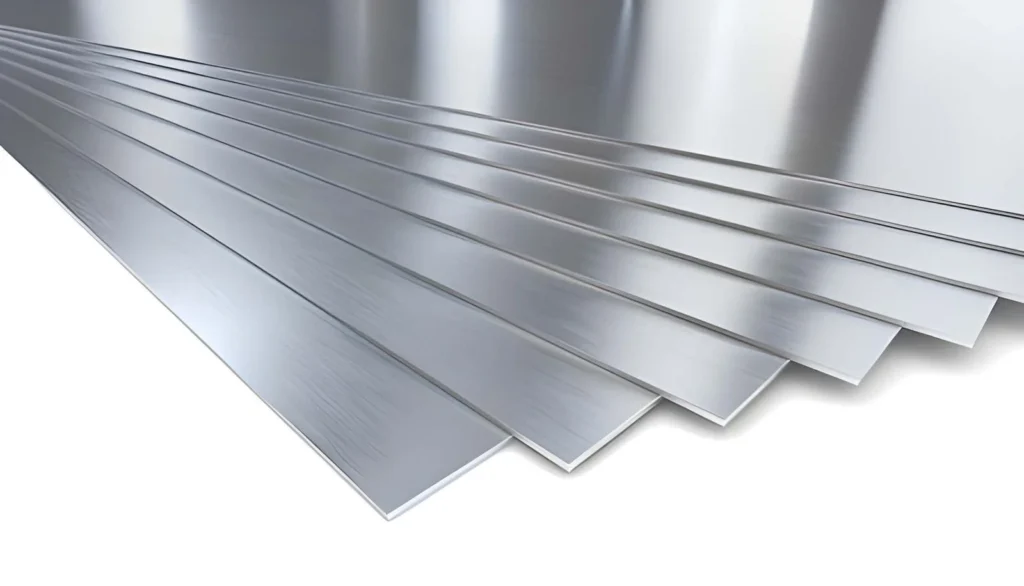
Stainless steel sheet metal
Stainless steel is generally a good option for sheet metal parts that need to be durable in their daily function (because of its rust resistance), and based on what part you are making, and how it will be made (fabrication), the best grade of stainless steel will depend on these two factors.
Grade 304
304 stainless is an austenitic stainless steel alloy. This alloy can handle moisture and most common chemicals. In addition, 304 stainless steel is relatively easy to fabricate with various methods such as cutting, bending, and welding.
where used:
- Kitchen panel parts
- Sinks
- Food processing tray parts
- General equipment that comes into contact with water or food.
Grade 316L
316L stainless steel has added molybdenum, giving it even greater resistance to corrosion from salt and other harsh chemicals than Grade 304. In addition to this improved corrosion resistance, 316L is also slightly stronger than Grade 304. Because of its increased strength and corrosion resistance, 316L is often recommended for outdoor or marine applications that require stainless steel.
where used:
- Boat parts
- Marine fittings
- Chemical equipment
- Bolts and nuts
Stainless Steel Comparison
| Grade | Composition | Corrosion Resistance | Weldability | Heat Resistance | Example Uses |
| 304 | Cr 18%, Ni 10% | High | Easy | Moderate | Kitchen panels, food equipment |
| 316L | Cr 16-18%, Ni 10-14%, Mo 2-3% | Extremely hight | Good | High | Marine fittings, chemical equipment |
Steel Sheet Metal Materials
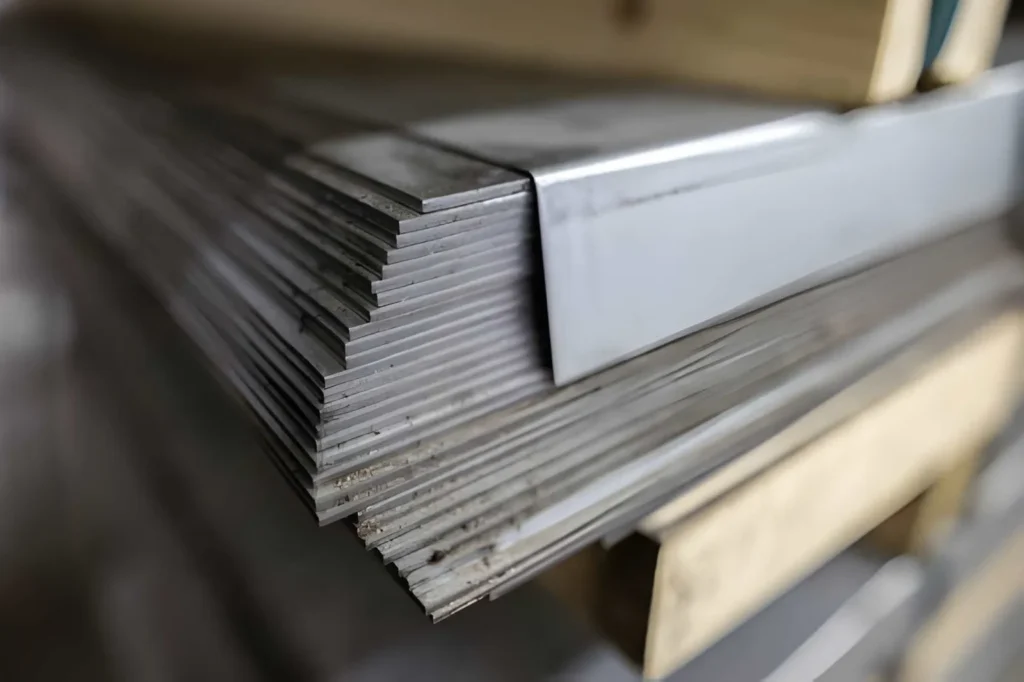
Stacked galvanized steel sheets
Steel has been used in many applications, including structural, automotive, and machinery applications. Each grade will differ in its ability to resist stress, be welded, withstand corrosion, and be formed. The choice of steel sheet metal material depends upon load requirements, fabrication process, and operational conditions.
S235 (1.0117/1.0038)
S235 is a low-carbon steel, ideal for structural applications and easy to weld, cut, and bend. As such, it can be employed as a beam, frame, or light machinery part. Several S235 steel sheet products are produced in a pickled and oiled condition, removing surface oxides that may cause rust during storage or processing.
S275/C45 (1.0044/1.0503)
S275 is a medium-strength steel with good ductility, commonly employed as an automotive panel, construction frame, pipeline, etc. C45 is a medium-carbon steel that offers better tensile properties than S275 and improved wear resistance, making it ideal for shafts, gears, and other mechanically loaded components.
Alloyed Steels (25CrMo4/42CrMo4)
The alloyed steels 25CrMo4 and 42CrMo4 are developed for use in high-stress applications. Both grades offer a combination of high strength, toughness, and fatigue resistance. Therefore, they are well-suited for use in axles, gears, forging dies, and similar industrial components that undergo repeated loading or impact.
Tool Steels (100MnCrW4/1.2379/SKD11)
Tool steels are a group of high-carbon alloys specifically designed for their wear resistance and durability. They can withstand severe abrasion and high heat. Tool steels are most typically used as cutting tool materials, die materials (e.g., stamping dies), and in the manufacture of industrial knives and blades.
Cold-Rolled Steels (DCO1/S355J2G3)
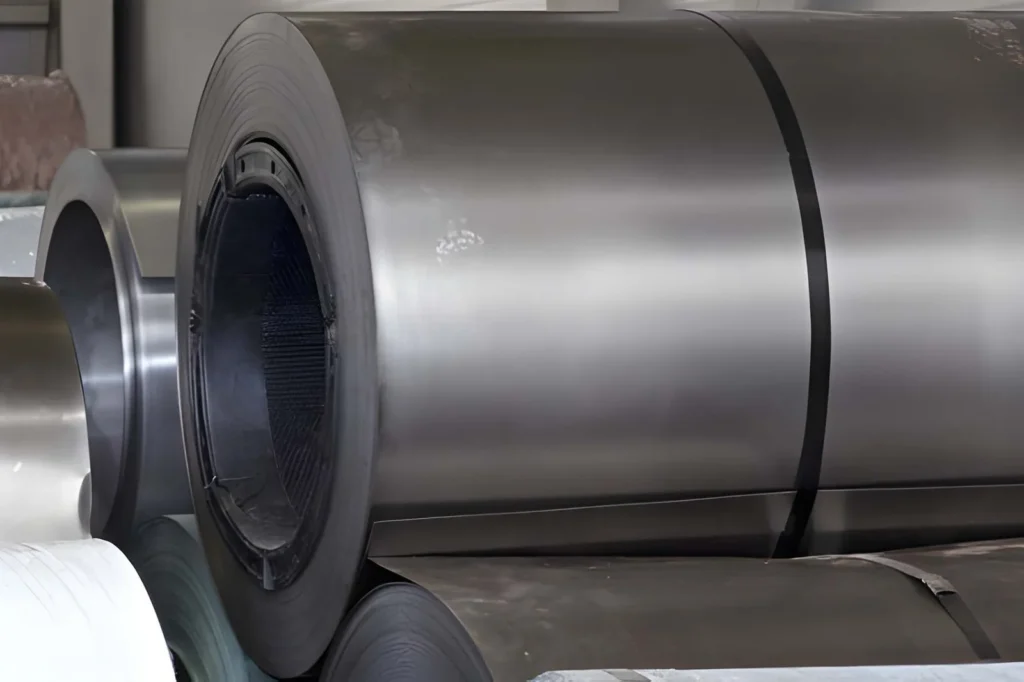
Cold rolled galvanized steel
Cold-rolled steels contain very low levels of carbon, resulting in excellent ductility and allowing for accurate thickness control. DCO1 is a good material for forming and bending, making it ideal for producing electronic housing components and automotive body panels. S355J2G3 has slightly higher tensile properties and is therefore used in load-bearing structural sheet applications.
Steel Grades Comparison Table
| Steel Grade | Tensile Strength (MPa) | Carbon (%) | Fabrication Notes | Typical Use |
| S235 | 360 – 510 | 0.17 | Weldable, easy to bend | Construction, light machinery |
| S275 | 430 – 580 | 0.2 | Weldable, moderate ductility | Frames, pipelines, car panels |
| C45 | 570 – 700 | 0.45 | High strength, moderate machinability | Shafts, gears, mechanical parts |
| 25CrMo4 | 650 – 900 | 0.25 | Alloyed, heat-treatable, tough | Axles, industrial components |
| 42CrMo4 | 750 – 950 | 0.42 | Alloyed, high-strength, fatigue-resistant | Gears, forging dies |
| 100MnCrW4 | 800 – 1000 | 1.0 | High-carbon, wear-resistant | Cutting tools, dies, and industrial blades |
| 1.2379 / SKD11 | 750 – 1000 | 1.5 | Wear-resistant, precise machining | Industrial blades, stamping tools |
| DC01 | 270 – 410 | 0.08 | Cold-rolled, ductile | Automotive panels, electronics |
| S355J2G3 | 470 – 630 | 0.22 | High tensile strength, weldable | Structural, load-bearing sheets |
Copper and Other Sheet Metals
This section has various other sheet metal types, the dominant ones.
Copper Sheet Metal
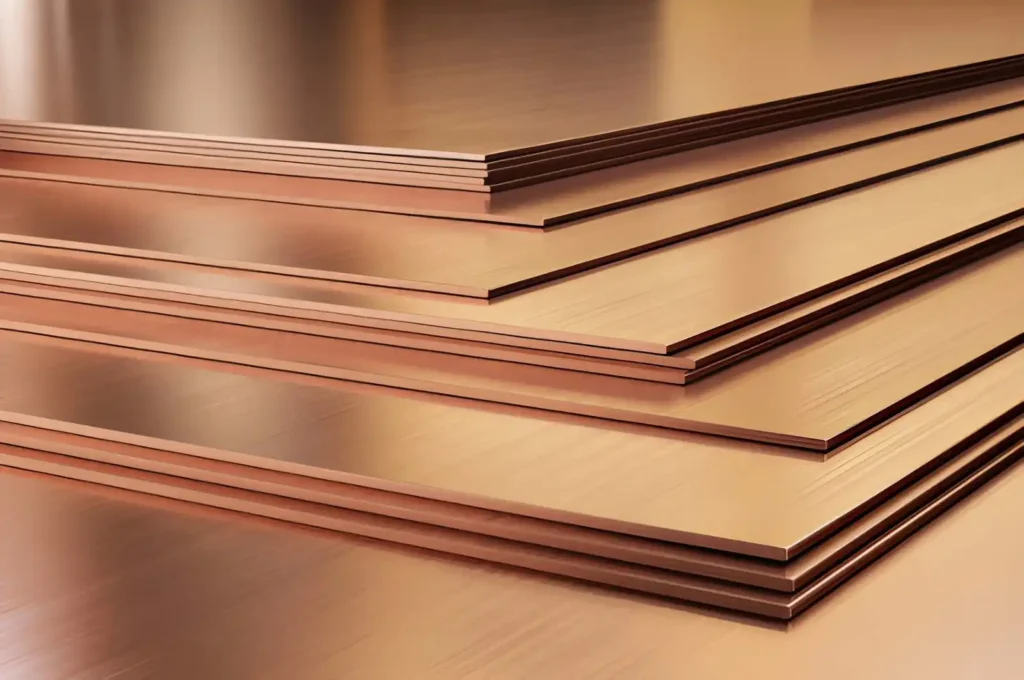
Copper sheets
Copper has good electrical properties, and it’s resistant to corrosion. Copper can be bent, soldered, and fabricated like most metals. For outdoor use, you’ll need to protect the copper through coatings (paint) or patina (chemical oxidation). Copper is commonly used as electrical bus bars, wire, architectural panels, and decorative finishes.
Brass Sheet Metal
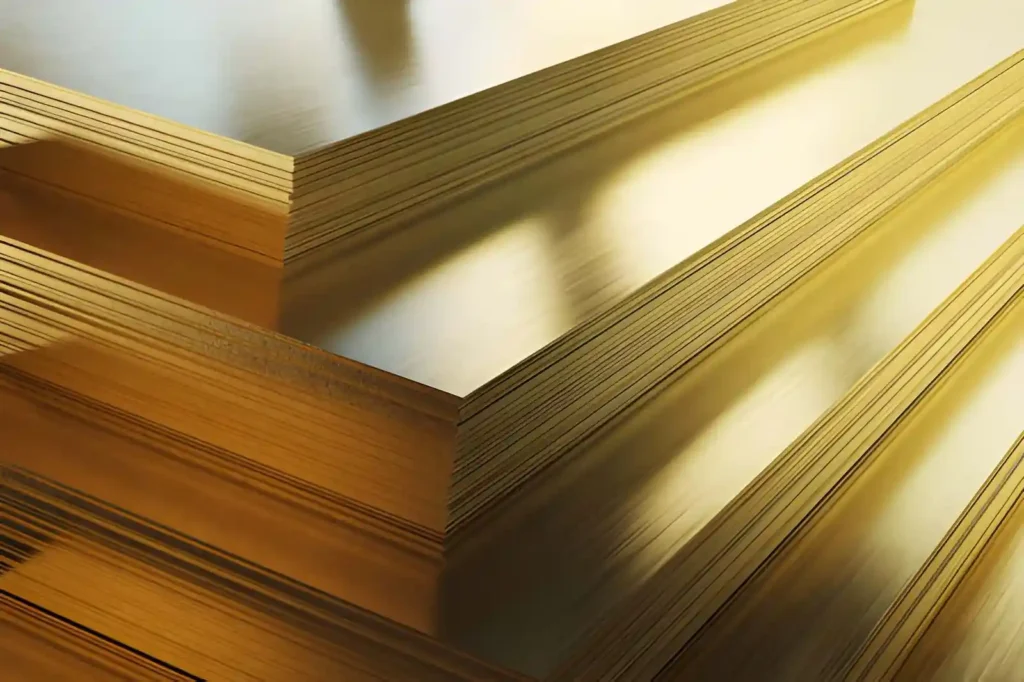
Brass sheet metal
Brass is a combination of copper and zinc that gives it many desirable mechanical properties, such as machinability and strength, and it’s also very corrosion-resistant. Brass sheets can be machined into parts that require accuracy (precision), valves, decorative items, and musical instrument parts. Brass metal fabrication involves cutting, milling, and/or forming into other shapes using the same tools you would normally use for brass sheets.
Nickel Sheet Metal
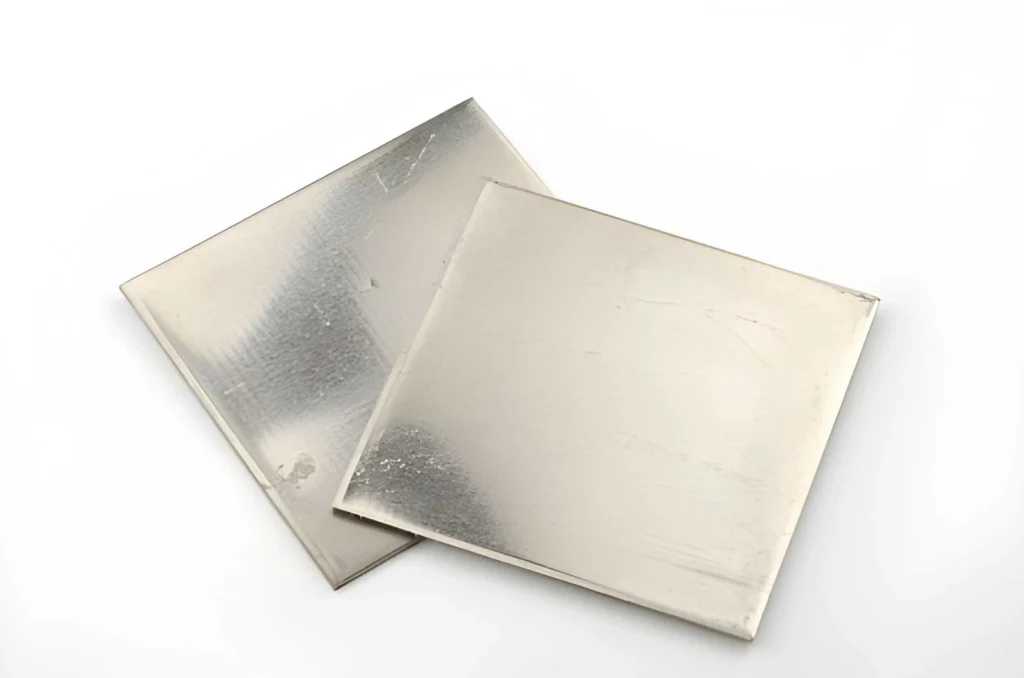
Nickel and its alloys (Inconel & Monel) are well-known for their ability to resist corrosion and high temperatures while maintaining strength. Nickel and its alloys are used in various applications, including chemical processing, marine engineering, and aerospace manufacturing.
Lead Sheet Metal
Lead is an exceptionally heavy and malleable material that makes lead sheets particularly useful for radiation shielding and acoustic absorption (soundproofing). Lead sheets can be moulded into virtually any shape to provide customised radiation protection for medical, research laboratory, and industrial applications.
Magnesium Sheet Metal
Magnesium is a relatively new material for sheet metal products because it was previously produced only in small quantities. Magnesium is lightweight yet very strong and is suitable for use in the automotive industry as body panels, aircraft structures, and portable electronic casings. To protect magnesium from corroding in humid or saltwater areas, it will require a coating.
Titanium Sheet Metal
Titanium is known for being strong, lightweight, and highly corrosion-resistant. Titanium is primarily used for aerospace parts, marine hardware, and medical devices such as implants. Because titanium is so difficult to machine, it is essential to use rigid fixtures for all machining operations and to keep cutting speeds low enough to prevent excessive temperature rise and ensure the longevity of your tooling.
Zinc Sheet Metal
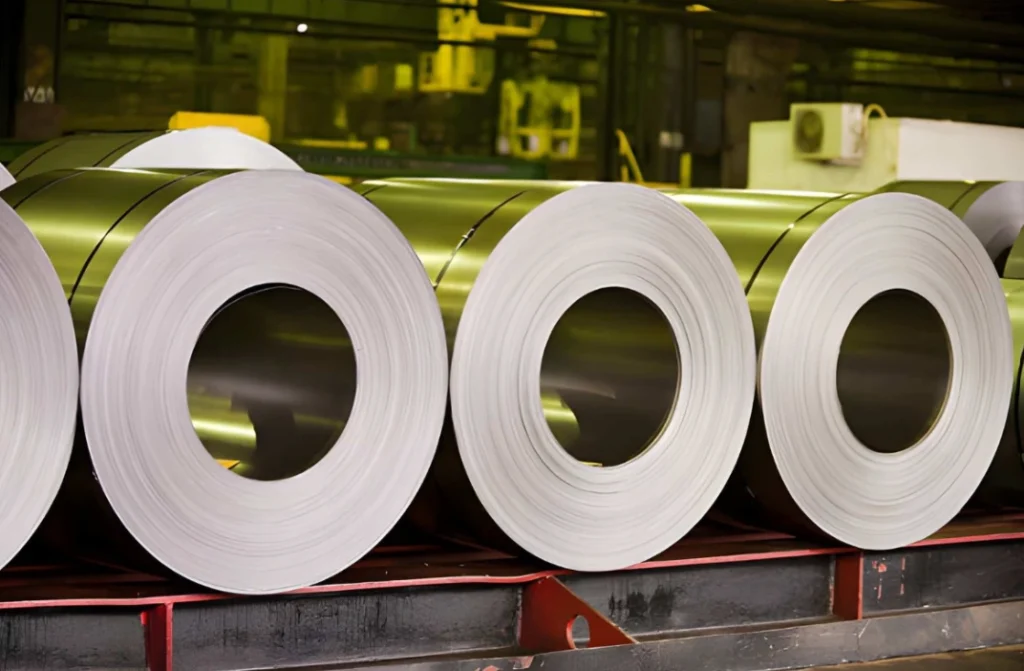
Zinc rolled sheet metal
Zinc is primarily used for coatings and roofing materials. Once zinc forms a protective layer, called a “patina,” on its surface, it becomes resistant to further corrosion. Zinc sheets are also used for exterior building cladding, downspouts, gutters, and corrosion-resistant enclosures.
Custom Sheet Metal Fabrication at Prolean MFG
At Prolean MFG, we bring years of hands-on experience in custom sheet metal fabrication. We work with a variety of materials, including aluminium, copper, carbon steel, stainless steel, and several high-strength alloys. We can produce parts to the precise specifications you need.
We offer all aspects of the fabricating process: cutting, bending, forming, welding, and finishing parts, and provide guidance on manufacturing and packaging designs, and inspect each part for consistent quality. If you would like to inquire about your next project or receive a quote, please reach out to us. We can ship worldwide and accommodate orders of any size.