Review the motion system
We start with the mating rail or shaft, load, clearance and lubrication requirements.
CUSTOM PARTS / ENGINEERING & MACHINING
A guide that binds, a bushing with inconsistent clearance, or a spacer that changes the assembly stack. We turn the functional requirement into a proposed machining route and a practical acceptance plan.
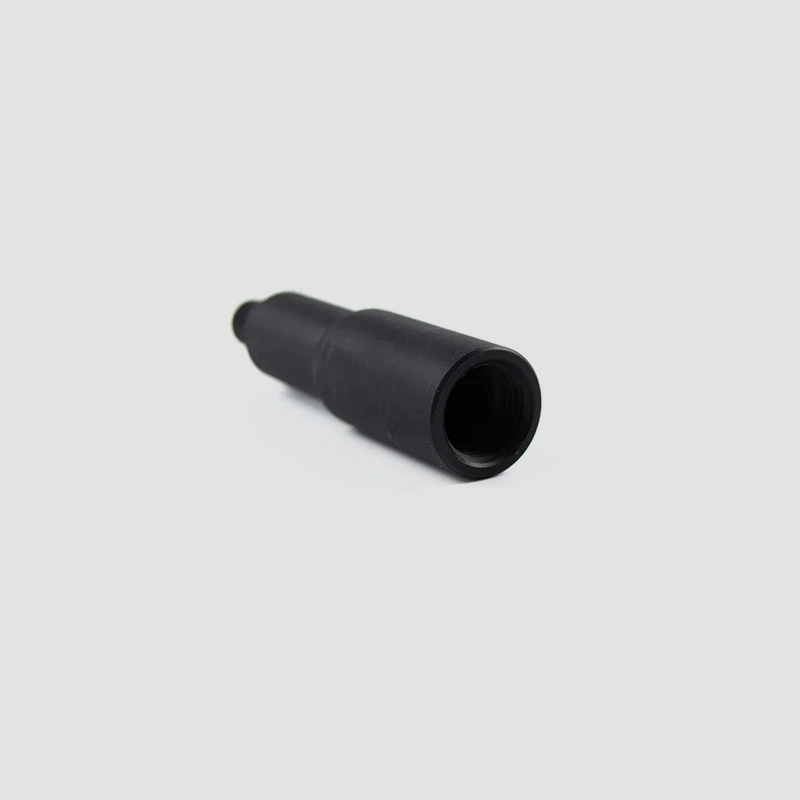
Our review links the feature that matters in your assembly to the proposed setup, machining sequence and acceptance check.
| Your part challenge | Our proposed approach | How to verify the result |
|---|---|---|
| A guide binds on its mating rail | Review running clearance and contact surfaces. Propose balanced roughing and a final pass on the functional geometry. | Inspect the released part and check the running fit with an agreed mating reference. |
| A bushing needs consistent clearance | Relate the bore and shoulder to the shaft and assembly datum before choosing setups. | Agree bore-size, shoulder and fit checks rather than inspecting unrelated dimensions alone. |
| A small batch needs to match the first part | Use the same drawing revision, material specification and defined inspection points throughout the lot. | Agree first-off approval and the sampling or reporting scope before production. |
ILLUSTRATIVE ENGINEERING BRIEF
Illustrative RFQ: 100 guide blocks, an 80 × 30 × 15 mm envelope and a 10.10 ±0.05 mm running slot. The slot must move freely on the customer's rail.
These numbers describe an example customer requirement, not a completed customer project or a guaranteed machining limit. Final feasibility is confirmed from the drawing.
Removing a deep slot can change the shape after release. Inspecting only its width can miss a binding condition along the travel.
Proposed acceptance: slot width at agreed positions, relevant straightness or parallelism, and a first-off running-fit check. The customer drawing defines the final limits.
We start with the mating rail or shaft, load, clearance and lubrication requirements.
The route distinguishes sliding contact, locating features and cosmetic surfaces.
Agree a functional check using the mating part or a defined checking reference.
The quotation identifies the material, revision and inspection scope used for repeat parts.
Confirm the grade after the functional requirements are clear.
If Delrin is specified, identify the required grade. If a POM-C alternative is acceptable, confirm the substitution against strength, service environment, dimensions and documentation before production.
| Material option | Selection context | What to confirm |
|---|---|---|
| Delrin / POM-H | A specified acetal homopolymer | Provide the grade or purchase specification. Avoid treating all acetal stock as branded Delrin. |
| POM-C | A specified acetal copolymer | Review the service environment and property requirements before substituting for POM-H. |
| Filled or ESD acetal | Modified mechanical or electrical behavior | Define filler type, supplier grade and the properties that need verification. |
| Food-contact or medical-use grades | Application-specific documentation | Request declarations for the exact grade and use conditions. A generic POM name is not sufficient. |
Material reference: Delrin product reference guide ↗.
Send the guide and rail drawings, where the part binds, required clearance and operating conditions. We can review the functional dimensions and propose machining and inspection changes.
Provide the original part, load, motion and service requirements. Material, geometry and fit need to be assessed together before approving a replacement.
Only after the grade and functional requirements have been reviewed and the substitution approved. The material designation remains part of the quotation.
Define the dimensional limits and a functional reference such as the mating rail. State whether first-off fit approval is required before the batch.
The CAD and drawing revision, specified acetal grade, quantity, mating component, load and motion, critical dimensions and requested inspection records.
ENGINEER YOUR NEXT PART
Send the drawing and tell us which feature controls assembly, sealing or motion. Our review connects that requirement to a proposed route and inspection scope.