
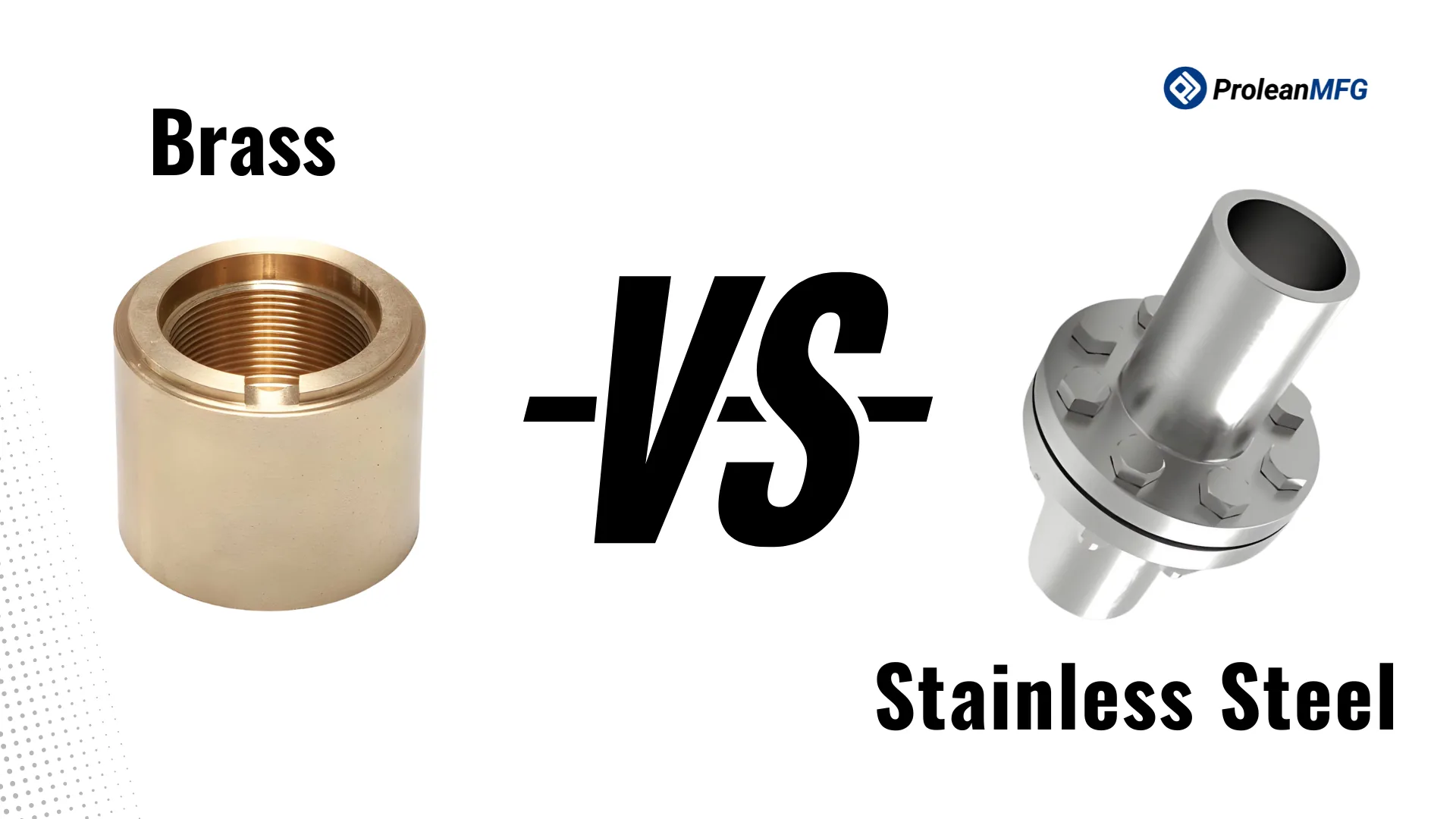

Brass and stainless steel are both widely used materials for CNC machining. They are not pure metals. Each is an alloy made for specific performance requirements. Engineers typically select the material based on strength, corrosion resistance, and the part’s intended use.
Brass is an alloy of copper and zinc. It is softer and easier to machine. Brass is also easy to bend into shapes and is great for applications that require forming or shaping.
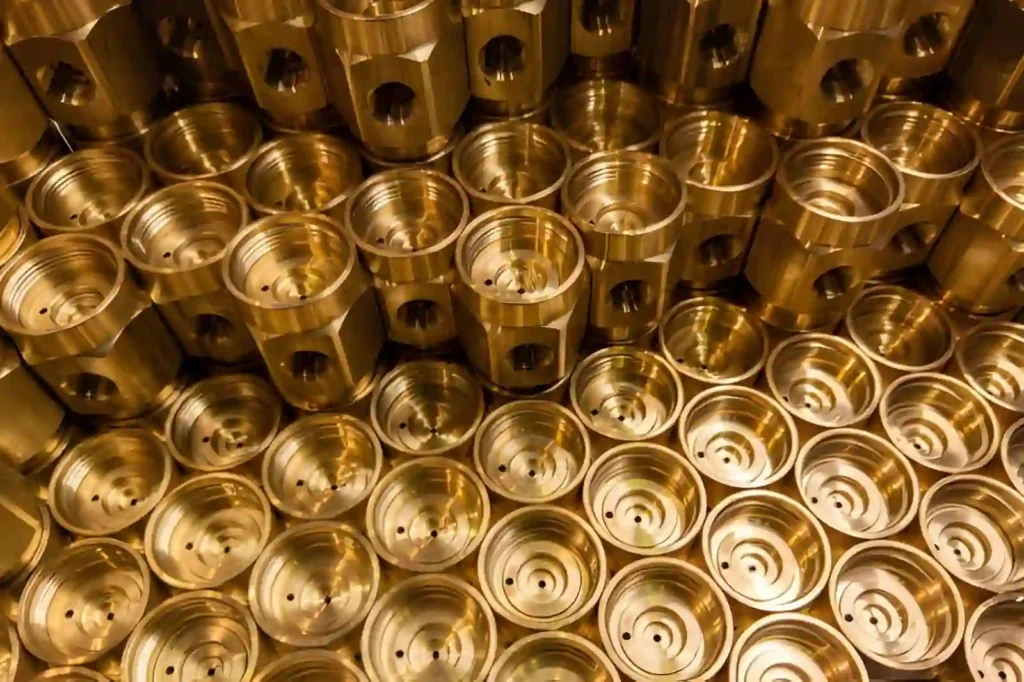
Shiny brass machined parts
Stainless steel is made from an iron-chromium alloy. The alloy is both stronger and more difficult to cut/machine than brass. The stainless steel alloy will withstand corrosive conditions and perform much better in extreme environments. In addition, stainless steel alloys retain their shape under load.
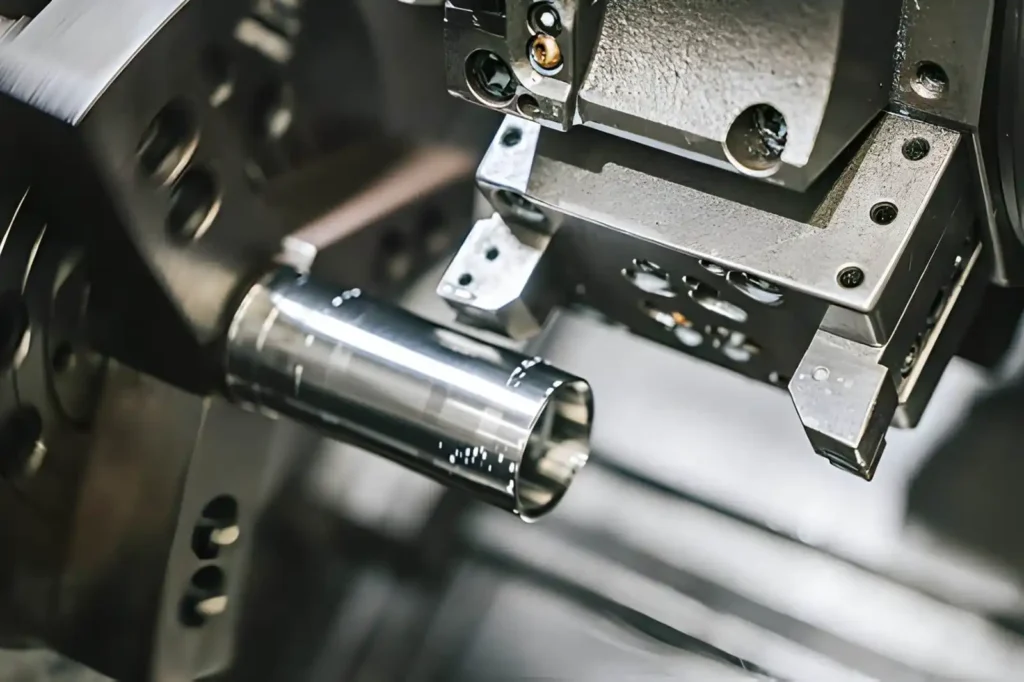
CNC lathe turning stainless pipe
There is no single “better” option when it comes to brass metal fabrication or stainless steel fabrication. The right choice depends on the part application, environment, and required performance.
What Is Brass Made Of? Composition and Properties
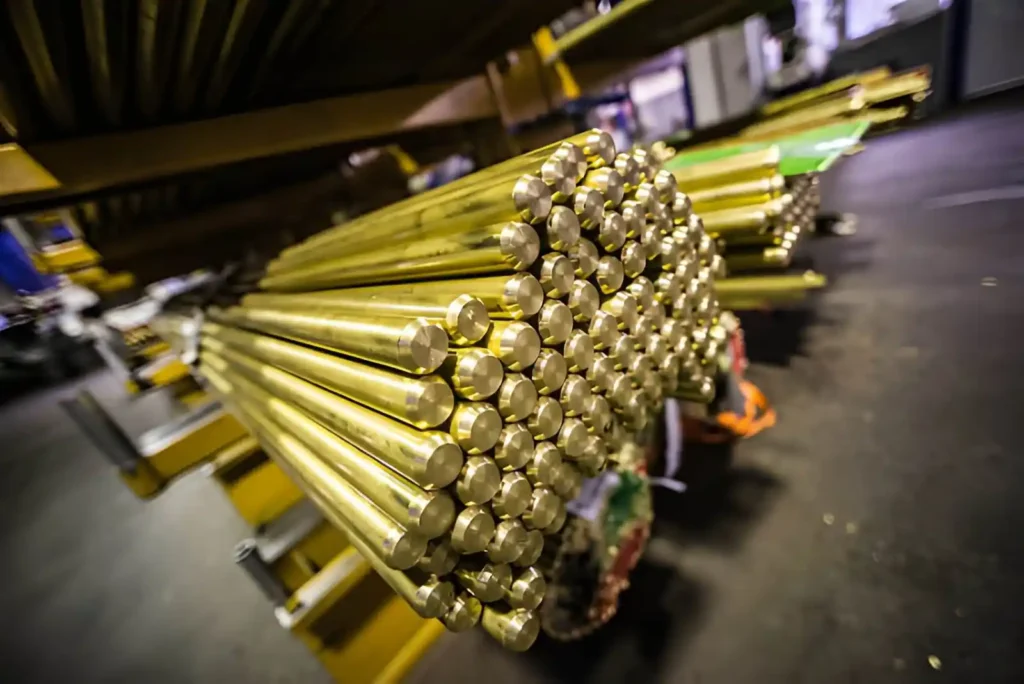
Raw brass pipes
Most commercial (industrial) grades of brass contain approximately 60-70% copper and 30-40% zinc. This results in a material that is generally softer than stainless steel, yet still allows for ease of forming and machining.
Copper to Zinc Composition
A higher percentage of copper will improve the corrosion resistance of the brass. Increasing the zinc content will improve the strength and hardness of brass.
- The optimal balance of copper and zinc provides good machinability.
- Brass melts at approximately 900-950 °C.
- The density of brass is close to 8.4 to 8.7 g/cm³.
Malleability and Forming Behaviour
Brass can be deformed without fracturing. Therefore, it is possible to create a large variety of shapes by bending or shaping it. The elongation of brass can reach up to 40-50%. This allows for the forming (bending, rolling, etc.) of items such as thin-walled products and fittings, particularly those with small diameters, such as pipes and fittings. Formability is also relatively lower than that of brass and requires significantly higher force to deform stainless steel.
Strength and Hardness
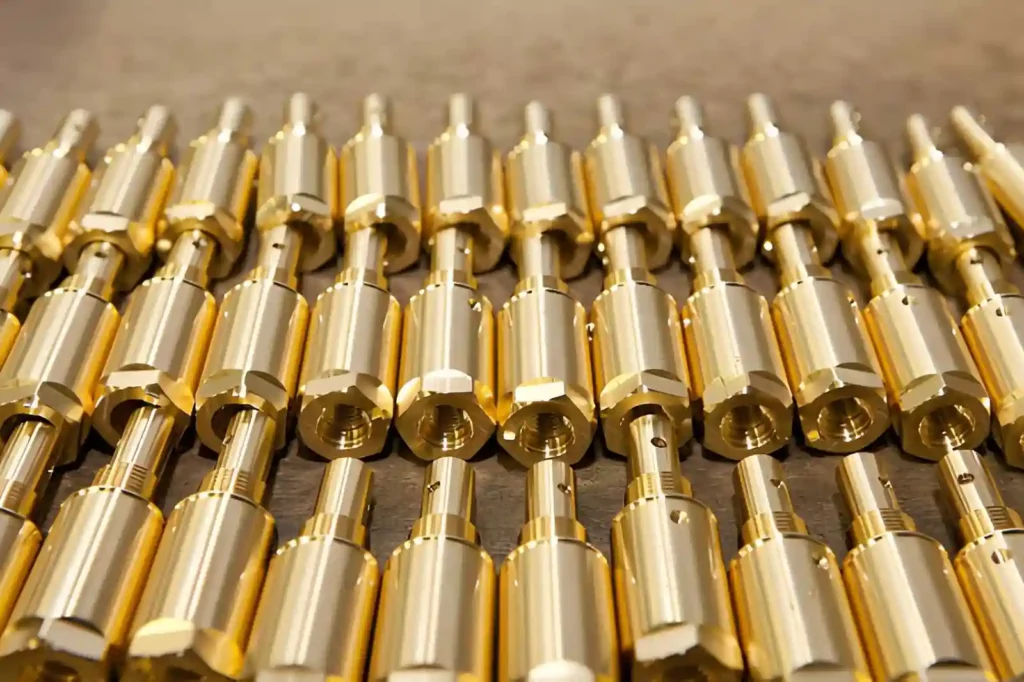
Custom brass machined parts
Brass can handle moderate loads, but it is less suitable for applications involving high stress or heavy mechanical forces.
- The tensile strength of brass ranges from 300 to 500 MPa.
- Average Brinell hardness is around 60-80 HB.
- Yield strength is typically very low.
Thermal and Electrical Conductivity
Brass has a reasonable capability to conduct thermal energy and electrical current.
- The thermal conductivity of brass is approximately 100 to 120 W/m·K.
- The electrical conductivity of brass is about 20 to 30 % IACS.
Corrosion Resistance
- Brass will perform adequately in mild environments.
- Brass resists moisture & is suitable for most interior applications.
- Over time, brass may tarnish.
Brass is generally susceptible to corrosion in saltwater or chlorinated water, though some marine-grade alloys offer better resistance. Stainless steel typically performs more reliably in corrosive environments.
Brass Properties Overview Table
| Property | Typical Range | Note |
| Copper Content | 60 to 70% | Improves corrosion resistance |
| Zinc Content | 30 to 40% | Adds strength and hardness |
| Density | 8.4 to 8.7 g/cm³ | Heavier than aluminum |
| Melting Point | 900 to 950°C | Lower than stainless steel |
| Tensile Strength | 300 to 500 MPa | Suitable for moderate loads |
| Yield Strength | 100 to 250 MPa | Lower load-bearing capacity |
| Hardness | 60 to 80 HB | Easier to machine |
| Elongation | 30 to 50% | High formability |
| Thermal Conductivity | 100 to 120 W/m·K | Good for heat transfer |
| Electrical Conductivity | 20 to 30% IACS | Used in connectors |
| Brass Corrosion Resistance | Moderate | Best for indoor or mild environments |
When to choose brass? Brass CNC machining is chosen when you need easy machining, good conductivity, and simple forming. It is not the best choice for high load or harsh environments, but it works well for fittings, valves, and precision components.
What Is Stainless Steel Made Of? Composition and Properties
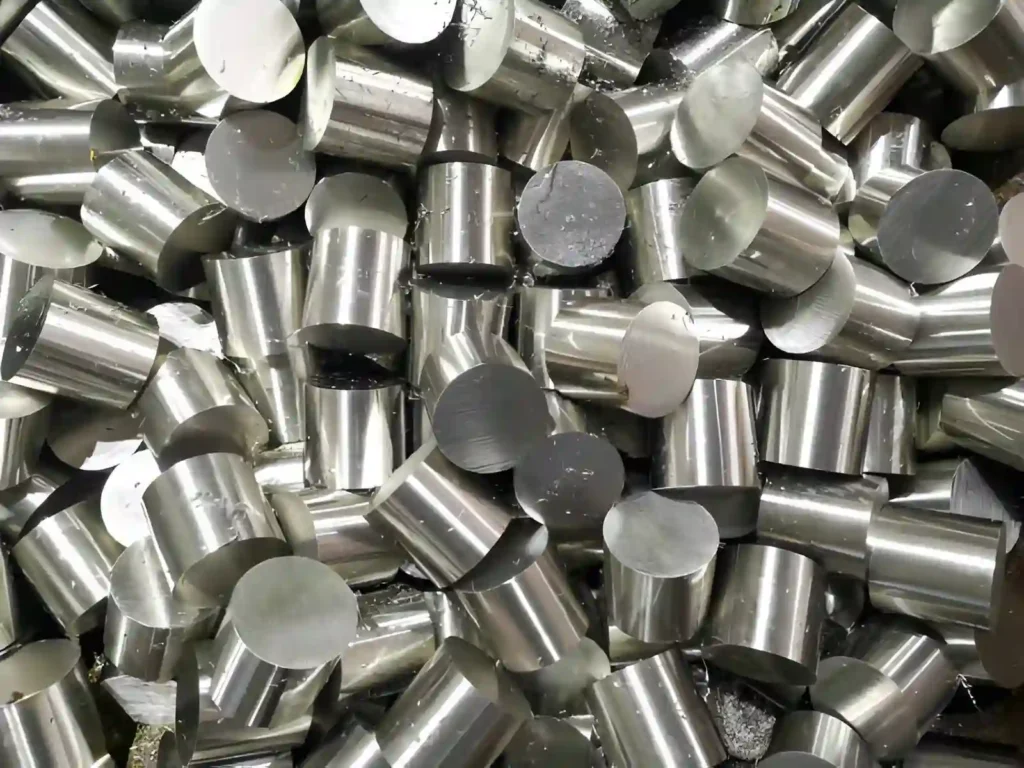
Stainless steel billets for CNC machining
The primary composition of stainless steel includes both iron and chromium. The majority of commercial grades must contain at least 10.5% chromium to provide corrosion resistance. Industrial grades typically include 8-10% nickel as well. The addition of nickel enhances toughness and prevents structural instability due to forming and welding processes.
Most stainless steel compositions contain very little carbon. Many commercial grades of stainless steel contain less than 0.01% carbon. A lower carbon content in stainless steel has been shown to enhance corrosion protection through weld regions and reduce the likelihood of carbide precipitation.
Together, iron, chromium, and nickel provide inherent resistance to rust in many service environments.
High Tensile Strength
Due to their high tensile strength, stainless steels can withstand significant mechanical stresses before undergoing plastic deformation. Typical tensile strengths for many grades of stainless steel range between 500 and 1100 MPa.
Stainless steel CNC machining is widely used for structural applications, including load-bearing elements such as frames, shafts, fasteners, and structural brackets. The high tensile strength of stainless steel, as opposed to brass, also provides superior stability under high loading conditions.
Durability in Harsh Conditions
Stainless steel has demonstrated excellent performance in extreme service conditions. The reaction of chromium with oxygen forms a thin oxide film on its surface. This passive layer protects the underlying metal from corrosive attack.
Additionally, the passive layer formed on stainless steel has also been shown to be resistant to scratching and surface damage. Although some degree of surface damage may occur, the passive film will reform once the surface is exposed to air.
As a result, stainless steel components have been observed to exhibit extended service life in severe service environments, including outdoor exposure and industrial applications.
Thermal and Electrical Behaviour
Stainless steel has lower thermal conductivity than brass. Thermal conductivity values for stainless steel range between 15 and 20 W/m·K. These values are relatively low among metals. As a result, stainless steel cannot transfer heat rapidly.
Similarly, stainless steel exhibits lower electrical conductivity than copper-based alloys. Therefore, stainless steel is generally limited to non-electrically conductive components. Despite these limitations, stainless steel is resistant to thermal degradation and can function effectively within equipment subjected to repeated thermal cycling.
Corrosion Resistance
One of the primary motivations for selecting stainless steel in engineering design is its ability to resist corrosion. The passive layer of chromium oxide protects against moisture and many chemicals.
Furthermore, the passive layer forms spontaneously upon contact with oxygen. This characteristic makes stainless steel particularly effective in wet environments.
Common applications of stainless steel in marine equipment, food processing machinery, and chemical-handling systems take advantage of its enhanced corrosion resistance over brass in severe environments.
Stainless Steel Properties Overview Table
| Property | Typical Range | Note |
| Chromium Content | 10 to 30% | Provides corrosion resistance |
| Nickel Content | 8 to 10% | Improves toughness |
| Carbon Content | < 0.1% | Controls hardness and strength |
| Density | ~7.9 to 8.0 g/cm³ | Slightly lighter than brass |
| Tensile Strength | 500 to 1100 MPa | Suitable for heavy loads |
| Yield Strength | 200 to 600 MPa | High load-bearing capacity |
| Hardness | 150 to 250 HB | Strong and wear-resistant |
| Thermal Conductivity | 15 to 20 W/m·K | Low heat transfer |
| Electrical Conductivity | Very low | Not used for electrical parts |
| Corrosion Resistance | High | Works in harsh environments |
Brass vs Stainless Steel: What Is the Difference?
Comparison Table: Choosing between brass or stainless
| Factor | Brass | Stainless Steel |
| Strength | 250 to 500 MPa (suitable for moderate load applications such as fittings, valves, and decorative parts) | 500 to 1100+ MPa (used in structural, load-bearing, and high-stress applications) |
| Corrosion resistance | Good in mild conditions | High in harsh and outdoor conditions |
| Marine performance | Prone to dezincification | Stable in marine environments |
| Thermal conductivity | ~100 to 120 W/m·K | ~15 to 20 W/m·K |
| Electrical conductivity | High (~15 MS/m) | Very low |
| Appearance | Gold-like finish, forms patina | Silver-grey, stays clean |
| Machinability | Easy to machine and form | Harder to machine |
| Cost (initial) | Higher due to copper content | Lower in many standard grades |
Brass works well for fittings, connectors, and decorative parts where conductivity and formability matter. Stainless steel is suitable for structural parts, fasteners, and components that are subject to loads and corrosion.
Is Brass Stronger Than Steel?
- Brass and steel have many differences when subjected to load.
- Steel has a good capacity to withstand stress and resistance to surface wear.
- Brass is softer than steel; however, it can be machined with less difficulty.
Hardness Comparison
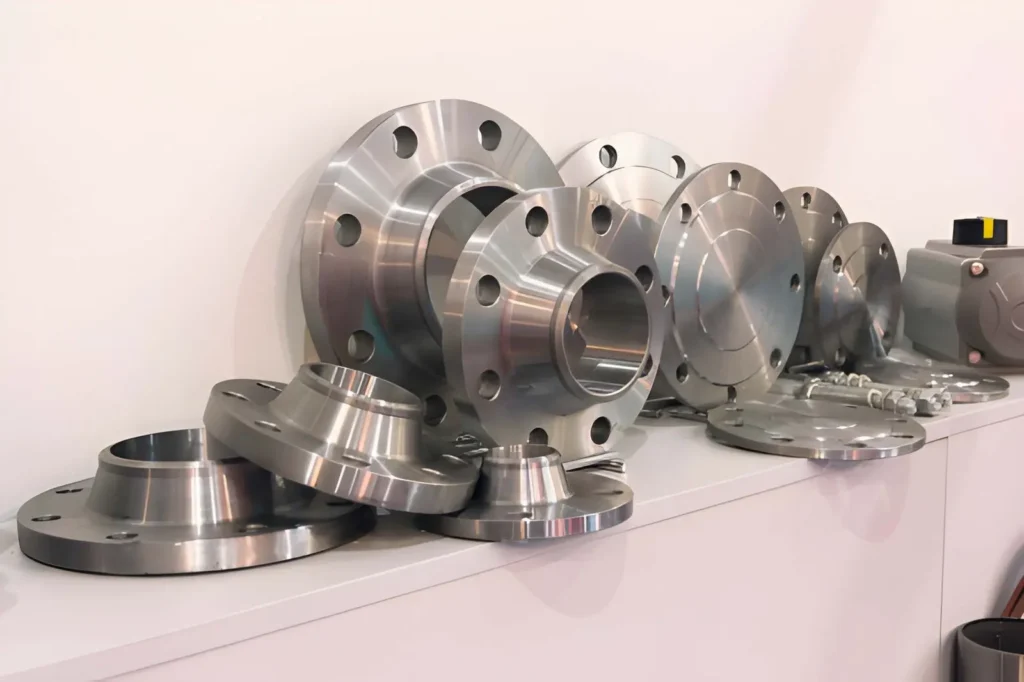
Stainless steel machined flanges
Brass generally measures out at about 55-73 BHN (Brinell Hardness Number) on the Brinell hardness scale. Free-cutting brass (C36000) falls into this same category.
Stainless steel measures out much higher. Depending on the processing, AISI 304 can measure anywhere from 150 to 200 BHN. Heat-treated martensitic grades, such as AISI 420, can measure up to 48-52 HRC (Rockwell Hardness Scale).
The same can be said regarding tensile strength. AISI 304 stainless steel measures approximately 515-860 MPa (megapascals), while brass alloys, like C36000, measure approximately 345 MPa.
A hard surface can provide stainless steel with significant resistance to deformation and surface damage.
Wear Resistance
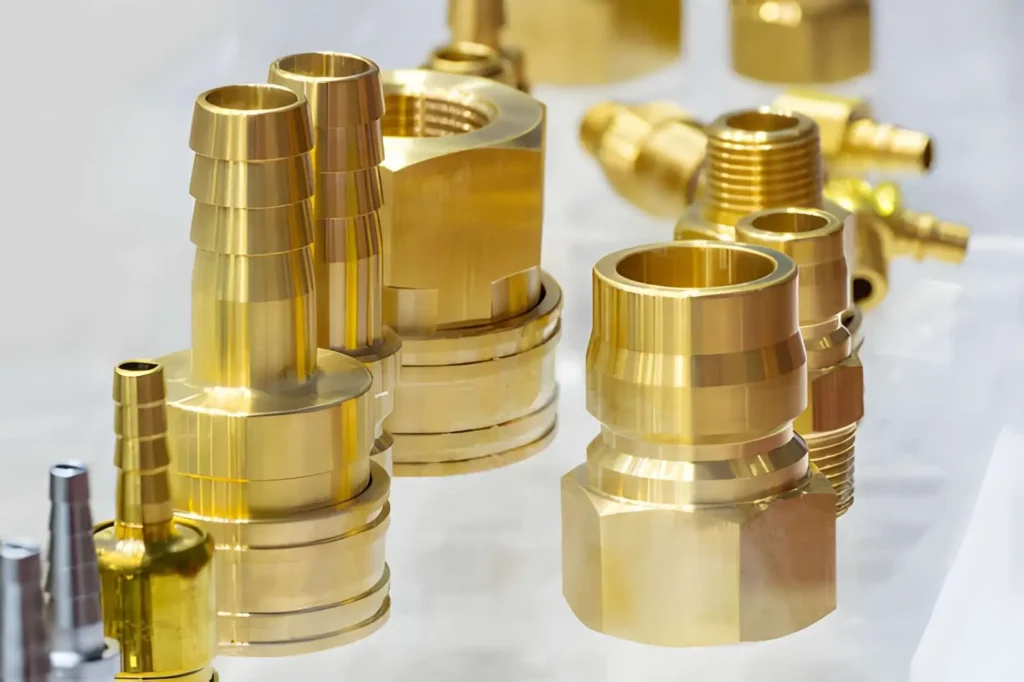
Brass pipe connectors
Surface hardness plays a major role in the amount of wear experienced by moving parts. Stainless steel experiences significantly less abrasion-related wear than brass.
The difference in wear becomes apparent when considering the sliding or rotating parts.
Chromium accounts for approximately 16-18% of stainless steel’s composition. When exposed to air, chromium forms a protective oxide film on its surface. This film provides protection against wear caused by friction with other materials.
Copper and zinc make up the majority of the composition of brass. Under friction, both copper and zinc remain softer than stainless steel. Therefore, brass wears down much more rapidly when exposed to continuous motion or load.
As a result, engineers frequently choose stainless steel for shafts, valve stems, and pump components. Components that undergo constant friction and mechanical stress.
Material Toughness
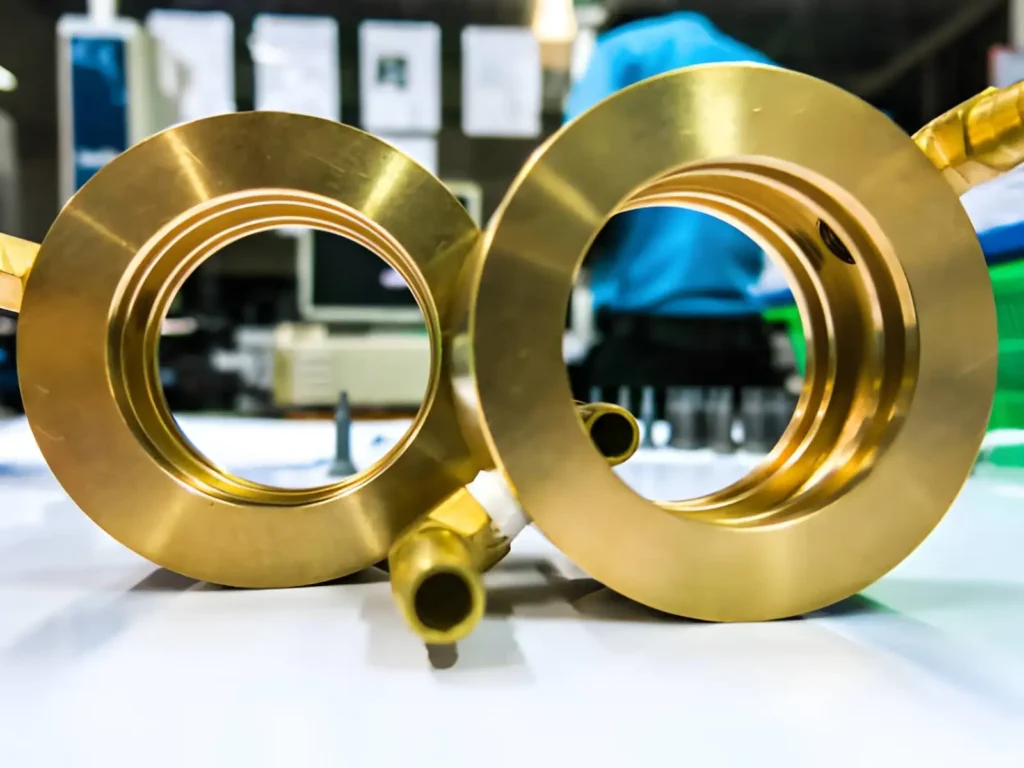
Brass cooling system parts
Toughness is the load a material can sustain before failure. The toughness of stainless steel derives from its ability to combine strength and ductility.
AISI 316L stainless steel can stretch to about 40% of its original length before breaking. This means the metal will absorb the load’s shock and slightly deform rather than shatter.
Brass alloys exhibit different characteristics. Most brass grades will fracture under high loads. This restricts the use of brass in applications that require structural or high-stress mechanical parts. Therefore, brass is suited to components that experience low mechanical stress. Fittings, housings, and decorative hardware are examples of components that function within these parameters.
Application Suitability
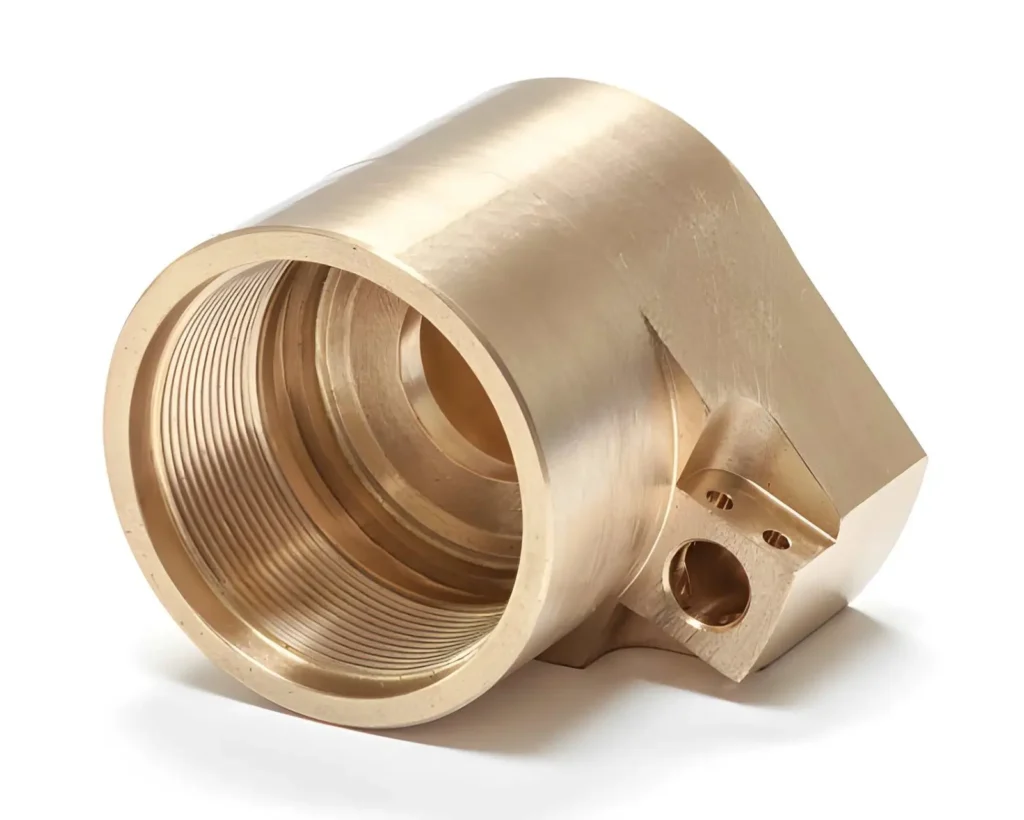
Brass CNC turned threaded part
The suitability of an application depends on the type of load applied to the component and the environmental conditions in which it operates. Stainless steel is a good choice for applications that require both strength and corrosion resistance.
An example of an application that would benefit from stainless steel is AISI 316. AISI 316 stainless steel contains approximately 2% molybdenum.
Molybdenum enhances the corrosion-resistant properties of stainless steel in both marine and chemical environments. In addition, it retains a high level of strength under load.
Brass, on the other hand, has several attributes that make it well-suited for certain applications. One attribute is its electrical conductivity. Many brass alloys have an electrical conductivity of approximately 15-16% IACS. This value is high enough to be useful in applications requiring electrical connections.
Examples of applications where brass is commonly used include electrical connectors, plumbing fittings, and hardware components. Stainless steel is typically used in structural parts, outdoor equipment, and high-stress assemblies.
Maintenance Requirements
In general, stainless steel requires little maintenance in most applications. Stainless steel develops a natural thin film of chromium oxide on its surface. This film acts as a barrier between stainless steel and corrosive substances.
The oxide film is extremely thin, measuring only a few nanometers. While the film provides excellent corrosion protection, if the stainless steel surface is damaged and the film is removed, it will reform when the stainless steel is once again exposed to oxygen.
Brass exhibits different behaviour in the open air. The copper in the alloy will react with moisture and oxygen over time. As a result, the surface will develop a tarnish or discoloured area.
While the tarnish or discolouration does not affect the structure of the brass, it does affect the appearance. Many brass parts must be polished periodically to maintain their appearance.
Why Choose Prolean for Custom Brass and Stainless Steel Parts
Prolean MFG manufactures custom brass and stainless steel components for industrial applications. Our machine offers both prototyping and large custom metal machining. Some parts have tolerances of less than ±0.01mm based upon design and process stability.
Brass CNC machining services are beneficial for parts that require a good surface finish and good cutting stability. Free-machining, which improves (cutting) brass alloys, such as C36000, which contains approximately 60% copper; this will improve chip formation and reduce tool wear. These characteristics make free-machining brass alloys useful for fittings, connectors, valve components, and other components, as well as all types of precision hardware.
Stainless steel is best suited for parts used in moist environments, exposed to chemicals, or subjected to higher mechanical stresses. The chromium content in stainless steel forms an extremely thin oxide film on its surface. This thin layer of oxide slows corrosion and protects the base metal from degradation over time. As a result, stainless steel components are very common in pump shafts, valves, and structural assemblies.
Before machining begins, our engineers review part drawings and specifications. We check tolerances, geometry, and material selection. This step helps prevent machining issues and improves production consistency.