
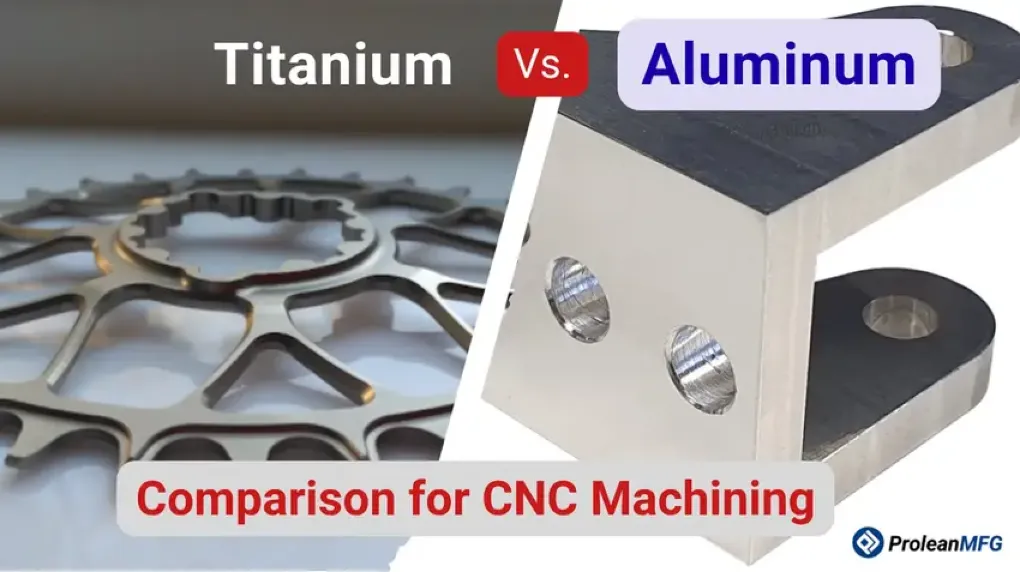

Titanium has an outstanding strength-to-weight ratio, is about 40% stronger than aluminum, and has exceptional corrosion resistance. Aluminum alloys, especially the advanced ones, offer strength comparable to mild steel. The material’s relatively low weight is applicable in the aerospace and automotive industries.
A thorough analysis of titanium vs aluminum parts covers temperature performance, structural integrity, cost considerations, corrosion resistance, and machinability.
For these reasons, titanium vs aluminum is a common topic of discussion in engineering procurement for CNC machining. The decision usually depends on specific project requirements rather than one material being superior to the other.
Read on for more details on the properties, comparison points, and ideal applications of titanium vs aluminum.
Overview of Titanium
Titanium is a premium-grade structural metal. It is widely used in aerospace, chemical processing, marine, and other applications where failure is not an option. The metal is exceptionally strong, corrosion-resistant, and fatigue-resistant.
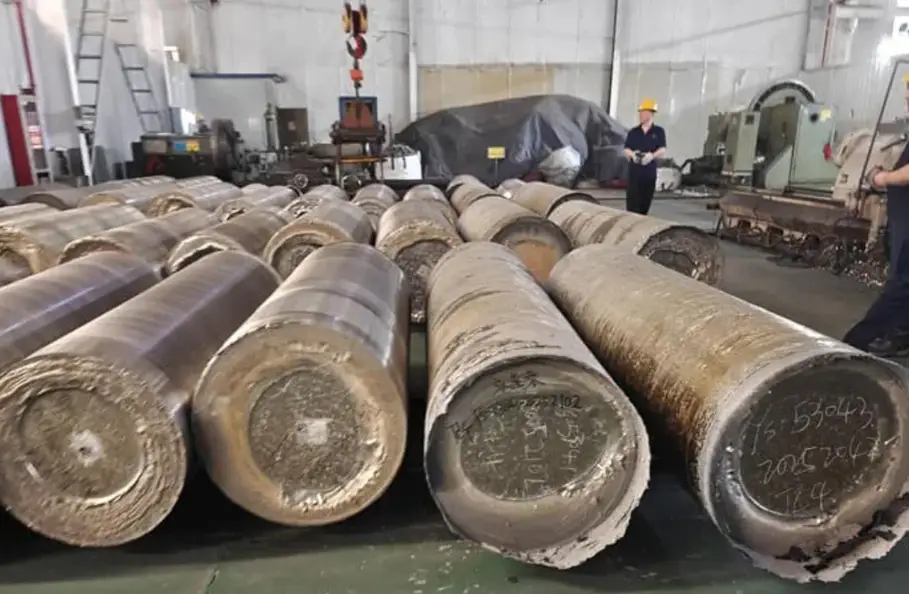
In machining applications, the most widely used titanium grade is Ti-6Al-4V (Grade 5, ASTM B265/AMS 4928). The material has a density of approximately 4.4 g/cm³ and tensile strength of 1000 to 1190 MPa. [1]
Titanium is non-magnetic, biocompatible, and mechanically reliable up to 300°C. The metal has its trade-offs, including relatively slower CNC machining and higher raw material costs.
What are the Advantages of Titanium?
Titanium’s advantages over metals include long-term fatigue performance, corrosion resistance, and strength-to-weight ratio. It is also thermally stable. That’s how it qualifies as a top option in safe-critical applications.
- Fatigue Performance – Titanium has an endurance limit of approximately 500 MPa, which is suitable for cyclic load applications
- Corrosion Resistance – The metal doesn’t require surface treatment to be resistant to acids, chlorides, and seawater
- Strength-to-Weight Ratio – With a density of 4.4 g/cm³ and tensile strength of around 1,100 MPa, the lighter Ti-6Al-4V outdoes most steels.
- Thermal Stability – It retains its mechanical properties at high temperatures – 300°C
What are the Downsides of Titanium?
Titanium is more expensive and harder to machine compared to aluminum. Specialized tooling is required for titanium machining. The tendency to spring back is also a notable limitation. Procurement teams focus on resulting lead time and cost premiums.
- High cost of CNC machining material – Ti-6Al-4V can be five times more expensive than 6061-T6 per kilogram
- High per-part machining cost – High tooling cost and slow machining feed rate
- Difficult to machine – Slower machining rate due to the tendency of the material to retain heat at the cutting edge
- Specialized tooling – Rigid fixturing, pressurized cooling, and carbide tooling
- Springback issues – Close tolerance features and thin walls require expert process control due to the challenges related to the material’s elasticity.
- Longer lead times – The procurement and machining requirements for titanium are longer than those of steel
Overview of Aluminum
Aluminum is a silvery-white, lightweight metal, considered to be in the soft category. Its chemical formula is Al. Due to its low weight, aluminum floats in the Earth’s crust. It is the most abundant metal element in the Earth’s crust.
Aluminum is a popular metal in industrial applications, renowned for its reliability, ease of machining, and machinability. The metal is commonly used in structural applications where extreme corrosion and heavy loads are not primary design requirements.
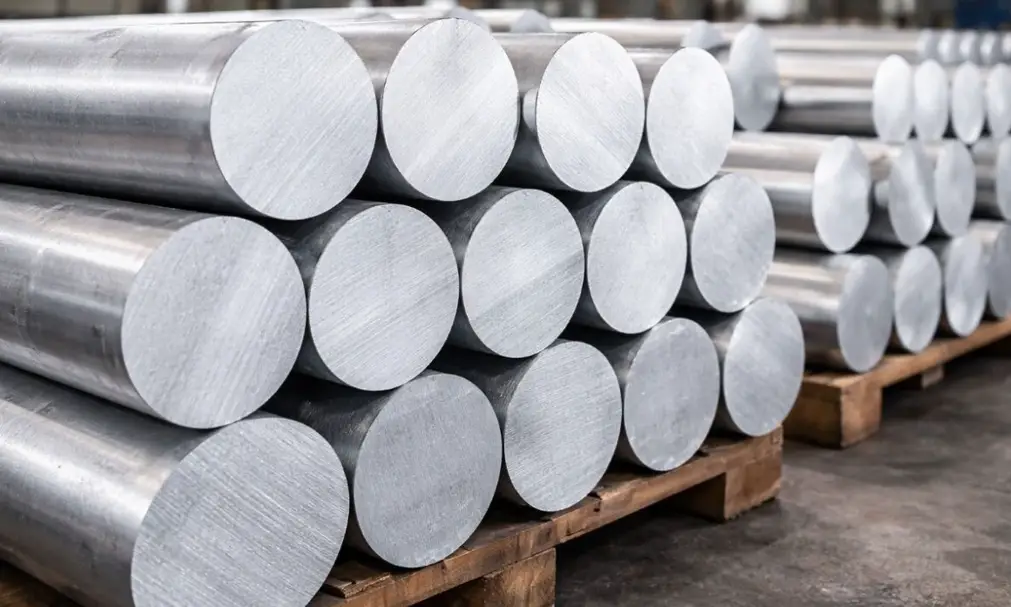
The dominant aluminum alloys in CNC machining are 7075-T6 and 6061-T6, with tensile strengths of 572 MPa and 310 MPa, respectively. Both grades are faster to machine than titanium and are widely available globally.
Aluminum is ideal for applications requiring high thermal conductivity, lower weight, and value for volume production. Its limitations include poorer mechanical performance above 175°C and lower strength compared to titanium.
What are the Advantages of Aluminum?
Aluminum is machinable, cost-effective, lightweight, and relatively strong. Its high thermal conductivity, suitability for surface treatment, and faster cycle times are also noteworthy benefits.
Machinable – The cutting speed of alloys such as 7075-T6 and 6061-T6 is faster than that ofin titanium.
Cost-effective – Aluminum raw material is widely available at affordable costs and a short lead time
Lightweight – Aluminum is much lighter than titanium- 2.70 g/cm³ vs. 4.4 g/cm³.
Relatively strong – The 310 MPa tensile strength for 6061-T6 is enough for moderate loads, for instance, enclosures and brackets.
High thermal conductivity – 6061-T6 has a thermal conductivity of 170 W/m·K, which is ideal for thermal management applications.
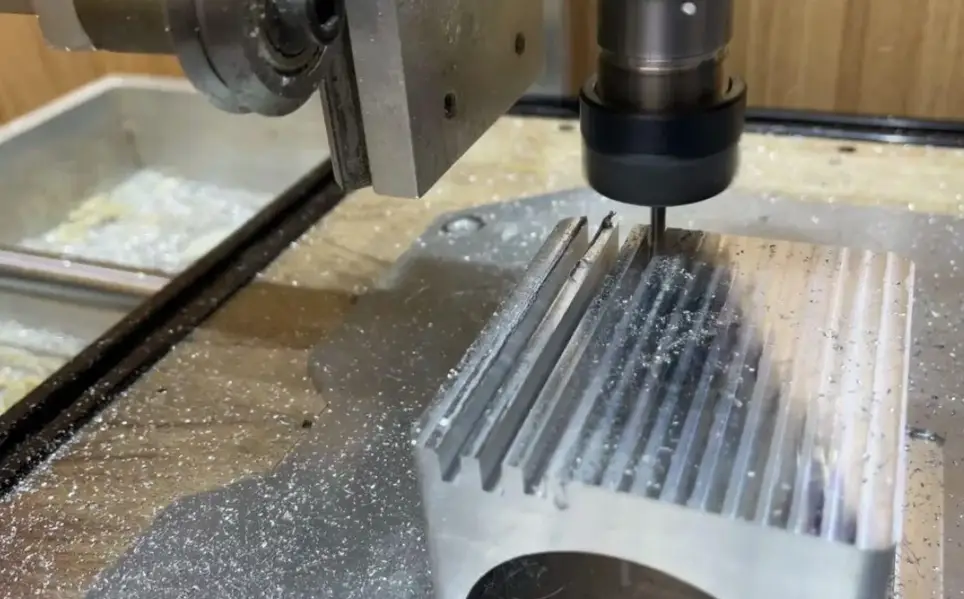
Suitability for Surface Treatment – Aluminum can undergo various surface treatment methods, including powder coating, chromate conversion, and anodizing
Faster Cycle Times – With its excellent machinability, aluminum cutting speeds can be up to 3 times faster than those of titanium.
What are the Downsides of Aluminum?
Aluminum’s mechanical performance starts to deteriorate at 175°C. The material also has inferior fatigue resistance, strength in cyclic loading, and corrosion resistance.
Inferior fatigue resistance – 7075-T6’s 572 MPa is significantly lower than 1,100 MPa for Ti-6Al-4V
Not suitable for precision thin walls – Aluminum’s soft nature can promote deflection and chatter during machining of tight-tolerance, complex parts.
Less Corrosion Resistance
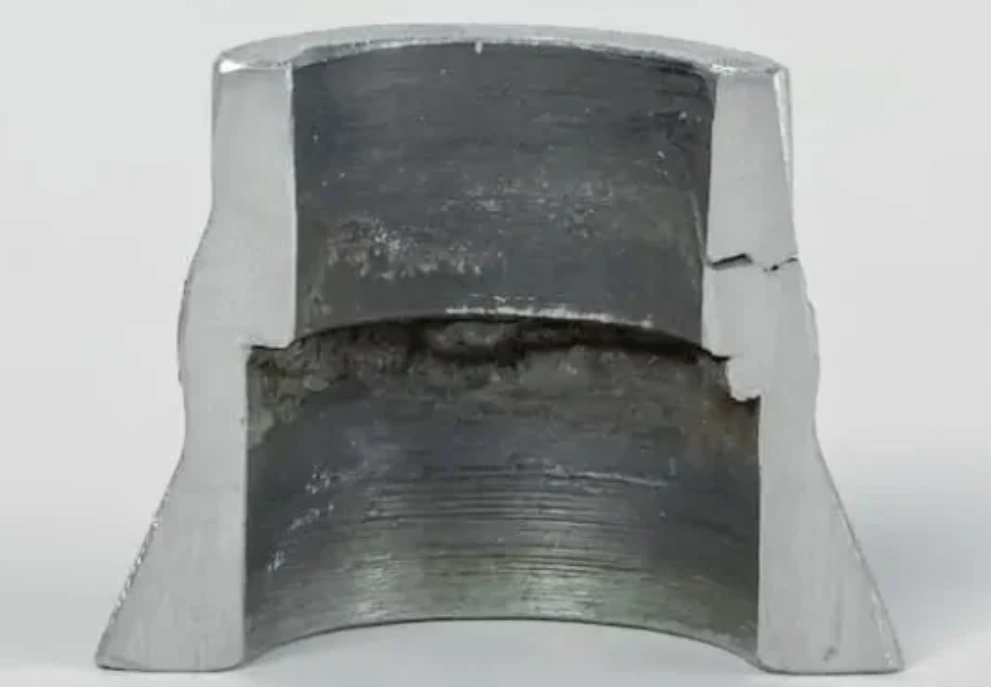
Aluminum easily corrodes in saltwater and humid environments. Coating and anodizing services are available to enhance the material’s corrosion resistance.
Comparison Between Titanium and Aluminum Alloys
The table below summarizes the main engineering parameters for common grades of titanium and aluminum alloys, specifically Ti-6Al-4V (Grade 5) and Al 6061-T6. Titanium and aluminum alloys are compared on density, strength, thermal conductivity, corrosion resistance, machinability, biocompatibility, and raw material cost.
| Property | Ti-6Al-4V (Grade 5) | Al 6061-T6 |
| Density | 4.4 g/cm3 | 2.7 g/cm3 |
| Fatigue strength | 530 to 630 MPa | 96 MPa |
| Tensile strength (UTS) | 1000 to 1190 MPa | 310 MPa |
| Thermal conductivity | 6.8 W/m-K | 170 W/m-K |
| Corrosion resistance | Excellent | Good |
| Machinability | Poor to average | Excellent |
| Raw material cost | Very high | Low |
| Biocompatibility | Excellent | Limited |
Source: [2]
1. Titanium vs Aluminum Strength: Is Titanium Stronger Than Aluminum?
Considering the titanium vs aluminum strength, the tensile strength of 6061-T6 is approximately 3 times lower than that of Ti-6Al-4V. Therefore, titanium is a better choice when structural integrity is a key design consideration.
It is important to note that for applications with moderate peak load demands, aluminum is an attractive option due to its impressive strength-to-weight ratio.
2. Titanium vs Aluminum Weight: Is Titanium Lighter than Aluminum?
No, it’s the other way round – titanium is heavier than aluminum. While the density of aluminum 6061 is 2.7 g/m³, the density of pure titanium is 4.4 g/m³. Therefore, titanium is approximately 1.67 times denser than this popular aluminum alloy.
Looking at it from another dimension, the cross-sectional area of titanium parts can be smaller because the material is stronger. Therefore, the titanium vs aluminum weight concern can be addressed in some structural applications.
3. Corrosion Resistance
Machined aluminum parts often require added protection. For titanium machined parts, the natural corrosion resistance of the material is enough in most industrial applications.
The good thing is that there are options for aluminum machined parts. Hard coating and anodizing are popular methods of adding protection. This comes at a small portion of titanium cost.
4. Thermal Performance: Which is better, aluminum or titanium?
When it comes to thermal performance, aluminum and titanium can be considered to be on opposite sides. While titanium tends to retain heat, aluminum is a reliable heat dissipater.
Aluminum 6061-T6 has a thermal conductivity of roughly 170 W/m-K, compared to 6.8 W/m·K for titanium Ti-6Al-4V.
When temperatures exceed 150°C, titanium’s thermal stability is a clear advantage.
5. Aluminum vs Titanium Cost
Aluminum outdoes titanium on cost, no matter the production stage – raw material, CNC machining, surface finishing. These benefits are only worthwhile when the performance properties of titanium are unnecessary.
| Cost Element | Aluminum | Titanium |
| Raw material | Widely available and low cost | High cost attributed to complex extraction |
| Tooling | Lowing replacement and tooling wear costs | Higher tooling cost |
| CNC machining | Faster machining speeds | Slower machining speeds |
| Surface finishing | Usually economical surface finishing | Generally more expensive due to requirement for specialized processing |
| Total part cost | Low to average | High to very high |
Verdict: Titanium premium cost is justified for critical structural parts.
6. Machinability of Titanium vs Aluminum
Here is another element with a large disparity – Aluminum is one of the most machinable metals at scale, while titanium is among the most difficult to machine. But with a supplier with professional processing capability, both materials can be reliably machined.
Aluminum’s caveat: Thin-walled features can cause tool deflection and chatter. More stringent process controls are required than in titanium machining.
7. Malleability: Is Titanium Malleable?
Yes, titanium is malleable, but aluminum outshines the metal in this area. Titanium’s hexagonal close-packed crystal structure means that the bend radii must be adequate for successful forming.
Note that the formability of aluminum reduces with temper hardness. For example, 7075-T6 is harder to form than 6061-T6.
8. Which Titanium or Aluminum Lasts Longer?
Titanium lasts longer than aluminum in demanding applications. Aluminum requires careful protection, so when this is provided, it can perform reliably in its intended application.
With its superior corrosion and fatigue strength, titanium outperforms aluminum in chemical and marine environments.
Decision Guide: If upfront cost is less important than lifecycle cost in an aggressive environment, investing in the higher-cost titanium is justifiable for aluminum vs titanium cost.
Titanium Vs. Aluminum: Which Metal Should I Choose?
Ultimately, choosing between titanium and aluminum depends on the type of structural load, chemical aggressiveness of the environment, heat dissipation requirements, cost sensitivity, and maintenance requirements, among other factors.
Choose titanium when:
- Required fatigue cycle is 10⁷+ cycles – cyclic and high loads
- The biocompatibility requirement is high
- Weight reduction from steel is necessary, but aluminum does not meet the strength requirement
- Component operates in a chemically aggressive environment, eg, seawater
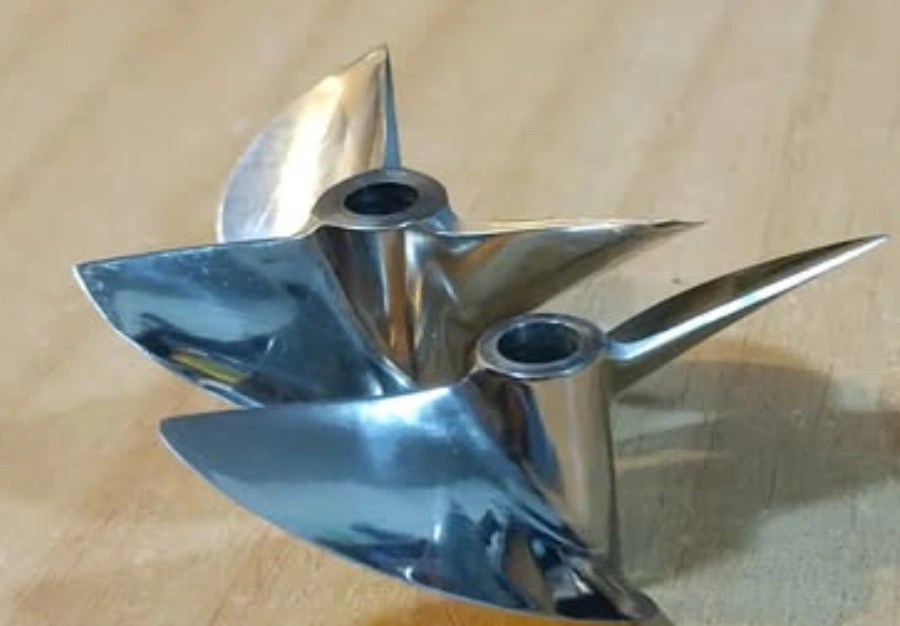
- Minimum maintenance and high service life are critical
- Non- magnetic performance is critical
Choose Aluminum when:
- Weight reduction is a major design consideration
- Heat dissipation is critical in the design
- Operation loads are average
- The environment is either dry or can be managed with coating and anodizing
- Operating temperatures don’t exceed 150-175°C
Best Practices for Titanium and Aluminum Processing
For titanium processing, the best practices include high fixture rigidity, material certification to AMS 4928, and sharp tooling. The best practices for aluminum processing include high cutting speeds, climb milling, and surface treatments for corrosion and wear resistance.
Here are more details about these and other best practices.
Best Practices for Titanium Processing
- Use rigid fixtures
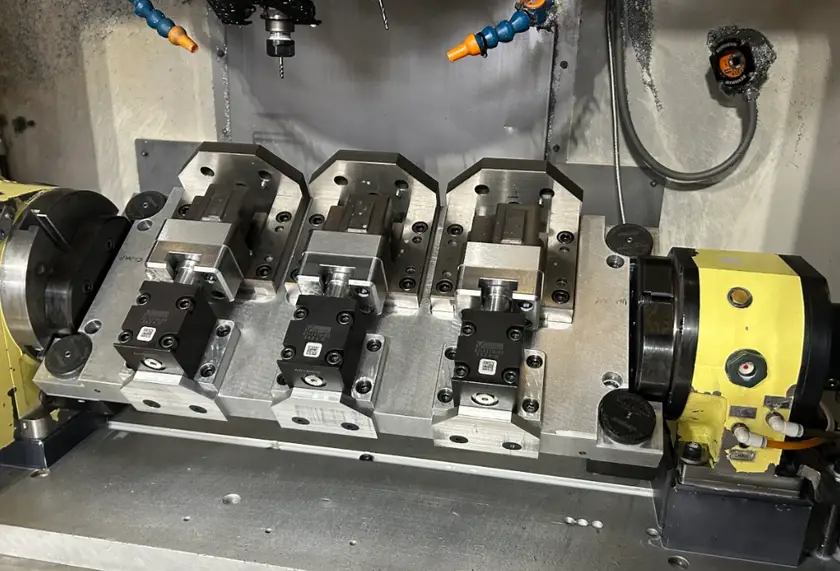
- Use high-pressure coolant
- Ensure the raw material is properly certified
- In-process certification is necessary, especially for thin walls
- Sharp carbide tooling
- Climb milling is recommended because it minimizes heat generation – cutting forces
Best Practices for Aluminum Processing
- Maximized cutting speeds
- Surface treatment specified at the design stage
- Use sharp tooling
- Alloys should be selected by application
In Conclusion
We have analysed the question of which is better, aluminum or titanium, outlining the properties, pros, cons, and applications of each of these metals.
Titanium is a strong, corrosion-resistant, premium material. It is challenging to machine, with longer lead time and higher machining costs.
Aluminum requires coating and surface treatment to withstand alkalis, although it is widely available and cost-effective. Its higher thermal conductivity is evidenced by the ease of machining.
Whether your project requires titanium’s corrosion resistance and strength or aluminum’s cost-effectiveness and low weight, choosing the right CNC machining partner matters.
ProleanTech has the technology and expertise to help you achieve the required efficiency and precision. Request for a free DFM review so you can start with the right material.
Our CNC machining services offer production efficiency, material quality, and precision for your project. Upload your CAD file today. Apart from getting an instant quote, you will be contacted by our engineering team for details regarding tolerances and lead time.
For more details, feel free to contact us.
Resources
[1]. https://store.astm.org/b0265-20.html
[2]. https://www.makeitfrom.com/compare/6061-T6-Aluminum/Grade-5-Ti-6Al-4V-3.7165-R56400-Titanium