


You understand the importance of classifying medical devices and how critical standards are. Specifications dictate what can and cannot be done to protect the safety of patients and the liability of the manufacturer. The medical industry has an ever-increasing demand for precision and consistency, along with great safety and reliability. The preferred solution to meet these demands is CNC Machining. CNC Machining for medical industry can deliver an impressive tolerance of +-0.001mm. Excellent consistency is achieved with CNC and remains true for every batch. Furthermore, for complete traceability with every raw material down to the finished component.
Choosing the correct machining partner is critical in accomplishing your goals in the timelines that you have defined. Whether you are prototyping new surgical instruments, increasing production output of orthopedic implants, or sourcing parts with precision measurement for diagnostic equipment, you understand the critical need for precise and correct engineering. The medical engineers and buyers are more frequently using the CNC machining services, such as those offered by Prolean MFG. Such companies know the engineering of medical parts, believe in and comply with the regulations.
This is what you can expect in this guide about medical CNC Machining: the engineering of different materials, biocompatibility of materials, the use of materials in surgical and implant applications, and the key points to consider in finding/selecting a supplier, and how to design your implants. All the information you seek is available in this guide, whether you are new to the field of precision engineering or whether you are reviewing available options for your project.
What Makes CNC Machining Suitable for the Medical Industry and Applications?
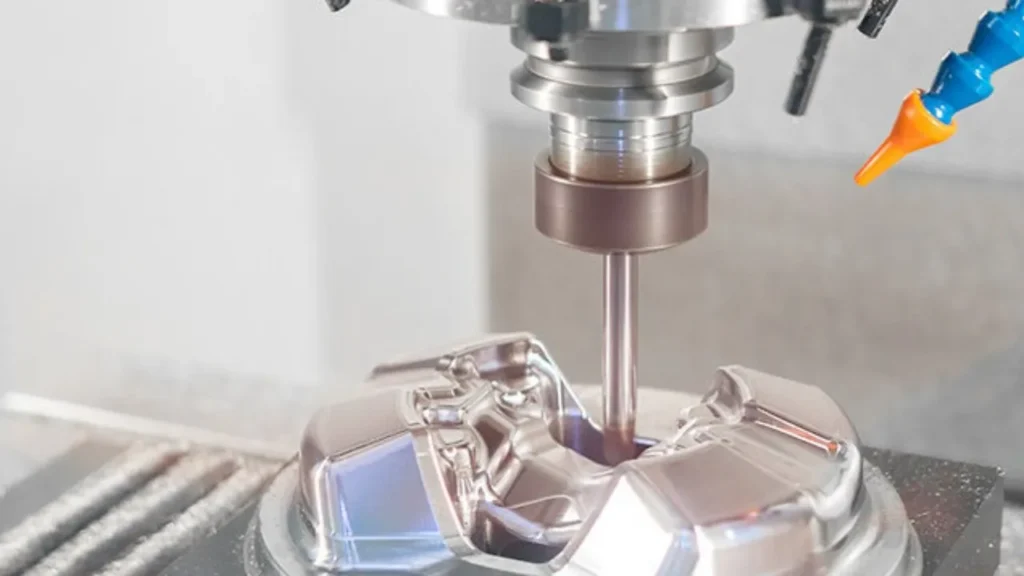
Medical parts must be precise, reliable, and manufactured under strict standards of quality. CNC machining in the medical sector meets these demands by providing tolerances of +-0.001mm, full traceability, and the ability to use biocompatible materials. However, not all CNC machines or materials will consistently achieve this tolerance, especially for complex parts.
The following are some of the key reasons why precision machining is dominant in medical manufacturing:
- Implants and surgical instruments require tight tolerances
- Consistent, repeatable output across production runs
- Compatibility of biocompatible metals, plastics, and other materials
- Ability to produce complex geometry with minimal human errors
- Support for regulatory compliance, quality documentation, and document management
CNC machining provides the precision and flexibility that is required in medical device manufacturing, whether it’s a prototype or a large-scale batch.
What are the CNC Machining Methods Commonly Used in the Medical Sector?
CNC machining meets ALL of the criteria for quality, reliability, and precision for medical machining, as well as the additional requirements of biocompatibility and traceability, and the ability to work to tolerances of ±0.001mm.
Some of the main reasons medical manufacturing relies on precision machining are:
- Surgical tools and implants need extremely precise dimensions.
- Each manufacturing cycle can produce the same instrumental part multiple times.
- Certain metals, plastics, and other materials are biocompatible and can be used to construct implants.
- Enhanced accuracy when manufacturing parts that are designed to be very complicated.
- Quality assurance, regulatory paperwork, and documentation can be easily managed.
In the manufacturing of medical devices, regardless of whether it is a prototype or mass production, CNC machining can provide the required precision and flexibility.
Which CNC Machining Techniques are Used in the Medical Field?
Different CNC technologies are used in the machining of medical devices. Each technique is advantageous for a particular part’s complexity, materials, and required finish.
CNC Milling
CNC milling is one of the many techniques of machining medical devices. It uses rotary tools to remove material from a workpiece. This technique can create anything from orthopedic implants to housings for diagnostic equipment.
Applications include:
- Prototyping medical devices
- Orthopedic implants, including hip and knee replacements
- Surgical instruments and endoscopy tools
- Components for diagnostic devices
CNC Turning (Lathes)
The CNC lathe turns cylindrical parts and works by rotating the workpiece against a cutting tool. This technique produces pins, screws, and rods that are widely used in minimally invasive surgical devices.
It is best chosen when the part is round or tube-shaped, as it delivers faster cycle times and smoother finishes on cylindrical geometry than milling ever could.
CNC Machining with 5 Axis
5-axis CNC machining is the ability of a CNC machine to position and move the cutting tool across five axes simultaneously. This ability to control a tool in 5 axes allows for the machining of complex geometry in a single setup. It is particularly useful for medical components with complex designs, especially those that are intricate, require undercuts, or have multiple surfaces.
Typical applications are complex surgical instruments, custom orthopedic implants, and components for diagnostic devices. It offers a considerable improvement in setup time and machining accuracy compared to conventional multi-step machining.
Swiss CNC Machining
Swiss CNC machining is capable of producing tiny parts at high volume while maintaining tight tolerances. This technique is perfect for machining medical devices and micro components. It’s also ideal for devices that are designed for minimally invasive surgery.
The sliding headstock is what sets this apart from standard CNC-turning. It supports the workpiece at the point of cutting, preventing vibration and deflection that could otherwise affect accuracy for thin or small parts.
Wire EDM (Electrical Discharge Machining)
Wire EDM, also known as wire cutting or wire EDM, is a machining method that uses an electrically-charged wire to cut through a material with incredible precision. This technique is perfect for machining titanium and stainless steel to create intricate surgical blades or implant components without mechanical stress.
The cutting process is performed by electric sparks. This means that materials that are hard or brittle can be shaped and molded without cracking, warping, or burring, which would occur with conventional cutting tools.
Micro-Machining
Micro-machining allows for the production of extremely small parts, which may need microscopic inspection. Micro machining is used to manufacture components for microfluid systems, miniature endoscopes, and small-scale medical prototypes.
This is the preferred method when the part features are measured by micrometers instead of millimeters. It fills the gap left by standard CNC tools that are too large to achieve the detail required.
Laser Cutting and Engraving
Laser cutting is an effective method of cutting and engraving metals and plastics that are medical grade. Laser cutting can be used to customize the shape of implants and prosthetics as well as to engrave identification marks on medical equipment.
It is especially suitable for marking serial numbers or regulatory codes that must be permanently legible.
Photochemical Machining
Photochemical machining (PCM), also known as chemical etching, is a method of creating detailed components without mechanical stress. This process is perfect for producing thin, high-precision components such as surgical meshes and filters, implants, and microstructures.
The main advantage of this process over mechanical processes is the ability to produce hundreds or intricate flat parts from a single sheet without heat or stress, which could cause delicate thin-walled features to be distorted.
Ultrasonic Machining
The ultrasonic machining technology uses an abrasive fluid and high-frequency vibratory waves to remove material. This is especially useful for the difficult machining of tough and brittle materials such as ceramics and glasses. These materials are essential in the production of dental implants and orthopedic implants as well as diagnostic equipment.
This is the preferred technique, especially when cutting ceramics or glass, which would cause them to crack under conventional tools. Ultrasonic vibrations remove the material in a gentle enough manner that they can be machined without breaking.
CNC Grinding
Medical applications demand better surfaces and tighter tolerances than other industries. CNC grinding is therefore better suited to the production of orthopedic implants, the precise grinding of surgical tools, and the shaping of diagnostic and therapeutic instruments.
The CNC grinding process takes over where other machining processes have left off. It achieves surface smoothness and dimensional precision that is unmatched by any other cutting method. This is crucial for implants, which must integrate with the bone or instruments moving without friction.
What Materials are Used Most Commonly in Medical CNC Machining?
Material selection is important when machining medical device components. Materials used in CNC machining in the medical industry must meet certain requirements, including strength, corrosion resistance, and sterilizability.
Metals
Metals are the most commonly used in CNC machining for medical purposes due to their strength, durability, and biocompatibility.
Stainless Steel (316L & 304)
Stainless steel is often used in surgical instruments and diagnostic equipment due to its corrosion resistance and ease of sterilization. When selecting a material, stainless steel is used when the device must be able to withstand multiple autoclaving cycles, and cost is more important than weight.
Titanio (Ti6Al-4V)
Titanium has a very high strength-to-weight ratio, making it the ideal metal for spinal devices, orthopedic implants, and dental implants. It is chosen for implantable applications as it is not rejected by the body, does not corrode when in contact with bodily fluids, and can support structural loads without adding weight to the body.
Cobalt-Chrome Alloys
Cobalt-chrome is more commonly used for orthopedic implants. CoCr alloys offer excellent wear resistance, making them ideal for joint and cardiovascular devices. These alloys are used when the device is subjected to constant friction and repeated motion, as with a hip or knee joint. Any material that breaks down too quickly can release harmful particles in the surrounding tissue.
Aluminum (Al 6061, Al 7075)
Aluminum is lightweight, making it ideal for housings of diagnostic equipment, components that are not implantable, and any other place where weight reduction is crucial. Aluminum is not used in the body but instead is chosen for external or portable devices that reduce operator fatigue.
Nickel-Titanium Alloys
Nitinol can be used to make stents, guidewires, and other medical devices. This material is chosen for these applications due to its shape memory properties. It can be compressed and inserted through a small cut, but then reverts to its original form once inside the body.
Plastics
Medical-grade polymers offer biocompatibility and chemical resistance as well as lightweight performance. They are ideal for a variety of medical parts and are often selected when a metal would be unnecessarily heavy, too rigid, or would interfere with imaging equipment.
The common plastics used in medical devices are as follows;
PEEK – Excellent mechanical properties, sterility, and use in surgical instruments and spinal implants.
Polycarbonate (PC) is a transparent and impact-resistant material used for housings of diagnostic devices.
UHMWPE – Wear-resistant plastic used for replacement joint bearings.
Polypropylene PP — Resistant to chemicals; used for fluid handling components and labware.
Acrylic (PMMA) is used in diagnostic and ophthalmic equipment.
PTFE – Non-reactive, biocompatible, ideal for sealing, gaskets, and catheter components.
Ceramics
Ceramics are used in applications that require hardness, wear resistance, and biocompatibility, such as dental and orthopedic applications.
Alumina (Aluminum Oxide) is a hard and biocompatible material used for dental prosthetics, joint components, and other materials.
Zirconia – Used for orthopedic implants and dental crowns due to its strength.
Silicon Nitride – Used as a spinal implant because of its strength and resistance to infection.
What are the Applications of CNC Machining in the Medical Industry?
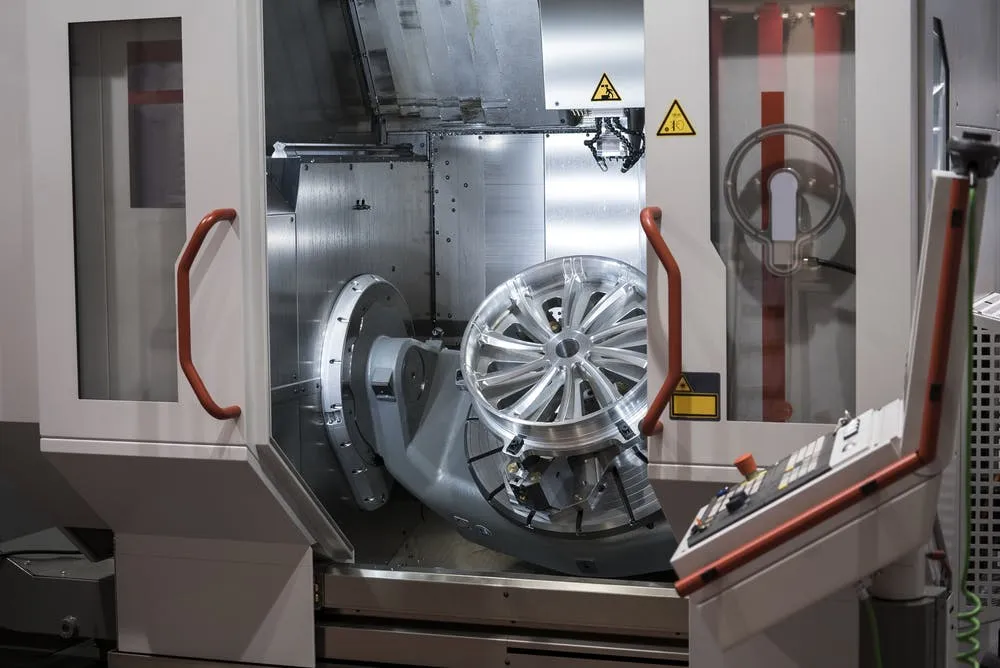
CNC machining for the medical industry is used in a wide range of ways, from the production of everyday surgical instruments to cutting-edge emerging technologies.
Surgical Instruments
Precision machining is used to produce scalpels, forceps, and retractors that meet the exacting tolerances of surface finish and safety requirements.
Orthopedic Implants
Medical parts that require tight tolerances, biocompatible materials, and high precision include knee and hip replacement components.
Dental Implants and Tool
High precision and repeatability are achieved by CNC machining of titanium dental implants, crowns, and surgical instruments.
Prosthetics
The design of custom prosthetic components and limbs is flexible, and the materials used are chosen to suit each patient.
Diagnostic Equipment
CNC machining is used to produce housings, brackets, and precision components of MRI machines, CT scanners,s and blood analyzers.
Cardiovascular Devices
Medical instrument machining is characterized by precision, biocompatibility, and high-quality materials.
Endoscopic Surgical Tools
Endoscopic tools can be operated with precision using miniature machined components in small anatomical areas.
Ophthalmic and Electronic Medical Equipment
CNC machining is used to produce precision lenses, housings, and connectors that meet the tightest specifications for electronic medical devices, ophthalmic equipment, and ophthalmic instruments.
Emerging Applications
As healthcare technology advances, medical CNC machining expands into new frontiers.
Customized Implants for Patients — Implants that are made to fit the patient perfectly, based on imaging data.
Wearable Medical Devices – Compact sensors and housings for health monitoring devices.
Robotic Surgery Components – High-precision machined parts for robotic surgery systems that require zero tolerance for errors.
Implants bioresorbables — Made from materials that dissolve safely in the body after healing.
Microfluidic Devices – Miniaturized Lab-on-Chip devices for diagnostics produced by micromachining.
Smart Implants – Implants that have sensors and electronics integrated, and require precise machining and assembly.
What are the Advantages of Using CNC Machining in the Medical Industry?
Precision machining is a superior manufacturing method in the healthcare industry.
Precision Exceptional – With tolerances as small as +-0.001mm, parts are guaranteed to function as intended. This is critical for surgical instruments and implants.
For regulated medical devices, it is essential to have the same parts produced in large quantities by CNC machines.
Material Versatility – Compatible with ceramics, metals, and plastics. This allows the best material for every application.
Rapid Prototyping – Quickly create functional prototypes based on design files to accelerate the path towards clinical use. Unlike 3D printing or injection molding, CNC machining produces prototypes from the exact same materials and to the same tolerances as the final production part.
A CNC prototype can be tested, sterilized, and evaluated under real clinical conditions rather than just used as a visual or fit model. This makes it particularly valuable in medical device development, where regulatory submissions often require performance data gathered from production-equivalent samples.
Regulatory compliance – Documentation of all processes supporting ISO 13485 and FDA 21 CFR 820.
Complex Geometry – 5-axis CNC machining can handle complex shapes that would be impossible to machine with other methods or too expensive.
Minimal waste – Toolpaths that are efficient reduce the amount of material wasted, which is important for expensive materials such as titanium or PEEK.
What are the Important Considerations When Choosing Materials for Medical CNC Machining?
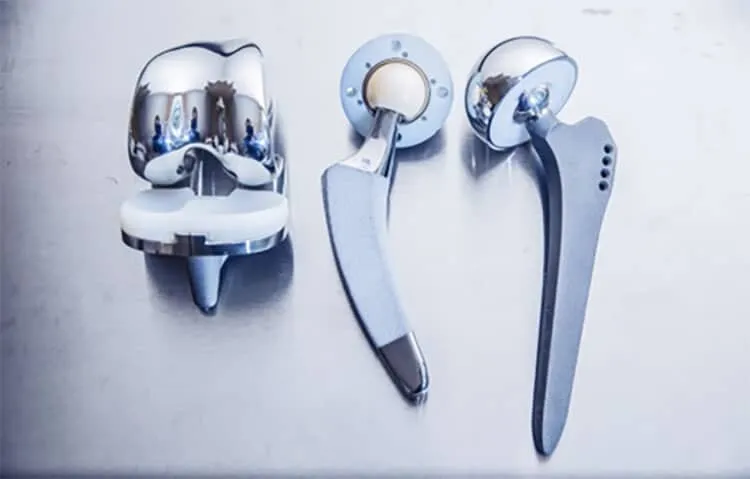
The material selection is crucial to the success of a medical device. When specifying materials for machining medical parts, consider the following factors.
Consideration of Long-Term Body Contact
The materials used for implants and prolonged skin contact should meet the ISO 10993 standards. The most common materials are titanium, PEEK, and medical-grade stainless steel.
Chemical Resistance Assessment
Cleaning agents, sterilants, and bodily fluids are often used to clean medical devices. Chemical resistance is high with PTFE and PEEK.
Ensuring Sterilizability
Materials must be able to withstand chemical, autoclave, and gamma sterilization without degradation. Verify compatibility before specifying.
Radiation Resistance Evaluation
Materials that are resistant to degradation under repeated exposure are required for devices used in radiation environments, such as those used in radiology and cancer treatment.
Artificial Joints & Prosthetics: Suitability
Wear resistance is a critical factor in joint replacement materials. Standard choices for high wear implant surfaces include CoCr alloys (copper-titanium alloys), titanium, and UHMWPE.
Cost Factors in Medical CNC Machining: What Drives Your Part Price?
Medical CNC machining costs a lot, and with good reason. Medical components are more expensive to manufacture because of the precision, traceability, and materials requirements. Understanding the factors that drive cost can help you negotiate better and design more efficiently.
Costs of Materials
Materials of medical grade are more expensive than standard industrial grades. The most expensive materials for machining are titanium (Ti6Al-4V) and medical-grade PEEK. One of the best ways to reduce costs is to specify only as much material as our design requires and to design parts that minimize waste.
Part complexity and Machining time
The more complicated your geometry is, the more expensive it will be. Parts that require 5-axis machining or multiple setups or have tight tolerances on the inside cost more. Simplify features that do not serve a clinical purpose whenever possible. Even small reductions in complexity translate into significant cost savings when used in large quantities.
Surface Finishing and Post-Processing
After machining, many medical parts need secondary operations — anodizing titanium implants or passivating to increase corrosion resistance. These finishing operations are expensive, but they’re often necessary for biocompatibility and regulatory reasons. Do not add them to your budget as an afterthought.
Volume and Economies of Scale
As volume increases, unit costs drop significantly. Setup costs are the most important factor for prototypes and low-volume production. Per-unit costs drop dramatically as you scale up to hundreds or thousands of parts. Discuss volume pricing early with your supplier if you are planning to launch a new product. Also, consider consolidating parts families under one supplier for better pricing.
Quality and Inspection Overhead
Every order is affected by the time and costs of first-article inspections, CMM measurements reports, and complete lot documentation. This overhead is inevitable for regulated medical products, but an organized supplier can provide it quickly. The suppliers with their own inspection capabilities and quality systems are more likely to offer better value than those who rely on third-party inspectors.
What are the Top Tips for Designing CNC-machined Medical Parts?
A good design reduces machining cost and improves the performance of parts. When designing for CNC machining, keep these principles in mind.
Design for Manufacturability
- Avoid adding unnecessary features to your design. Complex designs can increase cost and machining time without adding any clinical value.
- Design for portability — Lightweight designs made of aluminum or PEEK reduce fatigue in clinicians who handle instruments during long procedures.
- Reduce downtime by simplifying maintenance.
Design for Safety and Usability
- Use High-Visibility Colours – Color-coded elements for handheld surgical instruments reduce the risk of user error.
- Sterilization should be easy — Avoid blind-holes and internal cavities which trap contaminants and make it difficult to sterilize.
- Include User-Friendly Features – Ergonomic grips and clear markings reduce the need for training and improve patient safety.
- Prioritize durability in high-wear areas — Specify hard coatings or wear-resistant material for surfaces that are exposed to repeated usage.
Quality Standards in Medical CNC Machining and Compliance with Regulatory Standards
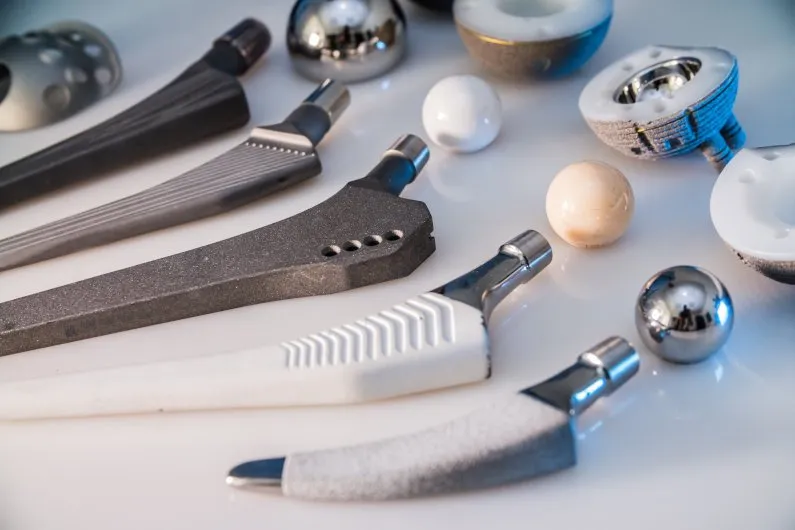
Regulatory compliance is universal across players in the medical device field. It is the foundation on which everything else is built. Knowing the regulations that apply to the components you manufacture and how your machining suppliers align with them is a critical element in your procurement strategy.
ISO 13485 – The Medical Device Quality Standard
Every manufacturer acknowledges ISO 13485. It is the international standard for quality management systems in medical devices. The standard addresses all components of the design and development phase, supplier control, and post-sale monitoring. When benchmarking CNC machining providers, ISO 13485 should be considered a prerequisite. This certification represents that the supplier has defined and documented processes and shows a culture of quality within the measurement system in every production lot.
FDA 21 CFR 820 Design and Production Controls
21 CFR Part 820 (Quality System Regulation) is the FDA regulation that governs most of the design, regulation, and quality control for medical devices before they are commercialized in the US. It is applicable. It is applicable.
Traceability Documentation
Traceability is essential in medical manufacturing. Each component should show the source of raw materials, how it was machined, and what inspections took place. A good supplier will provide certifications and traceability in the supply chain. This will help you answer regulatory and audit questions.
Contamination Control and Cleanroom Management
Some medical devices, such as Class III or implantables, require finishing or machining to be done in clean environments. It is important to check that your supplier follows cleanroom procedures, as well as contamination controls and cleanroom packaging.
How Do You Find the Best Medical CNC Machining Suppliers?
The design of medical equipment is just as important as any other aspect. A certified and experienced supplier will ease your operations and ensure that all regulatory and risk requirements are met.
ISO 13485 and 9001 Certified
The ISO 13485 certificate signifies that your supplier is committed to quality management and reflects their process reliability. It is important to check that your supplier also has ISO 9001.
Experienced Medical Device Machining
Medical device suppliers who are experienced in machining have a zero-defect attitude. They also understand regulatory requirements and material traceability.
Strict Quality Control System
Suppliers with in-house CMM and FAI inspections, as well as full traceability from raw materials to finished components, are the best.
CNC Machining Services
Medical programs that require regulated products are best served by reducing lead times and simplifying communication.
Conclusion
The medical industry continues to rely on CNC machining as a reliable and flexible manufacturing technique. The technology is used to produce large-scale surgical instruments and implants that are tailored. It is important to choose a CNC machining partner who is certified and competent. It is important to consider the supplier’s certifications, inspection capability, and experience in medical device machining.
Are you ready to start your medical device project? Prolean MFG offers ISO 13485-aligned medical-grade CNC machining, postoperative precision, and a full range of services, including surface finishing, quality documentation, and more. Contact us for a quote today!