
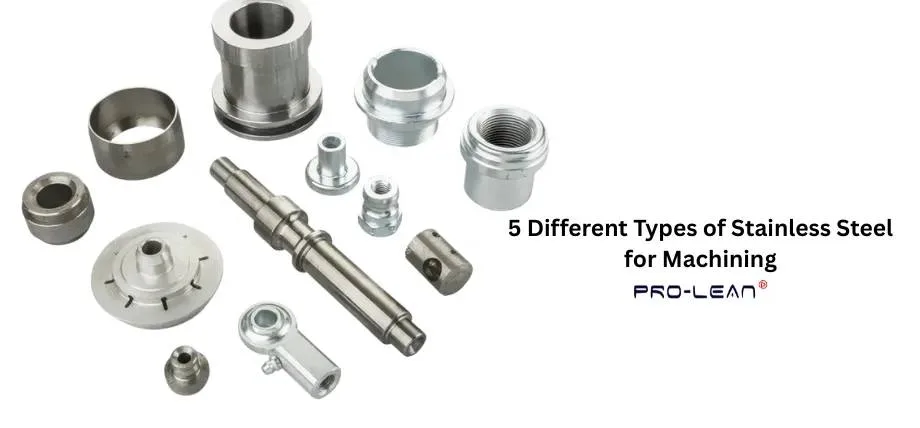

Stainless steel is an iron alloy that contains a specified amount of chromium, usually 10.5% by weight. Chromium is essential to making steel stainless because it helps form a non-reactive oxide layer that makes the alloy corrosion-resistant. Other alloying elements, such as molybdenum, nickel, and carbon, are added as needed and for specific applications. Stainless steel has excellent durability, corrosion resistance, and tensile strength.
These properties make stainless steel one of the most widely used materials in manufacturing. Common industries include the automobile and aerospace industries. Stainless steel has excellent machining properties, such as strength and durability, making it ideal for processes such as CNC milling, threading, and turning. Because of these benefits, it is important to select the right grade for machining stainless steel from the list.
Stainless Steel Families Explained
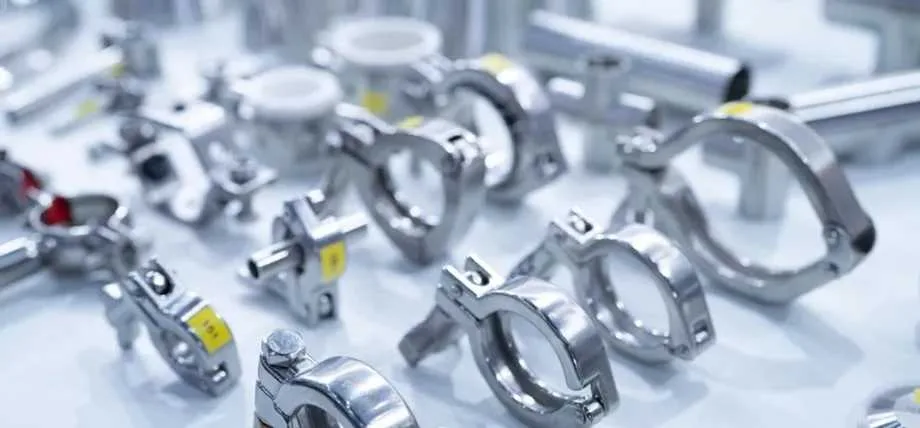
Stainless steel pipe fittings
There are 5 distinct stainless steel families, categorised by their microstructure and heat-treatment response. Different types of stainless steel materials have different properties, especially machine behaviour and characteristics. This is why you need to select the appropriate steel family that aligns with your applications. Improper selection can lead to excessive tool wear, poor performance, and component failure. Stainless steel is categorised into 5 main families listed below:
- Austenitic stainless steels are the most widely used, accounting for about 70% of global stainless steel production.
- Ferritic stainless steels: Ferritic steels are chromium-based steels that have magnetic properties. They are one of the most cost-effective options for stainless steel.
- Martensitic stainless steels can be hardened by heat treatment and offer high strength and wear resistance.
- Duplex stainless steels combine ferritic and austenitic structures for improved strength and corrosion resistance.
- Precipitation hardening (PH): these stainless steels can achieve high strength through specialised heat treatments, which makes them unique for high-stress applications.
Austenitic Stainless Steel: Most Common Type for Machining
Austenitic stainless steel is the most widely used and produced stainless steel grade globally. Austenitic steels are non-magnetic in their annealed state but can develop slight magnetism when cold-worked. They are regarded as the best stainless steel grades due to their versatility.
It is common to draw comparison between this steel family, like 304 vs 316L stainless steel because these two grades dominate industrial steel manufacturing. Similarly, the difference between 316 and 316L stainless steel is also crucial to consider; 316L contains less amount of carbon than grade 316.
Austenitic grades cannot be hardened by heat treatment and are used only in their annealed or cold-worked states. This family of stainless steel has excellent formability, corrosion resistance, good weldability, and ductility. These properties are highly functional for food processing, medical devices, chemical plants, and architectural applications.
Machinability Challenges: Work Hardening
Work hardening is the main challenge in machining authentic steels. They have a strong tendency to work hard during cutting because the cutting tool passes through the material, plastically deforming the underlying metal layer and increasing the hardness of the next layer. This increased hardness requires greater cutting force, which in turn induces greater tool wear.
Grade 303: Best for Machinability
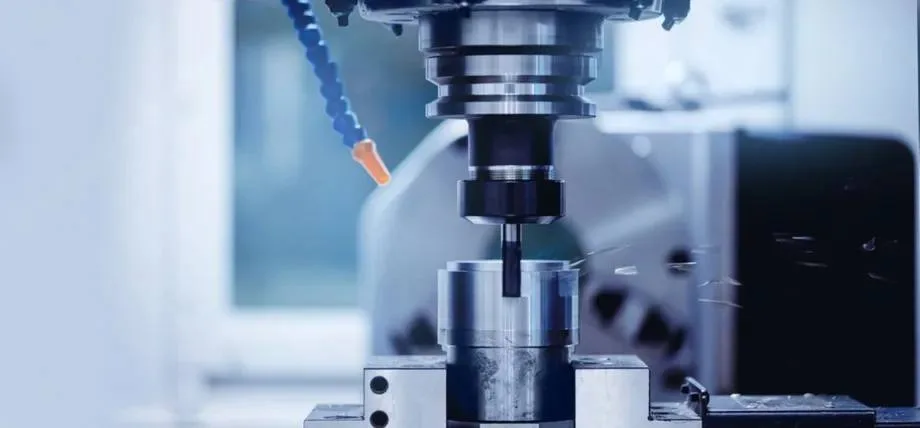
CNC machining 303 steel
Grade 303 is the most suitable for machining because of its excellent chip-breaking, which helps reduce cutting forces and minimise built-up edges. The short chips are caused by sulphur and selenium, which are inclusions in the metal that help initiate chip formation.
Although inclusion improves machinability, it also reduces corrosion resistance, limiting the use of 303-grade stainless to non-chloride-rich, mild environments.
Grade 304: The Industry Workhorse
Grade 304 stainless steel is also a primary stainless steel grade that is produced globally. It pairs great corrosion resistance with excellent formability, providing strong mechanical properties for most industrial applications. Its machinability may not be as good as that of 303 stainless steel, but it produces excellent results when the right parameters and tooling are used.
Grade 316: Superior Corrosion Resistance
316-grade stainless steel offers better resistance to pitting and crevice corrosion. Especially in chloride environments such as seawater and chemical processing plants. 316 stainless steel is harder to machine than 304 due to its higher alloy content, especially the addition of molybdenum, which improves corrosion resistance in chloride rich environments. The higher alloy content requires higher cutting forces and can create built-up edges.
This grade is mainly used in marine hardware and chemical processing due to its excellent performance in high-corrosion environments.s
Grade 321: Heat-Resistant Option
Grade 321 uses titanium as an alloying element, which helps stabilise the material. Titanium preferentially bonds with carbon and prevents the formation of chromium carbides when exposed to high heat, such as during welding. This makes grade 321 stainless steel a stable material for high-heat exposure applications, able to withstand temperatures up to 900 °C with ease.
Applications
Austenitic grades (303, 304, 316, 321) dominate food processing machinery, medical instruments, pharmaceutical equipment, chemical process vessels, marine fittings, and architectural applications.
Grade 303 has added sulphur, which makes it easier to cut and drill without gumming up the tools. This makes it a great choice for high-volume CNC turning, such as making nuts and bolts and Swiss-type lathe work to make CNC-machined parts, because of its excellent machinability.
Grade 316 has a higher alloy content with the special addition of molybdenum, which is great at resisting pitting caused by salt and chlorides. It is mainly used wherever chloride corrosion is a risk. It is the most corrosion-resistant grade, making it ideal for marine applications.
Grade 321 is used in high-temperature environments in aerospace and power generation applications. The addition of titanium improves its ability to withstand prolonged exposure to high temperatures.
Ferritic Stainless Steel: Affordable, Magnetic
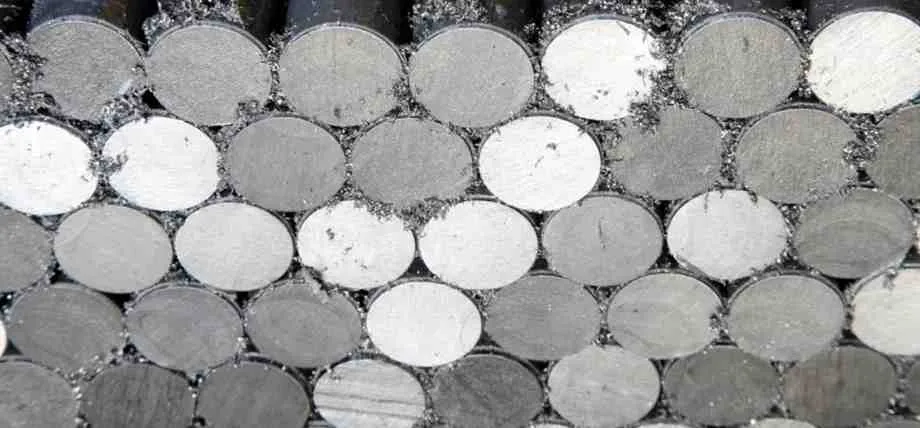
Ferritic stainless steel bars
Machinability of Ferritic Stainless Steel
Ferritic grade stainless steels have better machinability than austenitic grades because they are less prone to work hardening. The chip formation is short and brittle, reducing cutting force and the formation of built-up edges.
Grade 430: General Purpose
Grade 430 ferritic stainless steel is the most common ferritic steel grade. Its corrosion resistance is good for moderately corrosive environments. It is more cost-effective than 304 stainless stee which make sit standard industry choice for application suchas appliance and automotive trim.
Its machinability is better than that of 304 stainless steel, which means better and more effective machining with less cutting forces and lower cost.
Grade 430F Best for Machinability
430F has the highest machinability among the ferritic steels. The addition of sulphur improves its machinability. It is mainly used for automotive screws and machine parts, nuts, bolts, and fittings, where corrosion resistance requirements aren’t a big concern.
Grade 409: Low-Cost Exhaust Option
Gade 409 is the most cost-effective and cheapest option for manufacturing. This is due to its low chromium content. It is great at withstanding cyclic heating and often tailored for the car exhaust system, which requires it to withstand repeated cyclic heating and mild corrosion.
Grade 444: Enhanced Corrosion Resistance
This 444 grade stainless steel has the highest chromium content, which makes it more corrosion resistant than 316 stainless steel. The carbon and nitrogen content in the alloy is minimal, which supports excellent weldability for a ferritic grade because it is resistant to cracks near welding.
Typical Applications
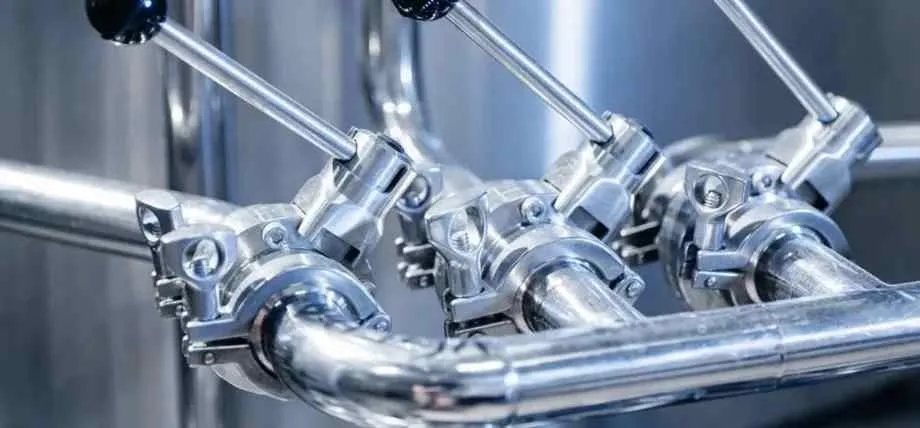
Industrial stainless steel piping
Grade 430: It is used in Automotive trim, dishwasher liners, and kitchen appliances due to its excellent machinability.
Grade 430F is used to make parts such as bolts, fittings, and solenoid valve components that require good machinability and moderate corrosion resistance.
Grade 409: The main use of this grade revolves around automotive exhaust systems, catalytic converters, and mufflers, used because of their thermal loading capabilities.
Grade 444: The grade is excellent for heat applications due to its high corrosion resistance and excellent thermal conductivity, and for water heater tanks.
Martensitic Stainless Steel: High Strength and Hardness
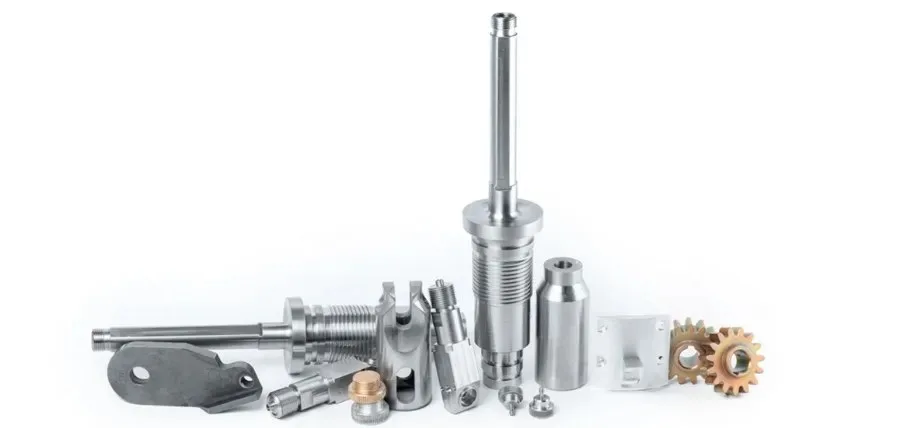
Martensitic industrial components
What Makes Martensitic Grades Unique?
Martensitic stainless steels are distinguished by their ability to be hardened through heat treatment. Theircheomiun content is lower than the asutentitic grade, which reduces the corrosion resistance. These grades are magnetic in all conditions and have lower corrosion resistance than austenitic or duplex grades.
Machinability of Martensitic Grades
The machinability of the martensitic grade depends on the heat treatment conditions. Annealed martensitic steel has a similar machinability to low-carbon alloys. In hardened and annealed conditions, the material’s machinability decreases.
Grade 410
The 410 martensitic stainless steel has the most well-rounded properties. It has good strength and moderate corrosion resistance. Annealed 410 steel has good machinability and is generally used for making mechanical parts
Grade 416: Best for Machinability
416 stainless steel has the highest machinability among ferritic steels due to its sulphur inclusion. It is about 85% as machinable as base-free machining carbon steel. Its high machinability makes it the preferred material for high-volume production.
Grade 420: High Hardness Option
Grade 4230 has a high carbon content, which increases its hardness. Its hardness can range up to 55 HRC at full hardness. It is only machinable in its annealed state because in its initial hardened state, machining isn’t feasible. Hardened 420 can only be processed through grinding or EDM machining.
Grade 440 : Maximum Hardness
This grade of stainless steel is unique because it has the highest carbon content, which improves its hardness, making it the hardest among commonly used steels. It is the standard option for making high-stress components such as bearings. It is machinable in its annealed state since hardened steel is difficult to process.
Applications
Garde 410/416: it has high strength and modern corrosion resistance, which makes it suitable for valve components and turbines.
Grade 420: It has a higher carbon content, which allows for higher hardness after heat treatment. This makes it suitable for cutlery and surgical instruments.
Grade 440: With high hardness, it offers excellent wear resistance, making it a strong option for high-performance parts such as roller bearings and industrial nozzles.
Duplex Stainless Steel: Balanced Strength and Corrosion Resistance
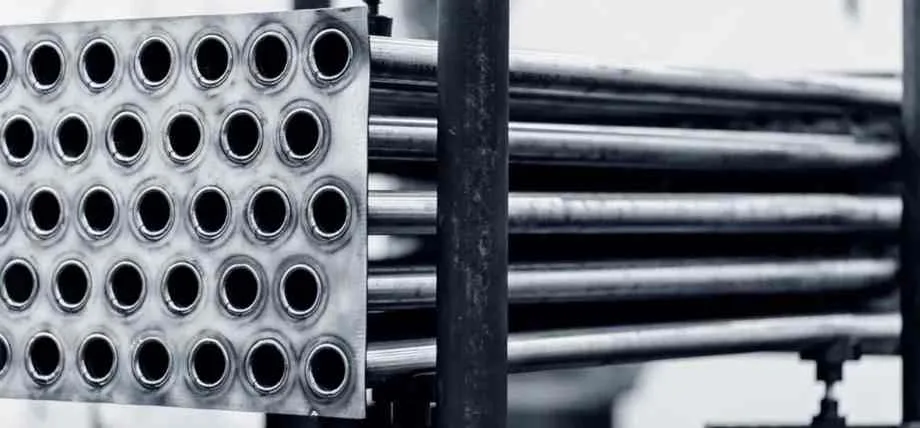
Duplex steel tube assembly
Duplex stainless steel is a mix of austenite and ferrite. This unique combination gives it enhanced properties when compared to standard stainless steels. It has twice the yield strength and is more resistant to corrosion cracking.
Machinability of Duplex Grades
Duplex stainless steel is one of the most difficult steel alloys to machine due to its mixed microstructure. The austenitic portion of the material makes work hardening problematic, while the ferritic portion can lead to smearing at low cutting speeds. It requires rigid setups and high-pressure coolant, along with high feed rates, to efficiently machine. The cutting speed of double grades is lower than that of 304 steel.
Grade 2205 : Most Common Duplex Grade
Grade 2205 is the most commonly used duplex steel grade in the industry and is the standard reference grade for duplex steels. It has excellent pittance resistance and is available in standardised forms such as bars, plates, and rods, making it ideal for CNC machining.
Grade 2304 : Lean Duplex, Cost-Effective
This grade of duplex steel is cheaper and more cost-effective than 2205 because it has less molybdenum and nickel. The strength og 2304 is still significantly higher than that of 302 stainless steel. It is typically used in storage tanks and structural components that require material with good resistance to stress-corrosion cracking.
Grade 2507 : Super Duplex
Garde 2507 is a special type of duplex steel that contains the highest chromium content, making it exceptionally corrosion-resistant. It has a low work-hardening rate and excellent stability at high temperatures. It is typically less ductile than austenitic steels.
Applications
Grade 2205: is suitable for pressure vessels and heat exchanger systems because of its high strength and great stress corrosion crack resistance
Grade 2304: A cost-effective option for making structural components and other various equipment. It has moderate corrosion resistance strength.
Grade 2507: It is the most corrosion-resistant grade among the duplex steels. It is used underwater and in marine applications due to its high performance in chloride-rich environments.
Precipitation Hardening Stainless Steel : Aerospace-Grade Strength
What Is Precipitation Hardening?
Precipitation hardening is a two-step heat treatment process that improves the hardness of stainless steels. The first step is solution annealing, which dissolves the alloying elements into a solid solution. The second step is to age the steel at a lower temperature, which causes precipitate formation within the microstructure.
This increases the tensile strength to 1300 MPa and the hardness to 30-44 HRC in the material. The material has excellent corrosion resistance, and in its pre-aged state, it can be machined to final dimensions, which is ideal for manufacturing pressure components.
Machinability of PH Stainless Steel
PH stainless steel is easier to machine in the solution annealed condition because it is softer and more ductile. Hardened states require the use of carbide-coated tools and positive cutting edges. PH stainless steel has specified cutting parameters to achieve extended tool life and better surface integrity under fatigue loads.
Grade 17-4 PH: Most Widely Used
The 17-4 Ph grade is the most common. It can be annealed and processed through a wide range of conditions to achieve different strengths and toughness. It is a preferred option for applications involving structural brackets, valves, and gears.
Grade 15-5 PH: Improved Toughness
The 15-5 grade of PH stainless steel is an improved version of 17-4. It features a more uniform microstructure, the highest transverse toughness, and improved ductility. It is mainly used in aerospace components.
Applications
17-4 PH: This grade is mainly used for components that need high strength and good corrosion resistance at high temperatures. Aerospace parts and components, such as valves, gears, and turbine blades, are made using this steel grade
15-5 PH: it has better strength and mechanical properties than 17-4, and is mainly used in landing gear components and defence applications.
How to Choose the Right Stainless Steel Grade for Your Machining Project
Different types of stainless steel materials and grades have varying properties. Selecting the right stainless steel within the different stainless steel families requires you to balance several factors.
Corrosion Resistance Requirements
Corrosion resistance is a primary determining factor that indicates the type of stainless steel best suited to the task. In moderate corrosive environments, basic austenitic steels, such as 304, work well, but in chloride-rich environments, such as marine applications, grades such as 2025 duplex or 316L are the minimum standard for reliable performance.
Mechanical Properties
Parts and components that work under high stress and pressure must have good mechanical properties for reliable performance. Standard austenitic grades aren’t suitable for Applications that require 500+MPa. Duplex grades such as 2205 and 1507 are better suited for these applications. Precipitation-hardened grades such as 17-4 and 15-5 are used in applications that require a yield strength over 1000 MPa.
Heat Treatment Requirements
Parts and components that require heat treatment have to be made from martensitic or PH grades. Martensitic grades can be quench-hardened and tempered. PH grades involve heat treatments as part of their manufacturing process.
Machinability Considerations
Free-machining grades such as austenitic 303, ferritic 430F, and martensitic 416 have excellent machinability. This makes them great for high-volume productions. Moderate production can be done with grades such as 304, 410, and 430. Materials such as duplex and precipitation-hardened steels require specialized carbide-coated tools and carefully selected processing parameters for efficient processing.
Carbon Content
Carbon alters various properties of steel, including hardness, weld sensitization, and machinability. Low-carbon steels are generally used when welding is included in the manufacturing process. Higher carbon grades, such as 420 and 440C, are used for applications requiring maximum hardness. Most components that don’t involve welding use 304 and 316 grade steels. Some low-carbon steel variants, like 904L and 306L stainless steel, can reduce carbide precipitation during welding.
Conclusion
Choosing the right stainless steel grade is a question that you should answer by first looking at your project requirements and matching it with the steel grade with the best performance, cost efficiency, and manufacturability. All the steel families above have unique advantages, from machinability, corrosion resistance, to cost efficiency during machining.
Working with an experienced machining company is important to find workarounds to common machining challenges and to reduce your costs even when machining difficult stainless steel grades.