

In sheet metal work, the term “gauge” describes a thickness designation; actual thickness depends on the material and the gauge standard. For example, “18 gauge steel” refers to a specific thickness. For those unfamiliar with the system, it can be confusing. Using a sheet metal gauge chart makes it easy to select the right material and ensures your parts meet sheet metal design and performance requirements.
The gauge system is not linear. Thicker or thinner metals don’t change by the same amount with each gauge number. It is based on standard numbers that relate sheet metal thickness to its weight per square foot, providing a practical way to measure and compare sheet metal.
By the end of this article, you’ll understand the gauge system, how to read gauge charts, and how to apply this knowledge to select materials for reliable, fit-for-purpose sheet metal components.
How Sheet Metal Gauges Are Used?
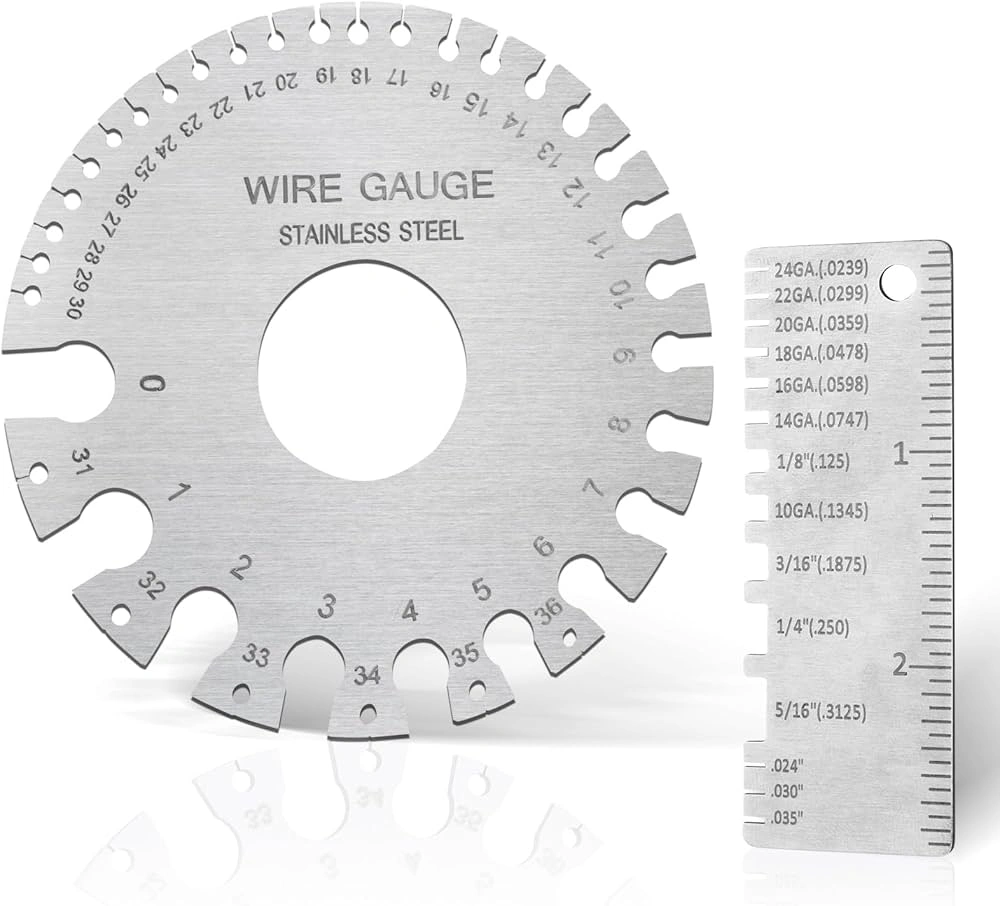
Sheet metal gauges are a method of describing the thickness of parts and products in precision sheet metal fabrication; however, the numbers associated with gauges do not correspond directly to standard or metric measurements.
A gauge conversion chart is used to convert from gauges to actual thickness in inches or millimetres. The thickness of 18-gauge steel is .0478 inches (1.214mm), and 18-gauge aluminum is .0403 inches (1.024mm). The above example illustrates that a single gauge number may represent different thicknesses depending on the type of metal.
As such, it is recommended to use a gauge conversion chart when selecting a sheet metal product to ensure the material meets the required dimensional specifications and performance requirements of your project.
Types of Calipers and Gauges for Measuring Sheet Metal
The measurement of sheet metal parts is critical to the successful completion of many fabrication operations, and calipers are widely used to measure various aspects of sheet metal parts, including internal diameter, external width, and length. There are numerous types of calipers and gauges available for use in fabricating sheet metal products, and each has its own unique applications for measuring the required dimensions of the sheet metal part:
Vernier Caliper
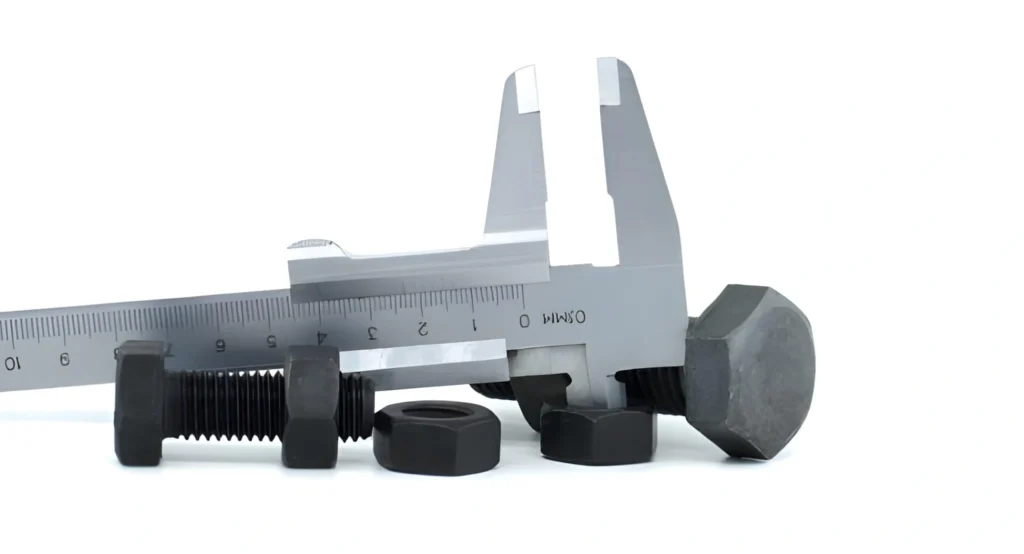
Vernier calipers are designed to measure various dimensions, such as outer and inner diameters, steps, and depth. The precision offered by vernier calipers is typically ±0.02 mm (±0.001 inch).
Dial Caliper

Similar to vernier calipers, dial calipers provide precision measurements; however, instead of a vernier scale, they use a circular dial to indicate the measurement in metric or imperial units.
Digital Caliper
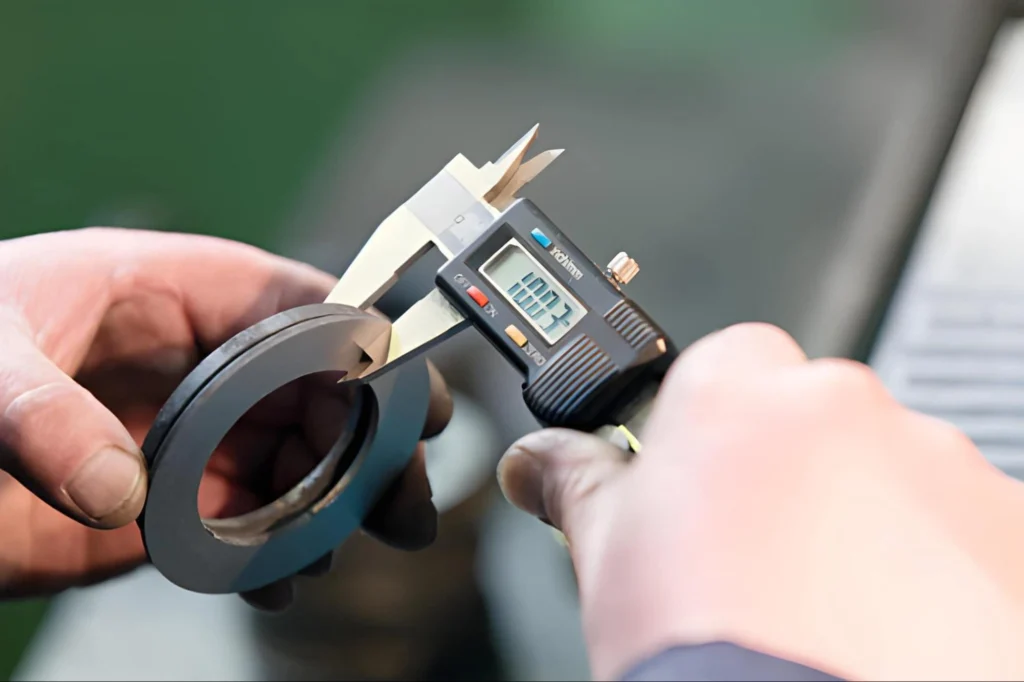
Using linear encoders to measure internal and external dimensions, digital calipers can quickly and accurately take measurements. These can quickly switch between metric and imperial units, which significantly facilitates measurements in a wide range of fabrication environments.
Ultrasonic Thickness Gauge

An ultrasonic thickness gauge uses sound waves to measure the thickness of a material. A small probe sends a sound wave into the material, and the time it takes to travel through the material and return is measured to determine the material’s thickness.
However, because different materials have varying transmission speeds and environmental conditions, such as temperature, can affect readings, the gauge must be calibrated specifically for the type of material being measured to obtain accurate results.
Limits of Sheet Metal Gauges
Sheet metal must be neither too thin nor too thick to be used effectively. In manufacturing industries, 0.3 mm is often referred to as sheet, and 6 mm and above are often used for sheet metal cutting/bending (depending on the process and application). Understanding this range will help you determine if your sheet metal can be successfully formed into the desired shape.
Why Gauges Are Different for Each Metal?
Because metals differ in density, a specific gauge can correspond to different thicknesses for different types of metal. To accurately measure sheet metal thickness, a gauge chart should be used.
What Defines Sheet Metal Thickness?
Sheet metal thickness is commonly categorized based on the relative thinness or thickness of the material rather than fixed numerical values. These values may vary based on regional or industry standards.
Sheet Metal Gauge Reference
This table shows the thicknesses of various sheet metals, including steel, aluminum, copper, brass, stainless steel, zinc, and galvanized steel, according to the US Standard Gauge system. It combines all the standard gauges in one place so you can quickly check and pick the right thickness for your project.
Sheet Metal Gauge Table:
| Gauge | Carbon/Steel (mm) | Galvanized Steel (mm) | Stainless Steel (mm) | Aluminum 6061 (mm) | Copper (mm) | Brass (mm) | Zinc (mm) |
| 3 | 6.07 | – | – | – | – | – | 0.152 |
| 4 | 5.69 | – | 5.954 | – | – | – | 0.203 |
| 5 | 5.31 | – | 5.555 | – | – | – | 0.254 |
| 6 | 4.94 | – | 5.159 | 4.115 | – | – | 0.305 |
| 7 | 4.55 | 4.270 | 4.763 | 3.665 | 4.572 | 3.665 | 0.356 |
| 8 | 4.18 | 3.891 | 4.366 | 3.264 | 4.191 | 3.264 | 0.406 |
| 9 | 3.80 | 3.510 | 3.967 | 2.906 | 3.759 | 2.906 | 0.457 |
| 10 | 3.42 | 3.132 | 3.571 | 2.588 | 3.404 | 2.588 | 0.508 |
| 11 | 3.04 | 2.753 | 3.175 | 2.304 | 3.048 | 2.305 | 0.610 |
| 12 | 2.66 | 2.372 | 2.779 | 2.052 | 2.769 | 2.053 | 0.711 |
| 13 | 2.28 | – | 2.380 | 1.829 | – | – | 0.813 |
| 14 | 1.90 | 1.994 | 1.984 | 1.628 | 2.108 | 1.628 | 0.914 |
| 15 | 1.71 | 1.803 | 1.786 | 1.450 | – | – | 1.016 |
| 16 | 1.52 | 1.613 | 1.588 | 1.290 | 1.651 | 1.291 | 1.143 |
| 17 | 1.37 | 1.461 | 1.427 | 1.151 | – | – | 1.270 |
| 18 | 1.21 | 1.311 | 1.270 | 1.024 | 1.245 | 1.024 | 1.397 |
| 19 | 1.06 | 1.158 | 1.110 | 0.912 | – | – | 1.524 |
| 20 | 0.91 | 1.006 | 0.953 | 0.813 | 0.889 | 0.812 | 1.778 |
| 21 | 0.84 | 0.930 | 0.874 | 0.724 | – | – | 2.032 |
| 22 | 0.76 | 0.853 | 0.792 | 0.643 | 0.711 | 0.644 | 2.286 |
| 23 | 0.68 | 0.777 | 0.714 | 0.574 | – | – | 2.540 |
| 24 | 0.61 | 0.701 | 0.635 | 0.511 | 0.559 | 0.511 | 3.175 |
| 25 | 0.53 | 0.627 | 0.556 | – | – | – | 6.350 |
| 26 | 0.45 | 0.551 | 0.475 | 0.404 | 0.457 | 0.405 | 9.525 |
| 27 | 0.42 | 0.513 | 0.437 | 0.361 | – | – | 12.700 |
| 28 | 0.38 | 0.475 | 0.396 | 0.320 | 0.356 | 0.321 | 25.400 |
| 29 | 0.34 | 0.437 | 0.358 | 0.287 | – | – | – |
| 30 | 0.30 | 0.399 | 0.318 | 0.254 | 0.305 | 0.255 | – |
| 31 | 0.27 | 0.361 | 0.277 | – | – | – | – |
| 32 | 0.25 | 0.340 | 0.259 | – | – | – | – |
| 33 | 0.23 | – | 0.239 | – | – | – | – |
| 34 | 0.21 | – | 0.218 | – | – | – | – |
| 35 | 0.19 | – | 0.198 | – | – | – | – |
| 36 | 0.17 | – | 0.178 | – | – | – | – |
| 37 | 0.16 | – | 0.168 | – | – | – | – |
| 38 | 0.15 | – | 0.157 | – | – | – | – |
How to Choose the Right Gauge for Sheet Metal Fabrication?
Regardless of whether you measure with a caliper or an ultrasonic gauge, it is essential to use a gauge conversion chart to confirm the actual thickness in inches or millimeters. The choice of metal type also plays a significant role, particularly whether you are working with ferrous or non-ferrous metals. Moreover, corrosion allowance affects minimum thickness and coating selection.
- Ferrous Metals: Ferrous metals contain iron and are known for their strength and durability. Common examples include carbon steel, engineering steel, cast iron, and wrought iron. These metals are widely used in construction, such as skyscrapers and bridges, as well as in shipping containers, industrial piping, automobiles, and a variety of tools and machinery. Their high tensile strength makes them ideal for applications where structural integrity is critical.
- Non-Ferrous Metals: Non-ferrous metals do not contain iron, making them more resistant to rust and corrosion. Common types include aluminium, copper, lead, zinc, tin, and precious metals like gold and silver. Non-ferrous metals are also malleable, easy to shape, and often non-magnetic, which makes them ideal for external structures, electronic components, and wiring applications.
By considering both the metal type and required gauge, you can ensure that your sheet metal parts are both functional and durable for their intended use.
Summary
Choosing the right sheet metal thickness helps reduce waste and keeps costs under control. Before selecting a gauge, think about the part’s purpose, the type of metal, the working environment, weight requirements, and industry standards. Picking the correct gauge ensures your parts are strong, precise, and fit for their intended use.
Prolean MFG offers cutting, bending, and sheet metal fabrication services for a wide range of metals and thicknesses. We focus on delivering reliable, accurate parts that match your design and performance needs. Reach out today to discuss your project and get a quote.