

As you know, CNC machining is a subtractive manufacturing process, where tools are responsible for shaping the work material. Tool selection directly impacts the machinability, precision, finish, cycle time, and overall quality of machined parts.
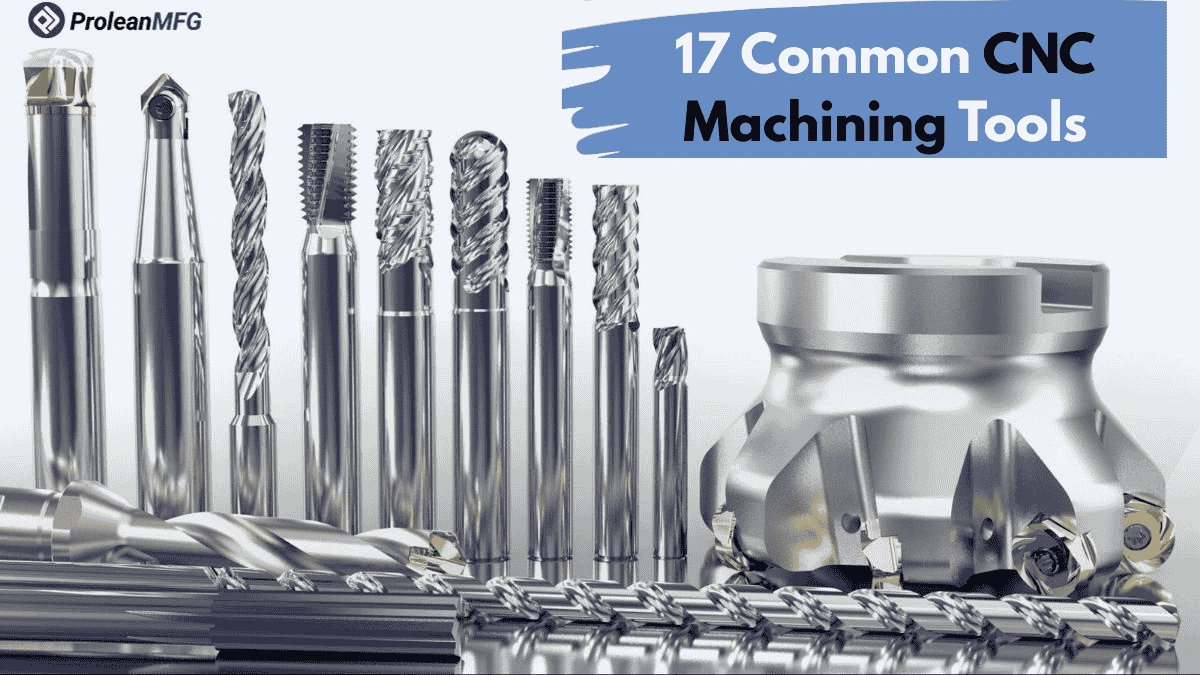
There are numerous CNC machining tools designed for different processes, materials, and features to be machined. End mill, ball-nose cutter, drill bit, external round mill, thread cutter, taps, fly cutter, reamer, and gear cutter are a few to name.
This article will discuss 17 common CNC tools and how you can make the right decision while selecting the tools for your parts.
Let’s get started!
What is meant by a CNC Machining Tool?
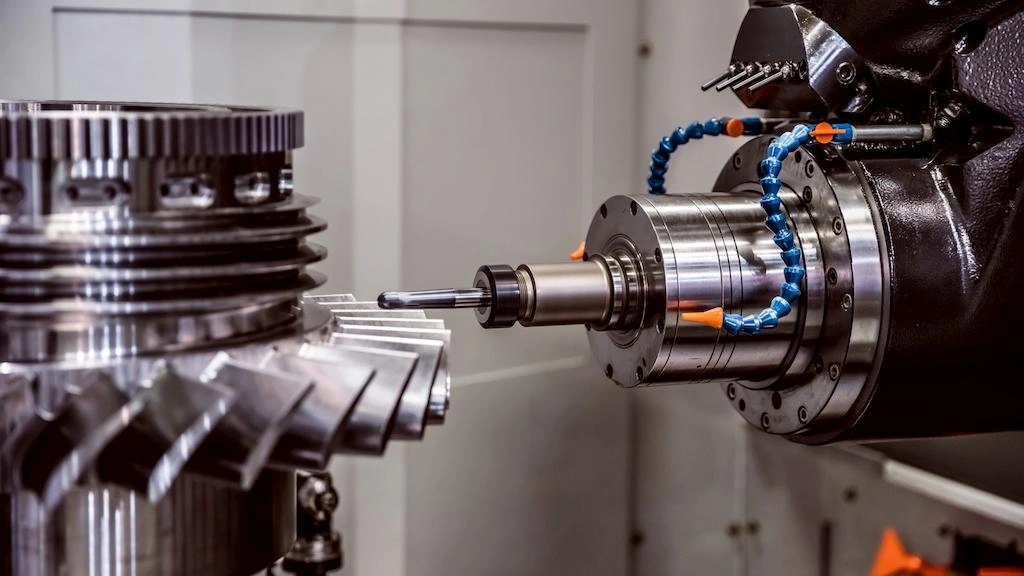
CNC Milling tool
A CNC machining tool is a device that engages with the workpiece and removes material in a controlled manner to obtain the desired shape and features.
Depending on the CNC process they are designed for, tools interact with the material in different ways, such as shear force, heat, or electrical discharges. For instance, milling & turning tools engage the material at one or more points; the EDM tool (electrode) uses electric discharges; and the laser cutter’s beam uses heat.
However, CNC tools mostly refer to cutters that directly contact the work material while shaping it into a specific form.
17 Most Common CNC Machining Tools
There are several types of tooling in CNC, each designed for a specific set of machining tasks. Tools are available with distinct geometries, sizes, and materials, and coating options.
Let’s elaborate on the 17 most common CNC machining tools: End mills, drill bits, face mills, thread mills, reamers, external round mills, countersink mills, thread taps, gear cutters, ball end mills, T-slot cutters, hollow mills, slab mills, fly cutters, side-and-face cutters, dovetail cutters, and knurling tools.
1. End Mills
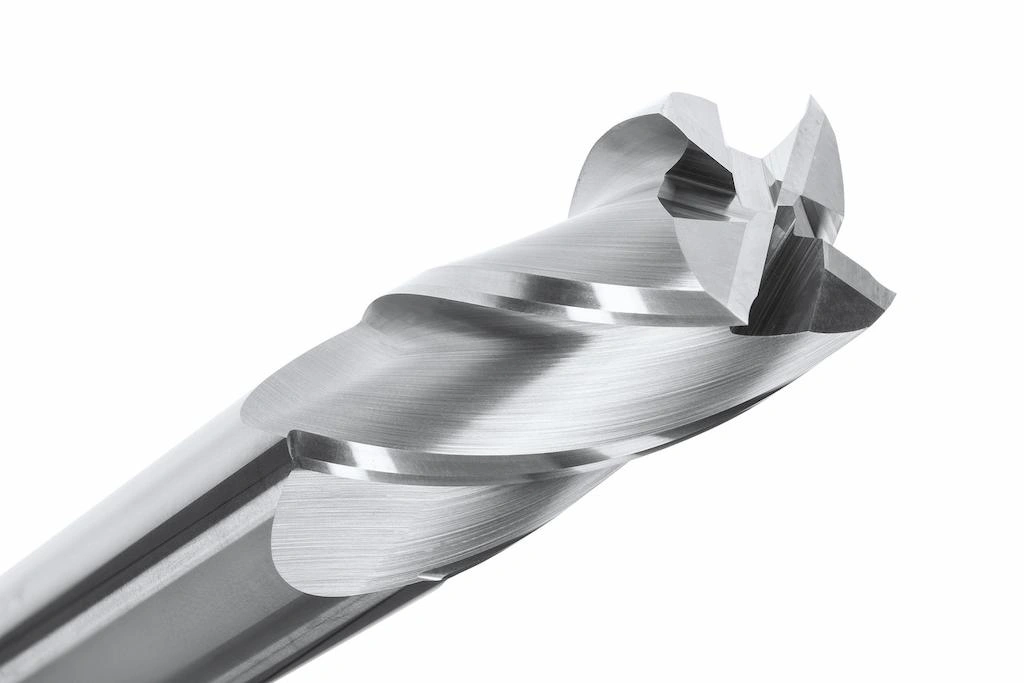
End mill
End mills are the most common CNC milling tools used to create profiles, slots, pockets, contours, etc. Based on the operation or shaping geometry, they can cut the material along multiple directions. Additionally, end mills remove a large amount of material in a single pass.
Moreover, there are different variations of end mills: Flat, roughing, corner radius, and ball nose.
- Roughing End Mill: A specialized variation of the end mill tool that includes heavy cutting edges for rapid removal of bulk materials.
- Ball End Mill: It is characterized by a spherical-shaped cutting end, and is used for 3D contouring & profiling.
- Flat End Mill: Standard end mill, used for common milling operations, such as surface preparation, slots, and smooth edges.
2. Drill Bits
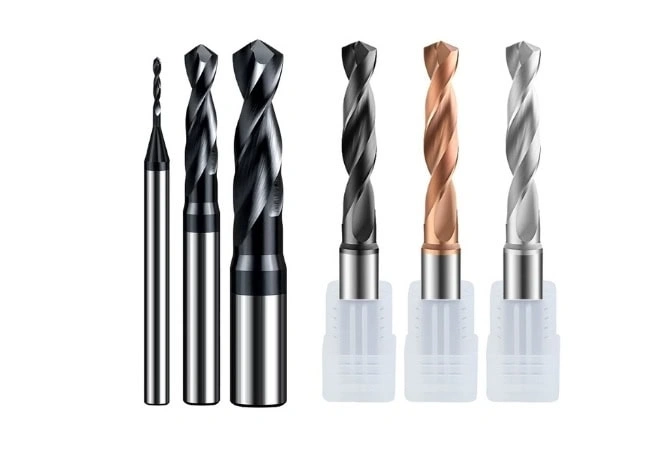
twist drill tools
Drill bits are used to make blind and through holes for fitting, threading, or any specific purpose. The typical geometry involves a long shaft with spirals around it and a conical tip. As the tool rotates, the tip penetrates the surface and enters the material, while the spiral geometry facilitates chip evacuation.
- Twist Drill: A general-purpose drill bit used for quickly making holes.
- Split-point Drill: It is characterised by its self-centring geometry and provides high hole accuracy in dimensions and positioning.
- Ejector Drill: It uses high-pressure coolant via a double-tube mechanism, allowing chips to be removed effectively and deep holes to be drilled.
3. Face Mills
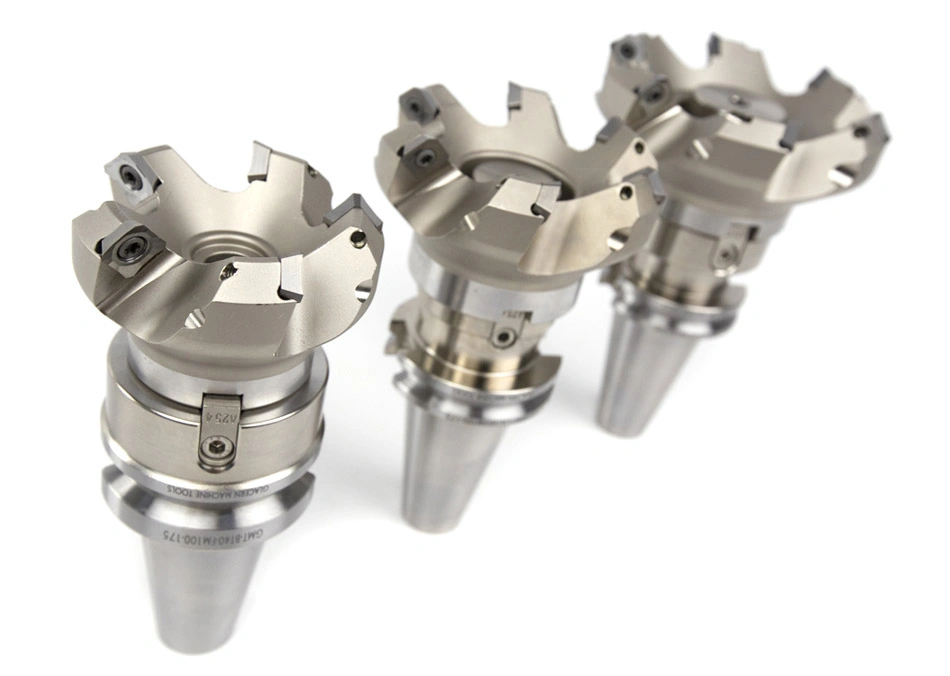
Face mills
Face mills are used for surface roughing and flattening of the workpiece. The cutting edges on the bottom face can remove large chips and create a flat & uniform surface.
Often, face milling is a preparatory step before performing the complex machining operations. Meanwhile, inserts are interchangeable, enabling efficient milling of various CNC machining materials.
4. Thread Milling Cutters
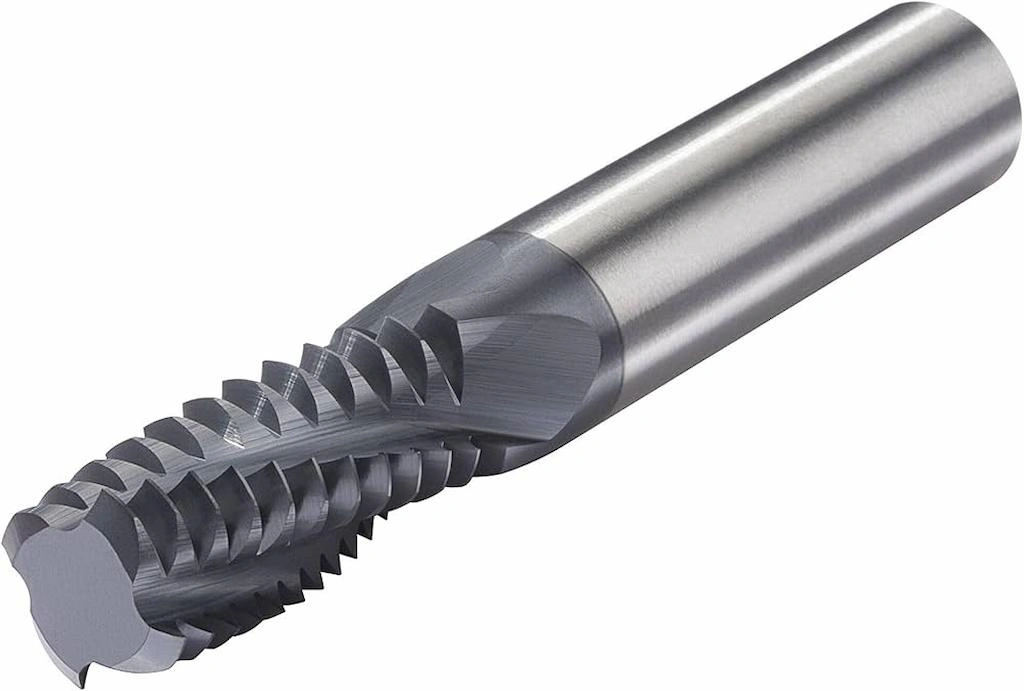
Thread cutter
As the name suggests, thread milling cutters are used to produce helical threads on workpieces, including inside holes or on the exterior surface. They rotate and remove material as multiple cutting edges engage to create threads.
Thread mills are preferred over taps when you need threads on large holes, in hard materials, or for flexibility & speed.
5. Reamers
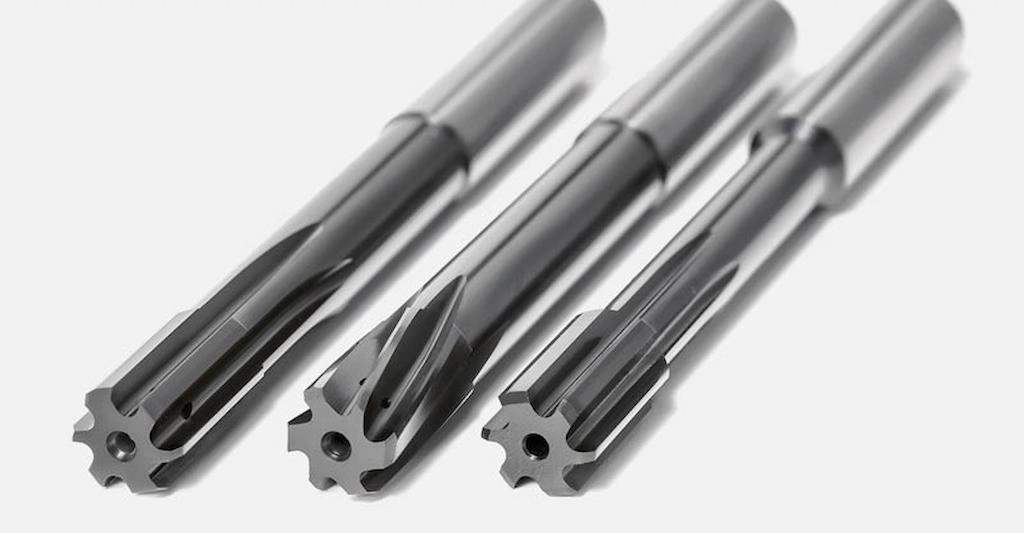
CNC reamers
Reamers are essential tools for improving dimensional accuracy and finishing pre-drilled holes. Their structure features a spiral or straight flute along the body, followed by a leading edge (a chamfer) at the tip.
These CNC machining tools are useful when precise, smooth holes are needed for fittings, fastening, or other applications.
6. External Round Mills
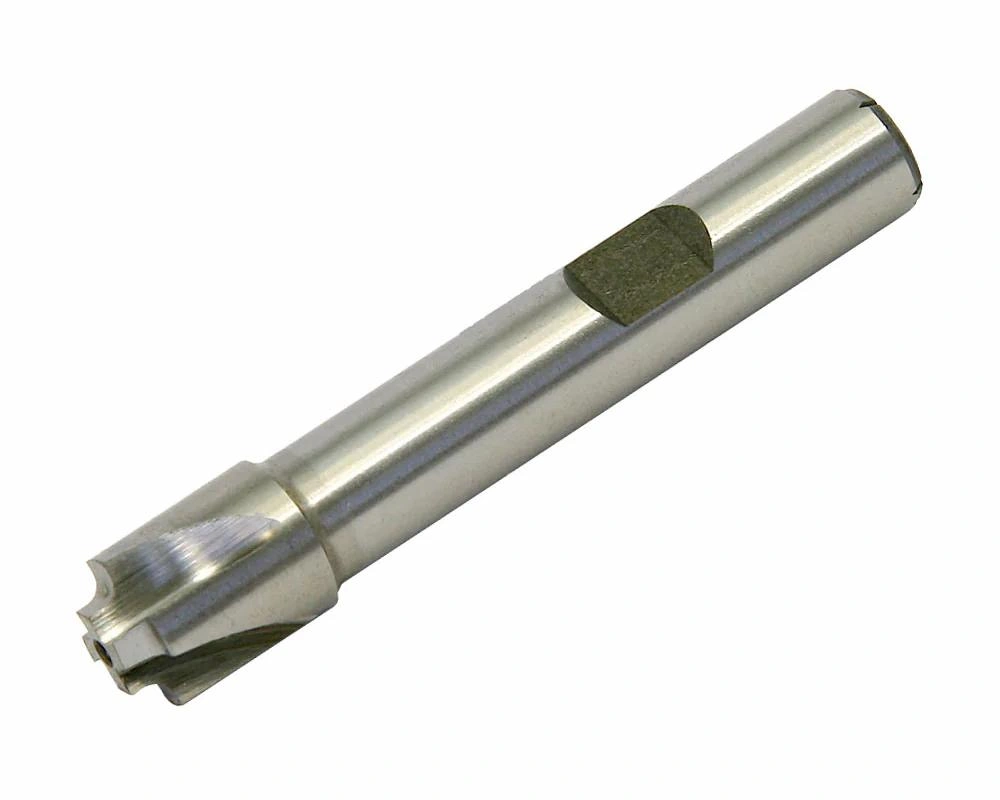
Corner radius end mill
These are CNC milling cutting tools, also known as corner radius mills, which remove material from cylindrical circumferences of the workpiece. External round mills are suitable for creating a precise radius on the outside corners.
7. Countersink Mills
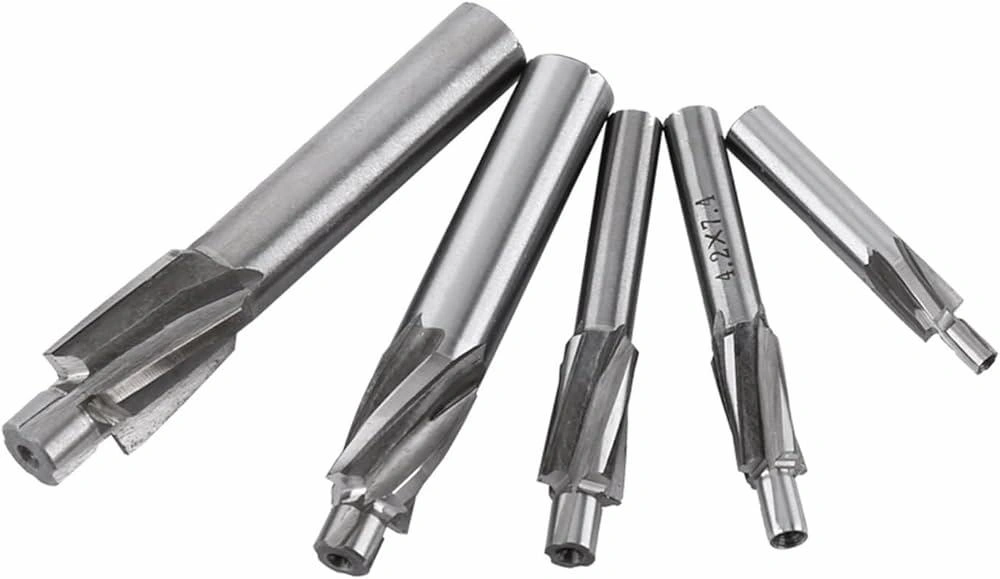
Countersink end mills
These tools create countersink holes to fit the matching fasteners. Meanwhile, 82°, 90°, 100°, and 120° are some common countersink angles.
Consequently, these tapered-end tools are also suitable for edge chamfering.
8. Thread Taps
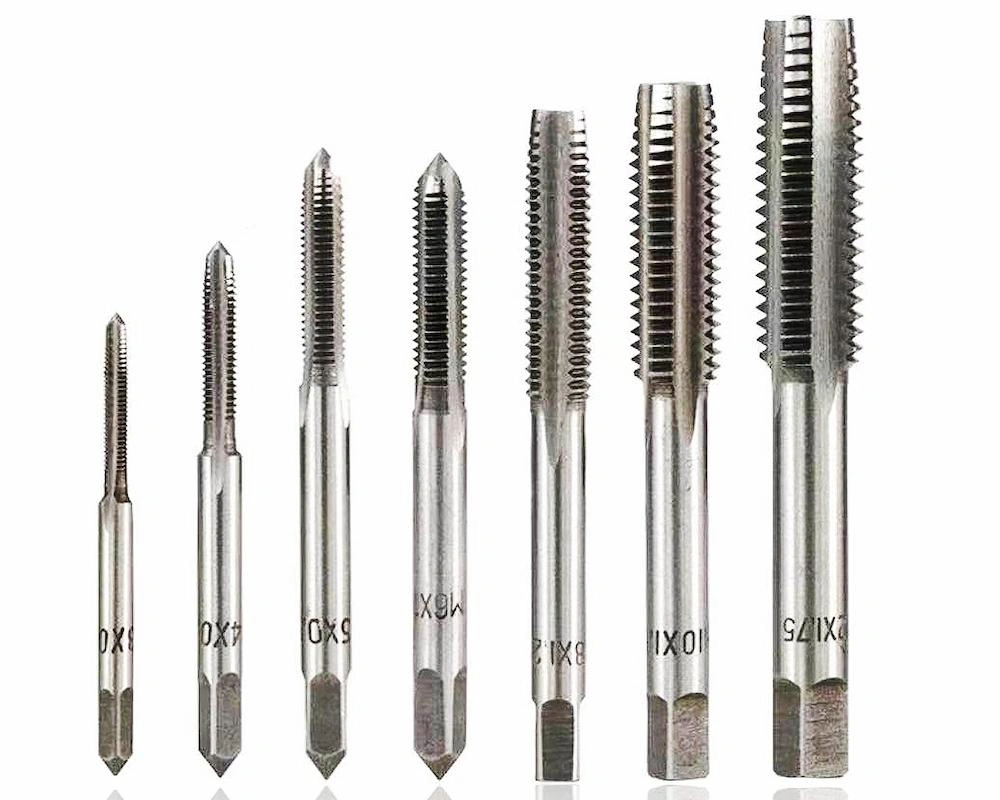
Thread taps
Thread taps are used to create internal threads in pre-drilled holes. They either form or cut the material for threading, whereas the pitch or other variables depend on the size of the tool you have used.
Consequently, hand taps, spiral flute, roll, and piper taps are common variables. These are useful in the fitting & assembly of parts in automotive, electronics, etc.
9. Gear Cutters
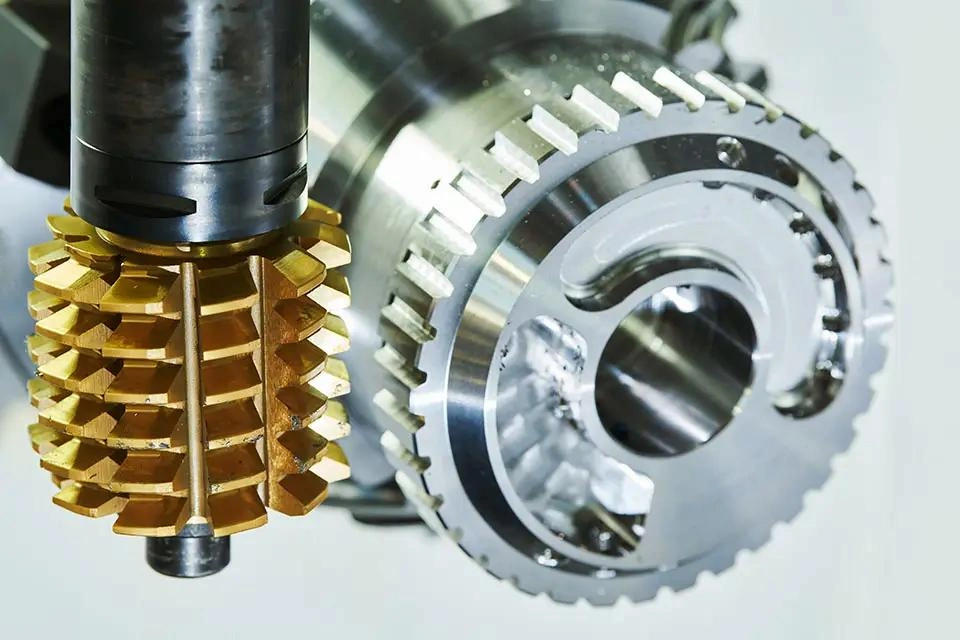
Gear cutter
These CNC tools are used to cut gear profiles with specific shapes and sizes. There are different gear cutters available, based on what type of gear you want to produce.
Specialized gear cutters reduce the need for multiple tools and enhance speed, precision, and finish in gear manufacturing.
10. Ball End Mills
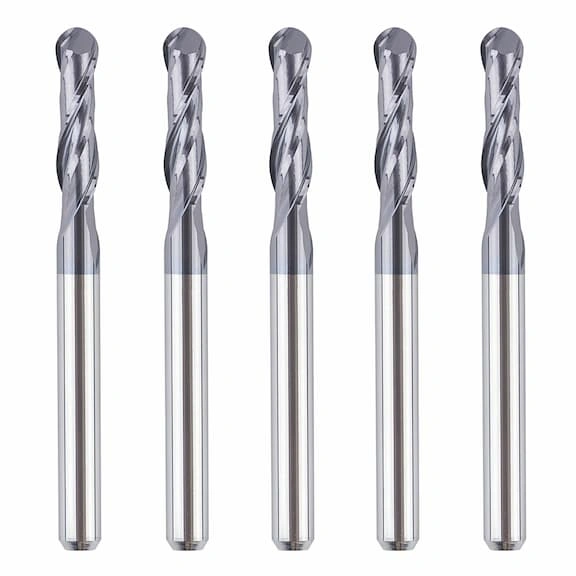
Ball end mill
As the name suggests, “ball end mill” is characterised by its ball-shaped end, which is suitable for cutting complex curvatures and profiles. These types of CNC milling cutting tools are useful for machining molds, dies, fixtures, sculptures, etc.
Furthermore, the variations of ball end mills are: roughing, long reach, tapered, stub length, reduced neck, and micro ball end mill.
11. T-Slot Cutters
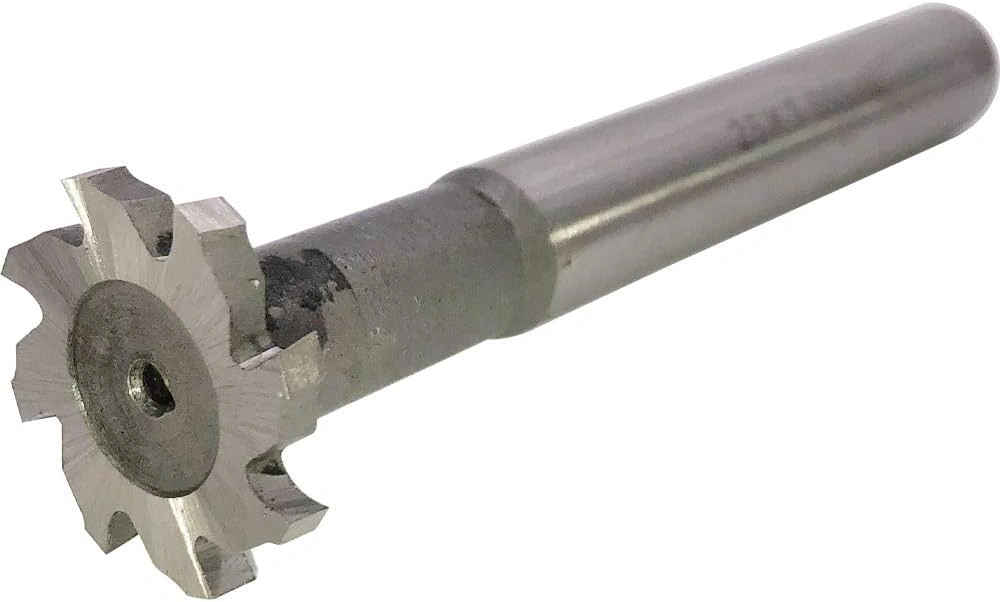
T slot cutter
T-shaped mills, or T-slot cutters, are specialized machining tools designed to cut precise T-slots in CNC materials. This tool includes cutting edges on the head. Consequently, T-shaped mills are essential for creating slots in fixtures, auto assembly parts, structural members, etc., in a single pass.
12. Hollow Mills
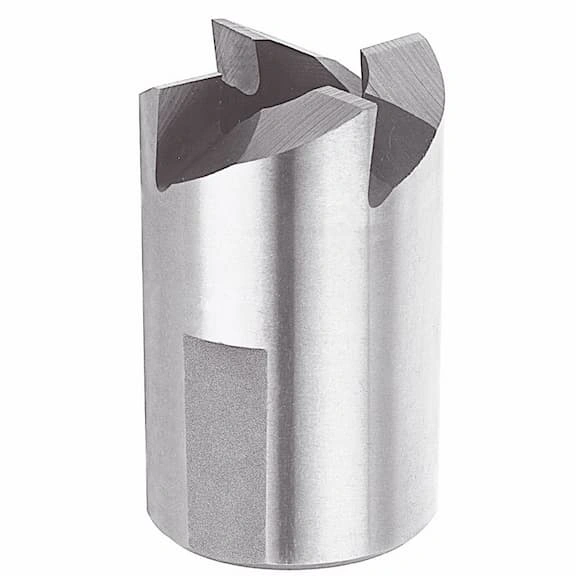
Hollow mill cutter
It is a cylindrical cutting tool designed to shape the outer diameter of the barstock. The internal cutting edges remove the material from outer surface as the tool rotates around the work. You can choose a hollow mill for diameter uniformity, stud & shoulder making, finishing, profiling, victaulic forming, etc.
13. Slab Mills
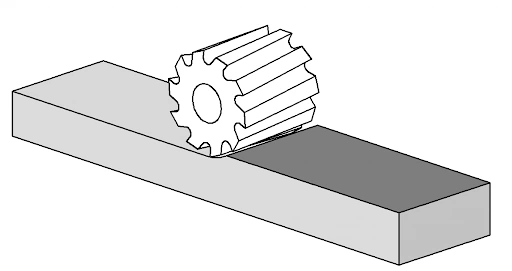
Slab milling
This is a flattening tool used to create flat surfaces parallel to the machining table/bench. The cutting edges on the cylindrical surface facilitate heavy-duty machining while maintaining tight dimensional and positional tolerances.
Furthermore, the slab mill is compatible with various CNC materials like carbon steel, stainless steel, and aluminum for roughing operations.
14. Fly Cutter
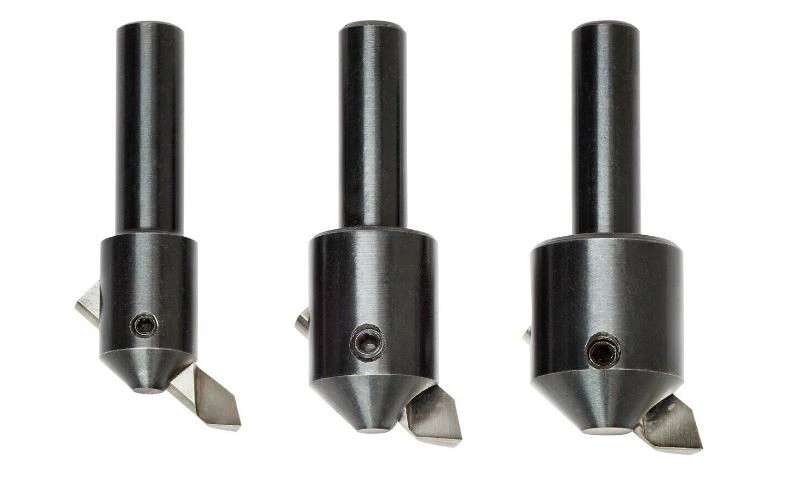
Fly cutters
A fly cutter is a single-point CNC milling cutting tool that is suitable for machining flat surfaces. Its bit (tip) extends outward from its rotational axis, removing materials on a gradual feed of material.
Consequently, fly cutters can match the speed and finish of face milling tools, and are cost-effective as well.
15. Side & Face Cutters
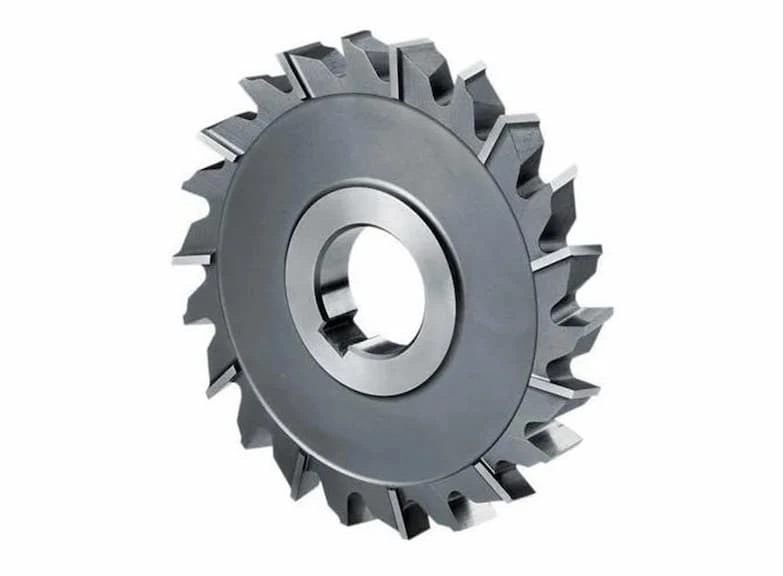
Side and face cutter
These tools are characterized by positions of cutting teeth on the face and side of the tool. This design allows the removal of material fromm side and face of the work at a single pass. Subsequently, side-face-cutters are useful for shoulder milling, slotting, V-grooving, and profiling.
16. Dovetail Cutters
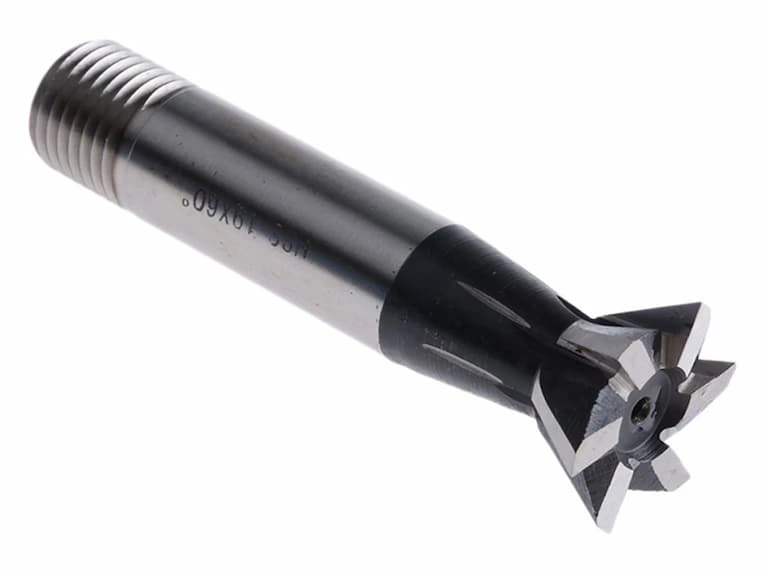
Dovetail cutter
As the name suggests, dovetail cutters are used to create a dovetail (wavy, angled, or trapezoidal-shaped) slot on workpieces. You can choose a tool with a specific dovetail angle, such as 45°, 50°, 60°.
Some applications of dovetail cutters include tool manufacturing, custom fixtures, linear sides, and O-ring grooves.
17. Knurling Tools
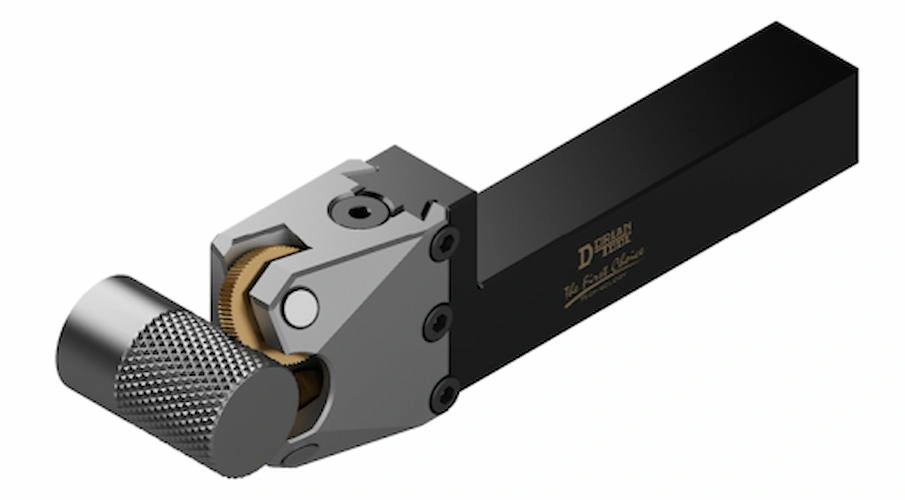
Knurling tool
Knurling tools create a raised texture on a machined surface, especially for fit adjustment or to improve grip. These hardened tools are pressed and rolled on the material surface to achieve the desired “knurl pattern”.
Consequently, straight, diamond, push-type, end rolling, and straddle are the main variations of knurling tools.
CNC Machining Tools: Quick Summary
The table below quickly summarizes the design and functions of the 17 most common CNC machining tools.
| Tool | Design | Function |
| End Mill | Cylindrical with cutting edges on the sides and tip | Milling profiles, slots, pockets, contours |
| Drill Bits | Long shaft with spiral flutes and conical tip | Blind or through holes |
| Face Mills | Large diameter and cutting edges on the bottom face | Surface roughing and flattening |
| Thread Milling Cutters | Helical cutting edges along the cylindrical body | Internal/external threads |
| Reamers | Cylindrical with spiral or straight flutes and a chamfered tip | Enhanced hole accuracy and finish for fittings, assemblies, etc. |
| External Round Mills | Cylindrical with corner radius | Precise radius on external corners |
| Countersink Mills | Tapered end with cutting edges at specific angles (82°, 90°, 100°, 120°) | Countersink holes and chamfered edges |
| Thread Taps | Cylindrical with internal thread profile | Internal threads in pre-drilled holes |
| Gear Cutters | Specialized tooth profile along cylindrical body | Cut gear shapes with precision and speed |
| Ball End Mill | Cylindrical body and spherical-shaped tip | Complex curvatures, contours, and 3D profiles |
| T-Slot Cutter | T-shaped head with cutting edges | Precise T-slots for fixtures, auto parts, structures, etc. |
| Hollow Mill | Cylindrical with internal cutting edges | Shape the outer diameter of bars |
| Slab Mill | Large cylindrical shape and cutting edges on the surface | Surface flattening parallel to the table |
| Fly Cutter | Single-point cutter | Flat surface machining |
| Side & Face Cutters | Teeth on the face and side of the tool | Shoulder milling, slotting, V-grooving |
| Dovetail Cutters | Trapezoidal/wavy cutting profile; angles 45°, 50°, 60° | Dovetail slots for fixtures, O-ring grooves, and tool making |
| Knurling Tools | Hardened rollers with patterns on the surface | Raised texture for grip or fit adjustment |
Classifications of Tools based on CNC Machining Processes
CNC machining includes milling, turning, drilling, grinding, broaching, boring, EDM, swiss machining, hobbing, and other processes. Next, let’s look at the tools classified under these machining processes.
CNC Milling Tools
Typically, milling tools are multi-point cutters with edges on the side or end, which rotate and feed the material in a linear direction.
Tools used in CNC milling operations are:
- Flat end mill
- Ball nose end mill
- Corner Radius end mill
- Face cutter
- T-slot cutter
- Slab mill
CNC Turning Tools
CNC turning involves removing material from a rotating workpiece using suitable CNC turning tools, typically single-point with indexable carbide inserts. They range from external turn tools and CMNG inserts to Swiss turning tools for precision machining of micro-features.
Tools used in CNC turning operations are:
- External turning tool
- parting tool
- Boring bar
- Grooving tool
- Turning insert
CNC Drilling Tools
The common tools used for drilling holes in CNC materials are:
- Twist drill
- Center drill
- Deep hole drill
- Countersink drill
- Peck drill/jobber drill
CNC Grinding Tools
Grinding tools are a form of abrasive or deburring tools, which remove a minor amount of material in a controlled manner. These are essential when you need to correct the dimensional accuracy and surface finish of machined parts.
Tools used in CNC grinding are:
- Straight grinding wheels
- Cylindrical wheels
- Tapered wheels
- Deburring tools
CNC Routing Tools
CNC routing is used for cutting, carving, and drilling of large worksheets. A tool attached to the rotation spindle moves along different axes for machining.
Tools used in CNC routing are:
- Straight bits
- V-groove bits
- Spiral bits
- O-flute bits
- Round-tip bits
Electrical Discharge Machining (EDM) Tools
Unlike CNC cutting tools we discussed above, EDM tools shape conductive workpieces using controlled electrical arcs (discharges) under a dielectric medium.
Tools used in electrical discharge machining are:
- Wire EDM ( A thin-wire electrode)
- Sinker EDM (Custom-shaped electrode)
- Hole Drilling EDM
Electrochemical Machining Tools
Electrochemical Machining (ECM) is another non-conventional process in which material is removed by passing an electric current through an electrolyte solution. It is ideal for machining hard-to-reach areas.
Tools used in the ECM process are:
- Electrical supply unit
- Electrolyte unit
- Copper or graphite electrode
- Electrolyte solution
Laser Cutting Tools
In laser cutting, a concentrated laser beam strikes the work and cuts/shapes/engraves/etches it using intense heat.
Tools used in CNC laser cutting are:
- Diode laser
- Fiber laser
- CO2 laser
Plasma Cutting Tools
Like a laser, plasma cutting uses intense heat for material removal, but the source is a beam of ionized gas rather than a laser beam.
Tools used in plasma cutting are:
- Plasma Torch
- Plasma nozzle
- Shield deflectors
- Swirl rings
CNC Broaching Tools
Broaching tools are used in CNC lathes and milling machines to machine internal & external profiles on workpieces, such as square holes & key slots. During the process, the broach tool removes material through push-pull movement.
- Hexagon & square broaches
- Surface boraches
- Keywy broaches
- Adjustable inserts
- Spline broaches
CNC Swiss Machining Tools
Swiss machining is used to produce highly accurate, small parts, such as watch components. During Swiss precision machining, a Swiss machine utilizes multiple tools to simultaneously perform different operations.
The common Swiss machining tools are as follows;
- Turning tools
- Threading tools
- End mills
- Grooving tools
- Drill bits
- Bring bars
- Remers
CNC Lapping Tools
Lapping tools remove a small amount of material to smooth the surface, maintain dimensional accuracy, and ensure flatness. They are critical in the manufacturing of aerospace, automotive, and medical components.
Common lapping tools are as follows;
- Lapping plates
- Adjustable laps
- Abrasive slurries/media
- Diamond grinding wheels
CNC Hobbing Tools
These tools are named after “ CNC gear hobbing machines” that are used to cut gear profiles and related geometries. The CNC system synchronizes the tool and workpiece rotations, and the tool removes material gradually to achieve the desired shape.
- CNC hobbing machine
- Hobs
- Involute and involute spline gear hobs
- Worm hobs
- Skiving hob cutter
CNC Boring Tools
Boring tools finish or enlarge the pre-drilled holes. They are used in both lathes and milling machines to correct hole diameter, roughness, or roundness. Consequently, CNC boring machining is heavily used in the manufacturing of auto parts, shipbuilding components, industrial machinery, etc.
- Rough boring bars
- Fine boring bars
- Twin-bore
- Back-boring tools
- Camfering & face-grooving heads
What are the Different Materials for CNC Machining Tools?
Carbon Steel, High Speed Steel (HSS), Carbide, Ceramics, Cubic Boron Nitride, and Polycrystalline Diamond(PCD) are the common CNC tool materials. The reason they are available in many materials is to diversify the capability of machining workpieces with different hardness levels.
Next, the list below further briefs on common CNC machining tool materials.
- Carbon Steel: Carbon steel tools are relatively softer and suitable for drilling, milling, or tapping of aluminum alloys, plastics, woods, etc.
- High Speed Steel(HSS): HSS tools are tougher than carbon steel, and provide better wear resistance & thermal stability. These are suitable for machining materials with moderate hardness.
- Carbide: Carbide tools can be used for machining precise parts. They can sustain high stress, heat buildup, and the abrasiveness of the workpiece. Subsequently, cemented carbide tools provide even more hardness.
- Cubic Boron Nitride (CBN): CBN is the second-hardest tool material after diamond, and CBN tools are compatible with stainless steel, tool steel, etc.
- Polycrystalline Diamond: PCD tools are harder and more durable. They are used for non-ferrous works requiring tight accuracy and finish.
- Coated Materials: These are tool materials with a thin protective coating to enhance machining performance, such as AlTiN, TiN, and TiCN.
Does Coating Impact Tool Performance and Durability?
Yes, coating is directly related to the performance and durability of machining tools. Coatings of titanium nitride, chromium nitride, or diamond, not only shape the hard workpieces, but also improve surface finish, accuracy, and cycle time. Consequently, coating also influences tool prices.
Here are the most common coatings for CNC machining tools.
- Titanium Nitride (TiN): This hard coating reduces the tool and material friction; suitable for milling & drilling tool coating.
- Titanium Carbonitride (TiCN): Harder than TiN and provides better performance and tool life.
- Diamond-Like Carbon (DLC): A low-friction and chemically inert tool coating, beneficial for built-up edge prevention and smooth finish
- Chromium Nitride(CrN): CrN coating prevents oxidation and wear, suitable for high-temperature machining, such as stainless steels.
- Diamond Coating: The toughest coating, which can shape hard CNC materials, such as Inconel and hardened steels.
How to Choose the Best Cutting Tools for CNC Machining?
If you choose an incorrect tool type, tool material, size, or geometry, it directly impacts the end machining results. Therefore, you must consider factors like work material type, required machining operations, desired speed, finish quality, and precision.
Next, let’s look at the key factors to consider while choosing the best cutting tools for CNC machining.
- Consider which material you are using for machining parts. Based on their machinability, you might need different CNC machining tools.
- Analyze the geometry and features in the designed part. Then, decide which machining operations are needed to create them.
- Consider desired tolerances and finish. For instance, diamond-coated end mills provide a smoother surface than standard roughing mills.
- Consider the production volume; some tools can machine faster than others.
What is the Cost for CNC Machining Tools?
The cost of CNC machining tools typically ranges from $20 to $300+, depending on type, material, coating, tolerance, and brand.
For instance, tools for hobbyist CNC machines are way cheaper than those for premium indexable tools for multi-axis CNC machines.
Summing Up
Tools are essential elements in CNC machining processes, and they determine the efficiency of machining processes and the overall quality of machined parts. By choosing the right types of tools and optimizing the tooling strategies, you can achieve higher production speed, tighter tolerances, smooth finish, and cost-competitiveness.
If you are still unsure which tools are best for machining your parts? Our engineers at ProleanMFG can help you select the best cutting tools for CNC machining. We provide comprehensive CNC machining services that cover everything from DFM feedback and tool selection to surface treatments.
FAQ
What is tooling in manufacturing?
Tooling and tool are different terms; tooling is the process of selecting tools, fixtures, jigs, and supports, and installing them on a machine.
What are the different types of tooling?
Cutting tools and forming tools are the common types of tooling in manufacturing. Based on manufacturing stages, they are classified into prototype, bridge, and production tooling.