
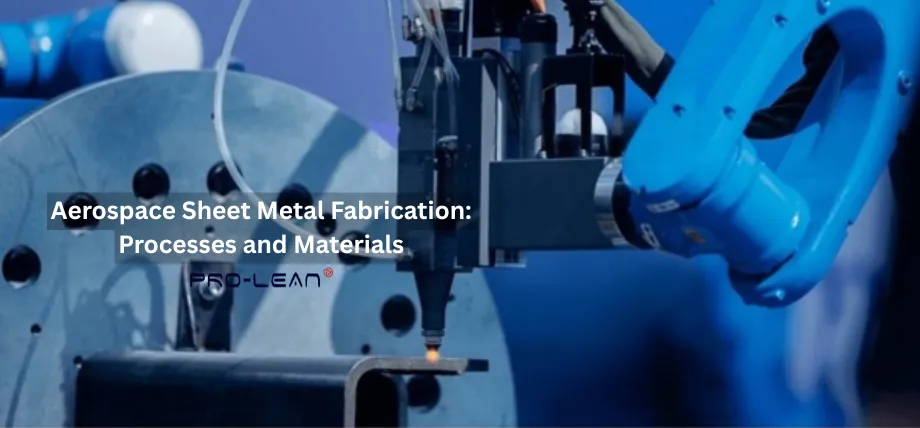

In modern aircraft design, aerospace sheet metal fabrication is one of the most efficient and highly precise fabrication processes. With this process, you can produce complex, dimensionally critical aircraft parts repeatedly under strict requirements. That’s why aerospace metal fabrication is extremely popular nowadays, expanding from aviation to defense applications.
What Is Aerospace Sheet Metal Fabrication?
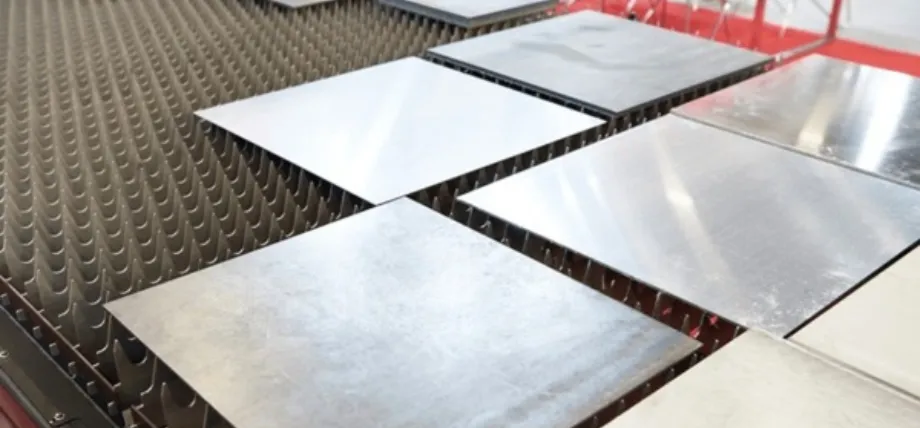
The process of converting flat sheet metal into functional, high-performance aircraft and spacecraft is known as aerospace sheet metal fabrication.
Since this sector needs the highest standards of safety and reliability, meeting tight tolerances, making the parts more lightweight, and maintaining repeatability are highly important considerations.
Even a small failure or misassembly in an aerospace part will bring life-critical risks. Therefore, aerospace metal fabrication’s focus is always on achieving the highest quality and standards, giving a minor priority to cost.
Aerospace Materials Used in Sheet Metal Fabrication
Material selection for aerospace metal fabrication is an advanced process. With a good material choice, you can make aerospace parts fabrication smoother and the final part more reliable.
You have to conduct a careful evaluation of weight, durability, corrosion resistance, and manufacturability before going for the final selection. Explained below are some of the most established materials in custom metal fabrication for aerospace.
Aluminum Sheet Metal
Aluminum is known as the most widely used material in precision sheet metal fabrication. The main reason for its popularity is its excellent strength-to-weight ratio. Aluminum can give you strong parts without adding unnecessary weight, and also with good corrosion resistance. Such parts directly improve the fuel efficiency and performance of aircraft parts.
Aluminum also has good manufacturability. It is easier to cut, form, and machine precisely compared to many other metals. Aluminum grades such as 2024 and 7075 can handle stress and fatigue well.
You can see numerous applications of aluminum in aerospace, especially in fuselage skins, wing panels, and structural supports across almost every aircraft.
Stainless Steel and Carbon Steel
For the parts that need higher strength and excellent temperature stability, stainless steel becomes a better choice than aluminum. It also resists corrosion and performs reliably in harsh environments. So, stainless steel is more suitable for engine parts, exhaust systems, and parts exposed to frequent temperature fluctuations in aerospace metal fabrication.
You can rarely see carbon steel in flight parts because of its high weight. But you can see it used in certain aerospace parts fabrication services, especially for tooling, ground equipment, and non-critical components. The main reason for choosing carbon steel, at least for certain non-critical parts, is its lower cost. You can greatly reduce the overall production cost if you can smartly incorporate small amounts of carbon steel without harming the safety and reliability.
Copper, Brass, and Specialty Alloys
Some components of aerospace manufacturing require special properties that aluminum or steel can’t provide.
Copper is one of the alloys that can provide excellent conductivity for aerospace parts. Copper is also the metal with the highest conductivity universally. It is mainly used in shielding and electrical systems.
Brass is also a material that can provide a good balance of corrosion resistance and machinability. But it’s more expensive than aluminum because it contains copper. You can see brass in many smaller-sized precision aircraft components. These include certain fittings, connectors, and fine-detailed components that you cannot produce with aluminum.
Specialty alloys like titanium and nickel-based superalloys are used in more advanced aerospace fabrication. You can see them used mostly in high-stress or high-temperature zones. Titanium can give you excellent strength with a lower weight than steel, but at a higher cost. Superalloys are highly stable and can perform well even in extreme heat. However, most of these materials are harder to process. But you somehow have to go for them when standard metals can’t meet those special demands.
Key Aerospace Sheet Metal Fabrication Processes
You have to provide a combination of advanced machining techniques to achieve the high precision standards of aerospace fabrication.
Laser cutting
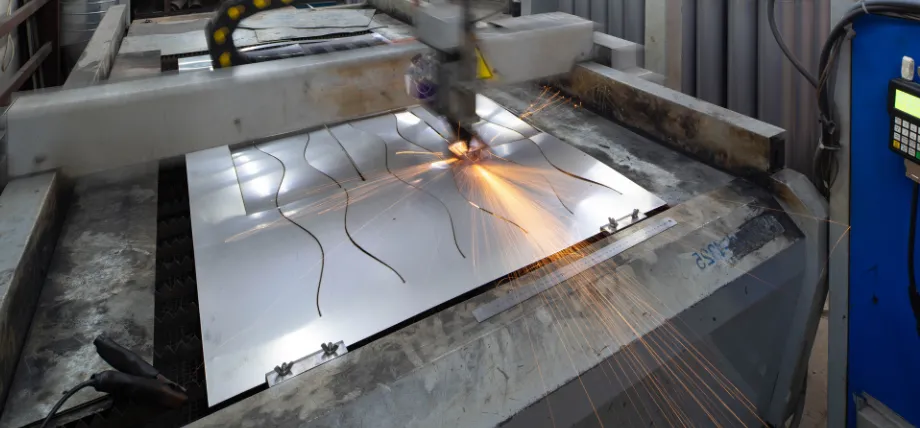
In laser cutting, you use a focused laser beam to cut the parts precisely. It is one of the most widely used processes in aerospace metal fabrication.
Laser cutting is popular for offering high precision with minimal material distortion, which is exactly what thin sheet machining demands. In addition, you can easily handle complex designs, reduce waste, and improve repeatability with laser cutting.
CNC machining
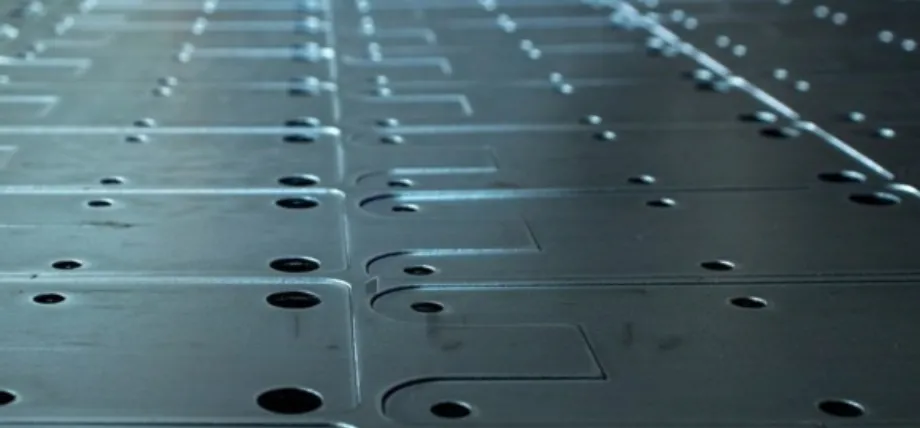
When you need aerospace components that require tight tolerances and complex geometries, you can go for CNC machining. CNC machining has many different techniques, such as drilling, turning, and milling, that you can choose depending on your requirements.
By using CNC machining for custom metal fabrication for aerospace, you can obtain micron-level accuracy for the parts that must fit perfectly within assemblies.
Metal forming
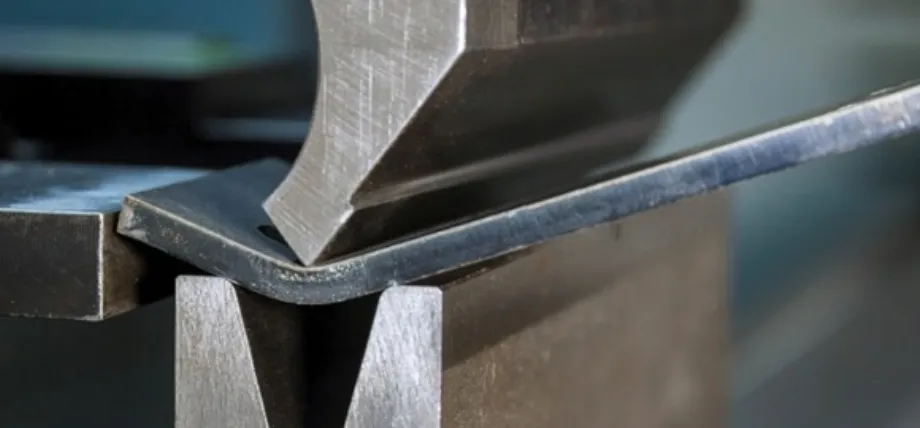
You can use sheet metal forming processes such as bending, stamping, and deep drawing to shape sheet metal into aerodynamic and structural forms.
However, in custom metal fabrication for aerospace, sheet metal forming must be carefully performed to avoid defects (like cracking or springback). In such cases, advanced simulation tools are used to predict material behavior before actual production.
Fabrication welding
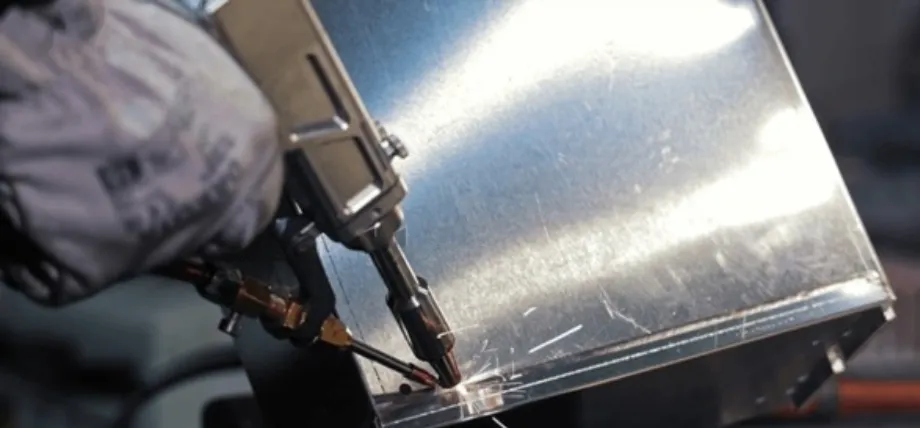
Welding is an excellent aerospace metal fabrication process that can excellently maintain structural integrity under extreme conditions. Welding can build a secure joint that can survive high stresses, vibrations, and temperature changes. There are many types of welding you can choose for your needs:
- TIG welding can be used to join thin, precision parts. You can obtain clean and controlled welds
- MIG welding is a faster welding technique you can use to minimize production time in some cases
- Resistance welding is useful for sheet assemblies
- Laser welding is highly preferred for narrow and precise joints
In custom metal fabrication for aerospace, welding should be able to produce consistent, defect-free products. Even minor defects can lead to failure and bring disastrous risks in service.
Custom Sheet metal fabrication for low-volume production
Apart from mass manufacturing industries, the aerospace industry also requires low-volume, high-precision parts. When you need such specialized components tailored to specific aircraft or mission requirements, you can use custom metal fabrication to produce them.
Custom sheet metal fabrication for aerospace can be used for prototyping, repairs, and specialized aerospace parts.
Aerospace Components and Applications
Some of the most common applications of fabricated sheet metal parts are:
- Fuselage panels and structural frames
- Wing skins and internal supports
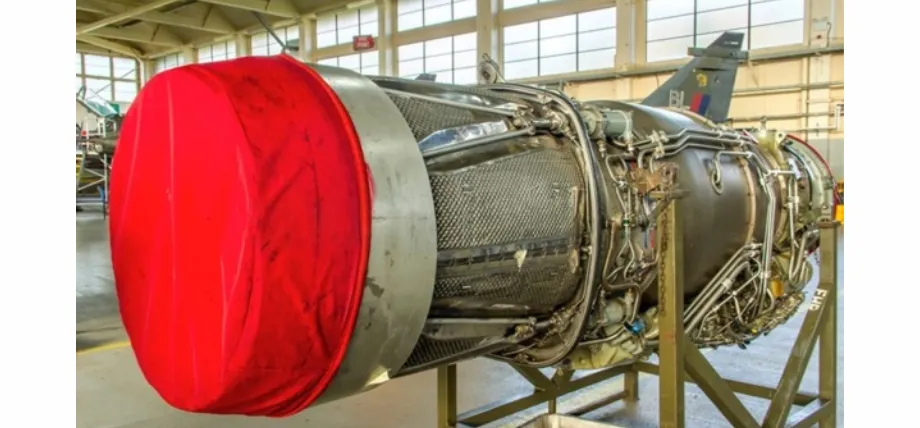
- Engine housings and heat-resistant covers
- Mounting brackets and reinforcement parts
- Equipment enclosures and interior panels
All these components must be strong, lightweight, and highly stable in demanding flight conditions. Apart from the above applications, aerospace fabrication also includes functional parts like air ducts, heat shields, and electronic housings.
Quality Assurance and Aerospace Standards
Since aerospace is a highly safety-critical sector, you must carefully choose high-quality aerospace parts fabrication services. They must be able to deliver products with consistent quality and strict performance that adhere to regulatory requirements.
To guarantee the quality and performance, you need strict inspection and testing processes. For that, you can use standard testing methods such as:
- Non-destructive testing (NDT) methods such as ultrasonic testing, radiography, and dye penetrant inspection to detect hidden defects.
- Dimensional inspections using coordinate measuring machines (CMM) to measure and validate tolerances.
Another important stage of quality assurance is traceability. You must trace and document every material, process, and operator to ensure accountability. If this process is done properly, manufacturers can track any issues back to their source, making maintenance and repairing easier.
Industry certifications for aerospace fabrication companies
When you’re choosing aerospace parts fabrication services, certifications are a strong indicator of their reliability and capability. Some of the highly recognized such standards are:
- ISO 9001 – this is a well-known certification issued for demonstrating a commitment to consistent quality management practices.
- AS9100 – the most recognized quality management standard for aerospace fabrication. It is mainly based on ISO 9001 but includes additional requirements specific to the aerospace industry (especially regarding risk management and product safety).
- NADCAP – a certification issued for special processes like welding, heat treatment, and non-destructive testing.
By working with certified aerospace parts fabrication services, you will receive the confidence that your parts meet both regulatory and performance expectations.
How to Choose an Aerospace Sheet Metal Fabrication Partner
In a field like aerospace metal fabrication, trust is the first priority when choosing a partner. You should look for the following criteria when picking the right supplier:
- Must have experience in aerospace sheet metal fabrication
- Ability to handle the complete aerospace fabrication process, so you don’t have to go for multiple suppliers. (Working with many suppliers for a single project will bring you complex issues in compatibility, error handling, and repair)
- Owning certifications like AS9100 and NADCAP to build trust
- Flexibility in types of metal fabrication (especially when you need prototypes, replacements, and special parts)
- Clear communication, guidance, delivering transparent documents, and regular project updates
With the right aerospace fabrication partner, you can perfectly meet your specifications and also optimize performance, reduce costs, and improve long-term reliability.
Sheet Metal Fabrication Service
Our aerospace sheet metal fabrication rely on ISO 9001, MIL, ASTM standards for components as small as rivets and fasteners. We hold flight critical part manufacturing to the highest quality standards.
With strict tolerance controls and using high-strength alloys like 7075 and 6061, we ensure all components meet your aviation project standards.
Proleanmfg provides low-volume manufacturing and prototype sheet metal parts and an easy process to transition from engineering prototypes to flight ready hardware.
Request a free quote today and get optional DFM support on volume production.
Conclusion
Sheet metal fabrication mostly relies on forming and bending, but aerospace sheet metal fabrication includes secondary services like coatings, paint, electroplating, and highly precise bend angle tolerances that are normally non-standard at most machine shops.