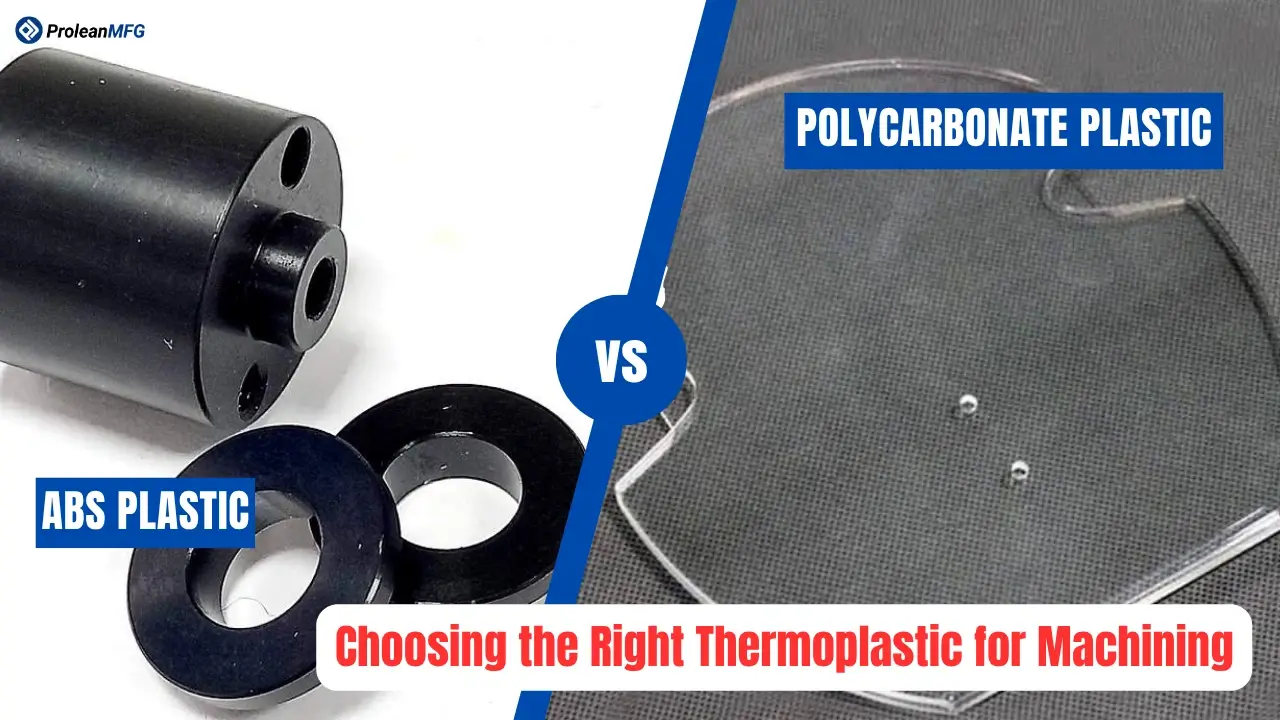

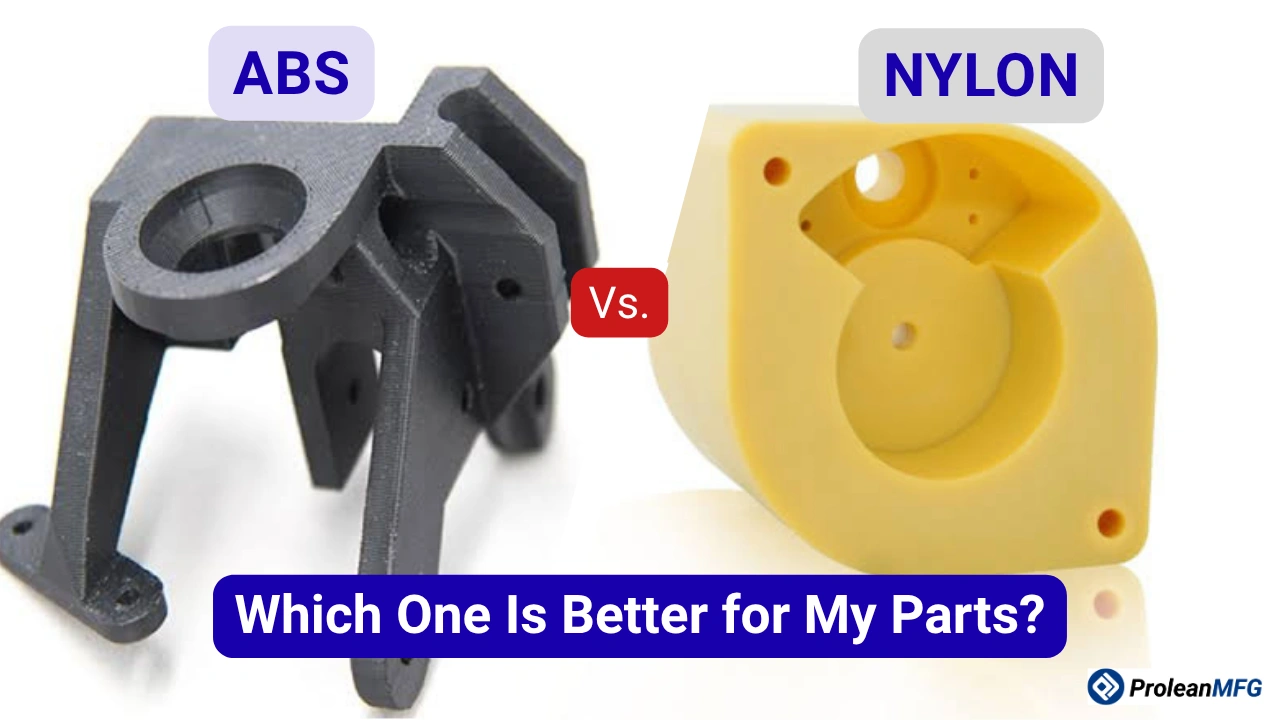

ABS and nylon are commonly machined and 3D-printed thermoplastics. However, they serve distinct industrial functions. Nylon delivers superior chemical resistance, strength, and wear resistance, while ABS is recognized for its dimensional stability, easy fabrication, and impact resistance.
The cost element is also a key distinction, with nylon’s raw material and processing requirements usually costing more.
A part failing is only one of the undesirable results of picking the wrong thermoplastic – tooling runs may be scrapped and lead times blown. Nylon’s wear resistance is less important for static equipment cover, and ABS’s weaker fatigue resistance will soon show in failed load-bearing gears.
ABS and nylon are sometimes specified interchangeably on drawings, forgetting that their behaviors under chemical exposure, heat, and load differ significantly. Costly redesigns can be avoided by using the right material. It all starts with understanding the fundamentals of each material.
Here is a guide that discusses the chemical, mechanical, processing, and thermal differences between ABS and nylon. The information will help you match either thermoplastic to your part requirements before committing to production.
What is ABS?
ABS (acrylonitrile-butadiene-styrene) is a thermoplastic polymer renowned for its stiffness, strength, and impact resistance.
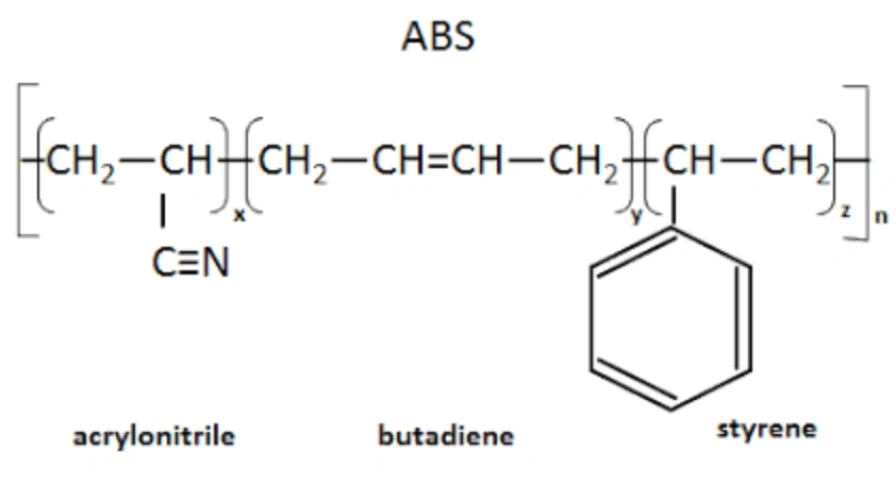
It has excellent dimensional stability, a property that is valued in volume production and machining pre-production prototypes. The material also has excellent thermoforming properties and machinability.
The main material options for ABS are general-purpose ABS and machine-grade ABS. Other options are FDA-compliant grade, orthotic grade, UV-resistant, scratch-resistant, and fire-rated.
General Purpose Extruded ABS – It is a low-cost thermoplastic that is rigid, impact-resistant, and easy to fabricate. It is found in many industrial applications.
Machine Grade ABS – Machine grade ABS is engineered for machining. The material is consistent, dimensionally stable, and easy to cut.
Specialty Grades – Specialty grades are FDA-compliant, orthotic grade, UV-resistant, scratch-resistant, and fire-rated. These are used to solve a specific problem, not for all-around performance.
Even as you consider the budget, focus on the operating environment. For instance, it doesn’t make a lot of sense to choose general-purpose ABS for a component that will be perpetually exposed to UV light.
Mechanical Properties of ABS
The mechanical properties of ABS plastic portray a low-cost material with a unique blend of impact resistance and rigidity to hold shape under load. Here is an outline of the main mechanical properties.
- Tensile Strength: 43.8MPa
- Elastic Limit: 38.45MPa
- Young’s Modulus: 1.47GPa
- Elongation at Break (%): 7.2
- Stress at Break: 29.58MPa [3]
Note that the material’s impact resistance drops significantly at lower temperatures. If an ABS part is to be used in cold temperatures, the specification should not be done at higher temperatures.
Is ABS plastic strong?
Yes, but it depends on what type of strength is being considered. Its impact resistance and toughness are excellent, but not so for raw tensile strength.
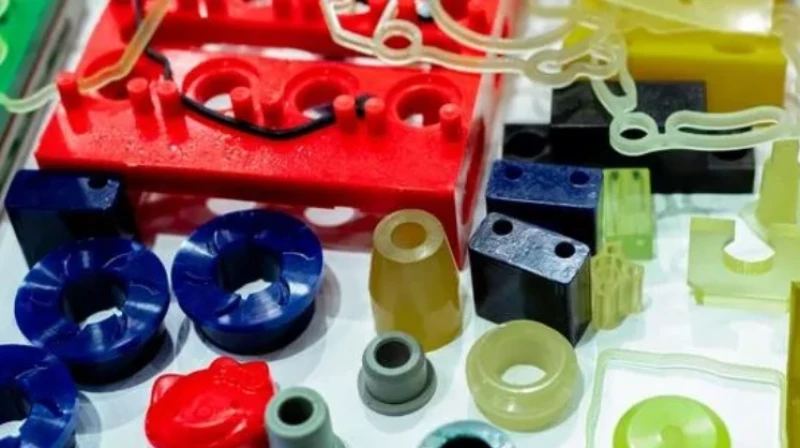
ABS plastic for impact resistance
It won’t lift as much weight as a high-performance polymer, but it doesn’t crack like PLA or other brittle plastics.
Chemical Properties of ABS
ABS is resistant to water, dilute acids, and dilute bases. However, it has notable vulnerability to organic solvents.
Thermal Properties of ABS
ABS is an amorphous material, so it softens gradually. There is no absolute ABS melting temperature. Here are its key thermal properties.
Glass transition temperature: 110°C
Processing temperature: 240°C
Thermal conductivity: 0.15 W/(m·K) [2]
What is Nylon Plastic?
Nylon is a cost-effective engineering thermoplastic that is durable, heat-resistant, and fade-resistant. This synthetic polymer is a polyamide resin and is produced by polymerization. The ingredients are petroleum-based.
With good compatibility with other fibers, nylon plastic can be readily enhanced for higher performance and durability.
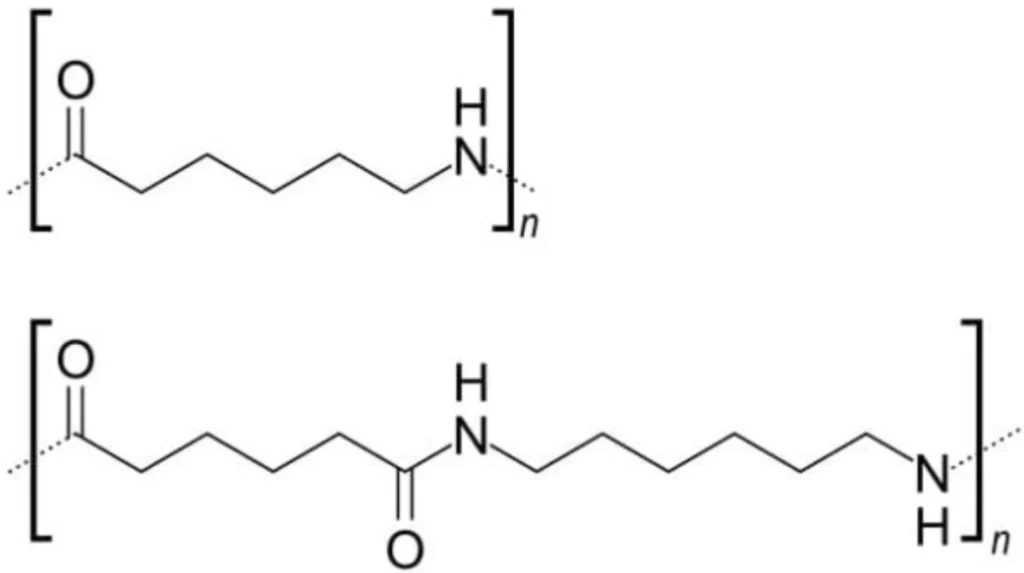
Mechanical Properties of Nylon-6
Tensile strength: 90 MPa
Flexural strength: 102 MPa
Elongation at break: 60 %
Yield Strength: 90/45 MPa
[4]
However, its moisture sensitivity can be a hindrance in tight tolerance applications. Further, the mechanical properties above can vary due to absorbed moisture.
Chemical Properties of Nylon
Nylon works well with solvents, oils, and fuels. This is why the plastic is popularly used in automotive and mechanical components.
Thermal Properties of Nylon
The Vicat softening temperature and melting point for nylon are listed below.
Vicat softening temperature: 190 °C
Melting point: 255 °C
Thermal conductivity: 0,28 W/mK
[4]
Nylon heat resistance is interpreted from the melting point and Vicat softening temperature.
Note that nylon has a specific melting point because it is semi-crystalline. ABS is not.
ABS vs Nylon Comparison
ABS and nylon plastic differ in their physical, mechanical, chemical, and thermal properties; CNC machining and 3D printing processes; applications; and cost.
ABS vs Nylon: Physical Properties
The most notable distinction between nylon and ABS is water behavior and weight – nylon absorbs water, and it is heavier.
ABS vs Nylon: Mechanical Properties
ABS wins against nylon in dimensional consistency. Nylon offers higher wear resistance and raw strength.
All in all, nylon’s mechanical performance depends on the moisture conditions. Ensure the test conditions are specified for a dependable comparison between the two materials.
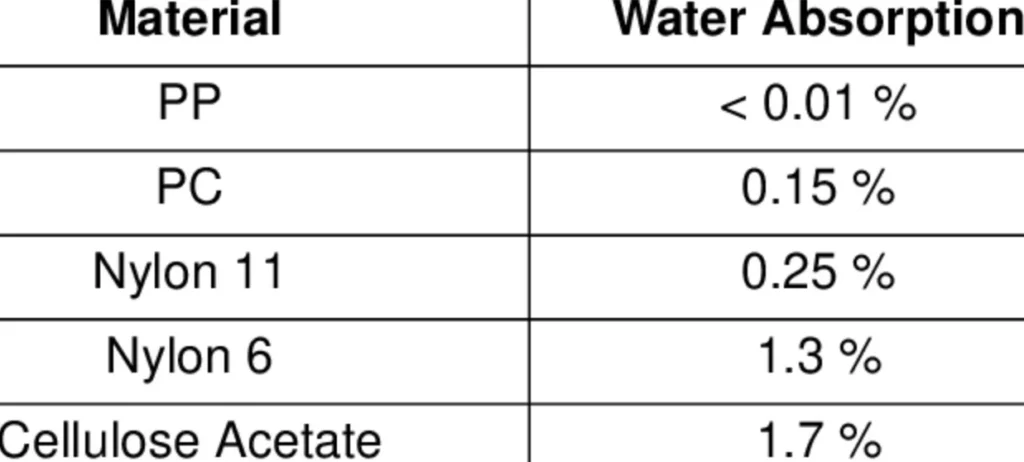
ABS vs Nylon: Chemical Properties
Nylon has higher oil and solvent resistance. ABS wins on moisture resistance. Therefore, consider the type of chemical exposure when deciding based on this factor.
ABS vs Nylon: Thermal Properties
ABS is more limited in the level of continuous service temperature it can tolerate. Therefore, it would make sense to use a nylon part if the operating temperature is near the upper limit for ABS.
ABS vs Nylon: CNC Machining
Both ABS and nylon are commonly CNC machined plastics.
With its tendency to absorb moisture, nylon requires special attention during machining. Deflections and burrs may also occur due to the material’s flexibility. Its low melting point means that melting should be avoided – sharp tools, controlled feeds/speeds, and adequate cooling are recommended.
For ABS plastic, the glass transition temperature of 105°C (221°F) means the material can start “smearing” instead of chipping. High feed rates are recommended.
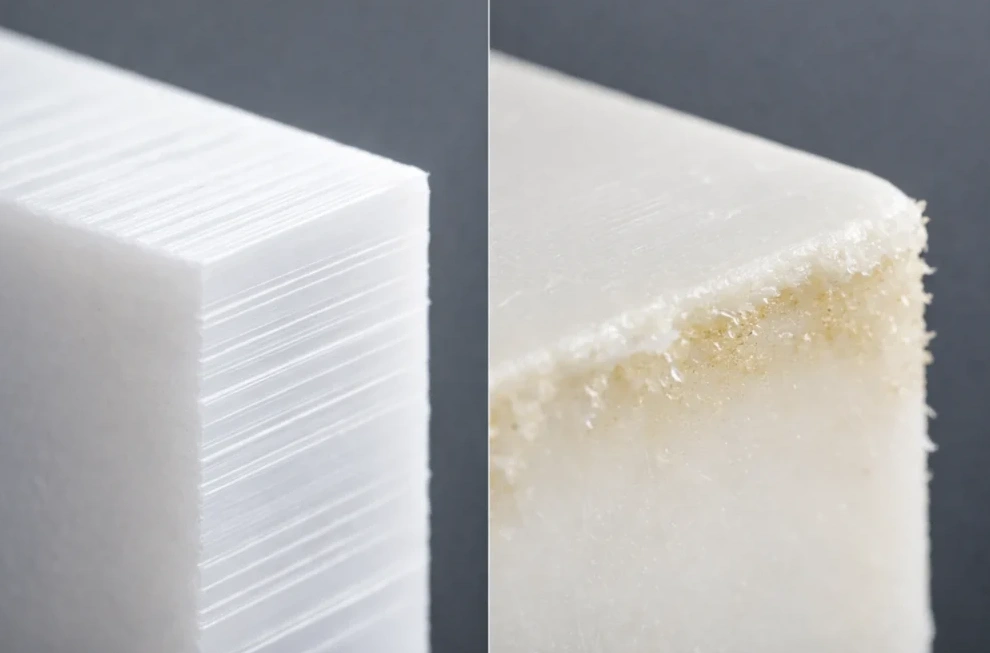
If the nylon to be machined is not fresh stock, the machinist should be wary of the moisture content. This is not an issue with ABS stock.
ABS vs Nylon: 3D Printing Process
While both ABS and nylon print, their requirements are different. Nylon absorbs moisture from the air even before the process can start. Printing the material as it is is not an option – poor layer adhesion and feeble parts are serious repercussions. As a standard, nylon filament is dried before being 3D printed.
ABS shrinks as its temperature lowers. It has to be kept warm during the process to avoid uneven shrinkage. The material is typically 3D printed in an enclosed area to prevent layer separation and warping.
ABS vs Nylon: Industrial Applications
ABS offers good dimensional consistency and impact resistance, so its parts show up in automotive interior trim, prototype parts, enclosures, and housings. Expect this plastic to be preferable to nylon where these properties are more valuable than raw strength.
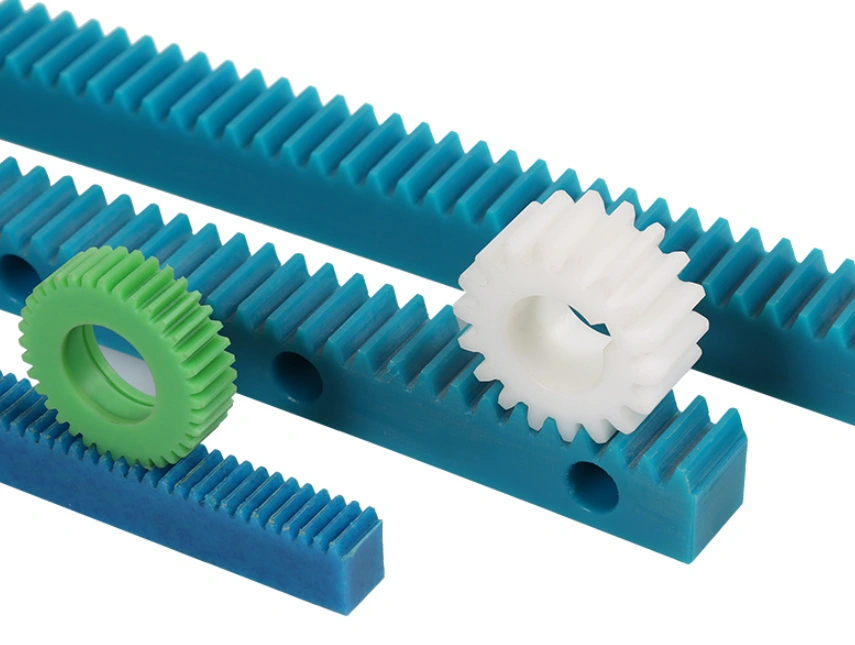
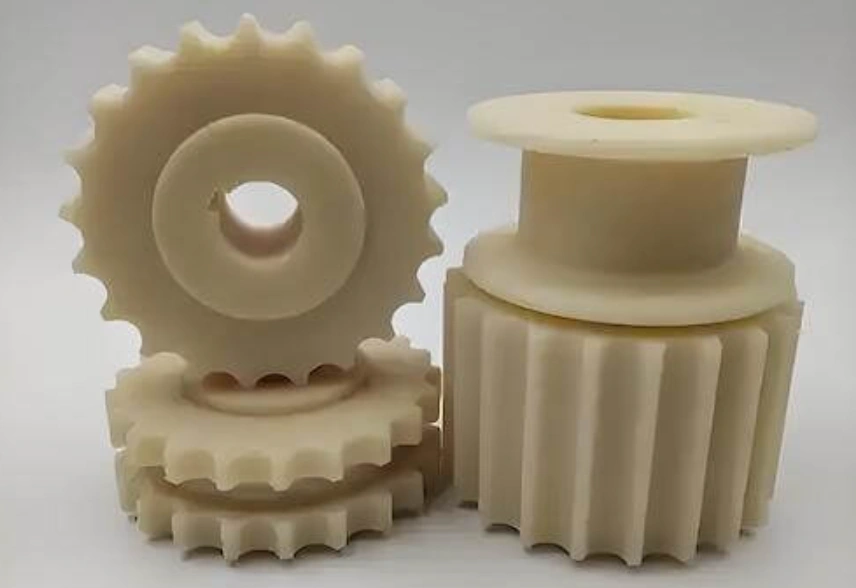
For its higher capacity to thrive under continuous load, repeated stress, or friction, nylon plastic is the better choice for parts such as gears and bearings.
ABS vs Nylon: Cost Analysis
ABS usually has a lower raw material cost per kg. It is also more readily available. However, the situation may be different concerning production.
Businesses are advised to determine the Total Cost of Ownership for the entire production process. The molding cycles for nylon tend to be longer due to tighter processing controls against shrinking and crystallization.
Cost for engineering ABS grades and standard nylon 6 or 6/6 may be comparable, but economics may be different wth high-performance polyamides.
ABS vs Nylon: Advantages and Disadvantages
Nylon has superior strength, chemical resistance, wear resistance, and flexibility. However, it is more expensive than ABS, denser (a challenge for weight-sensitive applications), and has a slower cooling rate.
Below is a summary of the advantages and limitations of ABS vs nylon.
Advantages of Nylon
- Higher abrasion and wear resistance
- Stronger chemical resistance against fuels, oils, and solvents
- Reinforcement capability
- Higher flexibility while retaining structural performance
Disadvantages of Nylon
- Raw material and processing costs are higher than ABS
- Higher weight a challenge in weight-sensitive applications
- Moisture sensitive
- Longer cycle times – slow cooling
Advantages of ABS
- Excellent dimensional stability
- Easy to machine
- Good impact resistance
- Widely available and material is affordable
Disadvantages of ABS
- Lower wear resistance
- Lower chemical resistance
- UV sensitivity – stabilizers required for standard grades
- Weaker heat tolerance
Choosing Between ABS and Nylon Plastic
To choose between ABS and nylon plastic, consider the part’s intended use, the environmental conditions, cost, availability, and material compatibility.
ABS is typically chosen when the desired properties for the parts are impact resistance, dimensional stability, flexibility, and balanced mechanical properties. Nylon is ideal for good thermal resistance, exceptional strength, durability, and wear resistance.
Factors to Consider when Choosing Between ABS and Nylon Plastic
- Intended Use
- Environmental considerations
- Cost
- Availability
- Material compatibility
Choose ABS Plastic When:
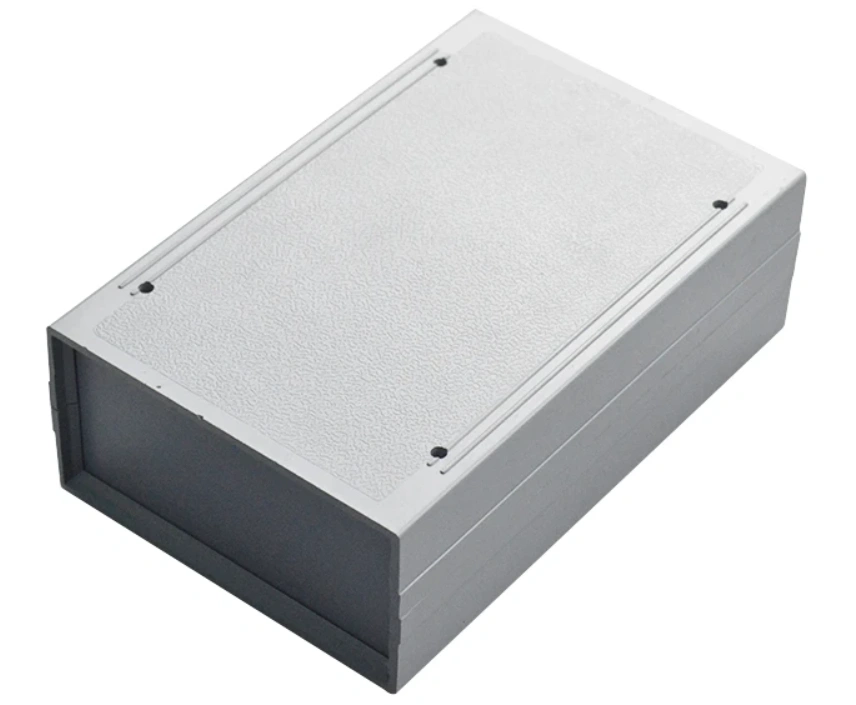
- Dimensional stability and impact resistance are more important than wear resistance
- The driving factor is lead time or budget
- The part is not a moving component but rather static – enclosure, casing, or housing
Choose Nylon Plastic When:
- The part is expected to undergo excessive exposure to chemicals, fuels, or oils
- Operating temperatures are normally high – nylon heat resistance is required
- The part is for repeated motion or continuous friction
Decision Table for ABS vs Nylon
Consider the following decision table for ABS vs nylon, focusing on the most important factors: use/application, durability, performance, fabrication, availability, and recycling.
| Factor | ABS | Nylon |
| Use | Low-stress, static parts – enclosures, housings | Load-bearing, dynamic – brackets, gears |
| Durability | Moderate | High |
| Performance | General purpose | Higher |
| Fabrication | Shorter cycle times, easier to process | Longer cycle times, tighter process control against moisture |
| Availability | High | Moderate |
| Recycling | Recyclable | Recyclable – process more prone to contamination |
To Conclude
ABS and nylon are not substitutable – their performance spectra differ. Nylon provides strength, chemical resistance, and wear resistance, while ABS outdoes nylon on machinability and dimensional consistency.
While nylon is preferred for gears, bearings, and other load-bearing items, ABS is best used in enclosures and housings.
So, focus on your part’s operating environment, chemical exposure, and loading requirements.
Unsure about which part exactly suits your project? Upload your part file for material guidance and a free quote from our ABS Machining Service team within 24 hours.
FAQs
What plastic is better than ABS?
It depends on the properties you are looking for. For instance, from the above discussion, nylon outperforms ABS on wear resistance, chemical resistance, and strength. PEEK generally has better mechanical and thermal performance, and polycarbonate has higher impact strength.
Resources
[1]. https://www.researchgate.net/figure/Water-Absorption-Values-for-Selected-Plastics_tbl1_289580955
[2]. https://www.researchgate.net/figure/The-physical-properties-of-the-ABS-plastic_tbl1_259095339
[4]. https://www.weerg.com/hubfs/Datasheets/Datasheets%202024/ENG/EN_Nylon6.pdf