
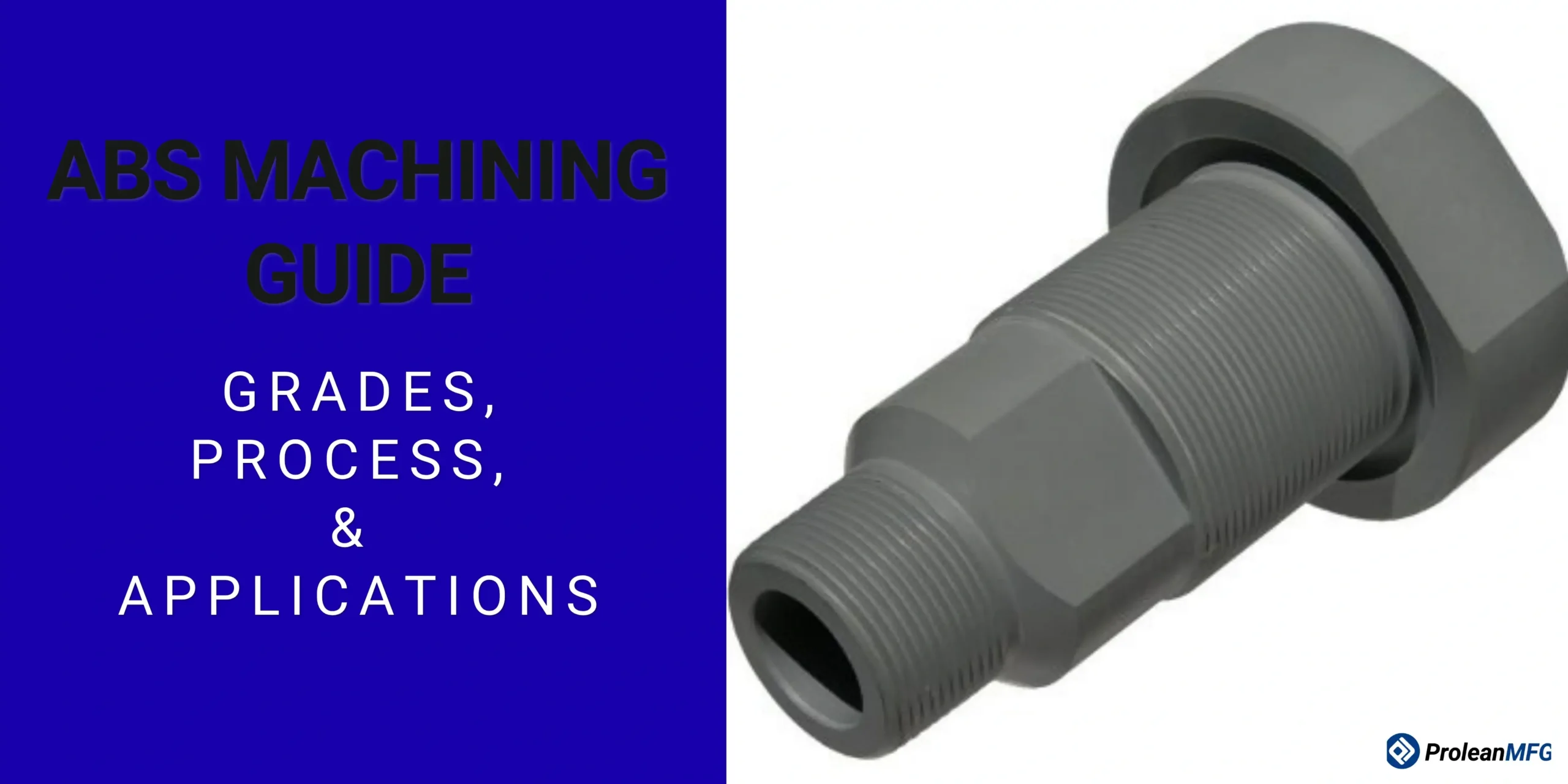

ABS machining is the CNC turning, milling, and routing of Acrylonitrile Butadiene Styrene. ABS is a dimensionally stable, cost-effective, and recyclable thermoplastic that can be used to make precision parts for medical, defense, electronics, and automotive applications.
If your project requires machined parts that balance machinability, impact resistance, and budget-friendliness, ABS is a worthy candidate.
Procurement and engineering teams constantly grapple with expensive specialty plastics that are not even justifiable for the application. Real-world loading and tolerance requirements are too high for standard plastics. That’s where ABS comes in.
Apart from machining cleanly, the thermoplastic holds dimensional stability across intricate shapes. Its possible finishes range from as-machined to spray-coated.
This guide provides a rundown of various ABS grades, CNC machining methods, surface finishes, machining considerations, and applications of CNC-machined ABS parts. It provides the fundamentals you require to correctly specify machined ABS parts.
What is ABS Material?
Acrylonitrile Butadiene Styrene (ABS) is a versatile, opaque thermoplastic polymer. It comprises three monomers, namely acrylonitrile, butadiene, and styrene. Plastic manufacturers can produce a wide range of ABS plastic grades by combining these monomers.
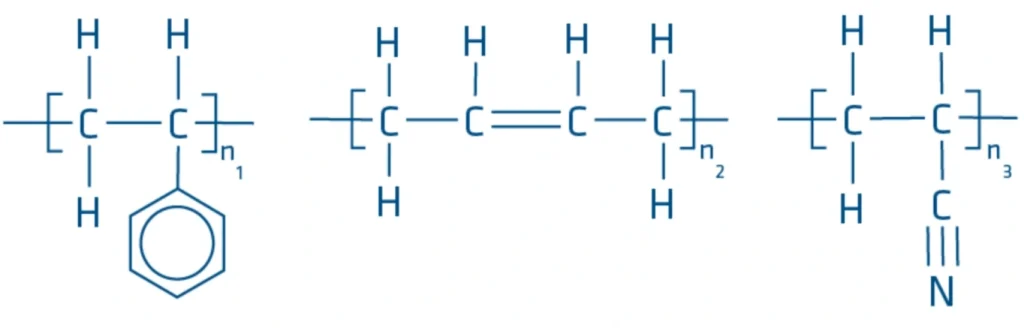
The material transforms into a liquid at 221 degrees Fahrenheit. ABS is one of the most notable materials in the plastics industry for these properties:
- High heat resistance
- Wear and tear resistance – longevity
- Polishable – can be made to produce a glossy finish
- Flame resistance – UL92-HB standards
- Resistance to strong alkalis and weak acids
The polymer is UV-sensitive, solvent-susceptible, prone to warping, and can have low resolution when 3D printed.
With its ease of processing, affordability, and recyclability, ABS material is widely used in areas such as automotive components, protective headgear, and power tool housing, depending on the processing method.
Properties of ABS Material
Here is a table of the technical specifications for ABS material: general, mechanical, and thermal properties.
| General Properties of ABS | ||
| Density | 1.05 g/cm³ | |
| Glass temperature | 110°C | |
| Hardness shore | 110 | |
| Processing temperature | 240°C [1] | |
| Mechanical Properties | ||
| Tensile Strength | 43.8 MPa | |
| Elastic limit | 38.45 MPa | |
| Young’s Modulus | 1.47 GPa | |
| Elongation at break (%) | 7.2 | |
| Stress at break | 29.58 MPa [2] | |
| Thermal Properties | ||
| Glass transition temperature | 105°C | |
| Minimum service temperature | -20°C | |
| Max. allowable service temperature in air – continuous | 90°C | |
Different Types of ABS Grades
The main ABS grades for machining are General-purpose ABS, Medical-grade ABS, Flame-retardant ABS, High-impact ABS, and Transparent ABS.
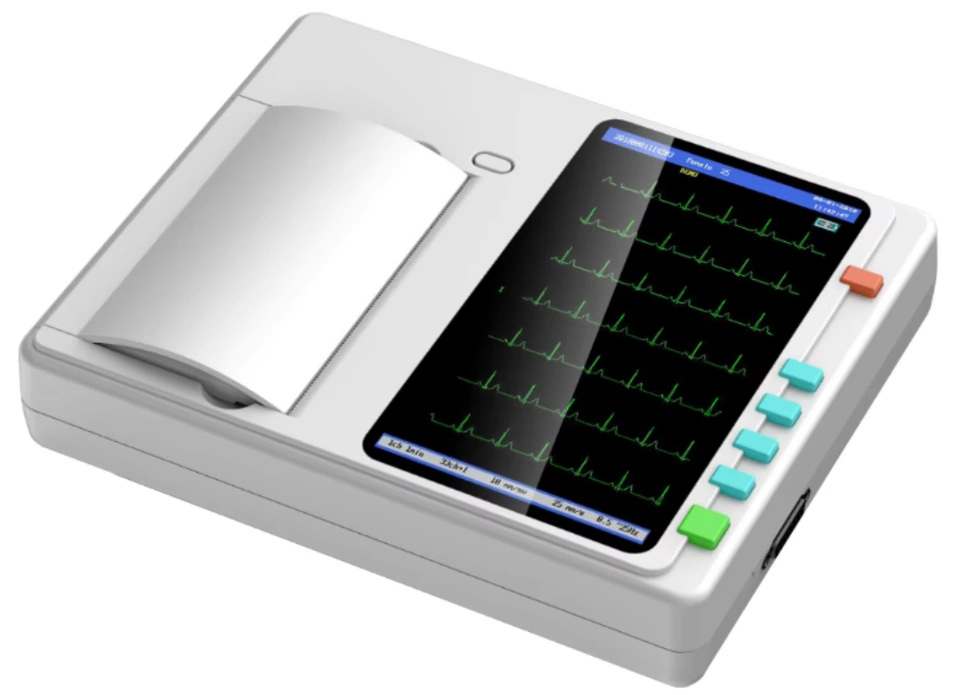
As the summary table below shows, each of these grades has distinct applications based on properties and machining capabilities.
| ABS Grade | Properties | Machining | Applications |
| General-purpose ABS | Strength, impact resistance, and good machinability | Supports complex geometries with stable dimensional performance under standard CNC milling and turning operations. | Enclosures, brackets, and structural components |
| Medical-Grade ABS | Sterilization resistance, biocompatibility | Controlled machining environment | Device enclosures, diagnostic equipment housing |
| Flame-Retardant ABS | UL 94 flame ratings, self-extinguishing | Machinability may vary by grade. | Junction boxes, electrical enclosures |
| High-Impact ABS | Enhanced toughness | Controlled feed rates and sharp tooling required | Automotive interior components, impact-prone parts |
| Transparent ABS | Optical clarity | Surface finishing can improve appearance, but optical transparency comparable to polycarbonate or acrylic is not achievable through CNC machining alone. | Indicator lenses, display windows |
Can ABS Plastic Be Machined?
Yes, ABS plastic is among the machinable thermoplastics. It cuts cleanly and predictably under the common machining methods – CNC turning, milling, and routing.
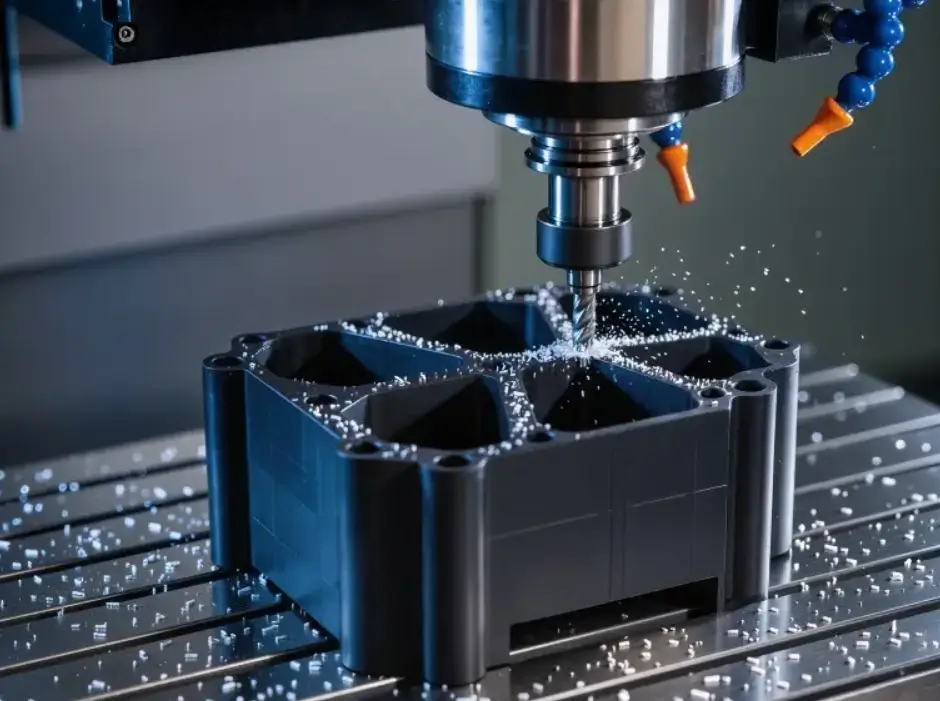
Expect the following when machining ABS plastic:
- Roughing and fine-tolerance finishing passes
- Allowance for higher spindle speeds – lower cutting resistance
- Excellent machining across different ABS formulations – general-purpose, medical-grade, etc.
What is the Process of ABS Machining?
As a subtractive manufacturing method, ABS machining entails securing the stock ABS to the machine chuck or bed, depending on the specific process. The next steps are CAD/CAM programming, tooling selection, chip management, and secondary finishing.
Step 1: Secure stock ABS to CNC machine
Step 2: CAD/CAM programming
Step 3: Tooling selection
Step 4: Chip management
Step 5: Secondary finishing
Is ABS machining cost-effective?
Mostly, yes. Factors that support this are low-cost raw materials, minimal tool wear, and relatively fast cycle times. ABS is so economical to machine that it generally outdoes Delrin and PEEK in this aspect for comparable machining complexity.
But there is a caveat: If optical clarity and tight tolerance requirements point towards another higher specialty grade, the cost-effectiveness tends to lose its importance.
Does ABS Require Special Coolants for Machining?
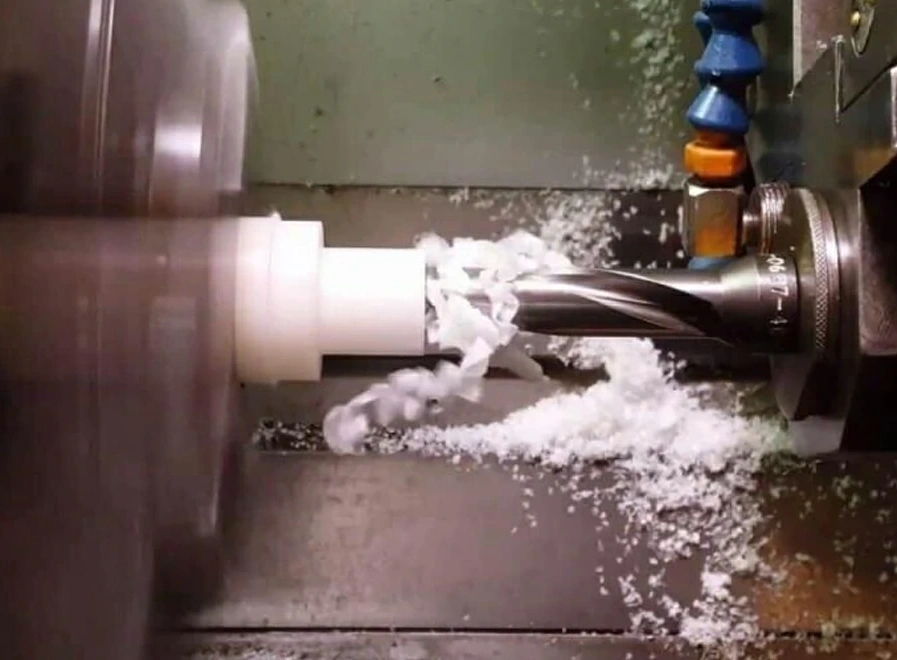
No, ABS machining is good with air blast or light mist-type cooling. Too much coolant is often unnecessary. It could even promote the entrapment of chips around the cutting edge, which is a recipe for heat accumulation.
Different ABS Machining Techniques/Methods
ABS types respond well to CNC turning, CNC milling, CNC routing, and precision micro-machining. A machinist’s experience is measured by the ability to select the right one for the application and the specific ABS grade.
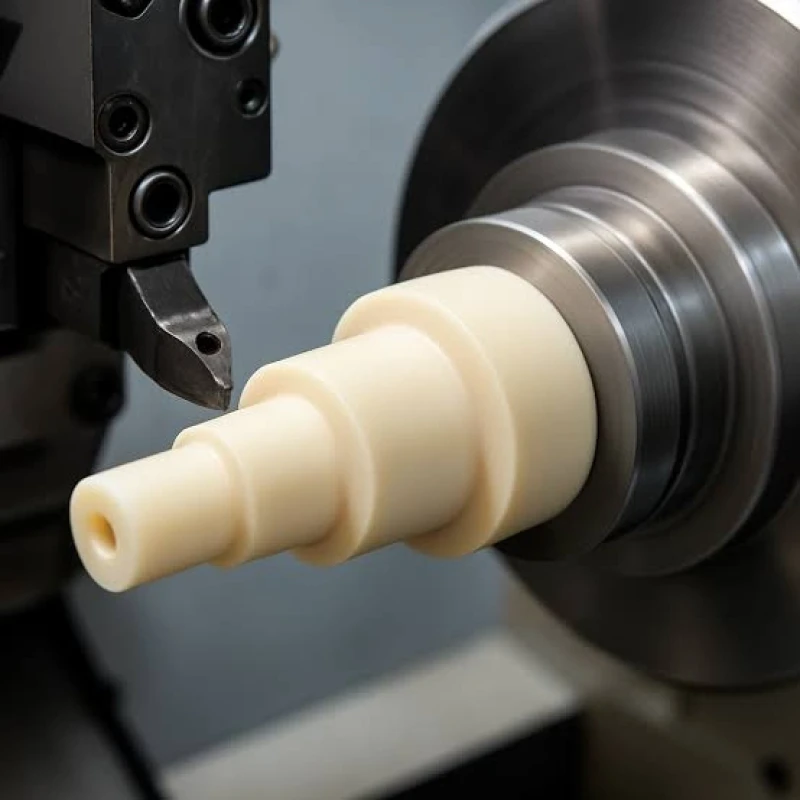
CNC Turning – A single-point cutting tool is used to produce cylindrical parts like shafts, bushes, and spacers.
CNC milling ABS plastic – CNC milling ABS plastic is the default ABS machining method for brackets and enclosures. It is also used to make complex 3D features, particularly those containing undercuts and pockets.
CNC Routing – CNC routing is ideal for fast and efficient removal of material on large flat surfaces. Micro-tolerance of the part is less important than the material removal rate.
Precision Micro-Machining – This ABS machining technique is ideal for producing medical components and other tight-tolerance features. The machinist can control the finer details of machining, including tool deflection.
Top 5 Considerations for Effective ABS Machining
Five things you need to get right when machining ABS material: ABS grade, cutting tool selection, cutting parameters, coolant, and heat & chip management. Overlook on and you are staring at the risk of broken tools, poorly machined parts, and a dent in the bottom line.
- Right ABS grade
Whether general-purpose, FR, or high-impact, the ABS grade should be matched to its end-use requirements before CNC machining. This is essential because the grade selected determines the machining and surface finishing options.
- Tool selection
ABS cutting tools should be sharp with a high positive rake to reduce friction.
- Cutting parameters
High spindle speeds and moderate feed rates are recommended.
- Coolant
Flood coolant is usually not necessary in ABS machining; a light mist and air blast are often adequate.
- Heat and Chip Management
With its low glass transition point, ABS in machining can easily remelt or become distorted if chip evacuation is poor. Dwell time should be avoided as much as possible.
Common Surface Finishes for Machined ABS Parts
Surface finishes for ABS machined parts include As-Machined, Mechanical Polishing, Light Bead Blasting, Painting / Spray Coating, and CNC Textured Machining.
The details for these surface finishes are as follows.
| Surface finish | Feature | Color | thickness/impact |
| As-Machined | CNC-machined surface with visible tool marks depending on cutting parameters | Natural material color | No additional material removal beyond machining |
| Mechanical Polishing | Improved surface smoothness with reduced machining marks; gloss level depends on part geometry | Natural material color | Minor material removal; not recommended for tight-tolerance or functional surfaces |
| Light Bead Blasting | Uniform matte surface texture; surface whitening may occur | Natural material color | Slight dimensional change possible; not suitable for precision mating features |
| Painting / Spray Coating | Decorative or functional coating for color, appearance, or surface protection | Custom | Typical coating thickness 10–30 μm; dimensional impact should be considered for assemblies |
| CNC Textured Machining | Machined surface patterns created through controlled toolpaths for grip or visual effect | Natural material color | Dimensional impact depends on texture depth and pattern density |
Benefits and Limitations of Custom ABS Machining
ABS provides a balance of machinability, toughness, and cost-effectiveness. Despite these advantages, there are limitations to note, including UV degradation, warping, and flammability.
Benefits of ABS CNC Machining
- Excellent machinability
- A broad range of possible finishes
- Good dimensional stability
- Cost-effective raw materials compared to engineering-grade plastics
- Recyclable
Limitations of ABS CNC Machining
- Prone to solvent attack
- UV degradation
- Can warp with poor heat management
- Flammable – flame retardant required
- Limited chemical resistance compared to specialty engineering polymers
Five main industrial Applications of ABS Machining
Machining ABS plastic is a popular practice in the automotive, food processing, defense, medical, and electronics industries. Despite its relatively affordable polymer pricing, ABS offers durable and machinable performance in these industries.
Automotive Industry
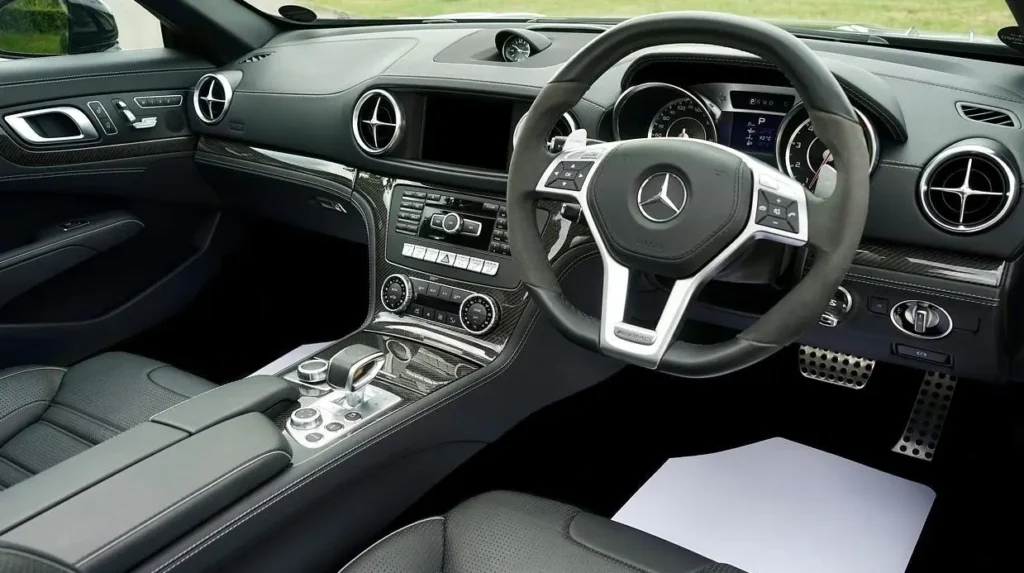
ABS machined parts are rarely used in high-load automotive applications. However, it is popularly used in dashboard components, interior trim, steering wheel covers, and air vents.
Food processing
ABS machined parts are commonly used in the manufacture of conveyor housings and equipment guards. They are also applied for impact resistance in non-contact machine panels.
Defense
The defense sector values the impact resistance of ABS plastics as used in communication device covers, field equipment enclosures, and rugged equipment enclosures.
Medical
Medical-grade CNC plastic is found in instrument trays and diagnostic device housings.
Electronics
ABS has natural electrical insulating properties, which are valuable for connector housings and consumer equipment enclosures. ABS gaskets are particularly effective as connector interfaces and sealing components for housings.
Trends in ABS CNC Machining Technology
Key trends in the ABS CNC machining world are advanced automation, AI integration, IoT integration, and real-time data analysis. Machine shops are increasingly adopting smarter and more connected systems, and in the process, ABS CNC machining is becoming faster and more precise.
- Advanced automation
- AI integration
- IoT integration
- Real-time data analysis in CNC machines
Conclusion
With its unique combination of cost-effectiveness, dependable performance, and fast cycle times, ABS machining is common in medical, automotive, defense, and electronics, among other sectors.
Success in these applications requires the use of the correct ABS grade, expert chip management, and proper tooling.
A reliable CNC machining partner gets these variables right. It doesn’t matter whether the project is for full production or a prototyping one; the part will perform as per specifications.
Have you settled on ABS CNC-machined parts? With a design file upload, you will get a thorough DFM review from our engineers. This is where you raise all your tolerance and grade queries, and professionals with first-hand experience will answer you.
While at it, check out our ABS machining service. Start the conversation today!
Resources
[1]. https://www.researchgate.net/figure/The-physical-properties-of-the-ABS-plastic_tbl1_259095339
[2]. https://www.researchgate.net/figure/The-mechanical-properties-of-ABS_tbl1_336517424