
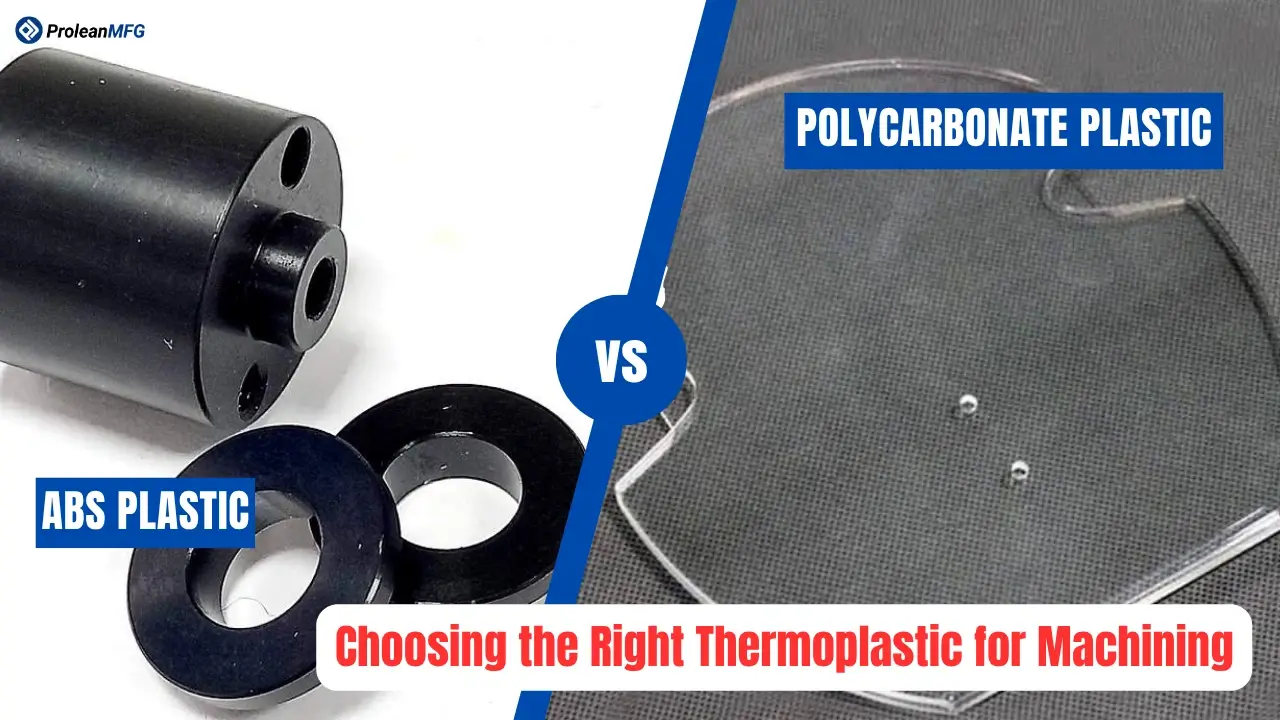

Acrylonitrile Butadiene Styrene (ABS) is an affordable, rigid, and easy-to-machine thermoplastic, but it suffers UV degradation. Polycarbonate offers superior optical clarity, impact strength, and heat resistance at a higher price.
The trade-off between affordability and machinability vs clarity and strength should determine which one between ABS and polycarbonate you use in the upcoming CNC machining project. A wrong choice means your parts could crack or fail under load, fade from UV light, or exceed your budget.
The machining requirements and specific performance of ABS and polycarbonate determine which one is selected for a machining project. With the below comparison of mechanical properties, machinability, UV resistance, chemical composition, and cost below, it is easier for you to select the better plastic for your application.
What is ABS Plastic?
ABS is an amorphous terpolymer comprising Acrylonitrile, Butadiene, and Styrene. Amorphous means that the long molecules in the material are not orderly, but rather random and unstructured.
There can be different combinations of these monomers, which is why ABS is available in a wide range of different plastics. Manufacturers use the copolymerization technique to achieve this diversity.
This engineering thermoplastic is widely used in CNC-machined parts for its stiffness and impact resistance, at a competitive cost.
Material Properties of ABS Plastic
The key material properties of ABS plastic are listed in the table below.
| Material | Glass transition temperature (Tg)(°C) | Density of ABS plastic (g/cm³) | Tensile Strength (MPa) | Elongation at Break (%) | ABS hardness IN HV (Vickers) | |
| ABS | 88–128 °C | 1.01–1.21 | 27.6–55.2 | 1.5-100 | 5.6–15.3 | |
[2] *Note that these values are representative of a variety of grades, hence the ranges.
What material is ABS: Various ABS Plastic Grades
The family of ABS formulations comprises General-purpose ABS, High-impact ABS, Flame-retardant ABS (FR), Antistatic / ESD ABS, PC/ABS blend, and Glass-filled ABS (10–20% GF).
The ABS grade influences machinability, post-processing, and applications.
Below are more details about these ABS grades.
| ABS Grade | Main Characteristics | Applications of CNC-Machined Parts |
| General-purpose ABS | Machinability, impact strength, stiffness | Brackets, prototypes, enclosures |
| High-impact ABS | Lower stiffness than GP ABS | Prototypes, housings, protective guards |
| Antistatic / ESD ABS | Carbon-loaded | Equipment enclosures, trays, and electronics housings |
| Flame-retardant ABS (FR) | Slightly brittle, self-extinguishing | Equipment covers, electronics housings |
| PC/ABS blend | Harder to CNC machine, higher impact resistance | Structural enclosures, automotive interior parts |
| Glass-filled ABS (10–20% GF) | Higher dimensional stability and stiffness, higher tool wear | Brackets, tooling, precision fixtures |
Is ABS Material Safe?
The answer to this question is not straightforward because one has to consider the extent of exposure, the disposal mechanism, and the type of ABS plastic.
Using an ABS part frequently is not the same as using it occasionally in terms of chemicals that may leach from the material over time.
The safety of ABS also depends on whether the material is dumped in a landfill or recycled. Recycling is safer because it reduces the environmental impact.
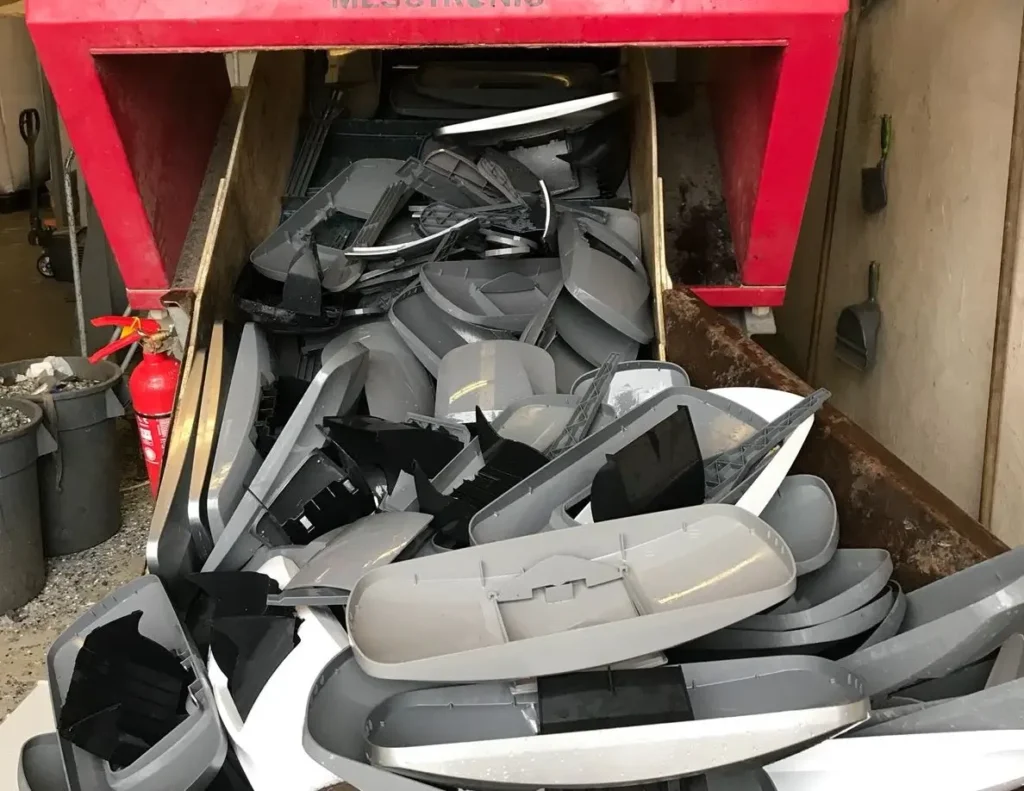
Some ABS grades contain more additives or impurities, causing disparity in safety levels. For example, bisphenol A (BPA), a chemical found in some low-quality ABS grades, can cause hormonal problems.
Is ABS a Strong Plastic?
Yes, ABS can be considered a strong plastic with good tensile strength, impact strength, stiffness, and toughness. It offers a good balance of mechanical strength and impact resistance suitable for a wide range of applications.
What is ABS Plastic Used For?
Common applications of ABS plastic machined parts are electronics, medical, automotive, defense, and food processing.
Electronics – ABS plastic machined parts in electronics are widely used in power plugs, enclosures, and insulation systems. The plastic’s moisture resistance and thermal stability are critical in these applications.
Medical – For the medical industry, ABS plastic parts include compressors and nebulizers. The material matches the lightweight and strength requirements for such parts.
Automotive – ABS has adequate impact resistance, strength-to-weight ratio, and scratch resistance for steering parts and interior components.
Defense – For the demanding defense industry, manufacturers use ABS parts for defense pads.
Food Processing – The dynamism of ABS is evident from its suitability for food processing components such as food dryers, refrigerator liners, and ovens.
Strengths vs. Limitations of ABS Plastic
Like other engineering plastics, ABS plastic has several strengths and limitations, as the following table summarizes.
| Strengths of ABS Plastic in CNC Machining | Limitations of ABS Plastic in CNC machining |
| ► Good chemical resistance – Alkalis, acids, and oils ► High rigidity and impact resistance ► Relatively low cost ► Can produce a high-gloss appearance | ► Low fatigue strength compared to Delrin and nylon ► UV degradation ► Relatively expensive compared to commodity plastics ► Limited resistance to acetone and esters |
If you are looking for cost-effective parts with tight tolerances and mostly aesthetic, ABS is likely the answer. But if your application demands optical clarity and greater impact resistance, take a closer look at PC material.
What is Polycarbonate?
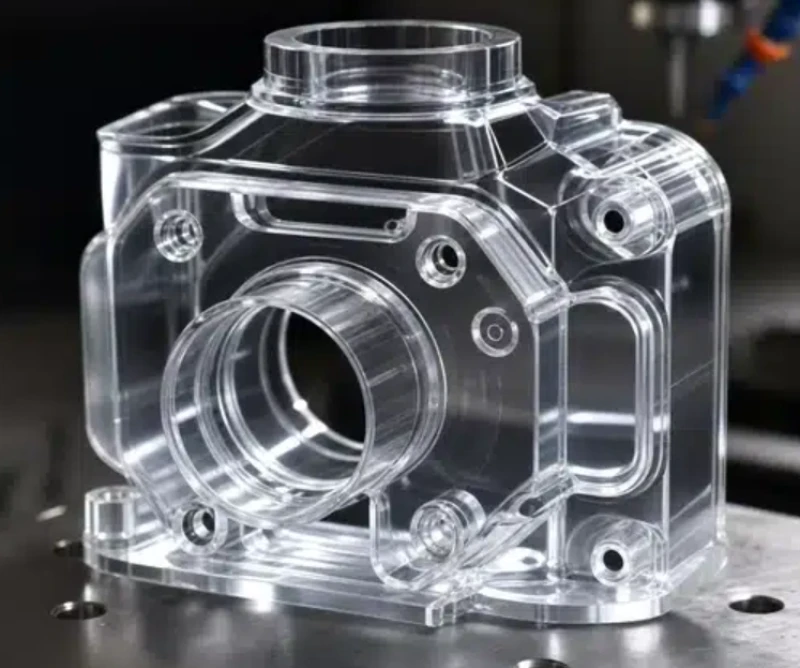
Polycarbonate is a transparent, impact-resistant, and dimensionally stable amorphous thermoplastic. It is exceptionally machinable, thermally stable, and stain-resistant. The material also has low water absorption.
Some popular polycarbonate grades are Machine Grade, Window Grade, and Glass-reinforced polycarbonate.
Material Properties of Polycarbonate
The key pc material properties are listed in the table below.
| Material | Melting Point (°C) | Density (g/cm³) | Tensile Strength at Yield (MPa) | Tensile strength at break (MPa) | Elongation at Break (%) | Ball indentation / Rockwell hardness |
| Polycarbonate | 150 – 160 °C | 1.20 | 60 | 72 | 150 | M72 / R118 |
[1]
Various Polycarbonate Plastic Grades
The four main grades of polycarbonate plastic are machine grade, window/optical, glass-reinforced, and flame-retardant. The main characteristics and applications of each option are summarized in the table below.
| Polycarbonate grade | Key characteristics | Applications of PC CNC-machined parts |
| Machine grade | Easy to machine, dimensionally stable | Prototypes, brackets, covers |
| Window/optical | Good impact resistance, high optical clarity | Protective covers, inspection windows |
| Glass-reinforced | Dimensionally stable, stiff, strong | Electrical housings, precision fixtures, brackets, machine parts |
| Flame-retardant | Good impact resistance, flame resistance | Equipment enclosures, electrical housings |
What is Polycarbonate Used For?
Polycarbonate CNC-machined parts are commonly used in automation equipment, medical devices, electronics & electricals, and new energy. The material’s impact-resistant and light nature matches the demanding requirements of these and other industries.
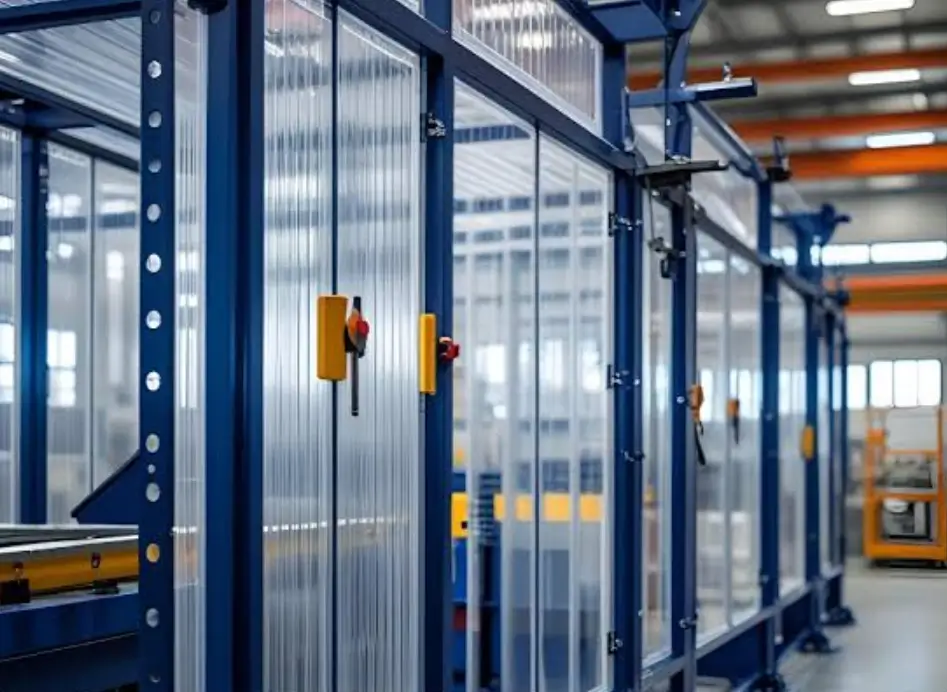
Automation Equipment – PC machined parts are used in automated production lines. The plastic is specifically used in safety door windows, equipment enclosures, control panels, and safety guards.
Medical Devices – Many medical instruments are made of PC for reliability and safety. The parts are found in diagnostic equipment, instrument housings, protective structures, and laboratory apparatus components.
Electronics & Electricals – PC machined parts for this industry include insulating brackets, display windows, and electrical protective covers.
New Energy – Typical applications in this fast-expanding industry are battery equipment viewing windows, equipment protective components, and industrial transparent covers.
Strengths and Limitations of Polycarbonate in CNC Machining
The strengths of PC material in CNC machining include optical clarity and dimensional stability, while limitations include heat sensitivity and proneness to stress cracking. The full list of these characteristics is outlined below.
| Strengths of Polycarbonate in CNC Machining | Limitations of Polycarbonate in CNC Machining |
| ►Exceptional impact resistance ►Tight tolerance capability ► Design flexibility without the need for new tools | ►Heat generation ►Tool marks ►Moisture sensitivity |
ABS vs Polycarbonate: Comparison Along Different Factors
The distinction between ABS and polycarbonate plastic is clear when viewed along chemical properties, mechanical properties, physical properties, UV resistance, processing, cost, and applications.
More about the specific differences is discussed below.
ABS vs Polycarbonate: Chemical Properties
The ABS vs polycarbonate element concerning chemical properties should first address the chemical structures of the two plastics. ABS is a copolymer produced by polymerizing acrylonitrile, butadiene, and styrene.
The specific properties attributed to the monomers are;
- Acrylonitrile – ABS hardness and chemical resistance
- Butadiene – impact strength and toughness
- Styrene – shiny surface
PC material is manufactured by reacting phosgene with bisphenol A. The plastic’s main properties are high heat resistance, tensile strength, and optical clarity.
ABS vs Polycarbonate: Mechanical Properties
About polycarbonate mechanical properties, the plastic has higher tensile strength than ABS at tensile strength at break of 72 MPa for the referenced grade, compared to 27.6–55.2 MPa for various ABS grades. [1][2] It is also relatively flexible, although prone to scratching.
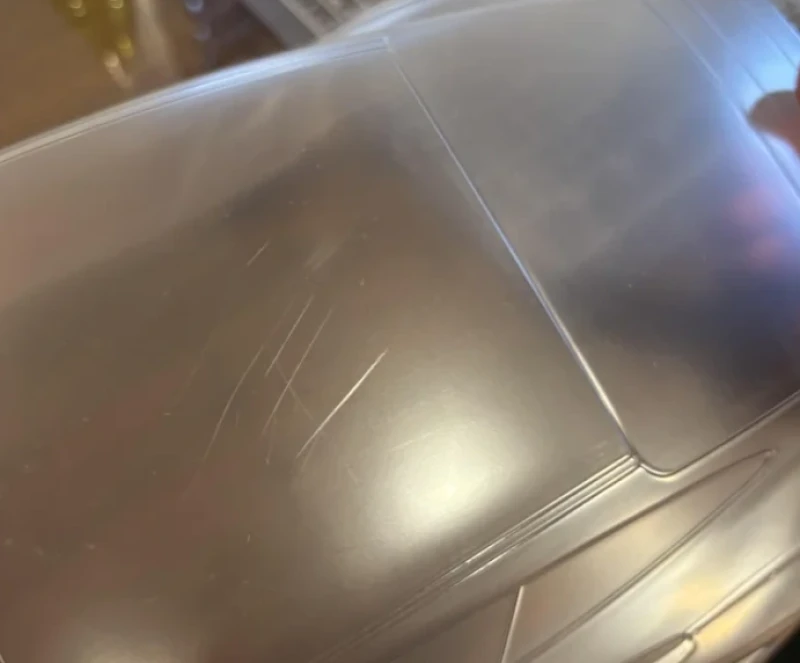
On the contrary, ABS is scratch-resistant. It is also rigid and resilient, properties that translate to high durability.
ABS vs Polycarbonate: Physical properties
Polycarbonate is a transparent and versatile material widely used in applications requiring optical clarity. The material has excellent impact resistance, even at low temperatures. It also has good dimensional stability.
ABS is renowned for its good impact resistance at room temperature. It has a recognizable opaque appearance with a matte finish.
Looking at the density of ABS plastic and PC material, PC material is slightly denser than ABS grades at 1.20 g/cm³ and 1.01–1.21 g/cm³, respectively. [1][2]
ABS vs Polycarbonate: UV Resistance
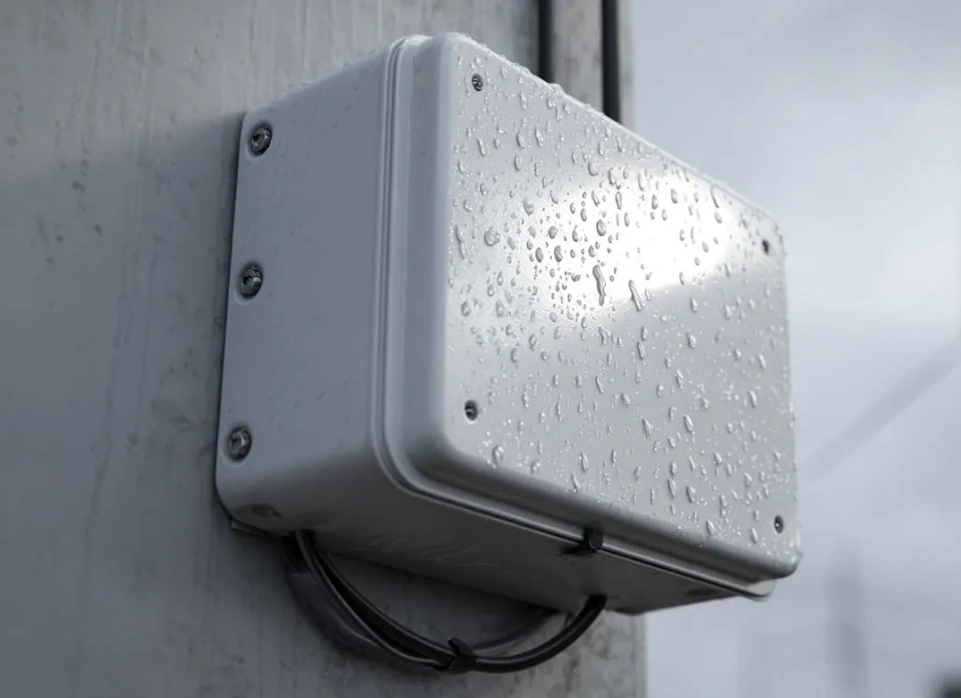
ABS does not withstand extensive exposure to UV rays. This usually shows as discoloration. The life of the material also decreases. UV resistance in ABS can be enhanced through the addition of UV coatings or stabilizers.
ABS vs Polycarbonate: Processing
ABS and polycarbonate behave very differently when being CNC machined and injection molded, and afterward.
ABS is less susceptible to stress cracking when machined with aggressive toolpaths and higher cutting speeds. It is easier to CNC machine for complex geometries.
Stress concentration and localized heat affect polycarbonate more. This challenge is more pronounced in thin sections and internal corners.
Requirements for polycarbonate machining are sharp tools and reduced cutting speeds.
There is also a notable difference in thermal behaviour between ABS and polycarbonate. The glass transition temperature range for ABS grades is 88–128 °C, while the thermal transition for polycarbonate grades is between 150 and 160 °C. [1][2]
ABS vs Polycarbonate: Cost
Polycarbonate tends to be pricier than ABS, mainly because its raw material is more expensive. Synthesizing its chemicals during processing is more demanding, leading to more energy use in production.
ABS vs Polycarbonate: Applications
As a blend of acrylonitrile, butadiene, and styrene, ABS has the versatility to accommodate different industrial applications – appliance housings, automotive parts, toys, consumer electronics, and so on.
Polycarbonate is also versatile, with applications such as automotive headlights, riot shields, eyeglass lenses, and bulletproof windows.
Choose ABS When
- The part is for indoor use
- You need to minimize production costs
- You are manufacturing for packaging, electronics, or 3D printing applications
Choose Polycarbonate When
- The product should be impact- and heat-resistant
- You are looking for long-term sustainability and durability
- The part is designed for outdoor use and high clarity – glass-like
Conclusion
The choice between ABS and polycarbonate depends on the application’s specifications. That’s because both materials have distinct pros and cons. Factors such as strength, temperature resistance, UV resistance, transparency, and budget play a big role in the decision.
At ProleanTech, our materials experts will walk you through each material, outlining its performance, budgetary, and durability aspects. We can accommodate your ABS and PC manufacturing requirements, whether low-volume or high-volume.
Share your part specifications or CAD files with our engineering team. After a thorough review, we’ll recommend the best plastic grade and machining strategy. You will then get a competitive quote within 24 hours.
Learn more about our PC and ABS machining services today!
Resources
[1]. https://www.directplastics.co.uk/pdf/datasheets/polycarbonate-sheet-data-sheet.pdf
[2]. https://www.sciencedirect.com/topics/engineering/acrylonitrile-butadiene-styrene