
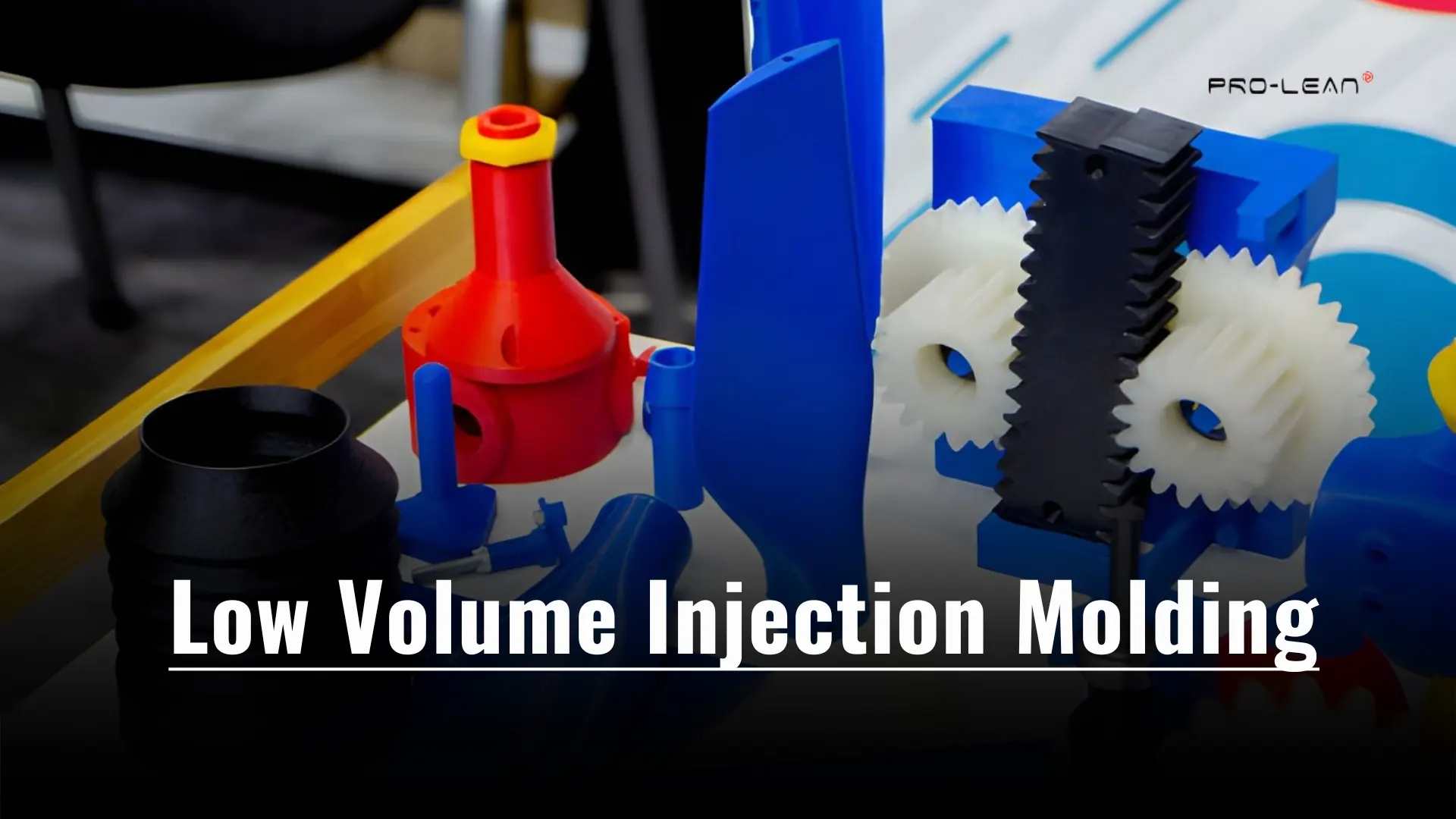

Low volume injection molding is used to produce plastic parts in small quantities, typically 100-10,000 pieces. It’s a good option when a design is ready and needs real-world testing, or when you want to start production before investing in expensive high-volume tooling.
Instead of fully hardened steel molds used for mass production, low-volume projects often use aluminum molds for faster and cost-effective tooling. These tools cost less and can be made more quickly, helping reduce lead time and upfront costs.
Steel molds can still produce complex parts with good accuracy and surface finish in low-volume runs. They also last longer and perform better than 3D-printed molds.
This article examines how low-volume molding works, when to use it, how molds are made, and what to consider during part design to avoid problems later.
How Low-Volume Plastic Injection Molding Works
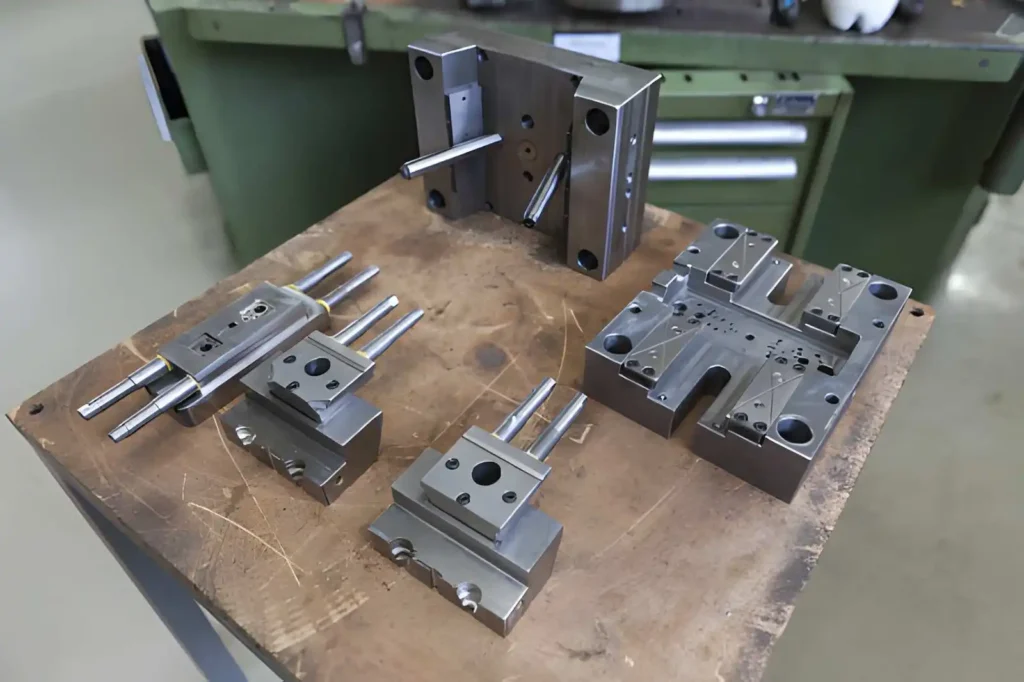
Low-Volume Molding Tool
The primary difference between traditional injection molding and low-volume (smaller) injection molding is the quantity produced. Otherwise, both methods follow the same process for creating parts.
First, plastic pellets are fed into a “hopper” on the molding machine, then move into a heated chamber (barrel). In that heated chamber, the plastic pellets melt. Once the plastic has melted, a screw inside the barrel begins to rotate, pushing the plastic forward and building pressure.
Temperature and pressure must be controlled to produce parts free of defects such as “short shot,” “warping,” and/or surface imperfections.
Injecting Plastic into Molds
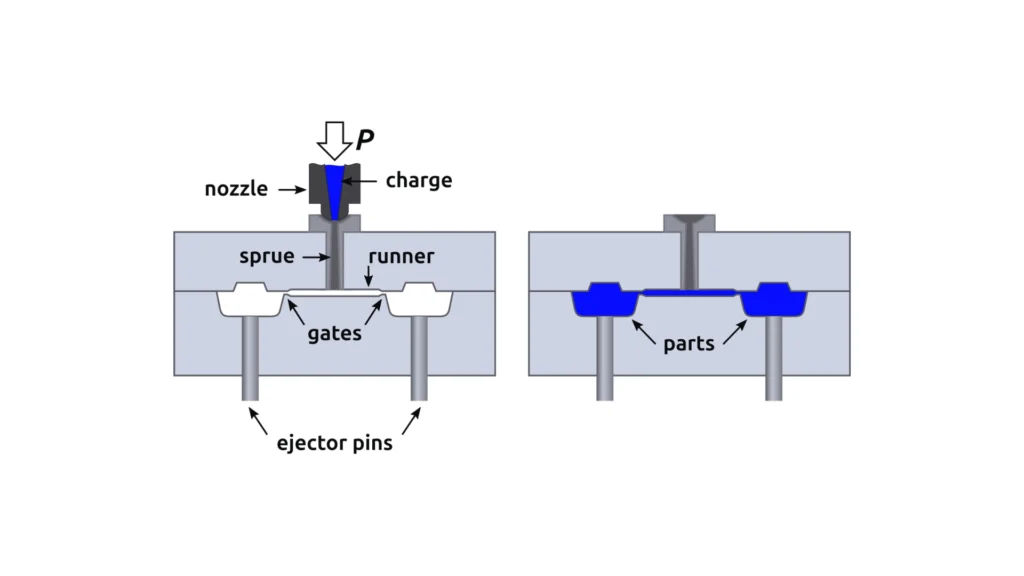
Injection Molding Process Illustration
When sufficient pressure builds up inside the molding machine, the machine will inject a predetermined amount of liquid plastic into the mold. The liquid plastic will flow down the runners (channels) to the gates, where it enters the cavity and fills the mold. The plastic will cool and solidify once the mold is closed and the plastic has entered the mold.
Low Volume Injection Molding
Low-volume injection molding uses either a “hot runner” system or a “cold runner” system:
- Hot Runner Systems: Hot runners generate less waste material and provide better flow control; however, they tend to be more expensive.
- Cold Runner Systems: Cold runner systems are generally less expensive and easier to install; however, they produce more scrap.
For low volume production runs, cold-runner systems are generally selected to keep mold tooling costs lower.
Removing Parts from Molds
Once the molded part has cooled, an actuator opens the mold, and the ejection pins push the part out.
In addition to using ejection pins, some molded designs include “undercuts.” Undercuts are areas of the design that cannot be removed from the mold without damaging the part.
To remove parts with undercuts, additional mechanisms are sometimes required. There are several types of mechanisms that can be used to remove parts with undercuts:
- Slider Mechanisms: Slides are used to remove external undercuts.
- Lifter Mechanisms: Lifters are used to remove internal undercuts.
- Hand Loads: Hand loads are a type of hand-loading mechanism used to manually place inserts into the mold to form complex features of the part. Because they reduce mold tooling costs, hand loads are commonly used in low-volume production applications. However, due to the need for manual intervention at each cycle, hand loads can increase the labour required to produce parts.
Finishing Operations
Depending upon the application of the molded part, some minor finishing operations may be necessary.
- Flash is the excess material created around the mold parting line. Flash is an unintended defect in injection molding. It is typically caused by improper clamping, mold wear, or gaps at the parting line. Proper mold design and clamping pressure will help to eliminate excessive flash.
- Clamping pressure is the force applied to the mold to close it during injection. Excessive mold opening will result in excessive flash and/or other molding defects. Clamping force in injection molding depends on the part’s projected area and cavity pressure, not on whether the run is low- or high-volume.
When to Use Low Volume Injection Molding
Micro injection molding is used to manufacture extremely small parts, typically weighing less than 1 gram, rather than referring to small production runs, but cannot afford to invest in a large-scale production mold. This method is suitable for making reliable parts for testing or use in an early-production setting.
Injection Molding for Early Prototypes
For the earliest stages of a product’s design, 3D printing is the best choice. Using 3D printing makes it easier to make fewer than 100 parts and to make design changes without spending money on molds.
It would be impractical to spend time and money on modifying a mold if the product’s design is changing frequently. The longer the timeline for mold making and tool modification, the longer it will take to get your product to market.
Injection Molding for Mature Prototypes
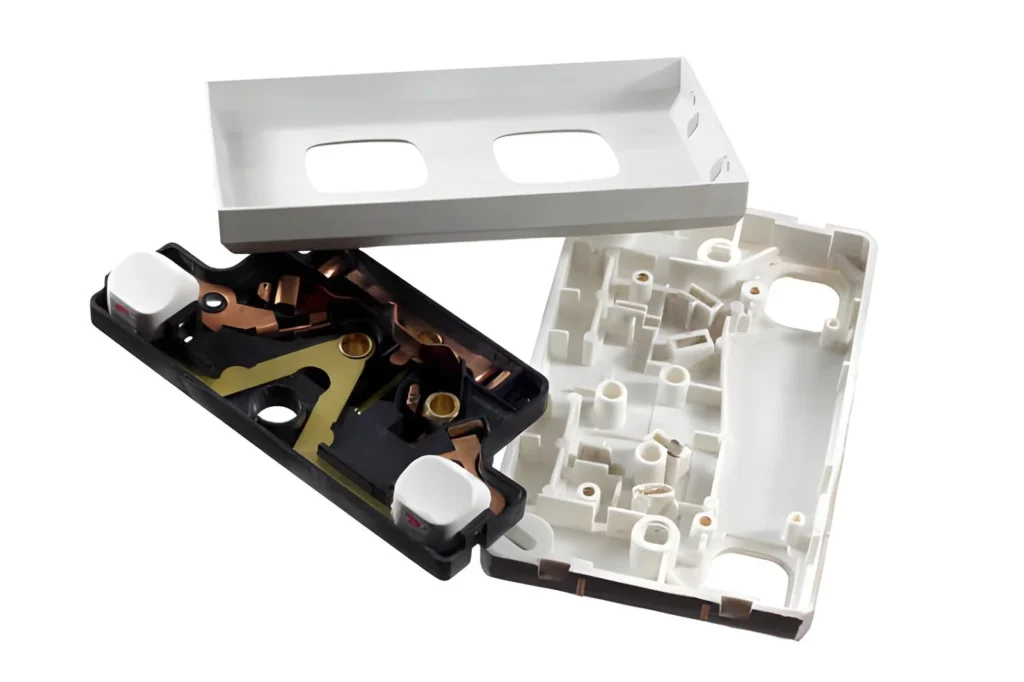
Wall Switch Plastic Housing
Once the design is complete, low-volume injection molding is the next step in making reliable parts. Using this method allows you to create parts from the same materials as your final product and to develop them using the same production processes.
Prototype injection molding is especially important when you need to test your parts for performance, strength, or when you have to pass a regulatory check, such as a First Article Inspection (FAI).
When Material Performance Matters
The strength and durability of a 3D-printed part do not always meet the standards of an injection-molded part. A 3D-printed part will rarely meet mechanical property requirements and/or perform well during functional testing.
If your project requires the strength and/or performance of a molded part, it is the better choice.
Bridging to Production
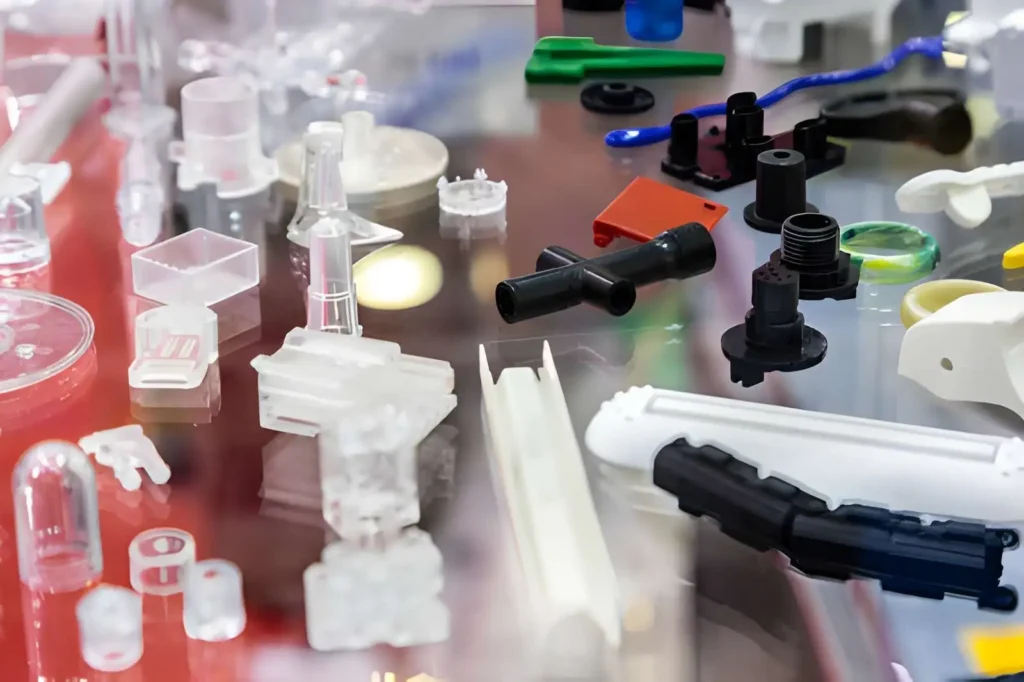
Prototype plastic parts
Low-volume injection molding can be used to bridge the gap until you are ready to go into full-scale manufacturing. Low-volume injection molding is typically used to produce 100–10,000 parts, or up to 50,000 for bridge tooling, before moving to full-scale production.
Low-Volume Injection Molding vs Traditional Injection Molding
Traditional Injection Molding
Traditional injection molding is well-suited for mass production. The process produces consistently shaped parts with tight tolerance specifications; thus, it is used in many large-volume industries such as automotive, electronics, and consumer products.
How the Process Works
A plastic material is first melted, then injected into a mold under heat and pressure. After cooling the mold, the part is ejected. Several types of plastics can be molded using this method, including ABS (Acrylonitrile Butadiene Styrene), PP (Polypropylene), PE (Polyethene), PC (Polycarbonate), and TPU (Thermoplastic Polyurethane). Specific methods may also mold metal and ceramic materials.
Tooling in Traditional Molding
In traditional injection molding, most molds are made of steel using CNC machining or electrical discharge machining (EDM). The molds will last for thousands of shots and provide large-volume capabilities; however, they are typically costly and require weeks to create.
Challenges for Small Runs
Due to the cost and time required to create steel molds, they can be a prohibitive option for low-quantity jobs. Creating a steel mold for a job that requires only a few hundred units would be an inefficient use of money and resources.
Low-Volume Injection Molding
The alternative to creating steel molds for low-volume jobs is low-volume injection molding. This type of molding enables the creation of molds that are much less expensive than steel ones. The molds are made from softer steels or via 3D printing, significantly reducing the upfront costs of mold creation.
Additionally, the mold-making process is much faster than when building a steel mold. Low-volume molding is ideally suited for prototyping, pilot runs, and short production runs. While the initial cost of creating the molds is lower, the quality and functionality of the parts remain the same as those produced with traditional high-volume tooling.
Alternative Tooling Options
Using soft steel molds, or molds created through 3D printing processes, allows manufacturers to produce small batch quantities at a significantly reduced cost and with a much shorter lead time than making a high-volume steel mold. Manufacturers can now test their designs and begin producing parts before investing in full-scale tooling development.
Benefits of Low Volume Injection Molding
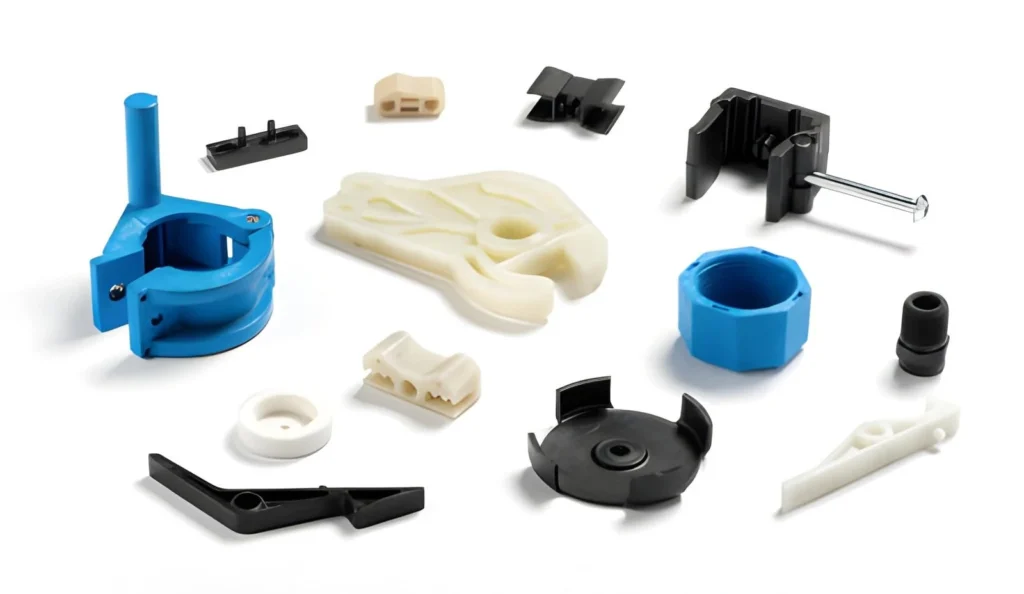
Low-volume injection molded parts
- Lower Tooling Costs: Low volume manufacturing enables the use of aluminium or 3D-printed molds rather than costly steel molds for your first run. This will reduce the cost of setting up your production process, allowing you to create prototypes and small-batch products with a low initial investment.
- Less Material Waste: The amount of material used to make your components (plastic) is reduced when producing lower volumes. Total material costs are reduced, as is the price of managing excess materials/scrap.
- Faster Production: For lower-volume production, molds are available more quickly than for full-scale production. Therefore, your first components can be delivered sooner than if you had to wait for the entire production tooling to become available. This also allows you to keep your project timeline on track.
- Easier Design Changes: Because the number of molds needed to complete a run is smaller, you can make design changes from one run to another with less cost associated with changing the molds required for each production run. This is especially useful for creating prototypes, testing different versions of the product, or making improvements to the component before high-volume production.
- Consistent Part Quality: Whether you are producing a few hundred or several thousand components using the same molds, the molded parts will meet the exact specifications and tolerance requirements. In many cases, achieving this consistency is difficult with 3D printing or other forms of rapid prototyping.
- Handles Complex Features: Components with complex geometries and/or fine detail can be created through injection molding. In addition, thanks to the precision of the molding process, your components will have accurate dimensions and a smooth finish.
Low Injection Pressure in Low Volume Injection Molding
- Poor Dimensional Accuracy: At times, insufficient injection pressure results in molded parts with some desired features missing, as the plastic is unable to fill the mold. If a part has a specific feature that it must fit within another part, this poor dimensional accuracy could lead to severe difficulties.
- Surface Finish Issues: The surface finish of molded products can be adversely affected by low injection pressures. In addition to creating a merely rough surface, a low-pressure shot may also create unevenness or defects, such as sink areas, flow marks, etc.
- Incomplete Mold Filling: When the molding machine pressure is insufficient to fill the mold, short shots occur. Short shots are parts that were not filled during the molding process, leaving them unusable.
- Porosity and Air Pockets: Low-pressure molding may lead to porosity and air pockets in the molded product. Trapped air weakens the molded product’s integrity and creates potential failure points when subjected to loads or stresses.
- Warping and Deformation: Warpage in molded parts is mainly caused by uneven shrinkage, cooling imbalance, or material orientation; low injection pressure is a secondary factor. Deformed products may compromise functionality and/or prevent proper assembly.
- Flash and Small Defects. Flash or skin defects usually occur due to excessive injection pressure or insufficient clamping force. When flash/skin defects occur, the molded product requires additional cleaning time.
Key Design Tips for Low Volume Injection Molded Parts
If you are producing plastic parts using low-volume injection molding, following a few basic rules will improve product consistency and help prevent common manufacturing problems.
Select the Right Plastic Material
The selection of the most appropriate resin for the application depends on how you intend to utilise your product. The different thermoplastic materials vary in strength, rigidity, thermal stability, and chemical stability. Selecting the correct resin will ensure your product performs as expected in its operating environment.
Keep Surface Finish Practical
Not all products require a highly polished surface finish. Creating high-polish molds will increase the amount of time and money you spend making your products. More often than not, an as-molded finish or a slightly textured surface will be sufficient for the product’s functionality and help keep production costs down.
Maintain Consistent Wall Thickness
Using uniform wall thicknesses throughout the product eliminates warping, sinkage, and other molding defects. There is a general rule of thumb for wall thicknesses when using various types of plastics: use 0.04 to 0.14 inches. Using this range provides a strong product and minimizes the risk of problems when the plastic cools during molding.
Round Sharp Corners
Sharp internal corners cause excessive stress concentrations and create weaknesses in the product. Using a radius or rounded edge at the corner enhances the product’s structural integrity and facilitates problem-free molding.
Include Draft Angles for Easy Removal
Using draft angles (1-2 degrees) on the vertical surfaces of your product makes removal from the mold easier and less likely to damage the mold. Using draft angles significantly reduces friction during mold removal.
Consider Multi-Cavity Molds for Small Batches
When you need to produce many identical products at once, consider using a multi-cavity mold. Producing multiple products simultaneously can significantly accelerate your testing, reduce the cost per product, and save you time when running small batches.
Low Volume Injection Molding Applications
Medical Devices
Low-volume mold making enables rapid development of prototype parts used in the design phase of a medical product, such as syringes, inhalers, or the housing of a medical product under test. Additionally, it may be used to produce small quantities of customised medical equipment for individual patients.
Consumer Products
A second application is in consumer products, which may be either niche or highly specialised. In this area, examples of items that would benefit from low-volume mold making include: custom phone cases; Limited-Edition electronics; branded drinkware. The primary advantage here is that you can produce these items in small quantities without the significant expense of creating large production molds.
Automotive Parts
Additionally, it can be beneficial in automotive applications by enabling the development of prototypes of new parts or the production of small quantities for special-edition automobiles. These prototypes can then be produced rapidly and accurately using low-volume mold making.
Electronics
Finally, low-volume mold making is particularly well-suited for producing small volumes of enclosure components for electronic products such as smart watches, tablet computers, and phone cases. It allows designers to verify that their designs fit together, have acceptable finishes, and operate properly before proceeding to large-scale production.
How to Choose a Low Volume Injection Molding Supplier
Finding a good supplier will allow you to save money and time. The key factors for suppliers are as follows:
- Production Capacity: You need a supplier capable of producing small-batch quantities (typically fewer than 10,000 parts). Suppliers with experience in low-volume run production will know how to keep costs down while meeting your specifications.
- Meeting Specifications: Your supplier must produce in accordance with your drawing specifications. Your supplier may provide suggestions, but they cannot make any changes to your specifications without your approval. To avoid receiving parts that are either too large or too small to function correctly, you must ensure your supplier meets your specifications.
- Additional Services: It is helpful when the supplier can provide extra services, such as mold flow studies, design assistance, and small CNC operations. Receiving these services from a single supplier will help solve problems, save you time, and reduce delays.
- Reliability and Communication: The equipment should be up to date, and the manufacturing process should be consistent. When you have a reliable supplier who communicates with you about the delivery timeline and any issues that arise before shipment, it helps you avoid future headaches, particularly with smaller runs.
Ready to Make Your Parts?
At Prolean Tech, we focus on getting your low-volume plastic parts made right the first time. Whether it’s a prototype or a small production run, our Injection Molding Service handles mold, machining, and finishing so you don’t have to worry about hidden issues.
We can review your design, suggest manufacturability improvements, and ensure tolerances and finishes meet your requirements. Our team works with steel and aluminium molds depending on your part needs, helping you get consistent, usable parts every time.
Send us your part files or drawings today, and we’ll provide a clear plan, cost estimate, and production timeline so you can move from design to physical parts without delay.