

When a machinist considers maximizing CNC milling efficiency, one of the focus areas is climb vs conventional milling. This technical area is critical because it significantly affects machining accuracy and surface quality.
There are several reasons why many manufacturers apply climb cutting, including less heat generation, superior surface finish, longer tool life, and a higher material removal rate.
Conventional machining still draws some machinists due to its compatibility with older machines and suitability for hard surfaces and delicate fixtures.
Ultimately, the choice between the two should focus on the strength of the clamping mechanism, specific material properties, and required tolerances or accuracy.
This is not to say these are the only differences. Climb milling and conventional milling differ in tool rotation, chip formation, feed rate, surface finish, and several other areas.
This post covers more details about these milling strategies to help you understand the ideal cutter tool types and other milling fundamentals.
Overview of CNC Milling
CNC milling is a prominent CNC machining process defined by the computer numerical control of rotary tools. This subtractive manufacturing method relies on pre-programmed, controlled removal of material to create parts of varying sizes and complexity.
CNC milling is applied to a wide range of materials, including plastic, metal, and wood. The rotary cutting tool and workpiece move relative to each other along multiple axes. This enables the creation of diverse shapes and sizes of parts.
What is Climb Milling?
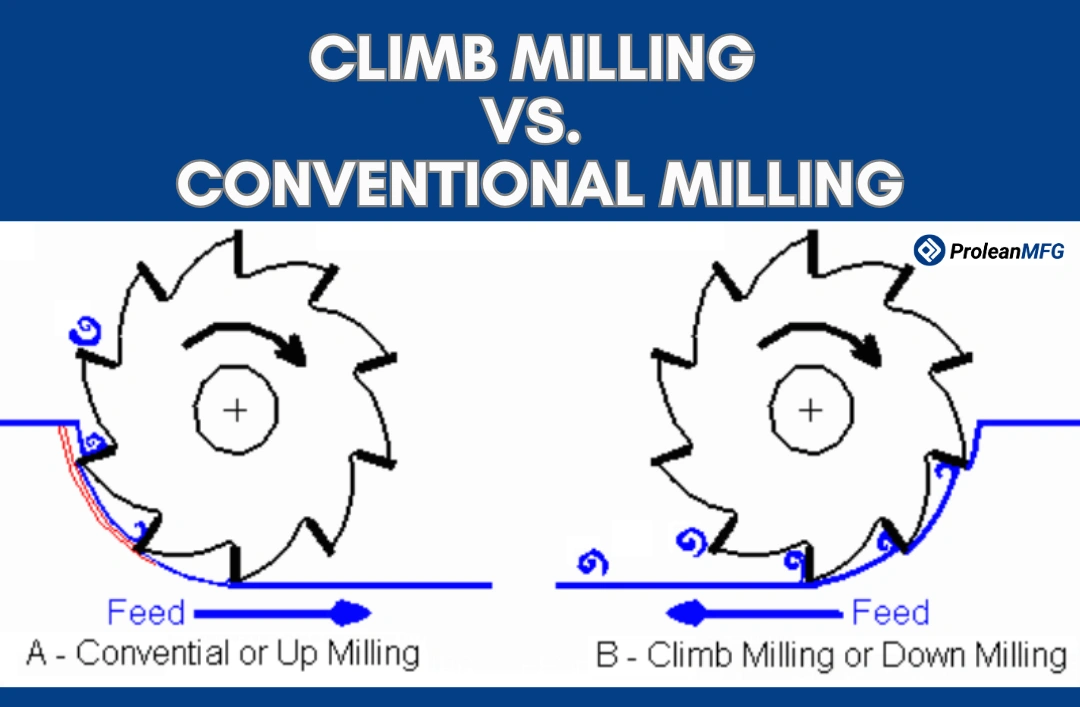
Climb milling is a broad category of CNC milling characterized by the rotary tool rotating in the same direction as the workpiece feed. The cutter’s edge engages the workpiece at the top and disengages at the bottom, as shown in the diagram below.
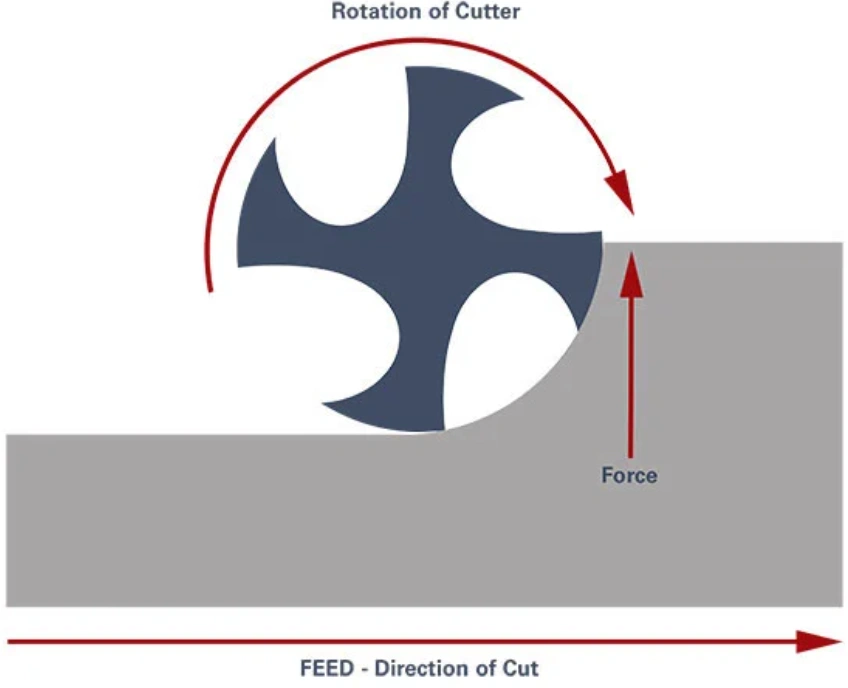
That’s why the cut is cleaner and smoother. With a quality CNC milling machine, the results are clearly different from those you can achieve from a conventional milling process.
The Advantages and Limitations of Climb Milling
The following are the advantages and limitations of climb milling.
Advantages of Climb Milling
- Smoother surface finish
- Less tool stress and deflection
- Can be more energy efficient
- Reduced vibration during cutting
- Improved tool life
- Reduced work hardening because heat generation is less
- Allows for faster machining speeds and higher feed rates
Limitations of Climb Milling
- Potential for machining inaccuracies in case of backlash (play between the machine’s feed screw and nut)
- Tool breakage risk for tougher materials
- Requires excellent control to prevent the cutting tool from digging into the workpiece
- Higher cutting forces at initial engagement between cutting tool and workpiece can disadvantage older machines – mechanical stress and machining inaccuracies.
What is Conventional Milling?
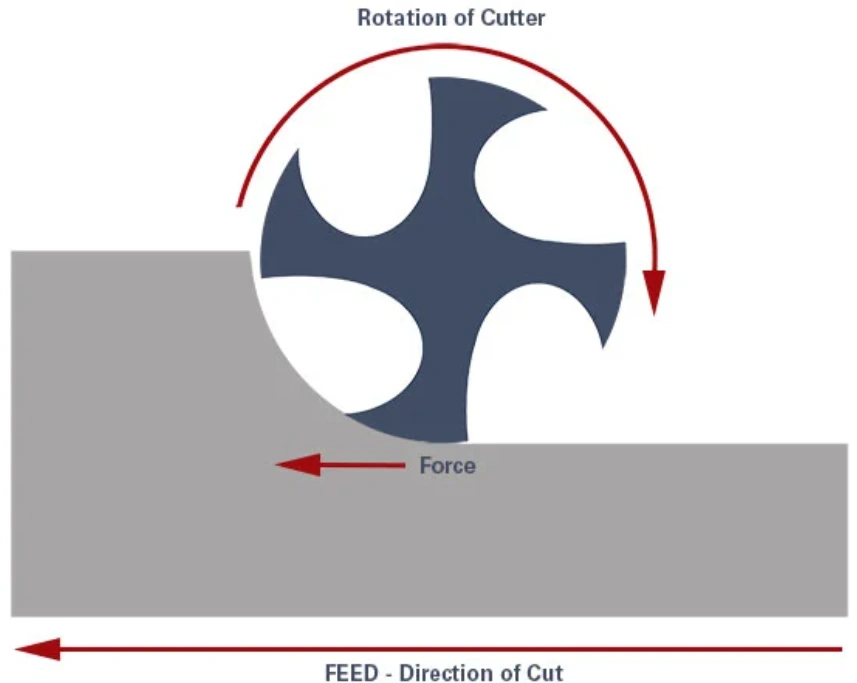
Conventional milling entails the cutter rotating against the feed direction. Its other name is up-milling. Unlike climb cutting milling, conventional cutting milling has the milling cutter engage the workpiece at the bottom of the cut.
The chip thickness is thinnest at the beginning and progressively grows as the cutter continues to engage with the material.
The Advantages and Limitations of Conventional Milling
Below are some reasons why the machinist may choose the milling strategy. The main limitations have also been outlined.
Advantages of Conventional Milling
- Low chances of the cutting tool being pulled into the workpiece
- More preferable for relatively loosely secured workpieces
- The risk of tool breakage is lower
- It is more preferable for manual milling operations – no CNC backlash compensation.
- More stable machining for harder materials that are prone to chatter and cracking
Limitations of Conventional Milling
- Risk of reduced dimensional accuracy due to the upward force exerted on the cutting milling tool
- Chip recutting instances are higher because the ejection tends to follow the cutting zone.
- Less efficient material removal
- Excessive friction and heat enhance tool wear
Main Differences Between Climb Cutting and Conventional Machining
The distinct differences between climb cutting and up-milling cover areas include the direction of tool rotation, chip thickness, surface finish, machine compatibility, and tool life. Notable differences are also in feed rate, cutting entry, and the load direction on the fixture.
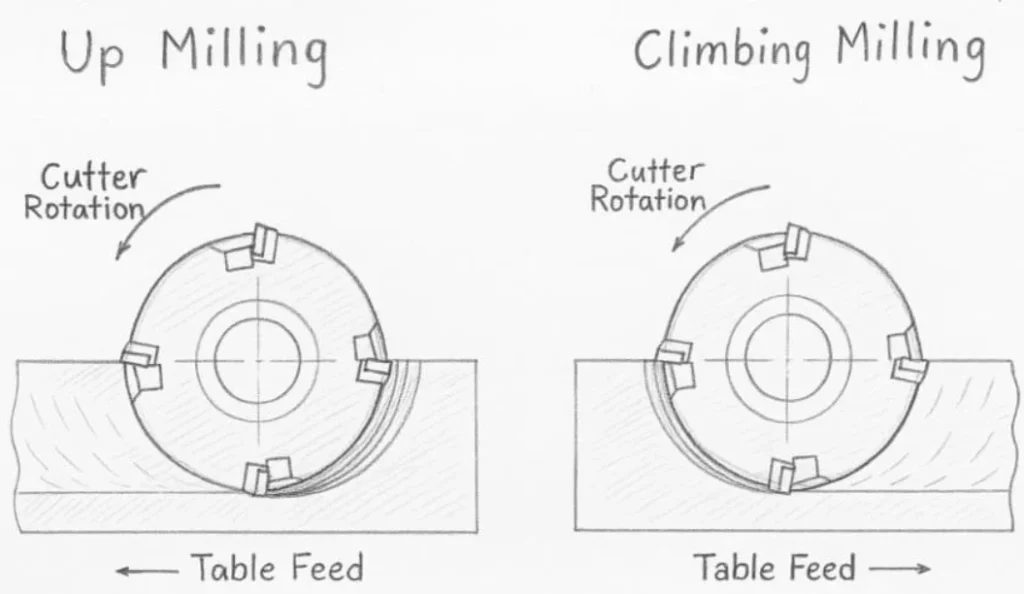
1. Climb vs Conventional Milling: Direction of the Milling Tool Relative to the Feed
For climb cutting, the cutting tool rotates with the feed direction. The tool rotation is against the feed direction in conventional milling.
2. Climb vs Conventional Milling: Chip Formation and Thickness
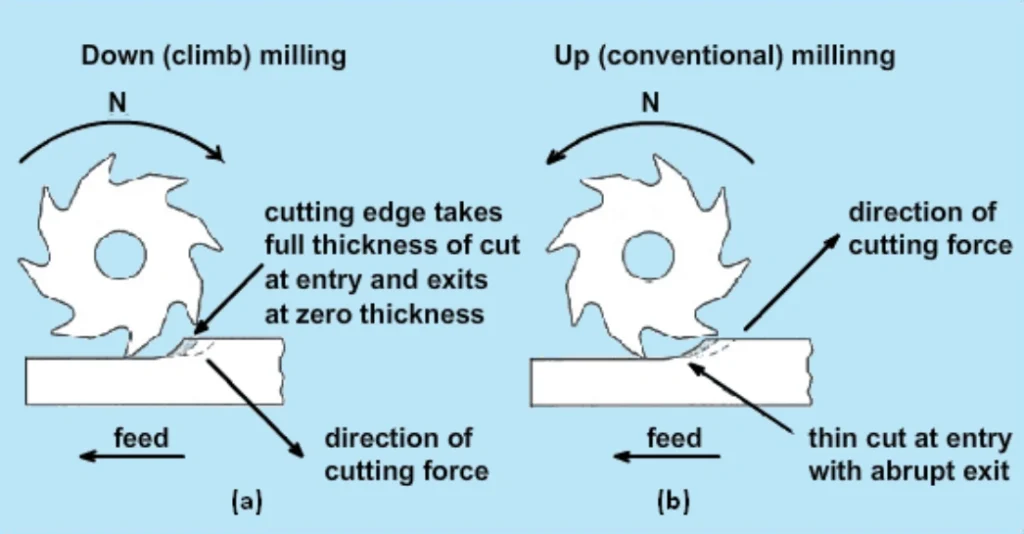
Since the tool rotates with the feed direction in climb cutting, the chip size starts thick, then progressively grows thinner. In conventional machining, the chip starts at zero and ends at the thickest point.
3. Climb vs Conventional Milling: Does Climb Milling Give a Better Finish?
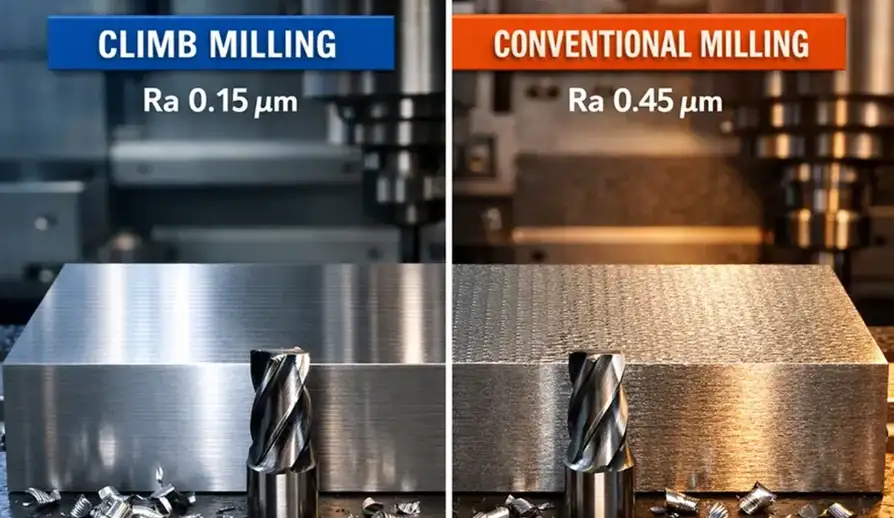
Climb cutting typically produces surfaces with finer surface finishes because the chip is thinnest at the end. There is the least force on the material at the disengagement between the rotary tool and the workpiece.
The surface finish for conventional milling is less impressive because the chip is thicker at the exit. More cutting forces are exerted, and chatter and chip recutting are possibilities.
4. Climb vs Conventional Milling: Machine Compatibility
Conventional milling is better for older milling machines. It exerts less directional force on the machines, which are prone to higher backlash.
Since modern CNC machines are engineered for minimal backlash and high rigidity, they tend to execute climb milling excellently.
5. Climb vs Conventional Milling: Tool Life
Tools typically last longer with climb cutting. With the milling cutter engaging the workpiece at the thickness point, rubbing and heat generation are minimized.
It’s the opposite for conventional milling because the chip thickness starts at zero and increases to a maximum. This triggers friction and enhances tool wear.
6. Climb vs Conventional Milling: Feed Rate
Machinists can use higher feed rates with climb milling. The cutting engagement and the accompanying forces are smoother. On the contrary, up-milling presents a higher risk of vibration and tool wear. The machinist has to use lower feed rates to effectively use the method.
7. Climb vs Conventional Milling: Load Direction on the Fixture
The force on the fixture is higher with the climb milling method because the cutting force tends to force the cutter into the workpiece. Therefore, the milling machine must be sturdy enough to sustain those forces.
Conventional milling is less forceful because the cutting tool tends to be pushed away from the workpiece. It is a better machining strategy for a less rigid milling machine.
Summary Comparison Table for Climb vs Conventional Milling
The following table summarises the differences between climb vs conventional milling, as discussed so far. Areas covered include cutting accuracy, cutting forces, tool wear, cutting direction, and common use.
| Comparison Element | Climb Cutting | Conventional Cutting |
| Cutting Direction | Cutter rotates with the feed direction | Cutter rotates against the feed direction |
| Cutting Forces | Lower and more stable | Higher, at entry, especially |
| Chip Formation | Thick first, then becomes thinner | Starts thin and ends thicker |
| Machine Requirements | Suitable for rigid CNC machines with minimal backlash | Suitable for older milling machines with backlash |
| Workholding | Strong fixturing | Can work with weaker machine setups |
| Tool Wear | Lower due to minimal rubbing | Higher – caused by initial rubbing |
| Tool Deflection | Lower | Higher with longer tools |
| Surface Finish | Typically smoother | Typically rougher |
| Common Use | Precision machining and finishing | Manual milling and roughing |
Choosing the Right Milling Method: Climb Cutting vs Conventional Cutting
If you are still unsure which milling and cutter tool types suit your parts, here are a few pointers as to which ones the manufacturer would use.
When Should You Use Climb Cutting?
Climb cutting is preferable in the following scenarios;
- When a top priority is tool longevity and superior surface finish
- In high-volume manufacturing, where chips must be removed fast and efficiently
- When dealing with non-ferrous metals such as aluminium and brass
- When using advanced CNC machines
When Should You Use Conventional Milling?
Conventional milling is better than climb milling in the following instances;
- Limited rigidity on clamping and fixturing
- Older CNC machine or manual mill
- The workpiece is relatively rougher and requires cutter tool types with the right sturdiness and other relevant characteristics
With these guidelines, the milling process is safer, more cost-efficient, and results in better-quality parts.
Best Practices for Climb Cutting vs Conventional Cutting
The following best practices are worthwhile to get the best from either climb cutting or conventional machining:
- Proper tool selection and machine setup are critical
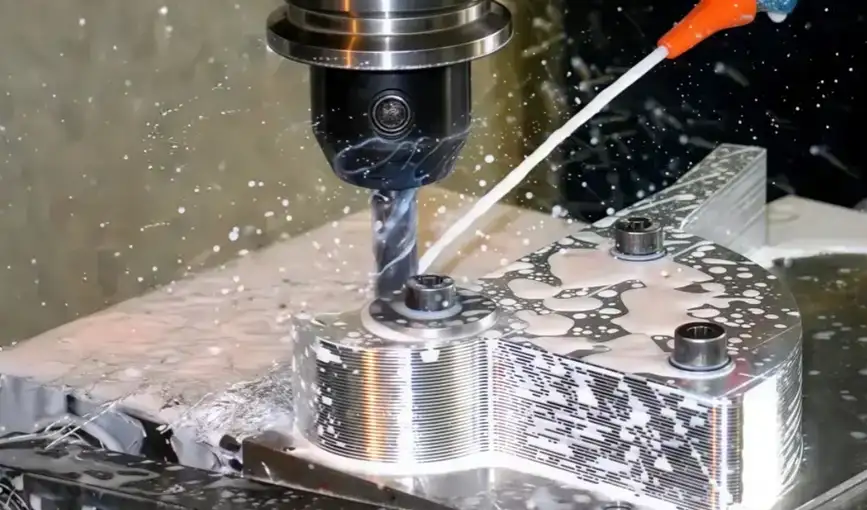
- Coolant and lubrication should be used for both methods
- Cutting speed, feed rate, and other cutting parameters should be optimized
- The machining process, even for CNC mills, should be constantly monitored
Wrapping Up
Climb cutting and conventional cutting have irreplaceable roles in manufacturing. While climb cutting thrives in milling efficiency and surface finish, conventional milling is suited for roughing jobs and on older machines.
For you, this means that the technology used for a job matters. Whether you are looking for the most cost-efficient option, the best surface finish, or the tightest tolerances, these milling strategies can solve that. You only need to define what your machining goals are.
At ProleanMFG, we look at all the critical factors before settling on either climb milling or traditional milling. We can help you proceed with your milling project with confidence.
Contact us for details on our CNC milling services and a free quote.