
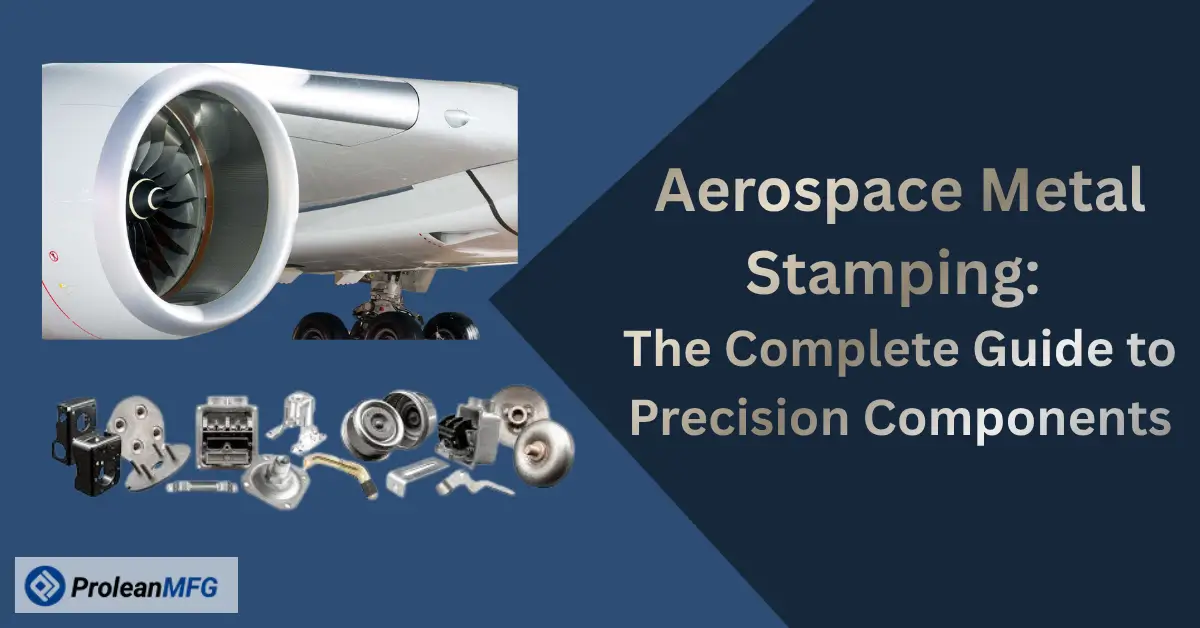

Aerospace metal stamping is the backbone of aircraft manufacturing. Metal stamping for aerospace can produce high-volume custom stamped aerospace components consistently holding tolerances as tight as ±0.001 inches, depending on the part and process. However, it is a highly controlled process used to shape aerospace sheet metal into precise parts that meet strict performance and safety standards.
This guide breaks down aerospace metal stamping processes, materials, tolerances, and certifications, as well as how to choose the right partner for a custom aerospace project.
What is Aerospace Metal Stamping?
Aerospace metal stamping is done by feeding a metal sheet into a powerful press, applying high pressure to transform it into a precise form. The metal sheets are cut, bent, and shaped with the use of a specialized tool known as a die. Metal stamping process is used to form both simple and complex shapes and patterns.
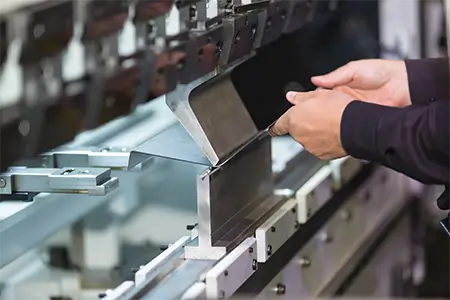
Metal stamping for aerospace plays a critical role in modern spacecraft and aircraft manufacturing. This high-precision process is applied to produce custom-stamped aerospace components to perform flawlessly under extreme conditions.
Aerospace Metal Stamping Processes
The selection of the right stamping process plays a crucial role in producing customized, precise aircraft parts. It is as important as selecting the right material.
Unlike the other types of metalworking processes, aerospace metal stamping combines speed, precision, and repeatability in a single production cycle. Every process deals with a particular part geometry, volume, and tolerance requirements.
Progressive Die Stamping
In the process of progressive die stamping, a metal strip is fed through a series of dies to create a workpiece. Each station performs its own operation, including punching, bending, coining, extruding, lancing, or blanking, until the final part is produced. This process produces connectors, brackets, shields, and fasteners in high volumes over 10,000 units with tolerances of ±0.001–0.002″.
Deep Drawing
Deep drawing is used to create hollow, three-dimensional parts by pulling a flat metal blank into a die cavity. This process is best for housings, fuel system cups, enclosures, and avionic covers. However, high ductility alloys like aluminum 3003 or stainless steel 304 are required for this process.
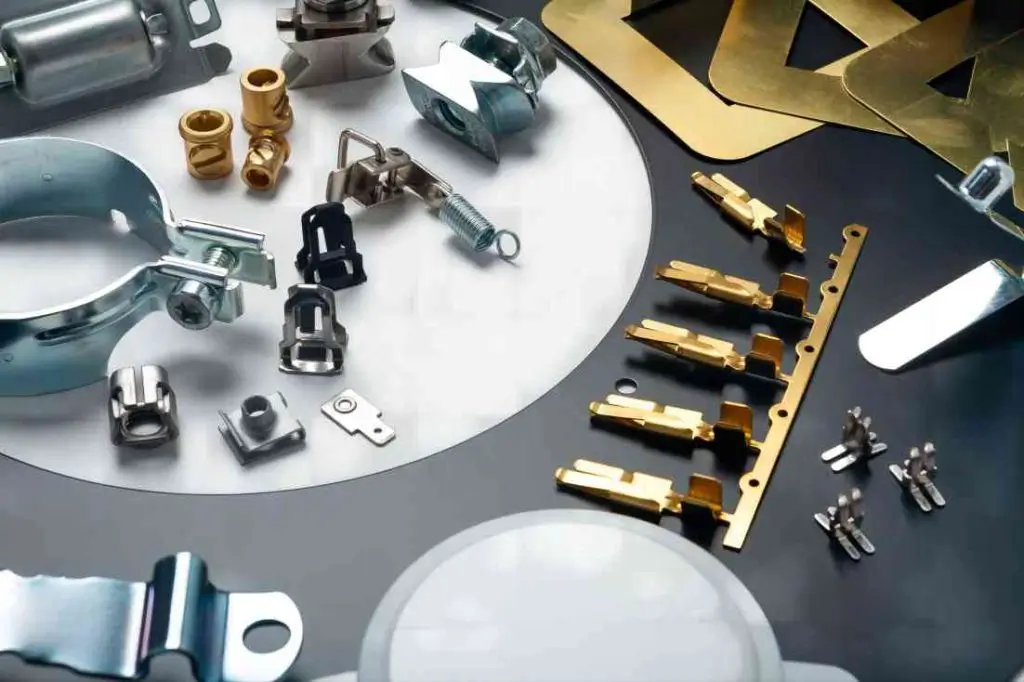
Fine Blanking
Fine blending process produces burr-free, square-edged parts in a single stroke. This is ideal for locking components, structural brackets, and precision shims. Fine blaning also achieves Ra 0.4–1.6 µm of surface finish.
Four-Slide / Multi-Slide Stamping
The four tools move from different directions continuously to bend, twist, and shape in one cycle during the four-slide process. It is best for spring contacts, clips, wire forms and complex small parts with multiple bends. This process works well with material thickness from 0.005″ to 0.080″.
Compound Die Stamping
During the process of compounding die stamping, blanking and piercing are combined in a single stroke. It produces flat parts with holes, shims, gaskets, and washers at a medium volume of production. Moreover, this process is cost-effective with lower tooling investment.
Materials Used in Aerospace Metal Stamping
The selection of the material is the most critical aspect of metal stamping for aerospace. The aerospace engineers must adhere to both lightweight design and structural integrity.
| Material | Key Property | Common Aerospace Use |
| Aluminum 2024 | High strength, lightweight | Airframe brackets, structural parts |
| Aluminum 7075 | Extreme strength | Critical load-bearing components |
| Titanium Ti-6Al-4V | Strength + heat resistance | Engine parts, fasteners |
| Stainless Steel 304/316 | Corrosion resistance | Fuel systems, avionics hardware |
| Inconel 625/718 | High-temperature performance | Jet engine hot section parts |
| Waspaloy | Extreme heat resistance | Turbine components |
The key requirement is the specification of alloy grade and temper when placing an order due to different behaviour during the forming. For instance, 7075-O behaves differently from 7075-T6. Therefore, if the wrong temper is used, it can result in a cracked part.
The metals like inconel and titanium need slower press speeds and carbide tooling. Similarly, the dominant alloys for structural aerospace applications are aluminum 2024 and 7075. Therefore, every material is fully traceable from the mill certificate to the final part with no exception. Material substitution is non-negotiable in aerospace, unlike other industries.
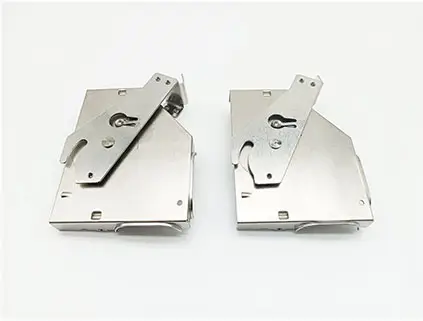
Tolerances in Aerospace Metal Stamping
The aerospace industry requires tight-tolerance components for aircraft and aerospace systems. Even a small error like 0.010 inches in a hole position can affect the fitting of the part.
| Feature | Standard Tolerance | Precision Tolerance |
| Internal features | ±0.003″ | ±0.001″ |
| External features | ±0.005″ | ±0.003″ |
| Hole diameter | ±0.003″ | ±0.001″ |
| Bend angle | ±1–2° | ±0.5° |
| Flatness | ±0.010″ | ±0.003–0.005″ |
| Material thickness | ±0.005″ | ±0.002″ |
This level of tight tolerances raises the cost and complexity of tooling. Precision tolerances are only used for the part where the functionality is non-negotiable. The reason is also documented in the DFM review.
Aerospace Certifications and Compliance Standards
The quality is engineered at every stage of aerospace sheet metal fabrication. Since precision metal stamping for aerospace must adhere to the quality standards of the industry:
AS9100 Certification
The aerospace quality management standard is the AS9100 certification. It is built on ISO 9001. It adds requirements for configuration control, risk management, and first article inspection. This certification satisfies DOD, NASA, and FAA requirements simultaneously.
ITAR Compliance
International Traffic in Arms Regulations (ITAR) controls military and defence aerospace parts. Any aerospace metal-stamped component for aircraft, defence, missiles, and spacecraft systems must adhere to an ITAR-registered facility.
DFARS Compliance
The Defence Federal Acquisition Regulation Supplement is required for domestic sourcing. It is necessary for certain metals in defence contracts. This is mandatory for the full material origin documentation.
RoHS Compliance
RoHS Compliance restricts the use of hazardous substances such as mercury and lead. It is relevant for avionics and electronics stamped components, housing, and connectors.
Common Challenges in Aerospace Metal Stamping and Solutions
The aerospace metal stamping offers unique challenges, whereas the basics of aerospace stamping remain the same.
Springback in High-Strength Alloys
High-strength alloys such as Titanium and HSLA steel spring back after the forming process. The simple solution is this: overbend the alloy by a calculated angle. Servo press controls are helpful to adjust the force in real time.
Tooling Wear on Exotic Alloys
Highly abrasive alloys such as Inconel and titanium wear standard tool steel rapidly. TiN or TiCN-coated carbide dies are the best to avoid this challenge because they last 5–10x longer than uncoated HSS.
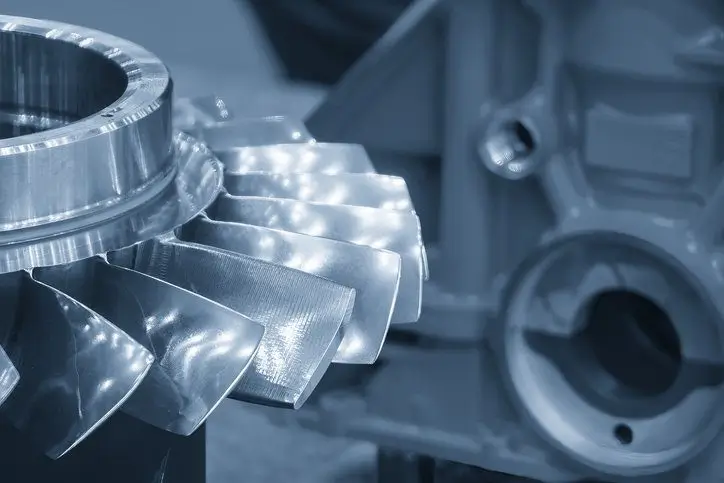
Maintaining Traceability Across High Volumes
Every part needs heat lot details, material certificates, and inspection reports, so nothing is lost or mixed up to maintain the traceability across high volume. The companies use in-die marking and barcode tracking to manage this issue. So, each component is tracked from the start to finish with this code or mark.
Achieving Consistent Tolerances at Scale
When a die slowly wears out after the production of 500,000 pieces, then a small change can shift the dimensions of the part. Hence, embedded press sensors can check every press stroke. So, the machine automatically stops if the force is not normal.
Aerospace Sheet Metal Fabrication vs. Aerospace Metal Stamping
The selection of aerospace sheet metal fabrication is done when custom low-volume parts or large structural assemblies are needed. Whereas aerospace metal stamping is ideal for the production of 10,000+ identical parts.
| Factor | Aerospace Metal Stamping | Aerospace Sheet Metal Fabrication |
| Best for | High-volume, thin sheet parts | Low-volume, large complex parts |
| Tooling cost | High upfront | Low upfront |
| Per-unit cost | Very low at scale | Higher per unit |
| Tolerances | ±0.001″ achievable | ±0.005–0.010″ typical |
| Lead time | Fast at volume | Faster for prototypes |
| Repeatability | Identical across millions | Varies part to part |
Key Aerospace Applications and Components
Aerospace metal stamping produces a wide range of custom-stamped aerospace components:
- Structural: Brackets, clips, reinforcement panels, shims, and washers.
- Engine: Flanges, heat shields, casings, and compressor components.
- Avionics: Connector housings, PCB enclosures, terminals, and EMI shields.
- Fasteners: Bolts, cotter pins, screws, nuts, pins, and castle nuts.
- Airframe: Wing reinforcements, door hardware, and fuselage clips.
- Fuel Systems: Tubing clamps, filter housings, and valve components.
- Landing Gear: Retention clips, sensor brackets, and wear plates.
The custom metal stamping parts can be used in mechanical and structural projects.
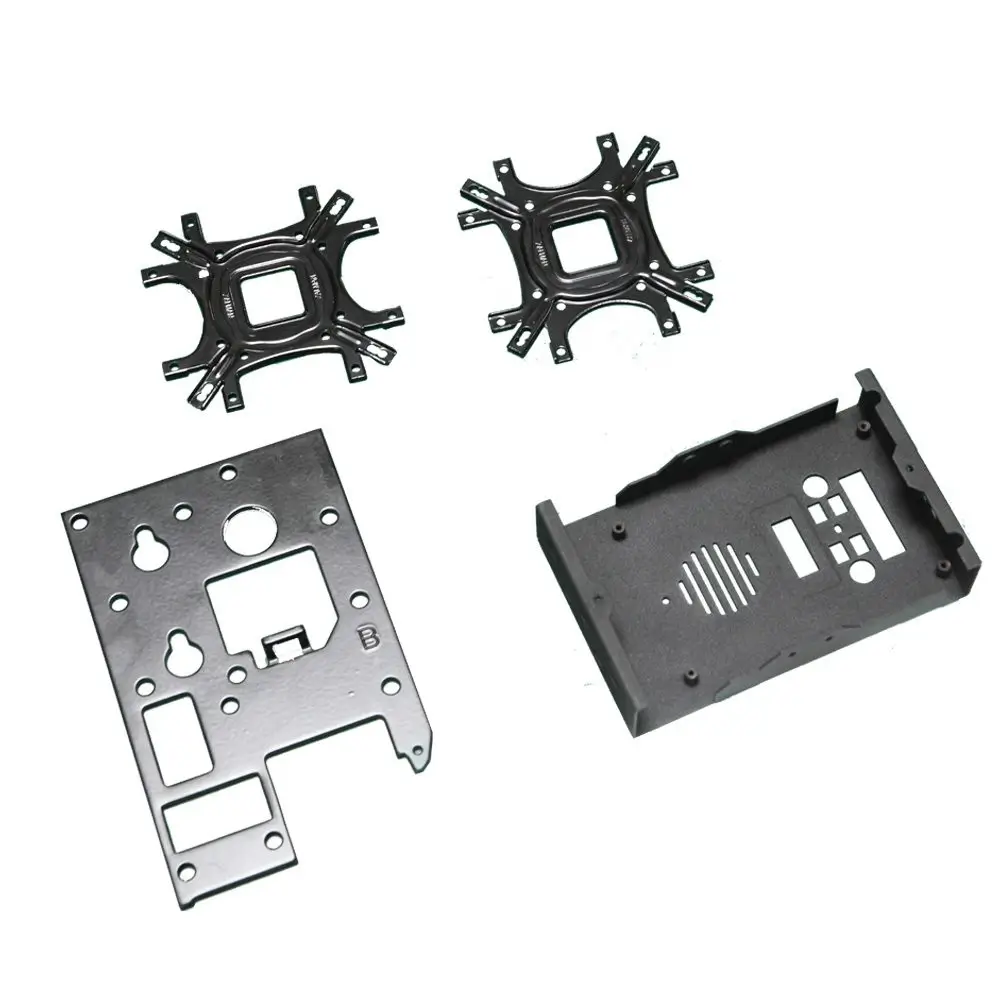
ProLean MFG Aerospace Metal Stamping Capabilities
ProLean MFG delivers precision metal stamping service for aerospace, supported by DFM review, in-house tooling, and full material traceability.
Our capabilities include:
- Stamping processes: Progressive die, compound die, deep drawing, fine blanking, and four-slide.
- Material range: Aluminum, titanium, Waspaloy, stainless steel, and Inconel.
- Tolerance capability: ±0.001″ for internal features
- Strip width: up to 24″
- Material gauge: 0.005″ to 0.500″
- Finishing: Anodizing, passivation, plating, and powder coating.
- Quality: ISO 9001 certified, full material traceability
ProLean MFG is a certified manufacturer that runs both prototype runs and high-volume production and delivers flight-ready parts on time.
Contact us to get a tailored quote today!
Frequently Asked Questions
Aerospace metal stamping requires tighter tolerances (±0.001″), full material traceability, and compliance with certifications like AS9100 and ITAR. On the other hand, standard industrial stamping has no such requirements.
Aluminum 2024 and 7075 are the most common for structural parts. Titanium Ti-6Al-4V is used for engine components. Inconel and Waspaloy are used where extreme heat resistance is required.
An aerospace stamping supplier should hold AS9100 certification. However, defence and military work additionally requires ITAR registration and DFARS compliance.
Precision aerospace stamping achieves ±0.001″ for internal features and ±0.003″ for external features. These must be maintained consistently across the entire production run.
Final Thoughts: Why Aerospace Metal Stamping Demands a Different Standard
Aerospace metal stamping is the backbone of aerospace sheet metal fabrication. Every alloy, every tolerance, every certification exists because the cost of failure at 35,000 feet is unacceptable. The demand for certified aerospace metal stamping will only grow as electric aviation, hypersonic vehicles, and next-generation spacecraft push material and precision boundaries further. ProLean MFG is equipped to meet that demand with the processes, materials, and quality systems to deliver custom-stamped aerospace components that are built to fly.
Ready to start your aerospace stamping project? Contact ProLean MFG for expert DFM review and a competitive quote.