
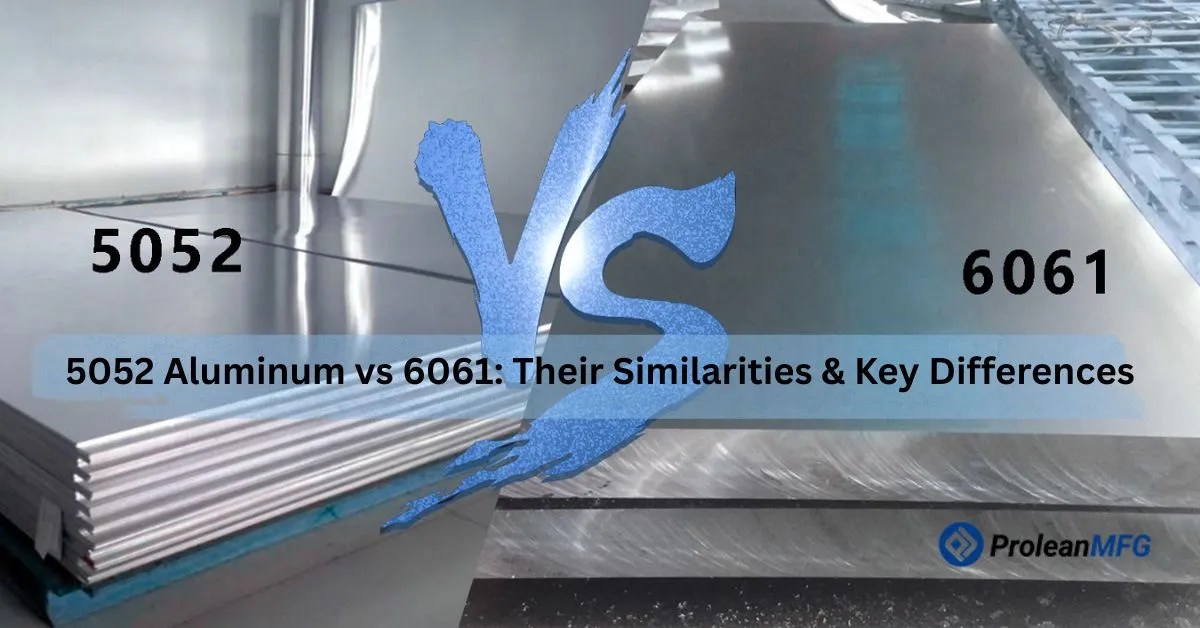

The outcome of your manufacturing project can be determined by the choice of aluminum alloy. Engineers and procurement teams are comparing 5052 aluminum vs 6061. Each alloy has different mechanical properties, processing behavior, and ideal applications. This decision will prevent costly rework and material failures as well as production delays.
Aluminum alloy is the most common engineering material. It is made by adding a small amount of other metals to pure aluminum. By adding these elements, they can change the properties of aluminum, which is used in different manufacturing processes. It is the ideal choice for manufacturers because of its flexibility, strength, and corrosion resistance. Aluminum is one of the most widely used metals in the market.
ProLean MFG works with both alloys in industries from marine fabrication to structural parts that require high precision. You can use CNC machining materials as a guide to planning your next production or custom aluminum machining for specific components.
This guide will give you a side-by-side comparison of the two alloys, so that you can proceed with confidence.
What is 5052 aluminum alloy?
Aluminum 5052 alloy belongs to the 5000 series alloy. It is a non-heat-treatable alloy. The main element, such as magnesium, is present at around 3–5%. Because of the presence of magnesium, it is called an aluminum-magnesium alloy.
5052 aluminum is highly resistant to saltwater corrosion because it does not contain copper. Due to this property, it is considered a corrosion-resistant aluminum alloy. It is an ideal choice for marine and shipbuilding applications.
Aluminum 5052 Temper
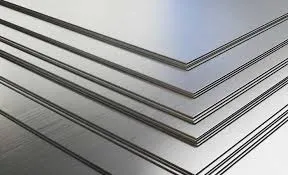
5052 Aluminum Sheets
The temper of aluminum refers to how the alloy was processed after casting. The most common temper for 5052 aluminum is
- H32 (5052 H32 aluminum): Strain-hardened and stabilized. It has the most popular temper, balancing strength and ductility.
- H34: It has higher strain-hardening for increased tensile strength
- H36 and H38: They have maximum hardness with reduced formability
- O (Annealed): For maximum forming capability, it is fully softened
5052 H32 aluminum is the most requested temper in the fabrication process, due to its predictable behavior during bending and forming operations.
Commonly Used 5052 Aluminum Alloy
Below are the most commonly used 5052 aluminum alloys
| Product | Temper | Standard |
| 5052 Aluminum Sheet Plate | O, H111, H112, H32, H34, H36, H38 | AMS 4015, ASTM B209, ASTM B928, AMS-QQ-A250/8 |
| 5052 H32 Aluminum Bar | O, H12, H14, H16, H18, H22, H32, H34, H111, H112 | ASTM B221, AMS QQ-A-250/8, AMS-WWT-700/4, AMS 4114 |
| 5052 Aluminum Tubing | O, H111, H112, H32 | AMS 4071, AMS-WW-T-700/4, ASTM B210 |
| 5052 Aluminum Coil and Strips | O, H111, H112, H32, H34, H36, H19, H48 | EN 485-2, EN 573, ASTM B209 |
| 5052 Aluminum Foil | O, H12, H16, H19, H18, H32, H34 | AMS 4015, AMS 4016, MIL-DTL-46063, QQ-A-250/8 |
| 5052 Aluminum Wire Rod | O, H111, H112 | EN 485-2, EN 573, GB/T 3195-2023 |
Chemical Composition of 5052 Aluminum
5052 aluminum is also known as an aluminum-magnesium alloy. The key elements of 5052 aluminum are:
| Element | Symbol | Composition |
| Aluminum | Al | 95.8% – 98.6% (balance) |
| Magnesium | Mg | 2.2–2.8% |
| Silicon | Si | ≤ 0.25% |
| Copper | Cu | ≤ 0.10% |
| Chromium | Cr | 0.04% – 0.35% |
| Iron | Fe | 0.70% max |
5052 aluminum has excellent corrosion resistance and good weldability compared to many other aluminum alloys due to the presence of magnesium.
5052 Aluminum Treatment Process
By heat treatment, 5052 aluminum cannot be strengthened. Using mechanical and controlled thermal processes, its strength and properties are improved.
Strain Hardening
This is the first step, which is used to increase the strength of 5052 aluminum. By rolling, bending, or stretching at room temperature, the metal is strengthened. It creates tempers such as H32, H34, and H36. The more cold work means higher strength but lower flexibility. It is commonly used for sheet metal and structural panels.
Stabilization
When the alloy is cold, it is heated at a low temperature to stabilize it. It helps to reduce internal stress and maintain most of the strength. It prevents changes in shape and improves dimensional stability.
Annealing
The alloy is fully heated and then slowly cooled. This process is called annealing. To make the aluminum soft and highly ductile, this process can be done. For deep drawing and complex bending, this is the best method. It is also known as 5052-O temper. It is used when maximum formability is needed.
Intermediate Annealing
During manufacturing, intermediate annealing is done between forming steps. It restores ductility and prevents the material from cracking during multi-step forming. It is best for complex fabricated parts.
Surface Treatments
5052 accepts different surface treatments such as anodizing, chromate conversion coating, and painting well. It already has a natural oxide layer that provides excellent corrosion protection. The surface treatments further enhance aesthetics and extend service life.
Aluminum 5052 Mechanical Properties
Below are the mechanical properties of aluminum 5052
Tensile Strength
The higher tensile strength means the stronger the material is. The 5052 aluminum tensile strength is 228 MPa (33,000 psi) in the H32 temper, which refers to a strain-hardened and stabilized condition. It is worth noting that the mechanical properties of 5052 aluminum vary depending on the temper designation, so the tensile strength may differ across other temper conditions.
Yield Strength
It is the stress where plastic deformation begins. The yield strength of 5052 is 193 MPa (28,000 psi).
Elongation at Break
It means the flexibility of the alloy, where it can stretch before breaking. The elongation at break of 5052 is 12%.
Modulus of Elasticity
The higher the value of the modulus of elasticity, the more rigid the alloy becomes. 5052 can slightly bend, but not too much. Its stiffness is 70 GPa (10,200 ksi).
Brinell Hardness
It means it’s resistant to dents. The Brinell hardness of 5052 is 60 HB, which is suitable for general industrial and structural use.
Shear Strength
Resistance to sliding forces is called shear strength. The shear strength of 5052 is 138 MPa (20,000 psi).
Density
Density means how heavy the material is. The density of aluminum 5052 is 2.68 g/cm³
Pros of 5052 Aluminum
Here are the pros of aluminum 5052
Corrosion Resistance
5052 has resistance to saltwater, marine environments, and industrial chemicals. Aluminum corrosion resistance comes primarily from the aluminum oxide (Al₂O₃) passive layer. Mg improves corrosion performance in marine environments.
Formability
Without cracking, 5052 aluminum bends, shapes, and draws. For complex sheet metal parts, tanks, and enclosures, it is the best choice.
Strength-to-Weight Ratio
It is not as strong as 6061. For lightweight structural applications, it still delivers a favorable strength-to-weight ratio.
Weldability
Welding of 5052 can be done cleanly with standard MIG and TIG methods. All welded aluminum alloys experience strength reduction in the HAZ due to thermal softening. 5052 performs well in welding but does not retain full strength.
Fatigue Strength
5052 aluminum can perform well under cyclic loading. It is suitable for components that are exposed to vibration or repeated stress.
Surface Finishing
Anodizing and painting can be done very well. For consumer and architectural products, it provides smooth and aesthetic finishes.
Cons of 5052 Aluminum
Below are some cons of aluminum 5052
Lower Strength
The tensile and yield strength of aluminum 5052 is significantly lower than that of 6061 T6. Due to this, we don’t use it in high-load structural applications.
Non-Heat Treatable
Through heat treatment, aluminum 5052 cannot be strengthened. Its strength can be improved by just mechanical working.
Poor Machinability
Aluminum 5052 is soft and gummy in nature. It can stick to the cutting tools and cause the tool wear.
Surface Softness
Due to its soft surface, it can be scratched more easily than harder alloys.
Springback in Forming
It means the “elastic recovery” of sheet metal. To achieve an accurate bend angle, careful tooling is required.
Thermal Conductivity
Aluminum 5052 has lower thermal conductivity than 6061. It is less suitable for heat sink or thermal management applications.
Applications of 5052 Aluminum Alloy
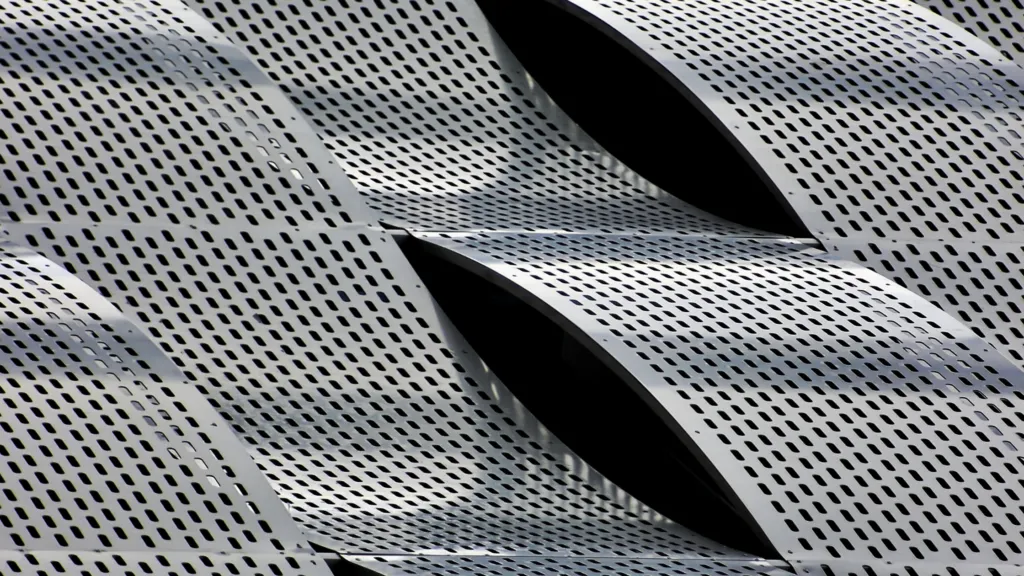
5052 aluminum sheets
Due to its corrosion resistance, it is widely used in industries. Some of the common applications are
Marine Applications
Due to saltwater resistance.5052 aluminum alloy is used in boat hulls, fuel tanks, and marine hardware.
Architecture
When formability and weather resistance are priorities, 5052 aluminum alloy is used. It is suitable for roofing, wall cladding, window frames, and decorative panels.
Home Appliances
Due to its clean finish and corrosion-resistant properties, it is used in home appliances, such as refrigerator liners, machine components, and kitchen equipment.
Transport Industry
Due to its lightweight and corrosion-resistant properties. It is used in the transport industry, such as fuel tanks, aircraft flooring panels, and body panels of trucks.
Industrial Manufacturing
Due to its corrosion resistance, 5052 is used in the manufacturing process, such as chemical storage tanks, pressure vessels, and enclosures.
What is 6061 Aluminum Alloy?
Aluminum 6061 is a heat-treatable alloy from the 6000-series. It has magnesium and silicon. It is the most widely used aluminum alloy in the manufacturing industry, due to its high strength, good machinability, and strong corrosion resistance properties.
6061 aluminum is widely used in different industries and applications such as manufacturing trucks, tower buildings, structural materials, and precision machining.
Aluminum 6061 Temper
The most common temper for 6061 aluminum is:
- T4: It is a solution heat-treated and naturally aged aluminum alloy.
- T6 (6061 T6 aluminum): It is an artificially aged and solution heat-treated alloy.
- T651: T6 with stress relieving by stretching. It can reduce residual stress for precision machining.
- O (Annealed): for maximum formability, it can be softened.
Due to its high tensile strength and excellent machinability. 6061 T6 aluminum has the standard specification for most structural, automotive, and aerospace applications.
Commonly Used 6061 Aluminum Alloy
Here are the best-selling 6061 aluminum alloys
| Product | Temper | Standard |
| 6061 Aluminum Sheet Plate | O, T4, T6, T451, T651 | ASTM B209, AMS 4027, AMS-QQ-A-250/11 |
| 6061 Aluminum Tube | O, T4, T6, T451, T651 | ASTM B221, ASTM B241, AMS-QQ-A-200/8 |
| 6061 Aluminum Rod Bar | O, T4, T6, T651, T6511 | ASTM B211, AMS 4115, AMS 4128, AMS-QQ-A-225/8 |
| 6061 Aluminum Flat Bar | T6, T651, T6511 | ASTM B221, AMS-QQ-A-200/8 |
| 6061 Aluminum Wire | O, T6, H18 | EN 485-2, EN 573 |
| 6061 Extruded Aluminum Profile | T4, T4511, T6, T6511 | AMS 4150, AMS 4160, AMS 4161, AMS 4172, AMS 4173 |
Chemical Composition of 6061 Aluminum
Here is the chemical composition of 6061 aluminum
| Element | Symbol | Min % | Max % |
| Aluminum | Al | 95.80% | 98.6% (balance) |
| Magnesium | Mg | 0.80% | 1.20% |
| Silicon | Si | 0.40% | 0.80% |
| Copper | Cu | 0.15% | 0.40% |
| Chromium | Cr | 0.04% | 0.35% |
| Iron | Fe | — | 0.70% max |
6061 Aluminum Treatment Process
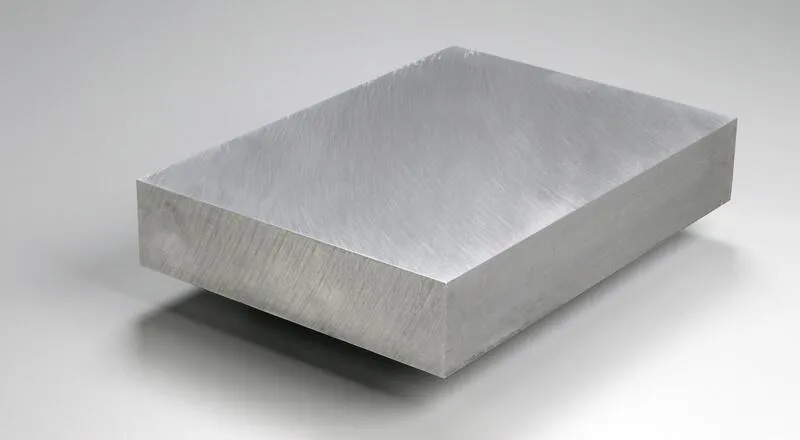
6061 aluminum flat bar
Below is the step-by-step process of aluminum treatment.
Solution Heat Treatment
To dissolve alloying elements into a solid solution, the alloy is heated to approximately 530°C (985°F). This can create a uniform microstructure.
Quenching
To lock the elements in place. The material is rapidly cooled in a water-glycol solution or hot water. It preserves the supersaturated solid solution.
Artificial Aging
To enhance the strength and hardness. The material is heated to 160–180°C (320–400°F) for 1-8 hours to form fine precipitates.
Annealing
For forming operation. The alloy is heated to approximately 415°C (775°F), and slow cooling softens it to its O temper.
Aluminum 6061 Mechanical Properties
Tensile Strength
Aluminum tensile strength is the maximum pulling force. The aluminum 6061 tensile strength is 6061-T6 (~290–310 MPa).
Yield Strength
Under pressure, it is resistant to bending. The yield strength of aluminum 6061 is 276 MPa (40,000 psi).
Elongation at Break
Aluminum 6061 focuses more on strength than flexibility. The stretching ability of 6061 is 8%.
Modulus of Elasticity
It provides good rigidity. Aluminum 6061 stiffness is 68.9 GPa (10,000 ksi).
Brinell Hardness
Due to its surface hardness, it is best suited for machined and mechanical parts. Aluminum 6061 Brinell hardness is 95 HB.
Shear Strength
It is ideal for bolted, riveted, and structural assemblies. The shear strength of aluminum 6061 is 207 MPa (30,000 psi).
Density
Aluminum 6061 density is 2.70 g/cm³. It is slightly heavier than 5052, but the difference is very small.
Pros of 6061 Aluminum
Here are some pros of aluminum 6061
Corrosion Resistance
In most environments, it has good corrosion resistance. Making it an ideal choice for the machining process.
Strength-to-Weight Ratio
It has a high strength-to-weight ratio. For structural use, it is an ideal choice.
Machinability
It has excellent machinability. Cleanly machining aluminum 6061 with standard tooling produces good chip control and has tight tolerances. This is the advantage of CNC machining materials applications.
Finishing Characteristics
It accepts anodizing, powder coating, and painting very well. It gives a hard, smooth surface that resists wear.
Availability
It is available in virtually every form, such as sheet, plate, bar, tube, extrusion, and forging.
Strong Performance
It handles high mechanical loads, vibration, and thermal cycling in manufacturing.
Cons of 6061 Aluminum
Some cons of the 6061 aluminum are
Welding
Fusion welding reduces its strength in the heat-affected zone. To restore its properties, the post-weld heat treatment is often required.
Bending
During tight-radius bending, it is more prone to cracking compared to 5052, especially in the T6 temper.
Fatigue Resistance
Under high-cycle loading conditions, it has lower fatigue performance than 5052.
Distortion and Warpage
If residual stress is not properly managed, it can warp during machining.
Higher Cost
Especially in extruded or forged forms, it generally costs more per pound than 5052.
Applications of 6061 Aluminum Alloy
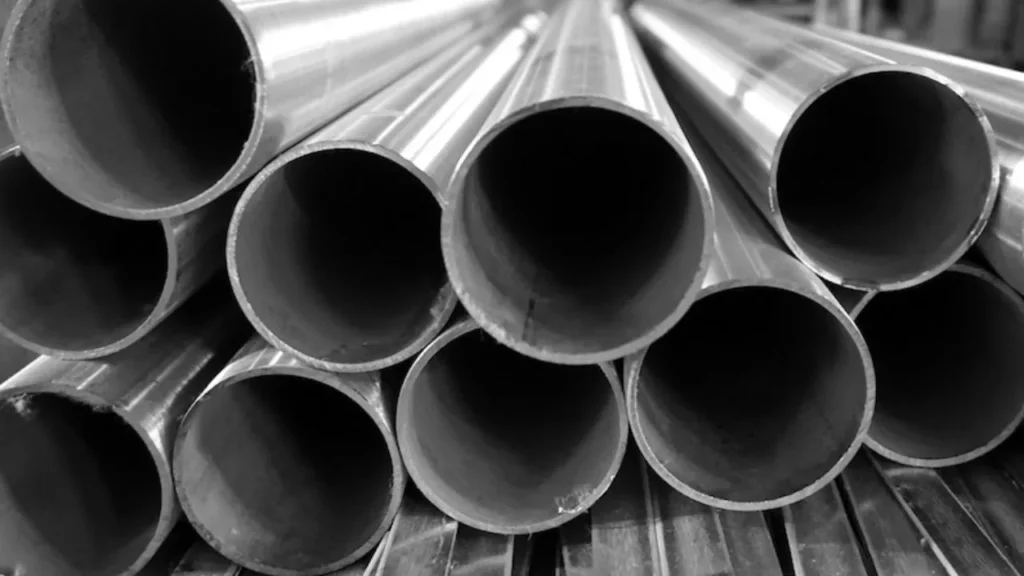
6061 Aluminum Rods
Common applications of 6061 aluminum alloy are;
Aerospace and Defense
Due to its strength-to-weight ratio and fatigue performance. It is used in airframe components, wing spars, and structural brackets.
Automotive
Due to its high strength and machinability. It is used for suspension components, frames, wheels, and chassis parts.
Marine Industry
Due to corrosion resistance properties. It is used in boat frames and structural components where strength is required.
Structural and Construction
6061 has consistent mechanical properties. It is used in bridges, scaffolding, rail cars, and architectural structures.
Machining
Due to its excellent machinability and dimensional stability. It is used for precision CNC-machined parts.
5052 vs 6061 Aluminum – Key Similarities
The aluminum alloys 5052 and 6061 have been widely used in commercial and industrial applications. Both alloys are members of the family of aluminum alloys and have excellent corrosion resistance. They are therefore well-suited to marine, automotive, and structural environments. The same alloys are available in a wide range of forms, including sheet, plate, and tube. They can also be found as wire, coil, bar, or rod. Both alloys support common fabrication methods such as welding and forming.
These alloys also meet internationally recognized standards such as ASTM, AMS, and EN specifications. This ensures consistent quality and traceability throughout global supply chains. Both alloys are strong and offer a high strength-to-weight ratio when compared to other metals. This makes them an attractive lightweight alternative for load-bearing applications.
When to Choose:5052 aluminum vs 6061
The selection of 5052 aluminum vs 6061 alloy depends on your application requirements, budget, and manufacturing process.
5052 Aluminum
Choose 5052 aluminum when your part will be exposed to saltwater, chemicals, or high-humidity environments, or when you need complex forming, bending, or deep drawing. It is best for fabricating marine components, fuel tanks, or architectural cladding. Budget is a main constraint. The primary process is sheet metal forming.
6061 Aluminum
Choose 6061 aluminum when high strength and load-bearing performance are important. The process requires high-tolerance CNC machining, such as aerospace, automotive, or structural applications that demand consistent mechanical properties.
Conclusion
The selection of 5052 aluminum vs 6061 ultimately depends upon the application requirements.5052 H32 aluminum is best suited for corrosive environments and complex forming. It also excels when used in welded assemblies. 6061 T6 Aluminum is the best aluminum alloy for structural strength, machinability, and precision manufacturing.
The right alloy depends on the specific requirements of your manufacturing process and cost target.
At ProLean MFG, our engineering team can help you select the right alloy for your project after comparing 5052 aluminum vs 6061 cost. If you need high-precision custom aluminum machining services, get a quote for the aluminum alloy you need to build your next project.