
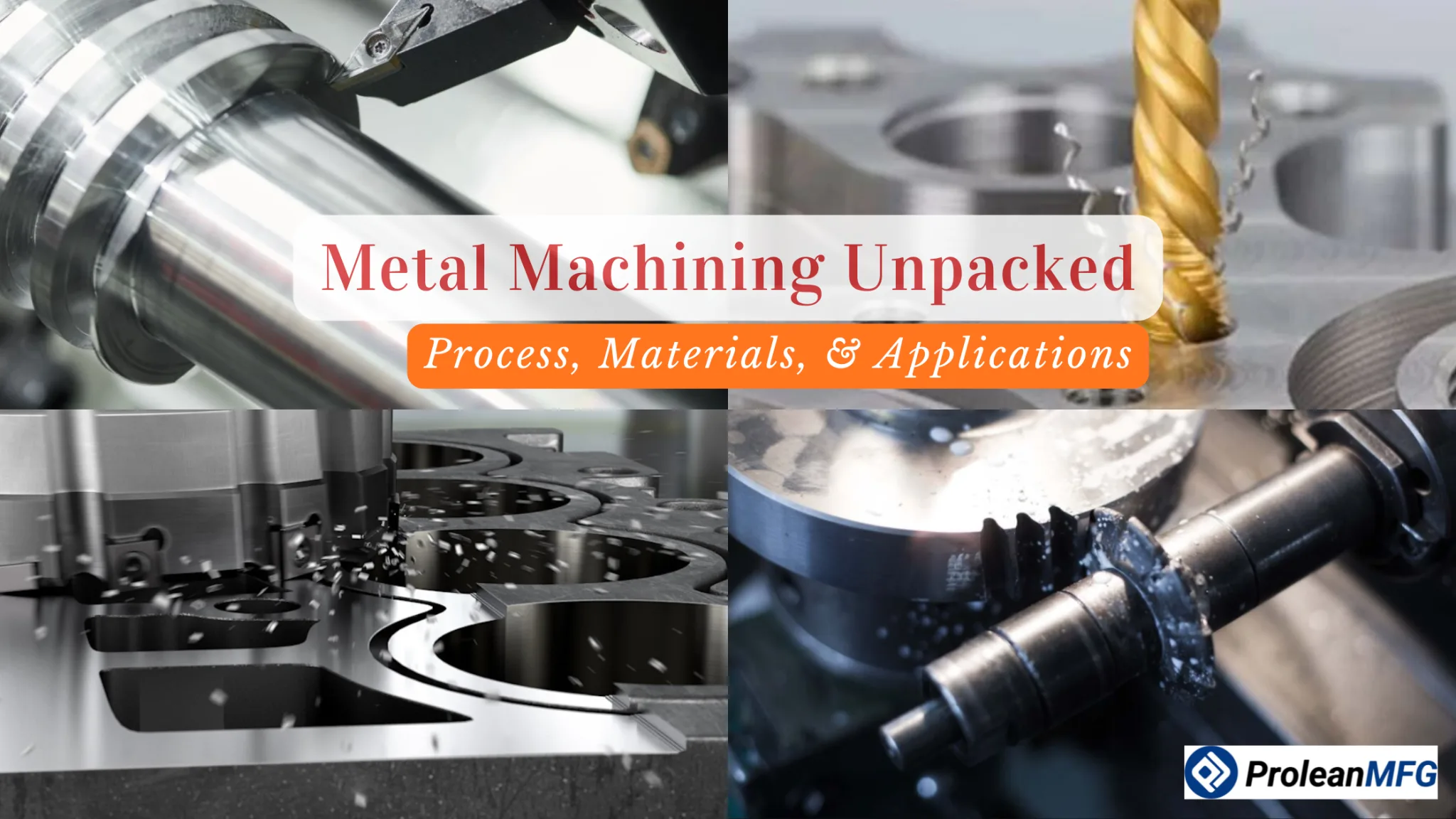

The dynamism of today’s manufacturing aside, metal machining remains a key process. As this article details, metal CNC machining entails balancing a range of material properties, tool capabilities, process parameters, and machine capacities.
Be it CNC milling, CNC turning, CNC grinding, or CNC drilling, there are always some considerations and plans to be made. For instance, the variety of metals is wide – aluminum, stainless steel, titanium, nickel alloys, and many more.
Choosing any of these materials depends on your project’s requirements for corrosion resistance, strength, and other factors. There are more technical hurdles, such as heat generation during machining, different dimensional stabilities, and varying surface finish requirements.
Importantly, there are designers, engineers, and machinists to help you navigate these challenges and produce incredible machined metal parts.
This article outlines the different aspects of metal machining, including the machining techniques, applicable metals, machining types, and industrial applications.
Learn More: Types of Machining Processes
What Is Metal Machining?
Metal machining is the process of using special cutters to cut and shape metal stock. Metal raw material in the form of rods, plates, or bars is converted into products.
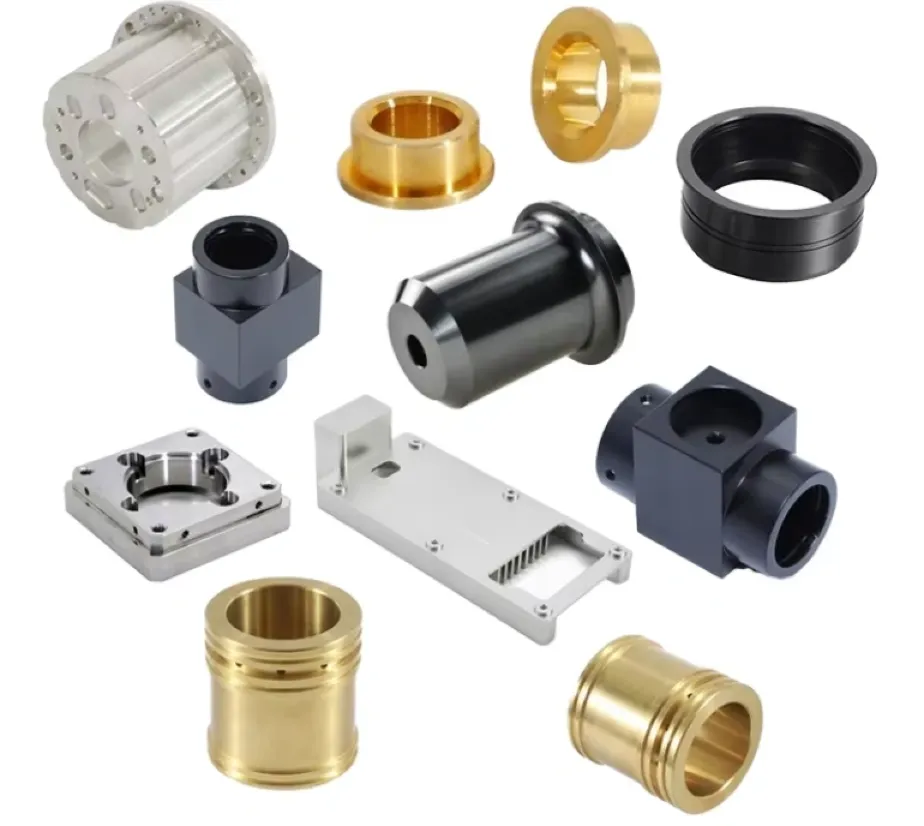
Machined metal parts
Metal machining has evolved. While conventional manual machines may still be around, newer versions are called CNC machines.
Parts for cars, medical, aerospace, military, and many other industries are manufactured this way.
The Benefits of Metal Machining
Metal machining is a versatile process highly valued for its capabilities to produce quality surface finishes, complex shapes, achieve high precision, and produce minimal waste. All this is done in a fast and reliable manner.
Surface Finish – The highest level of part surface finish is achievable with CNC metal machining. Manufacturers often apply CNC grinding to perfect the surface quality of machined parts.
Complex Shapes – Manufacturing metal parts of varying complexity and shape is generally challenging. However, CNC machining, particularly with multiaxis CNC machines, makes it look effortless.
High Precision – The other significant benefit of metal machining operations is high precision. CNC technology has transformed machining to previously unimaginable precision levels.
Minimal Waste – Precision CNC machining produces very little material waste, unlike processes such as melting. This is a major cost-saver in metal processing, especially in high volumes.
Speed and Reliability – The manufacturing process is also relatively speedy. The advanced systems ensure the cutting process is fast, yet reliable for precise parts. Parts that would traditionally take hours to complete can now be produced within minutes.
The Limitations of Metal Machining
Some limitations of CNC metal machining to be considered are material-specific challenges, CNC machining programming errors, and machine vibration (chatter).
Material-specific Challenges – Each CNC-machining material has unique challenges. Material adhesion in aluminum, burr formation in copper, overheating in stainless steel machining, and rapid tool wear due to titanium’s hardness are all material-specific challenges to expect.
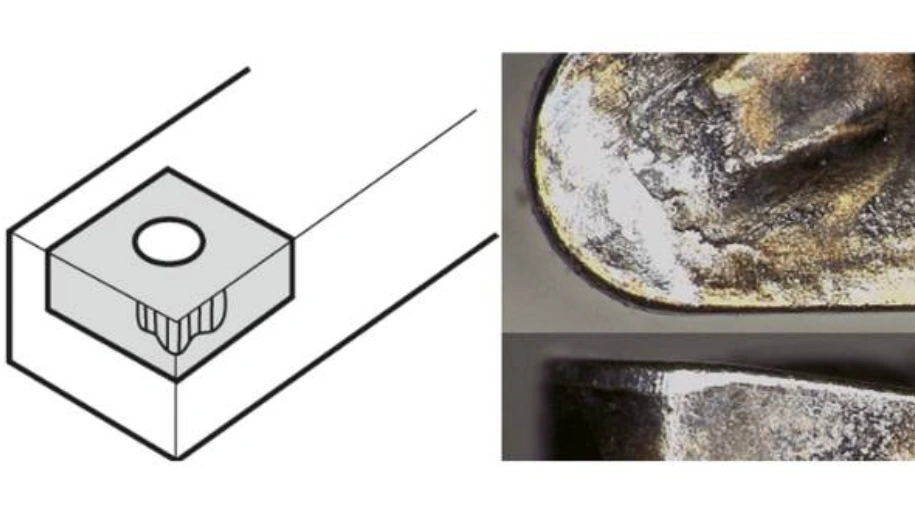
Abrasive wear on a tool
CNC Machining Programming Errors – CNC machining operations are prone to programming errors, regardless of expertise. These can trigger incorrect machining. Machinists avoid this issue by using modern CAM software with simulation features.
Machine Vibration (Chatter) – Chattering or vibrations can cause dimensional inaccuracies. The solutions are to use sharp metal machining tools and maintain the machine.
The Metal Machining Process
Generally, metal processing using CNC technology starts with material selection. The machining technique is then selected from the many options available. The metal block or workpiece is then set on the machine, ready for machining.
Before machining can start, the machinist sets the correct cutting parameters. Machining then happens under supervision where necessary. Quality inspection may also be performed to conclude the metal parts machining process.
Material Selection – The list of machinable materials is long. However, not all will suit your project requirements. For example, copper can be chosen for corrosion resistance, but it may not be the best for strength requirements.
The specific metal properties vis-à-vis the project’s goals guide this critical step.
Machining Technique – The next step is to choose the ideal machining technique for the material. Part complexity and related details are important considerations when choosing the best CNC machining operations.
Setting Up the Workpiece – There are different methods to clamp the workpiece on the CNC machine. In this step, the machinist ensures proper workholding for enhanced production efficiency, process safety, and dimensional accuracy.
Workholding options include vacuum chucks, toe clamps, and fixture plates.
Cutting Parameters – Top machinists have mastered feed rate, depth of cut, and cutting speed. Setting these elements is the next major step in metal parts machining. Note that these parameters are interdependent, so there could be tradeoffs.
Machining – When all is set, machining can proceed. Provided the designs have been prepared and approved, this step should go on smoothly. All the machinist requires is to follow the machining plan. Sometimes, the automated machining is complemented with finishing to give the part the perfect finish.
Quality Inspection – The machined part needs to undergo quality inspection. This step helps ensure every aspect aligns with the design and is devoid of defects or errors.
Common Metal Machining Technologies
The main CNC metal machining technologies are turning, milling, drilling, broaching, boring, grinding, and tapping. Each of these methods is designed for different parts, shapes, and levels of complexity.
Turning
Turning uses a lathe, which rotates the workpiece against a stationary cutting tool. It is the ideal mechanism to produce cylindrical parts. The machinist has a wide array of CNC turning operations to choose from, depending on the required part shape and size.
Examples of turning operations are taper turning, chamfer turning, step turning, face turning, contour turning, and cutting off.
Milling
For metal CNC milling, a metal block is secured on the machine. A rotating tool moves along a predetermined path, removing material from the workpiece. Milling operations include face milling, slot milling, end milling, slot milling, and gang milling.
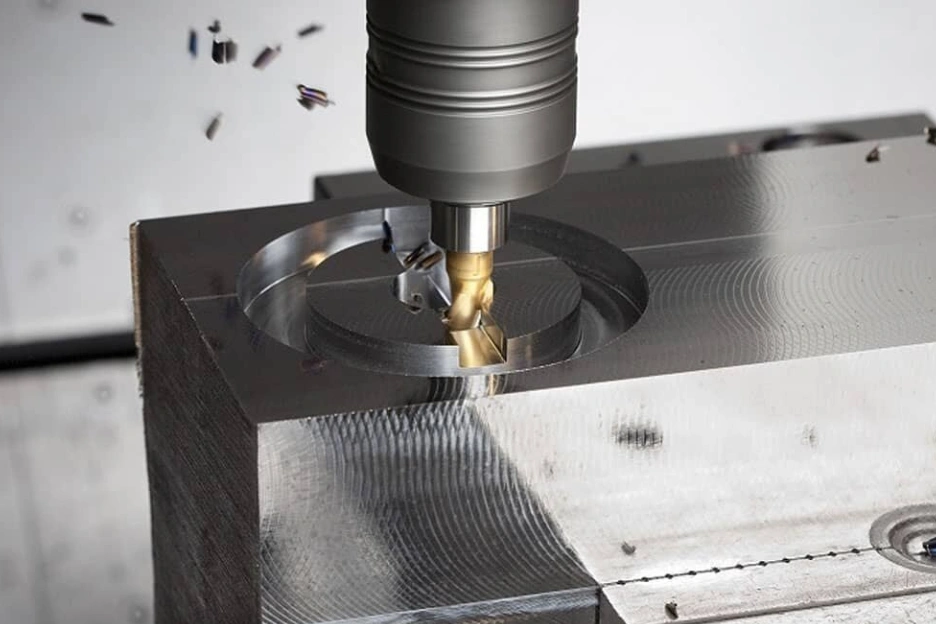
Stainless steel milling
Different manufacturers rely on this technique for metal parts. We can use the method for your aircraft brackets, automotive engine mounts, industrial gearbox housings, or structural support frames, among many other parts.
Drilling
Metal drilling involves using rotating and traversing metal machining tools to create holes in the metal surface. It can be done on virtually any type of metal, from titanium to aluminum alloys, using the respective drill bit and machinery.
Broaching
Broaching is an effective metal machining technique for forming internal or external surfaces. It uses a special tool called a broacher, which has progressively larger teeth. While the machining operation can be either linear or rotary, the former is more common.
Boring
Boring machining enlarges and refines existing holes in metal. It is a critical process in precision machining for enhanced accuracy and surface finish.
As you will learn from precision machining experts, there are several types of metal boring – horizontal boring, micro boring, line boring, jig boring, and others.
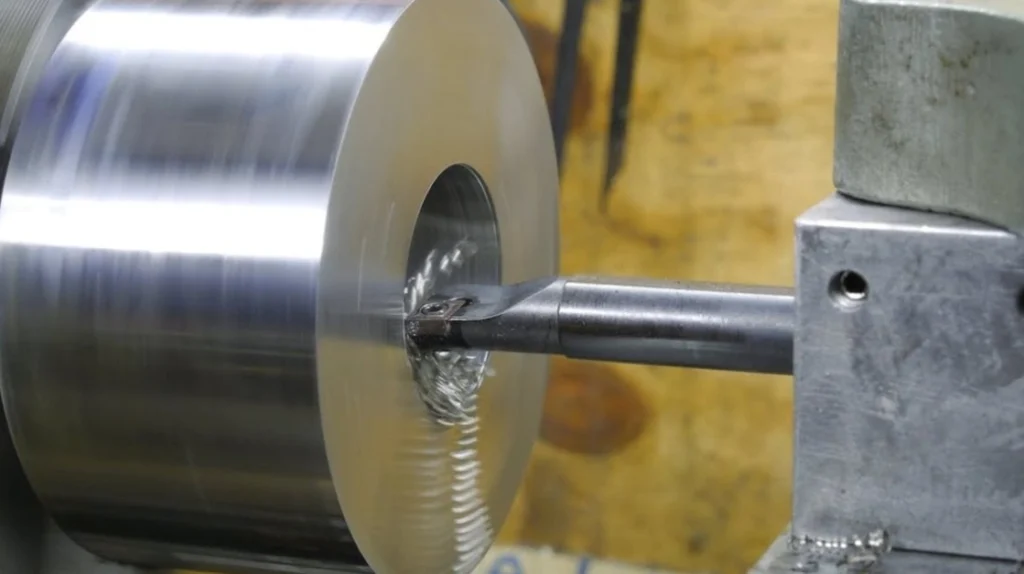
CNC boring machining
Grinding
Precision metal grinding is the removal of small amounts of metal from the surface using abrasive material. The three main metal grinding types are centreless grinding, cylindrical grinding, and surface grinding.
Tapping
Tapping is the technique you expect to be used when threads are required in a pre-drilled hole. A tap is used for this process.
Metals Commonly Used in Machining
The most popular metals for machining include aluminum, steel, brass, copper, and titanium. Choosing the materials carefully is critical because the properties presented are unique.
Aluminum Machining
Aluminums are among the lighter metals used in machining, such as 6082 aluminum, 7075 aluminum, and 2024 aluminum, which are commonly CNC machined. Their parts are strong, corrosion-resistant, and machinable.
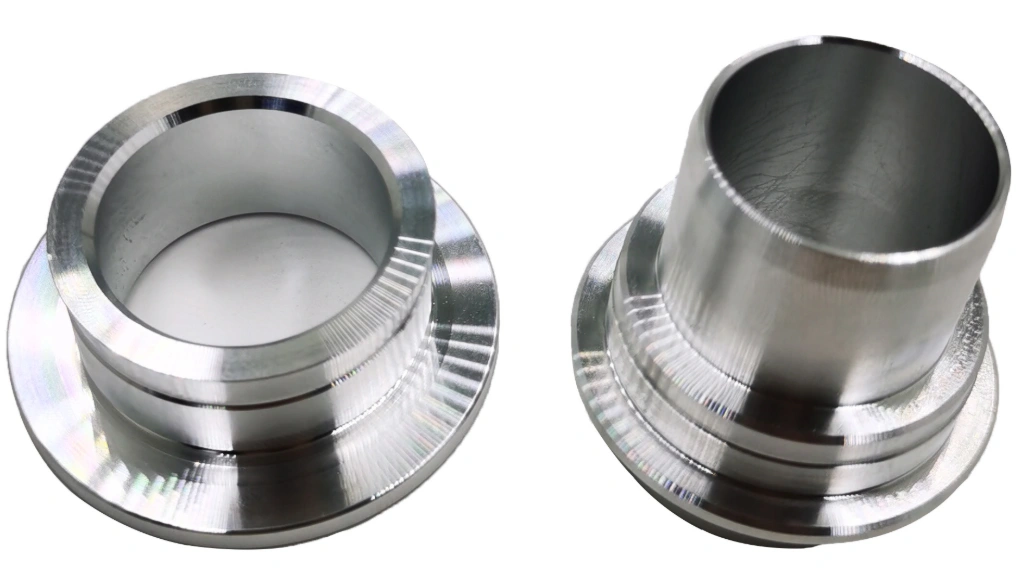
Turned 6082 aluminum parts
Steel Machining
Steel is commonly used in metal CNC machining for its durability and strength. Common steel machining parts are tools and structural parts.
Brass Machining
Different brass grades are used in CNC machining, among them brass C360 (free-machining brass), brass C260 (cartridge brass), brass C230 (red brass), and brass C385 (architectural bronze).
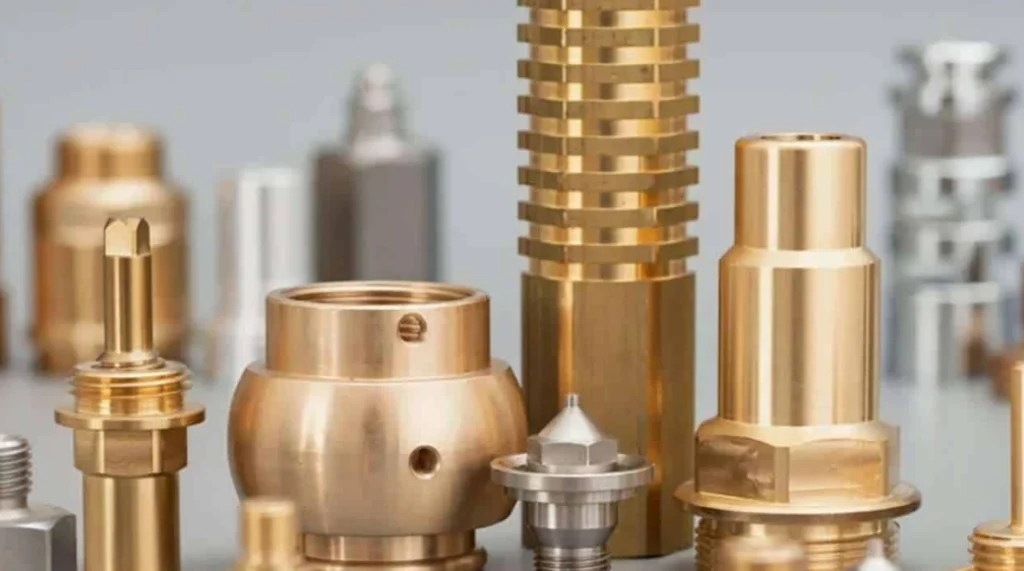
CNC machining brass parts
Copper Machining
Copper is formable, ductile, a good electrical/thermal conductor, and corrosion-resistant. It is highly machinable, so it is widely used to make plumbing fixtures and electrical connectors, among other parts.
Titanium Machining
Titanium offers superior corrosion resistance and strength-to-weight ratio. It is one of the most difficult CNC machining materials. However, expert machining companies manage to manufacture quality titanium parts for medical, aerospace, and other high-performance applications.
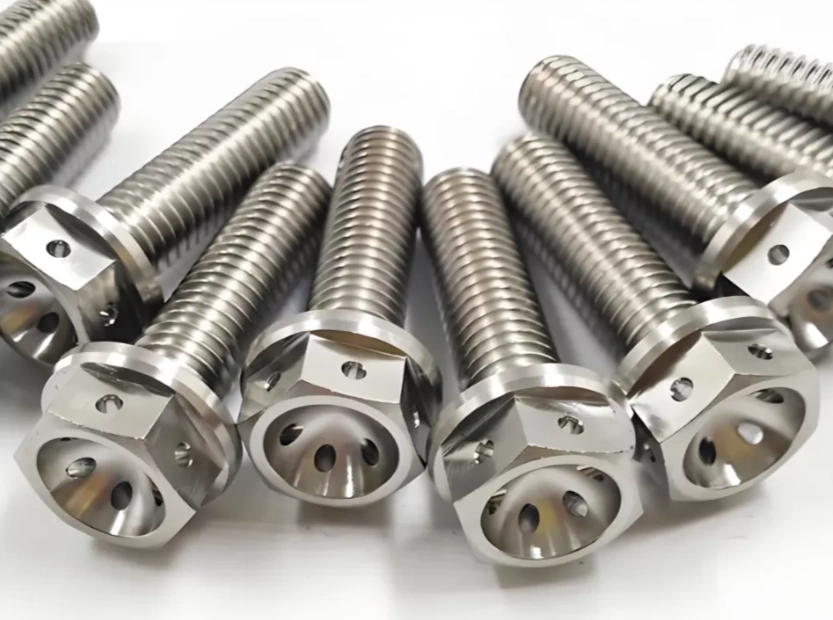
Titanium fasteners
Popular Industries Relying on Metal Machining
You might require precision metal machining services if you are in industries such as automotive, aerospace, electrical & electronics, marine, plumbing, and medical.
These markets are extensive with diverse metal processing requirements. For instance, corrosion resistance is critical for plumbing and marine applications. Strength is a core property for automotive and aerospace CNC-machined parts.
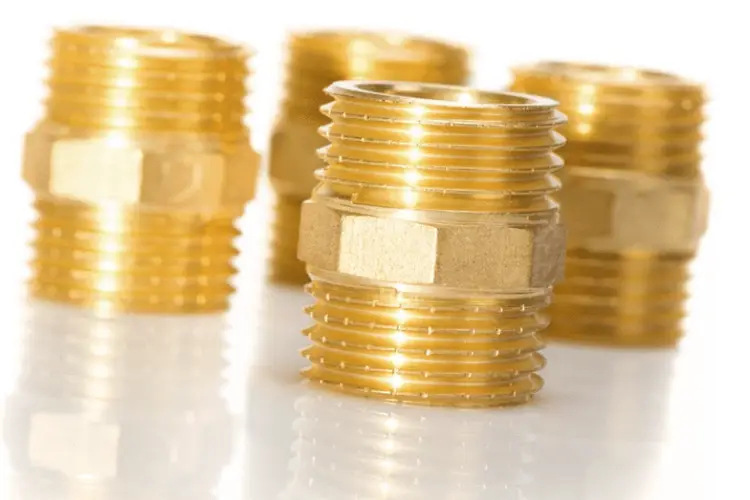
Machined plumbing parts
Challenges To Avoid In Metal Machining
CNC metal machining is successful if the following challenges are identified and remedied/avoided.
| Machining Problem | Causes | Solution |
| Dimensional inaccuracies | Thermal expansion and poor machine calibration | Regularly check temperatures and calibrate machines |
| Poor surface finish | Machine vibration, dull cutting tools, and inaccurate cutting speed | Use sharp tools, optimize cutting speed, and secure workpieces firmly |
| Tool wear | Wrong material type, feed rates, and cutting speed | Use the right cutting tools, adjust cutting parameters |
Metal Machining Versus Alternative Fabrication Techniques
We can compare metal machining with metal casting, metal forging, and metal forming. While these methods produce less waste, they often require machining to compensate for accuracy.
Metal Casting vs Machining
Metal casting entails pouring molten metal into a molding cavity and leaving it for some time to cool and solidify. Although the dimensional accuracy and surface finish are not the best, metal casting suits large parts with complex geometries.
Depending on project requirements, CNC machining can complement casting by helping achieve the tolerance and flatness required.
Metal Forging vs Machining
Metal forging is the application of compressive force on a metal using dies. It is a reliable method of enhancing the load-bearing capacity of a metal because it improves the mechanical strength and grain structure.
Similar to metal casting, metal forging often requires CNC machining for post-processing.
Metal Forming vs Machining
Metal forming comprises technologies such as stamping, extrusion, and rolling. We use such solutions when the goal is efficient material utilization in high-volume production.
Still, CNC machining may be required afterwards to refine the edges and attain the exact tolerances.
In Conclusion
In summary, metal machining is widely used for accurate, precise, and high-performance parts. Since it is available in turning, milling, boring, grinding, and other technologies, the options for making their metal parts are diverse.
Your industry does not matter; there is always a perfect set of CNC machining services for you. Skilled machinists, who have perfected machining techniques, are ready to help. Compliance with safety protocols and the application of the right metal machining tools is assured.
Upload your machining diagram today and leave the rest to us.