

Metal stamping is a manufacturing technique that uses sheet metal, a stamping press, and a customized die to produce precise parts from a flat metal sheet. It is commonly used in mass production due to its economic production speed, quality uniformity, and per-part cost.
Metal stamping is a process that works to form metal without removing much material or melting the metal, unlike machining or casting. From automobiles to electronics, medical to industrial manufacturing, modern metal custom stamping services are used to produce metal components in high volumes.
What Is Metal Stamping?
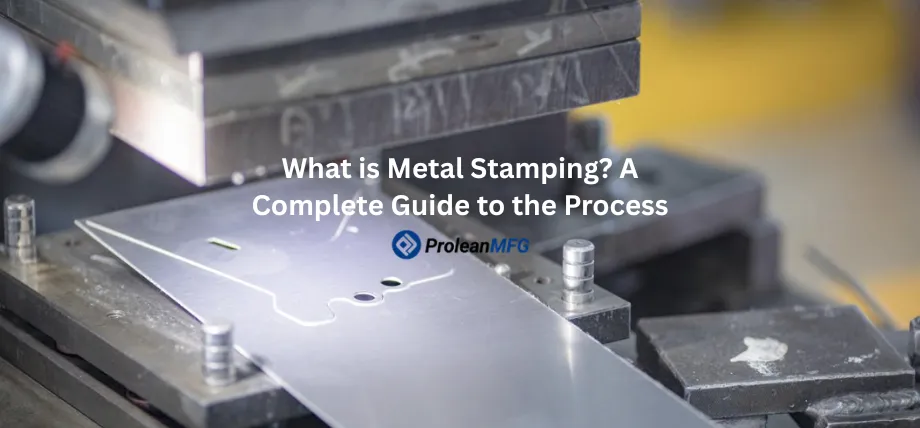
Metal stamping (also called cold stamping) is a process of manufacturing where flat sheet metal or coils of metal are manufactured into finished products using a stamping press and a customized die. By forming the metal under controlled pressure rather than melting it, manufacturers can achieve a high efficiency in the production of a large quantity of metal pieces that are consistent in shape.
The stamping presses crush the sheet material using specifically designed dies to cut or shape the material into the required geometry. Depending on the part design, several operations can be performed in a single press cycle.
How Metal Stamping Works?
The standard metal stamping process involves different shaping operations depending on the component’s shape or purpose for use.
- Punching: Makes holes or cutouts in the metal sheet.
- Bending: Forms angles and curves without breaking the material.
- Forming: Changes the shape of the metal into the desired profile or shape.
- Drawing: Forms the metal into hollow forms or enclosures that are deeper in shape.
- Coining: High pressure is used to produce fine details or accurate surface features.
Why Manufacturers Use Metal Stamping?
Metal stamping is chosen by manufacturers because it offers a low cost and an accurate process that produces high-quality parts within a very short time. After the tooling has been created, the operation can be continued without much part variation.
Key advantages include:
- High production speed
- Repeatable dimensional accuracy
- Low per part cost with high volumes
- Tight manufacturing tolerances
- Efficient material usage
| Process | Material State | Best For | Production Volume |
| Metal Stamping | Solid sheet metal | High-volume parts | Very high |
| CNC Machining | Material removal | Precision low-volume parts | Low–medium |
| Casting | Molten metal | Complex thick parts | Medium–high |
Metal Stamping Process
Sheet Metal Stamping Process is a controlled manufacturing process that converts raw sheet metal into finished product parts in several steps. Part quality, tooling performance, and production efficiency are all affected by each stage of the overall metal stamping process.
Stage 1: Part Design and DFM Review
For the manufacturers, before production, they conduct a Design for Manufacturability (DFM) audit to ensure that the part can be stamped efficiently. Engineers analyze CAD files, bend radius, hole spacing, and thickness of the material used to avoid tooling problems or material failure in production.
By making sure that DFM analysis is performed properly, it is possible to lower defects, improve production uniformity, and lower the overall manufacturing costs.
Stage 2: Tooling and Die Fabrication
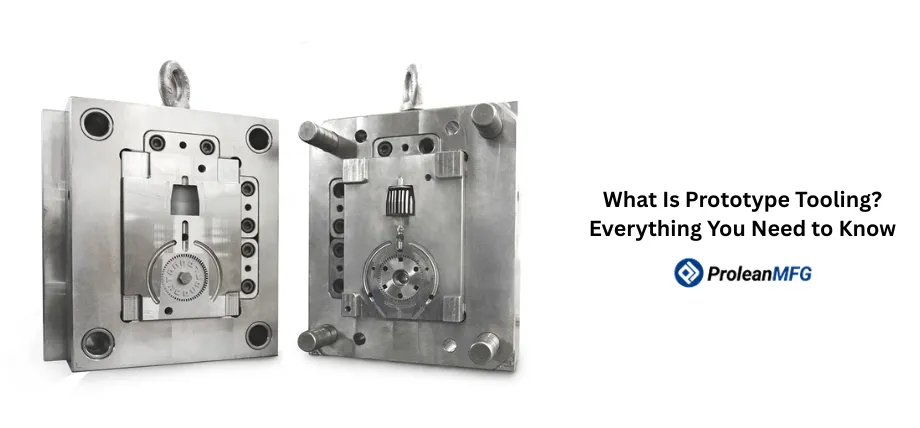
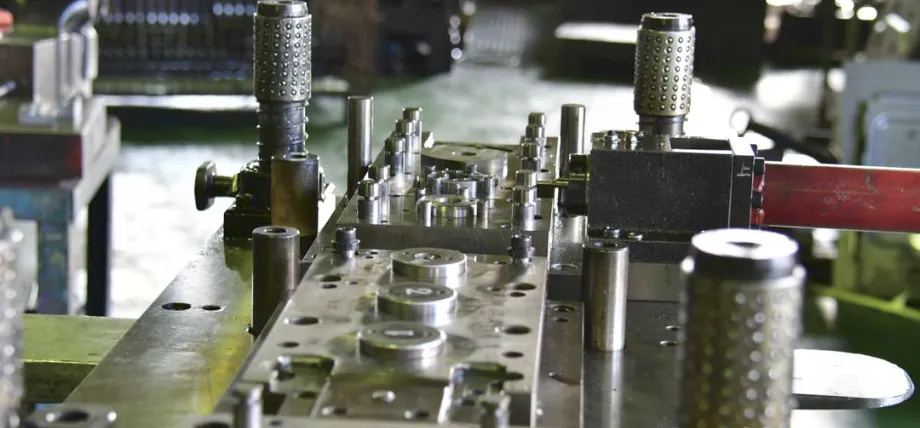
Once tool designs are approved, the custom tooling and tool dies are made for production. A tool steel die is accurately machined to fit the desired part geometry. Manufacturers can use a single-stage die or a progressive die depending on the application.
Tooling might need upfront investment, but it provides high-volume production with stable accuracy and lower unit costs.
Stage 3: Production Stamping Run
When in production, coils of sheet metal automatically feed to the stamping press, which stamps out the metal pieces using predetermined presses. Modern stamping systems have high speed and consistency of dimensions.
Quality control techniques, like in-die sensors, dimensional inspections, and statistical process control, can help identify production variations and reduce waste.
Stage 4: Secondary Operations and Delivery
Following the stamping, parts can also be exposed to further finishing treatments like deburring, tapping, heat treatment, powder coating, or plating to enhance durability and surface quality.
Completed products are then subjected to their last inspection before packaging and shipment based on customer specifications and production scheduling.
| Stage | Purpose |
| DFM Review | Validate manufacturability |
| Tooling Fabrication | Build production die |
| Stamping Production | Form metal components |
| Secondary Operations | Improve finish and functionality |
| Final Inspection | Verify dimensions and quality |
Types of Metal Stamping: Choosing the Right Process for Your Part
Understanding the various types of metal stamping helps you choose the right process for their part
1. Progressive Die Stamping
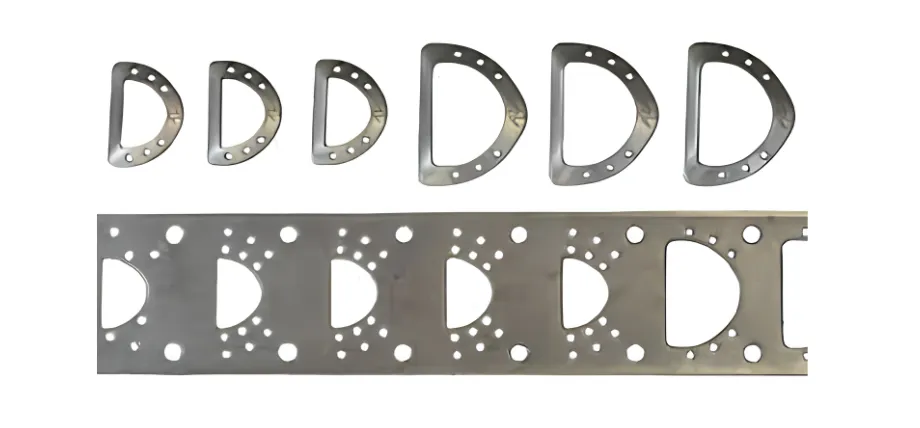
Progressive die stamping is a popular method for manufacturing high-volume small and medium-sized precision parts like electrical connectors, brackets, and terminals. The metal strip is supplied through several die stations sequentially so that each die station does a different operation in the same press cycle.
The major benefit of progressive stamping is the speed of production. Multiple operations like punching, bending, and forming are possible within one cycle. It is extremely beneficial in saving the per-part production cost at high-volume production. But progressive dies are more expensive and usually aren’t practical for deep-drawn or large hollow parts.
2. Transfer Die Stamping
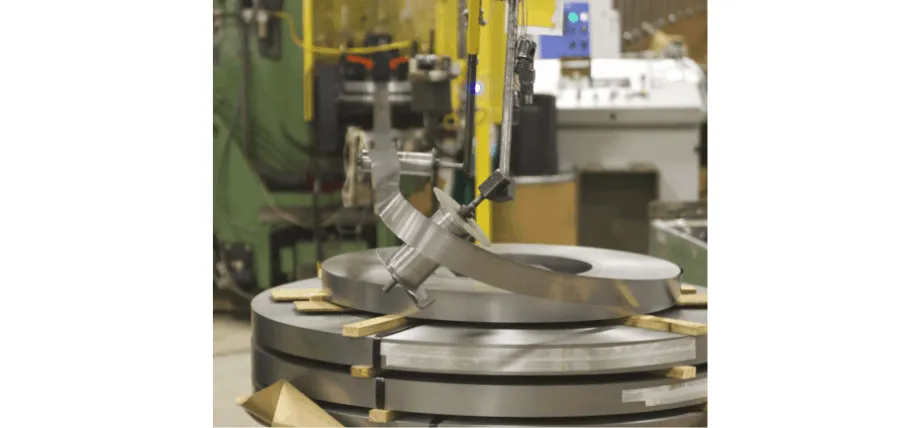
Die stamping is often used to stamp larger and more complex metal parts, particularly in the automotive manufacturing sector. With progressive stamping, parts are separated from the metal strip, and they are transported from one forming station to another.
This process gives the flexibility to form multi-directional and larger geometry parts that are much larger for progressive die forming. It also optimizes the usage of material for some designs of parts. However, transfer die set-ups are more complex and expensive in the initial production stages.
3. Deep Draw Stamping
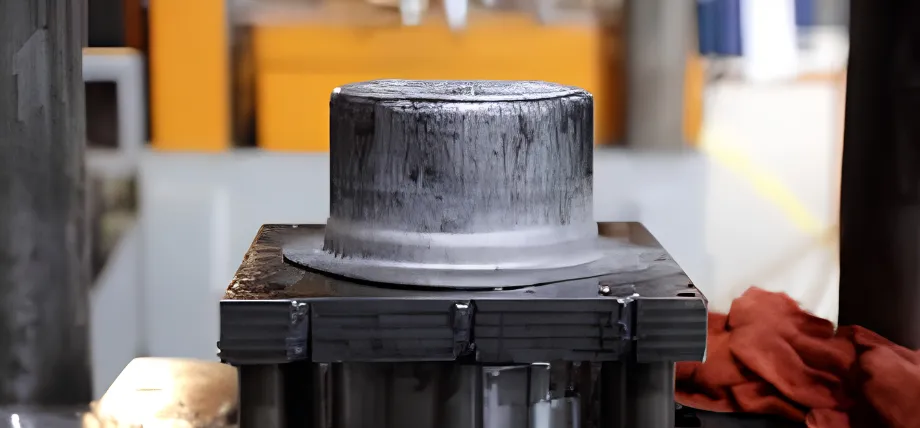
Deep draw stamping can be used to produce cylindrical or hollow parts such as enclosures, cans, housings, and containers. As the process progresses, a flat piece of metal is placed into a die mold to make detailed shapes with a moderately uniform wall thickness.
Deep draw tooling is also more affordable than progressive die systems when manufacturing hollow parts. It is a very effective process to manufacture light, continuous form objects. But drawing deep may cause material thinning, and it is sometimes necessary to use several draw stages to control dimensional accuracy.
4. Fine Blanking
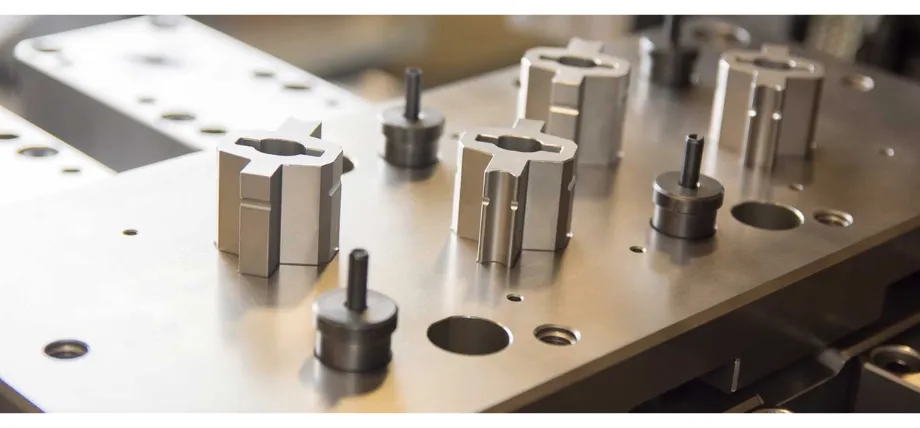
Fine blanking is a precision stamping technology that is used to make smooth edges without burrs and highly accurate parts. Common uses are gears, locking devices, and applications that need close tolerances with good edge quality.
Consistent high pressure implemented throughout the material thickness leads to better dimensional accuracy and fewer secondary finishing operations. Fine blanking has the advantage of high quality of the part made, but special presses are required, and the process is more expensive than conventional stamping.
5. Four-Slide and Multi-Slide Stamping
Four-slide and multi-slide stamping are primarily used for small precision parts, springs, clips, and retainers that need multiple bends. They are capable of working in multiple directions to manufacture the part shape. It makes them ideal for more complex geometries where producing the part using conventional press systems is more difficult.
This allows for quicker tool changes and a lower tooling cost than many progressive die applications. However, part size is limited, so the process is suitable only for smaller precision parts.
6. Short Run Stamping
Short-run stamping is usually used when full progressive tooling is not cost-effective, such as with prototypes, bridging, or low-volume production. Using simpler tooling systems increases manufacturing productivity as it lowers the setup cost and leads time for manufacturing.
The process provides flexibility while developing the product and in early production stages. Production efficiency is lower, though the cost per part is normally higher than that of large quantity stamping.
| Process | Best For | Tooling Cost | Production Volume |
| Progressive Die | High-volume small parts | High | Very high |
| Transfer Die | Large complex parts | Medium–high | High |
| Deep Draw | Cylindrical parts | Medium | Medium–high |
| Fine Blanking | Precision edges | High | Medium |
| Four-Slide | Springs and clips | Medium | Medium |
| Short Run | Prototypes | Low | Low |
Metal Stamping Materials: What Works Best for Your Application
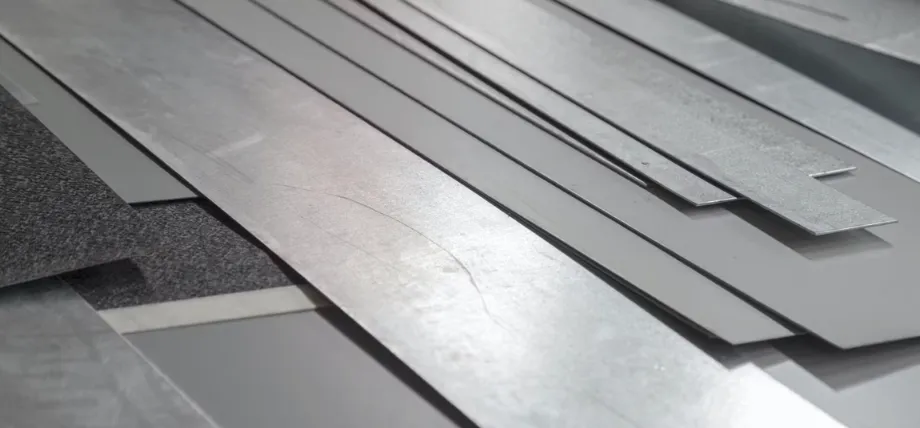
1. Structural Metals: Steel and Aluminum
Steel is a known material for metal stamping due to its strength, durability, and cost. Brass is used for brackets and structural components, and for components where resistance to corrosion is needed, stainless steel is preferred. Low-carbon steel can also be used for such applications.
Aluminum is used for lightweight applications because it is more corrosion-resistant and easily shaped. Essentially used in automobile panels, housings, and electronic parts.
2. Conductive Metals: Copper, Brass, and Nickel Alloys
Electrical connectors, electrical terminals, and bus bars are often made from copper and brass due to their excellent electrical conductivity and corrosion resistance.
Heat resistance and durability in harsh industrial environments are selected; nickel alloys are used.
3. Specialty Metals: Titanium and Beryllium Copper
Titanium is well known for its high strength-to-weight ratio. It makes it a desirable metal for use in the aerospace industry and medical field treatment, where it is corrosion-resistant.
Beryllium copper is used for spring contacts, switches, and connectors due to its combination of electrical conductivity and fatigue resistance.
| Material | Key Property | Common Applications | Relative Cost |
| Low-Carbon Steel | Strength | Brackets, enclosures | Low |
| Stainless Steel | Corrosion resistance | Medical, food equipment | Medium |
| Aluminum | Lightweight | Automotive, electronics | Medium |
| Copper/Brass | Conductivity | Connectors, terminals | High |
| Titanium | High strength-to-weight ratio | Aerospace, implants | Very high |
Metal Stamping Cost
Factors affecting the total metal stamping cost include tooling expenses, production quantities, material selection, and piece complexity
- Tooling Cost
Tooling cost makes up the majority of the setup cost in metal stamping. Depending on the stamping process and the tooling you use, like progressive dies and tough tool materials, this can also increase the tooling cost.
- Production Volume
Because tooling costs are so high, it doesn’t make sense to produce low quantities. As the quantities increase, the cost per part is lowered, and the tooling costs are distributed across the entire volume of the parts produced.
- Material Selection
This is another transferred cost of the project. Because the material cost is fixed and paid by the customer, the alloy, material choice and availability can greatly affect the project price.
- Part Complexity and Tolerances
A design that is complicated with many internal complexities results in tooling and cores with even more complications. Close tolerances for non-critical features and unnecessary inspection standards make part production more expensive.
Metal Stamping Applications
Metal stamping is widely used in industries like automotive and electrical industries, where the number of parts is in the thousands and requires identical part production.
1. Automotive Stamping
Automotive stamping produces structural and body components like brackets, door panels, and heat shields. These parts are thin enough and don’t require tight tolerances, so they can be stamped quickly and accurately. Stamped steel and aluminum parts also meet dimensional and load-bearing applications.
2. Medical Device Stamping
Medical devices produced from metal stamping include surgical instrument parts, implantable device housings, and equipment casings that need electronic shielding. Medical parts are most commonly stamped from stainless steel or titanium, and the important certification is the ISO 13485 quality standard with complete traceability for materials and a contamination-free environment.
3. Electrical and Electronics Stamping
Electrical stamping is very common, and most terminals, connectors, and bus bars in switches are made from stamping. Copper and brass can be easily shaped to fine tolerances because of their softness and ductility, ensuring consistent conductivity and operational reliability.
Key Takeaways
- Metal stamping converts flat sheet metal into repeatable production units through metal tooling called dies and machines called presses. These presses can be hydraulic or weight-operated, making them one of the most cost-efficient manufacturing processes for high-volume runs.
- Process Selection: Progressive stamping, transfer, and deep draw are some common metal stamping processes, and choosing between them depends largely on part geometry and tolerance requirements.
- Tooling (the largest capital cost) can be adjusted in the cost per part when production achieves a large scale.
- Metal stamping is better than machining when working with sheet metal, high volume and part geometry is consistent.
Metal Stamping Services
At Proleanmfg, metal stamping starts from the design. Our staff engineers conduct manufacturability analysis on every submitted design and identify bend radius, hole placement anomalies, and material suitability according to the tooling before a single press cycle even starts.
We provide stamping services in progressive dies, transfer dies, deep draw, and fine blanking, supported by multiple surface finishing and coating treatments.
Request a free quote today!
Conclusion
Metal stamping is a reliable and scalable forming process that can produce dimensionally identical parts in a close tolerance zone. Its material choice is limited, and steel, aluminum, brass, and copper are common materials that are stamped.
Selecting the right process, material, and tooling material is important early on in metal stamping because it has a high upfront cost.