
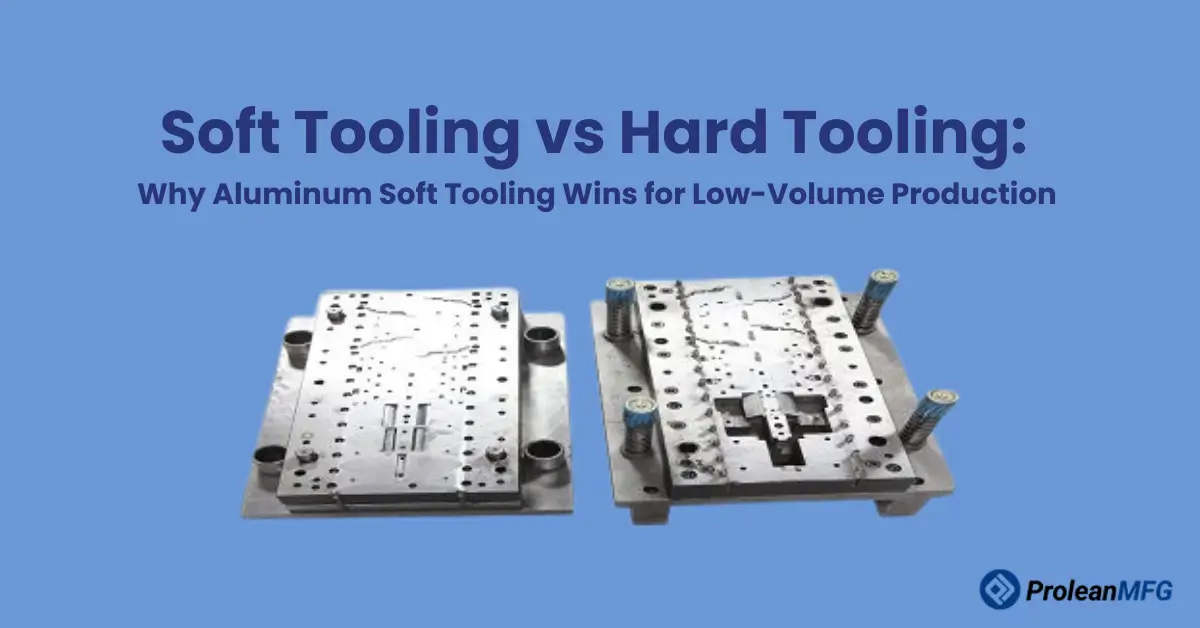

Soft tooling vs hard tooling are two different manufacturing processes, but aluminum soft tooling offers the best balance of speed, cost, and quality for low-volume production. Aluminum molds are faster to machine and less expensive than steel hard tooling. These aluminum molds are capable of producing parts ranging from 100 to 5,000 units. However, steel hard tooling is the preferred choice for mass production. But aluminum soft tooling validates design, ensures faster production, and reduces upfront investment without compromising the part quality.
The team at ProLean MFG has extensive experience with rapid tooling of all kinds, including aluminum soft tooling for low production and steel hard tooling for full-scale production. Learn more about the key differences between soft tooling vs. hard tooling. This guide helps you identify which is the smarter choice for your timeline, volume, and budget.
Soft tooling vs hard tooling are the two commonly used tooling processes to create molds, dies, and tools for producing parts. The type of tooling is the major difference in how the parts are produced. For instance, soft tooling (Urethane) is used to produce parts from silicon. Hard tooling (Injection molding), on the other hand, is used to produce parts from steel and aluminum.
The team at ProLean MFG has extensive experience with tooling of all kinds, including aluminum soft tooling for low production and steel hard tooling for full-scale production. Learn more about the key differences between soft tooling vs. hard tooling. This guide helps you identify which is the smarter choice for your timeline, volume, and budget.
What is Soft Tooling?
Soft tooling refers to the production of metal molds from soft materials in plastic injection molding, such as aluminum, urethane, or silicon. These materials are easy to machine and less expensive than hard steel. Soft tooling is used in rapid prototyping where flexibility and a small number of production runs are required. The most commonly used soft tooling materials are silicone, carbon fiber composites, and fiberglass.
Aluminum soft tooling involves the use of aluminum in soft tooling rather than steel to produce dies and injection molds. Now the question is, why is aluminum the most practical soft tooling material? Aluminum is an ideal choice for low-volume production.
- The machinability of aluminum alloys such as QC-10 and 7075 is 3 to 5 times faster than steel. So, the fabrication time of cutting is about 1 to 2 weeks.
- The thermal conductivity of aluminum is more than that of steel. Therefore, its cycle time is faster per shot.
- The surface finish quality of aluminum soft tooling is more suitable for final products than just prototypes.
- The mold life lasts to produce 500 to 10,000 pieces, depending on the material and plastic type. It is also ideal for 100 to 5,000 unit runs.
- Aluminum soft tooling is cheaper than steel hard tooling.
These low-volume tooling practices commonly follow industry standards such as ISO 20457 for plastics mold design and SPI tooling classifications used in injection molding.
Silicon and urethane soft tooling processes are required for the production of 1-100 units. Therefore, the aluminum soft tooling is the right choice for low-volume production.

Custom Silicone Mold with Plastic Fitting
What Is Hard Tooling?
Hard tooling for plastic injection molding uses hardened material like steel to create molds, tools, and dies. P20, H13, or S136 steel is typically used for high production runs. These molds have a tooling life between 500,000 and 1 million shots.
They can handle extreme temperatures, rough materials, and make parts with precise size and shape. The steel mold does not wear or flex as much as the softer mold material. The most commonly used materials for hard tooling are steel, nickel, and aluminum alloys.
The hard tooling is more expensive upfront due to the materials used, as steel is not as easy to machine as aluminum. Therefore, the steel molds undergo multiple processing stages. These stages include CNC machining, EDM for cavity and core features, heat treatment, and surface finishing. This procedure of hard tooling takes 6 to 14 weeks till the end product is ready.
Types of Tooling: Where Aluminum Soft Tooling Fits
The types of tooling help you to understand the difference in the selection of the right tooling for each phase.
Prototype Tooling
The prototype tooling is the initial stage for the product development phase. The initial design and testing of the model are decided in this stage. The design flaws are assessed in this step to ensure the final product meets the needs.
Aluminum Soft Tooling
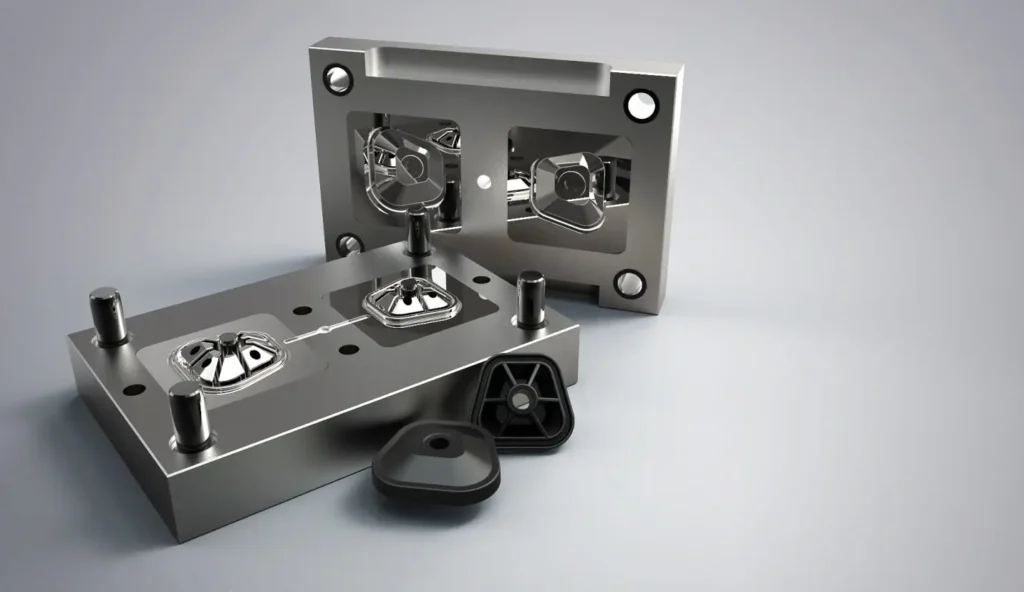
Soft tooling, most commonly aluminum soft tooling, is an ideal choice for low to medium production. Aluminum soft tooling offers faster production time than hard tooling. This tooling involves the making of complex designs with a lower initial cost. However, it is unsuitable for high-volume production due to the short life span of the molds. Which, in result, can increase the overall cost of the project.
Bridge Tooling
Bridge tooling can be considered the bridge between prototyping and full production. This process helps to increase production fast, so the product reaches the market quickly. Bridge tooling is cost-effective and uses aluminum molds to produce parts.
Hard Tooling
Hard tooling is an ideal choice for high-volume productions. This process used hard materials like steel and nickel due to their corrosion resistance and toughness. Hard tooling produces high-quality products, ensuring precision and longevity in production. However, it can cause high initial costs and long production times for low-volume production.
The Aluminum Soft Tooling Process
The aluminum soft tooling process is a fast and cost-effective method used for producing low to medium-volume prototypes. It is widely used when quick turnaround and functional testing are more important than long-term production durability.
Knowing about the soft tooling process is helpful to manage your project timeline:
Step 1: Design Review and DFM for Aluminum Tools
A design review is done before the beginning of machining for aluminum tooling. This evaluation includes uniformity of wall thickness, suitable draft angles, and undercut features that can complicate the mold release. Therefore, identification of such issues at this stage can lead to the saving of thousands of dollars. A DFM review is conducted for every aluminum soft tooling project before a single cut is made at ProLean MFG.
Step 2: Alloy Selection and CNC Mold Fabrication
The selection of the right aluminum alloy is crucial for injection molding. The aluminum alloy QC-10 delivers a consistent surface finish with easy machinability and holding tight tolerances. Whereas, 7075 aluminum alloy is exceptional for hardness and wear resistance for projects involving higher shot life. Then the mold cavities and cores are CNC machined from solid aluminum billet after the alloy is finalized. That’s why aluminum soft tooling took less time than steel hard tooling.
Step 3: Trial Shots, Validation, and Production
The first piece is produced via an injection molding machine after the aluminum mold is completed. So, every dimension of the first article is critically inspected in the part drawing. The aluminum soft tool is modified if any minor adjustment is required.
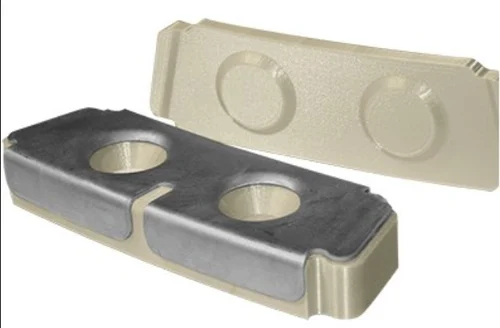
Tooling Material Selection: Matching the Right Material to Your Project
The table below is a comparison of all three types of tooling. This shows exactly where aluminum soft tooling stands differently from silicon casting and steel hard tooling:
| Factor | Silicone / Urethane | Aluminum Soft Tooling | Steel Hard Tooling |
| Upfront Cost | Very Low ($100–$2K) | $2K–$15K | High ($20K–$100K+) |
| Lead Time | 1–3 days | 1–2 weeks | 6–14 weeks |
| Tool Life (Shots) | 25–100 | 500–10,000 | 100K–1M+ |
| Best Volume | 1–50 units | 100–5,000 units | 10,000+ units |
| Surface Finish | Moderate | Production-quality | High precision |
| Design Changes | Very easy | Easy & affordable | Costly/new tool |
| Time to First Part | Hours | Days–2 weeks | 6–14 weeks |
Tooling material selection plays a crucial role in the overall project costs, lead time, and quality. This is a single strategic decision that must be aligned with your project’s specific requirements.
Aluminum Rapid Tooling of ProLean MFG
ProLean MFG is providing rapid tooling services for soft tooling and hard tooling. Our expertise in plastic injection mold tooling and advanced manufacturing solutions allowed us to provide tailored tooling solutions.
Our team developed an aluminum soft tool for a consumer electronics enclosure recently. This enables the customer to validate the design. Then a thousand functional parts are produced within a tight timeline. The project achieved faster mold fabrication and reduced upfront tooling costs by using aluminum tooling as compared to steel tooling.
Our reliable support is available from prototype development to full-scale production at every stage of the manufacturing process.
Contact us today! If you are ready to discuss your next injection molding project.
Key Takeaways
- Aluminum soft tooling is the most practical solution for low-volume production.
- Soft tooling molds take 1-2 weeks to produce, while steel hard tooling requires 6-14 weeks of manufacturing time.
- Aluminum enables faster mold fabrication and shorter injection molding cycle times due to its excellent machinability and thermal conductivity.
- Hard tooling molds have a tooling life between 500,000 and 1 million shots, so they are best suited for mass production.
- The selection of appropriate materials directly impacts project cost, lead time, mold lifespan, and overall manufacturing efficiency.