

Every machined metal component – from automotive enclosures to dies for tooling – starts with the conversion of raw stock into a functional part. The process behind this capability is called metal milling or CNC milling for advanced processes.
Metal milling is defined as a rotating cutter cutting or shaping a workpiece held on a movable table. Most engineering metals – aluminum, steel, titanium, and others – can be processed this way. Whether you are looking for flat surfaces, contours, pockets, or holes, there is usually a metal milling type to produce the shape.
Metal milling can produce these shapes thanks to the different types of cutters, namely end mill, face milling cutter, groove milling cutter, and plain milling cutter. But there is more to the machining outcome than just the type of cutter. Machine type and process parameters are instrumental in the metal milling process.
This article breaks down all the fundamentals you need to know about metal milling: The types of metal milling machines and tools, shapes that can be produced, types of metals for milling, the cost drivers, and how modern and conventional metal milling methods compare.
What is Metal Milling?
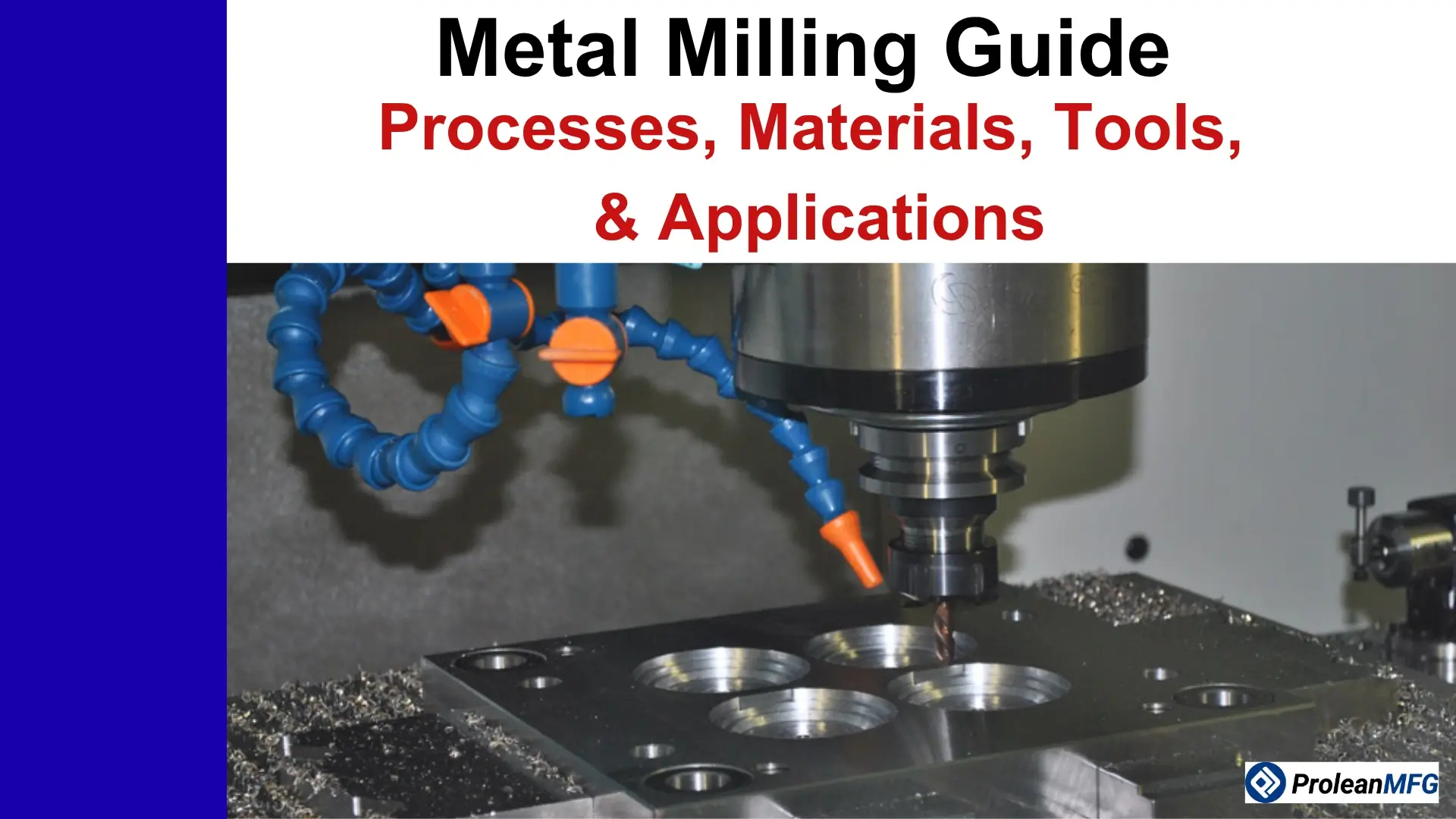
Milling metal is a subtractive manufacturing process that removes material from a metal surface in a controlled manner. The tool used in metal milling is called a milling cutter. But the backbone of metal milling is the milling machine, which holds the metal workpiece and spins the cutting tool.
The milling machine has a table that moves along axes as the cutter rotates, for a concurrent mechanism that produces the desired part. Since the milling cutter can produce 3D features, contours, holes, pockets, and stepped profiles can be produced on metal stock.
Which Metals Can Be Milled?
Commonly milled metals include steel and cast steel, hardened steel, Aluminum and cast aluminum, brass, bronze, titanium, copper, tungsten, gold, and silver.
- Milled steel and cast steel
- Hardened steels
- Aluminum and cast aluminum
- Brass and bronze
- Titanium
- Copper and tungsten copper
- Gold and silver
Aluminum, brass, and other softer non-ferrous metals mill faster and more cheaply than titanium or hardened steel. Therefore, factor in lead time and machining cost when considering these materials.
By adhering to the ISO 2768-m guidelines, the manufacturer can maintain metal machined parts for the required application.
Types of Metal Milling Machines
The main categories of metal milling machines are vertical, horizontal, CNC, and universal. Each of these types presents a unique combination of number of axes, repeatability, and precision.
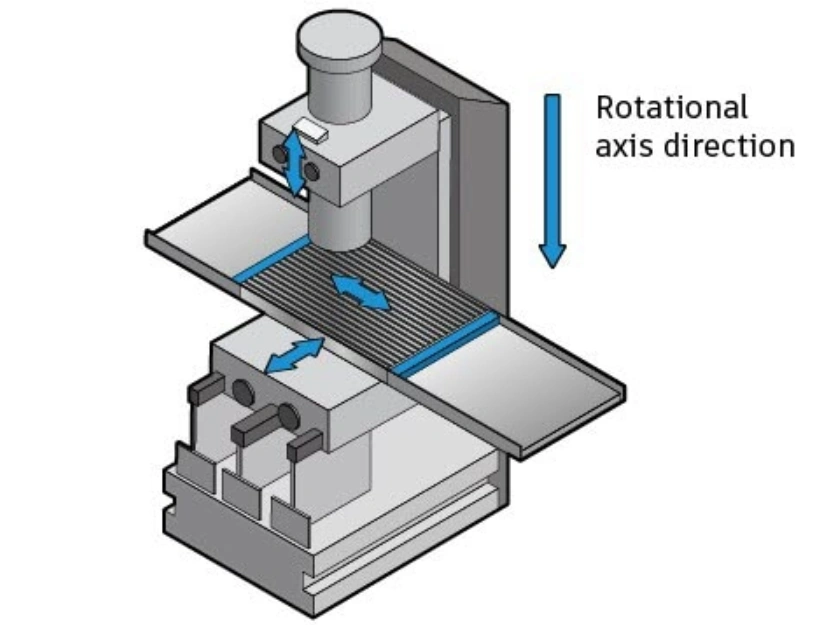
Vertical Milling Machine
The spindle is positioned vertically, or perpendicular to the worktable. The machine is suitable for detailed work such as die-sinking and drilling. It gives the machinist a clear view of the machining process.
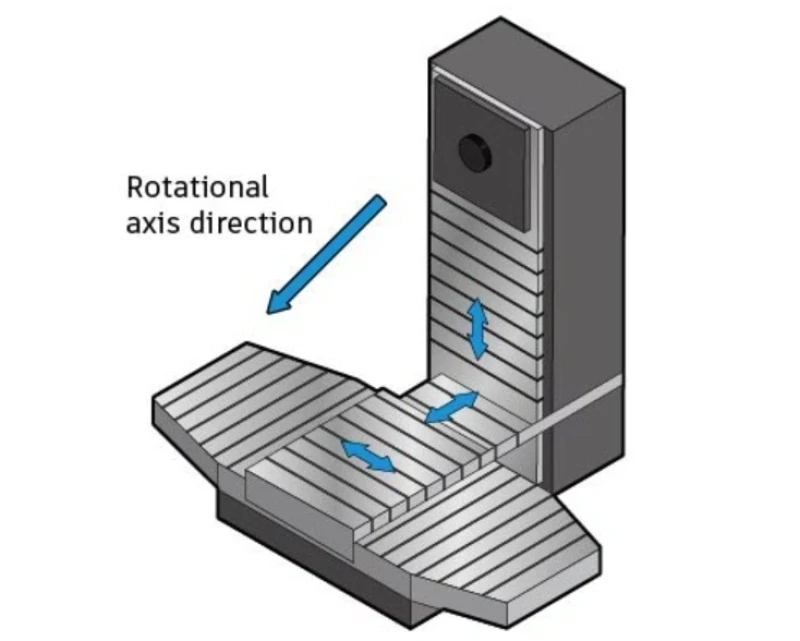
Horizontal Milling Machine
The worktable and machine spindle are parallel to each other. The cutter has a sideways approach to the workpiece. The horizontal milling machine configuration is designed for handling heavier workpieces.
CNC Milling Machine
A CNC milling machine can move across multiple axes and work with minimal machinist intervention. With unrivaled automation and repeatability, this machine type is the default choice for tight tolerances and complex geometries.
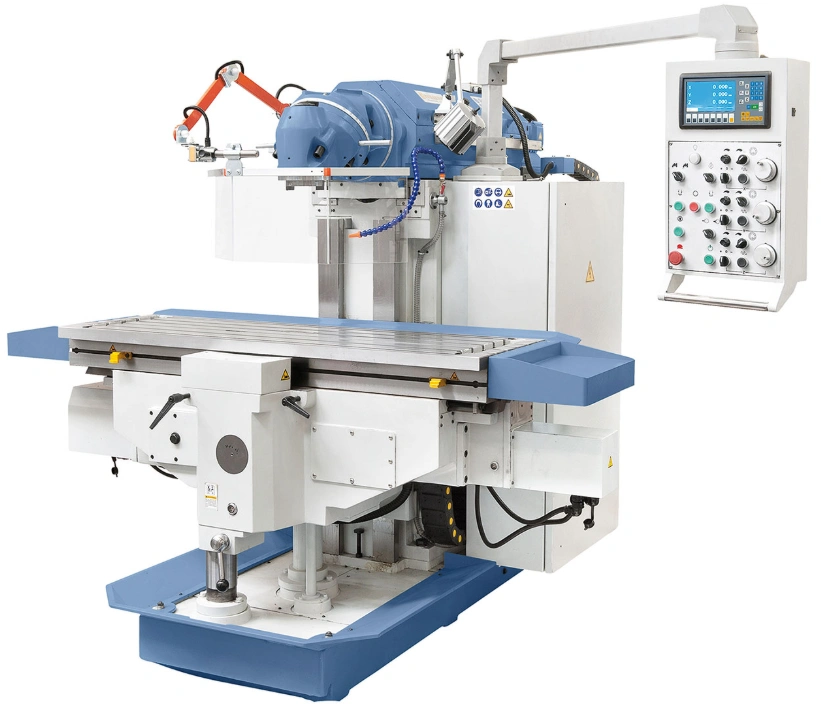
Universal Milling Machine
The universal milling machine has the capabilities of both vertical and horizontal setups. Since they have added flexibility, the complexity of the parts produced is higher. Angular cuts can be machined without repositioning, as would be the requirement for the less complex arrangements.
Types of Metal Milling Tools/Cutters
The main milling cutter options are end mill, face milling cutter, groove milling cutter, and plain milling cutter. The choice depends on the surface finish, cutting efficiency, and feature geometry.
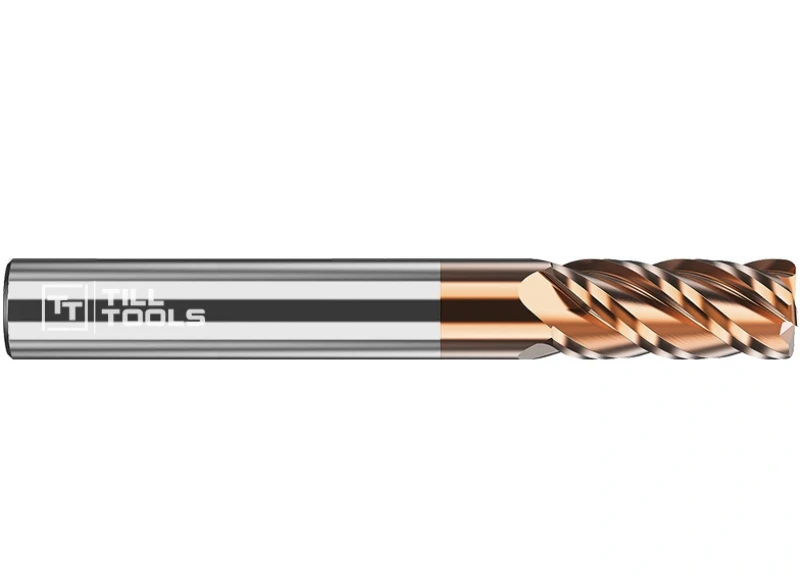
End Mill
This is a versatile cutter designed to machine on both its tip and side. Machinists prefer it for slotting, profiling, and contouring jobs.
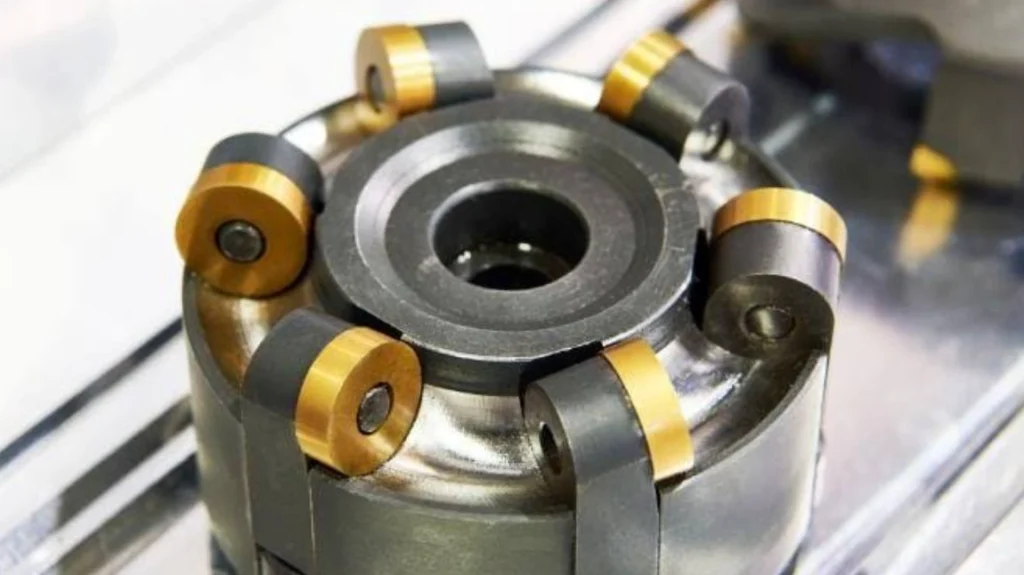
Face Milling Cutter
The cutting edges for the face milling cutter are positioned at the face and periphery. It is an early-stage machining tool, engineered to produce smooth finishes across large surfaces.
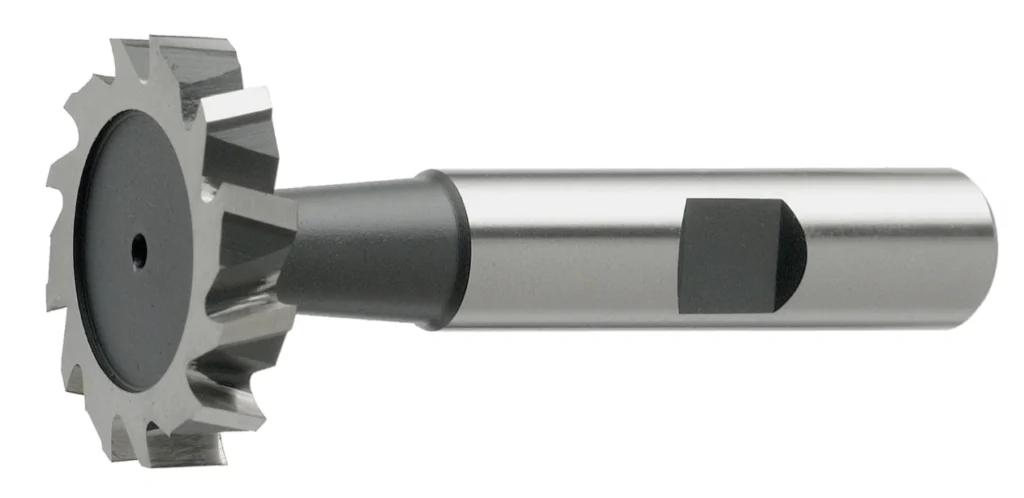
Groove Milling Cutter
The groove milling cutter is a perfect choice for manufacturing narrow channels like slots. The cutting edges are on both the periphery and sides. It produces features that help accommodate fasteners and other mating components.
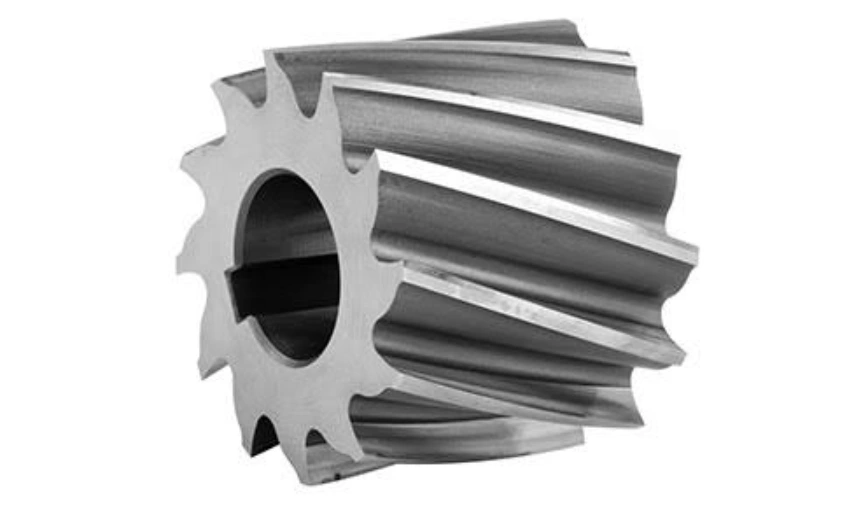
Plain Milling Cutter
Helical teeth across the length of the cutter are designed to produce quality horizontal, flat surfaces. The helical shape serves two main functions: Reducing vibration and producing a smoother surface.
The Metal Milling Process/Stages
The standard sequence for metal milling comprises securing the workpiece, loading tooling, setting the feed rate and machine speed, starting the spindle, and moving the table.
Step 1: Secure workpiece
Step 2: Load tooling
Step 3: Set feed rate and machine speed
Step 4: Start spindle
Step 5: Move workpiece-carrying table against the rotating cutting tool
As you look for CNC metal milling services, you are probably wondering what your design needs to cover. As the next section explains, the milling service provider considers several parameters and shapes.
Key Parameters in Milling Metal
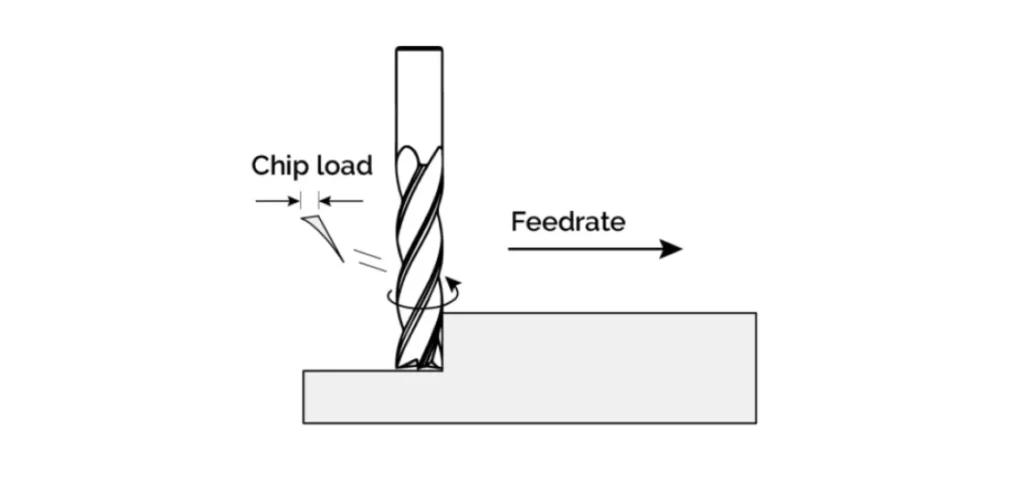
The most important interdependent settings in metal milling are cutting speed (SFM), feed rate, depth of cut, spindle speed (RPM), and tool material and coating. Getting these right is the secret to avoiding poor surface finish, dimensional mistakes, and tool wear.
- Cutting speed (SFM)
- Feed rate
- Depth of cut
- Spindle speed (RPM)
- Tool material and coating
Since these parameters are interdependent, the machinist should tune them together.
Design and Dimensional Recommendations for CNC Metal Milling
The table below shows a checklist of design and dimensional data that can be used to verify during CNC metal milling.
| Property | Recommendation | Notes |
| Standard tolerances | ISO 2768-m | This applies to non-critical parts |
| Wall thickness | ≤ 1 mm | Reinforcement recommended for higher mechanical loads |
| Minimum internal radius | ≥ 1 mm | A radius of ≥ 1.5 times the tool radius is preferable |
| Cavity depth-to-width ratio | ≤ 4 | 4 times the width should be the maximum |
| Thread length | ≤ 2 times hole diameter | Aluminum may require inserts |
| Hole depth | ≤ 10 times diameter | Shorter, say, 4 times better for shorter tools |
| Standard chamfer | 45°, 0.5-1.0 mm depth | Simpler assembly and minimal sharp edges |
What Shapes Can Metal Milling Produce?
With multi-axis motion capability, milling offers a wide range of shapes: Freeform 3D contours, holes, keyways, slots, grooves, rectangular pockets, flat surfaces, and stepped profiles.
- freeform 3D contours
- Holes
- Keyways
- Slots
- Grooves
- Rectangular pockets
- Flat surfaces
- Stepped profiles
With these options, an experienced provider can deliver custom metal milling parts.
Purposes of Metal Milling
Metal milling is not limited to cutting metal; it also enhances surface finish, reduces material thickness, shapes the workpiece, and cuts features such as pockets and slots.
- Surface finish
- Reduce material thickness
- Shape workpiece to precise specifications
- Cutting features – pockets, grooves, slots, etc.
Cost Drivers for Metal Milling
Four factors normally drive the cost of a metal milling job: Process time, Raw materials, Labor, and Extra costs such as electricity and cooling water.
- Process time
- Raw material
- Labor
- Extra costs – electricity, cooling water, lights, quality team (complex parts),
Applications of Metal Milling
Precision metal milling is widely used in aerospace and aviation, automotive, mechanical components, prototyping, and tooling.
Aerospace and Aviation – Complex Parts
Custom metal milling is popular in the aerospace and aviation industries because of the complex and distinct metal parts required.
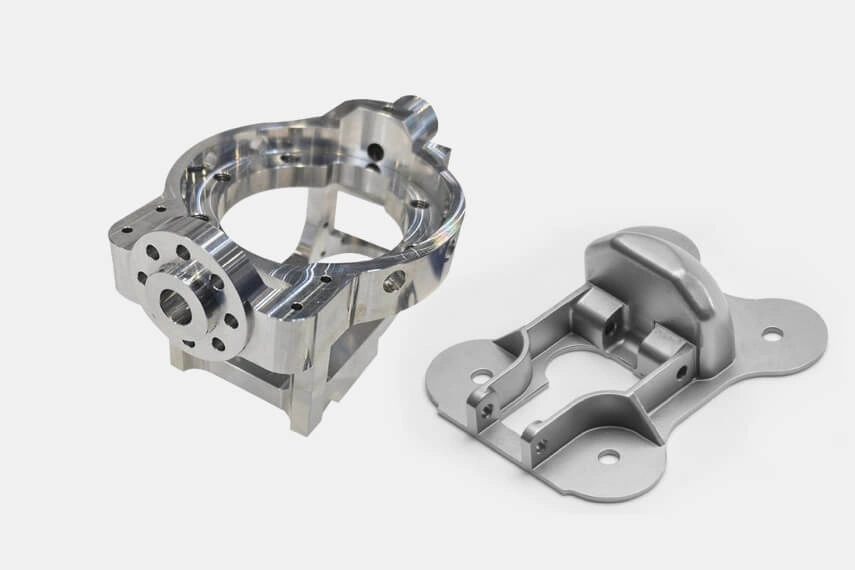
Automotive Applications
Metal milling is used for both component manufacture and prototyping. The precision and reliability of the process is evident in brake parts, transmission housings, engine blocks, and many other areas.
Professional metal CNC milling for the automotive industry helps meet tight standards on performance and safety with tight tolerances. 5-axis CNC machining is particularly central to production.
Mechanical Components – Couplings, Gears, Levers
Dimensional accuracy is non-negotiable for levers, gears, and other mechanical components. Metalworking milling helps achieve this by producing quality features such as keyways and tooth profiles.
Tooling – Dies, Molds
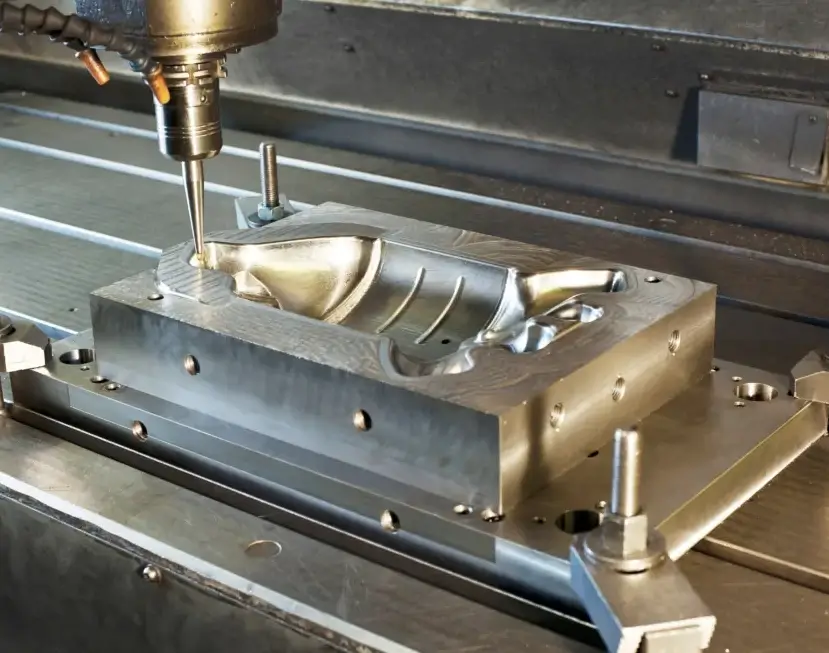
Precision is equally important in die and mold manufacturing. The contours and cavities have to match the design specifications. Tight tolerances are vital for these tools because of the effect on parts produced. It’s valuable to get these tolerances right the first time because repair or correction can be costlier.
Prototyping
The seamless connection between CNC metal milling and CAD data makes the process ideal for making functional prototypes. Engineers can subject real engineering metals to fit, form, and function validation.
Traditional vs Modern Metal CNC Milling
Traditional and modern metal milling methods differ across complexity, precision, speed, repeatability, and labor requirements. Modern metal CNC milling is more precise, faster, more repeatable, and capable of producing more complex parts. Its labor requirements are predictably lower, but the level of expertise required is higher.
| Element | Traditional Metal Milling | Modern Metal CNC Milling |
| Complexity | Simpler geometries. Multiple setups for complex work. | Complex, multi-axis performance in a single setting |
| Precision | Tolerances depend on operator consistency and skill | Programmable. Consistent tolerances down to ±0.001″ |
| Speed | Slower | Faster cycle times |
| Repeatability | Inconsistent – changes with operators, parts | Identical parts across runs |
| Labor Requirements | More hands-on labor | Higher hands-on labor |
The Future of Metal Milling
Metal milling is shifting toward higher precision and automation. The main drivers of this shift are artificial intelligence for toolpaths, 5-axis CNC technology, advanced process monitoring, and hybrid manufacturing.
Artificial Intelligence for Toolpath Optimization – Algorithms can analyze machining conditions and adjust paths and feed rates in real time.
5-Axis CNC Technology – Useful in the milling of multiple-angle geometries in one setup, for complex parts
Advanced Process Monitoring – Advanced sensors capable of monitoring temperature, vibration, and tool wear during machining. Errors are discovered early, and scrap rate is reduced.
Hybrid Manufacturing – Workflows blend subtractive and additive manufacturing processes. Parts can be 3D printed, then CNC milled for the highest precision.
Final Words
Metal milling is one of the most versatile metal processing methods available. The subtractive technique produces features such as pockets and contours across various engineering metals – steel, aluminum, titanium, and others.
Getting the most from metal working milling boils down to parameter control, cutter selection, material selection, and cost control. Equally important is the choice of milling machine and application of expertise.
Whether you are making automotive parts or prototyping a complex component, you minimize guesswork and turnaround time by working with a seasoned metal milling service provider.
Our CNC Milling Services cover all you require, including machining experts, the latest metal milling machines, fast turnaround of 12–24 Hours, tight tolerances of up to ±0.001″, and the capability to process 100+ metals.
Resources