
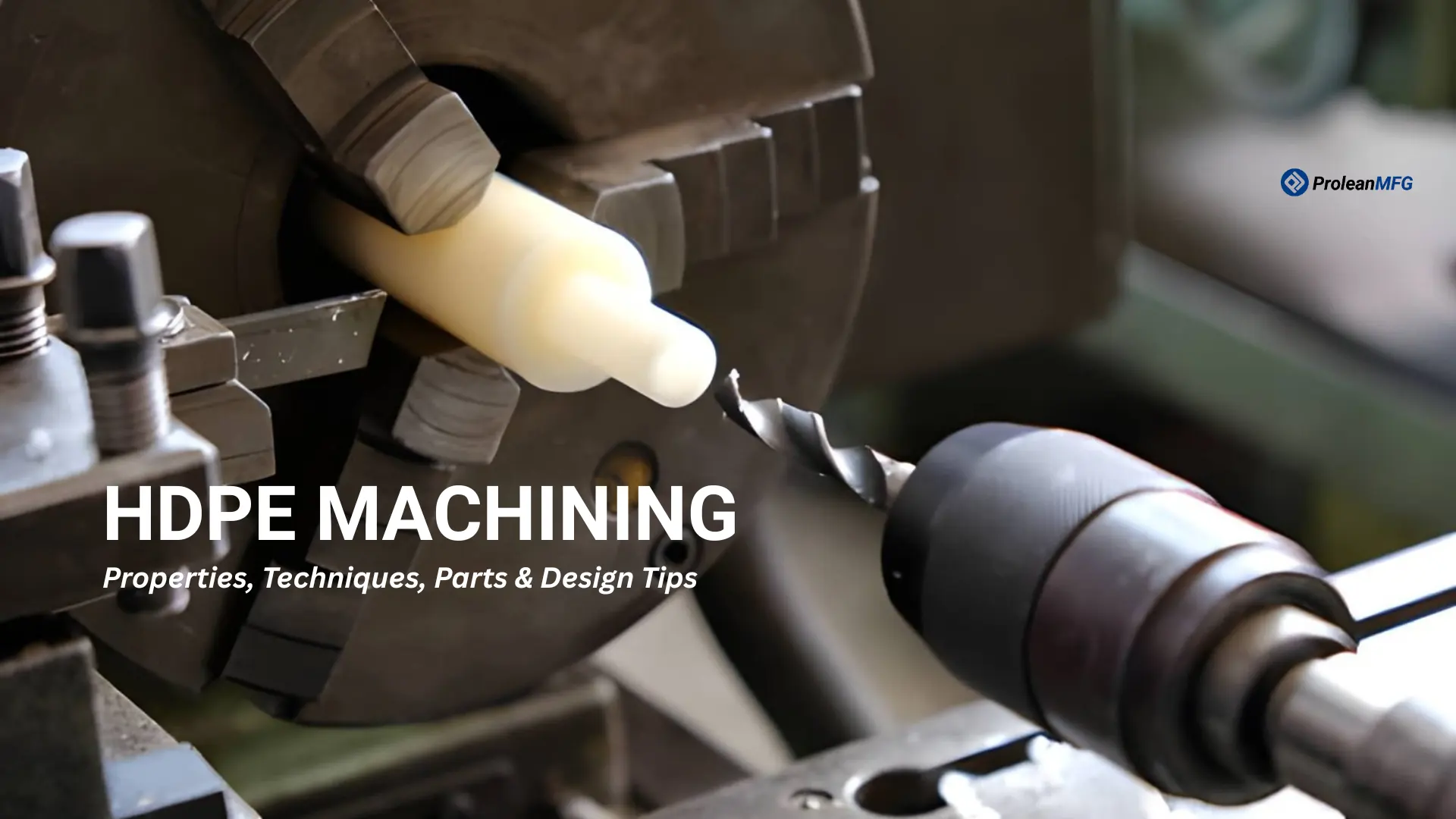

HDPE is a lightweight plastic with good strength, chemical resistance, and low moisture absorption. Its tensile strength is typically around 20 to 33 MPa, with a Shore D hardness of about 60 to 70. Because HDPE is relatively soft, clamping during machining can affect final dimensions, so workholding needs to be considered when tighter tolerances are required.
It is used for pipes, tanks, containers, conveyor parts, guides, wear components, and food-handling parts. HDPE is also useful where low weight and resistance to water and chemicals are more important than high stiffness.
HDPE has some limits. For example, its heat-deflection temperature is about 45 to 60°C, and its melting point is around 130-137°C. It also expands considerably with temperature. These points should be considered for large parts and closer-tolerance work.
This article explains effective HDPE machining tips, problems encountered, safety tips and typical parts made from this engineering plastic.
What Is HDPE Machining?
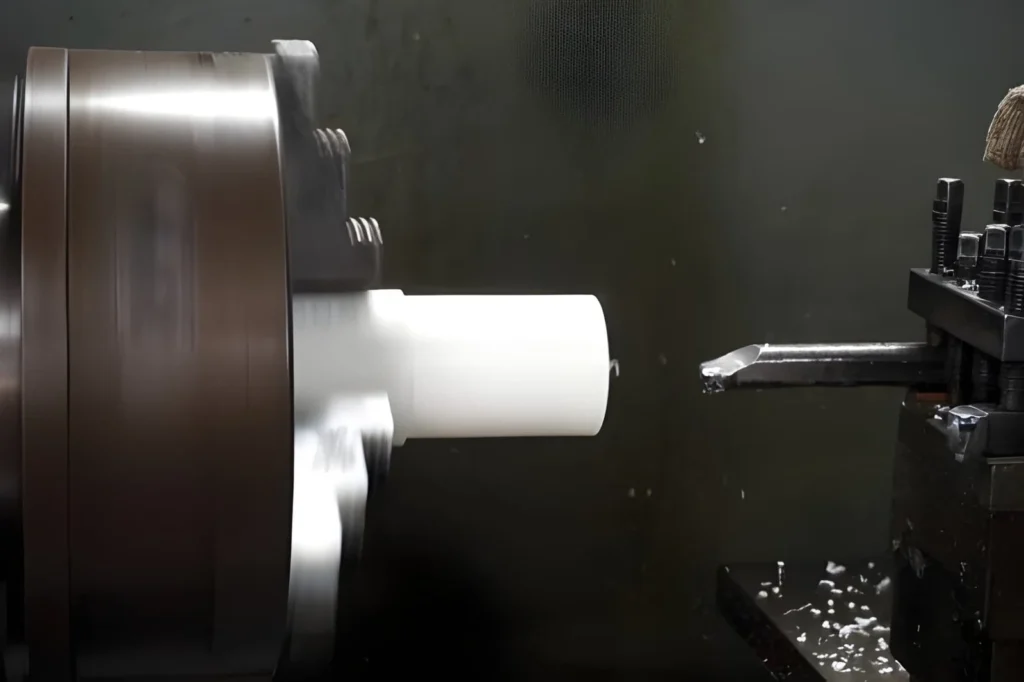
HDPE Plastic Machining involves producing a part from HDPE stock by CNC milling, turning, drilling, boring, and threading. It is well-suited to prototypes and low-volume custom parts. So, in fact, no mould is required, and hence it incurs low production costs.
Moreover, the material is easy to cut. However, the cutter should stay sharp, and chips should clear from the cutting area. HDPE can soften from cutting heat, and its low stiffness can cause movement if the part is not properly supported.
One other point is joining. HDPE has poor bondability. So, mechanical fastening or plastic welding is normally more suitable than standard adhesive bonding.
Machineable HDPE Properties
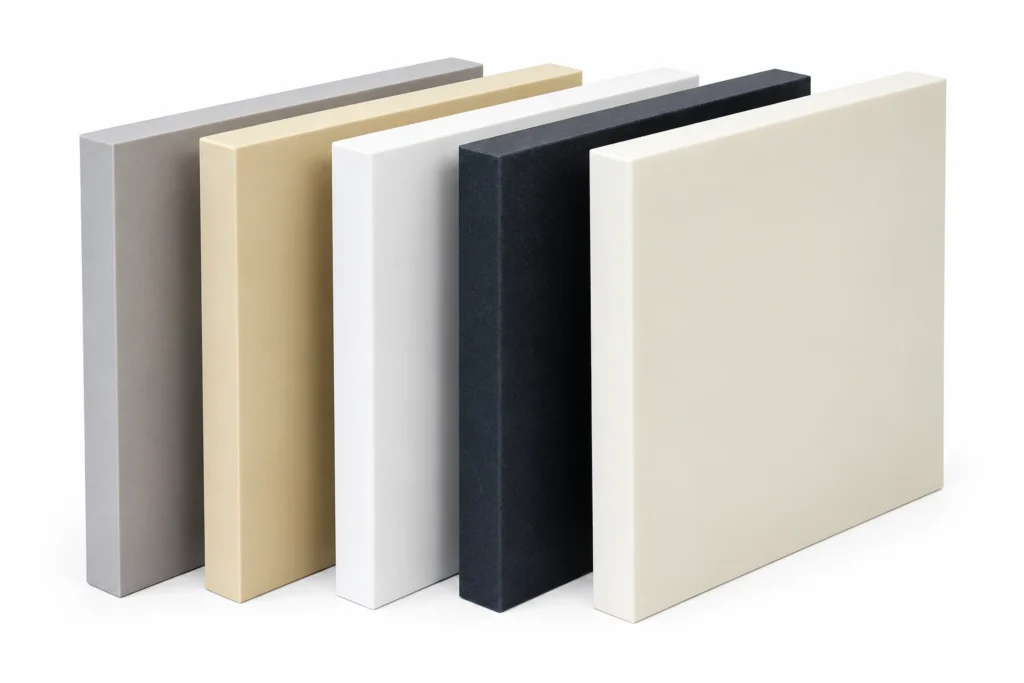
The following values are from the King KPC HDPE material datasheet. The datasheet notes that these are nominal values from ASTM-tested specimens.
Therefore, the values should be used as material reference data rather than as guaranteed specifications.
| Property | HDPE Value | ASTM Method |
| Density | 0.955 g/cm³ | D1505 |
| Tensile strength at yield | >4,100 psi (28.3 MPa) | D638 |
| Tensile modulus | 255,000 psi (1,758 MPa) | D638 |
| Elongation at break | >600% | D638 |
| Flexural modulus | 185,000 psi (1,276 MPa) | D790 |
| Compressive strength at 10% strain | 4,950 psi (34.1 MPa) | D695 |
| Hardness | Shore D 68 | D2240 |
| Izod impact resistance | 1.1 ft·lb/in² | D256 |
| Vicat softening temperature | 123°C (253°F) | D1525 |
| Heat deflection temperature | 75°C (167°F) | D648 |
| Brittleness temperature | Below −76°C (−105°F) | D746 |
Practical point: HDPE combines low density with high elongation and good impact performance. Its 75°C heat-deflection temperature is also worth checking for parts that will operate at elevated temperatures.
How to Cut and Machine HDPE?
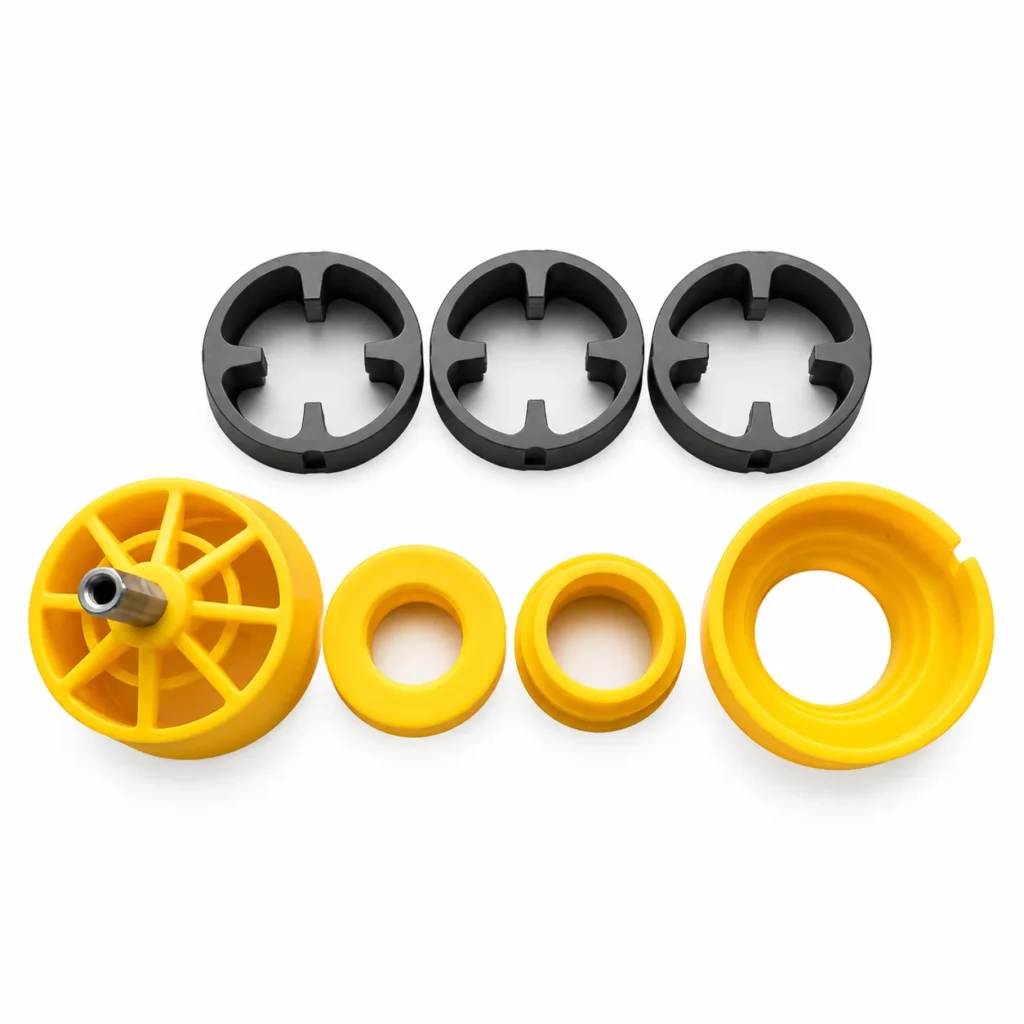
HDPE is easy to cut. However, it does not behave like aluminium and steel. Heat, chip accumulation, tool deflection, and material movement are the major problems during HDPE machining. Using the right cutter and regular chip removal helps to keep the cut neat.
Tooling for HDPE
Sharp edges with adequate flute space to remove chips. Dull tools get rubbed against the HDPE and may leave melted edges.
Single and two-flute cutters can be beneficial for routing and milling operations due to increased space for chip evacuation. The exact cutter is still needed to match the part size and operation.
Cutting and Routing
Do not allow the cutter to idle in any one spot. When a cutter is stopped or moving slowly, it can cause heat and leave a melted surface.
When cutting sheets, be sure to support the material properly, and do not force the cutter through the sheet. Clear pockets and deeper features regularly to avoid staying in the cutting area and the risk of being cut again.
Drilling HDPE
Use a sharp drill bit and remove chips from deep holes. Heat and/or roughness of the hole can be caused by chips stuck within it.
If the hole is bigger or deeper, remove the drill as necessary to clear the chips. Avoid resting the drill on the bottom of the hole as it is rotating.
Workholding
If clamping is too tight, there is a risk of HDPE moving. Apply clamping pressure without crushing or distorting the material. For large sheets, additional support is required throughout the machining area. If the support is inadequate, the sheet may lift or shift as the cutter passes through.
For HDPE parts, we help our customers select suitable tooling, cutting conditions, and workholding based on the part geometry and required dimensions. This helps avoid issues related to material movement, poor surface finish, and unnecessary rework.
Common Machining Problems & Typical Checks
Here are a few HDPE machining problems and their respective checks.
| Problem | What to check |
| Melted edge | Heat, feed, tool sharpness |
| Chips sticking to the cutter | Chip clearance, cutting conditions |
| Chatter | Tool reach, workholding, cutter engagement |
| Part moves during cutting | Clamping and support |
| Rough edge | Tool condition and chip evacuation |
| Size changes during machining | Material temperature and workholding |
HDPE Machining: What to Watch During Cutting?
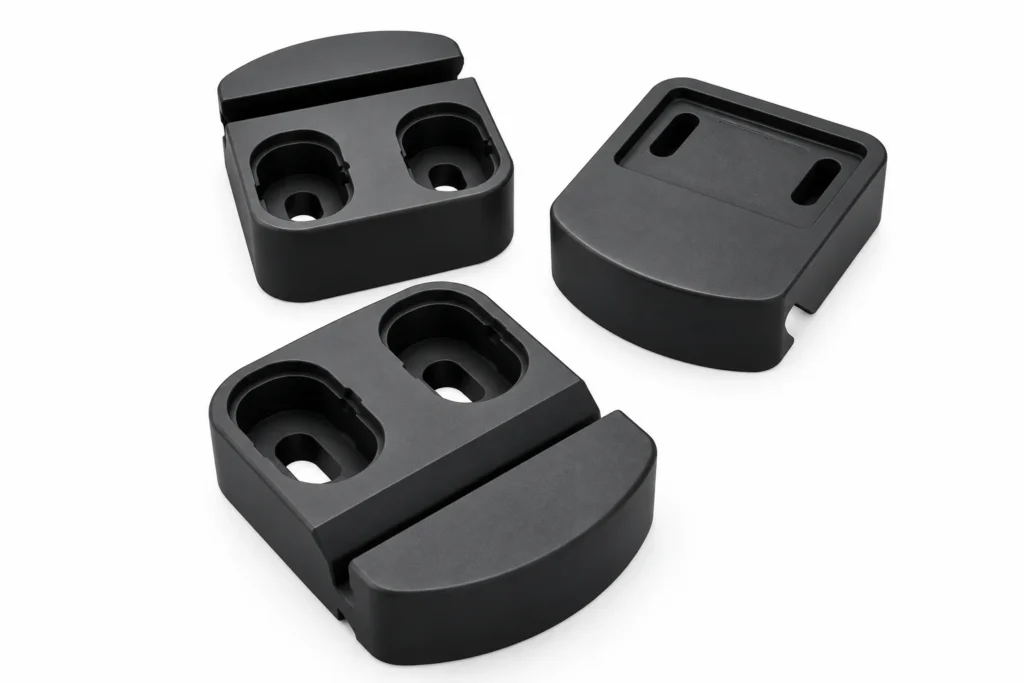
HDPE is easy to machine, but heat and movement can affect the result. When the cutter rubs rather than cuts, the plastic may melt, smear, or adhere to the cutter. Insufficient support may also cause the size of the part to change after machining.
Here are some useful tips that can have a big impact:
- Maintain a sharp cutting edge. An old tool generates more friction and heat.
- Do not let chips come into contact with the cutter. Hot chips are prevented from being cut again by air blast or vacuum.
- Monitor the temperature of the material. HDPE softens around 120 to 135°C (248 to 275°F).
- Support the part adequately. Thin sheets and large parts may move while cutting.
- Do not over-clamp. HDPE may be distorted under excessive pressure, which can affect the final dimensions.
- Inspect large or close-tolerance parts following return to normal temperature. The thermal expansion of HDPE is much higher than that of steel.
The 4 Rules for Effective HDPE Machining
Here are the 4 general rules for HDPE fabrication. These rules cover the main points of HDPE machining: keeping the cutter working, clearing chips, holding the part properly, and controlling temperature.
Following them helps avoid common machining problems and maintain the required dimensions.
Rule 1: Keep the Cutter Cutting
Use a sharp cutter using an appropriate chip load. The tool does not rub against the material, but should remove it. A cutter that generates dust, fuzzy edges, or melted plastic could be due to tool condition and/or feed rate. Don’t stop the cutter in the material, particularly in pockets.
Rule 2: Keep Chips Out of the Cut
Remove chips as they are produced. If the chips are trapped again, they can be cut once more, causing additional heat.
Use air blast or vacuum extraction for milling and routing, if possible. Ensure the cutter has sufficient flute space to remove chips from the work zone.
Rule 3: Hold the Part Without Distorting It
HDPE is flexible when clamped. Depending on the part’s shape, use soft jaws, vacuum workholding, or evenly distributed clamps.
Thin sheets and large plates require supports near the cutting area. Avoid using excessive clamping to prevent motion. If too much pressure is applied, the material’s shape could be altered, which may affect the final dimensions.
Rule 4: Control Temperature Before Checking Dimensions
The HDPE has a very high coefficient of thermal expansion. Measurement differences can occur largely between warm and cold temperatures.
If the dimensions are close, let the part cool to a steady temperature before final checking. This is particularly advantageous for large plates, thin sections, and long dimensions.
Preparation of HDPE and Safety during the Machining.Preparation of HDPE and Safety in the Machining.
HDPE manufacturing is inexpensive, although the setup requires some care. It’s soft, slick, and can also take long chips. Keeping the work safe and in size during the process is achieved by implementing good workholding and chip control.
HDPE CNC Machining Preparation and Safety
HDPE can create long strips of material, particularly when turning. These may be attached to the chuck, tool, or workpiece.
If the chips are starting to wrap, do not remove chips while the spindle is still moving. Do not remove chips during play.
Use an air blast, vacuum, or appropriate chip collection system to keep the work area clean. This will also help avoid re-cutting of chips.
Choose the Right HDPE Stock
Many general parts can be made in standard HDPE. There is a risk that large plates may move after machining due to internal stresses in the material.
Stress-relieved HDPE Sheet can be used to minimise this movement for large flat parts or parts with deep pockets. Before machining, check the material datasheet. The thermal expansion and mechanical properties of different grades of HDPE may be different.
Workholding
The low-friction properties of HDPE allow it to slide more easily than metal. It is not always increased clamping that is the answer.
Depending on the shape of the part, use either soft jaws, vacuum holding, or evenly distributed clamps. Use supports to hold thin sheets and large plates in place over the machining area.
Apply adequate pressure to secure the part without bending. When clamped, the part should remain fixed and return to its normal shape when released.
How Should HDPE Parts Be Finished?
HDPE usually does not need a complex surface treatment after CNC machining. For functional parts, it’s usually sufficient to have a surface that’s been machine-formed. Finishing to make the part look a certain way or have a certain feel is not applied unless the part requires it.
As-Machined Surface
The surface of the CNC-machined HDPE is usually matte. A sharp cutter and relatively clean removal of the chips allow the surface to remain even.
Such a finish is appropriate for many guides, spacers, brackets, and components for machines.
Bead Blasting
A fine glass bead blast will result in a more even matte finish and reduce the visibility of some tool marks. Not good for small holes, details, sharp edges, or small elements. Blasting can modify edge sharpness and alter the look of small features.
Joining HDPE Parts
Common adhesives do not adhere well to HDPE. Two or more parts that must be joined should be plastic-welded or mechanically fastened.
This is also convenient when a large portion would be very costly to cut from a single large piece of HDPE stock.
How Can HDPE Part Design Reduce Machining Cost?
The effectiveness of the design on cutting HDPE material and the number of operations will directly affect the design. A few changes to the HDPE part design can simplify the machining process. This helps keep the number of machining steps under control while still meeting the part’s intended use.
Split Large Parts Into Practical Sections
A large HDPE part doesn’t need to be manufactured as a single piece. Sometimes it can be cut in half and connected afterward. If the application doesn’t preclude it, mechanical fasteners or plastic welding can be used. Smaller sections can also minimize material waste and facilitate workholding.
Avoid Unnecessary Tight Tolerances
HDPE is highly temperature sensitive. This may mean that a higher level of control is needed when machining and inspecting very close tolerances.
Only use a tighter tolerance on functional dimensions, such as bores, mating surfaces, locating features, etc.
A good general rule for dimensions is a tolerance of ±0.010 in (or ±0.25 mm). A tighter value must be given a valid reason in the part design.
Leave Enough Space for Standard Cutters
Do not create an oversized area with a narrow depth, which requires the use of a deep or long-reach cutter. In certain cases, such as a larger radius internal corner, larger end mills can be used to make the feature. This can decrease the machining times, and the cutting can be controlled more easily.
Limit Extra Finishing
Leave surfaces as machined if not required to be polished, blasted, or to achieve a specified cosmetic finish.
Use special finishing just on the surfaces that require it. This helps to maintain the extra finishing and handling to a minimum where needed.
HDPE Machining Techniques
HDPE machining can involve milling for pockets and profiles, turning for round parts, drilling and boring for holes, and routing for sheets and plates. The sections below explain where each process works best and what to watch during machining.
CNC Milling
CNC milling is primarily used to create pockets, slots, holes, flat surfaces, and profiles. Clear the chips while cutting and use sharp tools to prevent heat buildup in the cutting.
CNC Turning
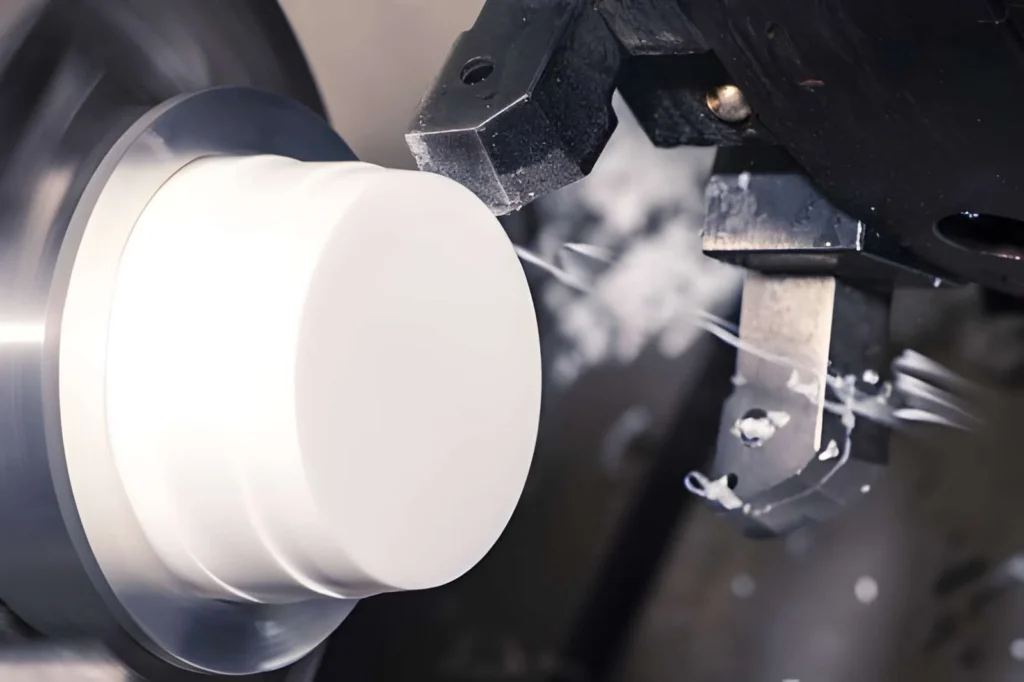
Turning is a good process for round parts made of HDPE, such as bushings, spacers, rollers, plugs, and rings. Use of long chips should be avoided as they can wrap around the workpiece or chuck, so they must be cleared regularly.
CNC Drilling and Boring
Drilling is suitable for making holes directly from HDPE stock. When a hole requires better dimensional control or a specific inside diameter, boring can be employed.
Routing
CNC routing is ideal for HDPE sheets and plates, particularly for large flat parts, cut-outs, and profiles. It is also a feasible solution for manufacturing multiple components from sheet metal.
Cooling and Chip Control
For longer machining cycles, pressurized air or an appropriate mist/coolant can help to keep heat in check and remove chips. Coolant should be suitable for the grade HDPE and machining equipment.
With tight tolerances, maintain a uniform temperature of the material during the machining and inspection process. Machining conditions should be kept stable as HDPE can expand and contract as the temperature changes.
Typical HDPE Machined Parts and Components
- Chemical storage tanks
- Water tanks
- Pipe fittings
- Bushings
- Wear strips
- Guide rails
- Conveyor components
- Rollers
- Spacers
- Gaskets
- Cutting boards
- Machine guards
- Pump components
- Valve components
- Marine components
- Outdoor furniture parts
- Food containers
- Medical components
- Orthotic components
Need CNC-machined HDPE Parts?
Prolean MFG can machine HDPE and other plastics for prototype and production parts. Our CNC capability includes 3-, 4-, and 5-axis milling, CNC turning, turn-milling, drilling, tapping, threading, and boring. For plastic parts, we support minimum wall thicknesses around 1.5 mm and machining tolerances down to ±0.005 mm (±0.0002 in) for suitable features. For HDPE parts, our machining setup helps handle thin walls, tight features, and dimensional requirements while keeping the part stable during machining.
Send us your CAD file, drawing, HDPE grade, quantity, and tolerance requirements. Our engineers can review the design, check the machining requirements, and provide a quote with the expected lead time.
Contact us and request a free instant online CNC Machining Services quote from our engineers!
FAQs
What Is the Machining Tolerance of HDPE?
A typical CNC tolerance for HDPE is around ±0.010 in (±0.25 mm). Some features can be machined closer, such as around ±0.002 in (±0.05 mm), depending on the part size, geometry, HDPE grade, and temperature during machining and inspection.
What are the disadvantages of HDPE?
While HDPE has several advantages over stiffer materials, it also has some drawbacks. It has high thermal expansion and low stiffness, and will allow large/thick parts to move during the machining process. It also has poor adhesive properties with many common adhesives.
Is HDPE easily cracked?
Cracking is not commonly a problem in typical applications due to the excellent impact resistance and high elongation of HDPE. Cracks may still form when the part is subjected to too high stress, sharp notches, and inappropriate machining.