
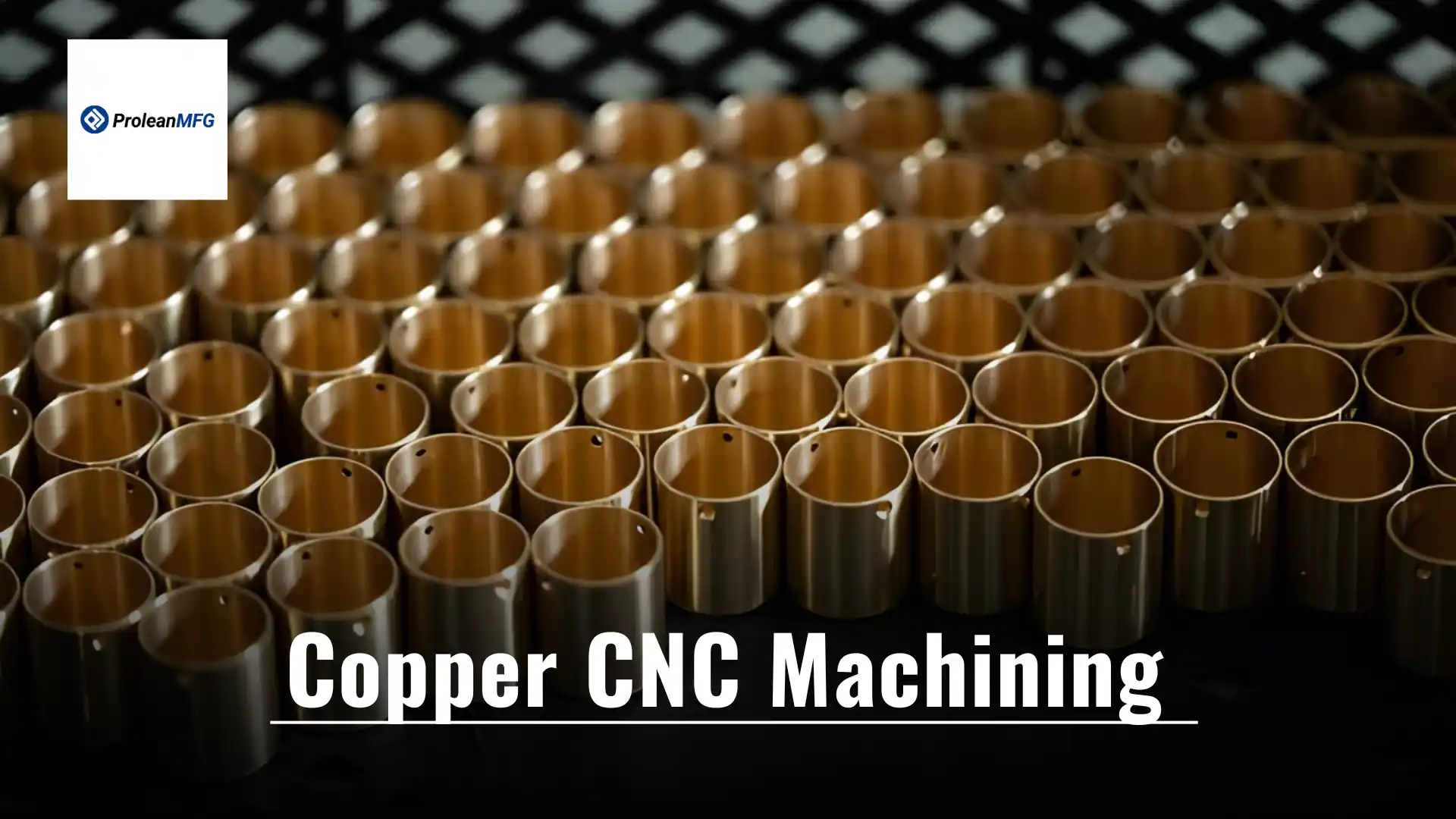

Copper is a metal people have used for thousands of years because it’s easy to work with and performs well. It has a warm, shiny look that makes copper a popular choice for electrical connectors, busbars, heat exchangers, and precision electronic components. Beyond looks, copper stands out for its excellent electrical and thermal conductivity among other CNC machining materials, which is why it’s widely used for wiring, connectors, and precision parts like EDM electrodes.
CNC copper machining refers to cutting and shaping copper using computer-controlled tools. Machines like mills and lathes remove material from solid copper workpieces to create accurate parts with tight tolerances. Because copper conducts heat and is softer than many other metals, the tools, fixturing, and cutting speeds need to be chosen carefully to avoid deformation and achieve a smooth surface.
This guide explains the basics of copper machining, common uses, and what to think about before you start cutting copper parts.
What Is the Machinability of Copper?
Machinability refers to how well a metal can be formed into its desired shape, with minimal tool wear and surface defects.
Pure copper is machinable; however, it is one of the most challenging metals to machine. It is highly ductile and therefore produces considerable continuous chip lengths when being cut. The constant chip length wraps around the tool, causing problems with surface finish. Copper typically falls in the 30 to 70% range on the machinability scale, where 100% is based on free-cutting brass (C360).
However, certain altered copper alloys have improved machinability over pure copper. Tellurium copper (C145) can achieve an approximate machinability rating of 80-90 percent and has been determined to be more effective for faster production rates and cleaner cuts than pure copper.
Due to copper’s softness, it will stick to the cutting tool during machining operations, which can lead to burrs. Gumming can also occur from uncontrolled machining conditions. Sharp tools, appropriate cutting speeds, and adequate coolant are all used to help eliminate gumming, minimize tool wear, and maintain tight tolerances.
Properties Affecting the Machining of Copper
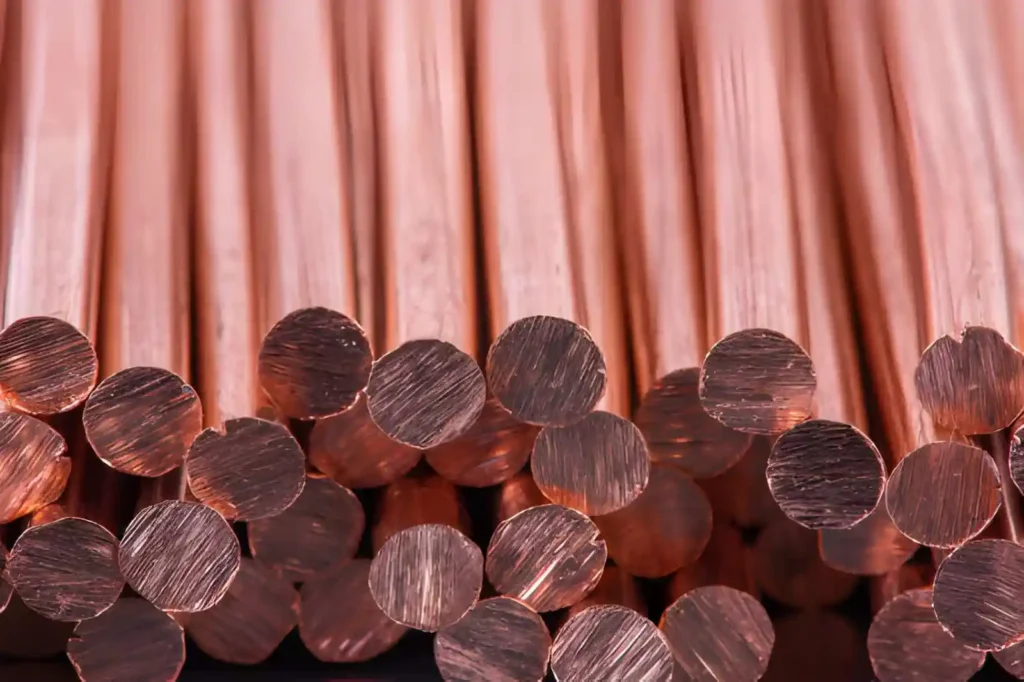
The physical properties of the material being machined, specifically strength, hardness, conductivity, and ductility, have an impact on the selection of tools, the optimal cutting speeds, and ultimately, the efficiency of machining copper.
Tensile Strength
The tensile strength of copper is typically between 200 and 400 MPa, depending on the alloy composition. Pure copper has a lower tensile strength, making it less complicated to cut. Additionally, pure copper is very soft and malleable and will readily form poor chip control when being cut. Copper alloys that contain other elements and/or have been heat-treated (such as heat-treated beryllium copper) provide a greater level of stability and are recommended for high-precision or complex parts.
Hardness
Pure copper has a relatively low hardness rating of 40 – 50 HRB. This relatively low hardness rating allows the copper to become embedded into the cutting tool and create a build-up of copper on the tool surface. Copper alloys containing higher percentages of other metals (like brass: 60 to 80 HRB) tend to machine more smoothly and leave fewer burrs than pure copper.
Thermal Conductivity
Copper is one of the best thermal conductors available (approximately 400 W/m·K @ RT). By transferring the generated heat away from the workpiece, thermal conductivity reduces heat build-up in the part being machined. However, the heat transferred from the workpiece to the cutting tool increases the potential for tool wear unless proper coolant is applied.
Electrical Conductivity
Copper can exceed 100% IACS in electrical conductivity (oxygen-free). Although electrical conductivity does not affect the machining process, it is vital to the finished product. A clean finish is essential for parts such as connectors or busbars, where conductivity must be maintained.
Ductility and Other Mechanical Properties
Copper exhibits high ductility (elongation = up to 50%) and thus generates long stringy chips during cutting. Due to its low yield strength (approximately 70 – 200 MPa), cutting forces need to be carefully controlled to avoid bending or distorting the part being machined.
What CNC Machining Processes Are Used for Copper?
Several CNC machining techniques can be used for producing copper parts. The relatively low hardness and ductility of copper make the selection of appropriate machining techniques necessary to control both the amount of heat generated and the form of the chips produced, as well as the final quality of the surface finish. While many production applications use pure copper due to its high conductivity and corrosion resistance, pure copper has poor machining properties when compared to its alloy counterparts, which exhibit improved consistency and reduced cutting forces during machining.
The following list represents some of the primary CNC machining techniques used for machining copper parts.
Copper CNC Milling
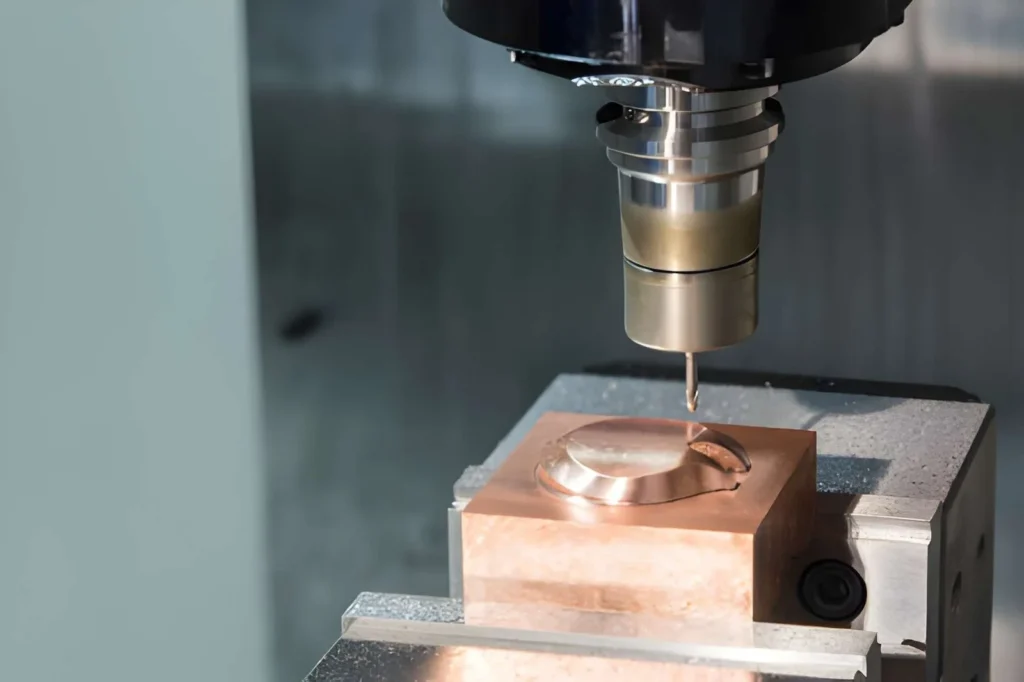
CNC milling involves using a rotating, multi-point cutting tool to remove material from a stationary copper part. Most copper parts can be created using this technique, including slotted, pocketed, contoured, flat surfaces, and precision holes.
When milling either copper or copper alloys, the recommended tool types are carbide tools (i.e., N10 or N20 grade) or High Speed Steel (HSS). When machining cast copper parts with a surface skin, the recommended cutting speeds should be decreased even further to protect the cutting tool. Also, high spindle speeds and sharp tools will help to prevent smearing the material.
In general, copper alloys have a smoother milling action than pure copper and offer better chip control, which is essential for creating parts that have complex shapes, such as heat exchangers or electrical housings.
CNC Turning of Copper
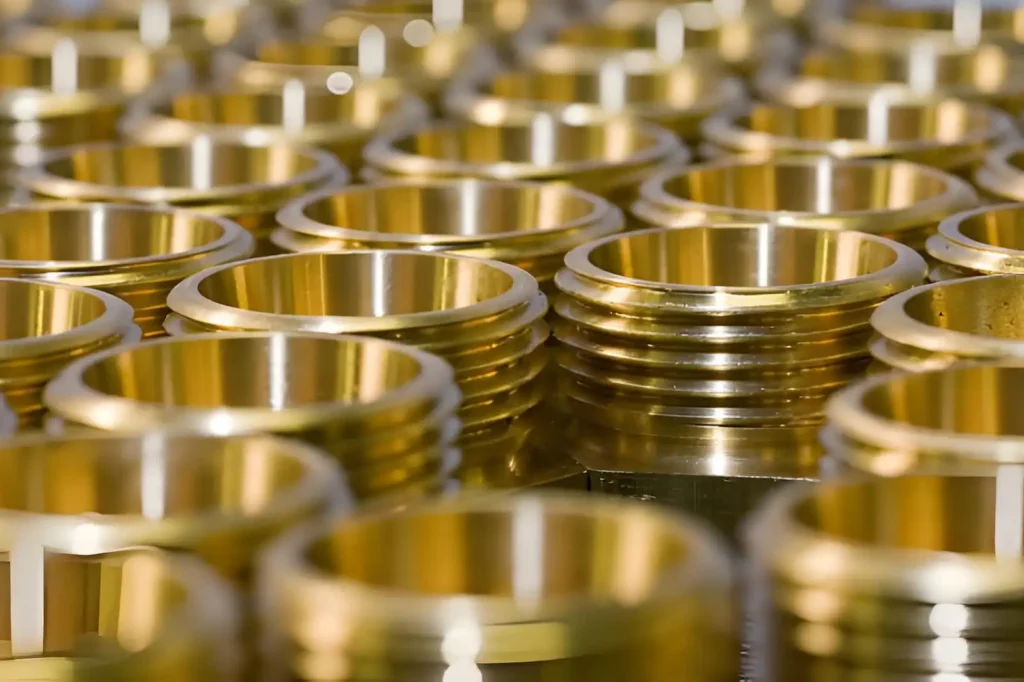
CNC turning is a technique in which the cutting tool remains stationary, and the copper workpiece is rotated to produce cylindrical parts. This technique is often used to create cylindrical parts such as shafts, bushings, connectors, and threaded components.
Due to the high thermal conductivity of copper, excessive wear of the cutting tool may occur if the spindle speed is not controlled correctly. Some practical guidelines for turning copper are:
- Use a large positive rake angle of 10° to 25° on the cutting tool to reduce sticking during copper machining.
- If you are using softer copper grades that tend to smear, set the cutting edge angle to approximately 90°.
- Keep the depth of cut constant to minimize the stress load on the tool.
- Adjust the included angle of the tool to handle greater mechanical loads and to reduce thermal stress.
Turning is the most commonly used technique for producing electrical components that require a high degree of dimensional accuracy and surface finish integrity.
Drilling Copper
Drilling copper requires careful chip removal due to its ductility. Chips can easily clog the flute of a drill bit.
- Peck drilling cycles can break chips and allow for better coolant flow.
- Using sharp drill bits and applying proper lubrication will help prevent burrs from forming.
- You may need to decrease your feed rate for softer copper grades.
Drilling is used extensively in electronic assemblies where accurate hole placement is critical.
Tapping and Threading
While copper’s ductility allows it to be threaded, it is necessary to apply controlled feeds to minimize tear-out.
- Use sharp, high-quality taps.
- Apply a low feed rate to avoid tearing out.
- Apply proper lubrication to prevent galling.
Threaded copper components are found in plumbing, electrical fittings, and mechanical assemblies.
Non-Conventional Manufacturing Method for Copper Parts
Water Jet Cutting
Water jet cutting uses a high-pressure water stream that is mixed with an abrasive material to cut copper parts without generating heat.
This technique:
- Eliminates heat-affected zones
- Minimizes distortion
- Creates clean edges
Water jet cutting is beneficial for cutting thicker copper sections or oxygen-free copper parts used in thermal and electrical systems.
Copper Alloy/Grades for CNC Machining
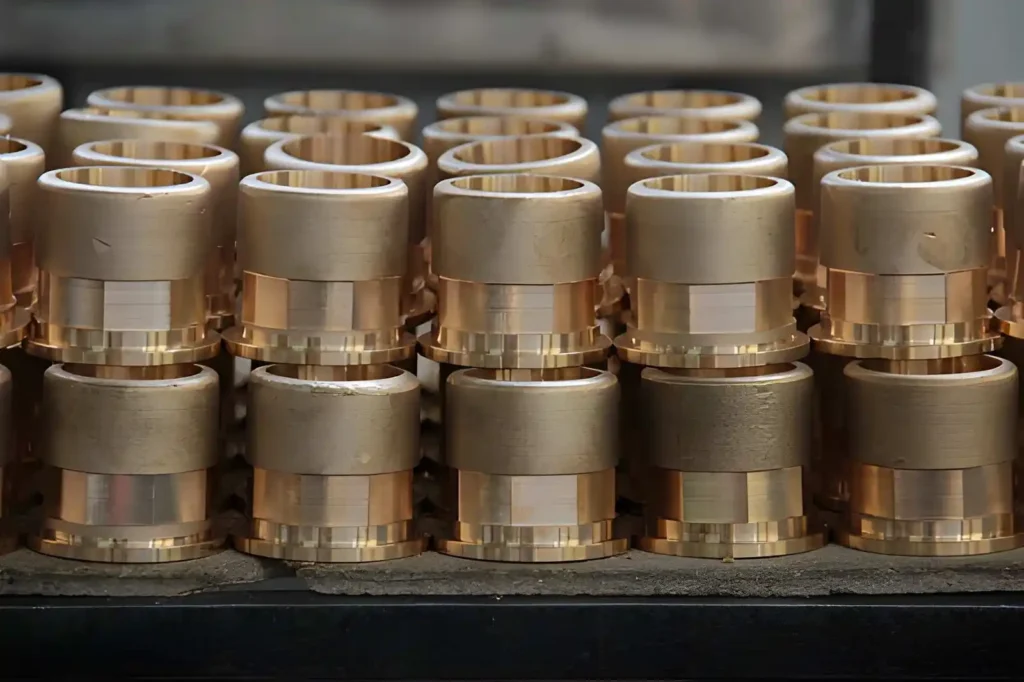
- C101 (Oxygen-Free Copper): C101 is essentially 100% pure copper and has both excellent electrical and thermal properties; however, it is incredibly soft and therefore difficult to machine (the cutting tool will produce long, thin chips, and the tool will have to be razor sharp). The most common use of this type of material would be in vacuum tube components, as well as in elements that are subject to large amounts of current flow.
- C110 (Electrolytic Tough Pitch Copper): Both C110 and C101 are very pure coppers with low machinability (≈20%) and are considered difficult to machine. In addition to being softer, C110 also retains some of its electrical conductivity. It is highly resistant to corrosion, making it an excellent choice for wiring, bus bars, and other types of power distribution components.
- C145 (Tellurium Copper): C145 contains tellurium, which improves the ability to machine. Compared to C101, C145 (Tellurium copper) forms shorter chips during machining, helping preserve cutting tool life. As a result of these characteristics, C145 is typically used for applications such as connectors for aerospace and automotive systems and precision-fitting components where tight tolerances are required.
- C360 (Free-Machining Brass): C360 is a brass alloy made from copper and zinc that is made to be free-machining by the addition of lead. Although C360 does not possess all of the properties of copper (such as strength), it does provide a good balance of strength and resistance to corrosion, and is therefore a popular choice for production-type items such as gears, valves, and plumbing components.
- C932 (Bearing Bronze): C932 is a tin bronze alloy that is highly durable and resistant to wear and corrosion. It is commonly used for components that are subjected to friction, such as bearings and bushings. C932 (SAE 660 bearing bronze) requires moderate feed rates during machining to maintain surface quality, due to its wear resistance and ductility.
- C17200 (Beryllium Copper): C17200 is a copper alloy that is highly durable and has been shown to be fatigue-resistant. Although it retains some of the conductivity of copper, C17200 is primarily used for its durability and can be heat-treated. Common uses for C17200 include springs, connectors, and molds for aerospace systems. When machining C17200 (precipitation-hardened beryllium copper), care should be taken to control heat, as improper temperatures can affect its hardness and properties.
Copper CNC Machining: Design Considerations
Designers of CNC-machined copper components should consider material usage as well as manufacturability when developing their designs. Because copper can be an expensive material, designers should utilize copper only where absolutely required to take advantage of its unique characteristics.
Why choose copper or copper alloys:
- High Corrosion Resistance
- Superior Electrical & Thermal Conductivity
- Solderable & Easy to Join
- High Ductility
- High Machinability (Especially in Alloys)
Selecting the Right Grade:
The selection of copper grade will affect both the performance and cost of the component. Pure Copper (C101) provides the highest level of conductivity but is very soft and difficult to machine.
Because copper tends to form long chips and burrs during machining, part geometry should avoid deep, narrow features that make chip evacuation difficult. This helps prevent tool smearing, reduces burr formation, and improves chip control.
Design for Manufacturability (DFM):
To optimize the machining process and provide cost reductions, incorporate the following into your design:
- Loosen tolerances from tight to reasonable tolerance limits without affecting the functionality of your part
- Reduce inspection requirements and minimize complex features
- Prevent deep pockets with tight radii
- Minimize the number of set-ups required for production
Practical Design Tips:
- Minimum Wall Thickness: 0.5mm
- Maximum Part Size for Milling: 1200 x 500 x 152mm
- Maximum Part Size for Turning: 152 x 394mm
- When dealing with undercuts, use either square profiles, full radius, or dovetail shapes.
Adhering to the above recommendations allows you to develop copper components that are cost-efficient to produce, easy to manufacture, and durable enough to be used in real-world applications.
CNC-Machined Copper Parts
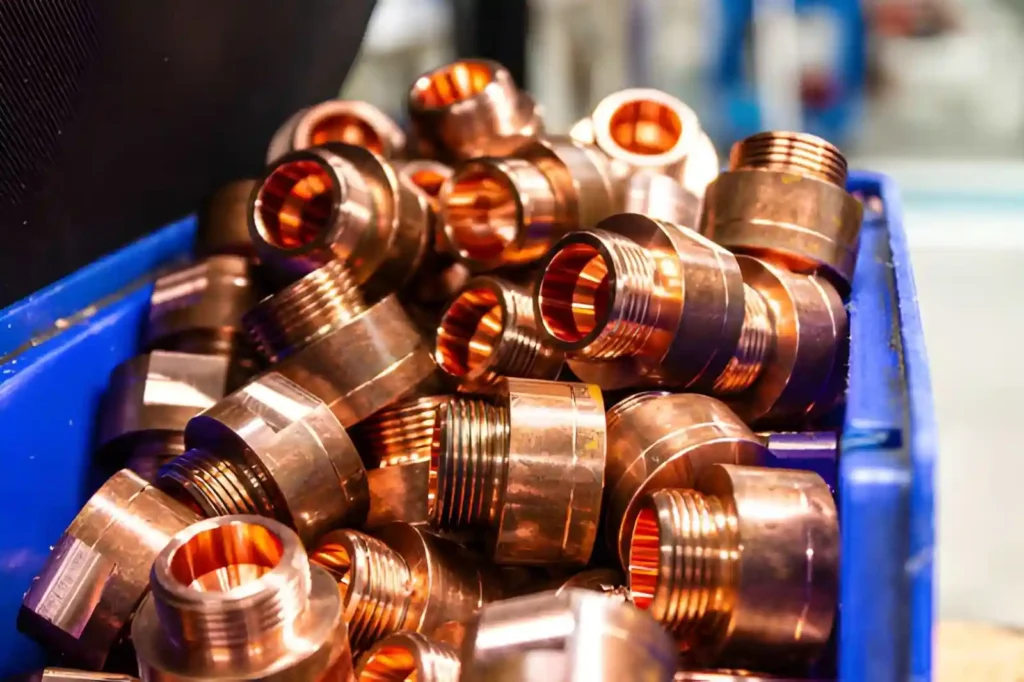
Here are the common CNC machined copper parts:
- Electrical Bus Bars: Bus bars (electrical bus bars) in electric vehicles and power systems transfer current efficiently.
- Heat Dissipation Components: Plates and Heat Sinks are used as heat dissipation components for managing the temperatures of electronic components and heavy equipment.
- Connectors and Terminals: Connectors and terminals provide a stable and low-resistive connection between machines and devices.
- Plumbing and Fluid Fitting: The fluid fitting elbow, adapter, and pipe fittings made from copper offer corrosion resistance and durability.
- Threaded Components: Threaded components for precision threaded hydraulic or mechanical assemblies to ensure leak-free assembly.
- Electrodes: Electrodes are used in various applications such as medical, welding, and industrial equipment for accurate energy delivery.
- Signal and Transmission Parts: Components like waveguides for aerospace, telecom, etc. applications use the conductivity properties of copper.
- Bushings and Bearing: Bushings and bearings are used as bearing materials to provide wear resistance and smooth operation for machines and vehicles.
- Valves and Flow Control: Copper valves with precision flow control for oil, gas, chemical, etc. applications.
- Microwave and RF Components: Magnetrons and other microwave and RF components require high thermal and electrical performance.
Copper CNC Machining Services at Prolean MFG
At Prolean MFG, we provide custom metal machining services for copper and copper alloy parts, including connectors, heat sinks, prototypes, and custom components. Our experienced team uses advanced 5-axis and multi-axis machining centers to deliver high-quality parts that meet your exact design specifications. Whether you need rapid prototyping or complete production runs, we ensure accuracy, consistency, and fast turnaround.
Contact Prolean MFG today for personalized support and a free quote—our team will respond promptly to your inquiry.