
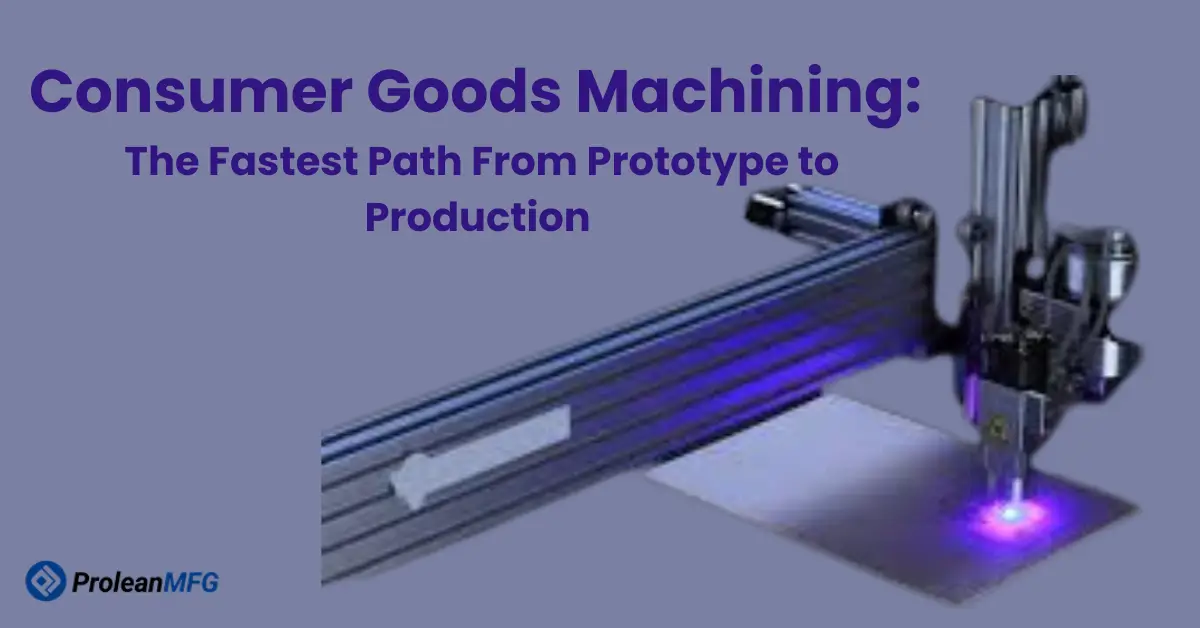

Consumer goods machining is a manufacturing process that involves CNC milling, turning, drilling, and other precision machining operations. These processes are used to produce components for consumer product prototypes. CNC machining ensures the accurate production of parts for both prototypes and end-use applications.
This process includes the production, packaging, and distribution of products from prototype to full production run for individuals and households. This guide covers CNC machining in consumer goods, including prototyping, bridge production, materials, finishing, and applications.
Consumer goods machining is a core manufacturing process of consumer goods manufacturing. Consumer goods manufacturing is a broad term for the large-scale production of end products. This process includes the production, packaging, and distribution of products from prototype to full production run for individuals and households. This guide defines the CPG manufacturing process, applications, and materials for ideal manufacturing with exceptional benefits of precision machining.
Key Takeaways
- Consumer goods machining is a manufacturing process that involves CNC milling, turning, drilling, and other precision machining operations for CPG products.
- Rapid prototyping enables fast design validation within 3 to 5 working days, depending on material, geometry complexity, finishing, and inspection requirements, helping to avoid redesigns, delays, and unnecessary tooling costs.
- Consumer goods machining is widely used across electronics, home appliances, sporting goods, and personal care products, ensuring tight tolerances, consistent quality, and faster time-to-market for fast-moving brands.
What Is Consumer Goods Machining?
Consumer goods machining uses CNC machining technology to produce components and finished consumer goods. CNC machining is a subtractive manufacturing process involving cutting, milling, and turning processes. This process uses CNC-controlled machines to turn raw materials into finished products.
The consumer packaged goods (CPG) sector covers food, beverages, cosmetics, and home care items. CNC machining plays an important role in manufacturing prototypes, custom fixtures, enclosures, and functional parts. However, CNC machining is a reliable solution for consumer goods production.
CPG manufacturing ranges from food and beverages, beauty and personal care, health and wellness, to home cleaning products. Therefore, consumer goods machining is ideal for manufacturing applications due to its premium quality, cost control, and faster production.
CPG Manufacturing Process: From First Design to Final Part
The CPG manufacturing process is a multi-stage process that requires a careful balance from the first design to the final part. This production process requires strategic planning to ensure the product is functional.
CNC machining is not always required for the concept design stage. Different techniques, such as CN, injection molding, and sheet metal fabrication, are used during the production process.
Here are the four stages of this production process:
The CPG manufacturing process has four stages, of which three involve CNC machining.
1. Concept & Design
The concept and design are the first step of this process. Designers and engineers prepare a detailed CAD model after refining a solid concept of the product.
2. Prototyping
Prototyping is a crucial step to validate the manufacturability of the design for high-volume production. The prototype is typically delivered within 3 to 5 working days, depending on material, geometry complexity, finishing, and inspection requirements.
ProLean MFG provides a rapid turnaround of consumer product prototypes for validation and design testing, including aluminum housings and ABS/PC parts. Our services include anodizing, bead blasting, assembly checks, and DFM feedback. A simple prototype takes 3-5 days to deliver, depending on the complexity of the design.
ProLean MFG provides a rapid turnaround of consumer product prototypes to check the validation and testing of the design. Our prototype evaluates the design quickly while maintaining precision. Our team is capable of meeting the short deadlines by making the process fast.
3. Pre-Production
The pre-production stage includes material selection, DFM review, process validation, and tooling preparation. This step involves supplier qualification and CNC bridge production before injection mold tooling is ready.
4. Production
Production moves to high-volume methods based on requirements after design validation. These include injection molding, sheet metal fabrication, or production CNC machining.
The product is released in the market after high-volume production. The receivers are usually consumers, retailers, and producers.
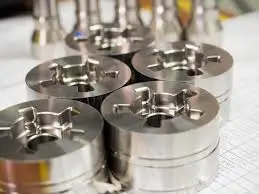
The selection of the right manufacturing process directly impacts your launch timeline. It must be aligned with the development stages, for instance, 3D printing, CNC machining, injection molding, and sheet metal or CNC processes for metal brackets.
Below is the detailed comparison of this manufacturing process:
The selection of the right method of manufacturing affects your launch date. Here is a comparison of the consumer goods production:
| Manufacturing Method | Typical Consumer Goods Application | Lead Time | Tooling Cost | Best Stage |
| CNC Machining | Housings, enclosures, precision components | 3–5 days | None | Prototype → Bridge Production |
| Injection Molding | Plastic shells, buttons, containers | 4–8 weeks | $5K–$50K+ | Mass Production |
| Sheet Metal Fabrication | Appliance chassis, brackets, enclosures | 5–10 days | Low | Prototype → Production |
| Casting | Cookware, complex metal parts | 2–4 weeks | Medium–High | Production Only |
| 3D Printing | Concept models, custom jigs | 1–3 days | None | Concept Stage Only |
All stated lead times, pricing, and production capabilities are approximate. It can change depending on factors such as design complexity, surface finish, and supplier capacity.
The selection of the right material and method from the very beginning can save production costs, reduce errors, and shorten lead time. That’s why the DFM feedback is a crucial step before the quote.
Manufacturing Materials for Consumer Goods
The selection of manufacturing materials has a direct impact on the cost, quality, and tooling time in consumer products. The wrong material choice can delay production by 4–8 weeks due to redesign, tooling changes, and validation cycles.
The wrong material can delay the production process for 4 to 8 weeks.
| Material | Best Manufacturing Applications | Surface Finish Capability | Cost Index |
| Aluminum 6061 | Electronics housings, appliance frames, wearable device enclosures | Anodize, bead blast, polish | Low |
| Aluminum 7075 | High-strength consumer hardware, drone components, and handles | Hard anodize, chromate | Medium |
| ABS Plastic | Consumer electronics shells, toy components, and packaging fixtures | Paint, texture, plating | Low |
| Polycarbonate | Transparent covers, LED housings, protective gear components | Clear coat, UV coating | Low–Medium |
| Stainless Steel 304 | Kitchen appliances, personal care tools, premium hardware | Brushed, mirror polish | Medium–High |
| PEEK | High-performance wearables, medical consumer devices | As-machined, light polish | High |
Aluminum 6061 is an ideal choice due to low cost, excellent machinability, and good finishing for many consumer goods machining projects. Therefore, upgrade manufacturing material according to weight, strength, and regulatory needs.
Key Manufacturing Applications in Consumer Goods: CNC Machining
The key manufacturing applications for the consumer goods machining are:
Consumer Electronics
The common consumer electronics manufacturing applications are Laptop enclosures, smartwatch cases, speaker grilles, and drone frames. Anodized finishes and surface roughness are achievable via consumer goods machining. Aluminum housings are machined to ±0.005 inch tolerances. Anodizing improves corrosion resistance and surface appearance, while Ra 0.8 µm depends on machining and finishing.
Anodized finishes for aluminum housing have ±0.005 inches tolerances and surface roughness under Ra 0.8 µm.
Home Appliances
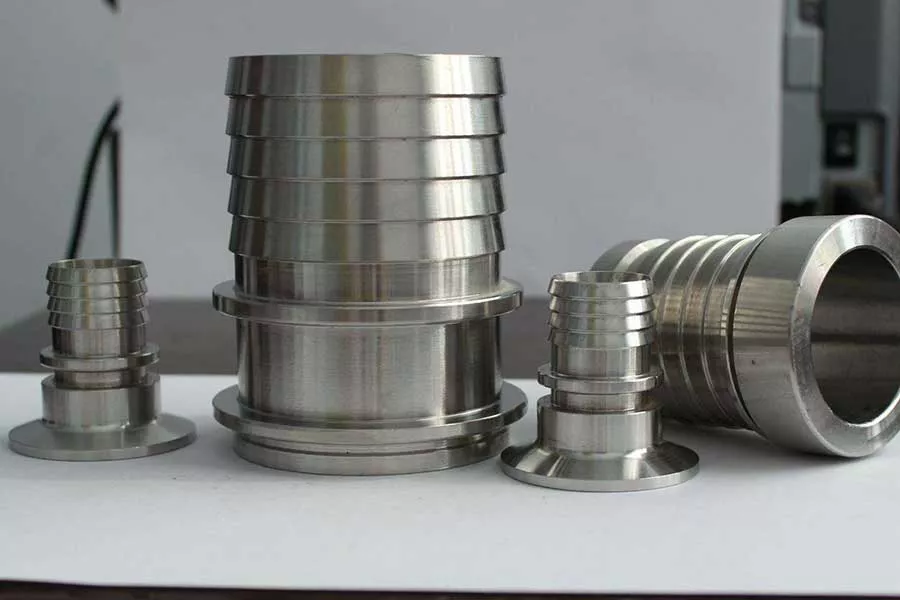
Home appliances such as Blender housings, coffee machine components, and HVAC control panels. These appliances are produced using ABS, polycarbonate, and stainless steel manufacturing materials. CNC machining delivers tight dimensional uniformity for appliances in the CPG manufacturing process.
Sporting Goods & Outdoor Equipment
The high-growth consumer goods manufacturing, sporting goods, include bicycle components, fitness equipment brackets, and outdoor gear hardware. High-strength materials like 7075 aluminum or stainless steel are used for these manufacturing applications.
Personal Care & Wearables
Personal care and wellness products are electric razor housings, hearing aid shells, and fitness tracker enclosures. These manufacturing applications have premium surface finishes with complex geometries. Such consumer good machining applications are the most demanding products in CPG Manufacturing.
Why Fast-Moving Brands Choose ProLean MFG?
ProLean MFG offers the entire product launch without delays in the CPG manufacturing process. We deliver a prototype for early DFM review to identify manufacturability issues.
At ProLean MFG, we ensure the right fit for each project for its application, while working with a wide range of materials. All work about finishing to maintain quality is employed under one roof by keeping short lead times.
Ready to speed up your consumer goods machining services? Partner with ProLean MFG and get a quote today to start your project faster.