
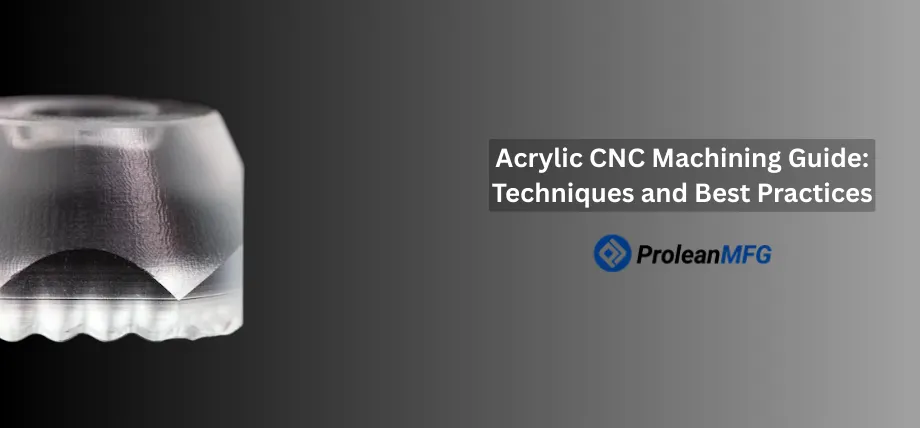

Acrylic CNC machining is a common forming method used to produce plastic components with high dimensional stability and clean edges. Acrylic (also known as PMMA) is a transparent plastic that is widely used when see-throughness is required. Also, acrylic is highly machinable compared to other plastics.
If you are aiming for low- to medium-volume production, CNC machining acrylic is highly advantageous over molded acrylic fabrication methods since it doesn’t need investment for tooling. It also gives you added benefits in design flexibility and controlling geometry.
What is Acrylic (PMMA)?
Acrylic is the common name used for polymethyl methacrylate (PMMA). It is a thermoplastic polymer with high optical clarity and rigidity. Because of its good transparency and lower weight, acrylic is mostly used as a substitute for glass in the industry. If you have ever seen a piece of acrylic, you might have noticed that it looks exactly like glass in the distance.
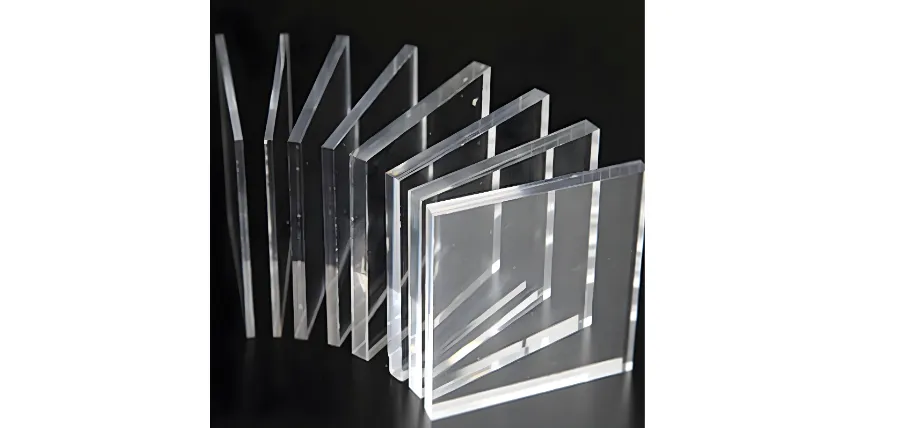
PMMA/Acrylic Material
In CNC machining materials, acrylic is a type of plastic that cuts very cleanly. However, it is more brittle than some engineering plastics, so your selection should carefully account for its impact on target properties.
Properties of Acrylic
Since acrylic is a type of plastic, despite its advantages, it also has certain limitations when it comes to manufacturing requirements. Therefore, understanding its properties as a material is important before committing to acrylic CNC machining.
Optical Properties of Acrylic
Acrylic has excellent light transmission. Its transmission percentage typically exceeds 90%, which is an excellent value for a plastic. And most importantly, it can maintain this value over time even under direct exposure to sunlight. Therefore, acrylic is highly used for indoor and outdoor optical and display components.
Mechanical Properties of Acrylic
Certain highly critical mechanical properties you must consider during acrylic CNC cutting and handling are pointed out below. There are both favorable and unfavorable properties, but you can optimize performance with the correct grade and proper machining.
- Acrylic has relatively high surface hardness compared to many thermoplastics and transparent polymers. However, it is still susceptible to scratches and abrasion.
- Acrylic is naturally brittle, and its impact resistance is very low. If you accidentally release any sudden loads or sharp stress concentrations, it will mostly crack. So, you must strictly consider this property when designing sharp corners or thin features.
- Acrylic has moderate tensile strength with very low ductility. This is a risky combination of properties since it will bear static loads to a good extent, but will fail suddenly without showing significant visible deformation. Therefore, it’s better to avoid bending or forced assemblies in acrylic parts.
- Acrylic has a high notch sensitivity. Small defects, sharp corners, or tool marks can initiate cracks easily under stress. You can prevent this by applying fillets and smooth edge finishing in acrylic CNC cutting.
Thermal Properties of Acrylic
Acrylic has its glass transition temperature around 105°C. It’s a comparatively low value for softening plastics. Therefore, during CNC milling acrylic or acrylic CNC cutting, acrylic can undergo melting, edge fusion, or surface whitening. So, you should only provide favorable cutting speeds and recommended chip removal techniques to maintain the quality of your custom acrylic parts.
Environmental Resistance of Acrylic
Acrylic shows good resistance to UV radiation and weathering. It does not become yellowish or degrade quickly in outdoor conditions. This will allow you to consider acrylic for protective covers and enclosures exposed to sunlight and moisture.
Types of Acrylic Grades Suitable for CNC Machining
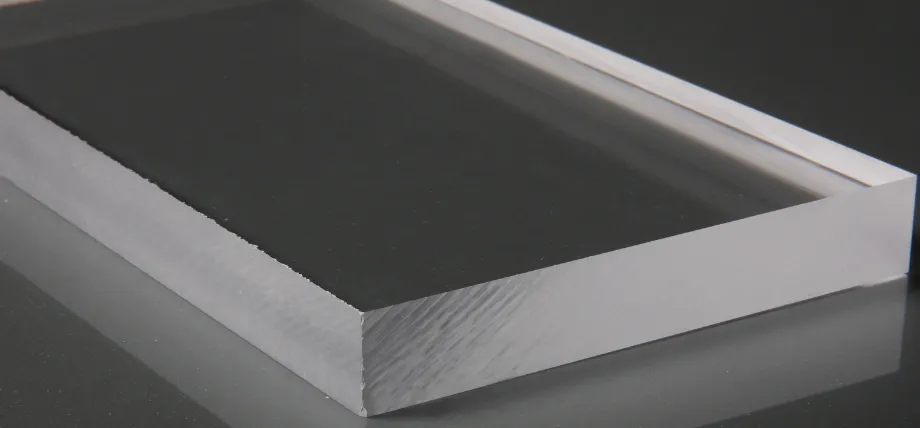
Machined acrylic edge
There are different grades of acrylic optimized for specific requirements. For acrylic CNC machining, you will mainly have the three acrylic options: cast acrylic, extruded acrylic, and continuous cast acrylic. It is highly recommended to obtain consultations from your selected acrylic machining services before making the material selection, since the choice depends on their tool and machining facilities as well.
Cast Acrylic
Cast acrylic is made by pouring liquid acrylic into a mold and curing it into solid sheets or blocks. Due to its forming technique, cast acrylic has low internal stress compared to other grades. So it is less likely to crack during acrylic CNC cutting. Since it machines cleanly and polishes well, this is your go-to choice for high-finish custom acrylic parts.
Extruded Acrylic
Extruded acrylic is made by melting acrylic and pushing it through a die to form a continuous sheet. It is usually cheaper than other grades, and the thickness is also consistent. But it usually has higher internal stresses and softer behavior. During CNC milling acrylic, it can get heated faster and may show rougher edges if the cutting settings are not correct. It also cracks more easily around holes and sharp corners. Therefore, extruded acrylic only suits simpler acrylic fabrication where your top priority is not the finishing.
Continuous Cast Acrylic
Continuous cast acrylic is made by casting in a continuous process between moving belts/rollers to form sheets. Its properties are between cast and extruded acrylic. Its thickness control is usually better than cast acrylic, and internal stresses are lower than extruded acrylic. It’s suitable for repeatable production that needs consistent sheet behavior and a decent visual finish.
CNC Machining Processes (Milling, Turning, Drilling, Engraving)
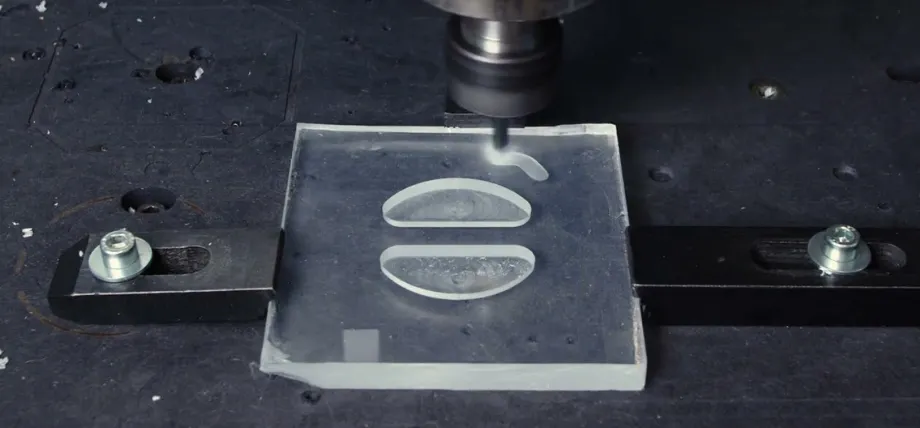
Active CNC milling process.
CNC Milling Acrylic
CNC milling acrylic uses a rotating cutting tool to remove material from fixed acrylic stock. Acrylic milling needs sharp tools specially designed for plastic to maintain quality. You have to carefully control the feed rates to prevent heat buildup, which can cause melting or cloudy edges.
CNC Turning Acrylic
CNC turning uses a complementary technique to milling. Here, the machining material is rotating against a stationary cutting tool. The cutting forces of turning are dependent on the geometry and depth. Maintaining smooth tooling is important in turning, since acrylic can crack easily under sudden load or vibration.
CNC Drilling Acrylic
CNC drilling is used to create holes using an axially moving tool. When you are drilling acrylic parts, you must properly align the feed rate and geometry to avoid grabbing, internal stress, and radial cracking around the hole.
CNC Engraving Acrylic
CNC engraving acrylic is a technique used to create surface features (textures, patterns, logos) by removing a thin layer of material from the surface. You have to maintain sharp tools and avoid aggressive cutting to obtain clean parts without distorting fine details.
Other digital Processing methods (Laser cutting, Laser Engraving)
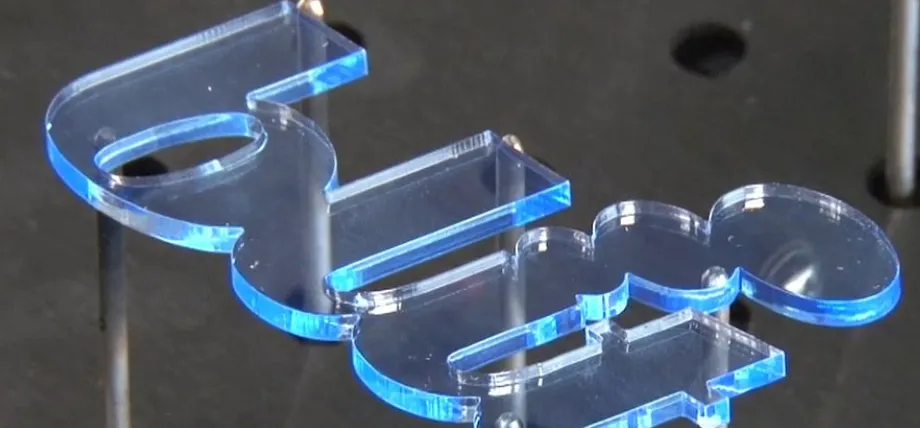
Precision-cut acrylic signage
This technique cuts material along a programmed path using mechanical tools. Edge quality depends on chip evacuation and stable support, since trapped chips and vibration can degrade the cut surface.
CNC Laser Cutting Acrylic
CNC laser cutting acrylic uses sharply focused thermal energy to melt and vaporize the material in target areas. You’ll get smooth edges with laser cutting, but it’ll induce residual heat, which can cause fine cracks within the material as well.
CNC Laser Engraving Acrylic
CNC laser engraving acrylic is a method used to draw surface marks using heat without any physical contact. These marks are precise, and the process is also faster than engraving. However, the depth of the marks is very low compared to mechanical engraving (suitable only for surface marking needs).
Speed and Tooling of Acrylic CNC Machining
Selecting the right type of tooling has a direct impact on acrylic CNC machining quality. Single-flute carbide or O-flute carbide are the commonly used tool materials for acrylic CNC machining. They are widely used because they allow efficient chip evacuation and reduce heat retention in your custom acrylic parts.
In addition, you should maintain high spindle speeds and controlled feed rates during acrylic CNC machining. Using extremely slow feed rates can cause friction and melting. Aggressive cutting can also cause chipping or cracking.
Similar to how you use coolants for other CNC machining processes, they are also used in PMMA CNC machining. Compressed air is used to clear chips and control temperature. By this method, you can get clean surfaces without chemical reactions with the plastic.
Acrylic vs. Polycarbonate CNC Machining
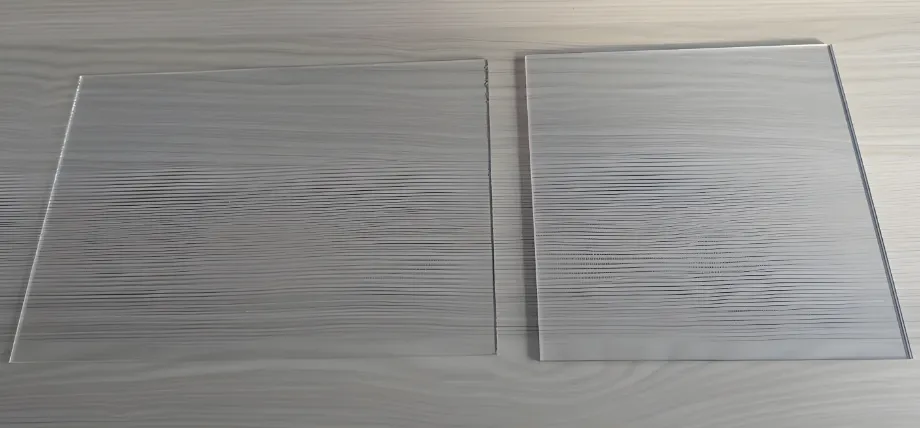
Selecting acrylic for machining
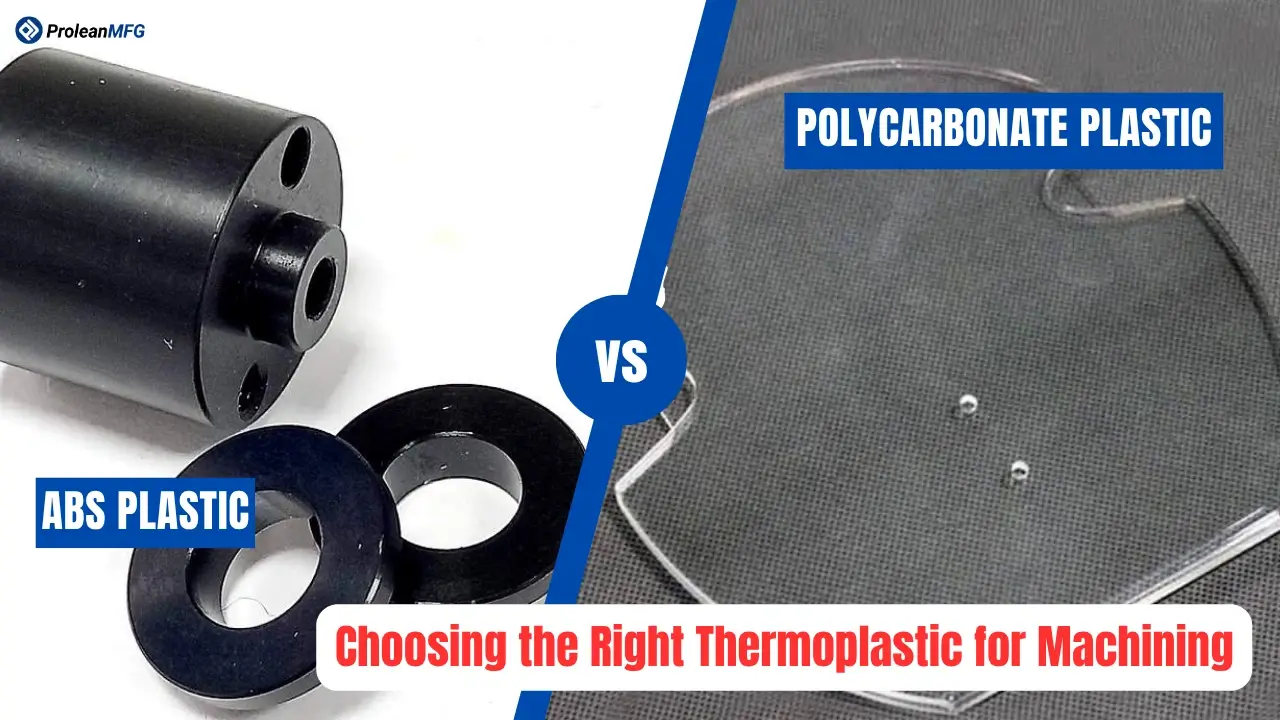
Acrylic and polycarbonate are both transparent thermoplastics widely used for many custom machining services. However, they give different behaviors during CNC machining. PMMA CNC machining gives stiffer parts with cleaner edges through smooth machining. Polycarbonate is tougher, highly impact-resistant, and difficult to machine cleanly due to its flexibility.
Table 1: Behavior of Acrylic vs. Polycarbonate in CNC Machining
| Property | Acrylic (PMMA) | Polycarbonate (PC) |
| Optical Clarity | Very high, close to glass (~92%) | High, but slightly less clear (~89%) |
| Impact Behavior | Highly brittle; shatters on failure | Highly impact-resistant; ductile |
| Stiffness | Rigid and dimensionally stable | More flexible under load |
| Heat Sensitivity | Melts under high heat | Softens and deforms |
| Surface Finish | Smooth (easy to polish) | Prone to surface scratching |
| Tensile Strength | 70 – 80 MPa | 60 – 70 MPa |
| Elastic Modulus | 2.8 – 3.4 GPa | 2.0 – 2.4 GPa |
| Impact Strength (Izod) | 15 – 20 J/m | 600 – 900 J/m |
| Glass Transition (Tg) | ~105°C | ~147°C |
Different Surface Finishes for CNC Machined Acrylic
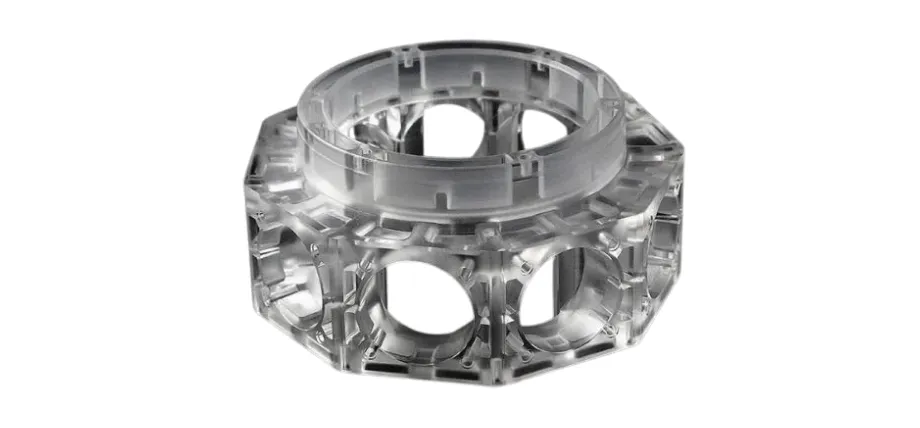
Complex CNC machined acrylic.
Surface finish directly affects the appearance of an acrylic part and how light passes through it. The finish is directly affected by acrylic CNC machining conditions, but can be further modified to meet visual or functional requirements.
Regular Finishing
This is the directly obtained output after CNC machining without post-processing. Most of the time, fine tool marks are visible. If you don’t need strict optical clarity, you can use these parts directly.
Mechanical Polishing
You can polish the acrylic surfaces using abrasives and buffing compounds to remove machining marks. You can use mechanical polishing to improve surface smoothness and transparency, with proper tracking of the dimensions. This method is good and sufficient to achieve moderate optical clarity.
Flame Polishing
Flame polishing uses a controlled flame to smooth and clear edges. This method gives you a glossy appearance but can create residual surface stresses. In general, flame polishing is recommended only for non-load-bearing edges.
Vapor Polishing
Vapor polishing uses chemical vapor to reflow the surface. You can achieve near-optical clarity with vapor polishing. However, this method needs strict process control and is used only to meet high-end optical requirements.
Matte/Frosted Finishes
Matte/frosted finishes are obtained by controlled abrasion or blasting. You can reduce glare and hide minor surface defects by this method, but it can reduce transparency. You can use these finishes for light-diffusive or non-reflective surfaces.
Advantages of Using Acrylic for CNC Machining
Acrylic CNC machining is one of the best process choices to make accurate plastic parts with good visual quality, without the cost of tooling. Main advantages of acrylic CNC machining are:
- High optical clarity with good geometric accuracy
- Clean edges and precise features of parts
- Suitable for both prototypes and low-volume production
- Parts are stiff and dimensionally stable
- Compatibility for surface modifications
- Industrially available in several grades for various
- UV resistant and durable under outdoor conditions
Applications of Acrylic CNC Machining
- Automotive Industry – Seat covers, light diffusers, interior display panels, transparent protective windows
- Electronics & Electrical Industry – Faceplates, transparent windows for indicators, protective covers for sensors and displays
- Medical & Laboratory Equipment – Equipment covers, sample holders, splash shields, clear housings for lab devices
- Retail & Advertising Sector – Signage panels, product display stands, holders, brand lightboxes
- Industrial & Manufacturing Sector – Machine guards, viewing panels, protective shields, templates and alignment jigs
- Architecture & Interior Design Industry – Decorative panels, partitions, lighting covers, clear mounting plates
Custom Machining Services
Proleanmfg has been serving the performance plastic machining sector for over 15 years. We provide custom machining for acrylic parts, PEEK, PC, and many other plastics. We are an ISO certified company with a door-to-door shipping network, so your parts are delivered to you on time and at your requested warehouse or office.
Some of our previous Acrylic machined parts include:
- Lenses
- Light pipes
- Light diffusers
- Display cases
- Prototype enclosures
- And more.
Request a completely free quote today!
FAQs
Laser cutting vs. CNC cutting for acrylic: what is better?
With laser cutting, you can create smooth, polished edges in thin acrylic sheets. However, laser-cut parts have heat-affected zones and geometry constraints. Acrylic CNC machining gives better dimensional control and supports complex three-dimensional features. You can also use CNC cutting for thicker parts as well. The choice depends on your requirements.
What is the melting point of acrylic?
Acrylic has a glass transition temperature of approximately 105°C. It does not have a sharp melting point like crystalline plastics, but it softens gradually when the temperature increases.
What affects acrylic machining costs?
The chosen acrylic grade, thickness, geometric complexity, machining time, and finishing requirements are the main cost drivers. Simple acrylic CNC cutting operations (without polishing) are usually affordable. For low-volume production, acrylic machining services are mostly more economical than molding.