
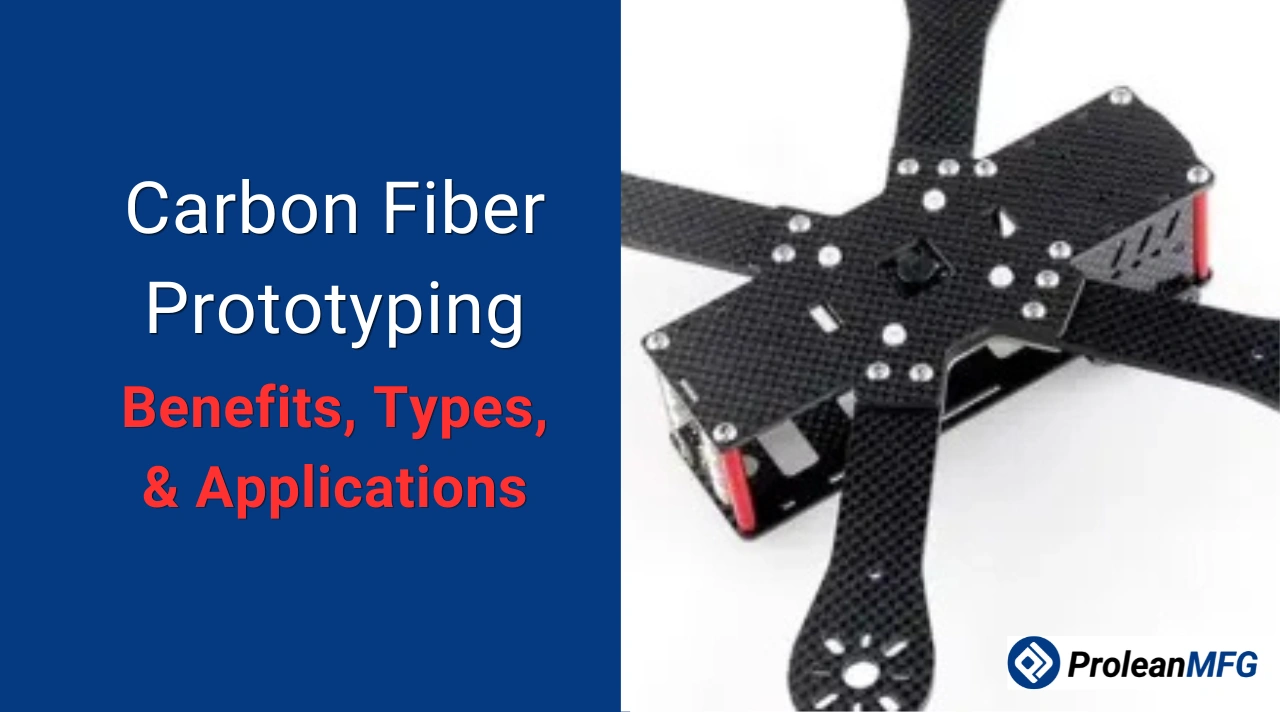

Carbon fiber prototype manufacturing has transformed products in aerospace, automotive, modern consumer electronics, and robotics, among other areas. It entails the use of carbon fiber composite materials to produce test parts.
These test parts help evaluate the functional, mechanical, and structural performance of a part or component before full-scale production. Main prototyping methods used are CNC machining, compression molding, 3D printing, vacuum bagging, and hand lay-up fabrication.
Carbon fiber’s performance levels are unmatched, particularly when high strength with low weight is a priority. Other benefits of prototyping with this material are good dimensional accuracy, high fatigue resistance, low thermal expansion, and excellent stiffness.
Engineers recommend Carbon Fiber processing in rapid prototyping because, despite being light, the material is stiff and strong. It offers excellent load distribution, the kind required in many high-performance engineering applications.
This guide reviews the different aspects of this crucial engineering process, reiterating the composite material’s suitability for high-performance prototyping applications across different industries.
What Is Carbon Fiber?
Carbon fiber is an exceptionally strong, stiff, and low- density composite material. It derives these unique properties from its composition of fiber strands, which are between 5 and 10 microns in diameter.
Other core properties of the material are corrosion resistance and thermal stability. Engineers choose to use carbon fiber to meet a part’s or component’s requirements for dimensional stability and high strength-to-weight ratio.
It is not surprising, then, that carbon fiber is a preferred prototyping material. It is perfect for validating lightweight structures before the engineers can commit to full-scale production.
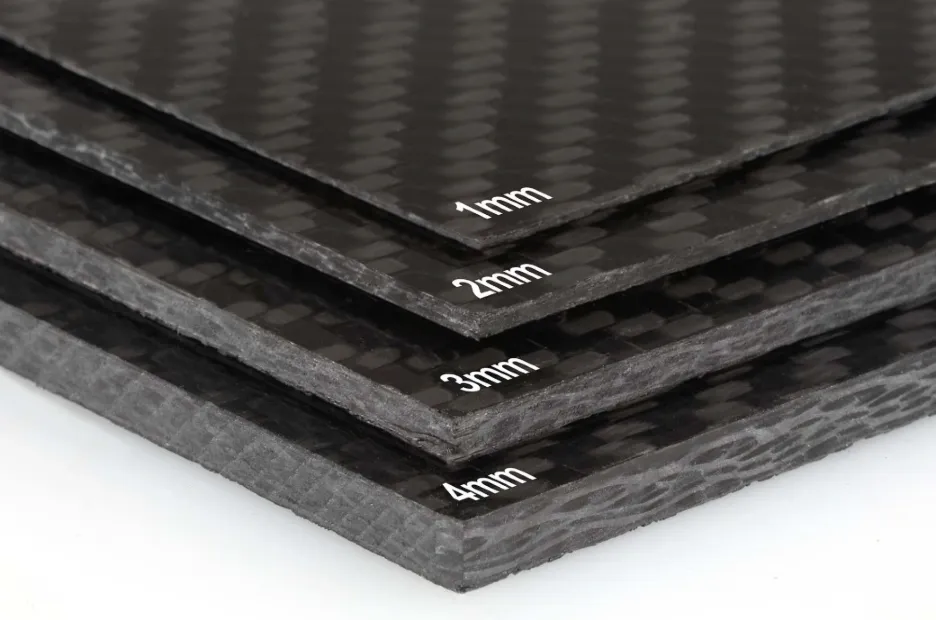
Carbon fiber
Different Carbon Fiber Materials
The types of carbon fiber composites applicable in prototyping include standard modulus carbon fiber, high-modulus carbon fiber, and carbon fiber reinforced polymers.
Standard modulus carbon fiber – Strong and cost-effective
High-modulus carbon fiber – High stiffness for demanding applications
Carbon fiber reinforced polymers – Produced from the combination of carbon fiber with epoxy, polyester, or other resin systems.
While the overall mechanical performance of a carbon fiber prototype depends on the material type, the directional performance is determined by the fabric type. That’s where the following discussion comes in.
Different Carbon Fiber Fabrics
The main carbon fiber fabrics are woven fabrics, unidirectional (UD) fabrics, multiaxial fabrics, and non-crimp fabrics (NCF).
- Woven Fabrics
These fabrics comprise interlaced tows in different patterns. The main patterns are plain weave, which produces excellent flat panels, and twill weave, which is ideal for complex parts.
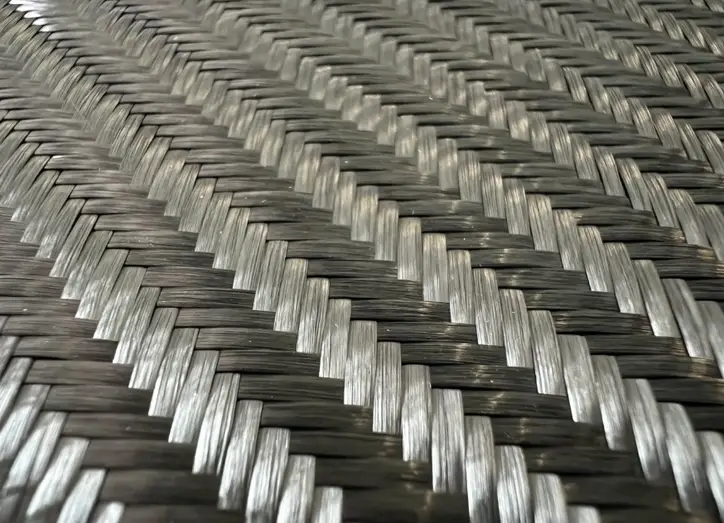
Woven carbon fiber fabric
Overall, woven fabrics are the most suitable for prototyping. They accept a wide range of design iterations and easily make complex geometries.
- Unidirectional (UD) Fabrics
With a predictable and well-understood load direction, the UD fabric can be used. Getting it right in this respect is critical because the fabric’s fibers run in one direction – strength is optimized on one axis.
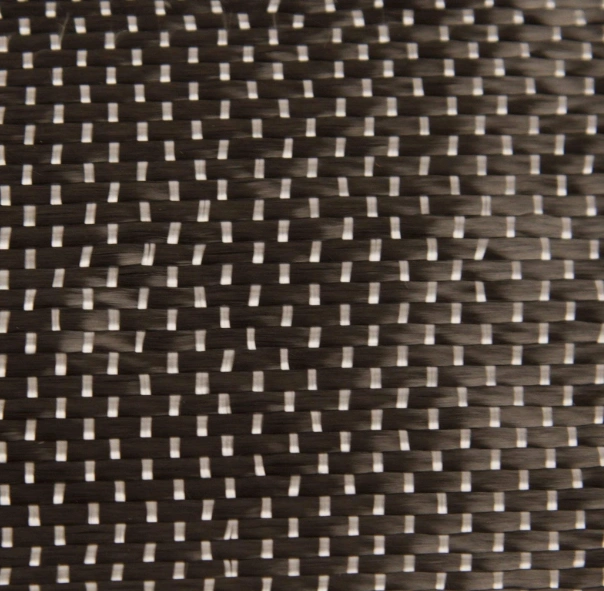
Unidirectional carbon fiber fabrics
Its prototypes are commonly used to validate the structural performance of spars, beams, and stiffening components.
- Multiaxial Fabrics
Multi-axial are built using layers of fiber arranged at different angles. Therefore, they provide strength along multiple axes. Prototypes requiring such characteristics are relevant in aerospace and automotive applications.
- Non-Crimp Fabrics (NCF)
NCFs are similar to multi-axial fabrics, only that they are stitched, not woven.
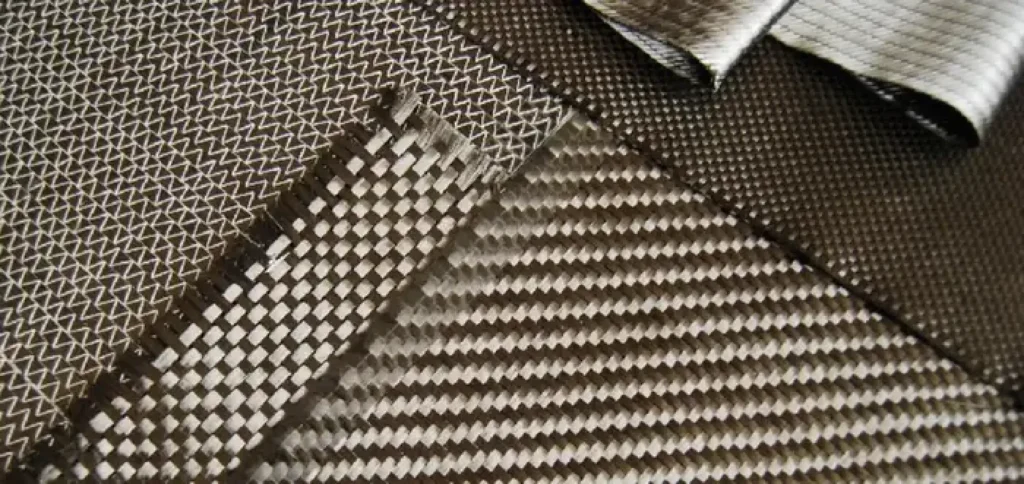
Non-crimp fabrics
These distinctions make these fabrics more mechanically sound. Since this is a high-performance material, its prototypes are suited for advanced applications such as robotics and aerospace.
Carbon Fiber Prototyping Resins
Having answered the fabrics question, the next focus is the resin system, which includes resin options such as laminating resins, prepreg resins, general-purpose resins, tooling resins, and infusion resins.
Laminating Resins – With their low viscosity, these resins are ideal for vacuum bagging applications
Prepreg Resins – These resins are pre-impregnated into the carbon fiber fabric. They provide a superior finish.
General-Purpose Resins – These resins are recommended for non-structural, cost-effective prototypes.
Tooling Resins – Tooling resins are commonly used in form and mold making, where their high temperature resistance comes in handy
Infusion Resins – This is the perfect resin for infusion processes because it has very low viscosity.
Some Industries That Use Carbon Fiber Prototypes
Carbon fiber machining and prototyping are widely used in aerospace, automotive, medical, and robotics, among others. These industries require high-performance, lightweight, and durable parts.
The aerospace sector commonly uses carbon fiber rapid prototyping to test and validate brackets and housings.
In the automotive sector, these prototypes are widely used for aerodynamic and performance testing. Engineers design carbon fiber parts for their lightweight and high strength.
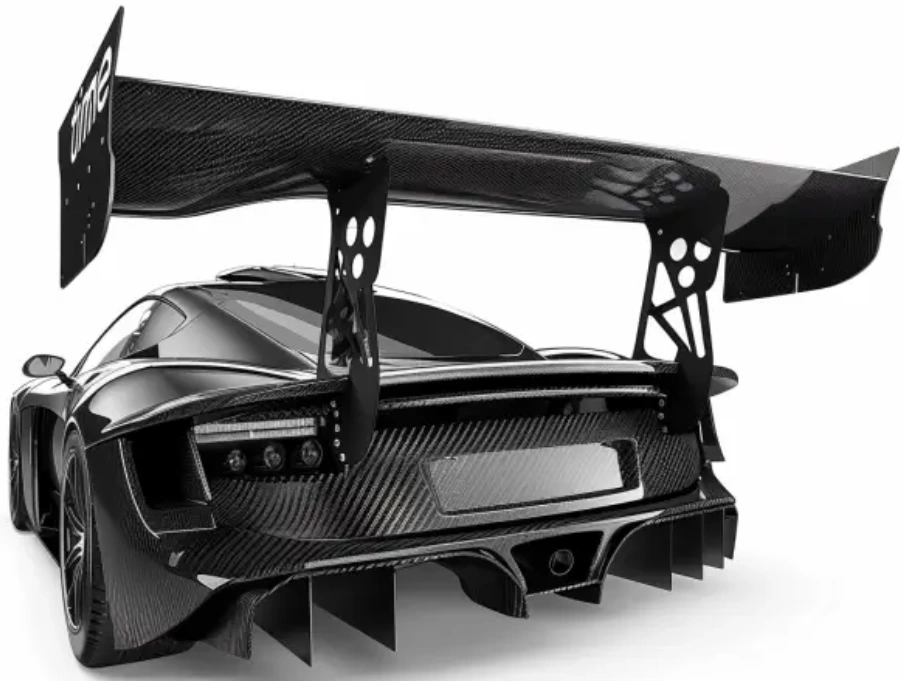
An automotive prototype
The medical device sector relies on machinable carbon fiber to produce prototypes for prosthetics and equipment frames.
In robotics, the use of carbon fiber parts is common in enclosures and mechanical arms.
Advantages of Carbon Fiber Prototyping
Carbon fiber rapid prototyping presents various advantages, including high fatigue resistance, high strength-to-weight ratio, low thermal expansion, good dimensional accuracy, and excellent stiffness.
- High Strength-to-Weight Ratio: Carbon fiber is lightweight but very strong. Its prototypes can be effectively used where strength and low weight are critical, including applications such as automotive, sports, and aerospace.
- High Fatigue Resistance: The material can withstand continuous stress cycles and loading. It delivers high performance for the long term.
- Low Thermal Expansion: Carbon fiber undergoes minimal contraction or expansion under temperature variations. This property is valuable for precision parts.
- Excellent Stiffness: A high modulus of elasticity (between 230 GPa and over 600 GPa) means that the material can maintain its shape even under significant forces.
- Dimensional Accuracy of Machinable Carbon Fiber: The composites can be machined to tight tolerances. This property is suitable for functional prototypes.
Limitations of Carbon Fiber Prototyping
The limitations of prototyping with carbon fiber include abrasive dust, rapid carbon fiber tooling wear, delamination, and high cost:
- Machining the material produces abrasive dust
- The material causes rapid carbon fiber tooling wear
- Poor machining can cause delamination
- Typically, more expensive than aluminum and engineering plastics
Different Carbon Fiber Prototyping Methods
The most common methods of prototyping carbon fiber are CNC machining, compression molding, 3D printing, hand lay-up fabrication, and vacuum bagging. The choice of any of these depends on the production speed, structural requirements, and part geometry.
Can Carbon Fiber Be CNC-Machined?
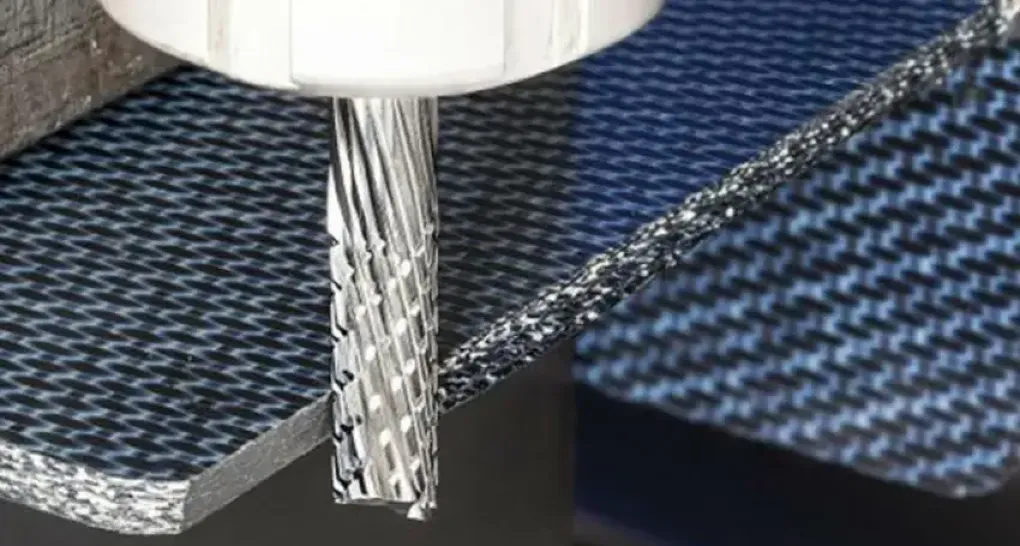
CNC milling carbon fiber
Yes, as mentioned above, CNC machining is one of the processing methods for carbon fiber. CNC milling machines and other machines can make complex geometries from carbon fiber panels, plates, and sheets.
However, carbon fiber reinforced polymer (CFRP) is tough, so it requires a special machining approach. Specifically, the feed rates and spindle speeds should be controlled and optimized to prevent delamination and fraying of machinable carbon fiber.
With dust extraction and other measures, one can design carbon fiber and produce excellent carbon fiber prototype parts.
How Much Does It Cost To 3D Print Carbon Fiber?
3D printing carbon fiber, another technology in prototyping, can vary in cost. But before we look at the cost, let’s introduce the method.
3D printing is an additive manufacturing technology involving continuous fiber reinforcement or carbon fiber-reinforced filaments. Engineers use the process for complex, lightweight structures that may be challenging to CNC machine.
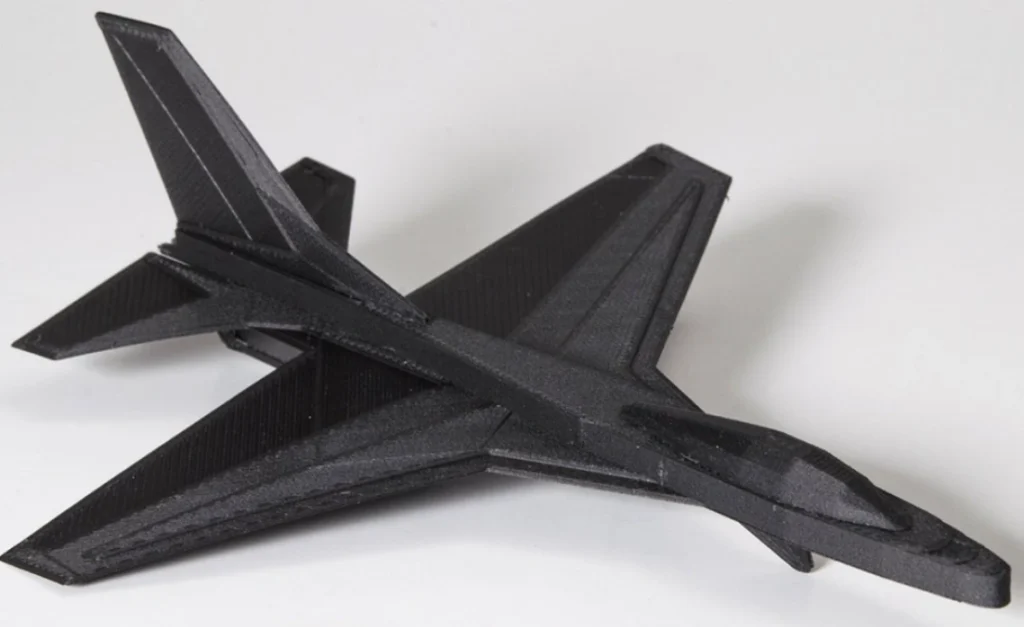
3D-printed carbon fiber
Going back to the cost question, it mostly depends on the specific printing technology, material type, and part details. 3D printing may be more preferable for complex internal geometries that CNC machining may not deliver.
Hand Lay-Up Fabrication
This method comprises the manual placement of layers of carbon fiber fabric into a mold. Resin is then added, and curing is done. Relatively poor in dimensional accuracy, this method is mostly recommended for larger prototypes.
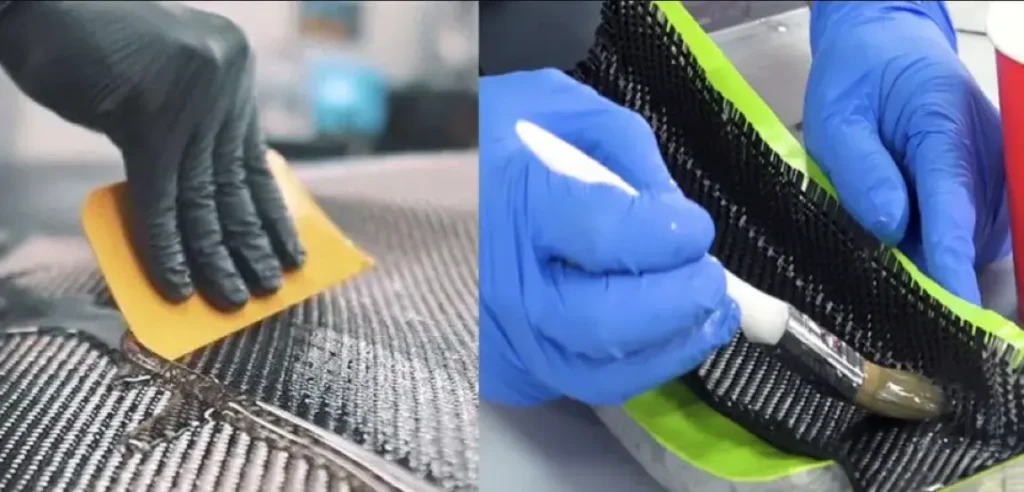
Hand layup fabrication
Vacuum Bagging
This method is often used together with hand lay-up fabrication. After the placement of the carbon layers, a special vacuum bag is used to remove air and press the laminate.
Compression Molding
A composite material is placed into a heated mold, and pressure is applied to form the part. We would recommend this method for prototypes with consistent thickness and for large-scale components.
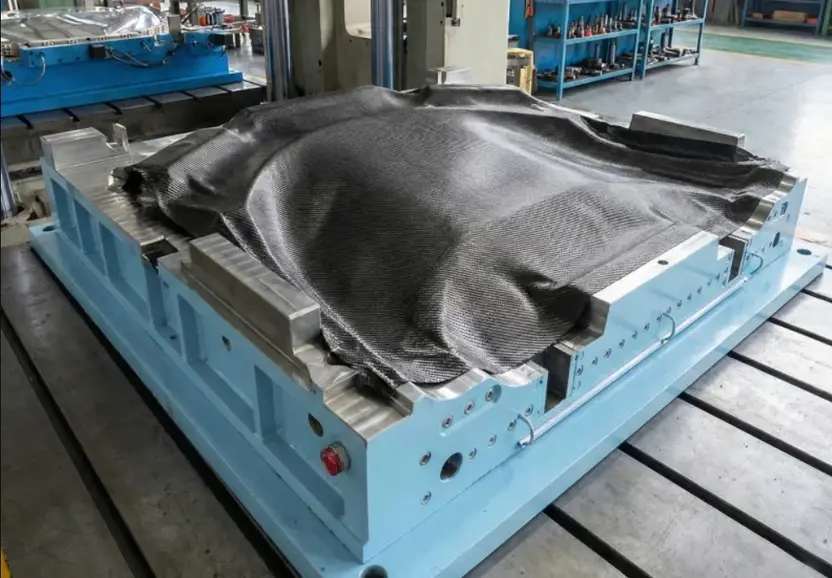
Compression molding
What is the Cost of Carbon Fiber Prototyping?
Several carbon fiber processing and technical factors determine the cost of carbon fiber prototyping. These include machining time, finishing requirements, material grade, and prototype thickness.
Compared with aluminum, carbon fiber sheets tend to be more expensive. The cost of prototyping can increase further due to specialized carbon fiber tooling and dust extraction systems.
However, the effectiveness of carbon fiber rapid prototyping and its many advantages often justify the cost of this option.
Design Tips for Carbon Fiber Parts
To design carbon fiber effectively, the following points are emphasized;
- The fiber direction in carbon fiber. The material has anisotropic properties – strength depends on fiber orientation.
- Sharp internal corners promote stress concentration, so they should be minimized.
- Holes and mounting features should be designed with sufficient edge allowance.
- Machining tolerances should be realistic
- Machining toolpaths should be accessible
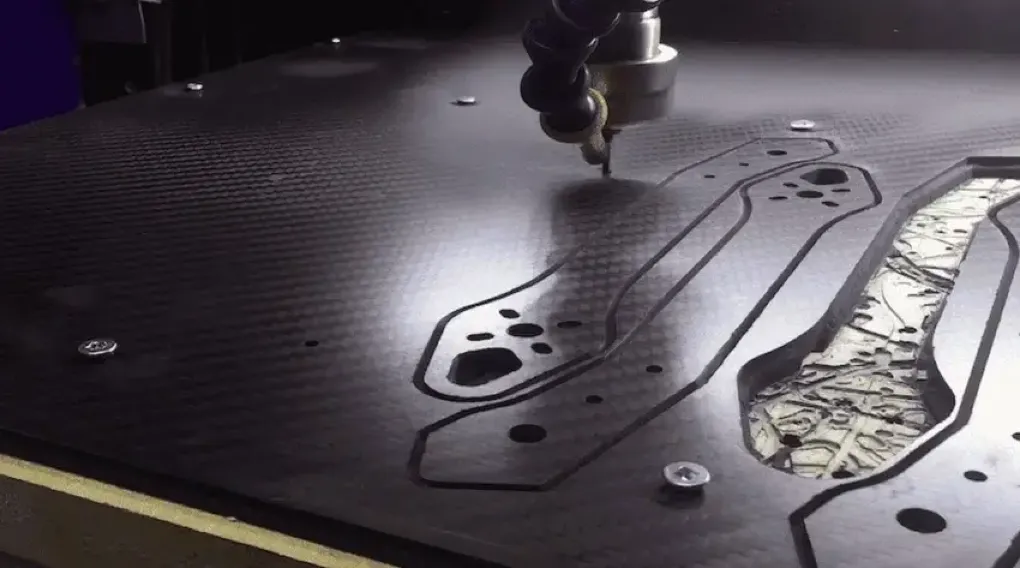
Optimized toolpath
Trends in Carbon Fiber Prototyping
The carbon fiber prototyping industry is expanding with advances in digital carbon fiber processing. Some of the notable trends are;
- The merger of CNC machining, 3D printing, and automated composite layup
- Advances in automated fiber placement systems
- Developments in continuous carbon fiber 3D printing technologies
Conclusion
Carbon fiber rapid prototyping is a modern manufacturing solution. It offers manufacturers unmatched benefits, such as low weight and strong parts. Many use it for prototyping in critical industries, from automotive to medical.
We have outlined how properties such as dimensional stability and machinability make the material suitable for prototyping applications. With creativity in the design of carbon fiber and the use of advanced machining systems, you can achieve a lot in carbon fiber processing.
Our rapid prototyping services help businesses take this transformative approach to product design and manufacturing. For a quote, please share your drawings and other relevant details via the contact form. We will respond within 24 hours.