

Brass metal fabrication often looks simple. But many projects run into problems, as brass scratches easily, and it hardens during forming, and reacts badly to poor setups. As a result, parts lose accuracy, surface finishes suffer, and costs rise unexpectedly.
At Prolean MFG, we handle brass metal fabrication with a streamlined approach. Firstly, we select the right brass alloy/grade. Then, our team plans the cutting and bending order and protects surfaces during every step. We focus on stable setups, optimized tool paths, and regular checks to keep parts consistent and of uniform quality.
This article will explain why brass is widely used in fabrication. It covers its behavior, fabrication process, grades, pros and cons, and typical applications.
Why Fabricators and Manufacturers Prefer Brass Metal Fabrication
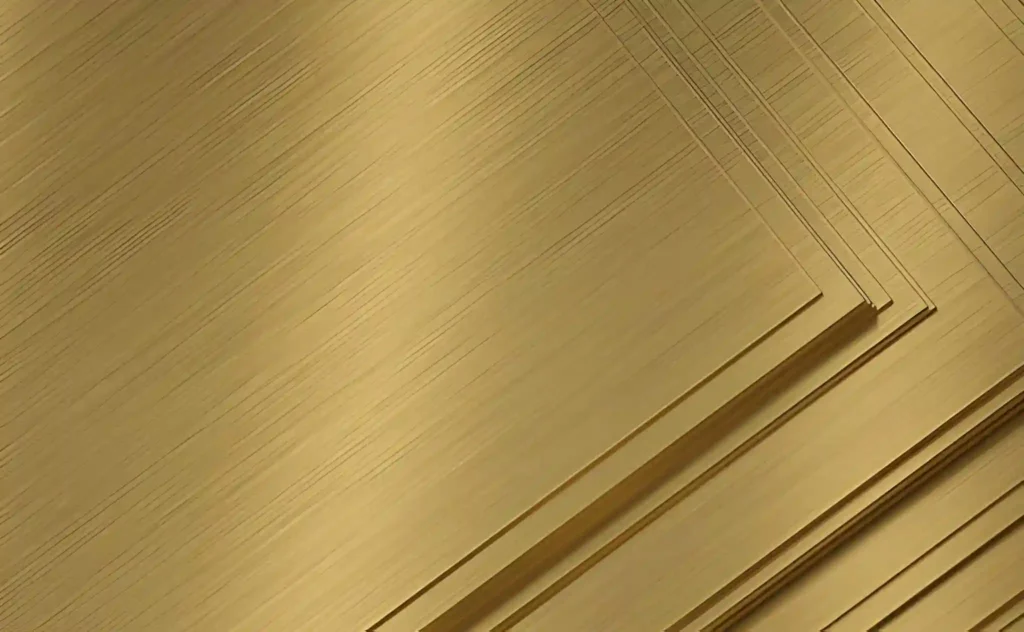
Matte brass sheets
Brass has a beautiful, natural golden color. It provides an elegant appearance immediately after fabrication. Customers often use brass for exterior parts because it doesn’t need painting or plating.
Moreover, brass is compatible with many materials. Common examples include wood, glass, and stone, resulting in a visually appealing final product.
In addition, brass has predictable performance during cutting and forming operations. When you follow recommended practices, it cuts precisely using laser or punch tooling. Furthermore, it retains its edge quality with minimal burring.
During bending, brass forms tightly curved radii without cracking. It provides the operator with controls to control the bend sequence and applies sufficient tooling pressure.
Fabricators also prefer to use brass for designs requiring fine detail and precise fit-up. They can create detailed shapes and smooth curves while retaining the component’s strength and structural integrity.
The Unique Properties of Brass That Favor Sheet Metal Fabrication
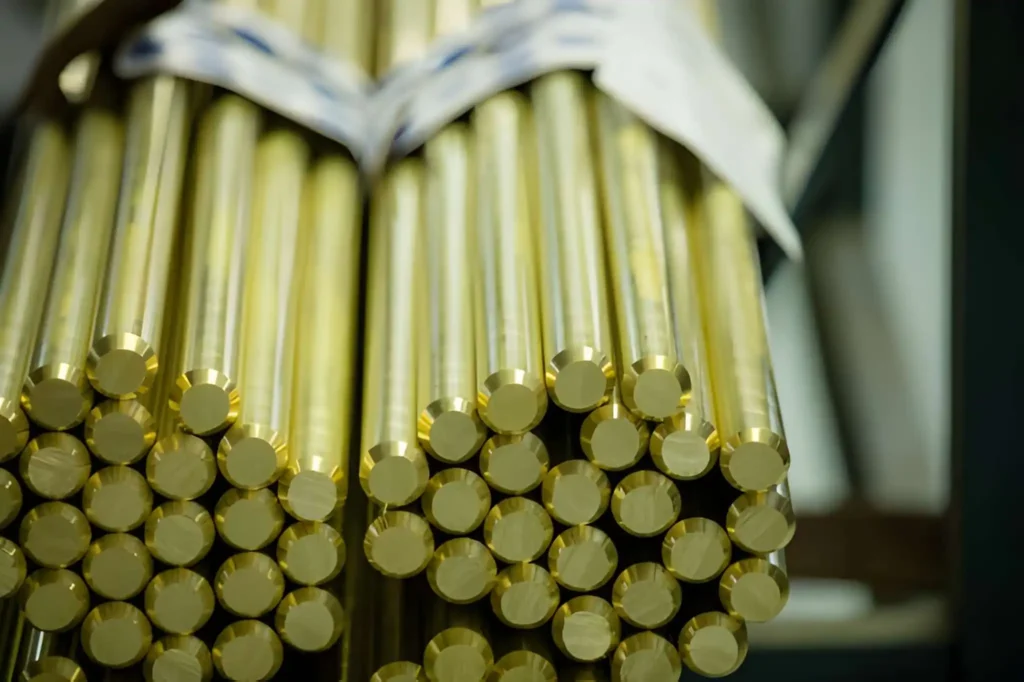
Raw brass rods
The inherent ductility and machinability of brass allow it to undergo cutting, forming, and finishing operations with minimal risk of cracking or surface defects.
Strong and Durable
Brass retains high strength and durability. So, its parts endure peak stress without breaking and chipping. It is primarily used for construction hardware, musical instruments, and mechanical components that are used extensively.
Corrosive Resistant
As brass is resistant to corrosion and can withstand moisture and mild chemicals, it lasts longer in environments with humidity and dampness, unlike steel, which typically requires plating or a protective coating.
Clean and Hygienic Surface
Brass is composed of copper(67% Cu) and zinc(33% Zn). It naturally prevents bacterial growth on surfaces. Therefore, it is often selected for products that require frequent contact. Examples include: rails, faucets, and hospital equipment that need regular cleaning.
Good Heat and Electrical Conductivity
Brass has better thermal and electrical conduction properties than steel, but not better than aluminum. It is commonly used in electric connectors, terminals, and housings. Additionally, brass maintains stability at both high and low temperatures.
Easy to Finish and Polish
Brass is easy to finish, polish, and texture. It facilitates a variety of finishes, from shiny to satin to mirrored, without requiring additional coatings. This makes it an optimal choice for functional and cosmetic parts.
Easy to Cut and Bend
Brass is relatively easy to clean and typically bends neatly without cracking when the right tools and bend radius are used. It produces less waste, resulting in faster production times when punching, drilling, or forming.
Popular Brass Alloys for Brass Metal Fabrication
Brass is available in various custom alloy types. Each type is designed for a specific purpose and use. The optimum choice depends on the intended part use (cutting, forming, and/or service conditions).
Leaded Brass
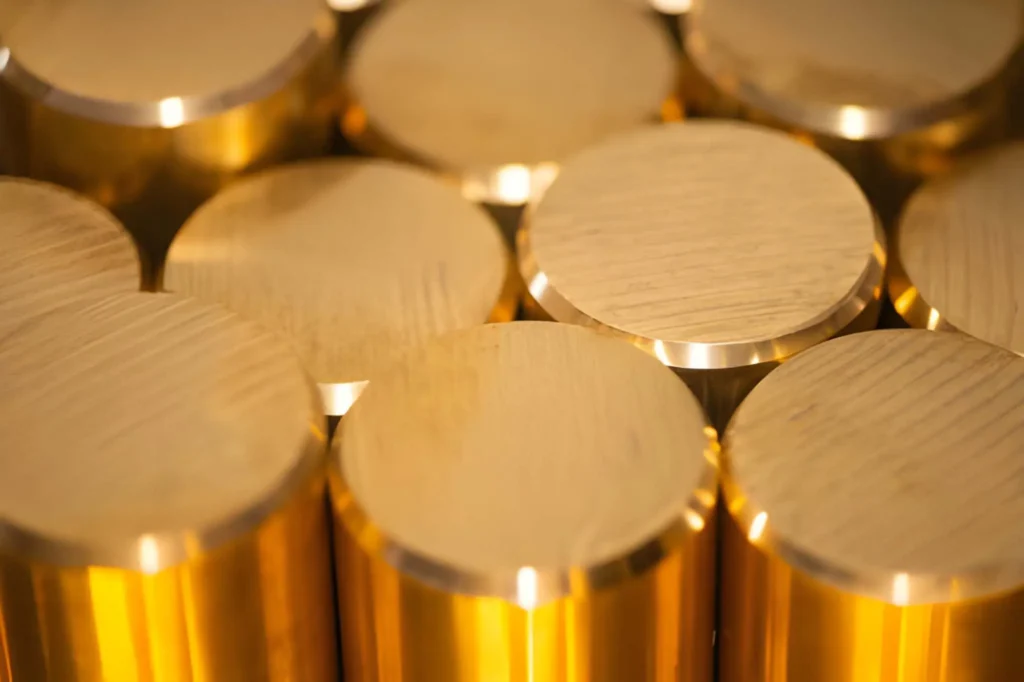
Leaded brass bars
Leaded brass has a low lead content (usually about 3%). The presence of lead promotes easy tool movement. So, it helps reduce tool wear and improves the part edge quality. Leaded brass is primarily used for parts that require drilling, threading, and close dimensional tolerances, such as fittings, bearings, and architectural hardware.
Naval Brass
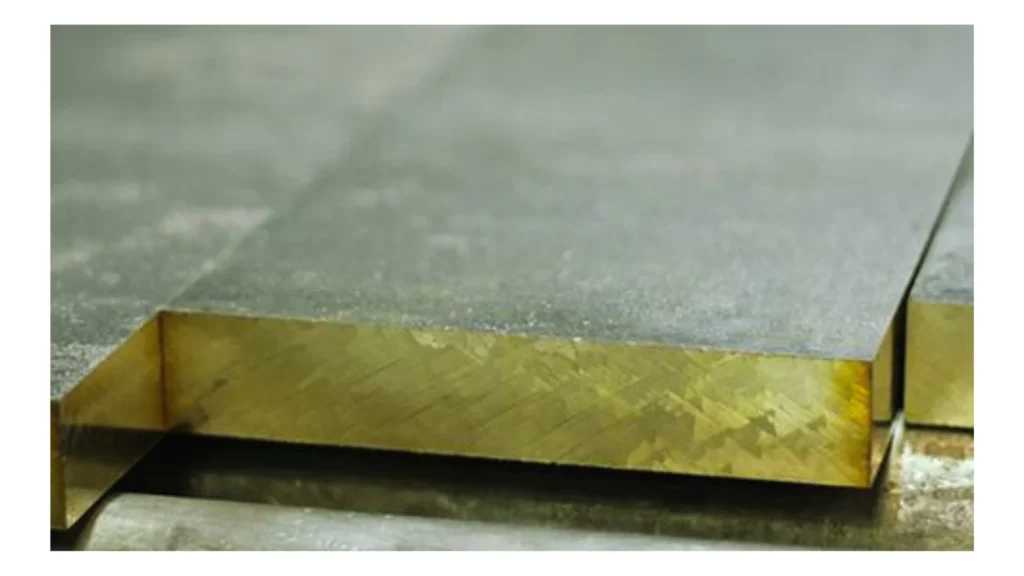
Navel brass sheet
Standard Naval brass(C46400) entails about tin(Sn ≈ 1%). This adds to its strength and corrosion resistance. Its use is common in damp and marine environments.
Fabricators use naval brass for parts such as shafts, fasteners, and hardware that are exposed to moisture, but do not require excessive forming.
Cartridge Brass
Cartridge brass contains a higher % of copper than zinc. It is softer and easier to form. It can produce tight curves without cracking when using appropriate tooling.
Cartridge brass is used for stamped parts, formed panels, and components that require a clean surface for polishing or plating.
Quick Brass Alloy Selection
| Brass Alloy | Best for Cutting | Best for Forming | Best for Marine / Moisture |
| Leaded Brass | Drilling, threading, and precise parts | Moderate | Limited use in damp environments |
| Naval Brass | Moderate cutting | Moderate | Excellent for damp or marine parts |
| Cartridge Brass | Moderate cutting | Stamped parts, tight curves | Limited use in damp environments |
How to Cut Brass Sheet Metal: Complete Fabrication Process
The brass sheet metal fabrication process follows a series of steps that convert raw sheet material into finished parts. Each method requires the proper equipment setup, tooling, and inspection to maintain quality and consistency.
Cutting Brass Sheets
The first step is to cut the brass sheets to the required size and shape. At Prolean Tech, we use a variety of fabrication techniques. These include punching, blanking, shearing, or stamping, depending on the part design and complexity. We employ sharp tools to eliminate rough edges and burr formation. After cutting, the parts are deburred and carefully inspected to ensure the edges are clean before forming.
Forming Brass Sheets
The next step is to form cut sheets into the desired configuration. We use computer-controlled press brakes and rollers to bend/curve the material. However, it is crucial to plan the bend sequence to avoid cracking and maintain the uniform thickness.
Jigs and fixtures are typically used to hold the sheet in position. Our fabricator inspects the part during the forming process to ensure the angle and radius meet the required tolerance specifications.
Joining and Welding Brass Sheets
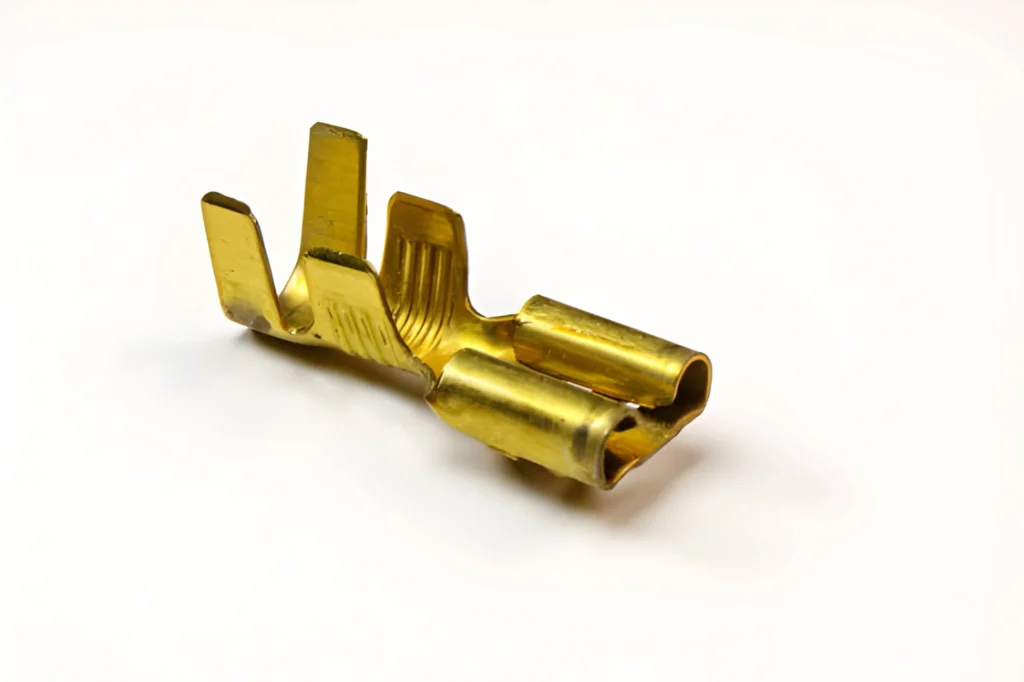
Brass automotive pre-tin connector
Once the parts are fabricated, they are assembled using welding. The most common welding methods for brass include TIG (Tungsten Inert Gas), MIG (Metal Inert Gas), and Laser welding.
Before welding, clean the brass surface to prevent oxidation and distortion. Moreover, heat control is essential during the welding operation to minimize warping and distortion.
Besides this, clamps and backing plates are used to maintain part flatness. After the parts are welded together, the welds are checked for strength and finish before final polishing/coating.
Surface Treatments for Brass Metal Fabrication Parts
Some typical sheet metal finishes for brass include galvanization, powder coating, conversion coating, and e-coating.
Galvanizing
Galvanizing involves dipping brass parts into liquid zinc (molten), which creates a consistent, thin layer of zinc. However, due to zinc diffusion, hot-dipped galvanized coatings for brass are rarely common.
The primary advantage of galvanizing is that it protects metal parts from corrosion and wear. Moreover, it’s relatively quicker and economical for providing protective coatings for parts and is commonly used in electronics boxes, car parts, tooling, lighting fixtures, and many other applications.
E-Coating
The e-coating process applies a thin, uniform layer of epoxy to the brass using electricity. The water-based epoxy solution is applied to the brass using an electric field to facilitate bonding.
E-coating serves as a primer and enhances corrosion protection. E-coated brass is widely used for hardware, marine components, and automotive parts.
Powder Coating
Powder coating involves spraying a dry powder onto the brass and then baking the powder to form a hard surface. Powder-coated brass parts have a durable, smooth finish and are available in a variety of colours and textures.
The process is relatively faster than wet painting, does not run or drip, and cures rapidly. Powder-coated brass parts are used extensively for vehicle parts, outdoor furniture, doors, windows, and household appliances.
Conversion Coating
Conversion coating is a chemical treatment. It increases the part’s surface hardness and improves corrosion resistance. Moreover, it gives vibrant colour options for custom brass parts. Usually, it applies to brass appliance panels, knobs, and handles for household appliances.
Pros & Cons of Brass Metal Fabrication
Pros
- Brass supports tight radii and bends without cracking
- It cuts easily with punches and drills
- It produces smooth holes and slots
- Brass can be polished to a mirror or satin finish
- It maintains tight tolerances for complex parts
- Since brass has a low melting so, it softens significantly with heat.
- Brass can be machined and reduces tool wear with proper setup
Cons
- Brass scratches easily and requires care in handling
- It has soft edges that can deform under pressure
- Brass hardens quickly and deforms with repeated bending.
- It is less intense than steel and not suitable for heavily loaded parts
- Brass is more expensive than mild steel
- Cartridge brass can be formed using deep drawing techniques
Brass Metal Fabrication Components/Products
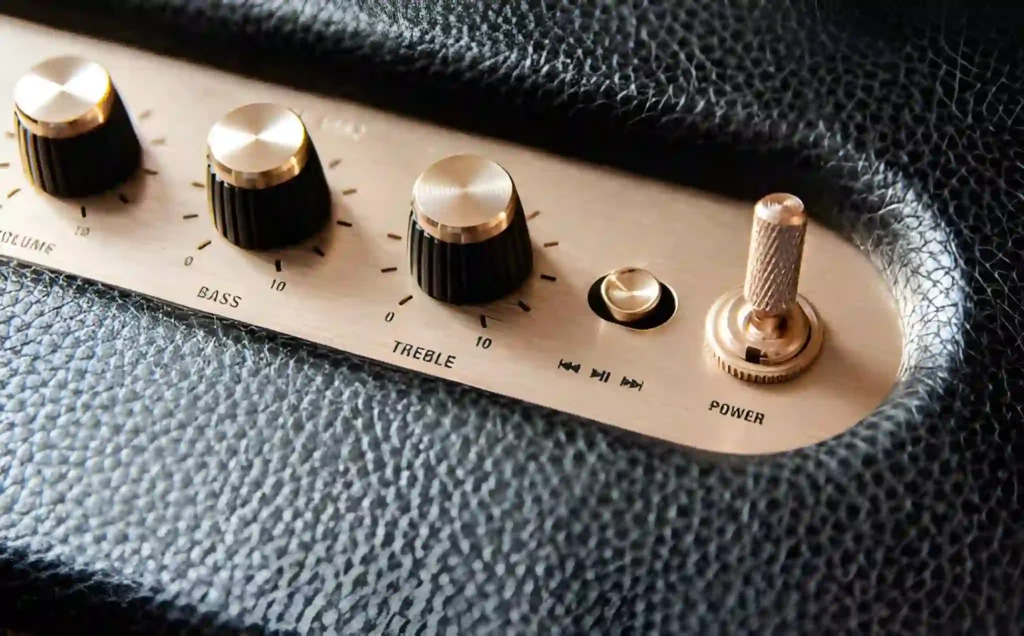
Brass-made adjustment knobs
Brass metal fabrication is used to make a wide variety of products.
Some common custom brass parts examples include:
- Electrical enclosures and
- Panels
- HVAC ducts
- Automotive body panels
- Chassis parts
- Machine covers and safety guards
- Kitchen appliances like ovens and mixers
- Metal cabinets and lockers
- Frames and supports for furniture
- Light fixture and lamp housing
- Signage
- Display stands
- Toolboxes and storage containers
- Hardware and fittings for boats
- Decorative architectural panels and cladding
Get Brass Metal Fabrication Components (Ready to Assemble) from Prolean MFG
With years of experience, we at Prolean MFG understand the challenges of working with brass. We provide complete solutions for brass fabrication services from the design phase through finished components to meet your project needs.
At our factory, we employ precision laser cutting, welding, punching, blanking, and surface finishing.
Whether your project requires simple brass parts or complex precision components, our team can consistently deliver reliable, high-quality parts, ready to assemble in one go. We focus on accuracy and consistent quality at every step, ensuring your parts meet both design and functional requirements.
Contact us today for custom sheet metal fabrication and get a free quote!