
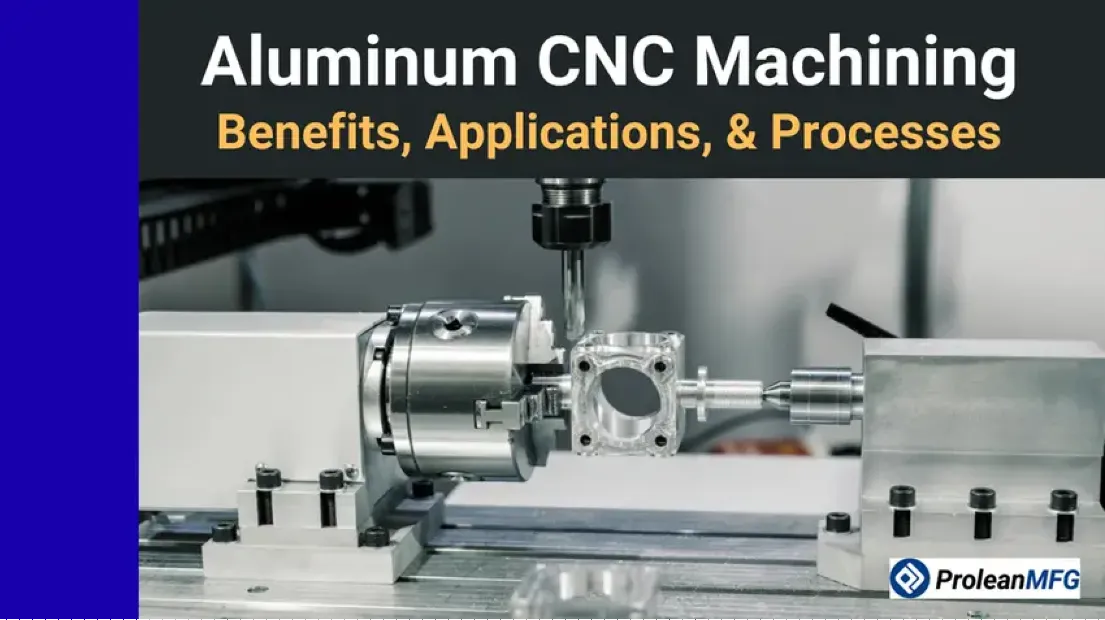

Aluminum CNC machining is the precise cutting and shaping of aluminum alloys using CNC mills, CNC lathes, and other computer- controlled machinery. It is a popular manufacturing method in aerospace, electronics, medical, automotive, and many other industries.
Starting with raw aluminum stock, the machining process entails CAD design, CNC programming, material preparation, CNC machining, and post-processing.
It is is not a straightforward exercise. The machinist must take into account the different aluminum alloys, part complexity, production volume, and other elements.
To help you understand aluminum CNC machining better, we prepared this comprehensive guide.
What Is Aluminum CNC Machining?
Aluminum CNC machining is the process of using computer numerical control (CNC) machines to cut and shape aluminum alloys. The resulting aluminum CNC parts are used in different applications.
Different CNC machining techniques are applied, including aluminum CNC milling, aluminum CNC turning, and aluminum CNC drilling.
Popular aluminum alloys used in aluminum CNC cutting and shaping are 7075, 6061, and 2024.
Aluminum CNC machining is as old as the mid-20th century, during the early years of CNC technology development.
The Advantages of Aluminum CNC Machining
While the different aluminum alloys offer varying properties, there are cross-cutting benefits from aluminum machined parts, including
Aluminum Corrosion Resistance
The oxide layer that naturally forms on aluminum is protective against forms of environmental degradation, including corrosion. Because of this, you can use CNC-machined aluminum parts for outdoor applications. You may not even require to apply additoional protective coatings on the aluminum CNCcnc parts.
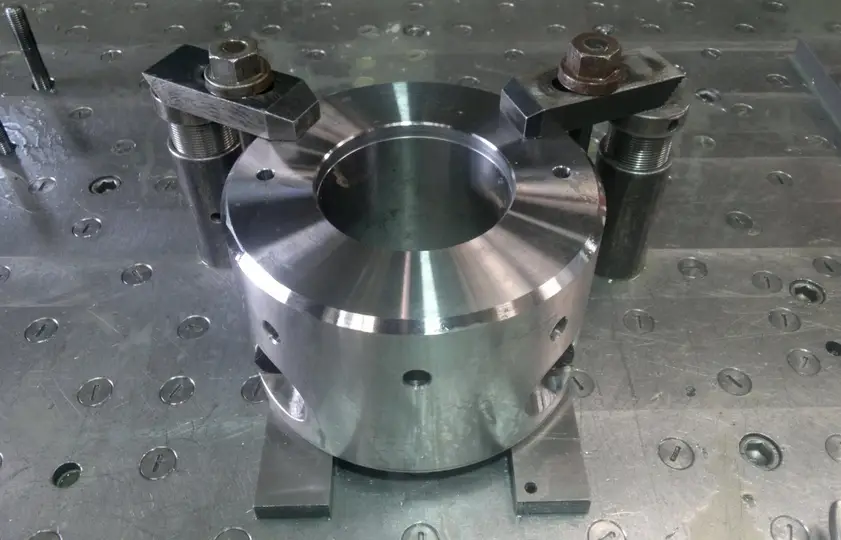
corrosion-resistant aluminum part
Aluminum Strength-to-Weight Ratio
With a low density of approximately 2.70 g/cm³, aluminum has relatively good mechanical strength. Its lightweight but strong machined parts are commonly used in popular applications such as aerospace and automotive. Engineers value related benefits, such as enhanced fuel efficiency due to lower weight.
Aluminum Machinability
The high machinability of aluminum is another big advantage, especially with the need for parts with tight tolerances and excellent surface finishes. The high aluminum machinability translates to not only faster processing times but also the capability to produce complex geometries.
Aluminum Conductivity
Aluminum CNC parts have superior electrical and thermal conductivity. Some areas where this property fits perfectly are heat sinks and enclosures. Combining this property with machinability enables you to achieve high-performance parts to exact design specifications.
Aluminum Recyclability
Aluminum is 100% recyclable, yet it doesn’t lose its properties in the process. This is a key property for manufacturers seeking sustainable practices. It also makes sense from the economic angle since material loss is minimal.
Aluminum Low-Temperature Performance
Aluminum CNC-machined parts retain their mechanical properties under cold conditions. Therefore, the parts can be used in low-temperature applications, for instance, industrial equipment and refrigeration systems.
The Limitations of Aluminum CNC Machining
The main limitations of aluminum for CNC machining are low fatigue resistance, high deformation, lower strength, and poor high-temperature performance.
Relatively Lower Fatigue Resistance
Aluminum’s relatively higher susceptibility to fatigue under repeated cyclic loading can be disadvantageous in dynamic applications. However, experienced manufacturers can optimize aluminum parts for such applications with precision CNC machining and expert alloy selection.
Deformation in High-Stress Applications
Since the material has a lower modulus of elasticity, it tends to deform easily under intense, sustained loads. A professional engineering approach encompassing proper grade selection and reinforcement can help use aluminum CNC-machined parts in such applications.
Lower Strength in Comparison to Steel
Despite its impressive strength-to-weight ratio, aluminum generally trails steel in terms of absolute strength. To use it in load-bearing applications, alternative alloys or thicker sections may be necessary.
Poor Performance in Very High Temperatures
Another limitation regards high-heat applications, where aluminum machined parts tend to struggle. Our experts can always guide you about the ideal CNC machining material from the various alloys available.
Industrial Applications of Aluminum CNC Machining Parts
Aluminum CNC machining parts are widely used in several industries, including automotive, electronics, aerospace, food processing, and sports.
Automotive Applications of Aluminum CNC Machining Parts
Aluminum shafts and other components are popular in the industry, mostly for their high strength-to-weight ratio.
Applications of Aluminum CNC Machining Parts in Electronics
With their lightweight nature and high thermal conductivity, aluminum CNCcnc machining parts are excellent for connectors, housings, and heat sinks.
Aluminum CNC Machining Parts In Aerospace
Similar to the automotive industry, some aerospace components are made from machined aluminum alloys.
Aluminum CNC Machining Parts in Food Processing
The relative non-reactive nature of the material makes it suitable for food processing and related industries, for instance, pharmaceuticals.
Aluminum CNC Machining Parts for Sports Items
Baseball bats and other sports items need to be lightweight and strong, hence the preference for aluminum CNC machining parts.
What Types of Aluminum Are Used in CNC Machining?
The most commonly used aluminum grades for CNC machining are 6061 and 5052. Others commonly used include 7075 aluminum, 2024 aluminum, and 6063 aluminum.
6061 Aluminum (EN AW-6061 / UNS A96061)
6061 aluminum has a great balance of corrosion resistance, strength, and machinability. It machines cleanly, producing aluminum CNC parts with excellent surface finishes. We use it for aluminum CNC machining parts such as frames, brackets, and housings.
When it comes to processing, 6061 aluminum responds well. You can use its anodized parts in industrial equipment, aerospace parts, and automotive parts.
A reason why 6061 aluminum is so versatile is that it is a heat-treatable Al-Mg-Si alloy. Although the material has lower mechanical strength than 7075 aluminum and other higher-strength alloys, it can still be used in some load-bearing applications.
5052 Aluminum
We mostly value this grade for its formability and corrosion resistance. On machinability, it isn’t as impressive as 6061 aluminum, but it can still be machined. Use its machined parts for marine and chemical environments – tanks, enclosures, and so forth.
Notably, this Al-Mg alloy is non-heat-treatable. That’s why the metal has excellent corrosion resistance, the kind that suits environments like marine. A drawback is poor machinability, which is evidenced by high tool wear.
Other Common Aluminum Machining Alloys (7075, 2024, 6063)
Other commonly used aluminum alloys for CNC machining are 7075, 2024, and 6063.
7075 Aluminum (EN AW-7075 / UNS A97075)
This aluminum alloy belongs to the zinc-based (Al-Zn-Mg-Cu) heat-treatable category. It is lightweight and strong, which is one of the reasons it is popular in aerospace and other industries for high-performance mechanical parts.
Although 7075 aluminum is as strong as some steels, its weldability and corrosion resistance are relatively poor.
2024 Aluminum –
This alloy is mostly popular for its high fatigue resistance. This Al-Cu alloy is highly preferred in cyclic loading applications. Its machined parts are common in aircraft components. However, anodizing or protective coatings are required because the metal has poor corrosion resistance.
6063 Aluminum
6063 aluminum provides an excellent surface finish. Its machined parts are commonly used in architectural applications. This is due to the metal’s unmatched formability, which supports aesthetics and surface quality.
However, its use in high-load applications is limited. Its strength is lower than that of 6061 aluminum.
Types of Aluminum CNC Machining Processes
Aluminum CNC machining parts are mostly processed through custom aluminum milling, turning, drilling, and tapping. Other machining processes include boring, reaming, and thread milling.
Aluminum CNC Milling
Aluminum CNC milling is defined by a rotary tool removing material from an aluminum workpiece. It is used to produce contours, pockets, slots, and even flat surfaces. Aluminum is perfect for milling operations, which often require high-speed machining.
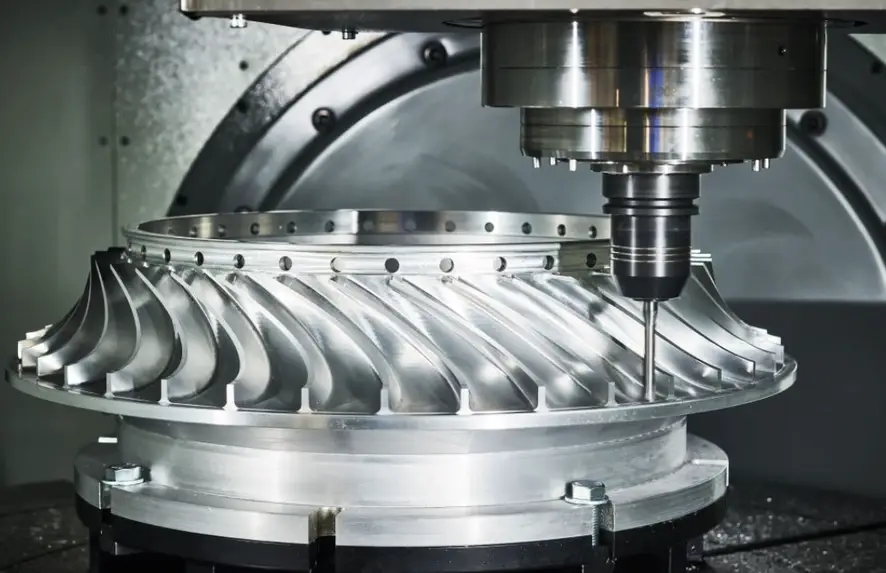
Aluminum CNC milling
Aluminum CNC Turning
Aluminum stock can also be turned into rotational or cylindrical parts. A stationary cutting tool is used to remove material from a rotating workpiece. We use different CNC turning operations to produce round geometries such as bushings and shafts.
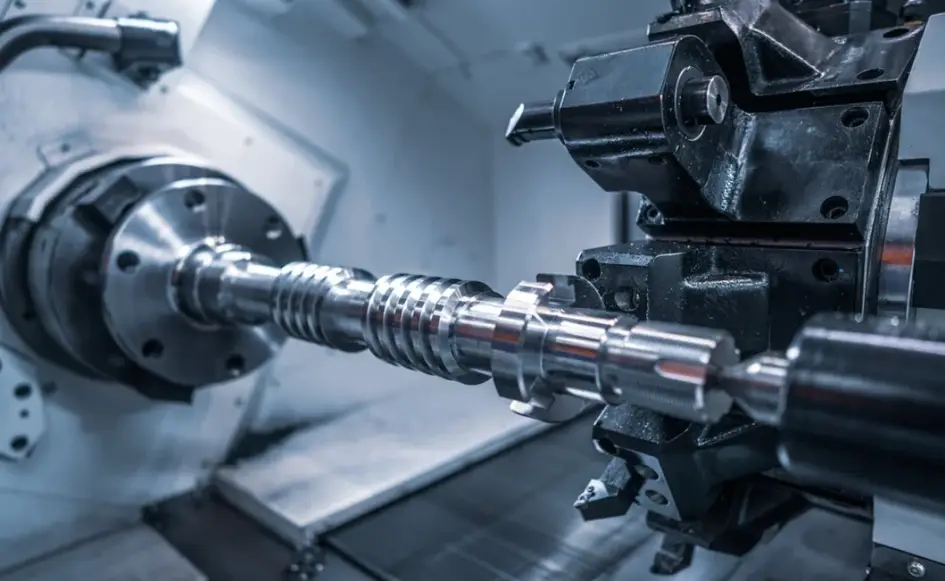
Aluminum CNC turning
Aluminum CNC Drilling and Tapping
Drilling and tapping are used to make internal threads and holes in aluminum. The manufacturer can be relatively fast and accurate on these operations, thanks to the softness and dimensional stability of aluminum.
Other CNC Machining Processes for Aluminum
Other additional processes used to produce machined aluminum parts include CNC boring, CNC reaming, and thread milling.
Aluminum CNC Boring – This is a popular technique for enlarging existing holes in aluminum. It is accurate and produces a good surface finish.
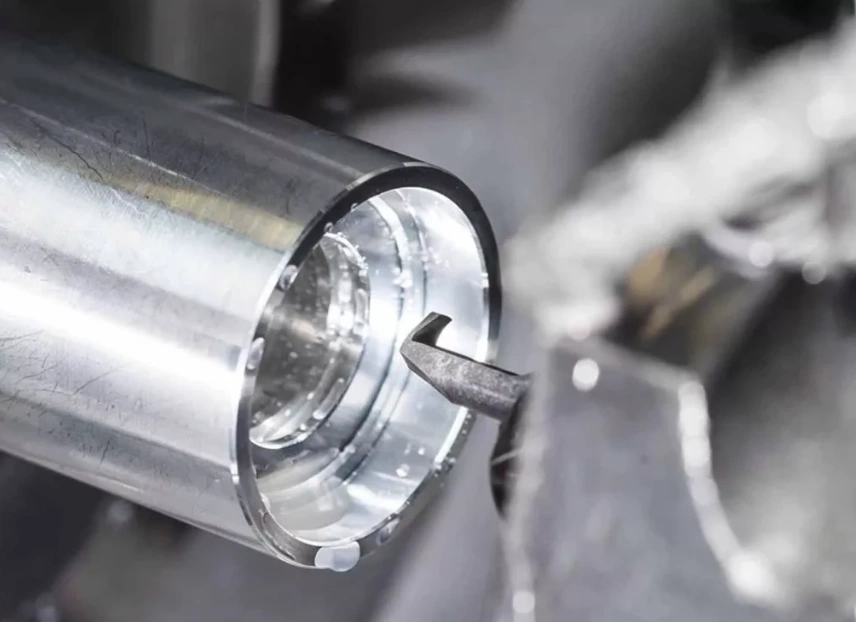
Aluminum CNC boring
Aluminum CNC Reaming – We use CNC reaming to improve the surface finish and dimensional accuracy of a hole.
Aluminum Thread Milling – Thread milling is a widely used process for making external and internal threads.
Machines and Tools Used in Aluminum CNC Machining
Producing excellent aluminum CNC machining parts relies on various machines and tools, including aluminum CNC milling machines, CNC turning centers, and cutting tools.
CNC Machines for Aluminum
CNC milling machines and CNC turning centers are the most prominently used machines in aluminum precision machining. The modern, advanced ones are built for unmatched accuracy and precision, fit for high-volume manufacturing of complex parts.
Industries such as aerospace, medical, and automotive depend on these machines for some of their most critical parts.
Cutting Tools for Aluminum Precision Machining
Carbide end mills and high-speed steel tools feature regularly in custom aluminum milling projects.
Carbide End Mills are valued for their high temperature resistance. These tools perform much better than most tools when it comes to high feed rates and cutting speeds.
High-Speed Steel (HSS) cutting tools are most suited for intermittent loads. Therefore, we will mostly use them to produce complex parts. They are also very effective in drilling and tapping operations.
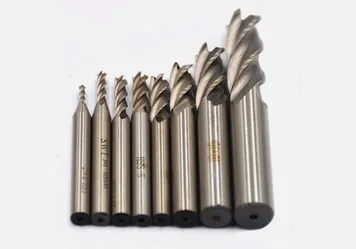
Since chips should be evacuated effectively, these tools are designed exactly for that. There are other requirements for these cutting tools, such as polished flutes to reduce material adhesion and high rake angles to minimize cutting forces.
Main Machining Parameters in Aluminum CNC Machining
Effective aluminum alloy machining entails checking and controlling parameters such as depth of cut, feed rate, spindle speed, cutting tool design & management, surface finish, and coolant application.
Depth of Cut – Bigger depths of cut go with slower speeds and robust machines. Smaller depths of cut are used to achieve finer surface finishes.
Feed Rate – While custom aluminum milling works best with faster feed rates, a proper balance is recommended to prevent tool overheating and damage.
Spindle Speed – The spindle speed, too, should be high – usually above 10,000 RPM
Cutting Tool Design & Management – For the cutting tool, we focus on the material, geometry, and wear. Carbide and HSS tools are popular because they produce clean cuts and evacuate chips effectively.
Surface Finish – Regarding the part’s surface finish, a few elements can be adjusted to achieve the desired results – spindle speed, feed rate, cutting tool sharpness, coolant, etc.
Coolant Application – It is also a critical parameter, not only for the surface finish but also for safeguarding the life of the cutting tool.
The Steps in Aluminum CNC Machining
Aluminum CNC machining encompasses several steps. The process starts with CAD design and CNC programming. The other steps are the selection of the CNC machining materials, tool/machine setup, CNC machining, and post-processing.
CAD Design – CAD software solutions such as Fusion 360 and SolidWorks are used to produce a 3D model of the part.
CNC Programming – Engineers convert the 3D model into a CNC program. A CAM software is critical in this step.
Material Selection – Engineers choose the right aluminum alloy to use in aluminum precision machining processes. They consider factors such as chemical requirements and mechanical requirements.
Tool and Machine Setup – The workpiece and respective cutting tools are set on the CNC machine. The machine is also zeroed for accurate and precise cuts.
CNC Machining – Following the G-code program, the CNC machine removes material from the aluminum workpiece.
Post-Processing – It is common for machined parts to undergo post-processing, such as inspection and surface treatment.
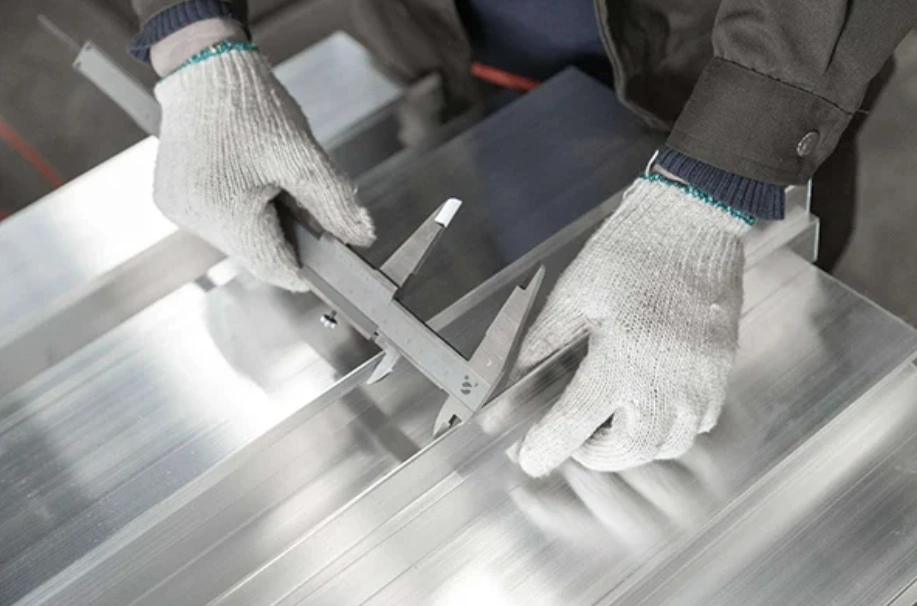
Dimensional checks
Common Post-Machining Processes in Aluminum CNC Machining
Aluminum CNC parts can undergo post-processes, which include anodizing, bead blasting, chemical film, powder coating, and polishing.
Anodizing – It is an electrochemical process that enhances the natural oxide layer of aluminum.
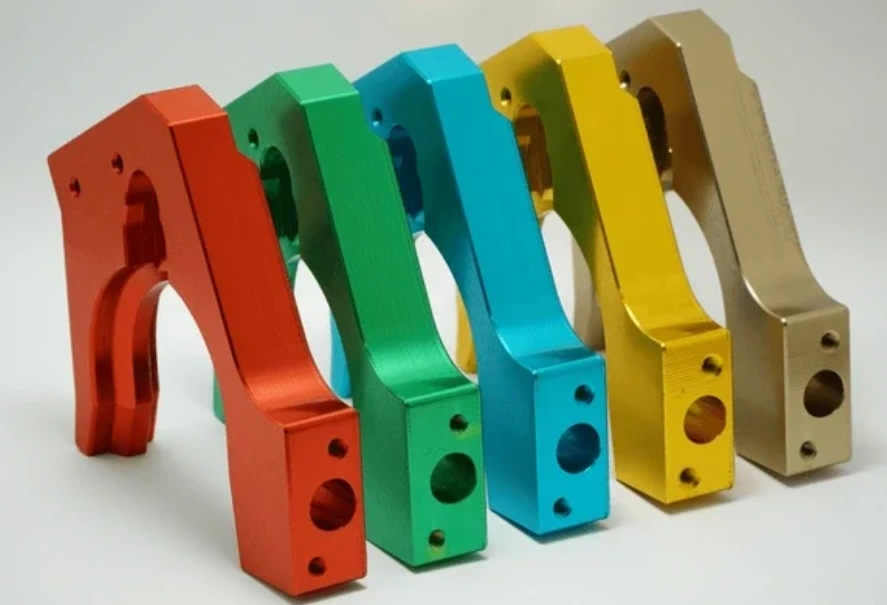
Aluminum CNC anodizing
Bead Blasting – Fine media is used to blast the surface of machined aluminum to produce a matte finish.
Chemical Film – Also called alodine/chromate conversion, this process produces a thin chemical coating that enhances corrosion resistance
Powder Coating – Powder coating comprises an electrostatically-applied dry coating for UV and impact resistance
Polishing – Polishing is a mechanical or chemical post-process that produces a smooth, reflective surface
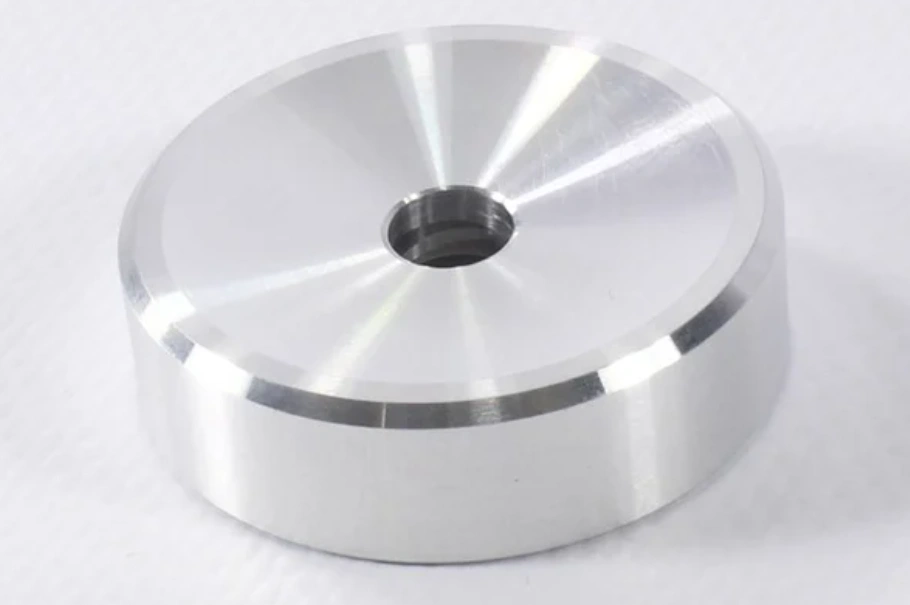
Aluminum CNC polishing
Common Problems and Defects in Aluminum CNC Machining
Aluminum machined parts have good properties, but the manufacturer can encounter challenges relatted to high thermal conductivity, malleability, and abrasiveness.
Thermal conductivity – Given the material’s high thermal conductivity, the easy dispelling of heat can cause thermal distortion and reduce aluminum alloy machining accuracy
Malleability – Since aluminum is malleable, chips can build up at the machining area and damage the tool and workpiece
Abrasiveness – Abrasiveness is an issue noted in silicon-containing alloys. This property can accelerate tool wear.
Safety Tips When CNC Machining Aluminum
Some of the most critical safety considerations in aluminum CNC cutting processes are:
- Use of appropriate machine guards
- Use of safety glasses and face shields to protect against flying chips
- Ventilation and dust removal systems
- Fire hazard awareness – high concentrations of aluminum can be flammable
Aluminum CNC Machining vs Other Metals
Aluminum CNC machining is often compared with steel CNC machining and brass CNC machining.
Aluminum vs. Steel CNC Machining
The strength and durability of steel machined parts are higher, but aluminum performs better in corrosion resistance, machinability, and lightweightness.
Concerning cost, aluminum is typically costlier than steel, initially. However, the reduced tool wear and higher ease of aluminum alloy machining tend to override this aspect in the long run.
Aluminum vs. Brass CNC Machining
Aluminum machinability is lower than that of brass. It also has poorer wear resistance and corrosion resistance. However, it tends to be more expensive and heavier.
Alternative Manufacturing Methods to Aluminum CNC Machining
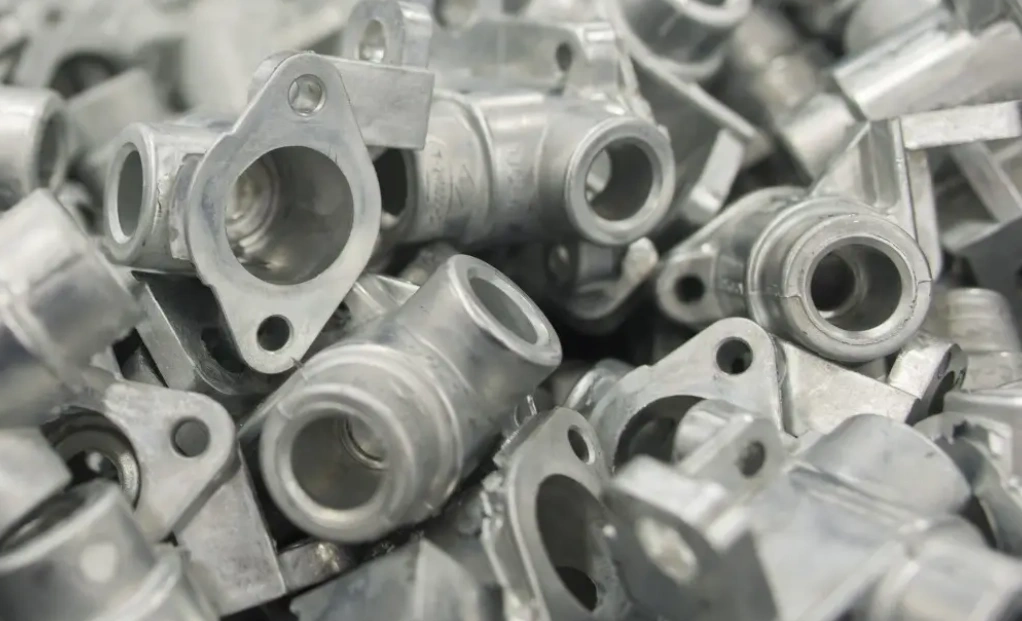
Aluminum alloy die casting
Depending on the application and nature of your aluminum parts, you could survey alternative manufacturing technologies such as 3D printing, laser cutting, die casting, and injection molding.
| Alternative Manufacturing Technology | Overview |
| 3D Printing | An additive manufacturing method that uses aluminum wire or powder to produce a part layer by layer |
| Laser cutting | Precise and fast cutting ofor aluminum sheets using a powerful laser |
| Die casting | It entails injecting molten aluminum into a steel mold at high pressure |
| Injection molding | Although the process is mostly used in plastic manufacturing, it can still be used for small aluminum parts in a process called metal injection molding (MIM) |
How Much Does a CNC Machine Cost for Aluminum?
The cost of CNC aluminum precision machining can vary significantly based on part complexity, production volume, type of machine used, and required tolerances.
Generally, the 4- and 5-axis CNC machining processes for complex multi-surface geometries tend to cost more than machining simple parts using 3-axis CNC mills.
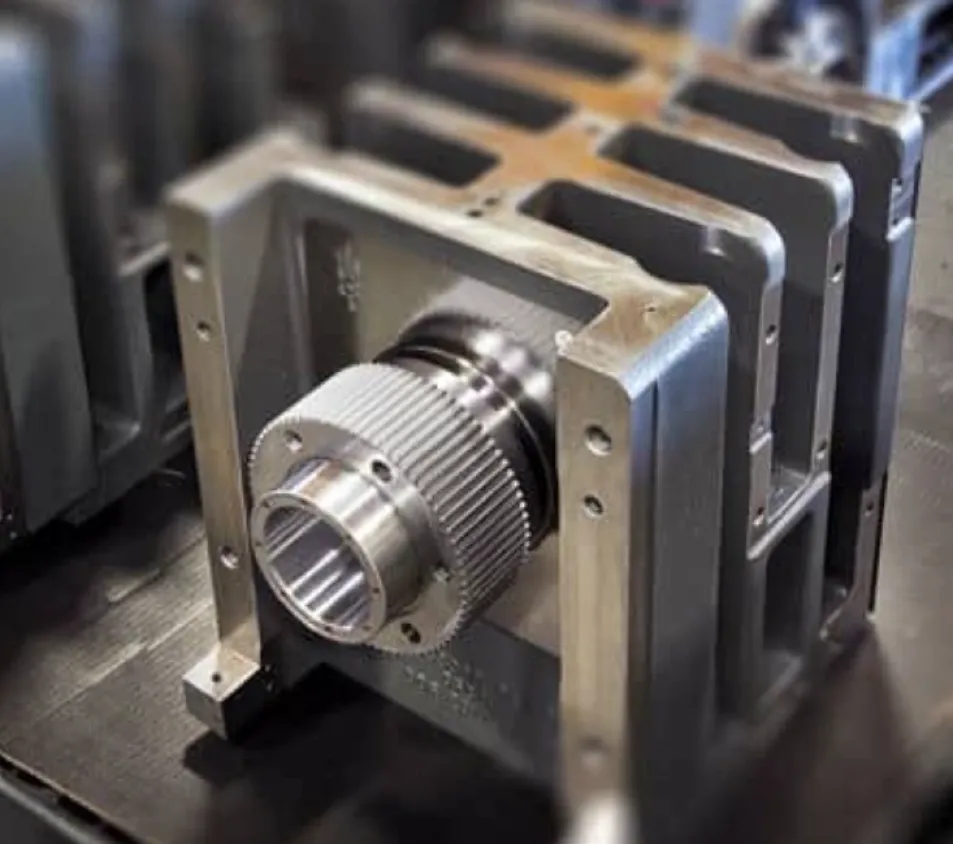
Complex CNC-machined part
In Conclusion
CNC machining is an advanced machining process that helps make aluminum parts for diverse industries. Aluminum is highly machinable, a property that is even more valuable considering the material’s high strength-to-weight ratio.
As technology advances, Aluminum CNC machining makes even more sense in manufacturing parts for aerospace, automotive, and other industries. From CNC drilling to aluminum CNC milling across different grades of machinable aluminum, businesses have much to gain from this manufacturing solution.
With our reliable CNC machining services, we are ready to meet your aluminum prototyping and mass-manufacturing requirements. Contact the technical team today.
FAQs
Yes, 6061 aluminum machines better than 5052 aluminum.